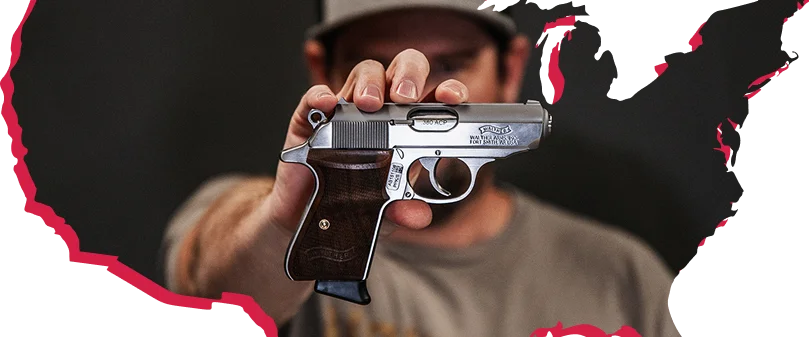



If you’ve got a buyer lined up, or you’re about to list your rifle or pistol, New Jersey has a way of stopping you cold right at the finish line. The “meet in a parking lot and swap cash” approach is where otherwise normal sales turn into a dead end.
The big unlock is planning around a New Jersey FFL transfer. In NJ, most private-party sales and transfers of both long guns and handguns have to run through a New Jersey licensed firearms dealer who conducts the NICS background check and handles the transfer paperwork, even if you already found a buyer.
Permits also split fast by firearm type. At a glance, buyers typically need a New Jersey Firearms Purchaser Identification Card (FPIC/FID) for rifles and shotguns, while handguns require a Permit to Purchase a Handgun, and it’s one permit per handgun.
The early pitfall that trips up sellers is magazine capacity. New Jersey generally defines a “large capacity ammunition magazine” as a detachable magazine capable of holding more than 10 rounds; possession and sale or transfer are generally illegal, with limited exceptions. A perfectly normal out-of-state configuration can become a problem the moment a 10+ round mag gets included.
This is informational only, not legal advice. Before you list or meet anyone, confirm the current NJSP guidance and any local ordinances, then follow a simple compliance-first sequence so you don’t waste time, lose the buyer, or create avoidable risk.
Step 1
Legality screening is the real Step 1, because a prohibited configuration can’t be “sold anyway.” The fastest way to ruin a sale is posting a listing for something New Jersey treats as banned, then trying to walk it back after you’ve already talked price.
An “assault firearm (New Jersey definition)” is a legal classification tied to (1) guns named on the statute’s list, (2) firearms “substantially identical” to those named models, and (3) certain semi-automatic firearms that trip a features test, N.J.S.A. 2C:39-1w. The practical gut-check is simple: don’t assume you’re fine because your receiver markings aren’t on a list, “substantially identical” can still capture the design and configuration.
For a semi-auto rifle, New Jersey’s features test is: able to accept a detachable magazine plus at least two of these features, N.J.S.A. 2C:39-1w(1): folding/telescoping stock; conspicuous pistol grip; bayonet mount; flash suppressor or a threaded barrel designed to accommodate one; grenade launcher. If you’re counting features, count like a prosecutor would, not like a forum thread would.
For a semi-auto pistol, the test is: able to accept a detachable magazine plus at least two of these, N.J.S.A. 2C:39-1w(3): magazine attaches outside the pistol grip; threaded barrel capable of accepting devices; barrel shroud; unloaded weight of 50 oz or more; semi-auto version of an automatic firearm. (New Jersey also regulates certain semi-auto shotguns under 2C:39-1w.)
Once you’ve confirmed the firearm itself isn’t the problem, the next question is whether the transfer path you’re using actually fits your relationship with the buyer-and whether any exception is real or just assumed.
You’re not the one running NICS, but you still control the transaction. Treat obvious red flags as a hard stop, and insist the transfer happens through a compliant dealer process where both parties appear in person with ID and complete the required steps.
New Jersey law has an immediate-family transfer exception, and inheritance or estate transfers can follow different rules, but “exception” isn’t the same thing as “no paperwork.” Even in immediate-family transfers, a Certificate of Eligibility (COE) may still be used to document the transfer properly.
If you’re using a COE-based transfer, plan on two COEs per gun, with each party keeping a copy.
Before you list anything or take payment, confirm the firearm’s exact configuration against 2C:39-1w and review current New Jersey gun law updates to ensure your eligibility and transfer plan still match the rules.
Step 2
Most New Jersey sales don’t fall apart because of the gun, they fall apart because someone shows up missing the one piece of paperwork the dealer needs to start the transfer. If the buyer can’t present the right credential and a government issued photo ID, you are both burning a trip.
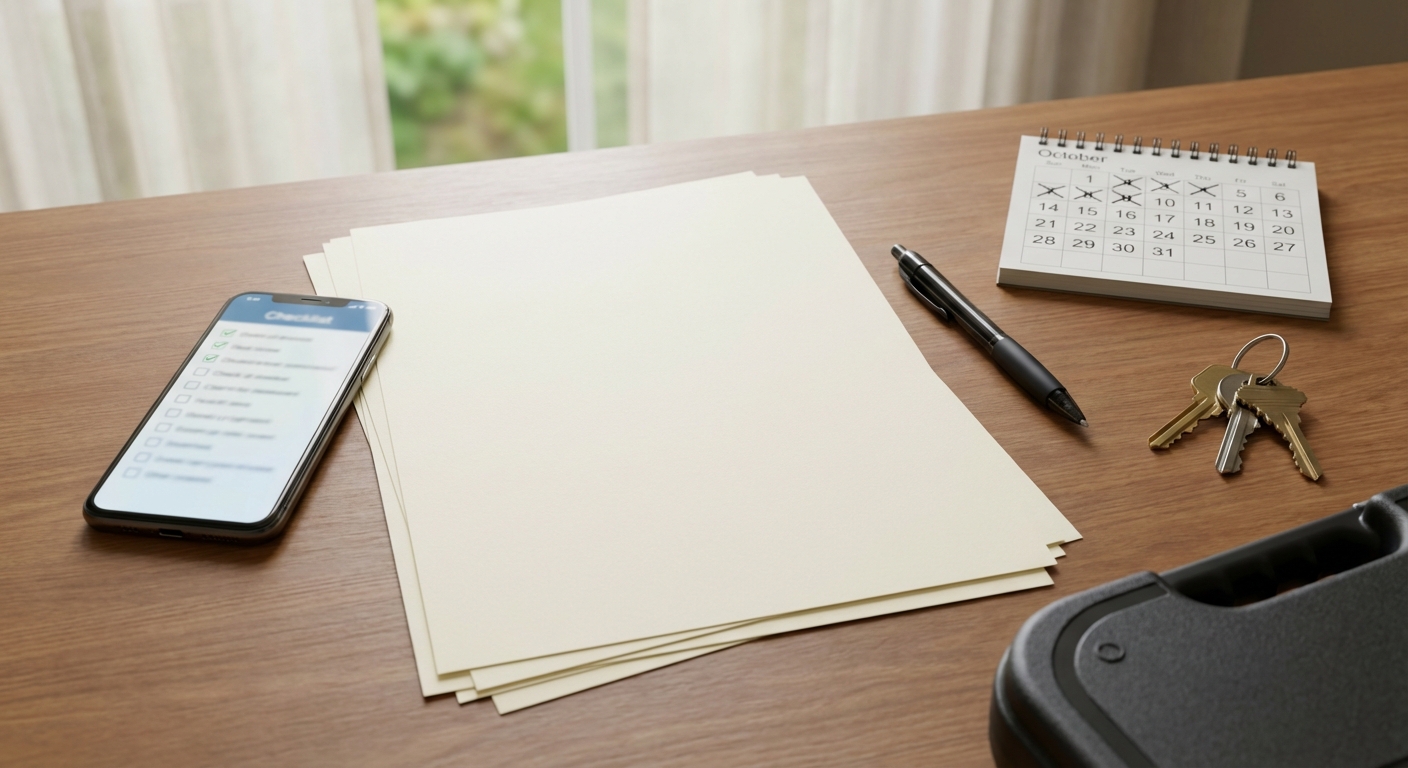
The buyer should bring a valid Firearms Purchaser Identification Card (FPIC/FID) plus a government issued photo ID. The FPIC/FID is the credential the buyer generally needs to receive a rifle or shotgun through a dealer transfer, so you want to confirm they have it before you schedule anything.
At the counter, the dealer verifies identity and eligibility, then has the buyer complete the required transfer steps (including the background check requirements that often apply to firearm transfers). From your side as the seller, the practical win is simple: if the buyer has their FPIC/FID and matching photo ID in hand, the appointment is far more likely to end with the firearm actually leaving with the buyer.
Handguns are where this gets stricter: the buyer needs a valid Permit to Purchase a Handgun plus a government issued photo ID. Bring the permit expectation up early, because it is issued per handgun, one permit per handgun.
A Firearms Purchaser Identification Card (FPIC/FID) is not a substitute for a handgun permit. If the buyer tells you “I have my FID,” your follow up should be, “Do you also have a current Permit to Purchase a Handgun for this transfer?” That one question prevents the classic wasted drive.
New Jersey’s “one handgun a month” rule generally limits buyers to one handgun per 30 day period. Even if they have the money and the permit(s), the calendar can force you to reschedule. There is also a Multiple Handgun Purchase Exemption process for buyers who legitimately need more than one handgun within 30 days, but the exemption does not replace the requirement to have a separate Permit to Purchase a Handgun for each handgun.
One more scheduling detail that saves headaches: permits run four years from the date of issue unless revoked, and renewal can be applied for within six months after expiration. If a buyer is close to the edge of that window, get the date confirmed before you lock in a meet time.
Before you agree on a dealer appointment, have the buyer confirm their permits are valid, match the firearm type, and their government photo ID matches the name on the transfer paperwork.
Step 3
Once the paperwork checks out, your job shifts to making the handoff smooth: safe handling, clear documentation, and transport that stays inside the rules. Preparation is what makes your sale smooth and defensible. A clean, clearly documented firearm sells faster and with fewer headaches, especially when you’re handing it to an FFL or shipping it to one. The friction usually shows up in two places, condition questions you can’t answer and transport mistakes you didn’t think mattered.
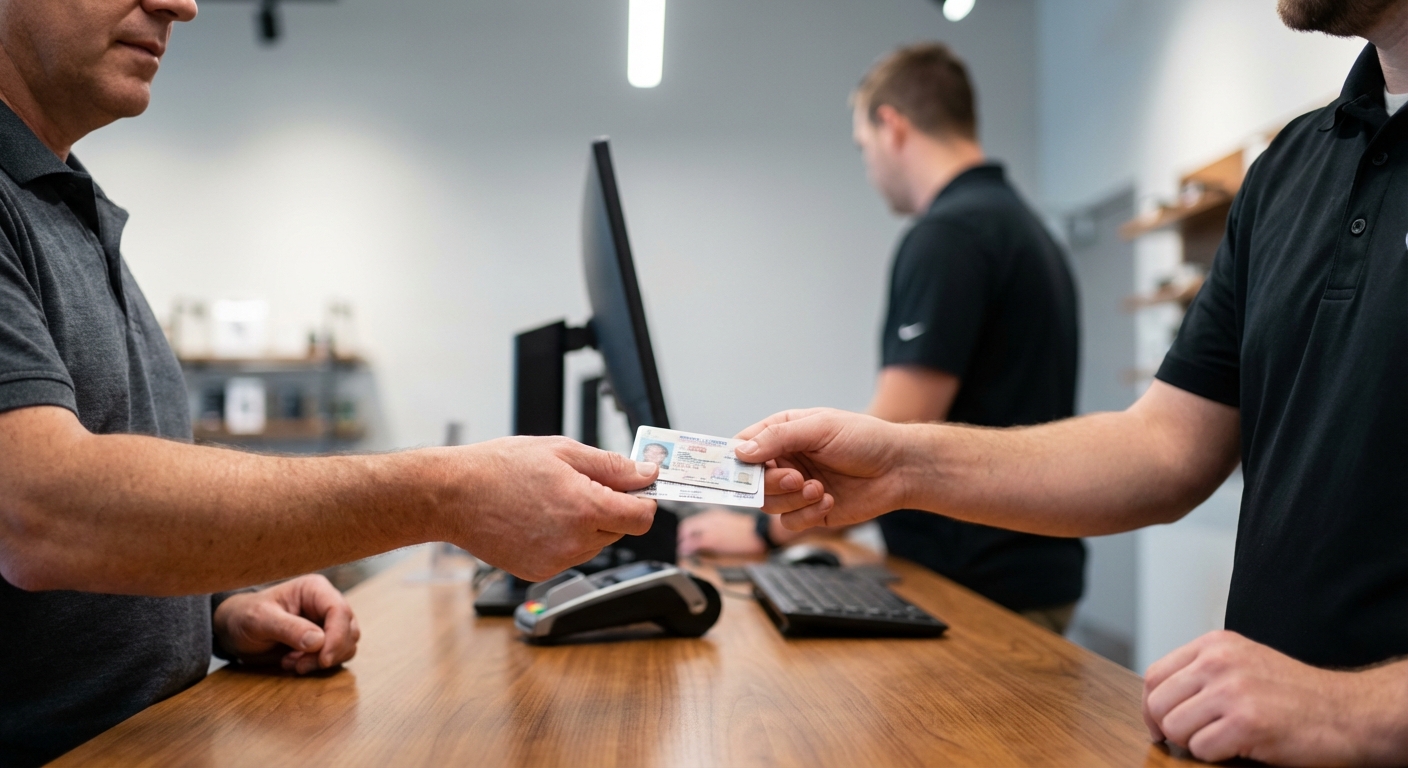
- Unload the firearm and remove the magazine (if applicable).
- Verify clear by visually and physically checking the chamber.
- Clear the area by moving all ammo to a different room, not the same table.
- Stage it for inspection and photos with the action open and any included magazines laid out separately.
This takes five minutes and prevents the classic, “Can you confirm it’s clear?” back-and-forth that delays intake and spooks serious buyers.
Write down what actually moves value: finish wear (holster rub, edge wear), bore condition (clean, pitting, strong rifling), matching numbers (where relevant), and any aftermarket parts. Aftermarket triggers, sights, barrels, optics mounts, and refinishes change price fast, but only if you can describe them clearly and photograph them cleanly.
Keep it simple, one note per line, and pair it with close-up photos of both sides, the top strap or slide, the crown, and any wear points. For photos, keep it compliant and boring, avoid showing prohibited accessories or anything that reads like you’re trying to sidestep the rules.
In New Jersey, when you’re relying on a transport exemption, the firearm must be unloaded and contained in a closed and fastened case, gun box, securely tied package, or locked in the trunk. Keep your travel between allowed places like your residence and the place of transfer or repair. This is the part that’s easiest to “wing” and hardest to defend later.
Pricing moves on signals, not vibes: exact model and variant, condition, what’s included (box, papers, extra mags, optics), and local demand. That’s why people search phrases like “how much is my Glock 19 worth,” “Glock 17 value,” “Sig Sauer P320 value,” “Beretta 92 value,” “CZ 75 value,” “Walther PPK value,” “Colt Python value,” “Taurus G3C value,” “Springfield 1911 value,” and “Ruger GP100 value,” they’re trying to anchor on the right version and condition tier.
If you want an online offer or appraisal path, your notes and photos make valuation and intake smoother. Cash My Guns, operated by Dunlap Gun Buyers (an FFL), bases valuation on make and model plus condition, and their condition checks include finish, bore condition, matching numbers, and aftermarket parts.
Before you pick a selling channel, do one quick pass: build a prep packet (condition notes, accessories list, clean photos), then transport it unloaded and properly cased to the FFL.
Step 4
Your selling path determines your speed, payout, and hassle level. In New Jersey, how you sell matters as much as what you sell, because compliance and convenience live in the selling channel. Pick the channel first, then let that choice drive the timeline, the paperwork flow, and what you can realistically promise a buyer.
Sell straight to a local gun shop/FFL. This is the fast-and-done option. You walk in, they evaluate it, and you either take the offer or you don’t. The tradeoff is simple: speed and simplicity usually come with a lower offer than you’d get from a retail buyer.
Consign it with an FFL.Consignment pushes for a higher net because the shop is selling to its customer base at retail pricing. The friction is time and uncertainty, your gun sits until it sells, and the shop takes a consignment fee out of the final price.
Use an online buyer or mail-in sale that routes through an FFL. This is convenience-first, especially if you don’t want to field messages or schedule meetups. The catch is waiting and coordination, you’re aligning timelines, shipping, and the receiving dealer’s process—so it helps to understand how to sell your gun online in a compliant way.
Find a private buyer, but complete the transfer at an NJ FFL (New Jersey FFL transfer, dealer processes the handoff). This is where you usually have the most price upside, but it’s also where people get sloppy. Both parties show up, provide identification, and complete the transfer steps at the dealer, so “parking-lot handoffs” aren’t part of the plan.
Zooming out, the big constraint is the same: in New Jersey, nearly all firearm sales, including private-party transfers, must be processed through an FFL—so it helps to compare your options for selling a gun before you commit to a path.
The NJ NICS background check fee is $15.00 per request. Buyers typically pay both the dealer’s transfer service fee and that separate $15 NJ NICS fee, so bake those costs into expectations early so nobody feels surprised at the counter.
Federal law lets a non-FFL ship a firearm they lawfully own to an FFL in any state for sale, consignment, repair, or transfer, but you cannot ship directly to an unlicensed out-of-state person. If you ship by a common or contract carrier, federal law also requires you to notify the carrier that the package contains a firearm. The clean move is to follow the receiving FFL’s written instructions before you ship anything or take payment.
Takeaway: pick the compliant channel that matches your priority, fastest, highest upside, or lowest hassle, then coordinate the FFL transfer details before you accept money or make promises to a buyer.
Step 5
Once you’ve picked the channel, transfer day is where everything either closes cleanly-or gets delayed because a form, fee, or status doesn’t line up. Transfer day is mostly paperwork and patience. The good news is the counter experience is predictable, especially for a private party sale where you and the buyer both show up at the same FFL, hand over your documents, and let the dealer run the sequence.
- Meet the buyer at the FFL at the agreed time.
- Present IDs and any required permits so the dealer can verify identity and eligibility before any forms get finalized.
- Complete ATF Form 4473, the federal Firearms Transaction Record used for dealer transfers, exactly as written, this is the form that drives the federal side of the transfer.
- Sign the New Jersey paperwork that matches the firearm type. For rifles and shotguns, expect a Certificate of Eligibility (COE) for each transfer, including black powder or BB rifles, so you are signing more than just the 4473.
- Submit the background check through the dealer. In NJ, that means the dealer submits through the state system, then you wait for the response.
- Finalize only when the dealer says you are cleared to finish, then the gun changes hands and you both leave with the right copies.
New Jersey is a NICS Point-of-Contact state, so checks run through the NJSP NICS Unit instead of the dealer contacting FBI NICS directly. The NJ NICS fee is commonly $15, and dealers typically collect it from the buyer when they submit the check. You will hear simple statuses: “Proceed” means the dealer is permitted to complete the transfer once all other federal and NJ requirements are satisfied. “Delay” means it is still under review, so the gun stays with the dealer until NJSP returns a final answer. “Deny” means the transfer stops.
Use secure, traceable payment, think cash at the counter, cashier’s check, or another method the dealer can receipt. Avoid app-based payments that can be reversed or disputed after the gun is gone. For seller protection, keep copies of whatever you signed (COE for long guns, any permit confirmation for handguns, and your receipt from the dealer), plus basic documentation that helps reduce liability when selling to a stranger.
Actionable rule: leave the shop with your copies and receipts, and do not hand over the firearm until the dealer says the transfer is complete.
After the Sale Checklist
Compliance-first is what makes NJ sales straightforward. If you treat the sale like a small compliance project-legality screen, right permits, an FFL transfer, and clean records-you cut the two biggest headaches sellers run into: wasted trips and avoidable risk.
You already did the hard parts in the right order: first you screened for NJ legality issues under the assault firearm framework and related restrictions; then you confirmed the buyer had the right permit and ID for the firearm type; then you prepped the firearm safely, documented condition, and priced it like the real market; then you picked a compliant channel that routes the transfer through an FFL; and finally you finished NJSP NICS and the required paperwork, then kept your records.
Your next move is simple: lock in the FFL appointment, or if you’re using an online buyer, request an offer and start the transfer workflow. That ties back to the two themes that trip sellers up early: avoiding the parking-lot instinct by routing the handoff through a dealer, and catching permit, configuration, and magazine-capacity issues before anyone wastes a trip. While you’re waiting, store the unloaded firearm responsibly, secured from unauthorized access, and follow core firearm safety rules for safe handling and storage if you want a refresher. If you want an online option, Cash My Guns presents its process as “Safe • Legal • Hassle-Free,” describes itself as a licensed FFL dealer, and states it offers insured shipping, with the policy: “You agree to ship your firearms within 7 days of receiving your prepaid shipping label and/or shipping kit.” Keep copies of everything until the sale is fully closed out.