
The Henry Repeating Arms Big Boy is an iconic American lever-action rifle, celebrated for its classic design, smooth action, and quality craftsmanship. Whether you own the classic brass receiver model or a modern X Model, understanding its market value is key to a successful sale. The rifle’s worth is determined not by age, but by its specific model, material, caliber, and overall condition. This guide will break down these factors to help you accurately price your firearm.
What Determines Your Henry Repeating Arms Big Boy’s Worth
The value of a Henry Big Boy is primarily determined by its specific model and materials rather than distinct generations or production years. Key factors include the receiver material—such as brass, color case hardened steel, or standard blued steel—and the rifle’s overall condition. A Big Boy Color Case Hardened model, with an MSRP of $1,283, will inherently command a higher price than a Big Boy Steel model with an MSRP of $1,070. Caliber can also influence demand, though condition remains paramount. Scratches, dings, or corrosion, particularly on the distinctive brass or case-hardened receivers, will significantly impact its final selling price in the used market, where prices typically range from $500 to $800.
2026 Price Breakdown by Generation
Big Boy Steel Models
While Henry doesn’t use formal generation distinctions, the Big Boy Steel models can be considered the foundational workhorses of the lineup. With a Manufacturer’s Suggested Retail Price starting around $1,070, these rifles offer the classic Big Boy experience with a durable, blued steel frame. On the used market, these models are widely available and their value is heavily dependent on condition. A well-maintained example can be expected to fetch a price in the common used range of approximately $676 to $681, though rifles showing significant field use may fall closer to the $500 to $600 mark, making them an accessible entry into the Big Boy family.
The appeal of the Steel models lies in their practicality and robust construction, making them popular among hunters and shooters who prioritize function over ornamentation. When selling one of these rifles, its mechanical condition is just as important as its cosmetic appearance. A smooth action and a clean bore are essential for commanding a fair price. Because they are valued as functional firearms, any signs of neglect or hard use will more directly impact their value compared to the more collectible, ornate models in the Big Boy series, which are often judged more heavily on their aesthetic preservation.
Big Boy Brass Models
The iconic Big Boy Brass models represent the classic, eye-catching aesthetic that many associate with the Henry brand. Featuring a polished solid brass receiver, these rifles carry a higher MSRP, often around $1,176, which directly translates to a higher resale value compared to their steel counterparts. The condition of the brass is a critical valuation factor for these firearms. Potential buyers are looking for that signature gleam, so a receiver free of deep scratches, significant tarnishing, or damage will command a premium. Even minor cosmetic flaws can detract from the visual appeal that defines this model, making meticulous care essential for preserving its top-tier value.
On the secondary market, a Big Boy Brass in excellent condition consistently holds its value well, often placing it in the upper end of the typical $500 to $800 used price spectrum. Sellers should be prepared for buyers to scrutinize the brass components, including the receiver, buttplate, and barrel band. Documenting the condition of these elements with high-quality photos is crucial. While a certain amount of patina can be acceptable to some, most buyers in this category are paying for the distinctive, well-preserved appearance, making cosmetic condition a primary driver of its final sale price.
Color Case Hardened & All-Weather Models
Positioned at the premium end of the lineup, the Big Boy Color Case Hardened and All-Weather models boast the highest MSRPs, currently listed at $1,283. This premium price point for new rifles establishes a higher baseline value on the used market. The Color Case Hardened model is sought after for its unique and beautiful mottled finish, making the preservation of this delicate surface paramount. Any scratches or wear that mar the intricate patterns will significantly reduce its value. Similarly, the All-Weather model’s appeal is its durability, so its hard chrome plating and weather-resistant furniture must be in excellent condition to justify a top-tier price.
For sellers of these models, the rifle’s specialized finish is its main selling point and greatest vulnerability. These are not just functional firearms but also pieces of craftsmanship, and their value is tied to that aesthetic integrity. A pristine example will appeal to discerning buyers willing to pay more for a premium product, often fetching prices at the very top of the used market range, potentially exceeding $800 depending on demand. Any compromise in the condition of their unique finishes will relegate them to the price range of more common models, negating the initial investment in the upgraded version.
Big Boy X Models
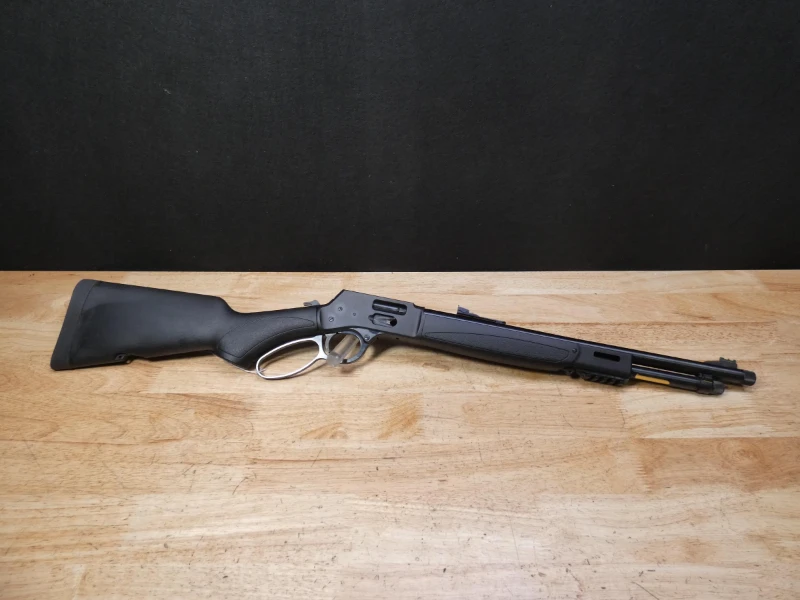
The Big Boy X Model represents a modern evolution of the classic lever-action, catering to a different segment of the market with its synthetic furniture, Picatinny and M-Lok accessory mounts, and a threaded barrel. With an MSRP of $1,124, it is priced competitively within the Big Boy family, and its value is tied more to utility than traditional aesthetics. The condition of its matte blued finish and polymer stock is important, as is the functionality of its modern features. Buyers for the X Model are typically looking for a suppressor-ready, optics-capable rifle, so its value is maintained by ensuring these components are in perfect working order.
Unlike the Brass or Color Case Hardened versions, the X Model’s value is less about pristine, classic looks and more about tactical and practical performance. A seller should highlight the rifle’s modern capabilities in their listing. While it appeals to a more niche audience than the traditional models, that audience is often willing to pay a fair price for a feature-rich, modern lever gun. Its resale value on the used market remains strong, often landing squarely within the average $675 to $710 range for a well-cared-for example, reflecting its unique position as a bridge between classic design and contemporary function.
How Modifications Affect Value
For the Henry Big Boy, there is no definitive market consensus on modifications that consistently add or detract from its value. The impact of aftermarket parts is highly subjective and often depends on the individual buyer’s taste. Changes like adding a scope, leather stock wrap, or an enlarged lever loop might appeal to a buyer looking for a customized hunting rifle, but a collector or purist may view these as detractors from the firearm’s original condition. As a result, sellers should not expect to recoup the full cost of any modifications they have made to the rifle.
Because value is so subjective, the most reliable approach is to retain all original parts. If you have modified the rifle, offering to include the factory components with the sale can significantly broaden its appeal. This allows the new owner to either keep the modifications or easily return the rifle to its stock configuration. Irreversible modifications, such as drilling and tapping an older model that was not factory-prepared for a scope, are more likely to negatively impact value, as they permanently alter the firearm and limit the pool of potential buyers to only those who approve of the change.
Regional Price Variations in 2026
The value of a Henry Big Boy can be influenced by regional demand, which is often shaped by state and local firearm regulations. In states with strict laws governing semi-automatic rifles, such as New York, the demand for capable and compliant alternatives like the lever-action Big Boy can be significantly higher. Because it is not a semi-automatic and typically has a magazine capacity of 10 rounds, it complies with New York state law outside of NYC. This sustained demand in a market with fewer legal options can help support stronger and more stable pricing compared to regions with less restrictive firearm laws.
Similarly, the availability of specific “California Legal” models indicates a dedicated market where Henry Repeating Arms has recognized sufficient demand to produce compliant versions. In such restrictive environments, the pool of available new long guns is smaller, which can bolster the value of desirable used firearms like the Big Boy. Sellers in these regions may find a more motivated buyer base, potentially leading to quicker sales and prices at the higher end of the national average. Conversely, in states with open markets and a wide variety of firearm choices, prices may be more competitive and align closely with the national average.
Online vs Local Sales
When selling a Henry Big Boy locally through a private transaction, the legal requirements can vary significantly by state. There is no federal mandate for a bill of sale, and in some states like Mississippi, it is considered entirely optional, serving only as a personal record. However, other states may require transfers to go through a licensed dealer even for private sales. It is crucial for both the buyer and seller to thoroughly research and comply with all state and local laws to ensure a legal and secure transaction, as ignorance of the law is not a valid defense.
Opting to sell to a local gun dealer offers a path of greater convenience and legal simplicity, but at a financial cost. Dealers must account for overhead and profit, so their offers are typically between 60% and 70% of the firearm’s private party market value. While the payout is lower, the transaction is immediate, and the dealer assumes all responsibility for the legal transfer paperwork. This trade-off is often appealing for sellers who prioritize a fast, hassle-free sale over maximizing their return. The specific offer will still depend on the rifle’s condition and the dealer’s current inventory needs.
Selling online to a buyer in another state involves strict federal regulations. Federal law prohibits the direct sale and shipment of a firearm between private residents of different states. The transaction must be facilitated by a Federal Firearms Licensee (FFL). The seller must ship the Big Boy to an FFL in the buyer’s state of residence. That FFL will then conduct a background check and legally transfer the firearm to the buyer. This process ensures full legal compliance but adds shipping and transfer fees to the overall cost, which should be negotiated between the buyer and seller beforehand.
The FFL Buying Advantage
For a seller, utilizing a Federal Firearms Licensee (FFL) for a firearm transfer offers a significant layer of legal protection and peace of mind. When you sell your Henry Big Boy through an FFL, whether on consignment or for a direct transfer, the dealer is responsible for executing the required background check on the buyer. This process ensures the person acquiring your rifle is legally permitted to own a firearm, effectively removing the liability from your shoulders. This is especially critical in private sales where verifying a buyer’s eligibility on your own is nearly impossible and fraught with legal risk.
In the case of an interstate sale, using an FFL is not just an advantage—it is a federal legal requirement. You must ship the rifle to an FFL in the buyer’s state, who will then handle the final transfer. This creates a clear and legal paper trail documenting the change of ownership. By adhering to this process, you guarantee that the sale is compliant with the Gun Control Act of 1968 and other applicable regulations. This insulates you from potential future legal complications and confirms that you have acted as a responsible firearm owner throughout the entire selling process.
What Increases Your Offer
A thorough pre-sale cleaning is one of the easiest and most effective ways to increase the value of your Henry Big Boy. A full disassembly is not necessary; focus on the details a potential buyer will inspect. Wipe down all exposed metal surfaces to remove fingerprints and dust, clean the bore and chamber to ensure they are free of fouling, and make sure the action is clean and lightly oiled. This simple effort demonstrates proper care and maintenance, which suggests the rifle is in good mechanical condition and can directly lead to a higher offer from an impressed buyer.
High-quality photography is non-negotiable for achieving the best price, especially in online listings. Present your Big Boy against a clean, non-distracting background and use excellent lighting, preferably diffuse natural light, to avoid glare on the metal surfaces. Use a capable camera to capture multiple sharp, detailed photos from various angles. Be sure to accurately document the rifle’s condition, including close-ups of the wood, receiver, and any unique features or blemishes. Clear, honest photos build buyer confidence and justify a higher asking price by leaving no questions about the firearm’s quality.
Completeness can significantly differentiate your rifle from others on the market. If you still have the original factory box, owner’s manual, lock, and any other included paperwork or accessories, be sure to feature them in your sale. This complete package is highly attractive to collectors and discerning buyers, as it implies the firearm has been meticulously cared for since its original purchase. While the rifle itself is the main asset, providing the full original kit can often be the deciding factor that persuades a buyer to choose your firearm over a similar one and agree to your asking price.
When to Sell Your henry repeating arms big boy
Timing the sale of your Henry Big Boy can have a noticeable impact on the level of interest and the final price you receive. The market for hunting rifles often experiences a significant upswing in the late summer and early fall, spanning from approximately August through October. During this period, hunters are actively preparing for upcoming seasons and are in the market for reliable firearms. Listing your lever-action rifle during this window connects you with a large, motivated pool of buyers, which can lead to a faster sale and more competitive offers as demand peaks.
Another strategic time to consider selling is in the spring, typically from February through April. This period often sees an increase in disposable income for many potential buyers due to tax refunds. With more cash on hand, shooting enthusiasts may be looking to add a classic firearm like the Big Boy to their collection for the upcoming year’s range sessions and outdoor activities. This seasonal financial boost can translate into a more active and receptive market for used firearms in general, making it an opportune time to list your rifle for sale.
Conversely, the summer months are generally considered the slowest period for firearm sales. With potential buyers often focused on family vacations, holidays, and other outdoor pursuits not related to shooting, overall market demand tends to soften. Listing your Henry Big Boy during this time may result in fewer inquiries and a longer time on the market. To make a sale during this off-season, you might find it necessary to price your rifle more competitively or be more willing to negotiate with the limited number of active buyers.
Common Pricing Mistakes
One of the most frequent errors owners make is overvaluing a standard-production Henry Big Boy. For common models, a formal, paid appraisal is generally not a worthwhile expense, as the market value is well-established and readily available. These rifles typically sell in the $500 to $800 range depending on condition. Instead of assuming your rifle has unique collector value, you should research recent sale prices of comparable models on online forums and auction sites. This data-driven approach will provide a realistic baseline for setting a fair and attractive price.
Another common mistake is pricing a used rifle too closely to its new counterpart’s MSRP. A new Big Boy Steel rifle retails for approximately $1,070, while the average used price hovers between $676 and $681. Even a rifle in pristine, like-new condition has undergone depreciation the moment it is sold. Buyers expect a significant discount for a used firearm, and failing to account for this will deter them from considering your offer. A realistic price reflects its pre-owned status and gives buyers a compelling reason to choose your rifle over a brand-new one from a dealer.
Failing to understand the full market landscape, including what a dealer would offer, can lead to unrealistic private sale expectations. Knowing that a dealer will typically pay between 60% and 70% of the private party value helps establish a realistic floor for your rifle’s worth. If you price your firearm too high in a private sale, savvy buyers will simply move on, knowing they can find better deals. Setting a price that is competitive within the private market, yet reasonably above the dealer trade-in value, is the key to attracting serious offers.
Market Outlook for 2026
While specific long-term price predictions are unavailable, the market outlook for the Henry Big Boy remains stable and positive, anchored by several key factors. The Henry brand carries a stellar reputation for quality and customer service, which fosters strong consumer confidence and sustained demand. Lever-action rifles occupy a timeless niche in the firearms world, appealing to a broad audience of hunters, collectors, and recreational shooters. This classic appeal ensures that the Big Boy is less susceptible to the volatile trends that can affect other segments of the market, suggesting its value will remain consistent.
The legal status of the Henry Big Boy also provides a solid foundation for its future value. As a manually-operated, non-NFA firearm, it remains compliant in many jurisdictions with increasingly strict regulations on semi-automatic rifles, such as California and New York. This ensures a dedicated market in areas where consumer choice is limited. As long as it remains a legally accessible and desirable alternative in these regions, demand is likely to hold steady or even grow, supporting a stable and predictable resale market for the foreseeable future.
Frequently Asked Questions
Does the caliber of my Big Boy affect its resale value?
Yes, the caliber of your Henry Big Boy can influence its resale value and how quickly it sells. Popular and versatile pistol calibers like .357 Magnum/.38 Special and .44 Magnum/.44 Special tend to have the broadest market appeal because ammunition is widely available and they are popular for both range shooting and hunting. This high demand can lead to a faster sale. While more specialized or traditional rifle calibers might have a smaller pool of potential buyers, a motivated individual specifically seeking that chambering may be willing to pay a fair price for it.
Is it worth getting a professional appraisal for my Henry Big Boy?
For a standard, modern production Henry Big Boy rifle, a professional appraisal is generally not worth the cost. The market value for these firearms is well-established and documented, with used prices for models in very good to excellent condition typically falling between $500 and $800. You can accurately determine a fair asking price by researching recent sales of the same model and caliber on online gun auction sites and forums. An appraisal is more suitable for rare, antique, or highly customized firearms where value is not easily determined.
Will I get more money selling to a private party than a gun dealer?
Yes, you will almost certainly receive a higher price by selling your Henry Big Boy to a private individual rather than a gun dealer. Dealers must cover business overhead and make a profit on resale, so their cash offers are typically between 60% and 70% of the firearm’s current private party market value. The primary benefit of selling to a dealer is the speed, security, and convenience of the transaction. A private sale requires more effort and time but will yield the maximum financial return for your rifle.
How much does the model (e.g., Brass vs. Steel) impact the price?
The specific model is one of the most significant factors driving the value of a Henry Big Boy. There is a direct correlation between a model’s MSRP and its used market price. Premium models featuring more expensive materials and finishes, like the Color Case Hardened (MSRP $1,283) or the iconic Big Boy Brass (MSRP ~$1,176), will consistently command higher resale values than the standard Big Boy Steel model (MSRP ~$1,070). The material, finish, and overall aesthetic are key components of what a buyer is paying for in the Big Boy line.
Is my Henry Big Boy rifle considered an NFA item?
No, the Henry Repeating Arms Big Boy series of rifles and carbines are not classified as NFA (National Firearms Act) items. They are manufactured with barrel lengths of either 16.5 inches or 20 inches, both of which exceed the 16-inch legal minimum for a rifle barrel. This non-NFA status is a significant value-preserving factor, as it means the firearm can be bought and sold through a standard FFL transfer without the additional taxes, extensive paperwork, and lengthy wait times associated with NFA-regulated items like short-barreled rifles.
Get a Cash Offer Today
Ready to sell your Henry Big Boy? We offer a fair, competitive price based on the latest market data. Our process is fast, secure, and designed to get you a cash offer without the hassle of a private sale.
Click here to begin the simple process. Submit information about your firearm, receive our offer, and get paid. Let us handle the complexities of firearm sales so you can enjoy a safe and profitable transaction today.