

In Colorado, the fastest way to blow up a “simple private sale” is assuming private means no paperwork and no check. You find a buyer, agree on a price, and then realize the handoff you planned is exactly what Colorado law is designed to prevent.
You’re not trying to do anything shady, you just want a clean sale that doesn’t turn into an accidental legal problem. The frustration is that the deal feels informal, but the legal transfer is formal.
Colorado’s universal background check requirement for private firearm transfers is codified at C.R.S. § 18-12-112, and it took effect July 1, 2013. That creates the real tradeoff: convenience and speed versus doing the transfer in a way a shop will actually process without surprises.
The practical “north star” is using a Federal Firearms Licensee (FFL), meaning a dealer who’s licensed to handle firearm transfers and run the required check. In this context, a background check is the dealer-initiated eligibility check that has to happen before the buyer can legally walk out with the gun.
This walkthrough sticks to the normal, repeatable scenario: a private sale between two unlicensed people, where you meet the buyer and complete a dealer-assisted transfer for handguns and long guns. It’s not legal advice, and it won’t dive into edge-case exceptions, prohibited weapons, or pricing and marketplace tactics. It also keeps “firearm” in the same lane Colorado uses in Title 18: handguns, rifles, and shotguns count, while an “antique firearm” is excluded under C.R.S. § 18-12-101.
The two failure points this helps you avoid are skipping the required dealer-assisted process, and walking away with no paper trail showing the gun left your possession legally.
You’ll walk away able to complete a Colorado-compliant private sale without guesswork or loose ends.
Step 1
- Confirm whether your handoff is a background-check-required transfer
Before you talk price or line up a meetup, get clear on one thing: is this a handoff Colorado treats as a background-check-required transfer? Under C.R.S. § 18-12-112, most firearm transfers between unlicensed people have to be completed through an FFL so the transferee passes a background check before you deliver the gun.
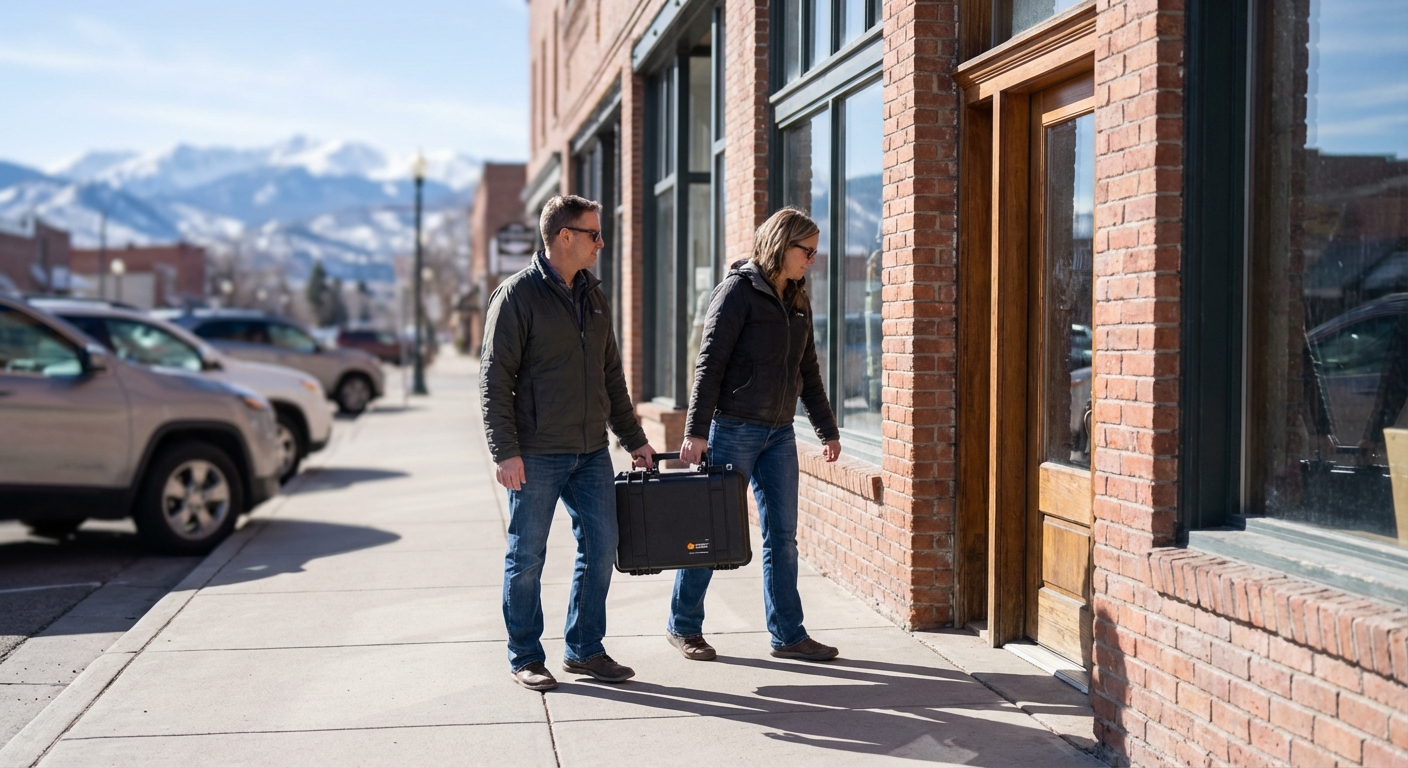
Here’s the catch that trips people up: Colorado uses “transfer” in a broad, everyday sense. C.R.S. § 18-12-112 says a transfer includes selling, giving, leasing, loaning, or otherwise conveying a firearm. That means a private-party transfer, a handoff between two unlicensed individuals, is not just “I sold it,” it can be a gift to a buddy or a loan for the weekend unless an exception applies.
Exceptions exist, but they’re narrower than most people assume. Common examples include certain transfers among immediate family members, certain limited temporary loans (like for lawful target shooting or hunting under specific conditions), and certain emergency self-defense loans. For more context on selling a gun without a background check and why you might not be able to, keep in mind this is not an exhaustive list, and the details matter. The clean way to avoid guessing is to describe your situation to the FFL who would facilitate the transfer and follow their guidance.
Skipping the required process has real teeth. A first violation is a class 1 misdemeanor under C.R.S. § 18-12-112(10)(a), punishable by 6 to 18 months in jail and/or a $500 to $5,000 fine (C.R.S. § 18-1.3-501). A second or subsequent violation is a class 6 felony under C.R.S. § 18-12-112(10)(b), punishable by 12 to 18 months in prison plus mandatory parole and/or a $1,000 to $100,000 fine (C.R.S. §§ 18-1.3-401, 18-1.3-801).
- You’re handing a firearm to another unlicensed person and they’ll keep it, even briefly.
- Money is changing hands, or it’s a gift, trade, lease, or “just a loan.”
- The situation is not obviously one of the narrow statutory exceptions (immediate family, limited temporary sporting loan, emergency self-defense loan).
- You want to avoid turning a simple sale into a criminal charge.
If you’re unsure, call the FFL you plan to use. For a broader walkthrough of how to sell a gun in Colorado, a two-minute conversation here can save you from building the rest of the sale around the wrong assumptions.
Step 2
- Choose the transfer path that fits your buyer and your risk tolerance
The “best” way to sell depends less on what you’re selling and more on where your buyer lives, plus how much coordination you want to do yourself. Once you know the transfer needs to run through an FFL, the rest becomes straightforward logistics: who you meet, where you hand it over, and who confirms the receiving dealer details.
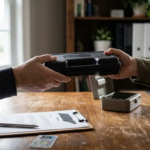
This is the fastest, lowest-friction path because the gun store or dealer is your buyer. Your responsibilities are simple: confirm the shop buys the type of firearm you have, bring a government-issued photo ID, and bring the unloaded firearm and any magazines or accessories you intend to include. The tradeoff is convenience for a typically lower offer, since the dealer has to resell it.
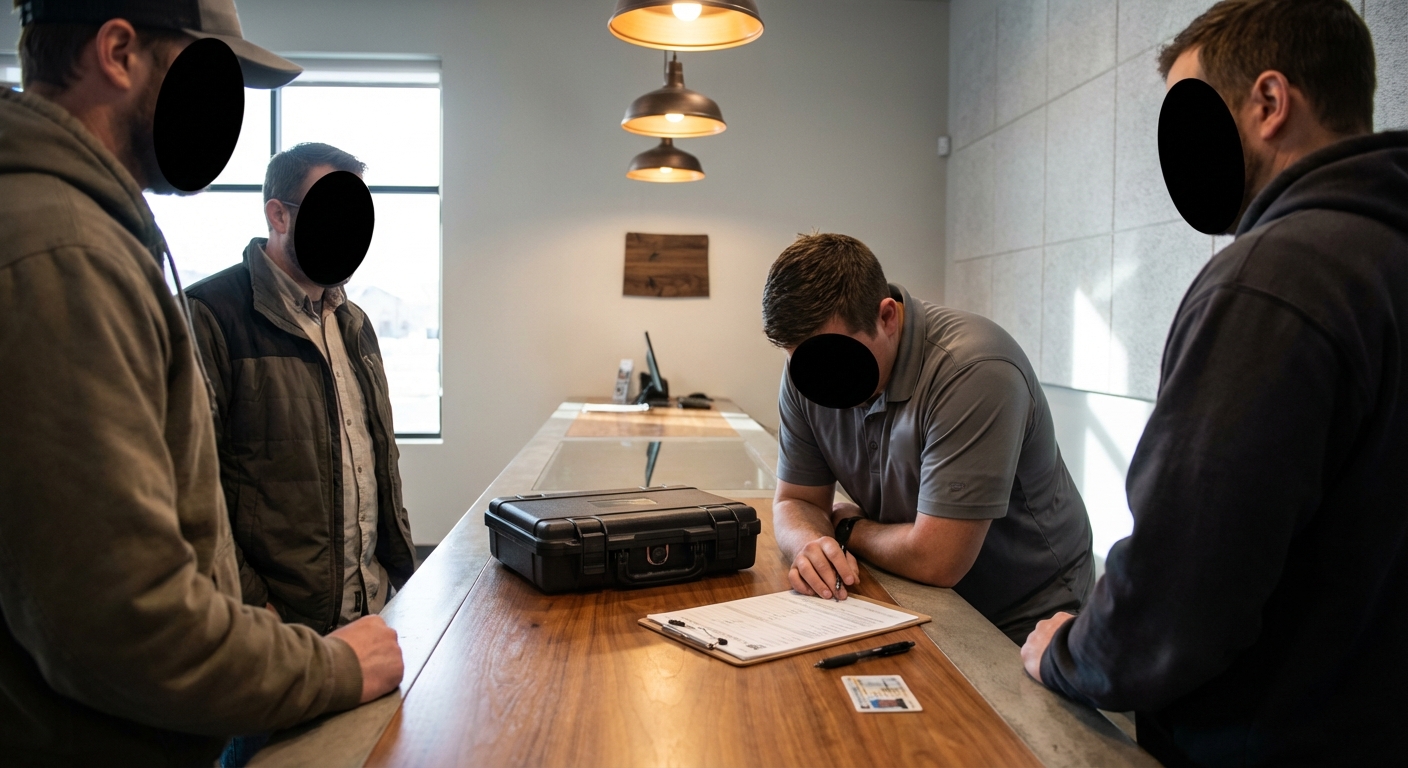
This usually gets you a stronger deal than selling straight to a shop, but it adds coordination. You have to find the buyer, agree on a time, and pick an FFL willing to facilitate the transfer. Plan on bringing your ID and the unloaded firearm to that dealer, and make sure the buyer shows up with whatever identification the dealer requires. If you’re weighing a private-party sale versus an FFL/dealer sale, your biggest risk reducer is choosing a reputable FFL and insisting the handoff only happens there.
Interstate reality makes online deals different. Federal law generally bars an unlicensed seller from transferring directly to a non-resident under 18 U.S.C. § 922(a)(5), and it generally bars an unlicensed buyer from receiving or transporting into their home state a firearm obtained out of state under 18 U.S.C. § 922(a)(3). Practically, that means the buyer lines up a receiving FFL in their state, you confirm that dealer will accept the shipment, and you ship or route the firearm to that FFL, not to the buyer’s house. For more on selling a gun online and shipping to an FFL, the key is keeping the transfer dealer-to-dealer. Before you ship or hand anything over, verify the receiving dealer with ATF FFL eZ Check at https://fflezcheck.atf.gov/FFLEzCheck by entering the first 3 and last 5 digits of the FFL number and confirming the license record name and address match where you’re sending it.
If you want least hassle, sell to an FFL. If you want a private-buyer deal without chaos, insist on meeting at an FFL. If you’re still comparing your options for selling a gun, start with the buyer’s location and the transfer path you can keep controlled. If the buyer is in another state, lock in the receiving FFL first and verify it in eZ Check so the transfer stays predictable from the start.
Step 3
- Price the firearm and prep your details before you meet
Most stressful sales in Colorado don’t go sideways because of “Colorado gun sale laws,” they go sideways because the price is a guess and the details are scattered, so you end up negotiating in the FFL lobby with your phone out and no clean answers.
Start with recent sold comps, not optimistic asking prices. Pull a handful of completed sales for the exact make and model, then set a realistic range based on what actually closed. If you’re searching “how to sell a gun in Colorado” or “sell firearm CO” while you price, make “recently sold” the filter you trust.
Then adjust for what’s in the box. Extra magazines, a quality optic, a hard case, and spare parts can move the number, but only if you list them clearly and photograph them with the gun.
Keep local demand in mind at a high level. Hunting calibers and shotguns often get more attention as seasons approach, while some niche items move slower—supply and demand affects firearm resale prices. Use that as a timing cue, not an excuse to overprice.
Two “same model” guns rarely price the same once you get honest about condition. Cash My Guns’ appraisal factors are the right mental checklist: make and model, plus finish wear, bore condition, matching numbers, and aftermarket parts all materially affect resale value. A clean bore and original, matching components generally support stronger comps, while heavy wear or irreversible mods push you toward the bottom of the range.
- Make, model, caliber or gauge
- Serial number (record it privately, don’t post it)
- Clear photos: both sides, markings, accessories, any blemishes
- Receipts or provenance (if you have them)
- Known modifications and included original parts
Colorado law also requires the dealer facilitating the transfer to provide both the unlicensed seller and the transferee a copy of the background check results. Ask for your copy before you leave, then store it with your records.
Don’t post your full serial number in public listings, don’t share full ID details by text, and don’t send photos that expose your address. Bring your ID to the FFL, but keep personal data off the internet.
Takeaway: walk into the FFL with a comp-based price range, an honest condition summary, and a clean info packet (even if you’re selling a gun with no box or papers), so nobody’s improvising at the counter.
Step 5
- Finalize payment and keep the right proof
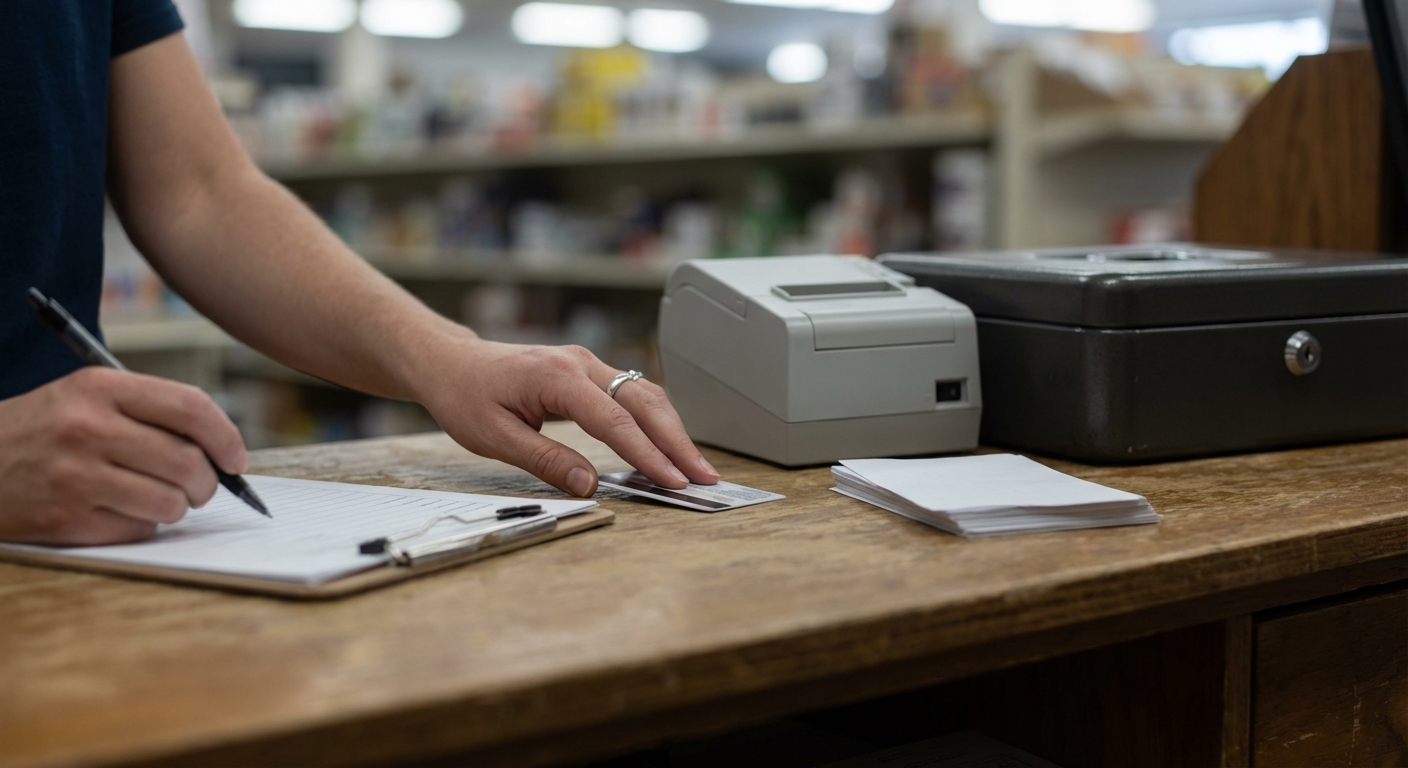
At the counter, the deal isn’t really “done” until your money is locked in and you can prove you transferred the gun through the FFL. The cleanest move is cash exchanged at the shop while the transfer is being processed. If you use a non-cash method, stick to something the FFL is comfortable with and you can verify on the spot, not a “trust me, it’s sent” screenshot.
If the buyer pushes PayPal or Venmo, treat it as a stop sign. Both platforms prohibit firearm transactions, and violations can trigger account limits, frozen funds, or suspension, exactly when you need the money to be accessible.
Zelle has its own trap: it’s intended for people you know and trust, and it offers no purchase protection for goods and services. Once it’s sent, your leverage is basically gone.
Also be skeptical of overpayments, “my cousin will pick it up,” pressure to leave the FFL early, or any request to change the agreed buyer at the last second. Guides on selling a gun to a stranger and reducing liability warn about exactly these “easy money” setups because they’re where sellers get burned.
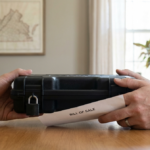
Keep a simple bill of sale or receipt between you and the buyer, plus the seller copy of the background-check results the dealer provides. That combo is what you’ll point to later if questions come up.
Don’t demand, photograph, or copy dealer-retained paperwork, for example the ATF Form 4473 is generally retained by the dealer. Ask the shop what seller-facing documentation they can legally provide, then save that.
The “what happens next” part is policy-dependent, and Colorado-specific delayed or denied handling isn’t uniform in the provided materials. Follow the facilitating FFL’s written policy and confirm the legal steps before anyone moves the firearm.
Post-sale, pull your listings, stop responding to “still available?” messages, and store your records like you’d store a title, scan to a locked folder and keep the paper in a safe.
Takeaway: Save (1) your bill of sale or receipt and (2) whatever seller-facing documentation the FFL can provide, then store a digital scan and the original somewhere secure.
Colorado Sale Checklist in One Page
The safest Colorado sale is the one that’s easy to prove later, run the transfer through an FFL and keep your paper trail. That’s the same theme from the start: the sale may feel informal, but the legal handoff is formal, and your documentation is what keeps it clean if anyone ever asks questions.

The friction is real, syncing schedules, waiting a full 72 hours, and not handing over a firearm until the process is actually complete. The payoff is clean compliance: private transfers generally require an FFL-run background check under C.R.S. § 18-12-112, and delivery must respect the 72 consecutive hour waiting period under C.R.S. § 18-12-115.
- Pick the FFL first and set the meet-up there, not in a parking lot.
- Confirm the transfer type, most private transfers run through the FFL under C.R.S. § 18-12-112.
- Bring what you need, your ID, the firearm, and whatever you agreed to document in Steps 1 to 5.
- Let the FFL run the check, they follow dealer-style requirements, including CBI InstaCheck/NICS (C.R.S. § 18-12-112; see also C.R.S. § 24-33.5-424).
- Start the clock and don’t complete delivery until 72 consecutive hours have passed (C.R.S. § 18-12-115).
- Keep proof, receipts and any transfer paperwork, so the sale is easy to verify later.
If you want a clean next step, get a quick valuation and offer from Cash My Guns.