


The sale itself usually isn’t what gets Michigan sellers in trouble. It’s the small mistakes, handing it to the wrong buyer, crossing state lines the wrong way, or having sloppy records that turn a simple deal into a real liability later.
You’re trying to get a fair price, move the firearm quickly, and not create a “wait, did I do that right?” problem months from now.
A private sale, meaning a firearm transfer between two non-FFL individuals rather than buying from a dealer, feels simpler because there’s no counter, no store hours, and less friction. The tradeoff is that more of the responsibility lands on you. A Federal Firearms Licensee (FFL) is federally licensed to handle sales and transfers and run the paperwork and background check process, which adds structure and a clearer record, but also adds time and convenience costs. This guide keeps you in the practical middle: follow a clean flow before you list the gun, verify what’s legal for your exact situation, set a realistic price, pick a selling channel, complete the transfer and required paperwork, then handle payment and keep the right records.
The safest starting point for current Michigan requirements is the Michigan State Police Firearms hub: https://www.michigan.gov/msp/services/firearms, and when you need a form, use the current PDFs linked on Michigan.gov rather than re-hosted copies because form numbers and requirements change.
You’ll walk away able to complete a compliant Michigan sale confidently, without surprises. The rest of the article follows the same order you’d use in real life: make sure the transfer is legal first, and then worry about price, where to sell, and the handoff details.
Step 1
If you skip the legality check, everything else is noise. The lowest-risk sale is the one you’re legally allowed to make to a buyer who’s legally allowed to receive the firearm, before money changes hands, before a meetup, and definitely before you post a listing (see this guide to selling a gun legally).

Here’s the seller-side reality check: you own the transfer. If you sell when you know, or reasonably should know, the buyer is a prohibited person, that’s where liability spikes. Same idea if you drift into an unlawful transfer across state lines, private deals are not a free-for-all just because you found a buyer.
- Confirm the buyer is a Michigan resident if you’re doing a Michigan private transfer, residency is a baseline guardrail for staying in the right lane on state rules.
- Check age minimums using MSP’s Firearms FAQ: Michigan State Police says the minimum is 18 to buy a pistol in a private sale, 21 to buy a pistol from an FFL (federal rule), and 18 to buy a rifle or shotgun. Use the current MSP FAQ here: https://www.michigan.gov/msp/services/ccw/firearms
- Screen for prohibited-person red flags (you don’t need a courtroom definition to act responsibly). If the buyer hints they can’t pass a check, asks you to “skip paperwork,” or wants it in someone else’s name, walk away.
- Measure overall length to classify the firearm under Michigan’s pistol rules. Michigan defines a “pistol” as 26 inches or less overall length (MCL 28.421). Overall length drives classification, including AR-style firearms if they measure 26 inches or less, so measure early to avoid following the wrong Michigan process.
- Account for Michigan’s universal background check law (effective February 13, 2024). Michigan expanded background-check and purchase-approval requirements for most firearm sales and transfers effective Feb 13, 2024 (2023 PA 17 and 2023 PA 18, HB 4149 and HB 4150). Older Michigan advice online is often outdated, so confirm current MSP guidance and exemptions before you commit to a plan.
- Verify what “purchase approval” applies to your situation, because the state’s requirements can hinge on the buyer’s status, your firearm’s classification (Michigan “pistol” vs not), and whether an exemption applies.
If you’re not sure, don’t guess. Start with current Michigan State Police guidance (and any listed exemptions) and, when you want certainty, run the transfer through an FFL so the background-check step is handled in a clearly documented way (and review Michigan private-sale rules and selling steps).
Step 2
Once you know you can legally make the transfer, pricing is where most sellers either leave money on the table or waste time chasing a number the market won’t support.
The “right price” is what comparable guns actually close at, not what someone paid in 2019 or what a random listing is hoping to get. Completed sales and auction results beat wishful thinking every time, and they also keep you from getting lowballed because you walked in without a solid baseline for what your gun is worth.
Pricing gets slippery because tiny details swing value, and the market moves. A different generation, barrel length, caliber, or a small change in configuration can put your gun in a totally different comp bucket, and condition details like finish wear or a rough bore can matter more than the brand name on the slide.
- Identify the exact variant, make/model, generation, barrel length, caliber, and any SKU-like configuration details (factory sights, capacity, frame size, “MOS/optic-ready,” etc.). Your comps are only useful if they match what you’re actually selling.
- Assess condition with concrete cues buyers pay for, finish wear (especially on edges and high spots), bore condition (clean rifling vs pitting or frosting), matching numbers where relevant, and the presence of aftermarket parts. Condition is a primary valuation driver, so be honest, and be consistent.
- Pull market comps from completed sales and auctions first, then cross-check against current dealer listings. Dealer tags show where the market is trying to go, but closed sales show where it actually landed.
- Adjust for your local market and timing. Regional demand and seasonality shift offers, so the same gun can move faster, or slower, depending on what people near you are shopping for right now.
- Account for accessories and mods realistically. Accessories rarely return full cost, and cosmetic or irreversible mods tend to narrow your buyer pool. Optics and weapon lights usually retain value better than custom coatings, frame work, or permanent cuts, but they still price like used gear.
- Set your numbers, one “list price” that leaves room to negotiate, and one firm “walk-away” minimum you won’t cross.
A Glock 19 Gen 5 and a Glock 19 Gen 3 aren’t interchangeable comps, even if they look close in photos. If you’re figuring out how to sell a gun in Michigan without leaving money on the table, matching generation and features matters more than your original receipt.
An AR-15 with tasteful, reversible upgrades (a known optic and a quality light) typically prices cleaner than one with aggressive cosmetic work or permanent modifications, because more buyers want “factory-ish” and fewer want your exact taste.
A Ruger 10/22 or Remington 870 in honest, clean condition sells on reliability and upkeep. A rough bore, heavy rust, or missing-matching parts pushes buyers into “project gun” pricing fast.
List it at a number you can defend with comps, then pick a walk-away number you’ll stick to. Expect negotiation, but don’t negotiate against yourself—supply and demand already did the hard part.
Step 3
Your price and your tolerance for hassle usually point you toward the right selling channel. Where you sell determines how much risk you personally carry. The fastest path to cash usually means a lower payout, but fewer weird buyer situations. The highest payout usually means you’re doing more screening, more coordination, and more liability management.
If your priority is a clean, low-friction transaction, a local FFL is the simplest risk-reducer. You hand the gun across a counter, they control the transfer process, and you’re not stuck judging a stranger’s story in a parking lot.
Tradeoff: you’ll usually take a lower offer because the dealer has to resell it at retail and carry overhead. The practical upside is legal clarity, FFL-facilitated transfers typically involve ATF Form 4473 (the federal transfer form) and a NICS background check, and ATF specifically encourages FFLs to help private parties complete lawful transfers (ATF Procedure 2020-2).
Federal law also allows a dealer to skip the background check when the buyer presents a qualifying state permit, which is one reason policies can vary shop to shop.
Online marketplaces and buyout services expand your buyer pool beyond your zip code, but the “real work” is shipping and coordinating with a receiving FFL. The clean version is simple: you ship or deliver the firearm to the buyer’s chosen FFL, and the FFL transfers it to the buyer on a 4473 with the appropriate checks.
For example, some services operate as federally licensed firearms dealers (FFLs), which is why selling guns online often routes through licensed dealers instead of direct person-to-person handoffs.
USPS baseline: a non-FFL can mail an unloaded rifle or shotgun to an FFL when lawful, but non-FFLs generally may not mail handguns. Also, don’t mark the outside of the package in a way that indicates it contains a firearm.
Private sales can pay more, but the “buyer management” shows up fast: out-of-state interest, evasive answers, pressure to skip lawful steps, or unsafe meetups.
Michigan sources state that firearm sales must include a background check of the buyer, so treating screening and documentation as non-negotiable is part of keeping the sale boring.
One hard line: interstate private transfers between two non-FFLs are generally unlawful. 18 U.S.C. § 922(a)(5) restricts a seller from transferring to a known (or reasonably believed) nonresident, and 18 U.S.C. § 922(a)(3) restricts a buyer from bringing home an out-of-state acquisition. The compliant route is shipment or transfer to a receiving FFL for the buyer’s transfer.
- Set expectations early: state that you’ll only proceed with a lawful transfer process, including an FFL transfer if anything about residency or eligibility is unclear.
- Ask straightforward questions: confirm in-state residency (when relevant) and whether they’re comfortable completing the required steps, and end the conversation if they dodge basics.
- Watch for behavior red flags: rushing, refusing to show up at an FFL, asking you to “just say it’s a gift,” or pushing you to skip paperwork.
- Choose a safe meet location: prefer an FFL counter or another controlled public place in daylight, not your home and not a secluded lot.
- Document your decision-making: save messages and keep your communications consistent, clear, and professional.
If you’re unsure, or the buyer is out of state, default to an FFL transfer. It’s a straightforward way to keep the sale legal, traceable, and low-drama.
Step 4
Once you’ve picked the channel, the transfer itself is where you want to be boring and precise. A well-documented, correctly routed transfer is your best protection. The gun itself is rarely the problem later, the paperwork trail is. When a firearm turns up in a theft report, a domestic call, or an evidence locker, the cleanest way to show you transferred it legally is having the right Michigan process followed and your copy of the right Michigan form.
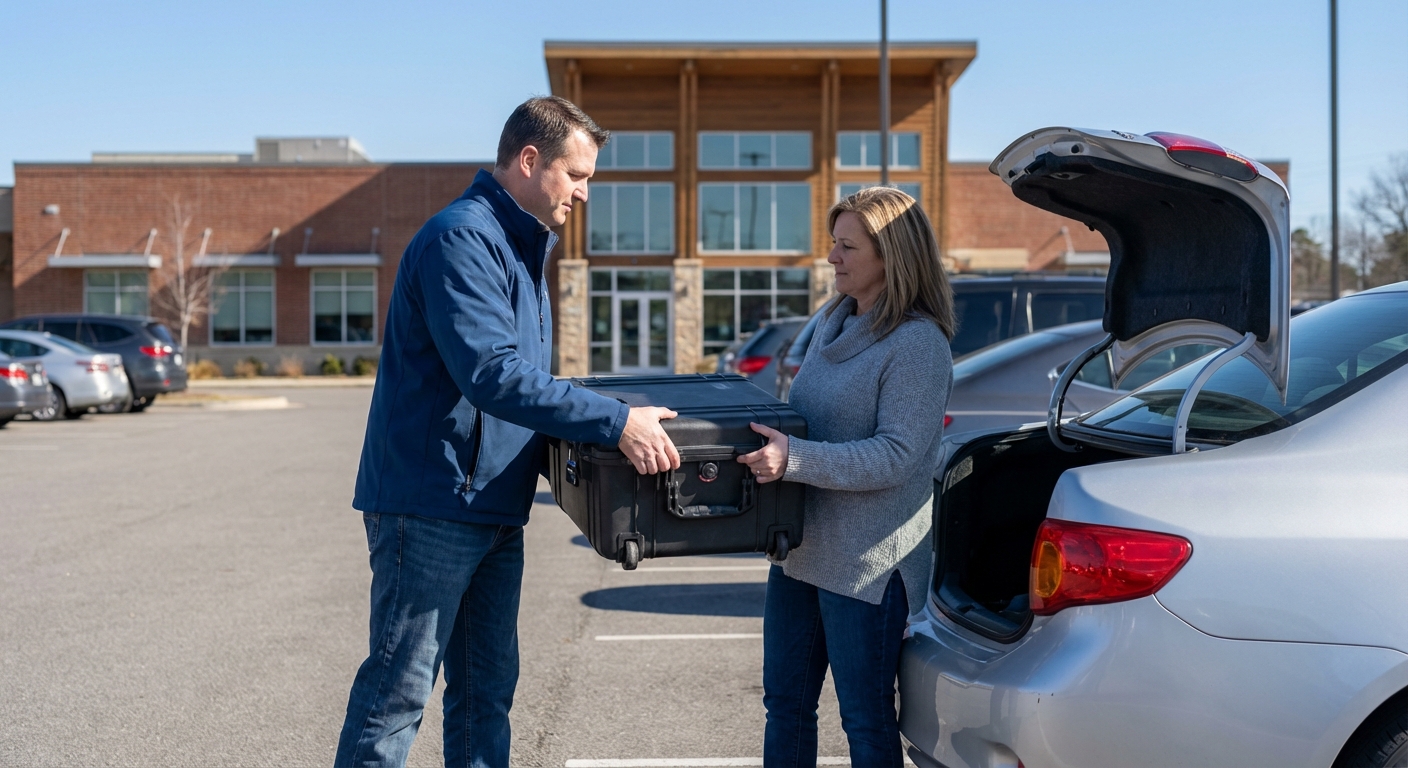
Most transfer-day mistakes come from three things: assuming “Michigan resident” without checking, ignoring a driver’s license address mismatch, and using an outdated form or old instructions. Fix those, and the rest is just execution.
- Confirm what you’re transferring, pistol versus not, because pistols and non-pistols route differently under Michigan rules.
- Decide whether an FFL is involved for this handoff, because using an FFL for the transfer brings federal identity and residency documentation requirements into play.
- Inspect the buyer’s government photo ID and confirm Michigan residency. If an FFL is involved, the buyer must show a document that establishes their “State of residence” as defined in 27 CFR 478.11, and the dealer must record identification information for the Form 4473 transaction record under 27 CFR 478.124.
- Verify the “current address” issue before you waste anyone’s time. For 4473 purposes, a driver’s license that does not show the buyer’s current residence address is not sufficient by itself, the buyer needs acceptable documentation showing the current address so the dealer can properly complete the record (27 CFR 478.124; 27 CFR 478.11).
- Check pistol licensing status. Michigan generally requires a License to Purchase for pistol acquisition unless an exemption applies, and a Michigan CPL holder is exempt from needing a separate License to Purchase under MCL 28.422.
- Use the current Michigan State Police pistol record form for pistols, RI-060 “Pistol Sales Record,” and pull it directly from MSP so you are not working off an old scan: https://www.michigan.gov/msp/-/media/Project/Websites/msp/forms/ri-060.pdf
- Complete the form(s) legibly, in full, and keep your seller copy. Don’t “fix it later” with cross-outs and side notes.
- Handle the firearm safely during the meetup: keep it unloaded, keep the action open, keep it cased until you’re ready, and don’t pass it around for handling until you’ve agreed on the process and location rules.
If anything doesn’t line up, name spelling, ID validity, Michigan residency, or the current address, pause the sale. Routing the handoff through an FFL is a clean way to get the identity and residency pieces nailed down correctly.
Step 5
The transfer process and the money side are tied together: the payment should be just as clean and defensible as the paperwork. If payment or documentation gets sloppy, that’s when sellers get burned. Most regrets aren’t about leaving $50 on the table, they’re about handing over a firearm and then getting hit with a reversal, a counterfeit payment, or a “that’s not what we agreed to” argument two weeks later.
Cash is still the cleanest option because it’s final, but treat it like a process, not a vibe. Meet in a safe, well lit public place, count the bills slowly, and don’t let anyone rush you. If you’re doing a larger amount, bring a counterfeit detection pen or use a place with a camera and a counter where you can verify bills without drama.
Cashier’s checks and money orders are where people get careless. Only accept them if you can verify them before the firearm changes hands, ideally at the issuing bank or by confirming issuance in a way you trust. If the buyer can’t wait for verification, they can pay a different way.
Avoid risky digital payments for firearm transactions. PayPal and Venmo prohibit firearms related transactions, violations can trigger account restriction or closure and funds being frozen. Even beyond policy, disputes and chargebacks can reverse funds or place them on hold, which is exactly the kind of after-the-fact headache you’re trying to avoid.
A simple bill of sale, where lawful, gives you a written record of who sold what to whom, when, for how much, and on what as-is terms. That record shuts down most “he said, she said” disputes fast. For Michigan pistol paperwork, sellers commonly retain their copy as a record, and you should generally keep your copies organized, but don’t guess on long gun record requirements. Check current Michigan State Police guidance for the latest.
Until the transfer is complete, store the firearm like you still own the risk, because you do. Michigan’s secure-storage and child-access prevention rule took effect Feb 13, 2024 and is codified at MCL 750.556d. If you know or reasonably should know a minor is likely present and you leave a firearm unattended, it must be unloaded and locked, using a locking device, a locked box or container, or a locked room.
- Confirm the exact payment method and don’t accept anything you can’t verify immediately.
- Meet in a safe public spot and count cash carefully, no rushing.
- Verify any cashier’s check or money order before the firearm changes hands.
- Write a bill of sale (where lawful) and save your copy with the buyer’s basic info and the firearm details.
- Store the firearm unloaded and locked until the transfer is fully complete (MCL 750.556d).
- Remove your listings and keep relevant messages, receipts, and transfer paperwork together.
- Separate accessories and ammo handling from the firearm transfer if they’re being sold or moved differently.
Choose payment methods you can verify immediately, and keep records like you’ll need them later—especially if you’re thinking about private-sale liability and documentation.
Conclusion
You can sell a gun in Michigan legally, without drama, if you handle it in a simple order.
Start where the liability starts, eligibility first, including the 26-inch classification decision point, and keep your radar on for rule changes. Michigan expanded background-check requirements through HB 4149/HB 4150 (2023 PA 17/18) effective Feb 13, 2024, so advice written before that date is often outdated, verify the current Michigan State Police guidance before you list anything.
Price it like a dealer would, using real comps that match your exact condition and variant, not a best-case listing. Then pick your selling channel like it’s risk management, and if the buyer is out of state, route the transfer through an FFL, it’s the safest default when anything feels uncertain.
On transfer day, the little details are what protect you later: use current MSP forms (including RI-060 when it’s a pistol), take the “current address” issue seriously, and keep your paperwork legible and organized. Stay disciplined on payment, documentation, and secure storage until the transfer is complete.
If you want maximum clarity, use an FFL-routed option, including a compliant service like Cash My Guns, which operates under an FFL, and if your situation is weird or edge-case, pause and get help from an FFL or an attorney.