

You’ve got a gun you’re ready to sell in Florida, but the part that keeps nagging at you is how easy it is to make one small mistake, sell to the wrong person, skip a paper trail, or pick a sketchy meetup spot, and turn a clean sale into a long, expensive headache.
Florida is straightforward in a couple key ways: the state doesn’t require universal background checks for every private, person-to-person sale, and Florida doesn’t run a registration system for ordinary privately owned firearms. The flip side is that when there’s no registry to lean on, your own documentation, and your own judgment, matter a lot. Also keep expectations realistic on price, what you’ll get depends on the model, condition, and what the current market is doing.
The real tradeoff is simple: private sales can be quicker and feel less formal, but a dealer, also called an FFL transfer, adds structure and protection because the dealer contacts FDLE for an approval number before completing the transfer and records it.
You’ll walk away with a Florida-specific, step-by-step checklist that keeps the sale safe, keeps your paperwork clean, and helps you choose a selling channel based on speed versus top dollar.
This guide is informational only, if you need legal advice or answers to specific legal questions, talk to a Florida attorney.
Step 1
Selling a gun in Florida is usually legal and straightforward once you match the process to the type of transfer, and you avoid a few deal-breaking red flags. Most problems come from treating a casual sale like there are no rules.
Your first decision is which lane you’re in. A private-party sale, meaning a direct sale between unlicensed Florida residents, is handled differently than a transfer through a Federal Firearms Licensee (FFL), meaning a gun dealer licensed under federal law to receive and transfer firearms. If you sell through an FFL, the dealer runs the Florida Department of Law Enforcement (FDLE) background check as part of the dealer’s process, see Fla. Stat. § 790.065(1) and FDLE Firearm Purchase Program guidance. Private in-state sales are not universally routed through that FDLE check (see this Florida-specific guide to selling rules and private sale vs FFL transfers).
The biggest legal risk for you as the seller is transferring to the wrong person. Federal law makes it a crime to sell or otherwise transfer a firearm if you know or have reasonable cause to believe the buyer is a prohibited person, meaning someone barred from receiving or possessing firearms under federal law (18 U.S.C. § 922(d), tied to the prohibited-status framework in 18 U.S.C. § 922(g)). Practically, “I didn’t ask” is a bad strategy if the buyer is waving obvious red flags.
Age is the next checkpoint. In Florida, an FFL generally cannot sell or transfer any firearm to someone under 21, see Fla. Stat. § 790.065(13). Separately, Florida also prohibits selling, leasing, loaning, giving, or otherwise transferring a firearm to a minor under 18, see Fla. Stat. § 790.17.
Then there’s timing. A waiting period, meaning a rule that delays delivery after the sale, mainly shows up in retail or dealer transactions, not as a blanket rule for every private transfer. Florida’s dealer waiting-period law is in Fla. Stat. § 790.0655, and it includes common real-world exemptions like buyers with a Florida concealed weapon or firearm license and trade-ins. Some counties also have state-authorized waiting-period ordinances that can change when the buyer can actually pick up.
Finally, be realistic about “local rules.” Florida’s preemption statute is broad, so cities and counties generally cannot invent their own gun-sale regulations (Fla. Stat. § 790.33). The main local wrinkle worth checking is whether a county waiting-period ordinance applies, since that affects delivery timing more than anything else.
- Confirm whether this is a private-party sale or an FFL transfer, and stick to that lane.
- Screen for obvious prohibited-person red flags, because “knows or has reasonable cause to believe” is the standard.
- Verify age-related requirements, under-21 for dealer transfers, and no transfers to minors under 18.
- Check whether a county waiting period could affect pickup timing, especially if an FFL is involved (and remember that selling a gun without a background check may still trigger an FFL transfer in some situations).
Step 2
Once you’ve got the right lane picked and you know who you can legally sell to, the rest of the process is mostly about clarity and avoiding preventable mix-ups. Accuracy is your best protection. The fastest private-party sale (person-to-person, same state) usually goes to the seller who can answer buyer questions instantly, because most disputes start with mismatched expectations, the wrong model variant, missing magazines, or a description that does not match what shows up in person.

“Identify” means nailing the objective details: make or manufacturer, exact model, firearm type (pistol, rifle, shotgun), and the marked caliber or gauge. Then write down the configuration buyers use to confirm they are looking at the right gun, including barrel length, finish, sights or optic setup, stock or grips, how many magazines are included (and their capacity), and whether you have the case plus the original box and manuals. If you need help, use a guide to identifying your gun by make/model and key markings. You are not filing anything with the state here. Florida law does not require a state-issued transfer form, state approval, or routine notification for a private, in-state sale between two Florida residents. This is just clean communication.
Make a simple “records folder” so you can list confidently and prove what you are selling. Gather whatever you have: purchase receipt, box, manuals, accessories, and any service or gunsmith records (and if you’re missing any of that, see how to sell a gun without the box or papers). Take clear, honest photos that match your written description, full left and right views plus close-ups of markings and included items is enough. Record the serial number for your private records, it is typically on the frame or receiver (often visible without disassembly), and it is the quickest way to prevent mix-ups. Serial-number issues are also a hard stop: do not sell or transfer any firearm with an altered or removed serial number, it is prohibited federally under 18 U.S.C. § 922(k) and in Florida under Fla. Stat. § 790.27.
If you are dealing with inherited or estate guns, pause if anything might be an NFA item (like a suppressor or short-barreled rifle). Certain tax-exempt transfers to lawful heirs use ATF Form 5, and transfers outside the estate generally use ATF Form 4.
- Unload and double-check the firearm is clear before handling details/photos.
- Record make/model/caliber and your firearm’s serial number for your private records.
- Photograph the firearm and included accessories honestly and clearly.
- Gather box/papers/receipts and any relevant history (especially for inherited guns).
Step 3
When your description is tight and your condition notes are honest, pricing gets a lot less emotional. The fastest way to set a realistic asking price is to anchor it to recent, condition-matched completed sales, then adjust for what’s actually in your box. Gut-feel pricing is how guns sit for weeks, and “I saw one listed for…” is how people convince themselves their number is normal.
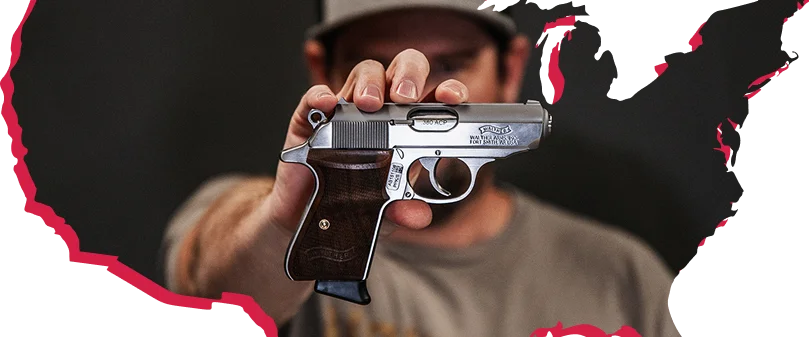
Start with completed sales, not active listings. A completed-auction price is the winning bid that actually closed, which is the closest thing you’ll get to a real market signal without running your own auction. Just don’t let the headline number warp your expectations, buyers usually pay extra on top of the winning bid, including shipping, transfer fees, and marketplace charges.
On GunBroker specifically, the platform’s fees can include state taxes and a service fee, so the price you see on a closed listing is not the buyer’s all-in cost and it’s not what you net after friction.
Keep your comps tight: same model, same generation or variant, and filter completed results by condition (new versus used) so you’re not averaging apples and oranges.
The non-obvious part is being honest about what buyers can’t “fix” cheaply. Finish wear and bore condition move the needle fast because they signal use and maintenance. For collectible or older guns, matching numbers matter, and missing box and papers can knock a listing out of the “collector clean” category. Extras cut both ways: an extra mag often helps, while a random budget optic can make buyers assume corners were cut.
Mods are the biggest pricing trap. A trigger, stippling, ports, or a home-cerakote narrows your buyer pool, and mods rarely return dollar-for-dollar. Price it like a used gun first, then treat upgrades as a bonus only if they’re widely trusted and cleanly installed.
Pricing moves month-to-month with demand, and how supply and demand affects firearm resale prices is usually the reason your “fair” number shifts. Hunting rifles typically get more attention leading into deer season, then soften after tags are filled. Even valuation tools, like Cash My Guns, build offers around make and model plus condition details (finish, bore, matching numbers, aftermarket parts) and they factor in seasonality and regional demand using market data from dealer listings and auctions.
Two quick examples (and it helps to sanity-check against a recent gun market report if you’re unsure your comps still reflect today’s demand):
- A mostly stock Glock 19 with factory parts and two mags is easy to comp and easy to sell. A heavily customized Glock 19 has fewer true comps, so you usually price closer to stock used sales and let the right buyer pay extra if they care.
- A common deer rifle with a basic scope often sells faster in the weeks before season. The same setup can need a lower ask in the off-season to move quickly.
- Pull 5-10 recent completed sales for your exact model/variant.
- Match condition and included extras as closely as you can.
- Adjust up/down for wear, originality, and what’s included.
- Set an asking price and a walk-away number based on your timeline.
Step 4
Once you know what you’re selling and what it’s realistically worth, the next question is where (and how) you want the sale to happen. Your channel choice is your biggest lever in Florida. The “best” way to sell depends on what you value most, speed, top dollar, or minimal hassle, and picking the right lane up front cuts both risk and friction.

Selling to a shop is the fast-cash option: you walk in, they evaluate it, and you’re done. The tradeoff is payout, dealers need margin for overhead and resale risk. If your priority is speed and simplicity, this is the cleanest path.
Consignment usually nets more than an outright buy because you’re waiting for a retail buyer. The catch is time, and you’re trusting the store to market it, answer questions, and close the sale. If you want a higher number without dealing with messages and meetups, consignment is the “hands-off, but patient” route.
Private sales tend to pay better because there’s no dealer markup. The friction is coordination: screening the buyer, managing communication, and making sure the transaction stays within the rules you already checked. You’re trading convenience for price.
Online listings widen your buyer pool fast, but they also force you to think through logistics and documentation early. If the buyer is out of state, you are not planning a meetup, you are planning an FFL (licensed gun dealer) transfer and the fees that come with it.
If you want speed with structure, a remote buying service can work, as long as the transaction is handled through an FFL. For a broader breakdown of selling options and tradeoffs, compare dealer, private, online, and specialty-buyer routes before you commit.
Federal law is the hard stop on most “easy” out-of-state deals. Non-FFLs generally can’t transfer a firearm directly to an out-of-state resident (18 U.S.C. § 922(a)(5)), and buyers generally can’t bring home a firearm they acquired out of state without an FFL transfer (18 U.S.C. § 922(a)(3)). The practical effect is simple: for an interstate sale, the firearm gets transferred through the buyer’s in-state FFL.
Budget for transfer fees before you pick a channel. In Florida, shops commonly charge roughly $25-$50 per firearm or serial number depending on the business. Examples cited:
- One pawnshop describes $25 as typical.
- Shoot Straight increased transfers from $35 to $50 per firearm.
- Top Gun Indoor Range lists $25 per serial number plus a $5 NICS fee (effective Jan 1, 2025).
- Pick your priority: speed, price, or convenience.
- Choose the channel that matches that priority.
- Plan for any FFL transfer and fees, especially for out-of-state buyers.
Step 5
After you pick a channel, the last step is making the handoff boring in the best way. A clean closing protects you. Your goal is a safe handoff, a compliant transfer when needed, and a paper trail you can actually find later if questions ever come up.
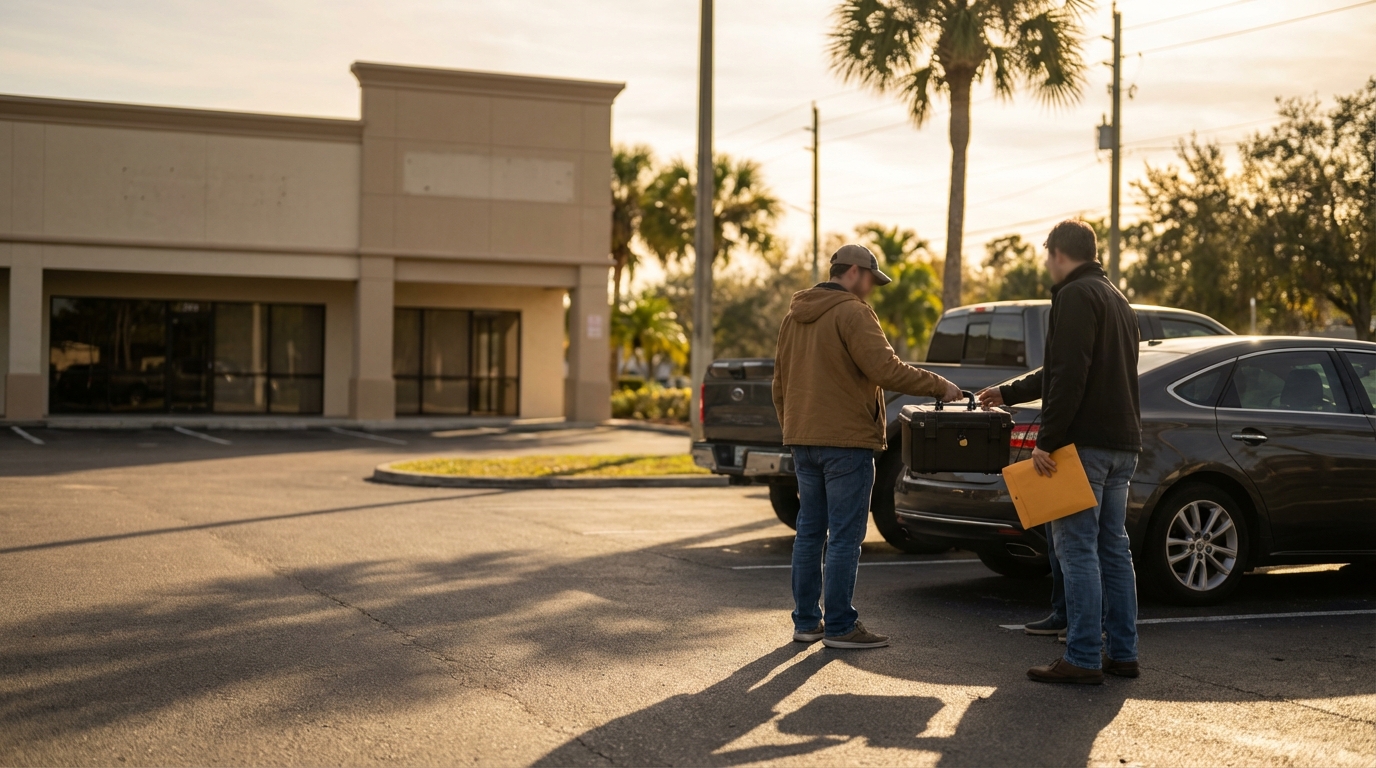
Private sales feel informal, but the meetup is where most headaches start. Pick a controlled, public spot, a gun range, or an FFL counter. Keep the firearm cased and secured until it’s time for an inspection, then keep the muzzle in a safe direction and keep your finger off the trigger. Don’t “test fire” in a parking lot, don’t let a stranger walk off with the gun to “check it out,” and don’t get pressured into rushing because someone “has to go.”
In a private Florida sale, do basic buyer due diligence and liability-reducing steps to the extent possible. Confirm the buyer’s Florida residency and make sure the name and photo on their ID match the person in front of you. Pay attention to red flags like inconsistent stories, refusal to show ID, or pushing you to skip normal steps. If anything feels off, route it through an FFL or walk away.
If the buyer is out of state, don’t ship or hand the firearm directly to a non-FFL. Interstate transfers need to be completed through an FFL. Even for in-state buyers, using an FFL is a clean option anytime either party wants extra certainty.
At a Florida dealer, the buyer fills out ATF Form 4473, the federal firearm transfer form the shop uses to document the sale. The dealer typically runs the background check through the FDLE Firearm Purchase Program, Florida’s NICS Point-of-Contact system, and FDLE returns a status of Approved, Denied, or Delayed.
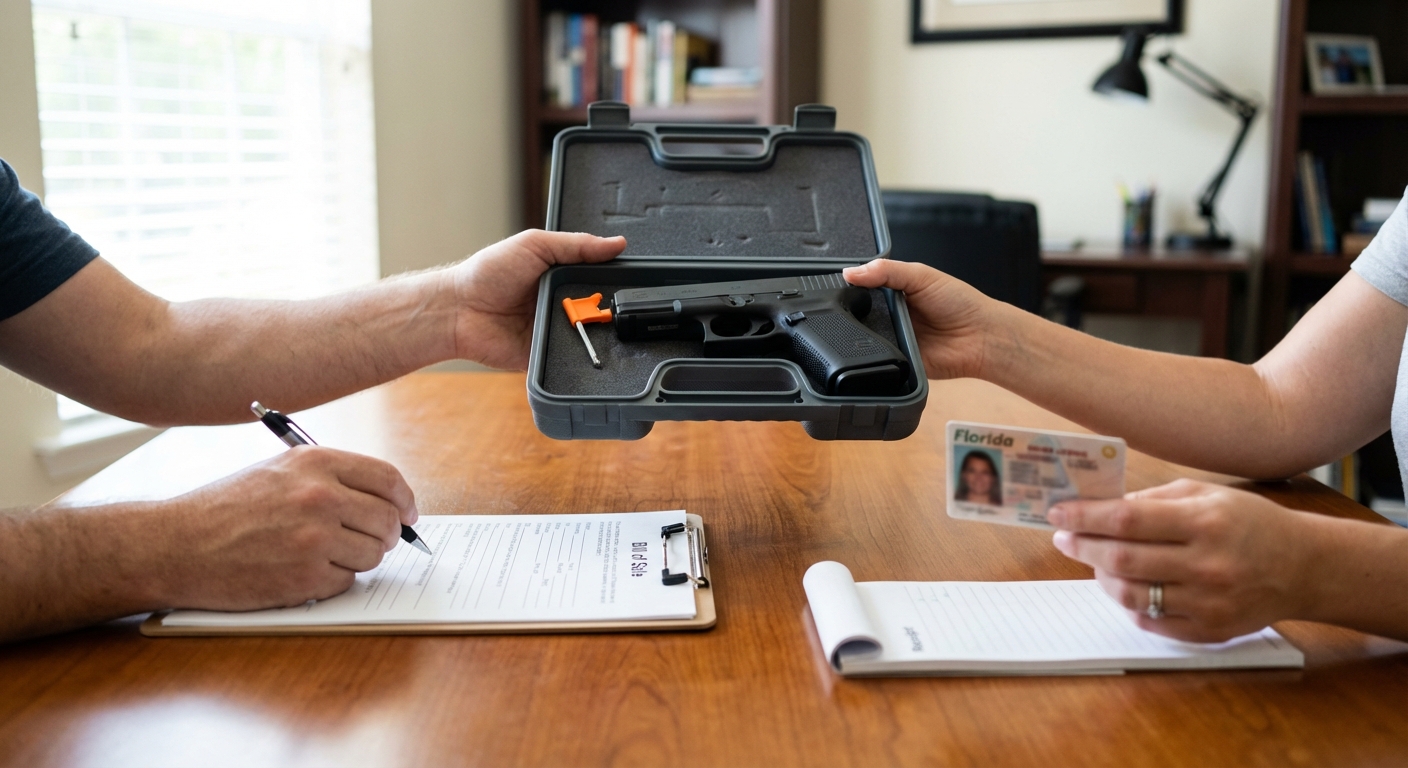
Florida does not have a state-mandated private-sale bill of sale form. A bill of sale is voluntary recordkeeping, but it’s useful because it nails down the date, the parties, and exactly which firearm changed hands. Include the firearm details (make, model, caliber/gauge, serial), date/time, location, price, and both names and signatures, then store it somewhere you’ll actually remember.
Use payment you can verify before the gun changes possession. Cash in a bank lobby is simple. If you use a cashier’s check, meet at the issuing bank and verify it there. Avoid reversible or easily disputed payments, and don’t accept screenshots as “proof” of funds.
- Choose a safe place and time for the inspection/transfer (or use an FFL).
- Confirm the buyer’s identity and Florida residency; trust your gut on red flags.
- Route the transfer through an FFL when required or when it adds peace of mind.
- Write a bill of sale and keep a copy with your firearm details.
- Accept payment in a way you can verify before handing anything over.
After the Sale
What you do right after the handoff is what makes your sale easy to explain later. Your paperwork is your protection. After the sale is when you lock in the one thing that matters if questions come up later: clear records showing you transferred the firearm legally, safely, and on a specific date to a specific person.
Keep a copy or photo of the bill of sale, or your FFL receipt and transfer paperwork if you used a dealer. Save screenshots of the listing, plus any key messages that show the agreed item and the handoff. Pair that with the firearm’s identifying details you already recorded and the transfer date. There’s no magic “Florida retention period” for private sellers, but a retention mindset works, file it securely and plan to keep it for years.
If the buyer calls with a question, your fastest answer is whatever you documented. If they push into a compliance or legality edge case, route them to an FFL. If law enforcement contacts you later, the most helpful thing you can provide is proof of the transfer date and who it was transferred to. One Florida wrinkle: there is no general statewide statute requiring private owners to report lost or stolen firearms within a set time, but local lost or stolen reporting ordinances still exist in practice, including Miami-Dade, Broward, and the City of Miami, so check local rules if a firearm goes missing.
- File your bill of sale/FFL receipt and any related messages or listings.
- Store records securely (digital + physical, if possible).
- Check local lost/stolen reporting rules if a firearm goes missing.
Conclusion
The safest Florida sale is the one where you match the process to the situation, screen for red flags, and keep your documentation easy to pull up later. Do it clean and you skip the headaches.
Step 1: decide if it’s truly a private-party sale or if an FFL is the right call. Step 2: identify the firearm accurately and document what you’re selling. Step 3: price from recent, condition-matched completed sales; Steps 4 and 5: choose a channel that fits your goal and finish the transfer with clear documentation.
Confirm the current rules using FDLE’s Firearm Purchase Program (https://www.fdle.state.fl.us/FPP/Home.aspx), the ATF unlicensed-transfer FAQ (https://www.atf.gov/firearms/qa/may-unlicensed-person-transfer-firearm-under-gca), and Florida Statutes Chapter 790 on Online Sunshine (http://www.leg.state.fl.us/Statutes/index.cfm?App_mode=Display_Statute&URL=0700-0799/0790/0790.html).
Rules change, so verify today’s requirements before you sell, and for inheritance, NFA, or interstate situations, get help from an FFL or an attorney.