

You’ve got a firearm shipment in motion, a sale, a transfer, maybe a repair. Then tracking freezes for three days, or the box lands looking like it took a fall, and suddenly you’re doing the math on a payout that won’t replace what you sent.
You did your part. You packed it, you shipped it, you kept things moving. But when something goes wrong, the process still dumps the headache on you, delays, forms, phone calls, and a check that can feel disconnected from reality.
Here’s the tension: default coverage is cheap because it’s small. UPS standard liability on domestic shipments is capped at $100 per package for loss or damage unless you declare a higher value and pay for it. FedEx also starts most domestic U.S. shipments at a $100 declared value limit unless you declare more and pay for it.
Firearms also aren’t “one price fits all.” Real valuations depend on make and model plus condition details like finish and bore condition, matching numbers, and aftermarket parts, backed by market data from dealer listings and auctions, which is exactly how replacement value ends up far above that default $100.
You’ll leave knowing how to spot the coverage gap, value your shipment like you’d actually replace it, and ship with the documentation that keeps a claim from turning into a dead end.
That starts with getting clear on what “full coverage” even means in shipping terms, because the label can hide some very real limits.
What Full Coverage Really Means
“Full coverage” only works if you understand what you’re actually buying, and what you’re not. Most bad surprises happen because people mix up a liability cap with actual insurance, then assume a bigger number on the label equals broader protection.
Start with the baseline reality: many carriers include limited built-in protection before you pay anything extra.
Declared value is the dollar amount assigned to a shipment that sets the carrier’s maximum liability for loss or damage. The catch is that carrier liability is the carrier’s contractual responsibility for loss or damage, subject to limits, rules, and exclusions. So yes, declaring a higher value raises the cap, but it doesn’t magically expand what the carrier is responsible for under those rules.
That’s why a higher declared value does not guarantee you will receive that full amount in payment.
Shipping insurance is an insurance policy for shipping firearms, often third-party, that can cover loss, theft, or damage in transit based on its terms and exclusions. “Full coverage” for firearm shipping should explicitly include loss, theft, and damage, plus real claims support and clear exclusions you can actually understand.
Exclusions are not a technicality. Even postal insurance is explicitly subject to limitations, and every carrier or insurer has rules that can shrink what gets paid.
Also, coverage tracks dollars, not feelings. Replacement or market value is what gets reimbursed. Sentimental value is real, but it won’t be.
Claims usually live or die on documentation. Proof of value means documentation showing what the shipped firearm was worth, like a receipt, appraisal, invoice, or documented market evidence. You’ll also typically need proof of shipment or tender (receipt, bill of lading) and proof of delivery (POD), which confirms delivery and may note visible damage.
Before you ship, confirm three things in writing: what’s capped (declared value), what’s covered (loss, theft, damage, exclusions), and what you’ll need to prove value and condition.
Coverage Gaps That Break Claims
Those definitions sound abstract until you’re in a claim and the carrier or insurer points to a single missing piece. If your shipment gets lost or damaged, the claim usually doesn’t fail because you “forgot insurance.” It fails because one small gap gives the carrier an easy cap, denial, or delay.
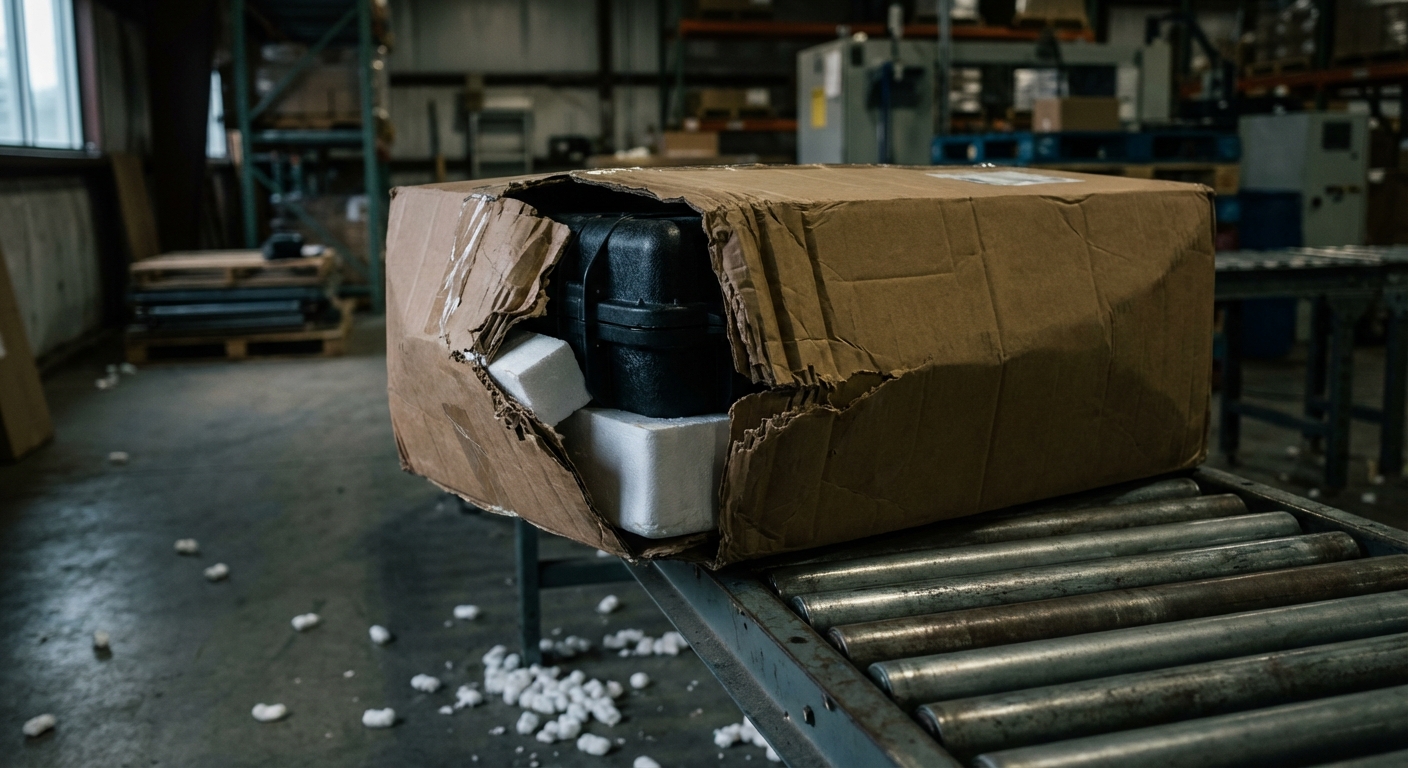
Declared value is the ceiling for reimbursement on loss or damage. If you declare $500 and you can prove the firearm was worth $1,200, the claim still gets capped at $500, even with perfect documentation.
Many carriers automatically include limited protection for lower-value shipments at no additional cost.
USPS Priority Mail Express and Priority Mail include up to $100 of insurance, and USPS coverage is also subject to limitations.
That “free” amount is a rounding error on many firearms, which turns a real loss into a partial reimbursement.
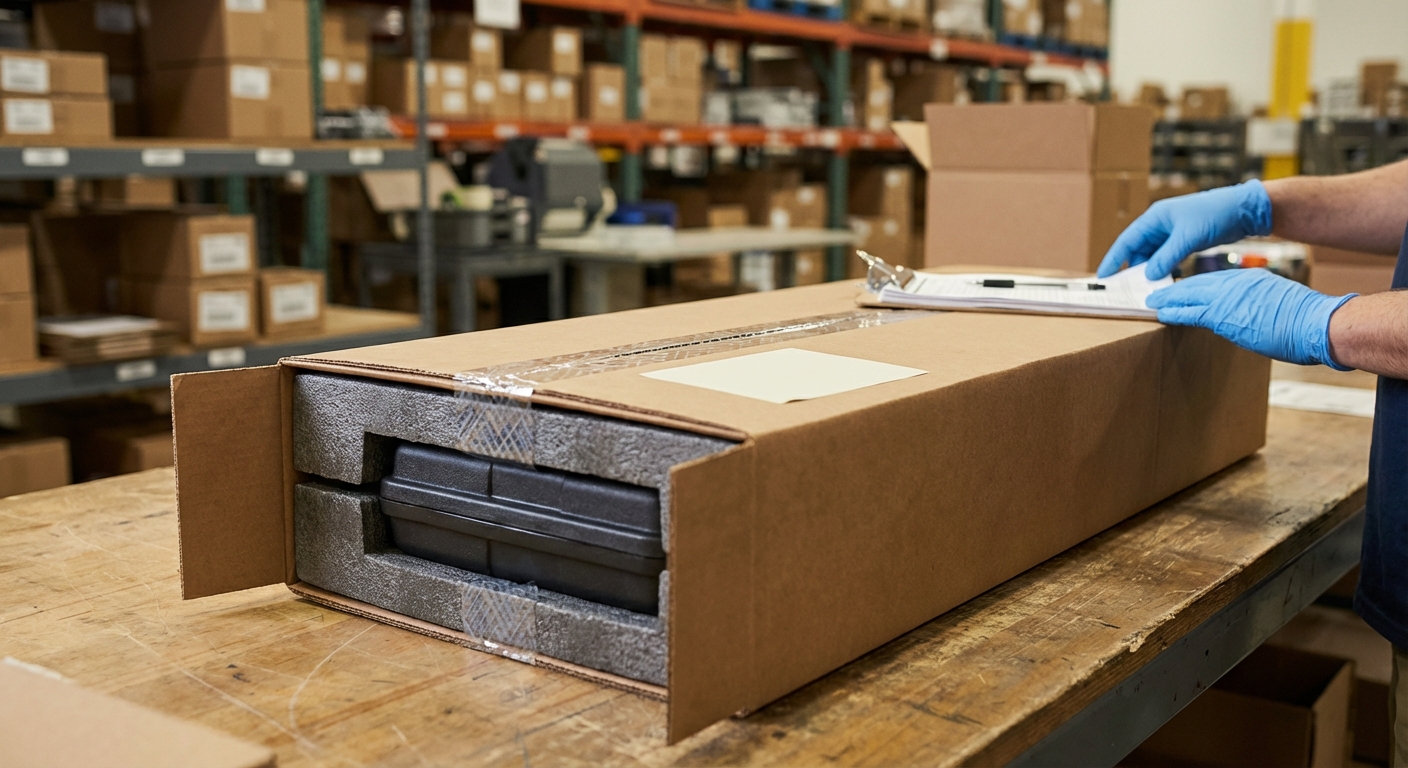
UPS packaging guidance requires a rigid corrugated box strong enough for the shipment’s weight, adequate cushioning, and no movement inside the carton. If the contents can shift, that’s improper packing, and it’s a claim vulnerability—follow proper firearm packaging and shipping steps before you drop it off.
Missing or incomplete claim data is a common reason claims get denied. If your proof of value, shipment details, or damage documentation is thin, expect delays at best and a flat denial at worst.
- Declared value doesn’t match what you’d expect to be reimbursed
- You’re relying on the default $100 coverage for a higher-value firearm
- Used, crushed, or thin box for a heavy item
- Any internal movement when you shake the sealed box
- Single-boxing a high-value shipment with minimal cushioning
- Weak tape, missed seams, or a box that can pop open
- No clear proof of value saved (invoice, appraisal, listing, payment record)
- Photos missing, especially of packaging before drop-off
Fix the gaps before you print the label. Once it’s in the network, the only thing that matters is what you declared, how you packed it, and what you can prove.
How to Insure the Right Value
The quickest way to create a “coverage gap” is to pick a number that doesn’t match what the firearm would actually cost to replace. Even with solid firearm shipping insurance, the insured amount is where most people accidentally undercut themselves. The right number reflects today’s market reality, not what you paid years ago and not what you wish it was worth—use a realistic gun value estimate based on current market data.

The model name gets you into the right neighborhood, but condition decides the address. Finish condition changes value fast, because it’s the first thing a buyer, dealer, or adjuster can see. Bore condition matters just as much, because a clean, sharp bore supports the gun’s function and long-term desirability.
A Glock 19 and a Glock 19 aren’t automatically the same insured value if one has obvious slide wear and the other is clean. Same deal with a Beretta 92 that’s been holster-carried for years versus one that’s been a safe gun. Even “old school” metal-frame guns like a CZ 75 or a Walther PPK swing widely based on finish wear and the bore—check a current Glock 19 worth guide to see how market pricing shifts.
Collectors pay for originality, so matching numbers can raise what you should insure. Aftermarket parts are trickier: an optics cut, trigger work, refinishing, or non-factory furniture might make the gun better for you, but it can lower insurable value if it narrows the buyer pool or removes original parts.
That’s why a Colt Python with correct, matching components is a different insurance conversation than one that’s been refinished. A 1911 with tasteful, documented upgrades can be easier to justify than a heavily modified one with unknown internals. Even a basic Taurus G3C can drift up or down depending on what’s been changed and how cleanly it was done.
To insure gun shipment value credibly, lean on current dealer listings and recent auction results for the same variant, then account for seasonality and regional demand. A scoped bolt gun, a lever-action, or an AR-pattern rifle can all move depending on what’s selling in your area and what’s hot right now (the same applies to modern pistols—see a current Sig Sauer P320 worth guide for a model-specific example).
Keep your number defensible with proof, because lack of supporting documentation is a common reason insurance claim denials happen—especially when you skip professional appraisals for firearm collections.
If you’re also getting a buy quote from a nationwide online purchasing service such as Cash My Guns, treat it as one more market input, then insure based on the best supported, current value for that exact firearm and configuration.
Comparing Coverage Options
Once you’ve got a defensible value in mind, the next decision is where that protection comes from. There isn’t one “best” way to get gun shipping coverage. You’re really choosing between three different “what happens if it’s lost or damaged” stories, and each one trades off simplicity, exclusions, and how predictable the payout feels.
Carrier protection is usually purchased as declared value, and it runs through the carrier’s liability rules, not a blank-check insurance policy. Many carriers include a limited amount automatically for lower declared values, then charge extra fees as value goes up. Those programs are also subject to limitations and exclusions, so “I paid for declared value” and “I’m guaranteed a full payout” are not the same thing.
Third-party coverage can be attractive if you ship often or want a different claims channel than the carrier, but you have to confirm eligibility in writing. Many standard policies limit what they cover through exclusions, and firearms can fall under tighter rules in shipping contexts, so don’t assume a generic policy treats a firearm shipment as eligible cargo.
Some buyers and receiving FFLs run programs that include labels or coverage as part of their intake process, which can shift who is responsible for initiating the claim and what documentation they already have on file. Services like Cash My Guns operate as an online FFL buying program, so the “coverage” conversation often happens inside their shipping workflow rather than as a separate add-on (for example, full insurance coverage for the shipment value).
- Size up the shipment value, is it a $400 shooter or a $3,000 collectible?
- Count how often you ship, once a year favors simplicity, weekly shipping rewards a repeatable system.
- Decide how much claim friction you can tolerate, carrier processes versus an insurer’s process versus an FFL-managed process.
- Verify firearms eligibility and exclusions before you pay, especially with third-party policies.
Coverage cost generally tracks the number you’re trying to protect, higher declared or insured values cost more. The best pick is the one that matches your value at risk and your tolerance for exclusions and paperwork if something goes wrong.
Pre-Ship Checklist That Protects You
Here’s the uncomfortable truth: the best firearm shipping insurance in the world won’t help if you can’t prove what you shipped, how you packed it, and where it went. When you’re rushed, the first things you skip are exactly what the carrier or insurer asks for later. This checklist keeps your shipment lawful, traceable, and defensible.
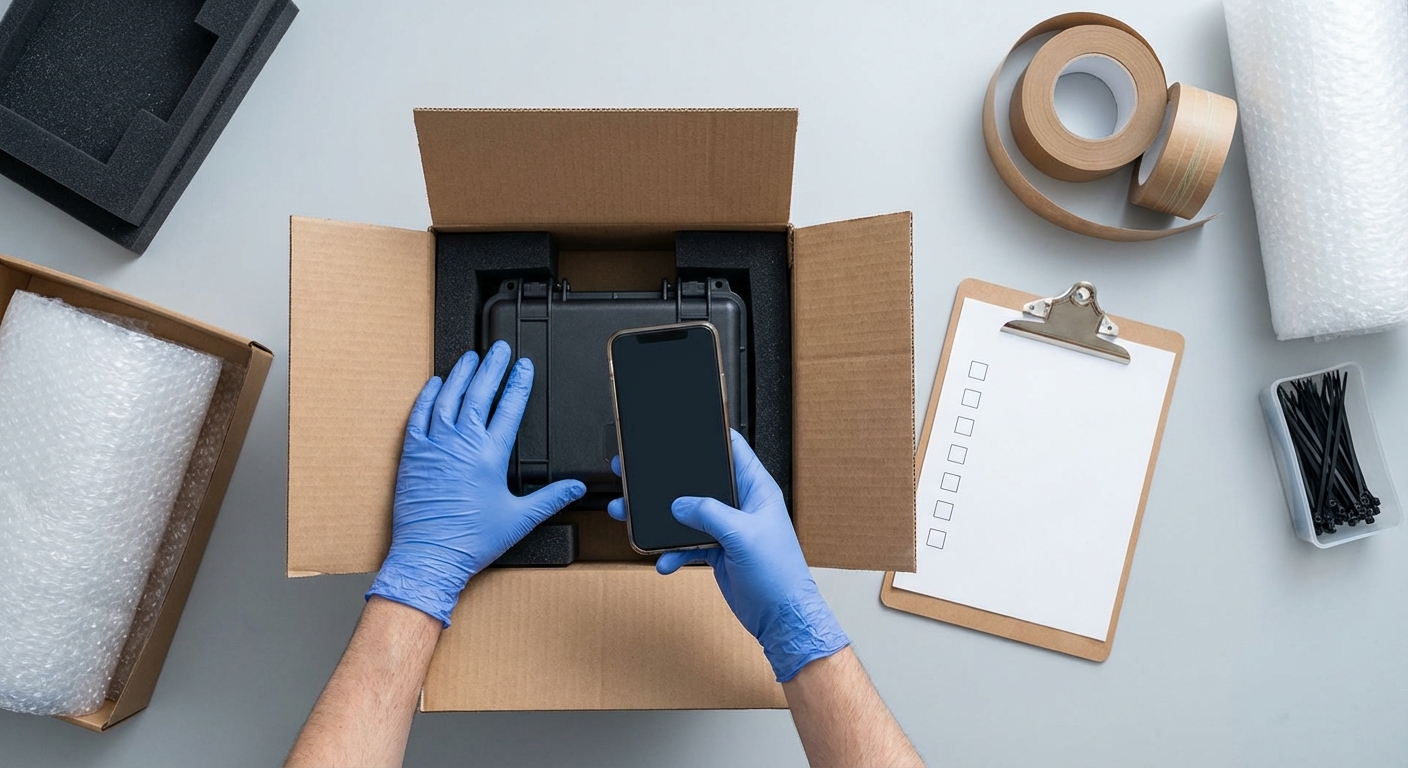
- Confirm the lawful shipping route. A Federal Firearms Licensee (FFL) is a federally licensed firearms dealer or entity authorized to receive and transfer firearms under federal law, and a non-licensee can ship a firearm to an FFL in any state for lawful purposes like sale/consignment, transfer through the FFL, repair, or appraisal, subject to the receiving FFL’s policies. This protects your claim by showing the shipment was allowed in the first place.
Do not ship an interstate transfer directly to a non-licensee. Federal law generally bars a non-licensee from transferring, including shipping, a firearm directly to a non-licensee in a different state. Keeping the transfer routed through the recipient’s in-state FFL avoids an instant denial over an unlawful delivery route. - Match the insured amount to what you can document. Set coverage to the value you can support with your records from the valuation work you already did, because claims pay documents, not stories.
- Record the firearm’s condition before it goes in the box. Clear, well-lit photos of both sides, serial number area, and any existing wear give you a clean “before” baseline.
- Pack to withstand transit, then make it obvious you did. Use a rigid outer carton, immobilize the contents so nothing shifts, and keep the build defensible so the damage story is simple.
- Photograph the packing process, not just the final box. Packaging photos are central to damage claims because carriers and insurers compare packaging condition and adequacy to the damage, and multi-angle photos of the packaging and damage often decide approval versus denial.
- Keep every shipment record in one place. Save the label details, drop-off receipt, tracking number, and any email confirmations so you can reconstruct the chain fast.
- Add signature confirmation. Signature confirmation is a delivery option that records the recipient’s signature to document delivery, and it’s strongly recommended and commonly expected for higher-value shipments. This closes the “it says delivered, but I didn’t get it” gap.
- Control delivery, not just transit. Verify the receiving address, recipient name, and any receiving hours or intake rules, because misdeliveries and refused packages create messy, delay-prone claims.
If something does go wrong, your first few moves matter just as much as how you packed the box. This is the “make it boring” part of the claim: clean evidence, preserved materials, and a timeline that matches the tracking.
- Stop and document immediately. Take photos of the box from all sides, labels included, then photograph the contents and any impact points.
- Preserve everything. Keep the packaging, padding, and damaged item together, since inspections often depend on the original materials.
- Contact the right parties fast. Reach out to the carrier first for the trace or damage process, then your insurer, and notify the receiving FFL if delivery is involved.
- Write down a clean timeline. Drop-off time, tracking scans, delivery attempts, and who you spoke to turns confusion into a provable sequence.
The goal is to make your claim boring: lawful route, documented value, defensible packing, and a paper trail that tells the same story from every angle.
Full Coverage Is Value Protection
Full coverage is really replacement-value protection plus a plan that makes claims work. If either piece is missing, the “insured” part turns into a nasty surprise.
The biggest lever is the default limit, carrier liability commonly starts around $100 unless you declare or purchase more, and that can be nowhere near a firearm’s replacement cost. The catch is the cap: the value you declare generally becomes the ceiling for what you can recover under carrier liability rules, so under-declaring value is a payout limit you can’t outrun later. Your claim is only as strong as your paperwork, which is why the checklist, clear photos, and clean shipment proof matter. And “full coverage” only protects you if it matches real market value, meaning you account for condition details and price movement before the box leaves your hands.
That same “don’t assume” mindset applies to timing, too. State context can change your timing assumptions, so don’t assume your state works like your buddy’s—check state-by-state firearm selling and transfer rules before you ship. For example, Texas has no state statutory waiting period for firearm transfers under Texas Penal Code Chapter 46 (Weapons): https://statutes.capitol.texas.gov/Docs/PE/htm/PE.46.htm.
If you want to avoid the tracking-freeze math from the start, get a professional valuation and choose an insured shipping path, including options like Cash My Guns, before you send anything.