
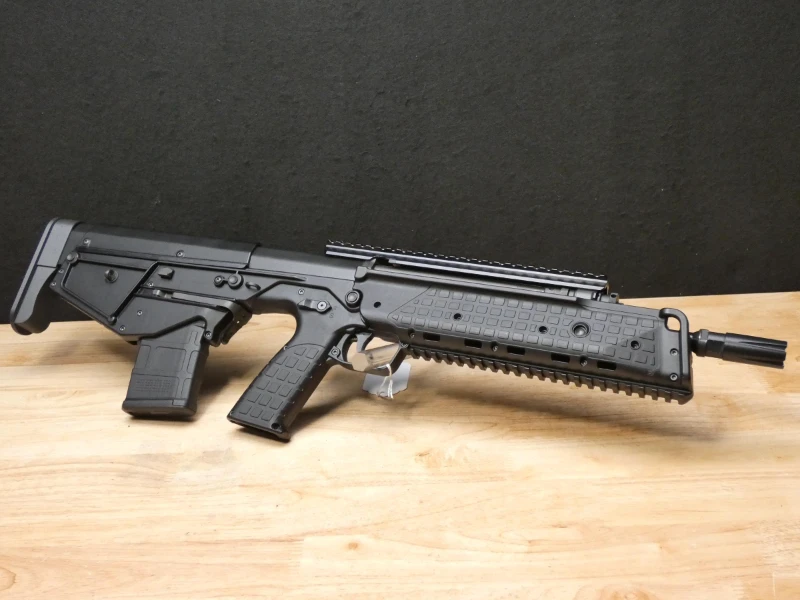
The Kel-Tec RDB stands out in the crowded rifle market with its innovative bullpup design and downward-ejecting mechanism, making it a favorite among ambidextrous shooters and modern firearm enthusiasts. Understanding its true market value is key for any owner looking to sell. The rifle’s worth is influenced by its specific model, overall condition, and the prevailing market demand. This guide provides a detailed breakdown of the factors that determine the cash value of your Kel-Tec RDB.
What Determines Your Kel-Tec RDB’s Worth
The value of a Kel-Tec RDB is primarily determined by its specific model, mechanical condition, and cosmetic appearance. While the manufacturer’s suggested retail price for a standard RDB17 is $750, the average new price often settles around $655. In the used market, a well-maintained RDB averages approximately $567. However, this figure can fluctuate significantly based on demand and configuration, with some used examples listed as high as $1,224.99. Factors such as regional legality, included accessories, and the rifle’s documented history also play a crucial role in its final appraisal.
2026 Price Breakdown by Generation
RDB17 (Standard Model)
While the Kel-Tec RDB series does not follow a traditional “generation” release schedule, its value is instead driven by specific model variations. The RDB17 is the foundational model, featuring a 17-inch barrel and representing the most common configuration on the market. New, this model typically represents the lower end of the price spectrum, with an average street price around $655 and retail listings often starting near $610. Its widespread availability makes it a benchmark for the RDB platform’s value, with prices heavily influenced by condition and local market saturation.
In the used market, the RDB17’s value holds relatively well, averaging around $568 for a rifle in good working order. Because potential buyers are more concerned with reliability and observable wear than a specific round count, a well-cared-for example will command a price close to this average. Pricing for a used RDB17 is less about its age and more about its functional integrity and the cosmetic condition of its polymer body and metal components, making it an accessible entry into the bullpup market for many shooters.
RDB Defender
The Kel-Tec RDB Defender model commands a higher price point due to its specialized features. It typically includes a shorter barrel and an adjustable stock, making it a more compact and versatile package. These enhancements position the Defender as a premium variant within the RDB lineup, with new models starting at a higher baseline price of around $727. This price difference reflects the added utility and different target audience for this carbine, which appeals to those seeking a more maneuverable platform for defensive or tactical applications, thus driving its value above the standard RDB17.
On the secondary market, the RDB Defender maintains its value premium over the standard model. Its more specialized nature means it appears less frequently for sale, creating stronger demand among buyers specifically seeking its compact features. While general market depreciation applies, a used Defender in excellent condition will fetch a higher price than a standard RDB of similar condition. The key value drivers remain its functional reliability and minimal cosmetic wear, ensuring it remains a sought-after variant for those prioritizing a compact bullpup design.
RDB-C (Compliant Model)
The RDB-C is a factory-compliant model designed specifically for markets with strict firearm regulations, most notably California. This variant is configured as a “featureless” rifle, lacking a pistol grip and flash suppressor to comply with state laws. This built-in compliance makes it highly valuable within its intended market, as it saves buyers the cost and complexity of converting a standard model. While its unique design may be less appealing in unrestricted states, its specialized nature ensures it holds a strong and specific market value in regions where it is one of the few legal bullpup options available.
The value of an RDB-C is intrinsically tied to regional laws. In California or New York, where a compliant model is necessary, its price can be on par with or even exceed that of a standard RDB17 in other states. Conversely, attempting to sell an RDB-C in a state without such restrictions may result in a lower offer, as most buyers prefer the standard ergonomics. Therefore, the rifle’s worth is less about its features in a vacuum and more about the legal landscape of the location where it is being sold.
RDB-S / Survival
The RDB-S, also known as the RDB Survival, is another specialized variant that influences the platform’s value spectrum. This model is often characterized by features that prioritize portability and light weight, such as a different stock configuration and sights, making it appeal to the survivalist and backpacking communities. Its unique design and targeted purpose mean its value is assessed differently than the standard tactical models. New prices for these variants can fluctuate based on availability and demand within their niche market, but they generally align with the upper-middle range of the RDB family’s pricing structure.
When sold used, the RDB-S holds its value well among buyers who specifically seek its unique attributes. Its appeal is less about general range use and more about its role as a compact, stowable carbine. A seller with an RDB-S will find the most success by marketing it toward this specific audience. The condition remains paramount, but the rifle’s specialized nature ensures that it occupies a distinct and often stable pricing tier, separate from the more common RDB17 and Defender models, with values driven by its unique configuration and purpose-built design.
How Modifications Affect Value
The secondary market for the Kel-Tec RDB has not established a clear consensus on which specific modifications consistently add or detract from the rifle’s resale value. Aftermarket triggers, handguards, or optics may appeal to some buyers but not others, making their impact on price highly subjective. Generally, reversible modifications that can be sold with the original parts included are safest, as they allow the new owner to choose their preferred configuration. Permanent alterations, unless professionally executed to address a known shortcoming, rarely add dollar-for-dollar value and can sometimes limit the pool of potential buyers.
One area where modifications have a definitive and critical impact is legality. The standard Kel-Tec RDB is classified as a long gun and is not an NFA item because it is manufactured with a barrel of 16 inches or more and an overall length exceeding 26 inches. Any modification that reduces the overall length to under this 26-inch federal minimum, such as installing a very short barrel or a different stock, could reclassify the firearm as a Short-Barreled Rifle (SBR). This would place it under NFA regulations, drastically altering its legal status, marketability, and value.
Regional Price Variations in 2026
The value of a Kel-Tec RDB can vary significantly based on state and local firearm regulations. In states with strict laws, such as California, a standard RDB is not legal for sale. However, Kel-Tec produces a specific “featureless” compliant model, the RDB-C, which lacks a pistol grip and flash suppressor. This model holds a special value in California because it is one of the few bullpup rifles legally available to residents. As a result, an RDB-C may command a higher price within California than it would in a less restrictive state where buyers prefer the standard configuration.
Similarly, in states like New York, specific compliance work is often necessary. To be considered legal, a semi-automatic rifle like the RDB may require its muzzle device to be permanently fixed, typically by pinning and welding. A rifle that has already undergone this professional conversion holds more value to a New York buyer than a standard model that would require additional gunsmithing and expense. Therefore, the rifle’s configuration relative to local laws is a primary driver of its regional market price, creating distinct value pockets across the country for compliant models.
Online vs Local Sales
Selling your Kel-Tec RDB online opens up a nationwide market, potentially leading to a faster sale and a higher selling price due to increased competition among buyers. However, this method involves logistical complexities. Federal law prohibits the direct transfer of firearms between unlicensed individuals residing in different states. To complete an online sale, the seller must ship the rifle to a Federal Firearms Licensee (FFL) in the buyer’s state. The FFL then conducts the background check and legally transfers the firearm, a process that adds shipping costs and transfer fees for the buyer.
Local sales, whether to a private individual or a licensed dealer, offer simplicity and immediacy. A face-to-face private sale (where legal) is often the quickest way to receive the full asking price without incurring extra fees. Selling to a local gun dealer is even more straightforward, providing instant cash and eliminating any personal liability. However, this convenience comes at a cost. Dealers typically offer between 50% and 65% of the firearm’s used retail value to account for their overhead and profit margin, resulting in a lower payout for the seller.
When choosing between these options, you must weigh the potential for a higher price against the convenience and security of a local transaction. An online sale requires careful adherence to legal shipping protocols and finding a trustworthy buyer. A local sale is faster but may yield a lower net profit, especially when selling to a dealer. Your decision should be based on your comfort level with federal shipping regulations, your desired selling speed, and your ultimate financial goal for the transaction.
The FFL Buying Advantage
Selling your Kel-Tec RDB directly to a Federal Firearms Licensee (FFL) offers a secure and legally sound transaction, which is a significant advantage for many sellers. When you sell to an FFL, the transfer of ownership is immediate and officially recorded, absolving you of any future liability associated with the firearm. This eliminates the risks and responsibilities of verifying a private buyer’s eligibility and navigating the complexities of state and federal transfer laws. For sellers who prioritize peace of mind and legal certainty, the FFL route is the most straightforward and risk-free option available.
The trade-off for this convenience is the price offered. A gun dealer must factor in business overhead, the time the rifle may sit in inventory, and their own profit margin. As a result, dealers will typically offer between 50% and 65% of the firearm’s estimated used retail value. For a highly desirable and quick-to-resell firearm like a popular RDB model, this offer might increase to as much as 70%. While this is less than you might get from a private sale, it represents immediate, guaranteed cash without the hassle or potential risks of a private transaction.
What Increases Your Offer
To maximize the offer for your Kel-Tec RDB, presenting it professionally is paramount. This starts with excellent photography for any online listing. Use a clean, neutral background and ensure the rifle is well-lit with soft, even light to avoid harsh shadows. Capture high-resolution images from all angles—top, bottom, and both sides—and include close-ups of markings, the bore, and any unique features. Honestly photographing any cosmetic imperfections builds trust with potential buyers and prevents disputes later, leading to a smoother and more profitable transaction.
While the market lacks a clear consensus on the value of original parts or the penalty for incompleteness, a full package is always more appealing. Including the original box, manual, and any factory-included accessories can differentiate your listing and justify a higher price. Furthermore, a high round count does not appear to significantly lower the RDB’s value, provided the rifle is in excellent working condition. Buyers are more concerned with observable wear and tear than a number in a logbook. A clean, well-maintained rifle that functions flawlessly will always command the strongest offers.
A detailed and honest description is just as important as the photos. Mention the specific model (e.g., RDB17, Defender), any included accessories, and its maintenance history. If the rifle has a low round count, mention it, but emphasize its excellent condition as the primary value point. Being transparent and providing a comprehensive overview of the firearm allows buyers to make an informed decision with confidence, often resulting in quicker sales and better offers than a vague or incomplete listing would generate.
When to Sell Your keltec rdb
The timing of your sale can have a tangible impact on the final price you receive for your Kel-Tec RDB. The firearms market experiences distinct seasonal trends. While hunting rifles and shotguns see peak demand in the late summer and early fall leading up to hunting seasons, recreational and tactical rifles like the RDB have a different prime selling window. The most opportune time to list your rifle is typically in the early spring, from February through April. This period aligns with tax refund season, when many consumers have more disposable income for discretionary purchases.
Listing your RDB during this spring peak capitalizes on heightened buyer activity and financial liquidity. More potential customers are actively searching for firearms for upcoming warmer weather and range trips, creating a more competitive market. This increased demand can lead to a faster sale and potentially a higher selling price compared to listing during slower periods of the year, such as the post-holiday season in January or the middle of summer when people are often focused on vacations rather than major purchases.
Conversely, selling outside of this peak season may require more patience or a more competitive price to attract a buyer. While an RDB can certainly sell at any time of year, aligning your sale with known market trends gives you a strategic advantage. By understanding that recreational rifles have their own sales cycle separate from hunting firearms, you can plan your listing to maximize visibility and financial return, ensuring you connect with the largest possible pool of motivated buyers ready to make a purchase.
Common Pricing Mistakes
A frequent error when pricing a Kel-Tec RDB is failing to differentiate between the various models. The standard RDB17 has a different market value than the more compact RDB Defender or the state-compliant RDB-C. Sellers who price their standard model based on a higher-priced variant will struggle to attract buyers. It is essential to research recent sales of your specific model to establish a realistic baseline. The average used price for a common RDB is around $567, a figure that should serve as a starting point for valuation, adjusted for condition and accessories.
Another common mistake is overestimating the impact of a low round count or underestimating the importance of condition. The market has shown that buyers are more concerned with the rifle’s observable condition and reliability than a specific number of rounds fired. A pristine rifle with 1,000 rounds through it will often be valued higher than a scuffed and poorly maintained rifle with only 200 rounds. Expecting a rifle’s value to be halved simply because it’s been used, especially with a round count under 1,000, is a misconception that leads to unrealistic pricing.
Finally, many sellers ignore the significant gap between new and used pricing. With an average new price around $655 and an MSRP of $750, a used RDB must be priced competitively to be appealing. Asking for near-retail price for a used firearm, even one in excellent condition, will deter most savvy buyers who can often find a brand-new one for only slightly more. A successful sale depends on acknowledging market depreciation and pricing the rifle attractively within the established used price range, which can span from $567 to over $1,200 for certain configurations.
Market Outlook for 2026
While a definitive future price prediction for the Kel-Tec RDB is unavailable due to fluctuating market dynamics, its value in 2026 will likely be tied to several key factors. The ongoing popularity of the bullpup platform is a significant driver; as more shooters become interested in these compact designs, the RDB’s unique features, like its ambidextrous downward ejection, will keep it relevant. Its position as one of the more affordable and accessible bullpups on the market should help sustain its demand among budget-conscious enthusiasts and those new to the platform.
The overall health of the firearms market will also play a crucial role. Political climates, economic conditions, and shifts in firearm legislation can all influence supply and demand for semi-automatic rifles. The RDB’s value will likely follow general market trends for similar firearms. As long as Kel-Tec continues to support the platform and it maintains its reputation for reliability, the RDB should retain a stable position in the used market, with its value being most influenced by its specific model, condition, and the regulatory environment of the region where it is sold.
Frequently Asked Questions
Does a high round count significantly lower my RDB’s value?
No, a high round count does not appear to significantly lower the value of a Kel-Tec RDB, provided the rifle is in good working condition. Potential buyers and dealers are generally more concerned with the firearm’s current reliability and observable wear and tear than the specific number of rounds fired. A well-maintained rifle with a clean bore and smooth action will hold its value far better than a neglected one with a low round count. For a rifle with a round count under 1,000, its value should certainly not be expected to be halved.
How much less will a dealer offer me compared to a private sale?
When selling to a licensed dealer (FFL), you can typically expect an offer of between 50% and 65% of the firearm’s current used retail value. This reduction accounts for the dealer’s business overhead, profit margin, and the time the rifle might sit in their inventory. For a particularly desirable or quick-to-resell model, this offer might increase to as much as 70%. While this is less than you could achieve in a private sale, it offers the benefit of an immediate, secure, and legally sound cash transaction.
Is my standard RDB worth more in a state with restrictions like California?
No, a standard Kel-Tec RDB is not legal in California and therefore has no market value there. However, the factory-compliant “featureless” model, the RDB-C, is highly sought after in restrictive states. This specific model, which lacks a pistol grip and flash suppressor, holds a premium value within California because it is one of the few bullpup rifles available that complies with state law. The value is therefore model-specific; a standard RDB is not worth more, but a compliant RDB-C is valued precisely because of those restrictions.
Are there specific models of the RDB that are worth more?
Yes, the value of a Kel-Tec RDB is primarily driven by its specific model. While the standard RDB17 represents the baseline value, other variants often command higher prices. The RDB Defender, for example, which features a shorter barrel and an adjustable stock, is priced higher than the standard model, with new examples starting around $727. Specialized versions like the RDB-C (for compliant states) or the RDB-S (Survival) also have their own distinct market values based on their unique features and target audiences.
Will shortening the barrel of my RDB make it more valuable?
Modifying your RDB by shortening its barrel to under 16 inches, or reducing its overall length to under 26 inches, will not make it more valuable in a conventional sense. Instead, it will legally reclassify the firearm as a Short-Barreled Rifle (SBR), which falls under the regulations of the National Firearms Act (NFA). This dramatically changes its legal status, requiring tax stamps and registration. While SBRs have a niche market, the modification makes the rifle illegal to possess without proper NFA paperwork, severely limiting its pool of potential buyers and complicating the sale process.
Get a Cash Offer Today
Ready to sell your Kel-Tec RDB? We make the process simple, safe, and transparent. Click here to submit your firearm’s information, and our team of experts will provide you with a fair, market-based cash offer. Eliminate the hassle and uncertainty of private sales and dealer negotiations today.
There is no obligation. Our process is designed to give you a clear understanding of your rifle’s worth. Get the best value for your firearm with a trusted name in the industry. Let us show you how easy it can be to turn your Kel-Tec RDB into cash.