
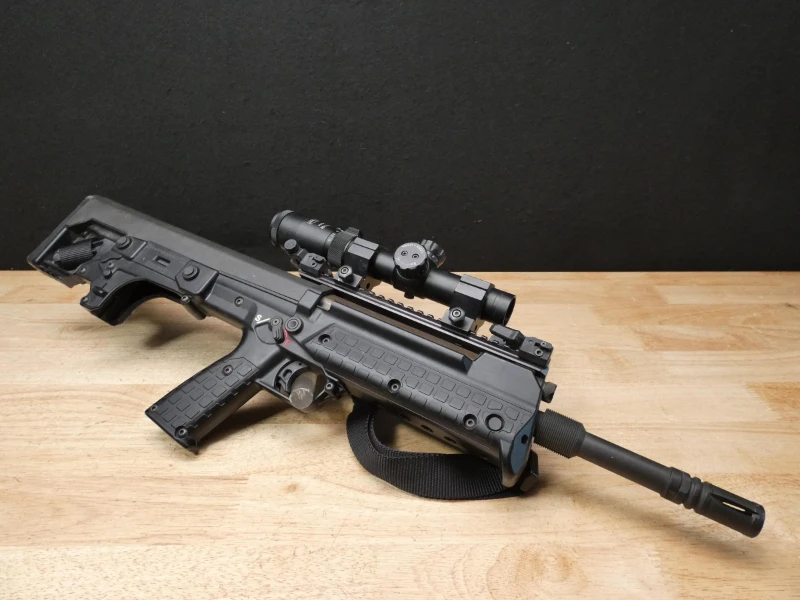
The Kel-Tec RFB (Rifle, Forward-ejecting Bullpup) is a unique firearm whose value is determined by its unconventional design, specific model, and overall condition. As a niche .308 bullpup, it attracts a dedicated following, which helps maintain a stable secondary market. Understanding the key factors, from its barrel length to regional laws, is essential for accurately pricing your RFB. This guide breaks down the elements that influence its worth, ensuring you can navigate the selling process effectively.
What Determines Your Kel-Tec RFB’s Worth
The value of a Kel-Tec RFB is primarily influenced by its specific model variant, mechanical condition, and cosmetic appearance. Unlike firearms with distinct generational updates, the RFB’s worth is tied to its configuration: the standard Carbine with an 18-inch barrel, the longer 24-inch Hunter, or the precision-focused Target model. While the Manufacturer’s Suggested Retail Price is a lofty $1,845, new market prices typically range from $1,230 to $1,550. In the used market, the average price settles around $946, with pristine examples fetching more and rifles with significant wear or high round counts selling for less.
2026 Price Breakdown by Generation
Carbine Model (18-inch barrel)
The Carbine model, featuring an 18-inch barrel, is the most common variant of the Kel-Tec RFB and serves as the baseline for its market value. Its compact overall length of just 26 inches makes it a highly maneuverable .308 rifle, appealing to those seeking a powerful yet handy firearm for range use or tactical applications. Because this is the most frequently encountered model, there is a steady supply on the used market, which tends to stabilize its price. Condition is paramount, as buyers will closely inspect these for signs of hard use or neglect.
Given its prevalence, the 18-inch Carbine’s value aligns closely with the platform’s average. A used example in good to very good condition typically sells for between $800 and $950. While accessories can influence the final price, the core value is dictated by the rifle’s functional and cosmetic state. Sellers with a well-maintained Carbine can expect to achieve a price near the average of $946, while those with visible wear or a higher round count may need to adjust their asking price downward to remain competitive in a populated market.
Hunter Model (24-inch barrel)
The Hunter model distinguishes itself with a 24-inch barrel, designed to extract greater velocity from the .308 Winchester cartridge for improved long-range performance. This variant appeals to a more specialized segment of the market, including hunters and marksmen who prioritize ballistic capability over the extreme compactness of the Carbine model. Its increased length and weight shift its purpose from a general-purpose rifle to a more dedicated field or precision firearm. Due to its more specific application, the Hunter model is produced and sold in smaller numbers than the standard Carbine.
The relative scarcity of the 24-inch Hunter model can lead to a modest price premium over the 18-inch Carbine, assuming it is in comparable condition. While the pool of potential buyers may be smaller, those specifically seeking its enhanced performance are often willing to pay more. A used Hunter model in excellent condition could fetch a price slightly above the platform’s average, potentially nearing or exceeding $1,000, especially if it includes desirable accessories like a quality scope or bipod that complement its intended role as a long-range rifle.
Target Model (26 or 32-inch barrel)
The Target model represents the pinnacle of the RFB line for precision shooting, originally offered with barrel lengths of 26 or even 32 inches. These variants are the least common and are purpose-built for maximizing accuracy and effective range, appealing almost exclusively to long-range enthusiasts and precision shooters. The extended barrel provides a significant velocity increase, which helps flatten trajectory and reduce wind drift. Its niche status means it is rarely seen on the used market, making it a unique find for collectors and dedicated marksmen who appreciate its specialized design.
Due to its rarity and specialized nature, the Target model generally commands the highest value among all RFB variants. However, its market is also the smallest, which can mean a longer wait to find the right buyer. A well-maintained Target RFB could sell for a significant premium over the Carbine, with prices varying widely based on its exact configuration and condition. A seller with one of these models should research recent sales carefully, as its specialized appeal makes its pricing less predictable than that of the more common variants available on the market.
Condition and Round Count
Regardless of the specific model, the physical and mechanical condition is a critical factor in determining an RFB’s final value. Cosmetic issues such as scratches on the polymer body, wear on the finish of the barrel and receiver, or damage to the stock will detract from the price. Buyers expect a rifle in this price range to be well-cared-for, and any signs of abuse or neglect will lead to lower offers. A thorough cleaning and detailed, honest photography of any imperfections are essential for building trust and achieving a fair price during a sale.
A high round count can significantly impact the RFB’s resale value. As with any firearm, extensive use leads to wear on critical components like the barrel throat, bolt, and gas system. This concern is amplified by mixed user reports regarding the RFB’s long-term durability; while some owners report thousands of rounds with no issues, others have experienced malfunctions. Consequently, potential buyers are often cautious of high-round-count examples, and sellers must be prepared to price their rifle lower to compensate for the perceived risk and expected component wear.
How Modifications Affect Value
When it comes to aftermarket modifications for the Kel-Tec RFB, the market shows no clear consensus on what consistently adds or detracts from its value. Many owners add accessories like upgraded charging handles, aftermarket triggers, or different muzzle devices to personalize the rifle. While these enhancements may improve the shooting experience for the owner, they rarely translate into a dollar-for-dollar increase in resale price. Potential buyers may not share the same preferences, and as a result, a heavily modified RFB may not fetch a higher price than a stock model in similar condition.
Similarly, there is no established list of modifications that are known to hurt the RFB’s value, with the exception of permanent alterations that cannot be reversed, such as cutting the barrel or making irreversible changes to the receiver. Most bolt-on accessories can be removed, allowing the rifle to be returned to its original factory configuration. Selling the rifle with its original parts included is often the best strategy, as it gives the new owner the choice to use the modifications or revert the firearm to its stock form, appealing to the widest possible audience.
Regional Price Variations in 2026
The value of a Kel-Tec RFB can fluctuate significantly based on state and local firearm regulations. In states with strict laws, such as California, a legally configured “featureless” RFB can command a premium. The process of making the rifle compliant, which often involves installing a grip wrap and using low-capacity magazines, adds cost and effort. Because fewer of these compliant rifles are available, sellers in these markets can often ask for a higher price than the national average, as buyers have limited options for a .308 semi-automatic bullpup rifle.
Conversely, in states like New York, the RFB’s standard configuration is generally not legal due to its pistol grip, which classifies it as an “assault weapon” under state law. The path to legal compliance is unclear and requires significant modification, effectively eliminating its market in such locations. This legal barrier means the rifle has little to no value in these restrictive states, as legal transfer is nearly impossible. Therefore, a seller’s geographic location is a critical factor in determining not only the rifle’s potential price but also its very ability to be sold.
Online vs Local Sales
Selling a Kel-Tec RFB online provides access to a nationwide market, significantly increasing the pool of potential buyers compared to a local sale. This broader audience can lead to a faster sale and a potentially higher selling price. However, all interstate firearm sales must adhere to federal law, which requires the seller to ship the rifle to a Federal Firearms Licensee (FFL) in the buyer’s state. The buyer must then visit the FFL, complete a Form 4473, and pass a background check before taking possession, adding a layer of complexity and cost to the transaction.
Private sellers face specific logistical challenges when shipping a firearm. Major carriers like UPS and FedEx prohibit individuals from directly shipping firearms; the shipper must be an FFL holder with a specific contractual agreement. To comply with these rules, a private seller must take their RFB to a local FFL, who will then handle the packaging and shipping to the buyer’s designated FFL. This service adds an extra fee to the sale, which should be factored into the final price or negotiated between the buyer and seller beforehand to avoid any confusion.
A local, face-to-face sale can be a simpler alternative, eliminating shipping costs and FFL transfer fees. However, this approach dramatically limits the number of potential buyers to those within driving distance. Furthermore, sellers must be diligent in following all state and local laws governing private firearm transfers, which can vary widely. While more straightforward in some respects, a local sale may require more time to find a buyer and may not yield the highest possible price due to the limited market exposure compared to a national online listing.
The FFL Buying Advantage
Selling your Kel-Tec RFB to a Federal Firearms Licensee (FFL), such as a gun dealer or a specialized online buyer, offers a significant advantage in speed and convenience. This path eliminates the uncertainties of finding a private buyer, negotiating a price, and navigating the legal complexities of a transfer. However, this convenience comes at a cost. Gun dealers typically offer between 50% and 65% of the firearm’s current private market value. This lower offer reflects the dealer’s need to cover overhead costs, manage inventory, and still make a profit upon resale of the rifle.
Based on current market data, the trade-in value for a used Kel-Tec RFB is approximately 65% of its private party sale price. For a rifle that is in high demand or expected to sell quickly, a dealer might stretch their offer to 70%, but sellers should generally expect an offer within the standard range. For an RFB with an average used value of $946, a dealer offer would likely fall between $473 and $615. This provides a guaranteed, immediate cash payment, making it an attractive option for those who prioritize a fast and hassle-free transaction over maximizing their financial return.
What Increases Your Offer
One of the most effective ways to increase the value of your Kel-Tec RFB is through high-quality presentation, especially for online listings. To achieve this, use soft, natural light and a simple, uncluttered background to ensure the rifle is the sole focus. A modern smartphone camera is more than capable of capturing clear, detailed images. Be sure to photograph the rifle from multiple angles, providing a comprehensive view, and include close-ups of any important markings, unique features, or cosmetic imperfections to build trust and transparency with potential buyers.
While the market lacks a consensus on a specific financial penalty for incompleteness, providing the firearm with its original components is a universal value-add. Including the original box, owner’s manual, factory-supplied magazines, and any other accessories that came with the rifle creates a more complete and desirable package. This attention to detail signals to a buyer that the firearm has been well-cared-for and can differentiate your listing from others, often leading to stronger offers and a quicker sale. Locating these items before listing your RFB is a simple step that can pay dividends.
A detailed and honest description is crucial for justifying your asking price and attracting serious buyers. Clearly state the RFB model (Carbine, Hunter, or Target), provide an accurate estimate of the round count, and transparently describe its condition. Given the mixed reports on the RFB’s long-term durability, mentioning a consistent maintenance history can help alleviate potential concerns. Providing this level of detail demonstrates credibility and helps a potential buyer feel confident in their purchase, making them more likely to meet your asking price without extensive haggling or hesitation.
When to Sell Your keltec rfb
Timing the sale of your Kel-Tec RFB can have a noticeable impact on the level of interest and the final price you receive. For rifles, the market typically sees a surge in demand during the months leading up to major hunting seasons. This peak period, generally occurring in the late summer and early fall from August through September, is an opportune time to list your RFB. During these months, more buyers are actively searching for rifles, which can lead to increased visibility for your listing and a potentially faster sale at a competitive price point.
Beyond the hunting season peak, another prime window for selling firearms is during tax return season, which runs from approximately February through April. During this time, many potential buyers have more disposable income, leading to an overall increase in consumer spending on discretionary items, including firearms. This broader market lift can benefit sellers of all types of firearms, including a specialized rifle like the RFB. Listing your rifle during this period can capitalize on the heightened purchasing power of a wide range of buyers, improving your chances of a successful sale.
While these seasonal peaks represent the most favorable times to sell, it is still possible to sell your RFB at any time of the year. However, selling during off-peak months may require more patience or a more aggressive pricing strategy to attract attention. The RFB’s status as a niche bullpup rifle means it has a dedicated, year-round following, but capitalizing on broader market trends can help ensure you connect with a buyer quickly and achieve the best possible return on your firearm, so strategic timing is always a wise consideration.
Common Pricing Mistakes
A frequent error sellers make is pricing their used Kel-Tec RFB based on its high Manufacturer’s Suggested Retail Price of $1,845. This figure does not reflect the actual street price or the current used market value. A savvy buyer knows that new RFBs can be found for $1,230 to $1,550, and the average used price is approximately $946. Setting an asking price based on the MSRP will deter knowledgeable buyers and likely result in the listing being ignored. Proper research into current, real-world sale prices is essential for setting a realistic and effective price.
Another common mistake is failing to differentiate between the RFB model variants when determining a price. The value is not uniform across the product line; the common 18-inch Carbine, the longer 24-inch Hunter, and the rare 26- or 32-inch Target models all have different market values. A seller who prices their less-common Hunter or Target model at the same level as a standard Carbine may be leaving money on the table. Conversely, overpricing a Carbine by mistaking it for a more valuable model will discourage potential buyers from making an offer.
Ignoring the impact of regional laws and market demand is a significant pricing pitfall. The value of an RFB is not the same in every state. For example, a legally configured “featureless” model in California is inherently more valuable than a standard model in a state with no such restrictions. Similarly, trying to sell in a state like New York, where the rifle is generally illegal, is futile. Sellers must consider their local market dynamics and legal landscape to price their rifle appropriately and avoid the frustration of a non-compliant or uncompetitive listing.
Market Outlook for 2026
Predicting the future value of any firearm, including the Kel-Tec RFB, is a speculative endeavor influenced by manufacturing trends, consumer demand, and the political climate. Currently, there is no definitive market consensus on the RFB’s long-term price trajectory. As a niche firearm, its value is less susceptible to the dramatic swings seen with more mainstream platforms, but it is also unlikely to experience significant appreciation. Its future worth will largely depend on its continued appeal to bullpup enthusiasts and Kel-Tec’s production decisions regarding the model.
The RFB’s unique forward-ejecting bullpup design in a .308 chambering secures its place in the market and ensures a dedicated, if small, following. This specialized appeal should help maintain a stable baseline value among collectors and fans of unconventional firearms. Should Kel-Tec cease production of the RFB, its value on the secondary market could see a gradual increase due to scarcity. However, barring such a development, its price is expected to remain relatively consistent, closely tied to overall market conditions for semi-automatic rifles and inflation rates.
Frequently Asked Questions
Does the barrel length significantly change my RFB’s value?
Yes, the barrel length is one of the most significant factors in determining your RFB’s value because it corresponds to a specific model. The 18-inch Carbine is the most common and sets the baseline price. The less-common 24-inch Hunter and the rare 26- or 32-inch Target models typically command higher prices due to their enhanced ballistic performance and relative scarcity. However, these longer-barreled versions also appeal to a smaller, more specialized market, so while their value is higher, finding a buyer may take more time than it would for the standard Carbine model.
Will a high round count drastically lower the selling price?
A high round count will almost certainly lower the selling price of your RFB. This is due to the inevitable wear on key components like the barrel, bolt, and gas system. The impact is particularly notable for the RFB because of mixed online reports regarding its long-term durability. A potential buyer will likely be more cautious and factor in the potential cost of future repairs or component replacement, leading them to make a lower offer compared to a similar rifle with a documented low round count. Transparency about usage is key to a smooth transaction.
Is my RFB worth more in a state like California?
Potentially, yes. In a state with restrictive firearm laws like California, a Kel-Tec RFB that has been legally modified to be “featureless” can be worth more than a standard model in a less-regulated state. The added costs of compliance parts (like a grip wrap), combined with the limited availability of such rifles in that market, create a scenario where demand outstrips supply. As a result, sellers can often ask for and receive a premium price from buyers who have few other options for a semi-automatic, .308 bullpup rifle.
How much less will I get by selling to a dealer instead of privately?
You should expect to receive a substantially lower amount when selling your RFB to a dealer. FFL dealers typically offer between 50% and 65% of a firearm’s current private party market value to account for their business overhead and profit margin. For the Kel-Tec RFB, the trade-in value is estimated to be around 65% of its private sale price. This means you are trading a significant portion of the rifle’s potential value for the convenience, speed, and security of an immediate and legally compliant transaction with a licensed dealer.
Does the RFB being a bullpup affect its resale value?
The bullpup design is central to the RFB’s identity and directly affects its resale value. It makes the rifle a niche product, which is a double-edged sword. On one hand, it appeals strongly to a specific community of firearms enthusiasts who appreciate compact, unconventional designs, ensuring a stable and dedicated market. On the other hand, it may deter buyers who are more accustomed to traditional rifle ergonomics. This specialized appeal creates consistent demand within its niche but results in a smaller overall pool of potential buyers compared to more conventional platforms like an AR-10.
Get a Cash Offer Today
Ready to sell your Kel-Tec RFB? We offer a fair, transparent process to get you a competitive cash offer. Avoid the hassle of private listings, the uncertainty of online forums, and the lowball offers from local pawn shops. Our streamlined system is designed to get you paid quickly and securely.
Simply submit the details and photos of your rifle, and our team of experts will provide a no-obligation quote. We handle all the necessary FFL paperwork and provide a prepaid shipping label, ensuring a fully compliant transfer that makes the entire experience safe and effortless. Find out what your RFB is worth today!