
The Kimber Micro Carry 380 is a highly regarded subcompact pistol, celebrated for its 1911-style ergonomics and concealability. Its popularity in the concealed carry market directly influences its resale value, making it a firearm that retains its worth well over time. Understanding the key factors that determine its price, from cosmetic condition and mechanical function to regional demand and market trends, is essential for any owner looking to accurately assess its current market value for a potential sale.
What Determines Your Kimber Micro Carry 380’s Worth
The value of a Kimber Micro Carry 380 is primarily dictated by its condition, specific sub-model, and the current market demand. As a subcompact, single-action, semi-automatic pocket pistol, it holds a strong position in the concealed carry segment. A new model has an MSRP ranging from approximately $713 to $1,210, depending on features. In the used market, a standard model in very good to excellent shape typically commands a retail value between $400 and $500. The average private sale price hovers around $375 to $386, with significant deductions for heavy wear or mechanical issues.
2026 Price Breakdown by Generation
Standard & Base Models
While the Kimber Micro 380 series doesn’t follow a traditional “generation” system like some other firearms, its value can be understood by grouping models based on features and finish. The standard, all-black Micro Carry models represent the entry point into the lineup. In the used market, these pistols in good to very good condition typically fall within the lower end of the value spectrum, generally between $375 and $425. Their value is heavily dependent on cosmetic condition and round count, as they are often purchased as functional carry pieces rather than collector’s items.
Prospective buyers for standard models are primarily focused on reliability and function. Because a break-in period of several hundred rounds is often recommended for this platform, a pistol with a documented low-to-moderate round count and proven reliability can be more appealing than one that is brand new but untested. Therefore, sellers who can demonstrate proper maintenance and consistent performance may achieve a price closer to the $450 mark, especially if the original box and accessories are included. Heavy cosmetic damage, however, can significantly reduce the value of these base models.
Two-Tone & Special Finish Models
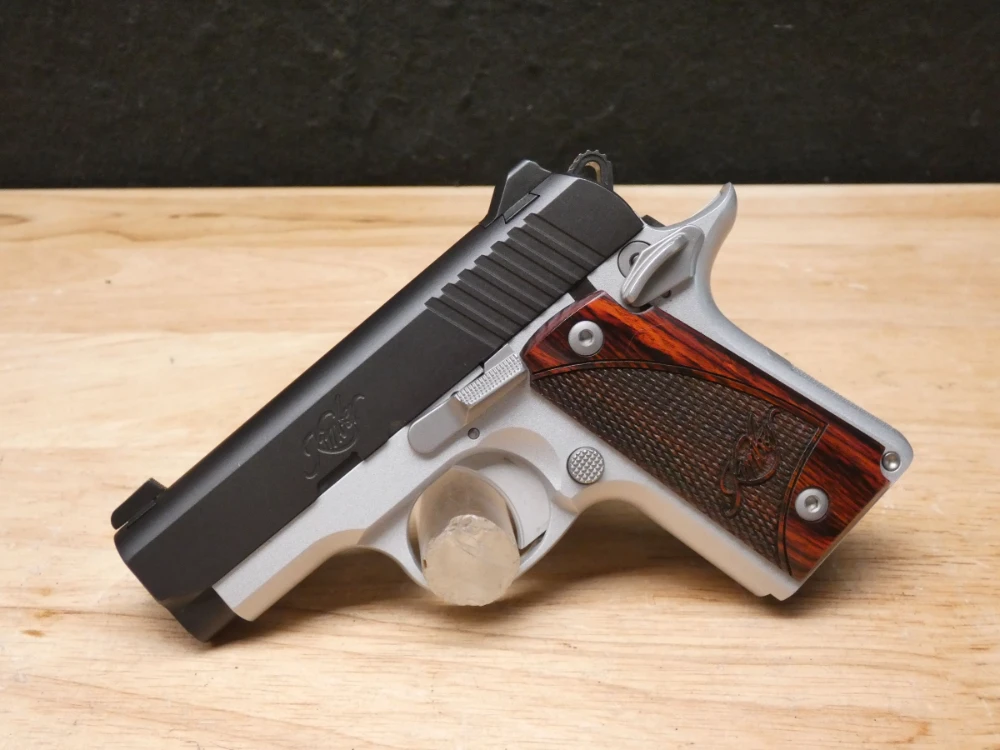
Kimber offers numerous Micro 380 variations with two-tone finishes, such as a stainless slide on a black frame, or models with unique Cerakote colors. These pistols often have a slightly higher MSRP than the standard black models and tend to retain that premium in the used market. A two-tone or special finish model in excellent condition can command a price from $425 to over $500. The specific finish plays a role; popular or less common color combinations may attract more buyer interest and fetch a higher price, while more polarizing colors might have a narrower appeal.
The condition of the finish is paramount for these models. Any significant scratches, holster wear, or discoloration on the frame or slide will disproportionately affect their value compared to a standard model, as their primary appeal is aesthetic. A pristine example with its original packaging is highly desirable. These models often appeal to buyers who want a more personalized or visually distinct concealed carry firearm, making them a strong seller in the private market when presented in excellent condition with high-quality photographs showcasing the unique finish.
Premium & Engraved Models
At the higher end of the spectrum are the premium Kimber Micro 380 models, which include versions with intricate slide engravings, special grips (such as G10 or rosewood), and factory-installed night sights. These models, like the Bel Air or Sapphire editions, carry a much higher initial MSRP, often exceeding $1,000. In the used market, they retain a significant portion of this value, provided they are in pristine condition. A well-maintained premium model can easily sell for over $500, with prices varying widely based on the specific edition’s rarity and desirability among Kimber enthusiasts.
The value of these high-end variants is closely tied to their completeness and originality. The presence of the original box, paperwork, and any included special accessories is crucial for achieving a top-tier price. Any modifications, even if they are functional upgrades, can potentially detract from the value if they alter the firearm’s factory appearance. These pistols are often seen as functional art, and buyers in this segment expect a firearm that is as close to new condition as possible, making them less forgiving of any cosmetic flaws or wear.
Models with Factory Lasers
Several Kimber Micro 380 models come equipped with factory-integrated laser grips, most commonly from Crimson Trace. These variants offer an enhanced sighting solution that is highly attractive for self-defense applications. When new, these models carry a significant price premium over their non-laser counterparts. In the used market, this added value is largely retained, though not entirely. A used Micro 380 with a functional factory laser grip can expect to fetch a price approximately $50 to $100 higher than an equivalent model without one, placing its value firmly in the $450 to $550 range depending on overall condition.
When selling a laser-equipped model, verifying the full functionality of the laser is critical. A weak or dead battery is an easy fix, but a malfunctioning laser unit can be a significant point of negotiation and will lower the pistol’s value. Sellers should highlight the feature in their listings and include clear photos of the laser in operation. Because this is a key selling point, its condition is just as important as the firearm’s cosmetic and mechanical state, and proving its reliability can help secure a faster sale at a higher price point.
How Modifications Affect Value
The market for the Kimber Micro Carry 380 does not show a clear consensus on modifications that consistently add to its resale value. Common upgrades like aftermarket grips or enhanced sights may appeal to a specific private buyer looking for those exact features, potentially leading to a quicker sale. However, these additions rarely increase the firearm’s cash value, especially when selling to a dealer. Most buyers, particularly in the used market, prefer a firearm in its original factory configuration, as it provides a known baseline for performance and reliability without introducing unknown variables from third-party gunsmithing.
Similarly, there is no definitive list of modifications that universally hurt the value of a Kimber Micro 380, but a general rule applies: permanent alterations are risky. Custom stippling, amateur gunsmithing, or personalized engravings can severely limit the pool of potential buyers and are very likely to decrease the pistol’s value. Reversible modifications are safer, but sellers should be prepared to include the original parts with the sale. Ultimately, the firearm’s core condition and reliability are far more significant value drivers than any non-factory additions, which often represent a sunk cost for the seller.
Regional Price Variations in 2026
State-specific firearm laws create significant regional price variations for the Kimber Micro Carry 380. In California, for example, this pistol is not on the Roster of Handguns Certified for Sale. This means that firearms dealers cannot sell it to the general public, drastically limiting its availability and creating a unique market for private party transfers. This scarcity can sometimes drive up the price in private sales between California residents, as it’s one of the few legal avenues to acquire one. Conversely, in states with fewer restrictions, the market is more saturated, leading to more competitive and generally lower pricing.
In contrast, a state like New York has different but still impactful regulations. The Kimber Micro Carry 380 is generally legal for individuals who possess a valid pistol permit because its standard magazine capacity complies with state law. However, the lengthy and often difficult process of obtaining a permit can influence overall market dynamics. In areas with high demand for compact concealed carry pistols but a limited number of licensed buyers, prices may remain stable. These regional legal landscapes are a critical factor in determining the firearm’s local market value and should be researched before listing it for sale.
Online vs Local Sales
Selling a Kimber Micro Carry 380 locally through a private transaction offers the advantage of immediate payment and no shipping complexities. However, laws governing private firearm sales vary significantly by state. While some states do not legally require any specific paperwork for a transfer between two residents, it is a widely recommended best practice to create a bill of sale. This document protects the seller from future liability and should include the names, addresses, and driver’s license numbers of both parties, the firearm’s make, model, serial number, and the date of the transaction.
Selling online opens up a nationwide market but introduces strict legal requirements for shipping. A private individual cannot legally ship a handgun directly to a buyer in another state. The firearm must be transferred through a Federally Licensed Firearms Dealer (FFL). The seller must ship the handgun to an FFL in the buyer’s state, where the buyer will complete the required paperwork and background check. Furthermore, when shipping, the seller must use a common carrier like UPS or FedEx, declare that the package contains a firearm, and ensure the package has no external markings indicating its contents.
The choice between online and local sales involves a trade-off between reach and convenience. An online listing can attract more potential buyers, potentially leading to a higher selling price, but it requires navigating complex shipping regulations and paying FFL transfer fees. A local sale is simpler and faster but limits the customer base to your immediate geographic area. Sellers must weigh the potential for a higher profit against the added logistical and legal responsibilities associated with an interstate sale, making sure to comply with all federal, state, and local laws regardless of the chosen method.
The FFL Buying Advantage
Utilizing a Federally Licensed Firearms Dealer (FFL) is a non-negotiable requirement for any interstate sale of a handgun like the Kimber Micro Carry 380. This process ensures the transaction is legally compliant and provides a layer of protection for both the seller and the buyer. The seller ships the firearm to the buyer’s chosen FFL, who then handles the background check and legal transfer paperwork. This system verifies the buyer’s eligibility to own a firearm in their state of residence, effectively removing a significant amount of liability from the private seller and ensuring the firearm is transferred safely and legally.
While an FFL is essential for facilitating a private party sale across state lines, selling directly to a dealer presents a different financial outcome. Gun dealers typically offer a trade-in or cash value that is approximately 65% of the firearm’s private party market value. For a Kimber Micro 380 valued at $450 in a private sale, a dealer might offer around $290. This lower offer reflects the dealer’s need to cover overhead, processing costs, and generate a profit upon resale. The advantage is a fast, guaranteed, and hassle-free transaction, but it comes at the cost of maximizing your financial return.
What Increases Your Offer
A crucial first step to maximizing your offer is a thorough pre-sale cleaning. It is essential to field strip the Kimber Micro 380 and remove all factory grease, which is designed for shipping protection, not for lubrication during operation. After a deep cleaning, applying a thin coat of a quality gun lubricant to all sliding parts and contact surfaces is vital. This not only ensures the firearm is in excellent working order but also presents it professionally to potential buyers, signaling that it has been well-maintained. Consulting the owner’s manual for proper disassembly and cleaning procedures is highly recommended.
High-quality presentation through photography is equally important, especially for online listings. Use soft, even lighting, such as natural light from a window, to avoid harsh shadows and glare. Place the pistol against a plain, non-distracting background like a clean workbench or a simple poster board. Capture clear, high-resolution images from every angle—top, bottom, left, and right. Including close-up shots of key details like the sights, barrel crown, slide serrations, and any manufacturer markings builds buyer confidence. Meticulously documenting any wear or imperfections also fosters trust and can prevent disputes later.
Finally, completeness adds significant appeal and can increase offers. While there isn’t a fixed monetary penalty for a missing box, including the original case, owner’s manual, all factory-included magazines, and any other accessories makes your firearm a more attractive package. It suggests meticulous ownership and provides the buyer with everything that would have come with a new purchase. This comprehensive presentation can differentiate your listing from others and justify a price at the higher end of the used market value range, leading to a faster sale and a better return.
When to Sell Your Kimber micro carry 380
Market analysis indicates a distinct seasonal trend for handgun sales, which can be leveraged to maximize the selling price of your Kimber Micro Carry 380. The most opportune time to sell is during tax refund season, which generally spans from late winter through early spring, typically from February to April. During this period, many potential buyers have more disposable income, leading to increased purchasing activity across the firearms market. Listing your pistol during this window can result in more competing offers and a quicker sale at your desired price point.
Beyond financial seasons, weather also plays a role in buyer activity. The arrival of warmer weather in the spring often correlates with an uptick in shooting sports participation and interest in concealed carry. As people begin to spend more time outdoors, they may be more inclined to purchase a compact handgun like the Micro Carry 380 for personal protection. This increased seasonal demand can create a seller’s market, allowing you to hold firm on your asking price and connect with a larger pool of motivated buyers who are actively looking to acquire a new firearm.
Conversely, the late fall and holiday season can sometimes be a slower period for used firearm sales, as consumer spending is often directed toward holiday gifts and travel. While a well-priced firearm will sell at any time of year, listing your Kimber Micro 380 outside of the peak spring season may require more patience or slightly more competitive pricing. By strategically timing your sale to coincide with peak buyer activity in the February-to-April timeframe, you significantly improve your chances of achieving the full market value for your pistol.
Common Pricing Mistakes
One of the most frequent errors sellers make is basing their asking price on the original Manufacturer’s Suggested Retail Price (MSRP) rather than the current used market value. A new Kimber Micro 380 may cost between $713 and $1,210, but the used market operates differently. A realistic price for a used model in excellent condition is typically between $400 and $500. Overpricing your pistol based on its initial cost will deter knowledgeable buyers and cause your listing to stagnate, ultimately forcing you to lower the price after wasting valuable time.
Another critical mistake is failing to accurately assess and disclose the firearm’s cosmetic condition. Sellers may overlook or downplay holster wear, scratches, or dings, but savvy buyers will spot these issues immediately. Heavy cosmetic damage can result in a price reduction of approximately 23% to 33%. It is far better to price the firearm fairly from the start, with clear photos documenting its condition, than to have a buyer negotiate a steep discount upon inspection. Honesty builds trust and leads to a smoother, more successful transaction for both parties.
Ignoring the impact of a high round count can also be a pricing pitfall. While a moderate round count is often seen as a positive sign of a properly broken-in and reliable pistol, an excessively high count suggests significant wear on internal components like springs and the barrel. While the overall condition is often more important than the exact number, a firearm with thousands of rounds through it will not command the same price as one with only a few hundred. Sellers should be realistic about how usage affects value and price their high-mileage firearms accordingly to attract the right buyers.
Market Outlook for 2026
While specific future price predictions for the Kimber Micro Carry 380 are not available, the market outlook can be assessed based on broader industry trends. The demand for subcompact, easily concealable .380 ACP pistols remains consistently strong, driven by a steady interest in personal defense and concealed carry permits. The Micro 380’s 1911-style manual of arms and reputation for quality craftsmanship give it an enduring appeal within this crowded market segment. This sustained demand suggests that the firearm will likely maintain a stable value, depreciating slowly and predictably rather than experiencing sharp fluctuations.
Factors that could influence its future value include the introduction of new competing models from other manufacturers or shifts in ammunition cost and availability. However, Kimber’s strong brand recognition and the loyal following for its 1911-platform pistols provide a solid foundation for its resale market. As long as it remains a reliable and desirable option for concealed carry, the Kimber Micro Carry 380 is expected to hold its value well, continuing to be a sought-after firearm in the used market with a predictable price range determined primarily by its condition and specific model variant.
Frequently Asked Questions
How much does heavy cosmetic damage affect the price of a Kimber Micro Carry 380?
Heavy cosmetic damage, such as deep scratches, significant holster wear, or dings in the frame or slide, can substantially reduce the value of a Kimber Micro Carry 380. Based on market analysis comparing new prices to used models in average condition, a firearm with considerable cosmetic flaws may see a price reduction of approximately 23% to 33%. For a pistol that would otherwise sell for $450 in excellent condition, this could mean a value drop of over $100. Buyers of premium-branded firearms like Kimber often place a high value on aesthetics, making condition a critical pricing factor.
Is a high round count a major problem for this model’s value?
A high round count can negatively impact the value, as it implies wear on internal parts, but it’s a nuanced issue for the Kimber Micro 380. This model often requires a break-in period of several hundred rounds to ensure optimal reliability, so a very low round count might not be as advantageous as it seems. The overall condition and demonstrated reliability are more significant factors. A well-maintained pistol with a higher round count that functions flawlessly may be more desirable to some buyers than a pristine example that is unproven, though its value will still be slightly lower.
Is it worth paying for a professional appraisal for my Kimber Micro Carry 380?
For a standard used Kimber Micro Carry 380, a professional appraisal is likely not worth the cost. The market value for these firearms is relatively well-established and accessible. In very good to excellent condition, they typically sell for between $400 and $500. Free online resources and completed sales on auction sites can provide a reliable valuation based on the pistol’s specific model, condition, and included accessories. An appraisal is generally better suited for rare, antique, or highly customized firearms where the value is not easily determined by public market data.
How much less will I get for my Kimber Micro Carry 380 if I sell it to a dealer?
When selling to a gun dealer, you can expect to receive a trade-in or cash offer that is significantly lower than what you could get in a private sale. Dealers typically offer a value that is approximately 65% of the firearm’s private party market value. For a Kimber Micro Carry 380 that might sell for $450 to a private individual, a dealer’s offer would likely be in the range of $290 to $300. This lower price accounts for the dealer’s business costs and the need to make a profit upon reselling the firearm.
Does the original box and paperwork significantly impact the resale value?
While the market has not established a specific monetary penalty for lacking the original box and paperwork, their inclusion undoubtedly helps in achieving the maximum possible resale value. Having the complete original package makes the firearm more appealing to buyers, especially collectors or those who appreciate meticulous ownership. It presents the gun as a complete set, just as it was sold new. In a competitive market, a pistol with its original box and manual is more likely to sell faster and at the seller’s full asking price compared to an identical firearm without them.
Get a Cash Offer Today
Ready to sell your Kimber Micro Carry 380? We make the process simple, safe, and transparent. Avoid the hassle of private listings and legal complexities. Click here to submit your firearm’s information and receive a fair, no-obligation cash offer based on its current market value and condition.
Our streamlined process ensures you get paid quickly and legally. We are a fully licensed FFL dealer, and we handle all the necessary paperwork to provide you with a secure and convenient selling experience. Turn your used firearm into cash today with a trusted industry leader.