
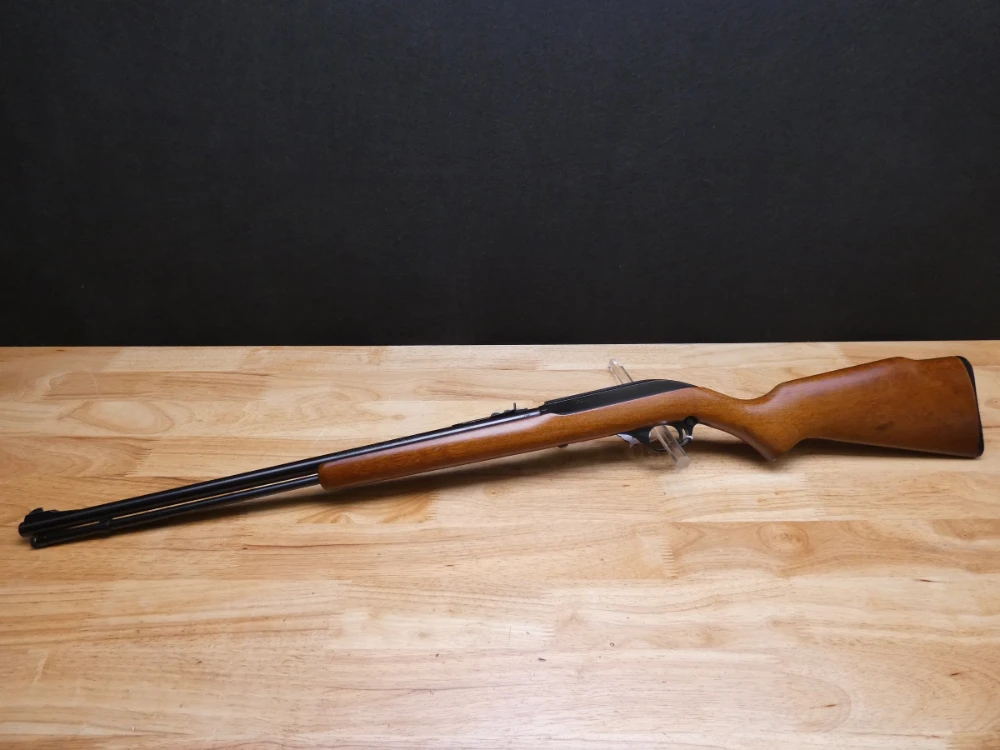
The Marlin Model 60 is an iconic American semi-automatic rifle, celebrated for its reliability and affordability since its introduction. As a long gun chambered in the popular .22 LR rimfire cartridge, it has become a staple for plinkers, small game hunters, and new shooters alike. Understanding its market value involves looking at its condition, specific manufacturing era, and current market trends. This guide provides a detailed analysis to help you accurately determine the worth of your Marlin Model 60.
What Determines Your Marlin Model 60’s Worth
The value of a Marlin Model 60 is primarily influenced by its physical condition, manufacturing era, and specific features. While these rifles are known for their durability, with some functioning perfectly after 20,000 rounds, cosmetic appearance remains a key factor. A rifle with a clean stock and minimal wear on the metal finish will command a higher price. Furthermore, generational differences, such as changes in barrel length, magazine capacity, and the inclusion of a last-round bolt hold-open feature, can impact its desirability and price. Special editions, like those with stainless steel finishes, often fetch a premium over standard production models in the used market.
2026 Price Breakdown by Generation
Pre-1980s & Glenfield Models
Older Marlin Model 60 rifles, particularly those manufactured before the 1980s, represent a distinct era in the firearm’s history. This group also includes the lower-priced Glenfield versions, which were often sold in department stores and featured more economical birch stocks instead of walnut. These vintage models are sought after by some collectors and enthusiasts for their classic build quality. Key identifiers for this period can include different barrel lengths and magazine capacities compared to their modern counterparts. These variations are important for collectors and can influence the rifle’s overall appeal and final sale price in the current market.
In today’s used market, these pre-1980s and Glenfield models typically have a value ranging from approximately $165 to $250. The final price within this range is heavily dependent on the rifle’s condition. A well-preserved example with minimal cosmetic wear and a clean bore will naturally command a price at the higher end of this spectrum. Conversely, a rifle showing significant signs of use, such as scratches on the stock or rust on the barrel, will fall toward the lower end. These models offer an accessible entry point for those seeking a piece of Marlin’s history.
Newer Standard Models
Marlin Model 60s produced from the mid-1980s onward introduced several key updates that define the modern iteration of the rifle. One of the most significant changes was the standardization of the last-round bolt hold-open feature, a convenient function that was not present on all earlier models. This feature automatically locks the bolt to the rear after the last cartridge is fired, providing a clear visual and tactile indication that the rifle is empty. This enhancement improves safety and user experience, making these newer models particularly appealing to shooters who prioritize practical functionality over vintage characteristics.
The market value for these newer standard production models is quite consistent, with used examples typically selling for around $196. This price point reflects their widespread availability and reputation as reliable, workhorse rifles. While they may not have the same collector appeal as the older versions, their dependable performance and updated features ensure they remain in high demand. For a seller, a rifle from this era in good to excellent condition can be expected to sell quickly within this established price range, making it a predictable and liquid asset in the firearms market.
Special & Commemorative Editions
Beyond the standard blued-steel-and-wood configuration, Marlin has periodically released special editions of the Model 60 that attract a distinct segment of the market. The most common of these are the stainless steel models, which offer enhanced corrosion resistance and a different aesthetic. These versions are particularly popular in humid climates or for shooters who want a low-maintenance plinking rifle. Because they were produced in smaller quantities than the standard models, they often carry a higher value due to their relative scarcity and desirable features, appealing to both practical users and casual collectors.
The enhanced appeal of these special editions translates directly to their market price. A stainless steel Marlin Model 60 in good condition can sell for as much as $350 on the used market, a significant premium over the standard version’s value. Other commemorative or limited-run models can also see elevated prices, depending on their rarity and the specific event they celebrate. When selling one of these unique rifles, it is crucial to highlight its special features and finish, as these are the primary drivers that justify its higher price point compared to the more common variants.
Modern Production Models
The most recent iterations of the Marlin Model 60 reflect contemporary manufacturing processes and market pricing. A brand-new Model 60 has an average Manufacturer’s Suggested Retail Price (MSRP) of approximately $386.00. However, it is common for retailers to offer these rifles at a lower street price, with some listings appearing around the $200 mark. This significant difference between MSRP and actual retail price sets a ceiling for the used market. A potential buyer is unlikely to pay close to $200 for a used rifle if they can purchase a brand-new one for a similar price.
This pricing dynamic directly impacts the resale value of nearly-new or lightly used modern Model 60s. A rifle that was recently purchased will experience immediate depreciation, settling into the established used price range of $165 to $202. Sellers must be realistic and understand that the value of their modern rifle is not based on its original MSRP but on the competitive landscape of both new and used firearms. Pricing a modern, used Model 60 too high will likely result in a prolonged and unsuccessful sale, as informed buyers will simply opt for a new model from a retailer.
How Modifications Affect Value
The market for modified Marlin Model 60s is highly subjective, and there is no clear consensus on which upgrades consistently add monetary value. Common modifications include aftermarket stocks, upgraded triggers, and optical sights. While these changes may improve the rifle’s performance or ergonomics for a specific user, they do not guarantee a higher resale price. A potential buyer may not share the seller’s taste or may prefer the firearm in its original factory configuration. Consequently, sellers should view most modifications as personal enhancements rather than financial investments, as the cost of the parts and labor is rarely recovered upon sale.
Similarly, there is a lack of definitive data regarding modifications that universally hurt the rifle’s value, aside from irreversible changes that damage the firearm’s core components. Permanent alterations like cutting the barrel or drilling extra holes in the receiver for non-standard mounts can be detrimental. Ultimately, the impact of modifications depends entirely on finding the right buyer. A shooter looking for a custom-built rifle might appreciate certain upgrades, while a collector or purist will almost always pay more for an unaltered, original example. To maximize the potential buyer pool, it is often wisest to sell the rifle in its factory state.
Regional Price Variations in 2026
The Marlin Model 60 enjoys broad legality across the United States, which helps stabilize its value by ensuring a large potential market. However, state-specific firearm regulations can influence local demand and, consequently, pricing. In states with stringent “assault weapon” laws, such as California, the Model 60’s design gives it a significant advantage. California law specifically exempts tube-fed .22 caliber rimfire rifles from its definition of an “assault weapon” and from its large-capacity magazine restrictions. This legal status makes it one of the few readily available semi-automatic rifles that can be owned without complex modifications or registration requirements.
Similarly, New York’s SAFE Act, known for its strict magazine capacity limits, also provides a specific exemption for tube-fed .22 rifles. This allows New York residents to legally own a Marlin Model 60 and load its tubular magazine to its full capacity, a privilege not extended to many other semi-automatic rifles with detachable magazines. These legal safe harbors in restrictive states can create pockets of higher demand, potentially allowing sellers in those regions to ask for a slightly higher price compared to sellers in states with more permissive firearm laws where a wider variety of semi-automatic rifles are available.
Online vs Local Sales
Selling a Marlin Model 60 locally through a private transaction can be the most straightforward and profitable method, where permitted by state and local law. This approach avoids shipping costs, FFL transfer fees, and the seller’s commission often charged by online auction sites. While federal law does not require a bill of sale for a private transfer, the ATF highly recommends creating one to document the change of ownership. This document should include the full names and addresses of both parties, the rifle’s make, model, and serial number, and the sale date and price, providing a crucial record for the seller’s protection.
Selling online to a buyer in another state introduces significant logistical and legal requirements. Federal law mandates that any interstate firearm transfer must be processed through a Federal Firearms Licensee (FFL). This means the seller cannot ship the rifle directly to the buyer. Instead, it must be sent to an FFL dealer in the buyer’s state. The buyer then visits that dealer to complete the required federal paperwork, including Form 4473 and a NICS background check, before taking legal possession of the firearm. This multi-step process adds time and cost to the transaction for both parties involved.
Furthermore, shipping a firearm like the Marlin Model 60 has become more restrictive for private individuals. Major carriers such as UPS and FedEx have implemented policies that prohibit private citizens from shipping firearms directly. Their rules now require that any firearm shipment must be initiated by an FFL holder. This policy forces a private seller to take their rifle to a local FFL dealer, who will then handle the packaging and shipping to the buyer’s designated FFL. This service adds another layer of cost, typically involving a service fee from the shipping dealer, which can eat into the seller’s final profit.
The FFL Buying Advantage
Selling your Marlin Model 60 to a Federal Firearms Licensee (FFL), such as a local gun shop, offers a path of maximum convenience and legal security. The process is immediate; you can walk in with your firearm and walk out with cash or a trade-in credit the same day. This eliminates the uncertainties and potential risks of finding a private buyer, verifying their eligibility, and navigating the legal requirements of the transfer. For sellers who prioritize a quick, hassle-free transaction over achieving the highest possible price, dealing with an FFL is an excellent and highly efficient option.
The trade-off for this convenience is a lower offer price compared to a private sale. Gun dealers operate on margins and must account for their overhead and the time the rifle may sit in their inventory. As a general rule, a dealer will likely offer a trade-in or cash value that is approximately 65% of the firearm’s private party market value. For instance, a Marlin Model 60 that could potentially sell for $200 in a private sale might receive a trade-in offer of around $130 from a dealer. This difference is the price of convenience and immediate payment.
What Increases Your Offer
A thorough pre-sale cleaning is one of the most effective ways to increase the value of your Marlin Model 60. A primary cause of malfunctions in these rifles is fouling in the bolt and receiver area. By disassembling the action from the stock and meticulously cleaning these components, you ensure the rifle is presented in reliable, working order. It is crucial to clean the bore from the breech end whenever possible, using a bore snake or a soft nylon brush to avoid causing any damage to the muzzle crown, which can negatively affect accuracy and, therefore, value.
High-quality photographs are essential when selling online. Use a tripod to capture sharp, clear images, and rely on soft, diffused natural light rather than a harsh camera flash, which can create glare and hide details. Photograph the rifle against a simple, uncluttered background to ensure it is the sole focus of the image. Be sure to take numerous photos from every angle, including close-ups of all markings, the sights, the muzzle, and any visible wear or imperfections. This transparency builds trust with potential buyers and accurately represents the rifle’s condition, justifying your asking price.
When preparing your rifle, avoid the common mistake of over-lubrication. After cleaning, apply only a very light coat of oil or use a modern dry lubricant. Excessive oil can attract dirt, dust, and unburnt powder residue, which can gum up the action and lead to reliability issues. For enhancing the external appearance, consider applying a quality paste wax to the stock and metal surfaces. This not only provides a protective layer but also gives the rifle an attractive sheen in photographs, making it more appealing to prospective buyers and potentially increasing the offers you receive.
When to Sell Your Marlin model 60
Strategic timing can significantly impact the final sale price and speed of selling your Marlin Model 60. The market for used rifles experiences predictable seasonal trends. One of the strongest selling periods occurs in the months leading up to hunting season. From late summer into the fall, approximately August through October, many hunters are looking to purchase new or used firearms for the upcoming seasons. The Model 60, being an excellent rifle for small game, sees a notable increase in demand during this time, allowing sellers to command better prices and find buyers more quickly.
Another peak period for firearm sales coincides with tax refund season. From late winter to early spring, typically February through April, many consumers have more disposable income and are looking to make purchases they may have postponed. This influx of cash into the market boosts demand for both handguns and rifles. Listing your Marlin Model 60 during this window can expose it to a larger pool of motivated buyers who are actively looking to spend their tax refunds on recreational goods, creating a competitive environment that can help you achieve your desired asking price.
Conversely, the summer months are consistently reported as the slowest period for firearm sales. With potential buyers focused on vacations, holidays, and other outdoor activities, the demand for firearms generally subsides. Listing your rifle during this time may result in it sitting on the market for longer and could necessitate lowering the price to attract interest. To maximize your return, it is advisable to avoid the summer slump and instead target the peak selling seasons in the fall and early spring, when market conditions are most favorable for the seller.
Common Pricing Mistakes
One of the most frequent errors sellers make is basing their asking price on the rifle’s original MSRP or the cost of a new model. The average price for a new Marlin Model 60 is around $386.00, but retail prices can be as low as $200. The used market operates independently, with average prices for common models falling between $165 and $202. Overpricing a used rifle based on new-in-box figures will deter knowledgeable buyers, who understand the immediate depreciation that occurs once a firearm is purchased. Your price must be competitive within the used market, not the new one.
Another common mistake is neglecting the rifle’s overall condition when setting a price. While the Model 60 is durable, its value is still tied to its cosmetic state. A rifle with a pristine stock and flawless bluing is worth more than one with numerous dings, scratches, and worn finish. Sellers often have an emotional attachment that makes them overlook flaws, leading them to price their well-used rifle the same as a like-new example. It is crucial to be objective, assess the firearm’s condition honestly, and price it accordingly within the established market range for its specific level of wear.
Finally, a significant financial mistake for a common firearm like the Marlin Model 60 is paying for a professional appraisal. With a typical value range of $150 to $300, the cost of a formal appraisal would represent a substantial percentage of the rifle’s total worth. This makes it an unnecessary and uneconomical expense. The market for these rifles is well-documented and transparent. A seller can easily determine a fair price by researching completed sales on online forums and auction sites, making a professional appraisal a poor use of funds that could otherwise be part of the sale’s profit.
Market Outlook for 2026
Predicting the future value of any firearm with certainty is challenging, as the market is influenced by a wide range of economic and political factors. For the Marlin Model 60, a definitive future price prediction is unavailable, as there is no market consensus on its long-term trajectory. However, we can analyze the factors that contribute to its stable value. As a classic, widely produced, and highly regarded .22 LR rifle, it has secured a permanent place in the American firearms landscape. This enduring popularity suggests that demand is likely to remain consistent among new and experienced shooters alike.
The rifle’s affordability and accessibility are key to its sustained market presence. It serves as a common entry point for individuals new to shooting sports and is a staple for casual plinking and small game hunting. As long as these activities remain popular, the demand for reliable and inexpensive rifles like the Model 60 will persist. While it is unlikely to experience a dramatic surge in value like a rare military collectible, its position as a functional, beloved classic should prevent any significant decline in worth, pointing towards a future of stable and predictable pricing in the used market.
Frequently Asked Questions
How much does a high round count affect the price of a Marlin Model 60?
A high round count does not significantly lower the value of a Marlin Model 60. These rifles are renowned for their durability and longevity, with many owners reporting flawless operation even after firing over 20,000 rounds. Consequently, the market places a much greater emphasis on the rifle’s external physical condition and specific manufacturing features rather than the number of rounds fired. A well-maintained rifle with a high round count will almost always be valued higher than a rarely-fired rifle with significant cosmetic damage, rust, or improper storage wear. The typical used value remains between $100 and $200 regardless of usage history.
Is my Marlin Model 60 an NFA item that requires special registration?
No, the Marlin Model 60, in its standard factory configuration, is not an NFA item. It is classified as a standard semi-automatic .22LR rifle and does not fall under the regulations of the National Firearms Act (NFA), which governs items like short-barreled rifles, silencers, and machine guns. This non-NFA status is a key factor in its value, as it ensures the rifle can be bought and sold widely without the expensive tax stamps, extensive paperwork, and long wait times associated with NFA-regulated firearms. Its broad legality makes it accessible to a larger market, supporting a stable and consistent value.
Does the price of a new Model 60 affect my used rifle’s value?
Yes, the price of a new Marlin Model 60 directly impacts the value of a used one by creating a price ceiling. While the MSRP for a new model is around $386, retailers often sell them for as low as $200. This competitive new-rifle pricing means a used model, even in excellent condition, cannot be priced too closely to that $200 mark. Most buyers would prefer to spend a little extra for a brand-new firearm. This dynamic firmly places the value of most used Model 60s in the $165 to $202 range, as the price must be attractive enough to justify forgoing a new purchase.
Is it worth getting a professional appraisal for my Marlin Model 60?
For a standard used Marlin Model 60, a professional appraisal is generally not worth the cost. The firearm’s value is well-established and typically falls within a modest range of $150 to $300. The fee for a formal appraisal would likely consume a significant portion of the rifle’s total worth, making it an impractical expense. The market for these common rifles is transparent enough that a seller can determine a fair price through simple online research of recent sales. An appraisal is better reserved for rare, high-value, or historically significant firearms where a small variation in grade can mean thousands of dollars.
Do special editions like the stainless steel model command a higher price?
Yes, special editions of the Marlin Model 60, particularly the stainless steel models, consistently sell for a higher price than their standard counterparts. The enhanced durability, corrosion resistance, and distinct appearance of the stainless finish make it a desirable feature for many buyers. Because these versions were produced in fewer numbers, their relative scarcity also contributes to their premium value. A standard used Model 60 may sell for around $196, whereas a stainless steel version in comparable condition can fetch as much as $350, rewarding sellers who have these less common variants.
Get a Cash Offer Today
Ready to sell your Marlin Model 60? We make the process simple and secure. Submit your firearm’s details on our website to receive a fair, no-obligation cash offer. We handle all the paperwork and legal requirements, ensuring a hassle-free transaction from start to finish. Don’t wait on unpredictable private sales.
Click here to see what your rifle is worth and get started today. Our expert team is ready to provide you with a competitive offer, turning your used firearm into cash quickly and safely. Experience the easiest way to sell your gun online with a trusted, licensed dealer. Get your quote now!