
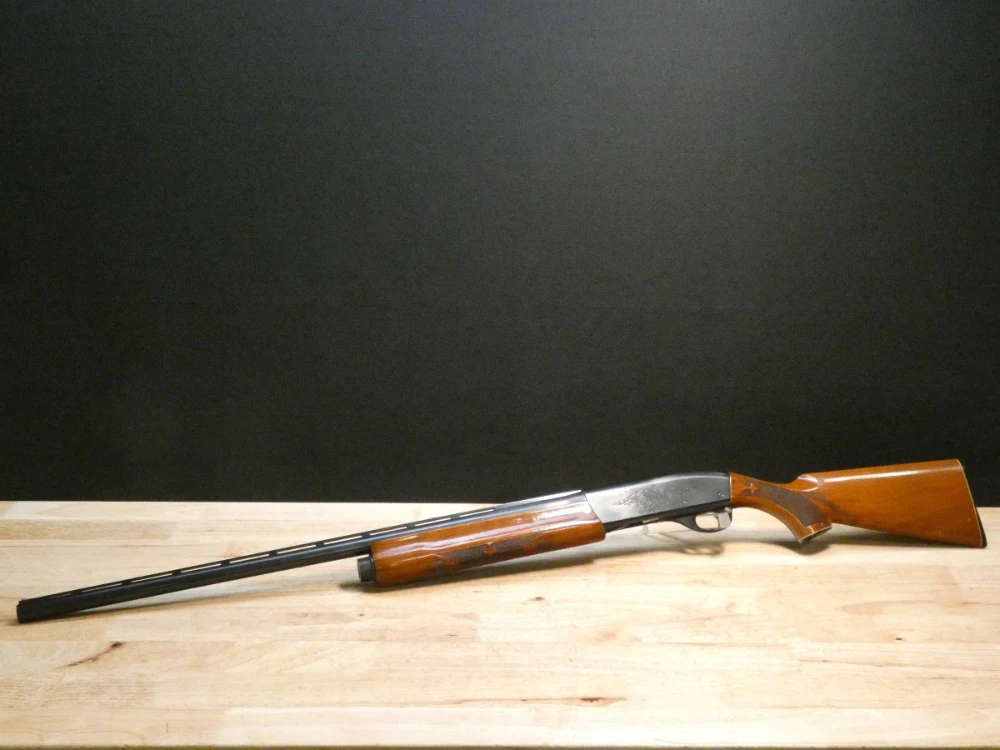
The Remington 1100 is a renowned gas-operated, semi-automatic shotgun, classified as a long gun. Its legendary reliability and smooth-shooting action have made it a favorite among sportsmen and clay shooters for decades. Understanding its market value requires looking beyond its initial purchase price, considering factors like specific model, condition, and the legal requirements for its sale. This guide provides a comprehensive breakdown of the factors that determine the true worth of your Remington 1100 today.
What Determines Your Remington 1100’s Worth
The value of a Remington 1100 is primarily driven by its overall physical condition rather than its round count. These shotguns are known for their durability, so usage wear on replaceable internal parts is not a primary valuation factor. The average used price for a common model is approximately $845, with a typical market range of $600 to $900. While the last manufacturer-suggested retail price was around $1,200, the model’s limited production status has pushed the average price for new examples to about $2,144, reflecting its high demand and scarcity in the current market.
2026 Price Breakdown by Generation
Standard Field Models (12 & 20 Gauge)
While the Remington 1100 doesn’t have distinct “generations” in the traditional sense, its value is most clearly segmented by model and configuration. The most common variants are the standard field models, typically found in 12 or 20 gauge. These are the workhorses of the 1100 family and represent the largest portion of the used market. For these shotguns, condition is the paramount factor influencing price. A well-maintained example with minimal cosmetic wear will consistently fetch a higher price than one showing significant use in the field, even if both are mechanically sound and have a similar round count through them.
In today’s market, a standard used Remington 1100 in very good to excellent condition typically commands a price between $400 and $845. This range accounts for minor variations in finish, wood quality, and included accessories like chokes. Sellers can expect prices to fall within the lower end of this spectrum for guns with noticeable scratches or dings, while pristine examples can approach the upper limit. This price bracket represents the core value proposition for the most frequently encountered models of this classic semi-automatic shotgun, making them an accessible yet valuable firearm for collectors and shooters alike.
Specialized Models (e.g., Sporting)
Beyond the standard field guns, specialized models like the Remington 1100 Sporting series often attract a different buyer and can command slightly different values. These models were designed with features tailored to competitive clay shooting, such as different barrel lengths, specialized stocks, and sometimes more refined finishes. Their value is influenced not only by condition but also by their desirability within the sport shooting community. The fact that specific variants like the Sporting model are explicitly listed as generally permitted on California’s Department of Justice roster can also positively influence their demand and subsequent market value in that significant regional market.
The pricing for these specialized models often starts at the higher end of the standard field model range and can extend further based on specific features and rarity. A Sporting model in excellent condition is a desirable firearm for those looking to get into competitive shooting without the expense of a dedicated over-under shotgun. As with all 1100s, originality and condition are key, but the specific configuration and its applicability to a particular shooting discipline play a much larger role in determining its final sale price compared to a more common, all-purpose field variant.
Desirable Gauges (.410 LW)
Certain configurations of the Remington 1100 are significantly rarer and more sought-after, leading to a dramatic increase in value. The premier example of this is the lightweight (LW) model chambered in .410 gauge. This specific variant is highly prized by collectors and enthusiasts for its unique characteristics and limited production numbers compared to its 12 and 20-gauge counterparts. The combination of the classic 1100 action in a small-bore, lightweight format creates a highly desirable shotgun for both upland hunting and collecting, placing it in a completely different value tier than standard models.
Due to its scarcity and high demand, the average used value for a .410 LW Remington 1100 can exceed $2,000. This price point illustrates a key principle in firearm valuation: rarity and specific configuration can often trump all other factors. While a standard 12-gauge model’s value is capped in the hundreds of dollars, this particular sub-model commands a price several times higher. Sellers who possess one of these rare gems should be aware of its distinct market and avoid pricing it according to the standards of more common models, as its value is in a class of its own.
New & Limited Production Models
The market for new-in-box or recent limited production Remington 1100s operates under a different set of economic principles. With the firearm not currently in regular production, the supply of new units is extremely limited. The most recent MSRP for a standard Model 1100 was approximately $1,200 before production slowed. However, the basic laws of supply and demand have since taken over, driving the actual market price for a new, unfired Remington 1100 to an average of around $2,144. This significant markup reflects the shotgun’s iconic status and the desire of buyers to own a pristine example.
This premium price for new models highlights the value collectors and dedicated shooters place on obtaining an untouched piece. Unlike the used market, where condition is a variable, the value of a new 1100 is set by its scarcity. Sellers with a new-in-box example are in a strong position, as their firearm competes with a very small pool of available units. This value is less about utility and more about collectibility and the assurance of factory-new condition, making it a distinct category in the overall valuation landscape of the Remington 1100 shotgun.
How Modifications Affect Value
When considering modifications, there is no broad market consensus that specific aftermarket parts consistently add monetary value to a Remington 1100. The firearm’s worth is most reliably tied to its original condition and configuration. While owners may add parts to enhance performance for their personal use, these upgrades rarely translate into a dollar-for-dollar increase in resale price. Potential buyers often prefer an unmodified firearm, as it provides a clean slate and assurance of factory reliability. Therefore, sellers should not expect to fully recoup the cost of accessories or custom work when pricing their shotgun for the general market.
Conversely, some modifications are unlikely to hurt resale value and may even be seen as a positive by knowledgeable buyers. For instance, discussions indicate that an upgraded aftermarket trigger, such as a Timney, is widely considered a significant performance enhancement. Some older, all-steel aftermarket triggers are desirable in their own right and can be quite expensive. However, irreversible modifications, such as shortening the barrel to less than 18 inches, drastically alter the firearm’s legal status. This modification turns the shotgun into a Short Barrel Shotgun (SBS), a regulated NFA item, which severely complicates the transfer process and drastically shrinks the pool of potential legal buyers.
Regional Price Variations in 2026
The value and ease of sale for a Remington 1100 can be influenced by state and local regulations, creating regional price variations. In states with stricter firearm laws, certain models may be more or less desirable. For example, in California, the Remington 1100 Sporting model is specifically listed by the state’s Department of Justice, which can make it a more straightforward and thus more valuable transaction within that state. In contrast, New York law restricts certain tactical configurations, which would suppress the value of such models in that market, while most standard configurations of the 1100 remain legal and maintain their typical market value.
Furthermore, paperwork requirements for private sales differ significantly by jurisdiction, impacting local market dynamics. Some states have no registration requirements for shotguns and may only recommend a simple bill of sale, creating a fluid and active private market. Other states mandate that all private transfers must be conducted through a licensed firearms dealer (FFL), adding time and cost to the transaction, which can slightly depress private sale values compared to less regulated areas. A seller must understand their specific state’s laws to price their shotgun effectively and ensure a compliant, successful sale within their local market.
Online vs Local Sales
Selling a Remington 1100 online opens up a national market but introduces specific legal and logistical requirements. To legally sell this long gun to a resident of another state, the seller must ship the firearm to a Federal Firearms Licensee (FFL) in the buyer’s state of residence. This FFL will then conduct the required background check and legally transfer the firearm to the buyer. This process ensures the transaction complies with federal law, but it adds shipping costs and FFL transfer fees for the buyer, which should be factored into the overall price negotiation when selling across state lines.
A private seller can legally ship a Remington 1100 shotgun via common carriers like UPS or FedEx, but they must strictly adhere to all carrier policies and applicable laws. The firearm must be declared to the carrier, completely unloaded, and packaged discreetly without any markings that indicate its contents. While an individual can typically ship a long gun directly to the buyer’s chosen FFL, it’s wise to first confirm that the receiving FFL accepts shipments from non-licensees. This diligence is crucial for ensuring a smooth and legal transaction from origin to destination.
Local sales, by contrast, are governed by state and municipal laws, which can be simpler or more complex depending on the location. In many states, a private sale of a long gun between two residents of that state can be conducted directly, often with just a bill of sale that includes the buyer’s and seller’s information and the firearm’s details. However, some states require all private sales to go through an FFL, mirroring the process of an interstate transfer. Verifying local laws is absolutely essential to avoid inadvertently committing a felony, making local sales potentially easier but requiring careful legal diligence.
The FFL Buying Advantage
Selling your Remington 1100 to a Federal Firearms Licensee (FFL), such as a local gun store, offers a trade-off between maximum value and convenience. Market data indicates that a dealer’s trade-in offer is typically around 65% of the firearm’s expected private party sale value. For instance, a common Remington 1100 model with a private market value of approximately $845 might only receive a trade-in offer of about $550 from a dealer. This reduction accounts for the dealer’s need to cover overhead, sit on the inventory, and still make a profit upon resale.
Despite the lower cash offer, selling to an FFL provides significant advantages in speed, safety, and legal security. The transaction is immediate, eliminating the time and effort required to find a private buyer, negotiate a price, and arrange a meeting. More importantly, selling to a dealer legally transfers the firearm out of your name instantly and permanently. This removes any future liability or concern about the firearm’s use after the sale, providing peace of mind that many sellers find is worth the difference in price compared to a private transaction with an unknown individual.
What Increases Your Offer
A thorough pre-sale cleaning is one of the most effective ways to increase the perceived value of your Remington 1100. Pay special attention to the gas system, which is critical to the shotgun’s reliable function. Meticulously cleaning the gas ports, piston, and piston seal will not only make the firearm more appealing but also assures the buyer of its proper maintenance. Failing to clear carbon buildup from the gas system and magazine tube is a common oversight that can cause ejection and feeding problems, which a knowledgeable buyer will likely check for before making an offer.
Beyond the primary action, cleaning often-neglected areas can significantly boost your shotgun’s appeal. The action spring and its tube, located within the stock, are frequently overlooked and can accumulate hidden debris and moisture. A clean spring and tube ensure smooth, reliable cycling. Avoid the common mistake of over-lubricating this area with heavy grease, which can congeal in cold weather and slow the action. A properly cleaned and lightly lubricated shotgun demonstrates a high level of care, signaling to potential buyers that the firearm has been well-maintained throughout its life, justifying a higher offer.
High-quality photography is essential for attracting the best offers, especially in online listings. To properly showcase your Remington 1100, use a simple, uncluttered background that doesn’t distract from the firearm. Soft, diffused lighting is crucial to prevent harsh glare on the metal and wood surfaces, allowing the finish to be seen accurately. Using a tripod will ensure your images are sharp and professional. Be sure to capture clear, high-resolution photos from all angles, including close-ups of the receiver, barrel markings, serial number, and any notable wear, to give buyers the confidence to make a strong offer.
When to Sell Your Remington 1100
Timing the sale of your Remington 1100 can have a tangible impact on the final price you receive. For a classic sporting shotgun like this, the market sees a predictable surge in demand during the months leading up to hunting season. Listing your firearm from late summer into early fall places it in front of buyers who are actively preparing for upcoming seasons. This heightened demand often allows sellers to hold firm on their asking price and complete a sale more quickly, as the buyer pool is at its largest and most motivated during this specific window of the year.
Beyond the hunting season, a secondary peak in the general firearms market occurs from February through April. This period coincides with tax return season, when many potential buyers have more disposable income to spend on hobbies and purchases. This trend applies broadly to most types of firearms, including shotguns, and represents another strategic opportunity to list your Remington 1100. Capitalizing on this seasonal increase in purchasing power can lead to a faster sale and a better price compared to other times of the year when buyers may be more hesitant to spend.
Conversely, some periods are consistently slower and should be avoided if possible. The summer months, particularly July, are widely cited as the most sluggish time for firearm sales. With potential buyers focused on vacations, family activities, and other outdoor pursuits, the market for firearms typically softens. Listing your shotgun during this lull can result in fewer inquiries, lower offers, and a much longer time on the market. For sellers who are not in a rush, waiting until the pre-hunting season or tax season upswings is a strategically sound decision to maximize their return.
Common Pricing Mistakes
One of the most frequent errors sellers make is overvaluing a standard, common model of the Remington 1100. While these are excellent shotguns, their widespread production means that a typical 12-gauge field model is not a rare collectible. For these standard firearms, a professional appraisal is likely not worth the cost. The market value for these shotguns in very good to excellent condition generally ranges from $400 to $845, and a formal appraisal fee would consume a significant portion of the firearm’s total value, offering little benefit for a well-understood market item.
The opposite mistake is undervaluing a rare or highly desirable configuration. Not all Remington 1100s are created equal, and failing to research the specifics of your particular model can cost you hundreds or even thousands of dollars. For example, pricing a lightweight (LW) .410 gauge model—which can command over $2,000—as if it were a standard 12-gauge field gun would be a substantial financial loss. It is crucial for sellers to identify their shotgun’s exact model, gauge, and features to understand if they possess a common variant or a premium collector’s piece before setting a price.
Another common misstep is failing to account for the difference between private sale value and a dealer’s trade-in offer. A seller who bases their asking price on what they see a similar gun listed for at a retail store is setting an unrealistic expectation for a private transaction. It’s important to remember that a dealer’s offer will be significantly lower, approximately 65% of the private sale value, to account for their business costs. Understanding this ratio helps sellers set a competitive private party price or have realistic expectations when approaching a dealer for a quick sale.
Market Outlook for 2026
While a definitive future price prediction for the Remington 1100 is not available due to fluctuating market dynamics, several key factors suggest that values for well-maintained examples will remain stable or appreciate modestly. The fact that the firearm is not currently in regular production has created a finite supply of both new and used models. As existing shotguns age, pristine, well-cared-for examples will become increasingly scarce. This scarcity, coupled with the model’s enduring popularity and reputation for reliability, provides a strong foundation for its long-term value in the used firearms market.
The shotgun’s legacy as a top-tier sporting and field gun also supports its future value. The Remington 1100 is an iconic American firearm, and its reputation ensures continued demand from both new generations of shooters and established collectors. Unlike more modern firearms that are quickly superseded by new technology, the 1100’s classic design and smooth-shooting gas action have a timeless appeal. As long as it remains a beloved and functional shotgun, the market for clean examples is unlikely to decline, making it a relatively safe store of value for its owners moving forward.
Frequently Asked Questions
Does a high round count hurt my Remington 1100’s value?
No, a high round count does not significantly lower the value of a Remington 1100. The market value for these shotguns is primarily determined by their overall physical and cosmetic condition. The Model 1100 is renowned for its robust design and durability, meaning it can handle extensive use without issue. While very high usage may lead to wear on easily replaceable parts like seals or springs, this is not a primary factor in valuation compared to the condition of the wood, the metal finish, and the absence of rust or significant scratches.
Is it worth getting my standard Model 1100 professionally appraised?
For a standard, common model of the Remington 1100, a professional appraisal is likely not worth the cost. The established market value for these shotguns in very good to excellent condition typically falls within a well-documented range of $400 to $845. A formal appraisal fee would represent a significant percentage of the firearm’s total value, making it an unnecessary expense. An appraisal is better suited for exceptionally rare configurations, such as the .410 LW model, where the value is much higher and less commonly understood by the general public.
How much less will I get trading my 1100 into a dealer?
When selling to a dealer, you should expect a trade-in offer that is approximately 65% of the shotgun’s private party sale value. This is a standard industry practice that allows the dealer to cover their overhead and make a profit on the eventual resale. For example, if your Remington 1100 has a private market value of around $845, a typical trade-in offer from a licensed dealer would be in the neighborhood of $550. The lower price is the cost of a convenient, immediate, and legally secure transaction.
Does the gauge of my 1100 significantly affect its price?
Yes, the gauge and specific model configuration can have a dramatic impact on the value of a Remington 1100. While standard 12 and 20-gauge models fall within a predictable price range, certain less common variants command a significant premium. The most notable example is the lightweight (LW) model chambered in .410 gauge. Due to its relative rarity and high demand from collectors and small-bore enthusiasts, the average used value for this specific model can exceed $2,000, placing it in a completely different price category than its more common counterparts.
Will shortening the barrel increase my shotgun’s value?
No, shortening the barrel of your Remington 1100 will not increase its value and will almost certainly damage it. If the barrel is shortened to less than 18 inches, the firearm is legally reclassified as a Short Barrel Shotgun (SBS). An SBS is an NFA-regulated item, requiring federal registration and a tax stamp to own legally. This modification severely restricts the pool of potential buyers and makes the firearm difficult and expensive to transfer. For the vast majority of buyers, this is a major deterrent that makes the shotgun far less desirable and valuable.
Get a Cash Offer Today
Ready to sell your Remington 1100? We make the process fast, safe, and simple. Submit your firearm’s details on our secure site, and our experts will provide a fair, transparent cash offer based on the latest market data. Eliminate the hassle and uncertainty of private sales.
There’s no need to deal with lowball offers or wait for the right buyer. Accept our offer, and we’ll provide a prepaid shipping label for you to send your unloaded firearm to us through a licensed dealer. Get paid quickly and confidently. Start your submission today!