
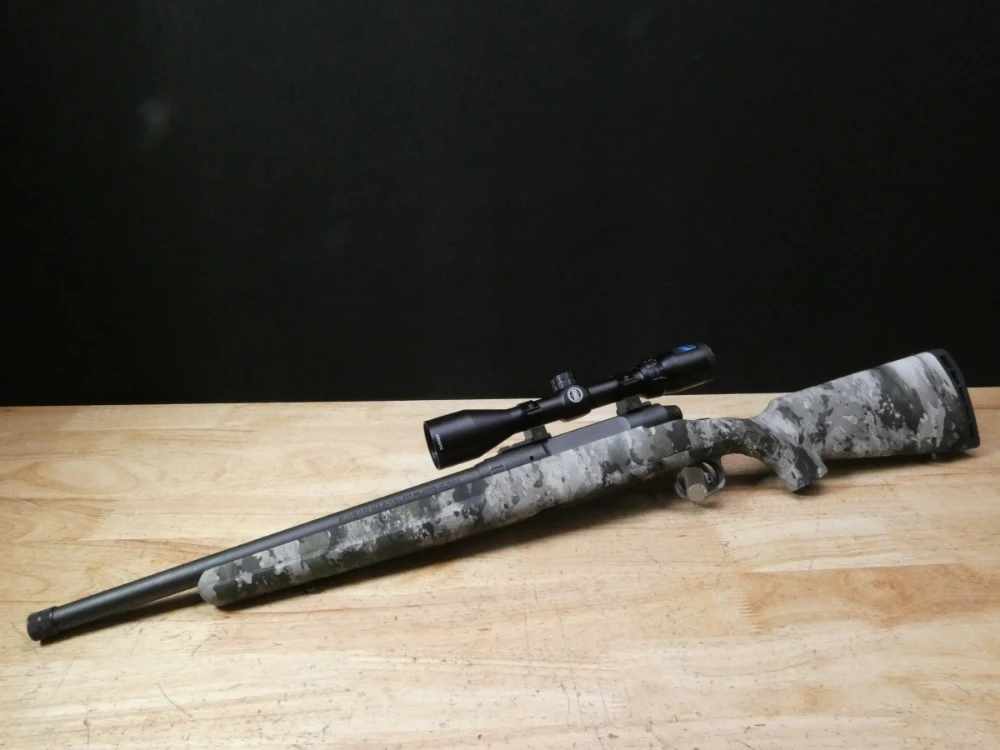
The Savage Arms Axis is a popular bolt-action rifle known for its affordability and reliability, making it a staple for new hunters and budget-conscious shooters. Classified as a long gun, this firearm has carved out a significant niche in the market as a practical, no-frills tool for the field and range. Understanding the key factors that influence its value, from its specific model and condition to market trends, is essential for any owner looking to sell or trade their rifle.
What Determines Your Savage Arms Axis’s Worth
The primary determinants of a Savage Arms Axis’s worth are its specific model, overall condition, and any included accessories. The most significant value distinction lies between the standard Axis and the Axis II, with the latter’s inclusion of the adjustable AccuTrigger commanding a higher price. Used prices for common models typically range from $280 to $320. However, a high round count can substantially decrease its value. As the Axis is considered a budget or “disposable” rifle, the cost of major repairs like a barrel replacement can easily surpass the firearm’s initial price, making heavily used examples far less desirable to potential buyers.
2026 Price Breakdown by Generation
Savage Axis (Base Model)
The original Savage Axis represents the foundational, entry-level model in the series, establishing a reputation for accuracy and affordability right out of the box. Lacking the later AccuTrigger system, its value is almost entirely based on its functional condition and mechanical integrity rather than any collectible status. With new models averaging around $450, its appeal lies in providing a reliable platform for hunting and target shooting at one of the lowest price points on the market. This model serves as the baseline from which all other variants derive their comparative value, making it a common and accessible option on the used market.
On the resale market, the base model Axis is a straightforward proposition for both buyer and seller. Its value is dictated by bore condition, cosmetic wear, and proper mechanical function. Because it lacks the more refined features of its successors, its price point is the most sensitive to signs of heavy use. Sellers should expect its value to be lower than an Axis II in similar condition, as savvy buyers often hold out for the model with the upgraded trigger system, making a clean, well-maintained rifle essential for achieving a fair price.
Savage Axis XP (Scoped Package)
The “XP” designation in the Savage Axis lineup indicates a package deal that includes a factory-mounted and bore-sighted scope. This configuration adds significant value by offering a turnkey solution for new shooters and hunters who want a field-ready rifle without the extra step of selecting and mounting their own optic. The convenience of this all-in-one package makes the Axis XP a highly popular choice, and its resale value reflects this added utility. The worth of the package is, however, tied to the quality and condition of the included scope, which is typically an entry-level model sufficient for most common hunting applications.
When selling a Savage Axis XP, the condition of the scope is just as important as the rifle itself. Scratches on the lenses or a damaged turret can diminish the package’s value. While the XP package commands a higher price than the standard rifle, sellers should not expect to recoup the full retail difference. Buyers understand that factory scopes are basic and may factor in the cost of a future upgrade. Therefore, presenting the included optic as a functional, ready-to-use component is key to realizing the package’s enhanced value over the base model rifle.
Savage Axis II
The introduction of the Savage Axis II marked the most significant evolution in the rifle’s lineage, primarily due to the inclusion of the renowned, user-adjustable AccuTrigger system. This feature alone elevates the rifle’s performance, providing a crisp, light trigger pull that greatly enhances accuracy potential. This upgrade directly translates to a higher market value, with new Axis II models averaging around $470. The AccuTrigger makes the Axis II a more desirable firearm for discerning shooters, bridging the gap between entry-level budget rifles and more expensive, feature-rich platforms, which helps it retain its value more effectively on the used market.
In the resale landscape, the Axis II consistently fetches a higher price than its predecessor in comparable condition. The AccuTrigger is a well-known and highly sought-after feature, and its presence is a primary selling point that justifies the price premium. Sellers of an Axis II should emphasize this upgrade, as it appeals to both new buyers seeking better performance and experienced shooters looking for an affordable rifle with a quality trigger. This perceived enhancement in shootability ensures the Axis II remains a top contender in the competitive budget rifle market, bolstering its long-term value.
Savage Axis II XP
The Savage Axis II XP represents the pinnacle of the Axis line, combining the upgraded, adjustable AccuTrigger of the Axis II with the convenience of a factory-mounted scope package. This model offers the best out-of-the-box experience, providing enhanced accuracy and immediate field-readiness. It holds its value better than any other variant due to this combination of desirable features. The new 2024 lineup reflects this premium positioning, with Manufacturer’s Suggested Retail Prices ranging up to $689, and specialized models like the AXIS 2 PRO priced between $599 and $639, setting the upper boundary for the rifle family’s value.
When selling an Axis II XP, owners benefit from the combined appeal of the improved trigger and the included optic. This package is particularly attractive to buyers who want a reliable, accurate, and complete setup without any additional purchases or gunsmithing. The rifle’s ability to deliver superior performance straight from the box makes it a strong seller. Its value is well-supported by its feature set, and as long as both the rifle and scope are in good condition, it will command the highest resale price among all Savage Axis models, making it a sound investment within its class.
How Modifications Affect Value
When considering modifications for a Savage Axis, it is crucial to understand its market position as a budget-friendly firearm. Upgrades such as an aftermarket trigger, while potentially improving the shooter’s experience, are unlikely to significantly increase the rifle’s resale value. Potential buyers for an Axis are typically price-driven and are not looking to pay a premium for custom parts. Consequently, owners should view such modifications as personal enhancements rather than financial investments, as they should not expect to recoup the cost of the parts or installation when it comes time to sell the rifle in a competitive marketplace.
Similarly, there is no broad market consensus on other modifications that consistently add monetary value to a Savage Axis. While a custom stock or a high-end optic might appeal to a specific niche buyer, the general market for these rifles prioritizes affordability and original factory condition. Because the platform’s core identity is its accessibility, most potential buyers will not pay extra for aftermarket components. Therefore, any customization is best done for the owner’s personal enjoyment, with the understanding that it will not translate into a higher offer from a dealer or the average private buyer.
Regional Price Variations in 2026
The Savage Arms Axis, being a standard bolt-action rifle, generally avoids the significant regional price variations caused by state-level firearm restrictions. The rifle and its variants are widely legal across the United States, including in states with stringent gun laws like California and New York. In California, many models are sold as “California Legal,” and in New York, bolt-action rifles do not face the same heavy restrictions as semi-automatic firearms. This broad legality ensures a stable, nationwide demand, preventing the dramatic price fluctuations that can affect other classes of firearms, and keeps its value relatively consistent from one state to another.
While major legal restrictions do not typically impact pricing, local market dynamics can introduce minor variations. In regions with a strong hunting culture, demand for reliable bolt-action rifles like the Axis may be higher, potentially supporting slightly stronger prices, especially leading into hunting season. Conversely, in more urban areas, the demand might be lower, which could result in more competitive pricing. However, these differences are generally subtle. The rifle’s status as a non-NFA item with widespread availability means that sellers should expect its value to be dictated more by condition and model than by geographic location.
Online vs Local Sales
Selling a Savage Arms Axis through a local, private sale can often yield the highest return, with average private party prices hovering around $291. This method requires the seller to create their own listing, vet potential buyers, and arrange a meeting. For this type of transaction, a comprehensive Bill of Sale is the essential piece of paperwork. This document should record the full names, addresses, and driver’s license numbers of both parties, along with the rifle’s make, model, caliber, and serial number. Both individuals should sign the document and retain a copy for their records.
Alternatively, selling to a Federal Firearms License (FFL) holder or gun dealer offers a much faster and more convenient process, but at a lower price. Dealers typically offer between 50% and 65% of a used firearm’s private market value to account for their overhead and profit margin. For a Savage Axis, this translates to a trade-in or cash offer of approximately $189. While this is a significant reduction compared to a private sale, it eliminates the complexities of finding a buyer and handling the paperwork, providing a secure and immediate transaction.
For an interstate sale to a buyer in another state, the transaction must be legally facilitated by an FFL. The private seller is required to ship the unloaded firearm to a licensed dealer in the buyer’s state of residence. Federal law mandates that the shipper must provide written notice to the carrier, such as UPS or FedEx, that the package contains a firearm, and the exterior of the box cannot have any markings that indicate its contents. This process adds shipping and transfer fees but is the only legal method for a private individual to sell a firearm across state lines.
The FFL Buying Advantage
Utilizing a Federal Firearms License (FFL) holder for the sale of your Savage Arms Axis provides a crucial layer of legal protection and peace of mind, even for local transactions. By routing the sale through a licensed dealer, the seller ensures that the buyer undergoes a mandatory background check. This legally verifies that the individual is not prohibited from owning a firearm, thereby transferring the liability of the sale from the private seller to the licensed professional. This step is the most secure way to confirm a legal transfer and protect yourself from potential future legal complications.
In the case of an interstate sale, the involvement of an FFL is not just an advantage—it is a federal requirement. A private seller must ship the rifle to an FFL in the buyer’s home state, where the buyer will then complete all necessary paperwork and the background check. This FFL-to-FFL process ensures the entire transaction complies with the complex web of federal, state, and local laws governing firearm transfers. While dealers can legally sell long guns over-the-counter to out-of-state residents, private party sales across state lines must adhere to this more structured and secure procedure.
What Increases Your Offer
A thorough cleaning is one of the simplest yet most effective ways to increase the value of your Savage Arms Axis before a sale. First, ensure the rifle is completely unloaded. Proceed to clean the bore and action meticulously, removing any carbon fouling and residue. A common mistake is over-oiling; apply only a very thin film of a quality gun oil to metal parts. This prevents rust and ensures the bolt operates smoothly without attracting the dirt and dust that a thick coat of oil will, presenting a well-maintained firearm to potential buyers.
High-quality photographs are non-negotiable for attracting the best offers, particularly in online marketplaces. Use a simple, uncluttered background to ensure the rifle is the sole focus. Good lighting is critical; use multiple light sources to eliminate shadows and accurately represent the firearm’s condition. A modern smartphone is more than capable of capturing clear, high-resolution images. Be sure to take numerous photos from various angles, including close-ups of any markings, the bore, and any imperfections to build trust and transparency with buyers, which often leads to better offers.
Completeness significantly impacts the final sale price. While the Savage Axis is sold new in a simple cardboard box that holds no value, missing original components like the factory magazine will result in a penalty. A replacement magazine costs between $48 and $60, and a buyer will deduct this from their offer. The total penalty for missing items can easily reach $50 to $100. To maximize your offer, ensure all original parts are included. Adding a basic hard case, which can be purchased for a modest price, can also add perceived value and make your listing more attractive.
When to Sell Your savage arms axis
The most opportune time to sell a hunting rifle like the Savage Arms Axis is in the months directly preceding major hunting seasons. Demand for reliable, field-ready rifles peaks from late summer into the fall, typically from August through October. During this period, hunters are actively gearing up and are more likely to purchase a new or used firearm. Listing your rifle within this window increases the likelihood of a faster sale and can often result in achieving a higher final price due to the heightened seasonal demand from motivated buyers preparing for their hunts.
In contrast, the summer months tend to be the slowest period for long gun sales, as outdoor activities shift away from hunting. While other types of firearms, such as handguns, might see increased sales during tax return season from February to April or around the Christmas holidays, the value of a dedicated hunting rifle like the Axis is most directly influenced by its seasonal utility. Attempting to sell during the off-season may require more patience and a more competitive price point to attract the limited number of buyers in the market at that time.
Beyond predictable seasonal trends, sellers should also remain aware of the broader political climate, which can unexpectedly influence the entire firearm market. Major elections or discussions of new firearm legislation can trigger sudden spikes in demand across all categories of firearms, including bolt-action rifles. While less common for this type of rifle compared to semi-automatics, these events can create unforeseen selling opportunities where demand temporarily outstrips supply, allowing a seller to command a premium price irrespective of the time of year. Staying informed can provide a distinct market advantage.
Common Pricing Mistakes
One of the most significant pricing mistakes owners make is underestimating the negative impact of a high round count. The Savage Arms Axis is valued as a budget-friendly, utilitarian tool, not a long-term heirloom. Its primary worth is in its immediate functionality. Because the cost to replace a worn-out barrel or perform other major repairs can easily meet or exceed the rifle’s initial low price, a heavily used example is worth considerably less. Sellers who price a high-mileage rifle similarly to a like-new one will find it very difficult to attract serious buyers.
Another common error is spending money on a formal appraisal. For a widely available and affordable firearm like the Savage Axis, a professional appraisal is simply not cost-effective. The fee for such a service would likely constitute a significant portion of the rifle’s actual resale value, yielding a poor return on the investment. A more practical approach is to research current and completed listings on popular online marketplaces to gauge a realistic market price based on the rifle’s specific model, condition, and included accessories, saving both time and money.
Failing to account for missing components is a frequent pricing pitfall that can derail a sale. A buyer will immediately calculate the cost of replacing any missing items, such as the factory magazine, and deduct it from their offer. A genuine Savage Axis magazine can cost upwards of $50, a substantial amount relative to the rifle’s total value. Sellers who overlook this and price their incomplete rifle as if it were whole will face tough negotiations and will ultimately have to reduce their price, leading to disappointment and a lower final sale amount.
Market Outlook for 2026
Predicting the exact market value of the Savage Arms Axis for 2026 is challenging, as the firearms market is subject to a variety of economic and political influences. However, given its established role as a reliable, entry-level bolt-action rifle, its value is expected to remain stable and closely tied to the manufacturer’s pricing for new models. Its worth will likely follow general trends for budget-friendly hunting and sporting firearms, appreciating slightly with inflation but not experiencing the dramatic value swings seen in more collectible or legislatively-targeted firearm categories.
As a standard, non-NFA long gun, the Savage Axis is largely insulated from the regulatory pressures that can cause sharp price increases for other types of firearms. Its widespread legality and consistent demand from new hunters and recreational shooters provide a solid foundation for its resale value. The market outlook suggests that the Axis will continue to be a popular and accessible option, with its used price determined primarily by its condition, specific model (Axis vs. Axis II), and the overall health of the outdoor sporting goods market rather than speculative factors.
Frequently Asked Questions
How much does the AccuTrigger on the Axis II affect its resale value?
The AccuTrigger is the single most important feature distinguishing the Axis II from the original Axis, and it directly impacts resale value. This user-adjustable trigger system is highly regarded for improving accuracy and is a major selling point. Consequently, an Axis II in good condition will consistently command a higher price than a standard Axis from the same era. While the exact premium varies, the desirability of the AccuTrigger ensures the Axis II retains its value better and is often seen as a more worthwhile purchase on the used market.
Will adding a scope to my base model Axis increase its value?
Adding a scope to a base model Savage Axis can increase its value, but typically not by the full retail price of the optic. The increase in value depends heavily on the quality and brand of the scope. A reputable, mid-tier optic will add more value than a generic, low-cost one. The rifle’s “XP” variants, which come with factory scopes, demonstrate that a package deal is attractive to buyers. However, since the Axis is a budget rifle, buyers are price-sensitive and may not be willing to pay a large premium for an aftermarket scope.
Does a high round count really matter for a budget rifle like the Axis?
Yes, a high round count significantly lowers the value of a Savage Arms Axis. It is considered a “disposable” or utility rifle, where its value is tied to its immediate function and barrel life, not its longevity as a collectible. The cost of replacing a worn-out barrel or other major components can easily exceed the entire rifle’s initial purchase price. Therefore, buyers will pay substantially less for a rifle with significant wear, as it has a limited remaining service life before requiring costly repairs, diminishing its overall resale value considerably.
Is it worth getting a professional appraisal for my Savage Axis?
No, obtaining a professional appraisal for a standard used Savage Arms Axis is generally not considered cost-effective. These rifles are widely produced, budget-friendly firearms with a well-established market value that can be easily researched through online listings and forums. The cost of a formal appraisal service would likely be a significant percentage of the rifle’s actual resale value, meaning you would spend money only to confirm what is already publicly known. It is a step best reserved for rare, custom, or high-value collectible firearms.
How much will I lose if I’m missing the original magazine?
The penalty for a missing original magazine is essentially the direct cost of its replacement. A factory magazine for a Savage Axis rifle typically costs between $48 and $60. A potential buyer will almost certainly deduct this amount from their offer, as the rifle is not fully functional without it. To maximize your sale price, it is always best to sell the rifle as a complete package. If the magazine is lost, you will either need to purchase a replacement before selling or accept a lower offer.
Get a Cash Offer Today
Ready to sell your Savage Arms Axis? We eliminate the uncertainty and hassle of private sales by providing a fair, fast, and secure cash offer. Skip the endless negotiations and lowball offers from local buyers. Click here to start our simple process and discover the true cash value of your rifle.
Our streamlined system is fully compliant with all federal and state laws, guaranteeing a safe and legal transfer every time. We purchase firearms in any condition, offering a competitive price for your Savage Axis without the stress of navigating complex shipping regulations or meeting with strangers. Get your offer today!