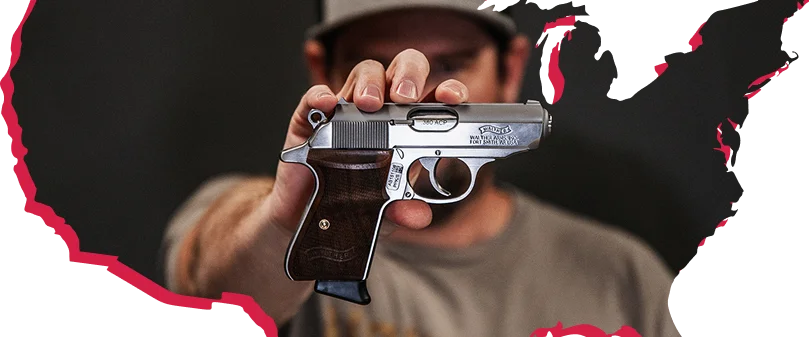

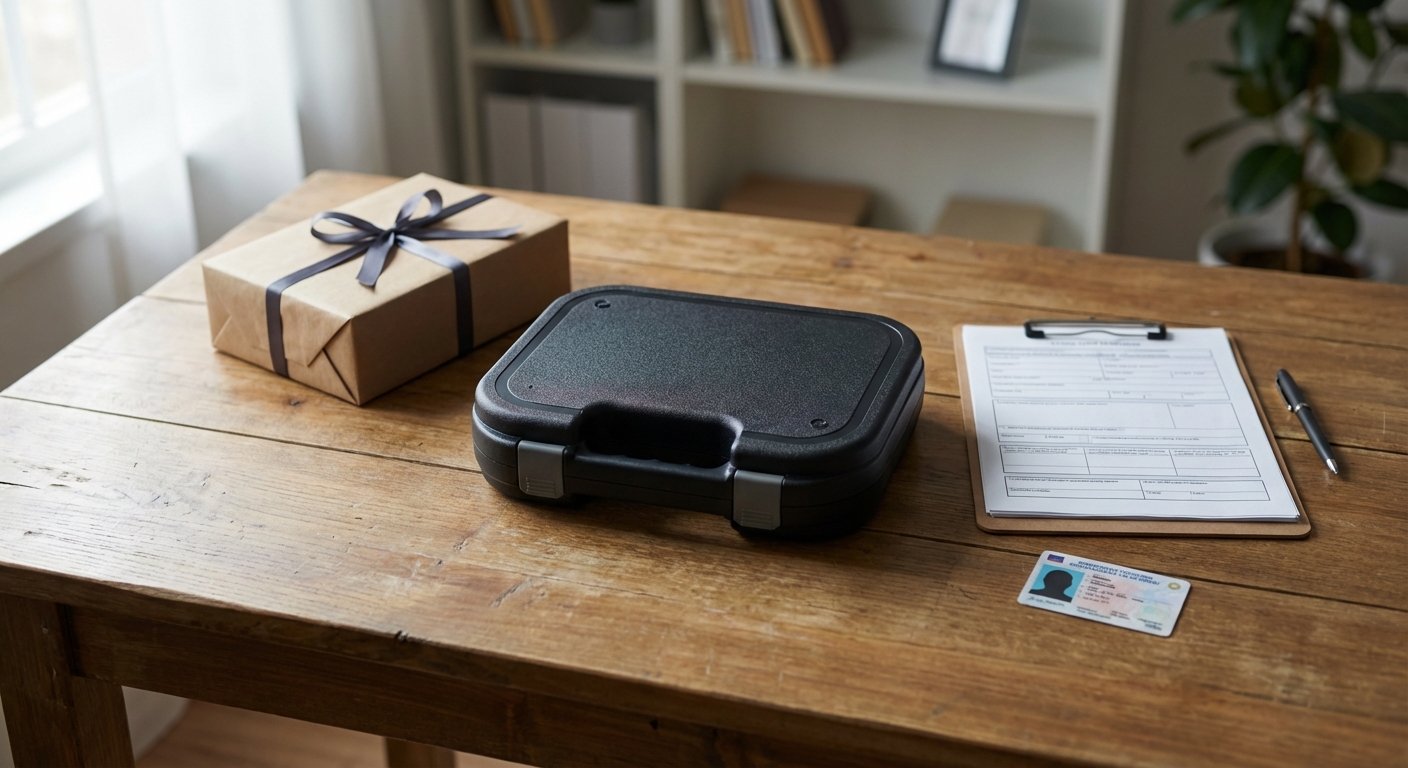
Here’s the gotcha: the ATF’s own FAQ guidance treats a gift as a regulated “transfer,” so the same basic paperwork and handoff rules can still apply. And if the gift happens through a dealer, ATF Form 4473 even calls out the difference between a lawful bona fide gift and buying it on someone else’s behalf.
The tension is real: you want the transfer to be clean and legal today, and you also don’t want a reporting mess later if you sell it, insure it, or just need a paper trail. That’s where fair market value (FMV) still matters for taxes and recordkeeping even if the price paid was $0.
You’ll walk away knowing how to treat a gifted firearm like a real transfer from day one, and how to keep value in mind so future resale or documentation doesn’t turn into a headache.
Gift Versus Sale Basics
In firearms, “gift vs sale” matters less than who’s really acquiring the gun. Under the Gun Control Act, the regulated event is you conveying a firearm to another person-“selling, delivering, or otherwise disposing” of it-not whether cash changed hands (18 U.S.C. § 922 framework). So the law keeps circling back to possession and control: who ends up with it, and how it moved from A to B (including lawful ways to dispose or transfer a firearm).
A private sale is a transfer where the recipient pays. A private transfer is the bigger bucket: it includes gifts, loans that cross the line into a handoff, and swaps. Here’s where people accidentally step in it: ATF Form 4473 (purchase/transfer record) asks if you’re the “actual transferee/buyer,” meaning the real person acquiring the gun for themselves, not a stand-in.
Example (a): You buy a pistol with your own money because you want to, then later decide to gift it. That’s a genuine gift. Example (b): Your buddy hands you cash and says, “Buy it for me.” That’s a straw purchase, buying as someone else’s agent while you pose as the buyer. Abramski v. United States (2014) held that lying about the actual transferee/buyer is material even if the final recipient could legally own guns.
Example (c): Inheriting a firearm through a will or intestate succession is its own lane under federal law, with specific exceptions for bequests in the interstate rules (18 U.S.C. § 922(a)(3), § 922(a)(5)). A living gift is not a bequest, even if it feels like “family property” changing hands.
Practical takeaway: if the recipient is choosing, funding, or directing the purchase, pause and run it the clean way, with the right person as the buyer.
Federal Rules You Cannot Skip
Once you’re clear on who the real buyer is, the next question is whether the transfer itself is allowed where and how you plan to do it. Federal rules don’t care that it was a gift.
The fastest way regular people stumble into real trouble is handing a gun to someone who can’t legally receive or possess one under 18 U.S.C. § 922(g) and § 922(n).
At the high level, that “prohibited person” bucket includes examples like someone with certain felony convictions, a fugitive from justice, or an unlawful user of controlled substances (18 U.S.C. § 922(g)). Separately, § 922(n) covers someone under indictment for certain crimes; they cannot receive a firearm while that case is pending. Your intent doesn’t change the eligibility rules, even for a family gift.
An interstate transfer is any firearm transfer where the giver and receiver are residents of different states, and that residency mismatch is what flips the rules. The common “oops” scenario is gifting a rifle to your kid in college out of state or handing a handgun to a sibling who just moved across the border.
Under 18 U.S.C. § 922(a)(5), a non-FFL generally may not transfer (sell, give, deliver) a firearm to a non-FFL they know, or reasonably believe, lives in another state. In plain terms, out-of-state gifts usually cannot be a face-to-face handoff; they typically must go through an FFL dealer rather than a private-party transfer in the recipient’s state.
A Federal Firearms Licensee (FFL) is the compliance default because the dealer is the one who runs the transfer: the recipient shows ID, completes ATF Form 4473 to document identity and eligibility, and the dealer runs the required background check (and why you might not be able to skip it) before delivery.
Shipping is where people get sloppy. As a baseline, USPS rules generally prohibit non-FFLs from mailing handguns, allow non-FFLs to mail unloaded long guns if lawful, and do not allow ammunition in the same parcel. If there’s any interstate element or doubt, route it through an FFL and treat the paperwork as part of the gift (see legal and safe firearms transfer practices).
Gift Tax and Reporting Reality
The legal handoff is only half the story: if the firearm has real value (or might later), you also want the numbers to make sense on paper. The tax “gotcha” isn’t paying tax today-it’s reporting/value and what happens if you sell later.
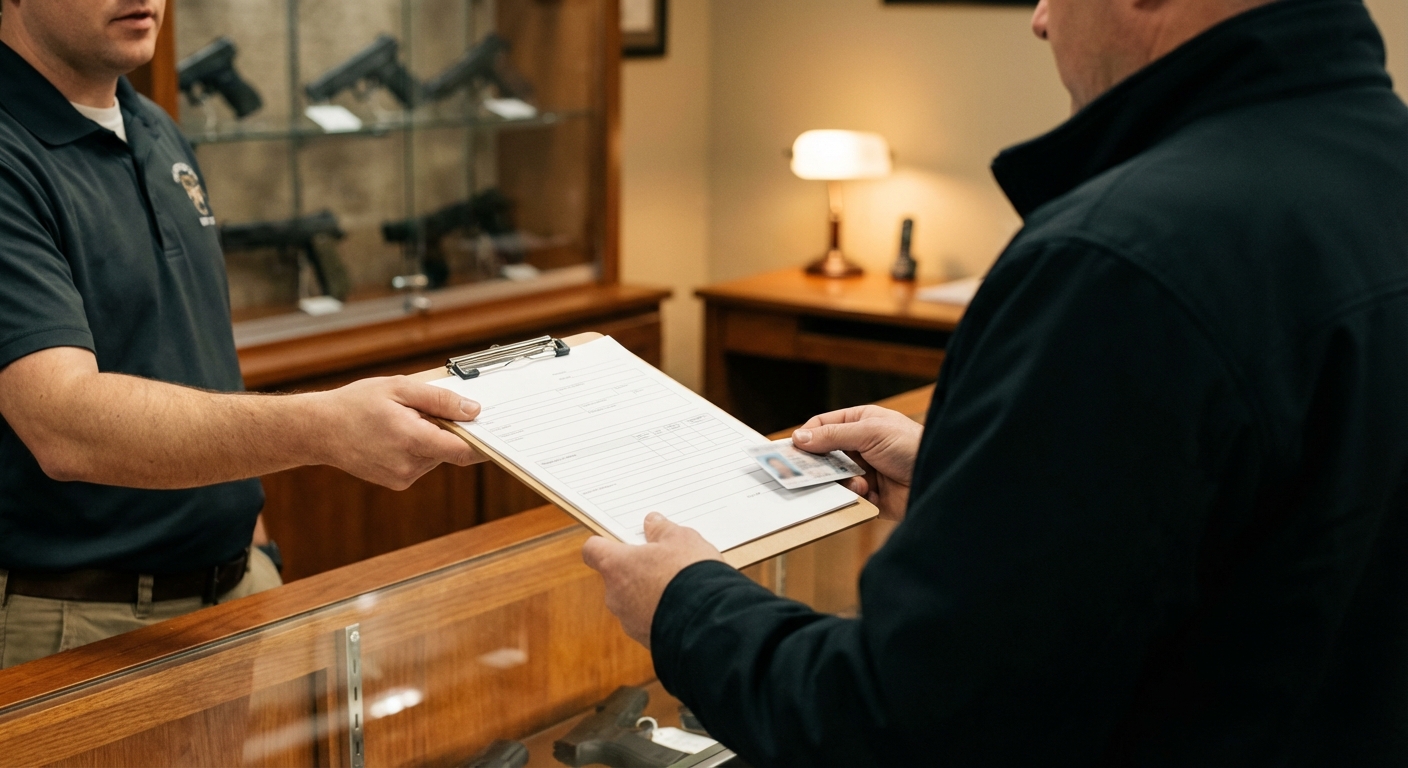
A firearm you receive as a gift generally isn’t taxable income to you, but the donor can trigger IRS paperwork if the gift is large. For 2025, the annual gift tax exclusion is $18,000 per recipient (or $36,000 with gift-splitting); check the latest IRS figure because it can change year to year. When filing is required, Form 709 is the return used to report the gift, and the amount over the annual exclusion typically chips away at the 2025 lifetime gift and estate exemption of $13.61 million, so confirm current amounts before assuming “no filing.”
Reporting lives and dies on the gift-date number. The IRS uses fair market value (FMV), meaning the price a willing buyer and willing seller would agree to, with neither forced to act and both knowing the relevant facts, a standard spelled out in IRS Publication 561. That gift-date FMV, not what the donor paid, is the value that drives what gets reported on Form 709 when a filing is required.
Your taxable gain usually keys off carryover basis, meaning you generally take the donor’s adjusted basis. Example: donor paid $600, FMV on the gift date is $1,500, and you sell later for $2,000, your potential taxable gain is $1,400 ($2,000 minus $600), not $500. If gift tax was paid, your basis can increase by the portion of that tax attributable to the $900 appreciation. Record the gift-date FMV and the donor’s basis now so future reporting and any sale is clean.
Valuation, Receipts, and Proof
That gift-date value and basis only help you if you can back them up later. If you ever need to defend the value, documentation is everything.
Two “same model” guns can land hundreds or thousands apart once you account for condition, originality, and what it actually costs to transfer it in your area, which is the number that matters for FMV, insurance, or a future family disagreement.
Start with the basics you can prove: exact make and model, caliber, and the serial number. Then get brutally specific on condition, finish wear, rust or pitting, and bore condition, because that’s where identical guns separate fast.
Originality is the next lever. Matching serial-numbered parts (where applicable) keep value credible; swapped bolts, slides, barrels, or mismatched numbered parts change what a buyer will pay.
Mods and add-ons cut both ways. Aftermarket triggers, optics cuts, cerakote, or “upgraded” furniture can narrow your buyer pool, while included accessories like magazines, optics, cases, and factory boxes usually help if they’re documented and actually included.
Finally, price is local. Demand swings by region, and your net value drops once you subtract local compliance costs and transfer fees.
- Dated photos: both sides, markings, serial number, and close-ups of wear and bore
- Written ID details: make/model, caliber, serial, and any matching-number notes
- List of aftermarket modifications and included accessories
- Transfer paperwork and receipts, including any FFL documentation
Example: Cash My Guns is operated by Dunlap Gun Buyers, an FFL, so the kind of dealer paperwork you’d save is straightforward and standardized (and it helps to know what to do when you don’t have the original box or papers).
Pay for a formal appraisal when the stakes justify it: high-value firearms, collections, scheduled insurance coverage, or estate planning. “Credible” means an expert firearms appraiser who signs a dated, written report that lists identifying details, condition notes, and the market sources used, not a number texted to you.
If you use a service that includes appraisal, look for real appraiser experience and keep the written output, even if it’s provided as part of a broader process.
A Safe Transfer Checklist
All of that detail can feel like a lot until you boil it down to a repeatable process. A “safe” gift is mostly about process, not good intentions.
The exact same firearm can be perfectly clean or a legal mess based on where the recipient lives, who actually paid, and whether your paperwork matches reality.
- Confirm the recipient is eligible to possess the firearm, ask the common-sense questions you’d want answered if your name were on the line.
- Verify state requirements for both of you, especially permits and ID cards tied to possession or purchase. For example, Illinois requires a FOID card to possess firearms or ammo, and some states require a permit to purchase a handgun, while others have no specific waiting period.
- Default to an FFL if anything crosses state lines, a direct non-FFL-to-non-FFL handoff across state lines is generally prohibited, so use an FFL in the recipient’s state.
- Complete the transfer correctly at the FFL, the transferee fills out ATF Form 4473, the FFL checks government photo ID, and the background check (NICS, plus any state add-ons) happens before pickup.
- Document the gift, date, make, model, serial number, and the FFL receipt or transfer record.
- Keep valuation and purchase records with your other tax files.
These are common ways otherwise well-meaning gifts get messy, especially when residency, payment, or timing isn’t as clear as it feels in the moment:
- Your college kid is “still a resident back home,” so you hand it to them during a visit in another state.
- They Venmo you back after the fact, or “pay you later,” and the paper trail turns a gift into straw-purchase optics, ATF red flags include the recipient selecting the gun or funding it while someone else does the 4473.
- You let the recipient pick the exact firearm, then you do the paperwork because it’s “faster.”
- “Just hold it for me” turns into an open-ended storage situation with no written transfer date or serial-number record.
When anything feels blurry-who paid, where they live, what your state requires-default to an FFL and write it down.
Do It Right, Then Gift Confidently
You can gift (or sell) confidently when the story matches the paperwork. The practical test is simple: if you can clearly explain who’s the real buyer and why money did or didn’t change hands, the transfer stays clean instead of turning into a headache later.
Federal rules set the floor, especially once state lines are involved, and state add-ons can change the steps even when the “gift” idea feels straightforward. Just as important, keep value and basic documentation tight: it protects you on taxes, and it protects the next owner on resale.
Two smart next steps: confirm the transfer path with a local FFL, especially if anything is interstate, and if the value is high or it’s a collection, get an appraisal and talk to a tax pro about reporting and basis. For the federal baseline, use ATF resources at atf.gov and verify dealers with ATF eZ Check (match the licensee name and address). If selling is the real goal, an FFL-routed option like Cash My Guns keeps the process on dealer rails.