

You’re packing lists, not negotiating with strangers on the internet. But between a deployment or PCS date, household logistics, and unit deadlines, your guns can turn into one high-stakes loose end fast.
You might be trying to keep your family comfortable, stay inside the lines at your current duty station, and make sure you’re not dragging a problem into your next one. The pressure is real because the clock only moves one direction.
The right move here isn’t just about money. It’s about lowering stress and avoiding preventable problems, like base policy issues, paperwork headaches, and getting targeted by scammers. DoD installations regulate privately owned firearms through installation-commander policies, and those rules can be stricter than the surrounding state. If you’re bringing privately owned firearms onto an Army installation, AR 190-11 also requires registration using the local installation’s procedures, plain and simple.
Rushed timelines also make you a target. The FTC warns that scammers push fast payment using hard-to-reverse methods like wire transfers, gift cards, and crypto, which makes disputes tough once the money is gone.
Decide now that you’ll follow a simple, lawful plan before your schedule compresses and forces a bad choice. The sections below walk through the practical choices (sell, store, or transfer), the legal guardrails you can’t ignore, how to price without spiraling, and a checklist you can run before wheels-up.
Sell, Store, or Transfer
If you’re undecided, you’re not behind, you just need a fast filter. The best choice-sell vs. store vs. a lawful transfer for safekeeping-depends more on your timeline and household reality than on “what gun people usually do.”
Selling wins when your deployment timeline is tight, nobody at home wants the responsibility, or your base rules limit where firearms can be kept. A 9 to 12 month absence can turn “I’ll deal with it later” into a spouse or roommate stressing over access, visitors, or where the safe key lives. If the simplest, lowest-drama outcome is having the guns gone before you fly, pick a compliant path you can execute quickly. For example, Cash My Guns is operated by Dunlap Gun Buyers, a federally licensed firearms dealer (FFL), and positions its process as “Safe • Legal • Hassle-Free.”
Storage makes sense when the gun has sentimental or collector value, or you know you’ll want it back. The friction is cost and rules (including practical considerations for off-site gun storage):
- Self-storage unit cost: about $30-$75/month depending on location and climate control (and many facilities restrict firearms in the contract).
- Off-site firearm storage insurance: some people consider insured off-site firearm storage at about $20/year for small, permitted items, but you still need to verify what’s allowed.
Whatever route you choose, store firearms unloaded.
If you have a trusted person who’s comfortable, local, and clear on expectations, a lawful transfer for safekeeping can reduce stress without forcing a sale. Keep it compliant, confirm state, local, and base rules, and use a licensed dealer for storage or transfer when required.
Pick the least-stress option you can execute cleanly before you leave, and decide within 48 hours so you’re not scrambling. Once you’ve chosen the lane, the next question is whether the transaction is even allowed the way you think it is-especially when duty-station residency and last-minute meetups are in play.
Legal Basics You Can’t Skip
Compliance is the shortcut, because mistakes cost time you don’t have. The fastest way to ruin a “simple sale” is ignoring residency and interstate rules, especially if you’re active duty and bouncing between home, a duty station, and a last-minute meet-up before wheels up.
- Pin down who counts as in-state vs out-of-state. Under the ATF’s “state of residence” definition in 27 CFR 478.11, an active-duty member is a resident of the state where their permanent duty station is located. The same regulation’s examples also matter in real life: if you keep a home in one state but your permanent duty station is in another, you can be a resident of both states for Gun Control Act purposes, but only while you’re physically present in each. And if you’re reassigned on Permanent Change of Station (PCS) orders, 27 CFR 478.11 treats you as a resident of the new state where the permanent duty station is located.
- Know when an FFL must be involved. A private-party transfer, meaning a person-to-person handoff between two nonlicensees, can be lawful within the same state under the ATF FAQ baseline as long as you do not know or have reason to believe the recipient is prohibited from possessing firearms. Cross state lines, and the guardrail changes: the ATF FAQ baseline is that interstate transfers to nonlicensees generally must go through a Federal Firearms Licensee (FFL), a dealer licensed under federal law, in the recipient’s state. That’s why using an FFL is often the cleanest way to keep an out-of-state situation from turning into a paperwork and scheduling mess.
- Assume state rules can be looser or stricter than you expect. Federal law sets the floor, but state laws can add background check requirements, permits, waiting periods, and other constraints that change what “simple” looks like on a random Tuesday.
Example: Texas (why people get complacent)
Texas is famously permissive for in-state private sales: no state-required background check for private intrastate transfers (federal prohibitions still apply), no state waiting period, and no FOID-style permit-to-purchase requirement. That can make it easy to forget that the moment the other person is an out-of-state resident, federal interstate rules still kick in.
Before you pick a buyer or a meeting plan, confirm (1) both parties’ residency situation under the ATF definition and (2) whether an FFL needs to be involved, then verify current state, local, and base policy since rules change. Once those guardrails are set, you can price realistically without getting dragged into endless “what’s it worth?” debates.
Pricing Your Guns Without Guesswork
You need a range, not a thesis. Under a deployment deadline, the win isn’t “perfect pricing,” it’s a defensible price range you can act on without second-guessing every message you get.
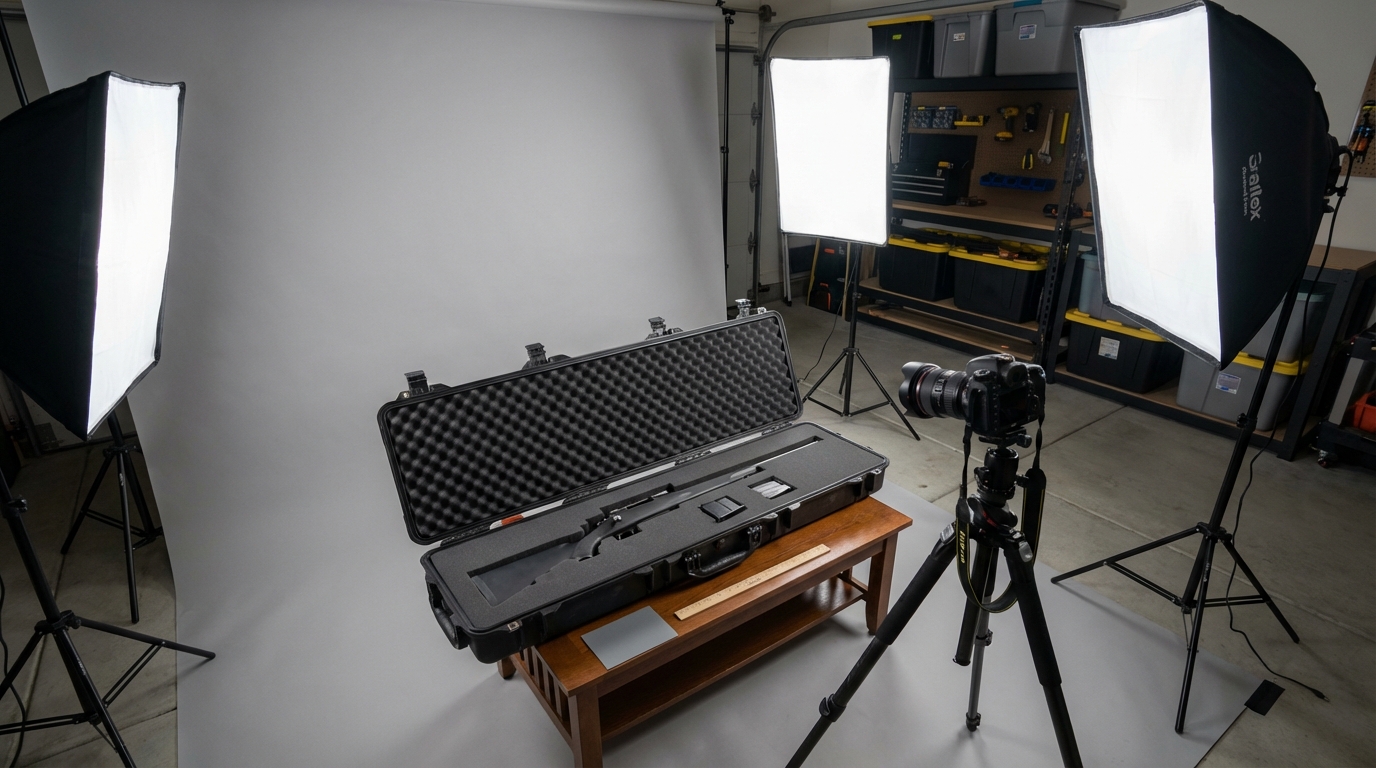
- Pin down the exact variant. Write the full make, model, and variant details that change buyer expectations: generation, barrel length, finish color, SKU markings, and any distinguishing features like an optics cut or factory night sights.
- Grade the few condition signals that actually swing value. Focus on what buyers pay for: finish wear, bore condition, and whether the gun has matching numbers or original major parts where that matters.
- Split the pile into “gun” vs “stuff.” Separate base gun value from magazines, optics, lights, cases, slings, and holsters. Aftermarket parts are not automatically a premium; they help with a buyer who wants your exact setup and hurt with a buyer who wants factory original.
- Sanity-check using live market signals. Use current dealer listings and active auctions as indicators of what people are asking and bidding on, not as a promise of what you’ll get. If you’re dealing with a collection, rare guns, or sentimental/collector pieces, consider when a professional appraisal is worth it. Cash My Guns explicitly lists make/model and condition signals like finish condition, bore condition, matching numbers or parts, and aftermarket parts as valuation factors, and says it uses market data from dealer listings and auctions to determine values.
Two “identical” models still land in different ranges because demand isn’t uniform. Regional preferences matter, and buyer type matters; a collector prices originality differently than someone who just wants a dependable shooter.
Mods are the big hidden trap. A trigger, stippling, or slide cut can be exactly what one buyer wants and an instant pass for five others, which narrows your pool and drags your timeline.
One limitation up front: the provided sources do not include completed-sale price ranges for specific models, so this section sticks to a repeatable process, not model-by-model price tables.
Before you list or reply to offers, write down two numbers: your walk-away number (anything below is a no) and your fast-sale number (the amount you’ll take to be done today). It also helps to understand how supply and demand affects firearm resale prices so you don’t misread timing-driven swings as “bad offers.” That keeps you from negotiating emotionally in the middle of the scramble.
Best Selling Options Before Deployment
You’re choosing a process, not just a buyer. The “best” selling route is the one that matches your deadline and your risk tolerance, not the one with the theoretical top dollar. Before deployment, execution beats optimization, because every extra step is another chance for a no-show, a paperwork snag, or a schedule collision.
A direct sale to a reputable gun buyer is the fastest path from “I need this handled” to “it’s off my hands.” The tradeoff is the offer spread: you’re selling for what a buyer can pay and still resell responsibly. If speed and predictability matter most, this is the cleanest lane-and it’s why some service members use an FFL-run buyer like Cash My Guns.
Consignment through an FFL can net more because you’re exposing the firearm to retail buyers, not wholesale pricing. The catch is uncertainty: you’re waiting on foot traffic, buyer financing, and the shop’s timeline. If your departure date is fixed, “maybe it sells next week” is real risk you have to own.
Selling to a local gun shop is simple: one trip, one counterparty, straightforward paperwork, quick payment. The tradeoff is usually the lowest offer, because the shop has to cover overhead and inventory risk. For a tight pre-deployment calendar, simplicity can be worth the discount.
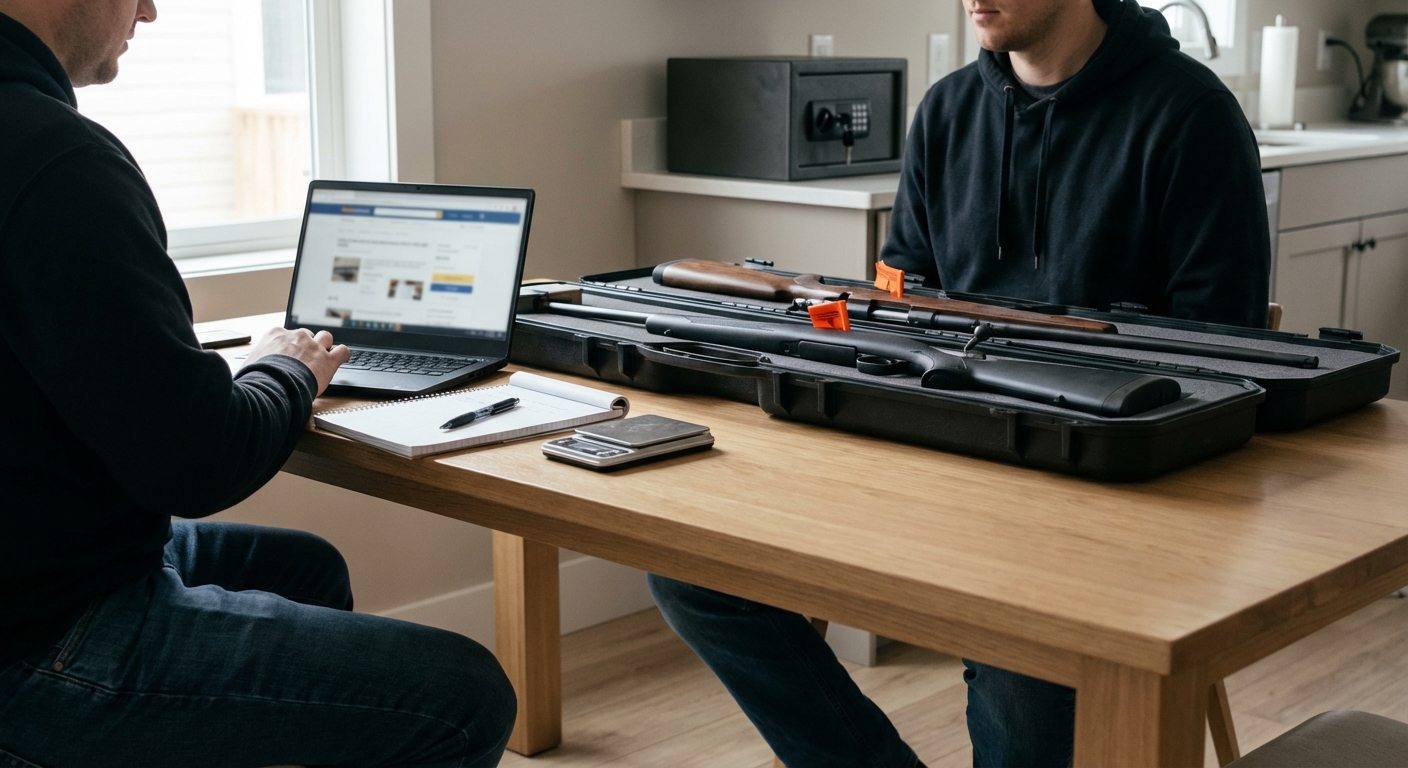
Online marketplace listings widen the buyer pool, but the deal still ends at an FFL transfer. That means more messages, more scheduling, and more chances for a buyer to flake while you’re trying to pack out.
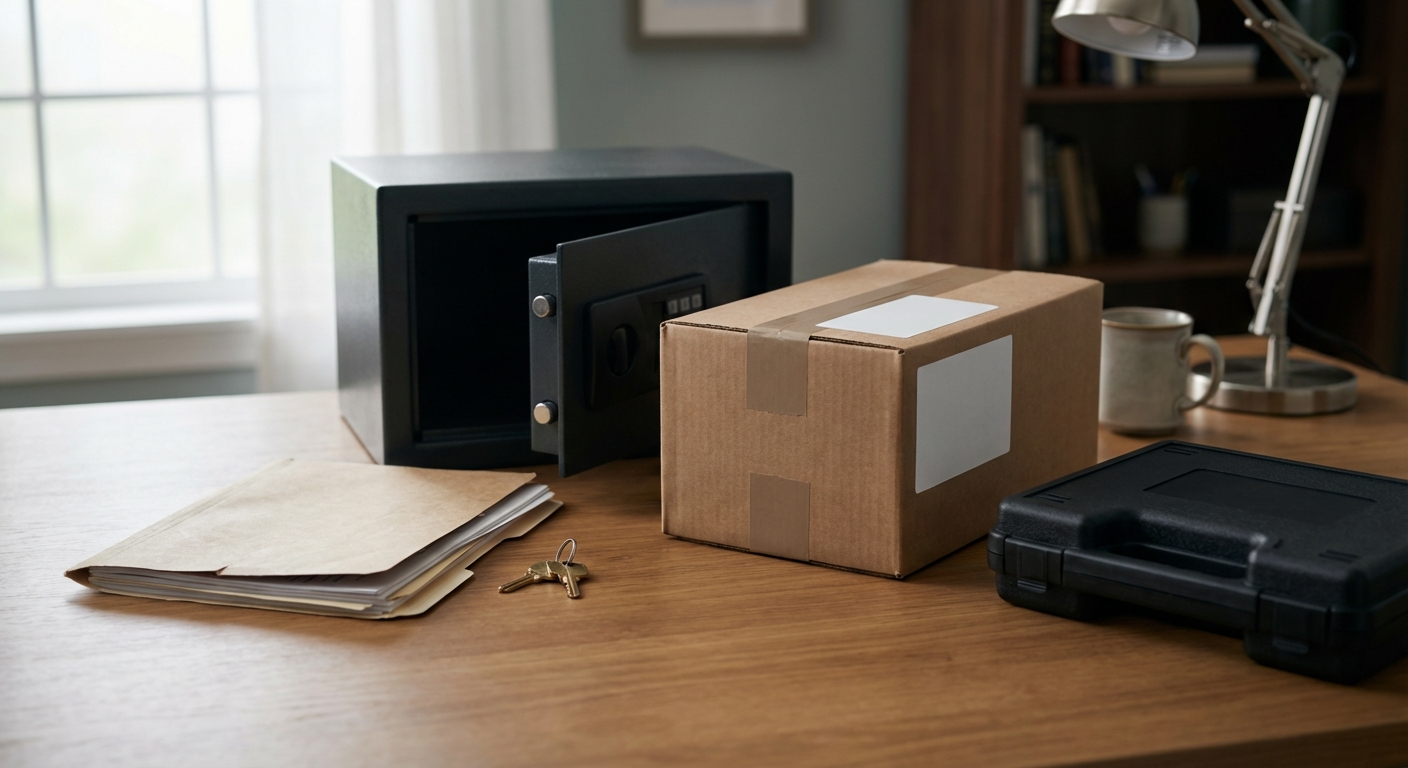
Shipping guardrails: Federal law allows an unlicensed individual to ship a firearm to an FFL for lawful purposes such as sale, transfer, or consignment, subject to compliance with applicable laws. Under 18 U.S.C. § 922(e), if you use a common or contract carrier, you must notify the carrier the package contains a firearm, and the outside of the package must not be marked as containing a firearm.
Speed is not just time-to-cash, it’s how many appointments, follow-ups, and surprises you can absorb before wheels-up. Pick the option with the fewest moving parts you can live with, then schedule it around your pre-deployment calendar with buffer for delays. And whichever route you pick, the same basic protections apply: secure the guns, verify the other side, and document the transfer.
A Fast, Safe Selling Checklist
A tight checklist is how you avoid “deployment brain” mistakes, missing paperwork, sketchy buyers, and last-minute surprises. Run this once, fix the gaps, then execute with buffer time.
- Inventory every firearm, record serial numbers, take clear photos, and pull any purchase paperwork you already have.
- Secure everything while it’s listed, keep firearms unloaded and locked in a safe or other secured storage.
- Validate any receiving dealer with the ATF’s official FFL eZ Check, and confirm the business name and address match exactly, because scammers use stolen or altered FFL documents.
- Protect your payment, don’t let anyone rush you or push irreversible methods.
- Flag timing for National Firearms Act (NFA) firearms, regulated items like suppressors and SBRs, a non-FFL transfer generally requires an approved ATF Form 4 before the transferee takes possession, typically with a $200 tax, or $5 for an AOW.
- Write a bill of sale, a simple written record that documents ownership changed hands.
Have both buyer and seller retain a copy of the bill of sale; it’s tangible evidence the transfer happened if questions ever come up.
If any step feels uncertain, default to the most compliance-forward path, involve an FFL, and finish a clean, provable transfer before you go (including how to package and ship a firearm if you’re sending it out).
Close the Loop Before You Deploy
The win before you deploy is walking away with zero loose ends, clear ownership, clean records, and less stress for the people at home.
Your decision to sell, store, or transfer should match your timeline and what your household is comfortable handling day-to-day, then stay inside the legal guardrails around residency and interstate transfers. Price it as a realistic range you can live with, not a perfect number, and stick to the checklist mindset: verify the FFL’s details and keep your documentation on both sides. Remember that an FFL transfer also creates a long-lived paper trail through ATF Form 4473, the federal form completed for most retail transfers as part of the background-check process, and FFLs must retain each 4473 at least 20 years; as of Aug 24, 2022, FFLs must retain A&D bound book records and 4473s for the life of the FFL. If you’re also tightening up home storage habits, Project ChildSafe is an NSSF program focused on firearms safety and education, working nationwide through community partnerships.
Before wheels-up, save digital copies of key documents, photos, and serials, and update your insurance inventory, since VPP (valuable personal property) coverage can protect firearms beyond homeowners or renters, and insurers typically want receipts, appraisals, photos, and serial numbers.
If you want the lowest-hassle route, get an offer or appraisal through Cash My Guns so you can finish the handoff on your schedule.