
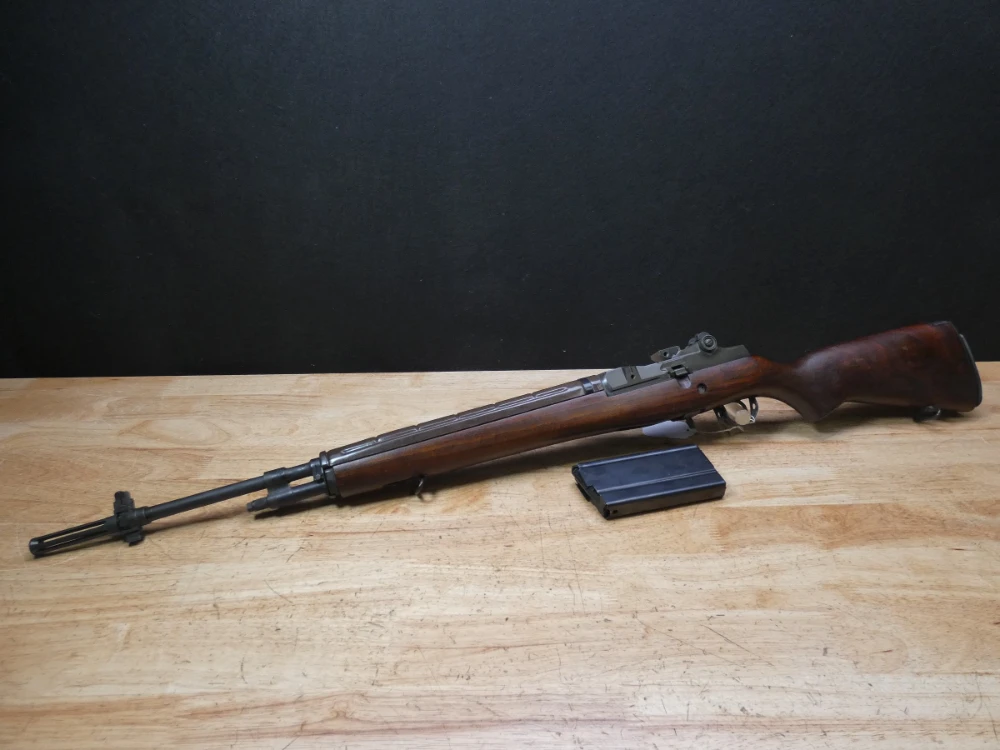
The Springfield Armory M1A stands as a celebrated icon in the firearms world, representing the civilian-legal, semi-automatic iteration of the U.S. Military’s M14 rifle. As a long gun with a rich heritage, its value is influenced by a unique set of factors, from its specific model configuration to its mechanical condition. Understanding these key market dynamics is essential for any owner looking to accurately assess their rifle’s worth and navigate the selling process for a fair and successful transaction.
What Determines Your Springfield Armory M1A’s Worth
The value of a Springfield Armory M1A is primarily dictated by its specific model rather than distinct manufacturing generations. High-end variants like the National Match or Super Match command premium prices due to their match-grade components and superior accuracy. In contrast, the Standard Issue model establishes the baseline value. Condition is the next critical factor, with a rifle’s round count directly impacting barrel life and, consequently, its price. Modifications also play a unique role; unlike many firearms, replacing commercial factory parts with authentic, surplus USGI (United States Government Issue) components can often increase the M1A’s value among discerning buyers.
2026 Price Breakdown by Generation
Base & Standard Models
The foundation of the M1A market is the Standard Issue model, which typically commands a value between $1,400 and $1,900. This version is the closest civilian counterpart to the classic M14, featuring a traditional walnut or composite stock and standard-profile barrel. It appeals most to purists and historical enthusiasts who appreciate the rifle in its original, intended form. The final price within this range is heavily influenced by the rifle’s overall condition, the inclusion of original accessories, and the type of stock it is equipped with, as wood stocks are often more desirable to collectors.
As the entry point into M1A ownership, the Standard Issue’s value is stable and well-understood in the used market. A well-maintained example with a low round count will fetch a price at the higher end of its bracket. These models serve as a reliable benchmark against which all other, more specialized variants are measured. For sellers, presenting a clean, well-cared-for Standard Issue rifle ensures it will attract a wide pool of potential buyers looking for an authentic and timeless piece of American firearms history, making it a consistently liquid asset in the marketplace.
Tactical & Upgraded Models
Occupying the middle tier of the M1A family, specialized versions such as the tactical SOCOM 16, the versatile Scout Squad, and the upgraded Loaded models command prices from approximately $1,500 to $2,100. The SOCOM 16, with its shorter 16-inch barrel and modern tactical features, is designed for close-quarters applications and appeals to a buyer seeking a more compact and maneuverable platform. The Scout Squad offers a balance between the full-size and compact models, featuring an 18-inch barrel and a forward-mounted scope rail for enhanced versatility, making it a popular do-it-all option for many shooters.
The Loaded models justify their higher price point with factory-installed upgrades, including a medium-weight national match barrel, an improved trigger, and enhanced sights. These enhancements provide a tangible performance boost over the Standard Issue, attracting buyers who want a more accurate and refined rifle without moving into the top-tier competition models. The value of these rifles is driven by their specific features and their appeal to a modern shooter who values performance and adaptability, making them a significant and popular segment of the used M1A market, with strong and consistent demand.
Competition & Match-Grade Models
At the apex of the Springfield Armory M1A lineup are the competition-oriented variants, specifically the National Match and Super Match models. These rifles represent the highest tier of performance and value, with prices ranging from $2,250 to over $2,700. The National Match is purpose-built for competitive shooting, featuring a glass-bedded action, a medium-weight match-grade barrel, and a finely tuned two-stage match trigger. These components are meticulously fitted to ensure maximum accuracy and consistency, making the rifle a favorite among serious marksmen and competitors who demand precision straight from the factory.
The Super Match takes this concept even further, incorporating the absolute best premium components available, including a heavy-weight Douglas or Krieger barrel and other enhancements that push the limits of the platform’s accuracy. Due to the high cost of these match-grade parts and the expert gunsmithing required for assembly, these models command the highest prices. Their value is less about general utility and more about their specialized, high-performance capabilities. Buyers for these rifles are a niche but dedicated group willing to pay a significant premium for a firearm that offers uncompromising, competition-ready performance.
Special & Limited Editions
Beyond the standard production tiers, the value of a Springfield Armory M1A can be significantly influenced by its status as a special or limited-edition release. These models are produced in smaller quantities and often feature unique finishes, engravings, or commemorative markings that set them apart from the regular catalog. A prime example is the anticipated “250th Anniversary” model slated for release in 2026, which is expected to attract considerable interest from collectors. The value of such firearms is driven primarily by scarcity and a collector’s desire for exclusivity, rather than purely by their functional performance or components.
When selling a limited-edition M1A, its provenance and completeness are paramount. Having the original box, certificate of authenticity, and any included special accessories can dramatically increase its market value. These rifles often appreciate over time, provided they are kept in excellent, near-new condition. Unlike standard models that are valued as shooters, these special editions are treated as collectible assets. Their pricing is less predictable and can fluctuate based on market trends and collector demand, often commanding a significant premium over even the high-end match-grade variants due to their inherent rarity and historical significance.
How Modifications Affect Value
The Springfield Armory M1A occupies a unique space regarding modifications, where certain changes can increase its value. There is a strong and well-established preference within the M1A community for replacing commercial factory components with higher-quality, surplus USGI (United States Government Issue) parts. Upgrading to a USGI bolt, trigger group, or operating rod is often seen as a significant enhancement that improves the rifle’s durability and reliability. Consequently, an M1A that has been thoughtfully upgraded with these sought-after parts can command a higher price than a factory-standard model, as it saves the buyer the time and expense of sourcing these components themselves.
While the market has not reached a definitive consensus on the value impact of specific aftermarket brands for chassis systems or optics, the general principle holds that functional, high-quality, and reversible modifications are viewed more favorably. Poorly executed or permanent alterations, such as amateur gunsmithing or radical changes to the receiver, will almost certainly hurt the rifle’s value. Sellers should be prepared to detail any and all modifications, especially the inclusion of USGI parts, as this information is a key selling point and a primary driver of value for knowledgeable M1A enthusiasts and prospective buyers.
Regional Price Variations in 2026
The value and marketability of a Springfield Armory M1A can vary significantly based on state and local firearm regulations. In states with stringent laws, such as California and New York, only specific state-compliant models are legal to own. This creates a distinct and often isolated market for these versions. For a seller in California, their M1A must be equipped with a specific muzzle brake and a 10-round magazine to meet the state’s Department of Justice criteria. Similarly, New York-compliant models are sold with 10-round magazines and lack features that would classify them as an “assault weapon” under state law.
This legal landscape directly impacts pricing. Within these restrictive states, the demand for compliant M1A models can be quite strong, as the supply is limited to what manufacturers produce for that specific market. This can sometimes lead to compliant models holding their value well or even selling for a premium locally. Conversely, a standard-configuration M1A with a flash hider and a 20-round magazine would be illegal to sell to a resident in those states, making its local market value effectively zero. Therefore, a seller’s geographic location is a critical factor in determining their rifle’s potential market and final sale price.
Online vs Local Sales
When conducting a private sale of a Springfield Armory M1A, understanding the paperwork requirements is essential. While federal law does not mandate a bill of sale for a transaction between two private individuals within the same state, it is highly recommended as a best practice to protect both parties. A comprehensive bill of sale should include the full names and contact information of the buyer and seller, the rifle’s make, model, and serial number, and the date and price of the transaction. State and local laws can vary significantly, with some jurisdictions requiring all private sales to be conducted through an FFL.
Selling a firearm to a resident of another state introduces strict federal regulations. It is illegal for a private individual to directly sell or ship a firearm across state lines. The transaction must be facilitated by a Federal Firearms Licensee (FFL). The seller is required to ship the M1A to an FFL located in the buyer’s state of residence. The buyer must then go to that FFL, complete a federal background check (Form 4473), and satisfy all of their state’s legal requirements before they can legally take possession of the rifle, ensuring the transfer is fully compliant with federal law.
Furthermore, private sellers face restrictions when it comes to shipping carriers. Both UPS and FedEx have policies that prohibit non-licensed individuals from directly shipping any firearms. To legally ship the M1A, a private seller must take the rifle to an FFL, who will then handle the packaging and shipment according to carrier agreements and federal law. The FFL will properly declare the contents to the carrier without placing any indicative markings on the exterior of the package, ensuring a secure and legally compliant transfer to the buyer’s designated FFL, making online sales a more complex but wider-reaching option than local transactions.
The FFL Buying Advantage
Selling your Springfield Armory M1A to a Federal Firearms Licensee (FFL) or a licensed gun dealer offers a distinct trade-off: convenience and speed in exchange for a lower cash offer. Dealers must account for their overhead, time on the shelf, and profit margin, so their offers will naturally be less than what you could achieve in a private sale. Gun dealers typically offer between 50% and 70% of the current private sale market value for a used firearm. This option eliminates the complexities and potential risks associated with finding a private buyer and navigating legal transfer requirements.
For a popular and quick-selling rifle like the M1A, offers from a dealer are likely to be in the upper end of this range, approximately 65% to 70% of its market value. This is because dealers recognize the rifle’s high demand and know they can resell it relatively quickly. While you receive less money upfront, the transaction is immediate and secure. The FFL handles all the necessary paperwork, and you are absolved of any future liability associated with the firearm. This makes selling to a dealer an attractive option for those who prioritize a fast, hassle-free, and legally sound sale.
What Increases Your Offer
A meticulous pre-sale cleaning is one of the most effective ways to maximize the value of your M1A. Before listing the rifle, it should be properly field-stripped to allow for a thorough cleaning of the bore, chamber, bolt face, and gas piston. Removing all carbon buildup and old lubricant demonstrates that the rifle has been well-maintained. A common mistake is improper lubrication after cleaning; be sure to apply a thin coat of quality, lithium-based grease to the receiver rails, bolt roller, and operating rod contact points, as a dry rifle can signal neglect and potential cycling issues to a knowledgeable buyer.
High-quality photography is crucial for attracting strong offers, especially in online marketplaces. To best showcase your M1A, use good, even lighting, such as natural light on an overcast day, to avoid harsh shadows and glare. Place the rifle against a simple, non-reflective background to ensure it is the sole focus of the image. Using a tripod will guarantee that your photos are sharp and in focus. Capture multiple images from various angles, including close-ups of important details like markings, sights, the muzzle, and any visible wear. This transparency builds buyer confidence and justifies a higher asking price.
While the market lacks a specific consensus on a financial penalty for an incomplete package, presenting the M1A with its original box, manual, and any factory-included accessories will always increase its appeal and value. A complete set suggests that the owner was diligent and cared for the firearm, which is a highly positive signal to potential buyers. Including these items makes the rifle more attractive to collectors and purists, often resulting in quicker sales and higher offers compared to selling the rifle by itself. It completes the story of the firearm and enhances its overall presentation and desirability.
When to Sell Your Springfield Armory m1a
Timing the sale of your Springfield Armory M1A can have a tangible impact on the offers you receive and how quickly it sells. While there is no single guaranteed best month, a favorable period for selling firearms generally emerges from late winter through spring. This timeframe, roughly spanning from February to June, often sees an uptick in market activity. Many potential buyers are receiving tax refunds during this period, providing them with disposable income that they are often eager to invest in their hobbies, including the purchase of a high-quality rifle like the M1A.
The motivation behind this seasonal trend is also tied to the changing weather. As winter recedes, shooters begin planning for the upcoming summer shooting season, which fuels their interest in acquiring new firearms. This increased demand can lead to more competitive offers and a faster sale for sellers who list their rifles during this peak window. By aligning your sale with this period of heightened buyer activity, you position yourself to take advantage of a more energetic and motivated market, which can translate directly into a better final price and a smoother overall transaction.
Conversely, certain times of the year are frequently cited as slower periods for firearm sales. The late summer months and the end-of-year holiday season, from Thanksgiving through December, often experience a downturn in activity. During these times, potential buyers’ financial priorities tend to shift towards vacations, back-to-school expenses, and holiday gift-giving. With less discretionary income and attention focused elsewhere, the demand for high-value items like an M1A can soften. Listing your rifle during these lulls may result in it sitting on the market longer and potentially attracting lower offers from less-motivated buyers.
Common Pricing Mistakes
One of the most significant pricing mistakes a seller can make is to ignore or misrepresent the rifle’s round count. The barrel is a critical wear component on an M1A, with accuracy known to diminish significantly after approximately 5,000 rounds. A rifle with a high round count on its original barrel is worth considerably less than one that has been fired sparingly. Attempting to hide a high round count is a major error, as an experienced buyer can often spot signs of heavy use. Being transparent about the rifle’s history, including an honest estimate of rounds fired, builds trust and leads to a fair valuation.
Another common error for owners of standard models is paying for a professional appraisal. While appraisals can be useful for rare or highly customized firearms, the value of a standard used Springfield Armory M1A is well-established and easily researched. Prices for common models are heavily documented online, typically ranging from $1,200 to over $1,600 depending on condition. Free resources, such as online forums and completed sales on auction sites, are usually sufficient to determine a fair market price. Spending money on an appraisal for a standard M1A is an unnecessary expense that cuts into the seller’s final profit.
Overvaluing personal modifications is a frequent pitfall. A seller may have invested hundreds or even thousands of dollars in a high-end scope, a modern chassis system, or other aftermarket accessories. However, it is a mistake to assume these costs will be fully recovered in the sale price. A buyer may not share the seller’s taste or may have their own customization plans. It is often more effective to price the rifle based on its base model and condition, and then offer the accessories separately or as an optional package. This approach allows for a more realistic base price and wider appeal.
Market Outlook for 2026
Based on market data from late 2025, the value of standard Springfield Armory M1A rifles has experienced a slight decrease. Currently, a new M1A averages a price between $1,450 and $1,475, while a used model is valued in the range of $1,350 to $1,370. This trend suggests a stable but slightly softened market for these popular rifles. Projections for 2026 indicate that prices for standard production models are expected to remain within this established range, with no significant increases or decreases anticipated under normal market conditions, providing a predictable valuation landscape for both buyers and sellers.
A notable event for the M1A market in 2026 will be the release of a special “250th Anniversary” limited-edition model. This firearm will likely be priced significantly higher than standard models and will be treated as a collectible item. Its value will be driven by factors such as production numbers, unique features, and collector demand rather than the market forces affecting standard shooter-grade rifles. The introduction of this anniversary edition is unlikely to impact the pricing of used standard models but will create a new, high-value segment in the M1A market for that year.
Frequently Asked Questions
Does a high round count significantly hurt my M1A’s value?
Yes, a high round count is a primary factor in diminishing an M1A’s value. The rifle’s barrel life is generally estimated to be around 5,000 rounds before accuracy begins to degrade noticeably. A rifle with a high round count on its original barrel will see a significant price reduction because the new owner will have to factor in the cost and effort of a barrel replacement. However, if the rifle has been well-maintained and the barrel was professionally replaced with a quality new one, the negative impact on its overall value is considerably less severe.
Is it worth getting my standard M1A professionally appraised?
For a standard used Springfield Armory M1A, a professional appraisal is generally not worth the cost. The market value of these rifles is well-documented and determined by predictable factors like model, condition, round count, and included accessories. Used prices for standard models are readily available through online marketplaces and forums. These free resources are typically sufficient to determine a fair and accurate value for a common model, making a paid appraisal an unnecessary expense that would reduce your net proceeds from the sale.
Do I need the original factory parts if I’ve upgraded my M1A?
No, and in many cases, it is actually a benefit not to have them. The M1A market has a strong preference for rifles that have been upgraded from their commercial factory components to higher-quality, surplus USGI (United States Government Issue) parts. These parts are considered more durable and historically correct. Therefore, if you have replaced commercial parts with genuine USGI components, it will likely increase the rifle’s value and appeal to knowledgeable buyers. Keeping the original commercial parts is not a requirement and is far less important than on other collectible firearms.
How much less will a dealer offer me compared to a private sale?
When selling to a gun dealer or FFL, you can typically expect to be offered between 50% and 70% of the rifle’s current private sale market value. Because the Springfield Armory M1A is a desirable and popular rifle that sells quickly, offers are likely to be in the higher end of that spectrum, around 65% to 70%. While this is a lower amount than you could achieve through a private sale, it provides the benefit of an immediate, guaranteed, and legally secure transaction without the hassle of finding and vetting a private buyer.
Are select-fire M1A rifles more valuable?
Yes, they are immensely more valuable, but it is crucial to understand the distinction. The standard Springfield Armory M1A is a semi-automatic rifle and is not an NFA-regulated item. However, a very limited number of select-fire, fully automatic M1A rifles were produced and registered as NFA machine guns before the 1986 ban. These are legally restricted firearms that require extensive federal paperwork to transfer. Due to their extreme rarity and legal status, these select-fire M1A rifles are exceptionally valuable collector’s items, with prices that can be tens of thousands of dollars higher than any semi-automatic version.
Get a Cash Offer Today
Ready to sell your Springfield Armory M1A? We take the guesswork out of the process, providing a fair, transparent cash offer based on current market data. Avoid the hassles of private listings, shipping regulations, and finding a trustworthy buyer. Our streamlined process ensures you get paid quickly and safely.
Simply submit photos of your firearm, and our experts will provide a no-obligation quote. We handle all the FFL paperwork and logistics, making the sale of your M1A simple and secure. Click here to start your free, confidential appraisal and get your offer today.