

Why is the same used handgun $450 in one place and $650 in another, and both sellers swear that’s “the going rate”? If you’ve tried to price a firearm in 2026, you’ve felt the whiplash: you look up your exact model and the numbers don’t even live in the same zip code.
You’re usually deciding three things at once: sell now or wait, go private or use a dealer, and how to price it without leaving money on the table or scaring off serious buyers. The tension is real: the fastest, cleanest path tends to trade away upside, and the highest price usually demands more time, more back-and-forth, and more compliance confidence.
The unpredictability has a few concrete causes. First, demand charts swing month to month, and a lot of people point to FBI NICS checks, the FBI’s monthly background-check totals, as a demand proxy. The FBI also says NICS checks do not equal firearm sales, because one check can cover multiple firearms and some checks are for non-sale purposes like permits or pawn redemptions, so the headline number can mislead.
Second, repeat selling feels tighter under ATF’s 2024 “engaged in the business” rule, a heads up that patterns that look like buying and reselling for livelihood and profit can raise licensing questions.
Third, online visibility creates huge price dispersion between listings and real transactions. A Glock 19 can show three different “prices” depending on whether you’re looking at an optimistic ask, a shop tag, or what actually closed. That’s the backdrop for everything that follows: separating signal from noise, landing a realistic value range, and picking a selling path that avoids avoidable headaches.
What’s Driving Used Values in 2026
Used prices move when buyer alternatives change. Your gun doesn’t live in a vacuum; it competes with whatever else a buyer can do with the same money this month, from a brand-new promo-priced pistol to a different caliber that’s cheaper to train with.
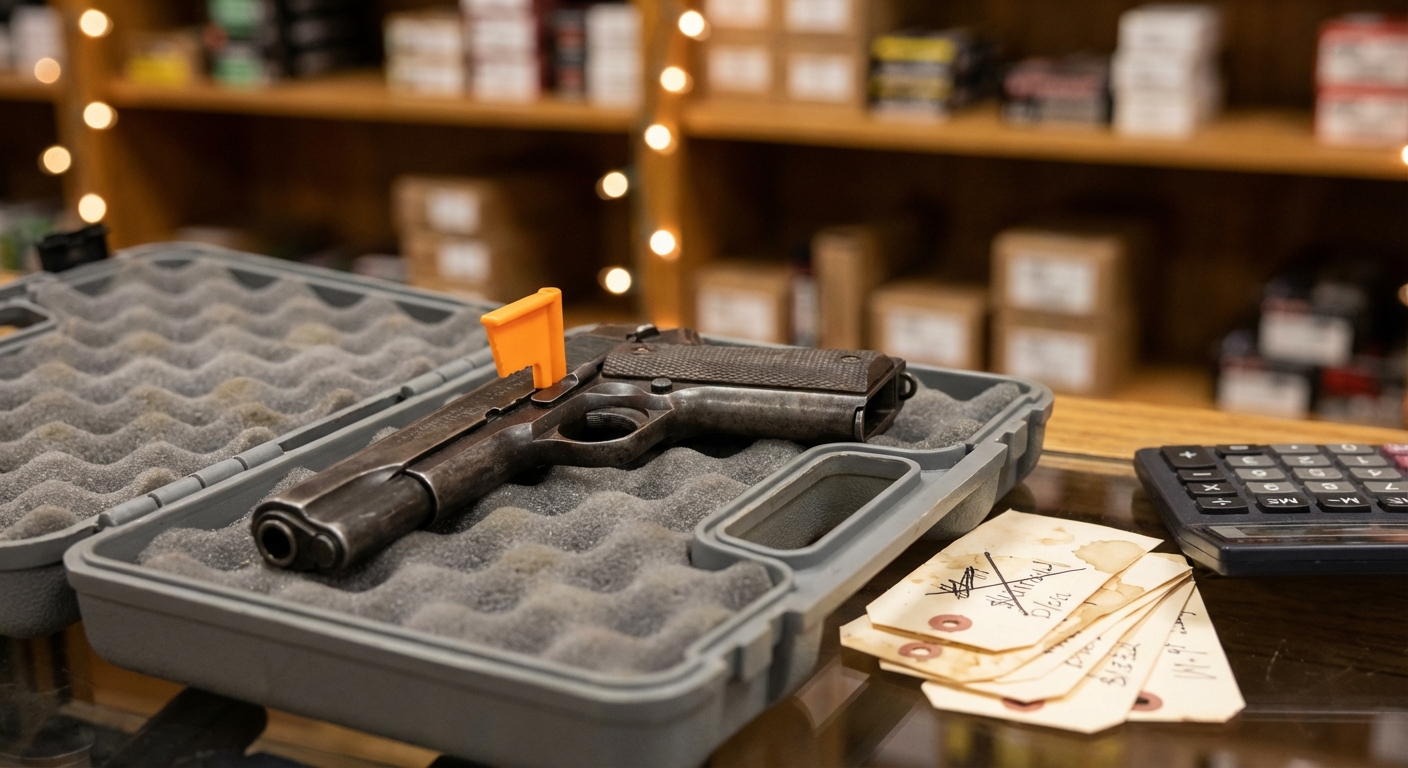
When demand thins out, the market tells you fast: fewer messages, longer gaps between inquiries, and more “cash today” offers. Common models soften first because buyers have options, and there’s always another one listed. When demand spikes, clean, correctly described examples move quickly and the buyer questions shift from price haggling to logistics: “Can you meet tonight?” The practical read is simple: speed of replies and quality of offers are your demand gauge.
Ongoing ammo cost changes what a buyer wants to own. If a caliber’s cost-per-round climbs, range time gets rationed and interest cools, especially for training-heavy guns. If a caliber stays cheap, it props up demand because the buyer can actually afford to use the thing. LuckyGunner’s Ammo Index charts average online ammo prices over time by caliber, including 9mm,.223/5.56,.308, 12 gauge, and.22 LR. AmmoSeek also tracks caliber-specific pricing and posts historical trend pages built from aggregated online listings.
New-gun pricing and promotions put a hard ceiling on used values because buyers compare your used number to current dealer listings and advertised “new with warranty” deals. This hits common guns hardest; the more interchangeable the model, the less room you have to price above today’s street price.
Online marketplaces make it easier to see national pricing, but they also highlight a reality sellers forget: valuation inputs often include seasonality and regional demand. The same model can price differently by region, season, and configuration, because the local buyer pool is not the national buyer pool.
- Check the ammo trend for your caliber (LuckyGunner and AmmoSeek).
- Compare your ask to the current new-gun street price in your area.
- Test local demand by watching how fast comparable listings get real inquiries.
Once you’ve looked at ammo, new-gun street price, and how fast real buyers are showing up locally, pricing stops feeling like vibes and starts looking like a repeatable process.
A Practical Pricing Method Sellers Can Use
A fair price range comes from consistency, not guesswork. You can price a used gun in 2026 without guessing, as long as you’re comparing the same gun, in the same condition, with the same setup, against real sold evidence-not someone else’s optimistic listing.
- Confirm the exact make, model, and variant, then write it down the way a buyer will search it.
- Match your “comps” to that same variant, not just the family name.
This is where most valuations go sideways. A Glock 17 and Glock 19 are both 9×19, but they aren’t the same product: the Glock 17 is the full-size model with an approximately 4.49-inch barrel and a standard 17-round magazine, while the Glock 19 is the compact model with an approximately 4.02-inch barrel and a standard 15-round magazine. If you comp a 19 against 17 sales, your “market price” is wrong before you even start.
Generations matter too. Gen3 Glocks typically have finger grooves and no Modular Backstrap System. Gen4 typically adds the Modular Backstrap System, and many slides are marked “Gen4.” A clean Gen4 with factory features shouldn’t be priced off Gen3 sales, or you’ll attract the wrong buyers and miss the right ones.
Use a common language for condition so you’re not debating feelings. The NRA Modern Gun Condition Standards grade primarily by percentage of original finish remaining. “Excellent” commonly lands around 98 to 100% original finish, and “Very Good” commonly lands around 90 to 97%. That finish percentage needs to match what your photos show, not what you remember from when you bought it.
Then add the stuff appraisers actually look at: finish and bore condition, matching numbers (where applicable), and aftermarket parts. Parts swaps are a double-edged sword. A quality optic can add value if it’s desirable and documented, but unusual triggers, stippling, or “custom” work often narrows your buyer pool, even if you paid a lot for it.
Active listings are hopes. Completed sales, sold comps, are evidence because they show what someone actually paid in a finished transaction. Pull multiple recent sold results that match your exact model, generation, and major features, then bracket a range from the low clean sale to the high clean sale.
If your numbers don’t line up, don’t panic. Appraisers commonly blend dealer listings and auction results as market data, and seasonality and regional demand explain why two identical guns can list high but sell lower, or sell fast in one area and stall in another.
Once you’ve got a real range, the next pressure point is the channel: how quickly you want to close, and how much work (and compliance responsibility) you’re willing to take on to chase the top end.
Private-party sales usually chase maximum net, but you take on more work: screening buyers, scheduling meetups, and staying compliant (state-law compliance handling).
For example, Cash My Guns (operated by an FFL) advertises a seller-friendly speed and certainty package: expert appraisal, a prepaid shipping label, full insurance coverage, packing and shipping guidance, and state-law compliance handling.
Set a realistic price range from tight sold comps, not a single magic number. Start with your “matched-model, matched-condition” sold range, then nudge it down if you’re missing box, mags, or factory parts, and nudge it up only when your condition grade and included gear clearly justify it. Finally, choose the channel that matches your timeline, and let that choice determine where you land inside the range.
Model and Category Trends to Watch
Category behavior tells you what buyers reward. Your gun’s category sets the rules of the game, because common, easy-to-replace guns get price-capped fast, while scarce, era-specific guns get judged like collectibles.
A good reality check is to look at what actually moves in completed auctions. GunBroker’s monthly reports span pistols, rifles, and shotguns, and the rankings are based on category-leading completed auctions, not asking prices. (sold comps)
That “what sells” view matters because it highlights rotation: the top used models change by category, and the top-10 lists reflect what buyers bid on, not what sellers hope for. That’s why category-level drivers beat model-by-model guessing.
In the Glock 19, P320, and M&P lane, competition is brutal and new-gun deals keep a lid on used prices. Buyers pay for condition and a clean configuration, especially factory-optics-ready setups over home-milled slides, because it stays closer to the baseline most pricing guides assume.
Revolver value drivers and what tends to hold value are steadier, because nostalgia and specific variants can matter more than “latest generation.” A Python or GP100 that’s clean, correct, and un-messed-with usually draws broader interest than one with swapped parts and a fresh refinish.
An 870 or 500 is a utility purchase first, so wear tells the story. Honest use is fine, but “rode hard” cues-pitting, cracked stocks, rust under the forend-push value down faster than sellers expect unless it’s a genuinely special variant.
Lever-action demand is heavily era and marking driven. Remington acquired Marlin in 2007, Ruger bought Marlin in 2020, and collectors often separate “JM-stamped” Marlins, identified by a “JM” proof mark near the receiver, from later Remington-era production.
Classic rifles are where originality is money. A Model 70, SKS, or even a clean 10/22 that’s era-correct can command a premium when the finish, parts, and markings match what collectors expect (and AR-15 value considerations and market behavior follow their own supply-and-demand rules).
Most published values assume original factory configuration, meaning factory-correct parts, finish, and configuration, because that’s the baseline assumption for collector premiums and guidebook numbers. Blue Book of Gun Values notes values are typically based on original factory configuration, and non-factory modifications commonly reduce value unless specifically documented and market-desired. NRA condition frameworks treat refinished guns separately; loss of original finish generally reduces collector value, even when the refinish looks “nicer.”
Decide what matters in this order: category first, then condition, then configuration. Once you know the bucket, protect what that bucket pays for-usually originality plus honest, verifiable condition.
Prep Steps That Protect Your Sale Price
The easiest money you’ll ever make on a used gun is the money you don’t lose in prep. And the category point above is the tell: if buyers are paying for originality, sloppy “upgrades” can cost you; if it’s a utility gun, small signs of neglect get priced in immediately.
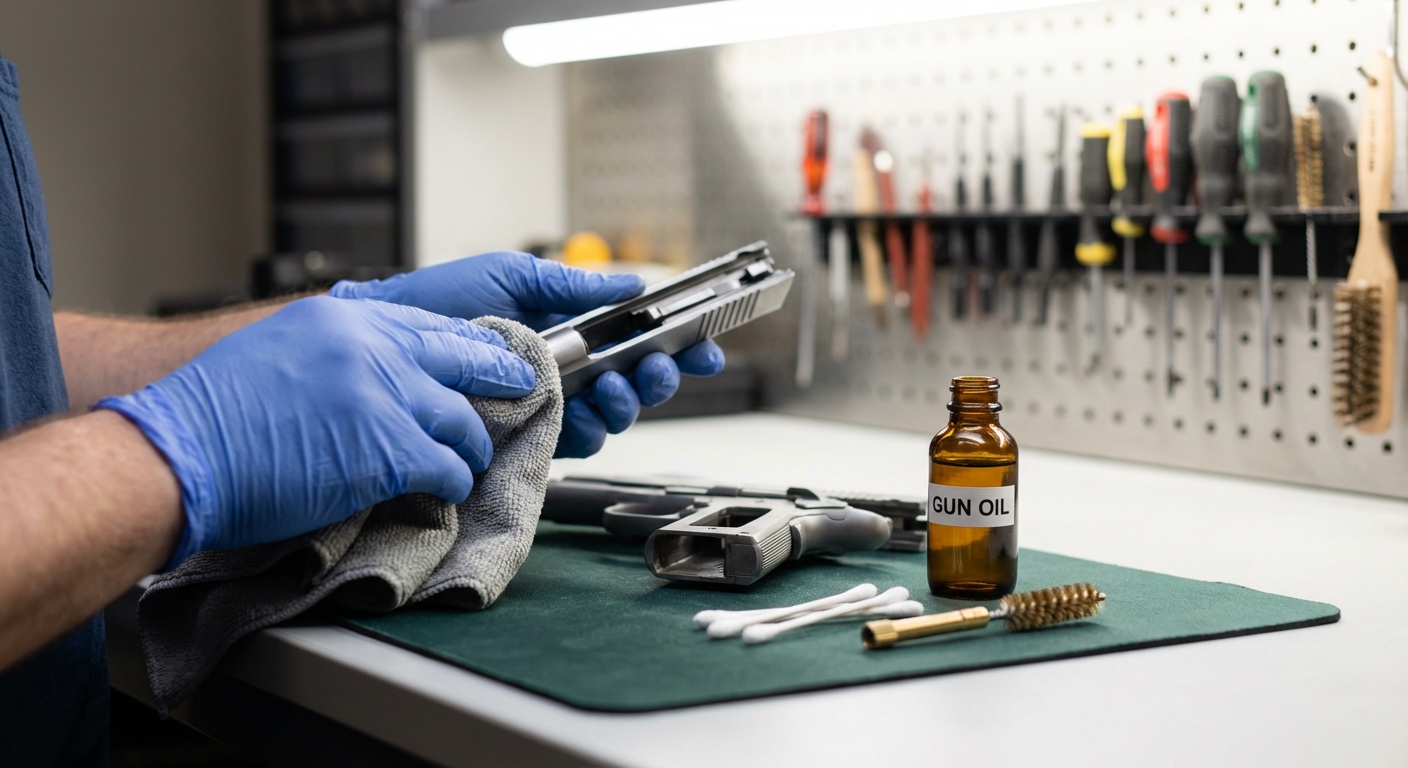
- Make it safe. Point it in a safe direction, remove the magazine, open the action, and visually and physically verify it’s unloaded. Buyers trust sellers who handle firearms like grown-ups.
- Clean it lightly. Wipe exterior metal, knock off carbon where it’s obvious, and run a basic bore pass if it’s dirty. Skip “improvements” like aggressive polishing, rebluing, sanding, or swapping parts just to look newer; finish damage and non-original parts get priced in fast.
- Document it correctly. Write down make, model, caliber/gauge, and key markings. The controlled part is the frame or receiver, and manufactured firearms are required to have a serial number marked on the frame or receiver, so note exactly where that serial sits for error-free listings and smoother transfers.
- Gather what’s included. Count magazines, find the box and papers, list optics and mounts, and include original parts if you swapped anything (original factory configuration). If you’re missing the box or papers, be upfront and compensate with clear photos and details.
- Stay scam-aware. Treat pressure, overpayments, and weird payment methods as deal-killers, and keep everything written and straightforward.
Storage history shows up on metal. Keeping relative humidity below about 35% greatly reduces active corrosion risk for ferrous metals, while around 60%+ RH is conducive to rapid rusting. Even light freckling at screw heads, under grips, or along edges reads as “stored damp,” and offers drop accordingly.
Spend 20 minutes getting it clean, documented, and complete before you ask for a dollar.
Selling Legally Across Key States
Clean prep and a solid price won’t save a deal if the transfer itself gets messy. The fastest way to ruin a good sale is to assume your state works like someone else’s.
Legality and logistics are part of your selling strategy, because they determine who can buy, how fast you can close, what you pay in fees, and how much risk you personally carry. Rules change; double-check before you sell.
Most sales land in one of three lanes:
- Private-party sale (where allowed): Usually the lowest fees and fastest in-state handoff, but your buyer pool can shrink fast if your state requires extra steps, and your risk goes up if you skip basic due diligence.
- Dealer sale or dealer-facilitated transfer: An FFL transfer processed through a federally licensed firearms dealer to comply with applicable federal and state requirements often broadens your buyer pool and lowers “did I do this right?” anxiety, at the cost of transfer fees and scheduling.
- Consignment: The shop finds the buyer and runs the paperwork, but you trade speed and a cut of the sale for convenience.
- Gather clear photos and the basics: make, model, caliber/gauge, condition notes, and what’s included (case, mags, box).
- Document provenance you can support (receipt, prior transfer paperwork), and keep the serial number off public listings.
- Decide your lane first, then market inside it (frequent flipping raises licensing questions).
Texas is a clean illustration of variance. Texas does not require private-party transfers between Texas residents to go through an FFL. Texas also has no permit-to-purchase or FOID-style requirement, no state-mandated waiting period, and it criminalizes transfers to prohibited persons (Tex. Penal Code § 46.06). The practical effect is speed: many lawful in-state deals can close quickly, but you still need to screen for obvious red flags and keep the transaction clearly between Texas residents.
People often ask about TX, FL, CA, GA, PA, OH, AZ, NY, NC, and IL. Treat every one of those as “verify current rules first,” and use a state-by-state guide to selling a gun as a starting point, because dealer-transfer mandates, waiting periods, permits, and age requirements vary and change.
USPS rules (DMM 601) draw a hard line between long guns and handguns. Nonlicensees may mail unloaded rifles and shotguns to an FFL or other eligible recipient, subject to applicable law. USPS generally restricts handgun mailing to authorized senders like FFLs, manufacturers, and government agencies. Any firearm mailed must be unloaded, with no external markings indicating a firearm. Ammunition is regulated separately and is generally not mailable by typical consumers through USPS.
If you want fewer moving parts, some sellers use an FFL-run process that includes state-law compliance handling and a prepaid shipping label.
Before money changes hands, verify your state and local rules and pick the pathway that matches your risk tolerance.
A Simple 2026 Selling Game Plan
In 2026, the “going rate” can still look wildly different depending on where you’re standing, so fall back on the stuff that doesn’t change. Price off sold comps (completed sales) using one condition grade, protect originality because factory-correct guns are what buyers pay up for, and avoid easy discounts with a light clean plus clear photos and paperwork.
The friction is real: ammo swings and new-gun promos cap used value, and rules change by state, so verify requirements and pick a compliant transfer path. Your appraisal inputs stay the same-make/model, finish and bore condition, matching numbers, aftermarket parts-anchored to market data (dealer listings and auctions) plus seasonality and regional demand.
If you want to optimize for max price, list it yourself and work the comps, condition, and originality hard. If you want fast certainty, an FFL-run buyer like Cash My Guns is one example of the speed-and-compliance approach described above.