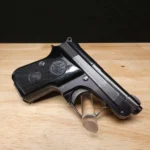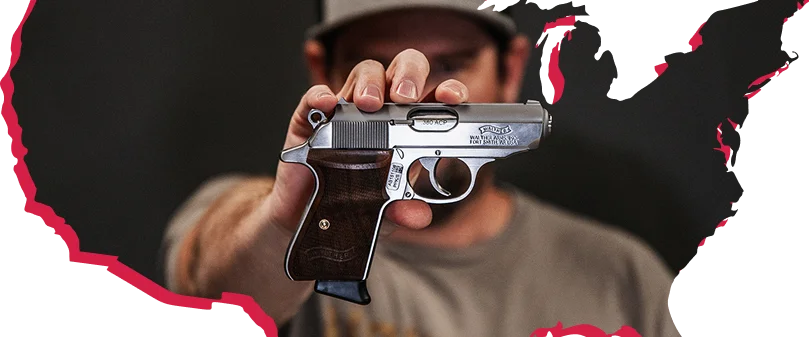

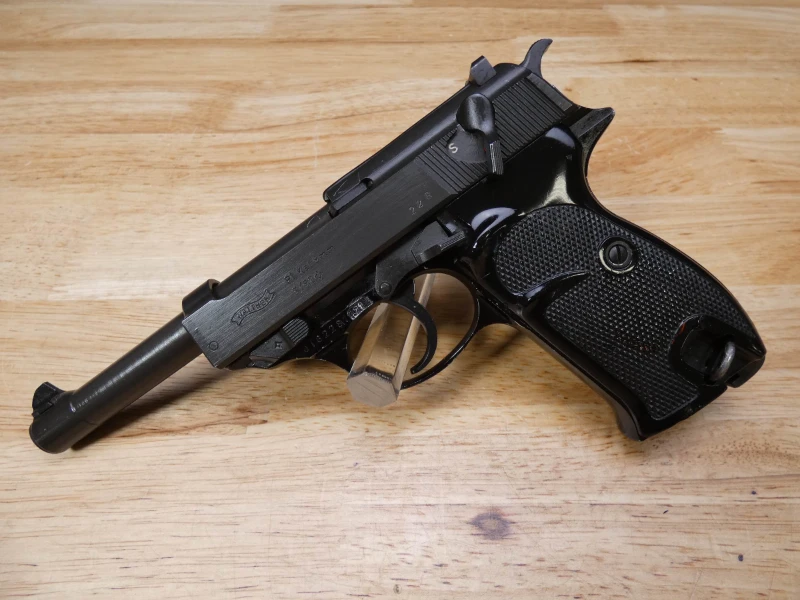
The Walther P1, the post-war evolution of the legendary P38, holds a unique position in the military surplus market. As the standard-issue sidearm for the West German military, this semi-automatic pistol is valued for its historical significance and reliable performance. Understanding its value requires looking beyond its function and considering factors like its aluminum alloy frame, condition, and completeness. For owners, knowing these key details is crucial to accurately pricing this classic Cold War-era handgun for a successful sale.
What Determines Your Walther P1’s Worth
The primary determinant of a Walther P1’s value is its distinct identity from its wartime predecessor, the P38. While visually similar, the P1 features a post-war aluminum alloy frame, making it significantly less valuable to collectors than the steel-framed P38s, which command prices often starting at $800. For the P1 itself, value is driven by condition, particularly the state of the frame, as high round counts can cause wear. Completeness, including original magazines, and any accompanying accessories also play a crucial role in establishing its final market price, which typically falls between $400 and $600.
2026 Price Breakdown by Generation
Wartime P38 (Predecessor)
The steel-framed, wartime P38 is the firearm from which the P1 is derived, and it occupies a completely different tier of value. These pistols are highly sought after by collectors of WWII memorabilia for their historical significance and robust construction. Because of this, their prices are considerably higher than the post-war P1. A P38 in good condition often starts at a value of $800 and can easily exceed $1,200, with rare variations or pistols with documented histories commanding even greater premiums. The P38’s value is tied to its role in history, not just its function as a firearm.
When evaluating a P38, collectors scrutinize manufacturer codes, inspection marks (Waffenamts), and whether the serial numbers on all major components match. Any deviation from its original, factory-issued state can impact the price. Unlike the P1, which is often seen as a functional shooter-grade surplus pistol, the P38 is an investment-grade collectible. Its value is less about utility and more about authenticity and historical provenance, making it a centerpiece in many military firearm collections and a benchmark against which the more common P1 is often compared and contrasted.
Early Production P1
The most common variants of the Walther P1 found on the surplus market are the standard post-war models featuring the signature aluminum alloy frame. This change was implemented to reduce weight and manufacturing costs for the newly formed West German military. These pistols represent the baseline value for the P1 series, with an average used price hovering around $564. The typical retail range for examples in very good to excellent condition is between $400 and $600. These firearms are popular among enthusiasts looking for a piece of Cold War history that is also an enjoyable and reliable shooter.
For these standard models, condition is paramount. Buyers will closely inspect the finish for holster wear, check the grips for cracks or chips, and examine the bore for pitting or excessive wear. Because these were service pistols, a certain degree of cosmetic wear is expected and often does not drastically reduce the price. However, pistols that retain a higher percentage of their original finish and show minimal signs of use will command prices at the upper end of the typical market range, while those with significant wear will fall closer to the $400 mark.
Reinforced Frame P1
Later in its production cycle, Walther introduced a key improvement to the P1 design by reinforcing the aluminum alloy frame. A steel hex pin was added above the trigger guard to increase the frame’s durability and resistance to cracking, a known issue that could arise from extensive use, particularly with higher-pressure ammunition. This reinforced frame is a desirable feature for shooters who intend to use the pistol regularly, as it offers greater longevity and peace of mind. While not a massive driver of value, this feature can make a P1 more appealing to knowledgeable buyers.
The presence of this hex pin can add a modest premium to the pistol’s value compared to an early-production model in similar condition. Buyers who prioritize function and durability over strict historical configuration will often seek out these later models. For sellers, it is important to highlight the reinforced frame in sales listings and photography, as it differentiates the pistol from earlier versions and justifies a price point at the higher end of the typical $400 to $750 retail spread. This small but significant upgrade is a key talking point in the P1 market.
Commercial/Surplus Market
The vast majority of Walther P1 pistols available today are military or police surplus imports. Their value is firmly established within a consistent range, typically retailing between $400 and $750 depending on condition, importer marks, and included accessories. Online listings often reflect this, with prices for well-maintained examples appearing from approximately $600 to over $800. These prices are for the pistol itself, and the inclusion of an original holster, multiple magazines, and cleaning kits can help a seller achieve a price at the top of this spectrum. The P1’s appeal lies in its affordability as a historical military sidearm.
Unlike its P38 predecessor, the P1 is not considered a rare firearm, which keeps its price accessible. The market is primarily composed of shooters and entry-level collectors rather than high-end investors. Therefore, the value is heavily tied to its physical condition and functionality. A clean P1 with a strong finish and a pristine bore will always sell faster and for more money than one showing heavy use and neglect. Its status as a widely available surplus handgun means that buyers have many options, making condition the key differentiator in determining its final sale price.
How Modifications Affect Value
The market for the Walther P1 is overwhelmingly driven by collectors and history enthusiasts who place a high premium on originality. Consequently, there is no established consensus on modifications that reliably add value to the firearm. Upgrades common to modern handguns, such as aftermarket sights, grips, or trigger enhancements, are generally not sought after by the typical P1 buyer. Any alteration from its standard military configuration is more likely to be viewed as a detraction from its historical authenticity rather than a functional improvement, potentially narrowing the pool of interested purchasers and failing to increase the firearm’s resale price.
Similarly, there is no specific list of value-hurting modifications, as aftermarket support for the P1 is limited. However, any permanent change—such as drilling and tapping the frame for a scope mount, applying a non-original finish like Cerakote, or altering the slide—would almost certainly decrease its value significantly. Collectors want a firearm that represents its service history accurately. A modified P1 loses its historical context and is relegated to the status of a simple “shooter,” a category where it competes with more modern and capable pistols. To preserve value, maintaining the P1 in its original configuration is essential.
Regional Price Variations in 2026
State and local firearm laws can create significant regional price variations for the Walther P1. In California, for example, the P1 is no longer on the Roster of Handguns Certified for Sale as of January 1, 2022. This means it cannot be sold by a licensed dealer to a regular citizen. The only way to legally acquire one is through a private party transfer from an existing owner within the state. This restricted supply can create a unique micro-market, potentially increasing its value among California collectors who have fewer options for acquiring historical handguns compared to buyers in less-regulated states.
In contrast, New York presents a different set of considerations. While the Walther P1 is generally permissible and does not meet the state’s definition of an assault weapon, ownership requires a valid pistol permit. Furthermore, New York’s magazine capacity restriction of ten rounds is a key factor for buyers. Since the standard P1 magazine holds eight rounds, this is not a direct legal issue, but it places the firearm in a market where magazine capacity is a constant topic of legal scrutiny. These regional legal landscapes can influence local demand, desirability, and ultimately, the price a seller can realistically expect to receive.
Online vs Local Sales
Selling a Walther P1 online grants access to a nationwide market of collectors and enthusiasts but involves strict legal protocols. According to federal law, when selling a handgun to a resident of another state, the firearm must be shipped to a Federal Firearms Licensee (FFL) in the buyer’s home state. The buyer then completes all required paperwork, including a background check, at their local FFL before taking possession. This process ensures the transfer is legally compliant but adds complexity and cost, including FFL transfer fees and shipping expenses, which must be factored into the final sale price.
The logistics of shipping a handgun like the P1 have also become more complicated for private sellers. Major carriers such as UPS and FedEx have internal policies that prohibit non-licensed individuals from shipping firearms, requiring the seller to use an FFL to handle the shipment. The handgun must be shipped unloaded via a priority overnight service, with an adult signature required for delivery and no external markings indicating the package contains a firearm. These regulations make online sales a multi-step process that requires careful coordination and adherence to both legal statutes and carrier policies, which can be daunting for inexperienced sellers.
A local, private sale offers a more direct alternative, though it is governed by state and local laws which can vary significantly. While a federal Bill of Sale is not required, it is highly recommended to create one to document the transfer of ownership, including the firearm’s make, model, serial number, and details of both the buyer and seller. In many states, this is sufficient for a legal transfer between two eligible private citizens. However, other states mandate that all private firearm transfers must be conducted through an FFL, mirroring the process of an interstate sale and requiring a background check for the buyer.
The FFL Buying Advantage
Selling your Walther P1 directly to a gun dealer, or Federal Firearms Licensee (FFL), offers the distinct advantages of speed, convenience, and guaranteed legal compliance. The process is straightforward: you bring the firearm to the dealer, they assess its condition and marketability, and you receive a cash offer on the spot. This eliminates the complexities of finding a private buyer, navigating shipping regulations, and worrying about the legality of the transfer. For sellers who prioritize a quick and hassle-free transaction, selling to an FFL is often the most appealing option, providing immediate payment without any lingering responsibilities.
However, this convenience comes at a clear financial trade-off. A gun dealer is a business that needs to turn a profit, so their offer will be based on the firearm’s wholesale value, not its retail price. Typically, dealers offer between 50% and 70% of what the Walther P1 might sell for in a private sale. The exact percentage depends on factors like the shop’s current inventory, local market demand for surplus handguns, and the pistol’s overall condition. While the payout is lower, the dealer assumes all the risk and effort of finding a final buyer.
What Increases Your Offer
Completeness is a significant factor in maximizing the value of a Walther P1. A pistol accompanied by its original magazines will command a better price than one without. A missing magazine will result in a direct value reduction equivalent to its replacement cost, which is approximately $15 to $20 per magazine. While the monetary penalty for a missing original case or holster is less defined, their inclusion creates a more complete and desirable package for collectors. Presenting the firearm as a complete set, just as it might have been issued, adds to its historical appeal and can bolster your final offer.
While the provided data does not offer a consensus on original parts, the military surplus market universally favors firearms in their original, as-issued condition. A Walther P1 with all numbers-matching components (frame, slide, barrel) will always be more valuable than a “parts gun” assembled from various sources. Any replacement of major components, even with period-correct parts, can detract from its value in the eyes of a discerning collector. Highlighting the originality and matching serial numbers of your pistol is a key strategy for demonstrating its authenticity and securing a higher price from knowledgeable buyers.
Excellent presentation is crucial, especially for online sales. To attract the best offers, photograph your Walther P1 using bright, diffused natural light against a simple, uncluttered background. Use a tripod to ensure your images are sharp and high-resolution. Capture multiple angles, including detailed close-ups of all markings, the sights, the bore, and any areas of wear or damage. Honest and clear photography builds trust with potential buyers, accurately represents the firearm’s condition, and prevents disputes after the sale, ultimately leading to a smoother transaction and a better price.
When to Sell Your Walther p1
The market for used firearms often follows predictable seasonal trends that can be leveraged to a seller’s advantage. A prime time to sell a Walther P1 is during tax return season, which generally runs from February through May. During this period, many potential buyers have more disposable income, leading to increased demand and a greater willingness to spend on hobbies like firearm collecting. Listing your pistol during this window can result in a quicker sale and potentially a higher selling price as more buyers are actively looking to make purchases.
Another favorable period for sellers often occurs in the months leading up to hunting season, particularly in late summer and early fall, around August and September. While the P1 is not a hunting pistol, this time of year sees a general surge in interest and foot traffic in gun stores and online marketplaces. This heightened activity across the entire firearms market can create a more favorable environment for selling all types of guns, as more people are in a buying mindset. Capitalizing on this seasonal peak in general firearm interest can be a strategic move.
Beyond predictable seasons, the market for firearms like the Walther P1 is heavily influenced by political events and news cycles. Proposed changes to gun legislation or heightened political tensions can create sudden spikes in demand that override any typical seasonal trend. While these events are unpredictable, they can create a seller’s market virtually overnight. A savvy owner should pay attention to the political climate, as it can be the single most powerful short-term driver of firearm values and present an unexpected but highly opportune moment to sell for maximum return.
Common Pricing Mistakes
The most significant pricing error a seller can make is confusing the post-war Walther P1 with its more valuable predecessor, the wartime P38. While they share a design lineage, their market values are worlds apart. The P1, with its aluminum alloy frame, is a common military surplus item with an average value around $564. In stark contrast, the steel-framed P38 is a sought-after WWII collectible, with prices often starting at $800 and climbing much higher. Overpricing a P1 by using P38 values as a reference will deter knowledgeable buyers and leave the firearm unsold.
Another common mistake is failing to properly assess and account for the firearm’s condition, especially the potential for frame wear. A high round count can negatively impact the value of a Walther P1 due to stress on its aluminum frame, an issue that knowledgeable buyers are well aware of. Later models with a reinforced frame are more durable, but any P1 should be inspected for signs of excessive wear or cracks. Ignoring these condition issues or failing to price the pistol accordingly will lead to difficult negotiations and likely a lower final sale price than initially expected.
Finally, a frequent misstep for owners of common surplus firearms is paying for a professional appraisal. For a standard Walther P1, which typically trades in the $400 to $600 range, the cost of a formal appraisal would consume a significant portion of the pistol’s actual value. This makes it an unnecessary and impractical expense. Sellers can determine a fair market price much more effectively by researching completed sales on online auction sites and forums, which provides a more accurate, real-world valuation without the added cost of a formal appraisal.
Market Outlook for 2026
While a definitive consensus on the future price of the Walther P1 is not available, its value trajectory will likely follow the path of other popular military surplus firearms. The supply of these pistols is finite; as more are imported and absorbed into private collections, the number of available examples on the open market will gradually decrease. This principle of diminishing supply, coupled with steady demand from collectors and historical firearm enthusiasts, suggests that the P1’s value is unlikely to decline. Barring the discovery of a new, large cache of surplus pistols, its price should remain stable or see modest appreciation.
Several factors will influence its long-term value. Continued interest in Cold War-era militaria will help sustain demand, as the P1 was a standard-issue sidearm for a major NATO power. Its classic design and connection to the famous P38 also add to its appeal. Furthermore, as a pistol chambered in the ubiquitous 9mm Luger, it remains an affordable and practical firearm to shoot, which helps maintain its relevance among those who are not strictly collectors. As long as these conditions persist, the Walther P1 is expected to be a solid and accessible piece of military history for years to come.
Frequently Asked Questions
How does the P1’s aluminum frame affect its value compared to the P38?
The P1’s aluminum alloy frame is the single greatest factor separating its value from the wartime P38. The steel-framed P38 is a WWII collectible that commands a premium, often valued at $800 to over $1,200. The P1, designed for post-war military production, is considered a more common surplus firearm. Its aluminum frame, while making the pistol lighter, places it in a different category for collectors, resulting in a much lower average market value of around $564. The material difference represents a shift from a historical combat artifact to a mass-produced service weapon.
Will a high round count significantly decrease my P1’s price?
Yes, a high round count can negatively affect a Walther P1’s value, primarily due to potential wear on its aluminum frame. This is a well-known issue, and discerning buyers will inspect the frame for signs of stress or cracking, especially if high-pressure (+P) ammunition was used. While later models with a reinforced hex pin in the frame are more durable, significant wear will still lower the pistol’s value. Sellers should be transparent about the firearm’s condition, as frame integrity is a key point of inspection for anyone knowledgeable about these pistols.
Is it worth getting a professional appraisal for my Walther P1?
For a typical Walther P1, a professional appraisal is likely not worth the cost. The firearm’s value generally falls within a well-established range of $400 to $600, and the fee for a formal appraisal could represent a substantial percentage of that value. A more practical and cost-effective approach is to research recent sales of similar-condition P1s on online gun auction websites. This real-world market data will provide a much more accurate and relevant valuation for a common surplus firearm without the unnecessary expense of a formal appraisal.
How much does missing an original magazine hurt the value?
Missing an original magazine will directly reduce the value of a Walther P1 by the cost of a replacement, which is typically around $15 to $20 per magazine. While this is not a substantial monetary penalty, collectors value completeness. A pistol sold with its full complement of correct, period-appropriate magazines presents a more attractive and authentic package. Therefore, while the financial loss is minimal, having the original magazines can make the firearm more desirable and easier to sell at your asking price compared to an otherwise identical pistol that is incomplete.
Does my P1’s legal status in states like California affect its overall market value?
Yes, state-level restrictions can influence a firearm’s value, though sometimes only within that specific region. In California, the Walther P1 is off-roster, meaning it can only be acquired through a private party transfer. This limited supply within the state can create a localized market where the P1 might sell for a premium compared to its price in less restrictive states. While this doesn’t drastically change its national average value, it demonstrates how regional laws can impact the supply and demand dynamics, affecting what a buyer in a specific location is willing to pay.
Get a Cash Offer Today
Ready to sell your Walther P1? We make the process simple and secure. Submit your firearm’s details online, and our experts will provide a fair, market-based cash offer. Skip the hassle of private sales and get paid quickly for your historic handgun.
Our streamlined process ensures you receive a competitive offer while we handle all the necessary FFL paperwork and legal compliance. Click here to begin, see what your Walther P1 is worth, and turn your surplus firearm into cash today with confidence and ease.