
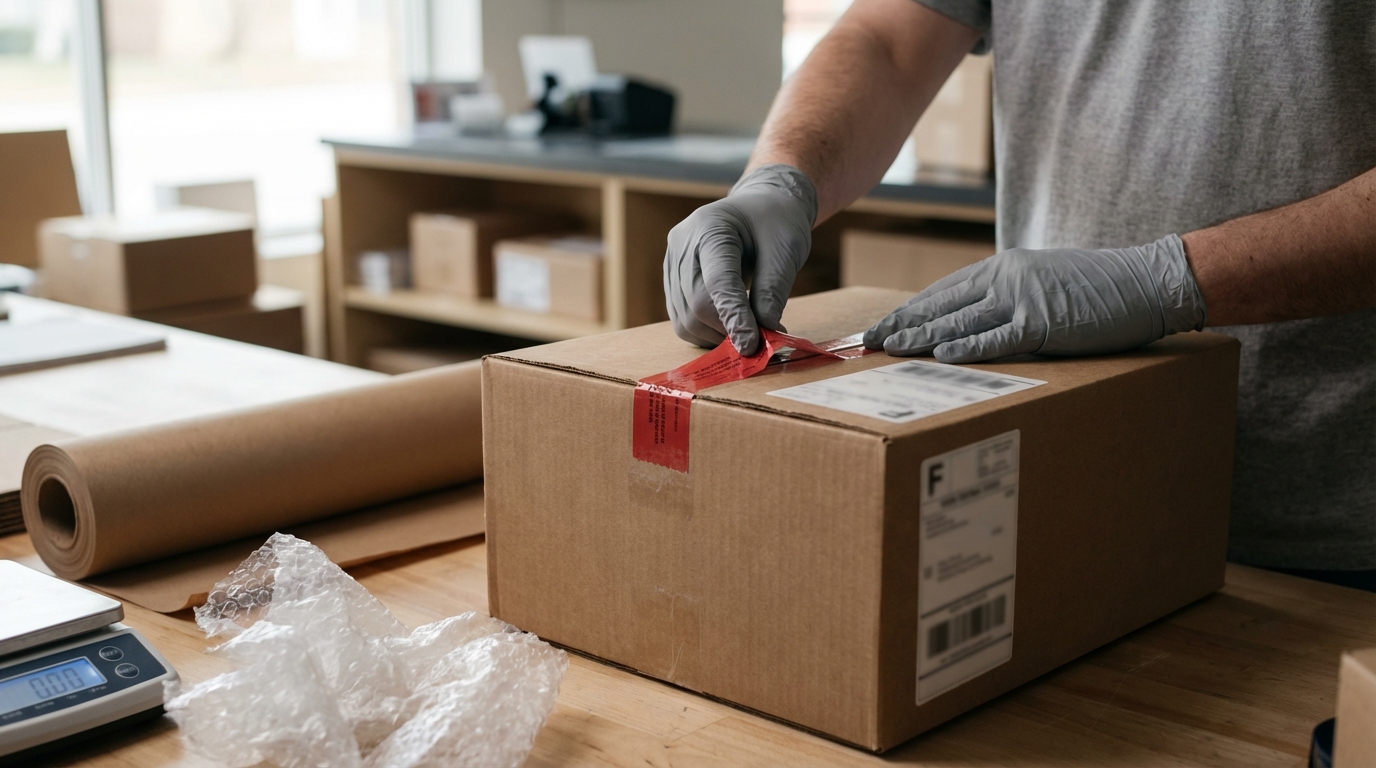

The weird part of selling online is the moment after it leaves your hands, you’re not the one steering anymore. You’ve accepted the offer, the box is gone, and the rest of the process feels like a black box you can’t control.
If you’re thinking, “Did I just create liability for myself?”, “When do I actually get paid?”, or “What happens to the gun now?”, you’re not being paranoid, you’re reacting to the handoff. The tension is real: online selling is fast and convenient, but the part you don’t see is what matters most once the firearm is out of your possession.
Behind the scenes, the transaction turns into a documented chain of custody controlled by a Federal Firearms License (FFL), meaning a dealer that’s legally authorized to receive and transfer firearms. When the firearm arrives at the receiving dealer, it gets logged into the dealer’s required Acquisition & Disposition (A&D) record, which tracks what the FFL took in and what it transferred out, creating a traceable paper trail after intake. In an FFL-mediated private party transfer, the receiving FFL is responsible for lawfully transferring the firearm to the unlicensed buyer. Many online buyers also tie payment to those checkpoints, releasing funds after the firearm is received and inspected and paperwork is completed, typically within 2-3 business days.
So while you wait, expect two things: a compliance-driven handoff you don’t have to personally manage, and a short, normal gap between delivery and payment while the dealer does the required intake and transfer work. The rest of this guide breaks down what that looks like in practice: the transfer timeline, what inspection really checks, when payment typically unlocks, and what you should keep for your own records.
The Transfer Timeline Explained
Most “online gun sale” processes are really an FFL-to-buyer transfer workflow once the gun arrives. Once the offer’s accepted, the process becomes a predictable handoff sequence, and the order is driven by interstate rules and carrier policies. If you want the full context, see this end-to-end selling workflow.
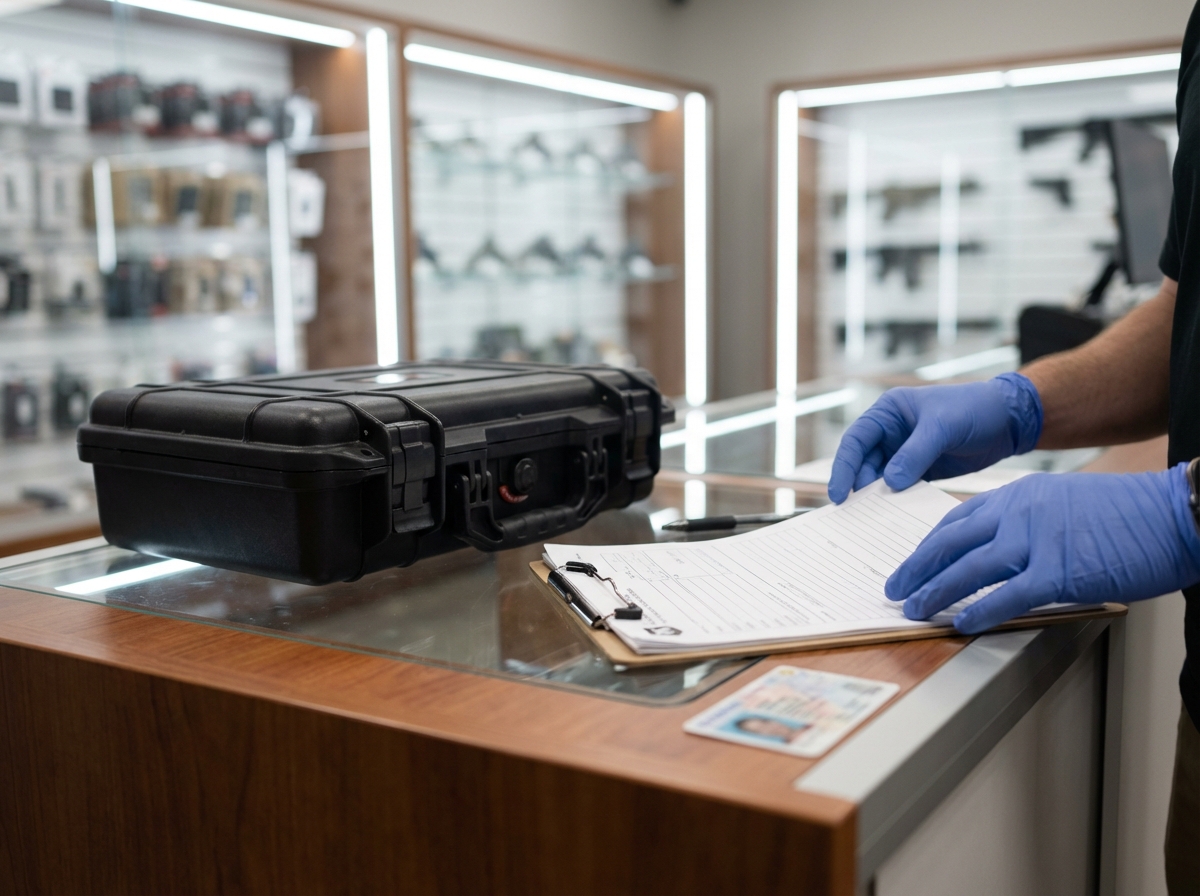
- Confirm the receiving FFL details. What happens: the buyer picks a receiving dealer in their state and provides that FFL’s shipping instructions. Who: buyer and receiving FFL, you follow the instructions. Timing: usually same day to a couple business days, depending on how fast the FFL responds.
- Prep the firearm for compliant shipment or drop-off. What happens: you package the firearm and follow the carrier or FFL’s rules. If you’re mailing a long gun, USPS Publication 52 is the rulebook that allows non-FFLs to mail unloaded rifles and shotguns domestically; it also makes handguns generally nonmailable for non-FFLs. Who: you. Timing: typically 1 day once you have instructions.
- Choose the right transport channel. What happens: if a shipment is required, handguns typically go by a common carrier, meaning a private shipper like UPS or FedEx, addressed to the receiving FFL. For USPS shipments allowed under Publication 52, USPS requires the firearm be unloaded and prohibits marking the outside of the parcel to indicate it contains a firearm. Who: you. Timing: same day drop-off or next business day pickup.
- Route interstate transfers through the buyer’s-state FFL. What happens: the firearm goes to an FFL in the buyer’s state instead of directly to the buyer. Reason: 18 U.S.C. § 922(a)(5) generally prohibits a non-licensee from transferring a firearm to an out-of-state resident, and 18 U.S.C. § 922(a)(3) generally prohibits a non-licensee from receiving an out-of-state firearm. Who: you ship or deliver, receiving FFL receives. Timing: shipping time plus intake queue, often 2 to 7 days total.
- Complete receiving FFL intake and logging. What happens: the receiving FFL opens the package and records the acquisition in its A&D record. Who: receiving FFL. Timing: often same day to a few business days after delivery, this is the first “arrival and intake” checkpoint sellers watch.
- Run the transfer paperwork and background check. What happens: the buyer fills out ATF Form 4473, the required transfer form that documents identity, eligibility, and the specific firearm, per 27 CFR 478.124. The FFL then runs the NICS background check, meaning the National Instant Criminal Background Check System (or a state point-of-contact), per 27 CFR 478.102. Who: buyer completes their portion, receiving FFL conducts the check. Timing: often same day, delays can extend it.
- Release the firearm to the buyer. What happens: after an approved transfer, the buyer takes possession from the receiving FFL. Many online buyer workflows treat “transfer approved” as the final compliance checkpoint tied to fund release. Who: receiving FFL and buyer. Timing: same day approval, or later if the buyer schedules pickup.
To prevent delays, confirm the receiving FFL’s exact name, address, and preferred delivery method before you ship, then follow their packaging and labeling instructions so the package is accepted, logged promptly, and ready for the 4473 and NICS step without a do-over (here’s a practical guide on how to package and ship a firearm).
Once the firearm is delivered and checked in, the process stops being about shipping and starts being about verification. That next stage is what determines whether the original offer stands or gets adjusted.
Inspection, Verification, and Condition Checks
Inspection is where the ‘online quote’ turns into a final, defensible number. It’s the reality check that protects both sides, because the buyer can only pay for the exact firearm and exact condition that actually shows up.
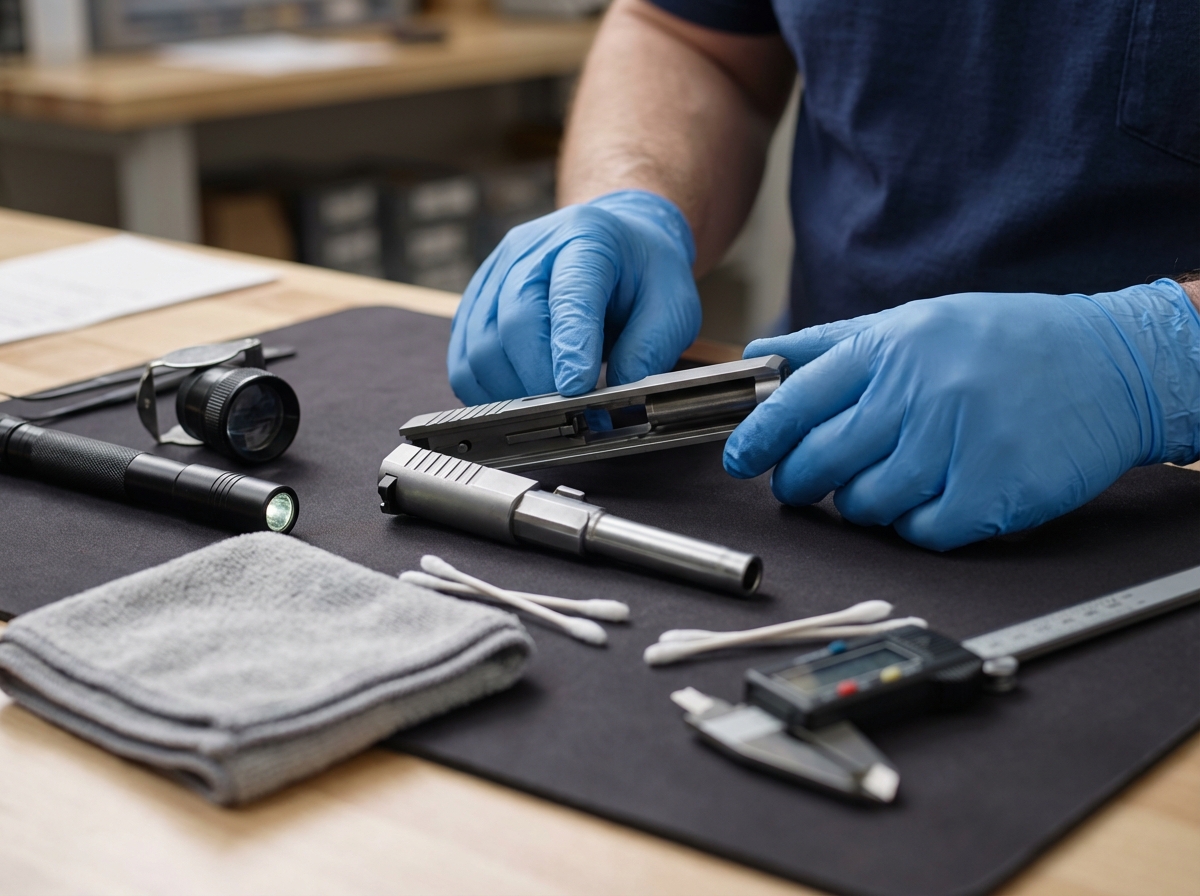
Reputable online buyers start by verifying identity: the make and model match what you represented, and the serial number on the firearm matches the information tied to the transaction. For a concrete example, Cash My Guns, operated by Dunlap Gun Buyers (an FFL, licensed dealer), describes unboxing and inspection of a firearm as part of valuation, and after you accept an offer it emails a prepaid shipping label and instructions, with shipment going by a common carrier with full insurance coverage per its process guidance.
Once identity is squared away, the inspection shifts to what changes value in real life. Expect practical checks for finish wear and touch-ups, bore condition, and, where it applies, matching numbers. Aftermarket parts get attention too, because “upgraded” to you can read as “non-original” to an appraiser. Even small configuration differences, like a swapped stock, refinished slide, or non-factory sights, can legitimately move the final number, and it’s also where sellers sometimes feel blindsided if they didn’t document those changes clearly.
Buyers also inventory what showed up in the box. Magazines, optics, cases, factory boxes, manuals, and any extras you included get counted and compared to what was promised. Missing mags or an optic that isn’t the one pictured is the kind of discrepancy that triggers a re-check fast, because included items are part of the deal, not a footnote.
When something’s off, the conversation usually follows the same pattern: the buyer documents the differences with photos and notes, then gives you a revised offer based on what arrived, or a return option if you don’t accept. Policies vary, so read the fine print, for example one buyer’s stated return policy says the buyer pays return shipping and a refund is issued only after the returned product is received.
The simplest way to avoid disputes is to ship what you photographed. Before you pack, capture: (1) full left and right side photos, (2) close-ups of markings and rollmarks, (3) the serial number area, (4) close-ups of common wear points, (5) a clear bore and muzzle or crown photo, (6) any aftermarket parts installed, and (7) one photo of all included items laid out, especially mags, optics, cases, boxes, and manuals.
Those inspection notes don’t just settle the condition question-they’re also what most buyers use to justify releasing payment. That’s why “delivered” and “paid” rarely happen at the same moment.
Payment, Insurance, and Seller Protections
Payment isn’t random, it’s usually tied to verification milestones. You get paid when the buyer can confidently say, “this is the gun we agreed on,” and they can document that through delivery confirmation, intake, inspection, and the required paperwork.
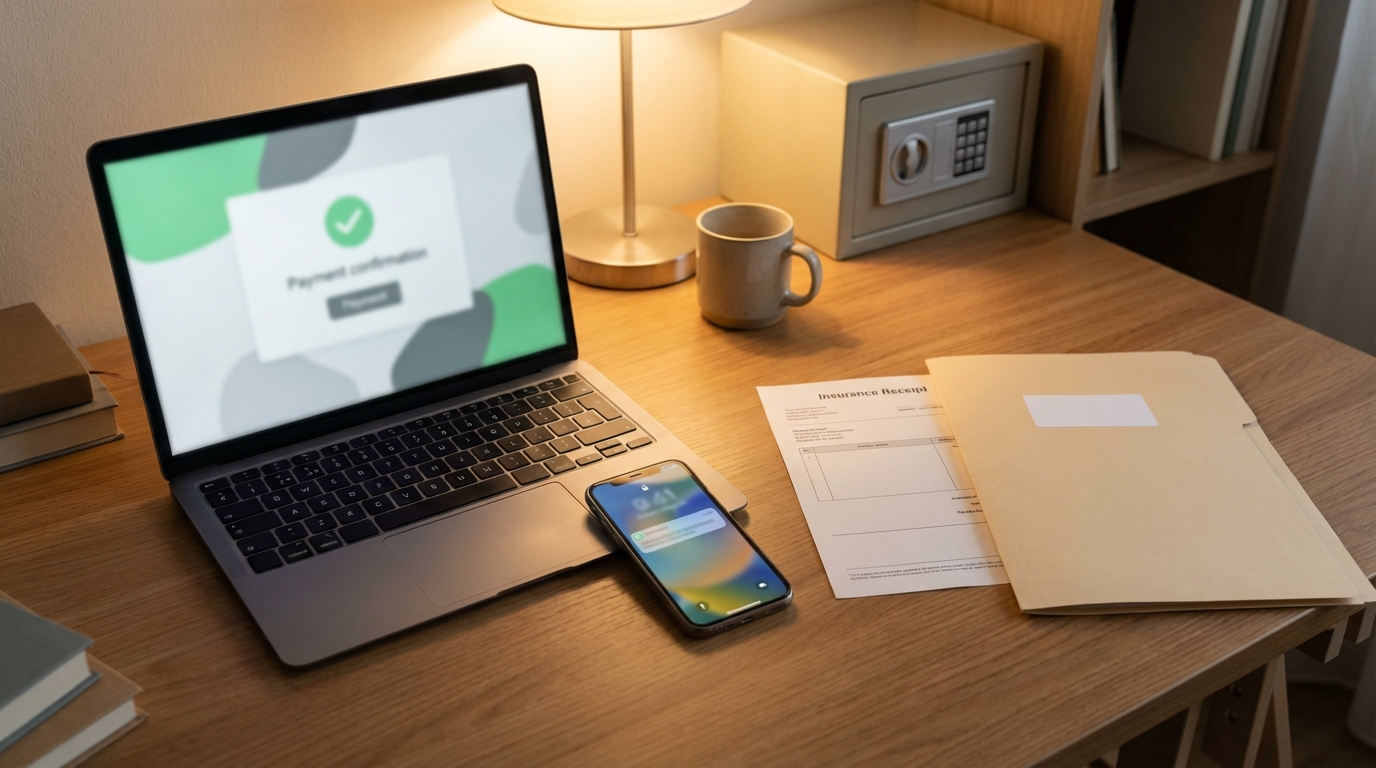
Cash My Guns says payment is released after inspection and paperwork are completed, typically within 2-3 business days. They list direct bank transfer as an option, with funds available as fast as 24 hours, and mailed check with a stated 3-7 business days to receive it.
The part that feels slow is the gating. Even if the package shows “delivered,” most buyers still need an intake record, an inspection sign-off, and their compliance steps finished before anyone presses “pay.” Your lever here is picking a payment method whose clock starts when those milestones clear: ACH/direct bank transfer usually lands faster than a check, while a wire transfer is also a common industry option but depends on the buyer’s policy and bank cutoffs.
During the shipping window, your job is to remove ambiguity. Carrier rules and shop policies can be picky about packaging, and you want your shipment accepted and checked in without questions. Tracking plus signature gives you a clean handoff record if anything gets delayed or disputed.
Some reputable buyers also state shipments are insured, with full insurance coverage and seller protections. Treat that as a paperwork game: follow their packing instructions exactly, and keep proof so your shipment matches what their process expects.
- Save the drop-off receipt and the tracking number.
- Add signature confirmation when required, and keep the delivery record.
- Photograph the sealed box and the shipping label before it leaves your hands.
- Pack in a plain outer box, no firearm-related markings.
- Match the buyer’s label and packing instructions exactly.
After the money hits, what you keep matters almost as much as what you shipped. A small set of documents can answer most future “what happened to it?” questions without you digging through old emails, and it helps to understand the importance of shipping insurance for firearms if you ever need to document loss or damage.
Your Records After the Sale
The easiest way to feel ‘done’ after a sale is to keep proof you did it responsibly. Your best liability reducer is simple: proof of when and where the gun left your possession, and that it went to a receiving FFL, not to some random address (see liability concerns and risk reduction when selling a gun).
ATF consumer guidance says unlicensed individuals who occasionally sell firearms from a personal collection are generally not required by federal law to keep records. Real life still has a way of creating follow-up questions, a buyer asking for details, a carrier issue, or a “when did you own this?” timeline question years later. A small folder of basic documents gives you peace of mind without turning this into a legal project.
If you want extra confidence, verify the receiving dealer’s license with ATF FFL eZ Check. It is the ATF’s tool for confirming an FFL is valid, so your records show exactly who the firearm was sent to.
Some firearm sales can be treated as collectible gains depending on the facts. The IRS states that net capital gain from the sale of a collectible held more than one year is taxed at a maximum federal long-term capital gains rate of 28%. Receipts and, in some cases, appraisals help substantiate your basis, so you can back up your numbers. Talk to a tax pro for your situation.
- Save the invoice or purchase confirmation showing the date and amount.
- Save a simple bill of sale or transfer receipt showing the date it left you.
- Save the receiving FFL info, plus an FFL eZ Check confirmation.
- Save the shipping receipt and tracking number showing delivery to the FFL.
- Save any appraisal or written valuation you relied on for taxes.
Those records also make the pricing feel less mysterious, because the buyer’s “final number” is usually just the market view of the same condition details you documented.
How Buyers Set Final Value
Buyers aren’t pulling numbers out of thin air, they’re pricing to what they can realistically resell. Your records from the sale tell you what happened; the final number explains what the buyer believes the market will pay once that gun is back in circulation.
Valuations often use market data pulled from dealer listings and auctions, then layer in seasonality and regional demand (the same supply-and-demand factors that shape resale prices). That’s why the same make and model can land at different numbers depending on what’s actually moving, and where.
A preliminary quote is built on the details you provide, but the final value moves when hands-on confirmation locks in condition and originality. The stated inputs include make and model, plus condition factors like finish wear, bore condition, matching numbers, and aftermarket parts, because those are the exact details that separate “easy resale” from “harder to explain listing.”
Example: two 9mm pistols with the same model name price differently if one has factory parts and the other has a trigger, slide, or optic cut that narrows the next buyer’s comfort zone. Example: two pump shotguns look identical in photos, but a clean bore and intact finish holds value better than pitting, rust, or a rough chamber. Example: two modern sporting rifles can diverge fast when one is stock and the other is a mix of non-factory furniture and mismatched components. Example: with lever actions, “complete” matters, a factory-correct configuration and included accessories routinely outrank a rifle that’s missing original parts.
Legal and market constraints, like capacity limits or feature and roster restrictions, shrink the buyer pool and push pricing down even when the firearm itself is unchanged. Fewer eligible buyers means slower resale, so the offer has to reflect that reality.
If you want fewer value surprises, give clean model and variant details up front, and be blunt about modifications and any missing or non-matching parts.
Even when the condition and pricing are straightforward, the state where the transfer happens can still change how smooth the finish line feels. That’s where most “why is this taking so long?” moments come from.
What Changes by State
Your ZIP code can change the timeline more than the buyer you choose. State-by-state selling considerations are the biggest wildcard in how fast “done” feels, because they can add shop policies and legal constraints after your package hits the receiving dealer.
The big variables are (1) what the receiving FFL will accept (some shops only take inbound transfers from other FFLs), (2) state or local delays that affect when the buyer can actually take possession, and (3) configuration and magazine limits that can turn a clean shipment into a refused or modified transfer. The practical fix is simple: verify the receiving FFL’s rules for that exact location before you ship.
- California (CA): Confirm any buyer eligibility requirements, plus configuration and magazine limits for the specific firearm.
- Texas (TX): Confirm the shop’s inbound transfer policy (from private individual vs FFL) and its intake timing.
- Florida (FL): Confirm acceptance rules, plus any local timing or waiting requirements where the buyer will pick up.
- Confirm acceptance: Will you accept this firearm type, and will you accept shipment from a non-FFL?
- Confirm compliance: Is the current configuration transferable there, or should anything be removed first?
- Confirm magazines: Can mags be included, and what capacity limits apply?
- Confirm timing: After delivery, what’s your typical check-in and transfer turnaround?
If you’re juggling shipping rules, inspection expectations, payment timing, and state constraints, a short checklist keeps the process from feeling like guesswork. It also puts your attention on the same checkpoints the buyer and receiving dealer are using.
A Simple Post-Sale Checklist
If you follow a few checkpoints, the “black box” after you ship doesn’t have to feel stressful. Most delays come from missing info, mismatched descriptions during inspection and verification, or unconfirmed receiving FFL and state constraints.
- Confirm the receiving FFL details and any state-specific constraints before you ship.
- Pack so the box stays rigid and intact, and avoid any markings that reveal firearm contents.
- Ship and save your tracking number plus delivery confirmation.
- Track the handoff through the receiving FFL so you know when intake can start.
- Verify your shipped item matches your described condition, that’s what inspection is checking.
- Watch for the payment trigger, it happens after verification is accepted in the buyer’s process.
- File a small “sale packet”: offer/receipt, receiving FFL details, tracking/delivery confirmation, and payment confirmation.
That’s the practical answer to the three worries that usually show up right after the box leaves: liability comes down to a documented handoff to an FFL, payment comes after intake/inspection/paperwork, and what happens to the gun is a logged, traceable transfer process you don’t personally have to manage.
For deeper walk-throughs, explore the related resources on Cash My Guns, the operating name of Dunlap Gun Buyers, a federally licensed firearms dealer (FFL). If you’re ready, you can also get an offer and run this checklist as you go.