
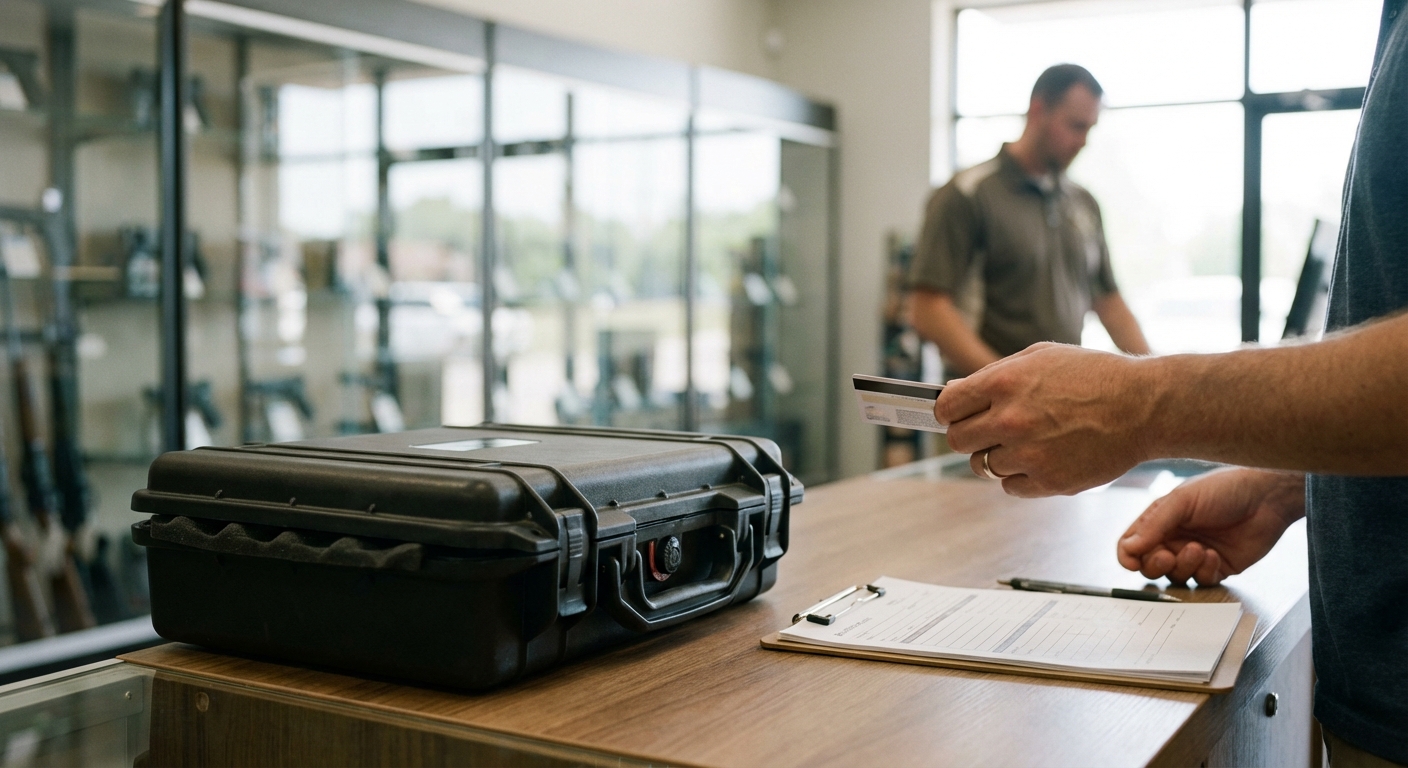

The non-resident trap is simple: a sale that feels like a normal private handoff can accidentally become an illegal interstate transfer the moment you and the buyer are treated as residents of different states.
The frustration usually hits when you’re traveling, you moved recently, you’re visiting family and want to sell a gun “locally,” or you found an online buyer across state lines. It feels like an in-state deal because you’re standing in the same driveway, but federal rules don’t care how casual the meetup feels. They care about each person’s State of residence.
State of residence is the state where you’re present with the intention of making a home there, and you’re only a resident during the time you’re actually present with that intent (27 CFR 478.11). If you’re a nonlicensee, meaning you’re not an FFL holder, federal law generally prohibits you from transferring a firearm directly to another nonlicensee you know, or have reasonable cause to believe, is an out-of-state resident (18 U.S.C. § 922(a)(5)).
The practical pressure-release valve is routing the handoff through a Federal Firearms Licensee (FFL). Dealers “receive” and “transfer” firearms using standard recordkeeping in an A&D bound book, plus buyer paperwork (Form 4473 and a background check), which sharply reduces accidental unlawful transfers.
State laws vary, but federal rules still apply. If there’s any chance you and the buyer are different-state residents, assume an FFL will be part of the handoff.
Step 1
You can’t pick a clean, legal transfer path until you nail two basics: which state counts as your State of residence for firearm purposes, and what the item is classified as for transfer paperwork. The headaches usually hit people with two homes, students, and “it’s just the receiver” sales.
- Confirm which state counts as your State of residence right now (and which state you’re physically in). Federal rules key off where you’re actually present and intend to make a home, not where you vote or pay taxes. If you legitimately live in two states, you’re only a resident of each one during the time you’re actually living there. College students can also be residents of the school state during the term if they’re living there with the intent to make a home there for that period (27 CFR 478.11).
- Identify where the handoff will happen (the state the firearm will be transferred from/to). Write down the seller’s state and the recipient’s state, because interstate private transfers between nonlicensees generally have to run through an FFL in the recipient’s state (18 U.S.C. § 922(a)(5)).
- Classify what you’re selling: handgun, long gun, or frame/receiver (see firearm categories). “Firearm” legally includes the frame or receiver, so selling “just the receiver” still triggers firearm rules (18 U.S.C. § 921(a)(3)). On ATF Form 4473, dealers log the type as Handgun, Long Gun, or Other (frame/receiver).
- Gather the details you’ll need before you talk to an FFL/buyer (this speeds up quoting, appraisal, and intake).
- Make, model, and caliber/gauge
- Serial number recorded securely (don’t post it publicly)
- Condition notes, including any modifications
- What’s included: mags, optics, cases, spare parts
- Provenance you can state plainly, like original owner and approximate purchase date
- Flag any “this might be extra-regulated” hints and plan to confirm with an FFL before you proceed. If it involves a suppressor, short barrel configuration, auto sear, or a state-restricted feature set, stop and verify first with the dealer handling the transfer, whether that’s your local shop or a nationwide FFL buyer like Cash My Guns.
Step 2
Once you’ve written down the two residence states and the firearm type, the next decision gets a lot easier: you’re choosing a transfer path that stays inside federal rules, not just a convenient meetup spot.
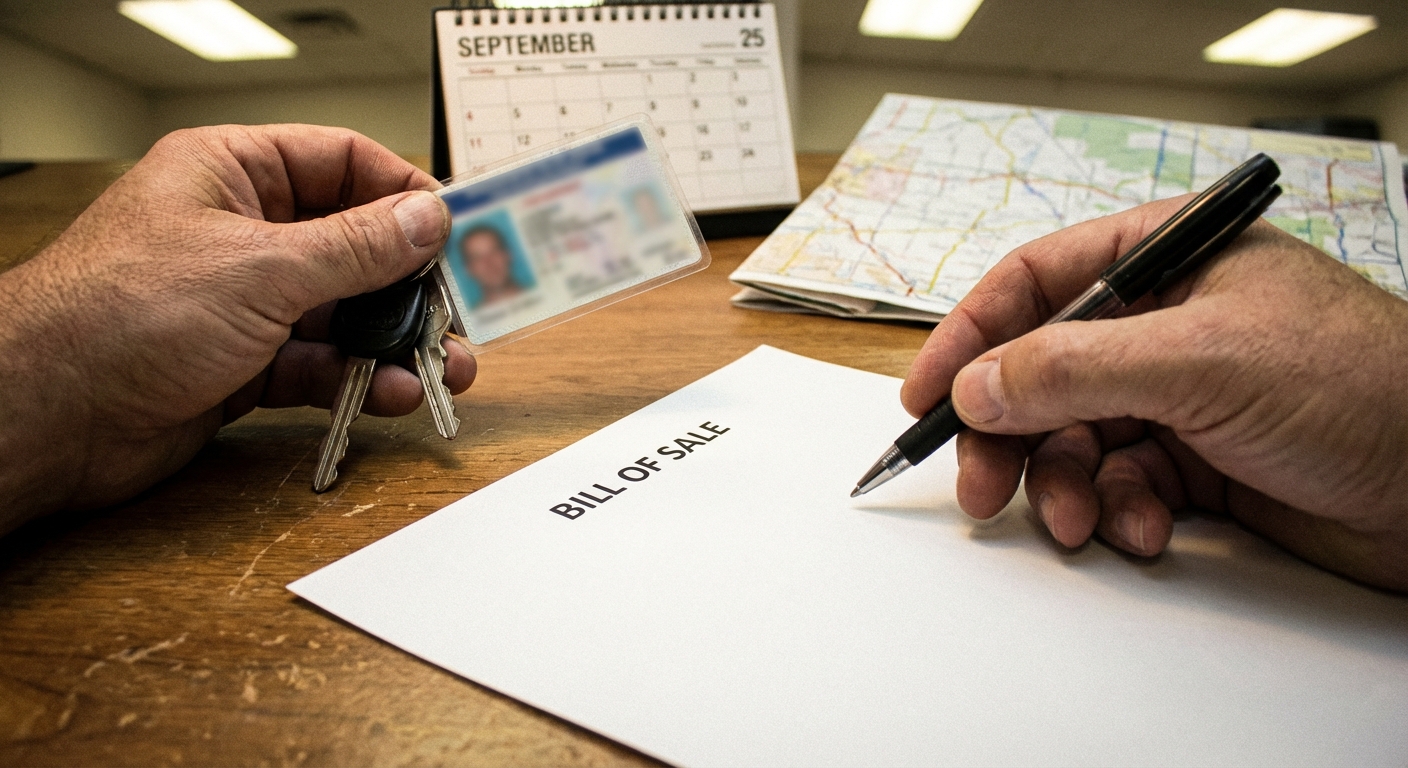
Once the seller and the buyer live in different states, you’re not really “picking a buyer” anymore, you’re picking a transfer path that stays inside federal rules. The tempting move is the quick handoff while you’re traveling, cash in a parking lot, and done. Federal law is what makes that the risky option, not the vibe of the state you’re standing in.
Why the parking-lot handoff usually fails: 18 U.S.C. § 922(a)(5) generally bars an unlicensed person from transferring a firearm directly to an unlicensed person who resides in another state. So even if you’re visiting a private-sale-friendly state, state culture does not override the interstate federal rule.
Route A: Selling to an FFL where you are
Cleanest when you want a simple, compliant exit while traveling, and you’re fine selling to a dealer instead of a private buyer. Federal law allows an unlicensed person to transfer a firearm to an FFL in any state, including a state you’re visiting. Common snag, some shops will only buy certain types or will decline unusual configurations and paperwork situations.
Route B: Selling to an out-of-state private buyer via the buyer’s FFL
Cleanest when you’ve already found the buyer, but you want the legal handoff to happen at their dealer, with a 4473 and background check on the buyer at pickup. Common snag, the receiving FFL can refuse the transfer if they won’t accept from a non-FFL shipper or if the firearm is not legal to transfer in the buyer’s state.
Route C: Shipping to an FFL for sale or consignment
Cleanest when you don’t want to coordinate with a specific buyer and you’d rather let a dealer sell it from their inventory, or you’re using a nationwide online FFL buyer like Cash My Guns. Common snag, intake policies vary, some dealers require specific ID copies in the box and specific addressing before they will log it in.
Quick state callouts: Texas and Florida both allow many in-state private-party transfers without an FFL, but neither state can “waive” 18 U.S.C. § 922(a)(5). If the other person is a resident of a different state, the clean path still runs through an FFL to keep the sale legal.
- Choose your route (A, B, or C) based on where the buyer and the receiving dealer are.
- Confirm the receiving FFL will accept the firearm and configuration from your state.
- Ask who is sending it, how it must be addressed/labeled, and what documentation they want in the box.
- Pause on edge cases (inheritance or sporting loan/rental) and verify before you act.
- Will you accept this transfer from a non-FFL individual, or do you require it to come from my local FFL?
- Any state restrictions I need to know before I send it (model features, magazines, or other configuration limits)?
- What exact name and address should appear as the sender in your records, and what ID copy do you want included?
- Do you want the buyer’s name, phone, or order number referenced on the outside label or inside the box?
- If the package arrives and you refuse it, what happens next and who pays return shipping?
Step 3
Once you know whether you’re doing an in-person dealer sale, a buyer’s-FFL transfer, or a shipped intake, you can price the gun the way you’ll actually sell it-based on real comps and your real friction costs.
Your “right” price is what similar guns actually sold for, minus the friction costs you’ll eat as a non-resident seller, like transfer fees, shipping and insurance, consignment commissions, and card fees. If you skip the net math, you’ll either overprice it and stall, or accept a number that looked fine on paper but lands light in your pocket.
GunBroker is useful here because it’s an auction platform with lots of comparable inventory, plus Buy Now listings. For valuation, you care about closed results, not the optimistic ask prices still sitting unsold.
- Pull sold comps (Completed Auctions) and filter to your exact variant.
- Adjust for condition using a few high-impact checkpoints.
- Add or subtract for accessories and original items where they matter.
- Back into your asking price by doing net-proceeds math (fees + transfer + payment processing + shipping/insurance line items).
Comps get messy fast unless you match configuration. “Glock 19” isn’t one price, a Gen 3, Gen 5, and Gen 5 MOS (optic cut) don’t trade the same, and listings often bundle different mag counts or sights. Same deal with SIG P320, where “Compact” vs “Carry” vs “X” variants change what you should compare, and with Beretta 92FS vs M9, where the specific model marking and included kit can separate two guns that look identical in a quick scroll.
Condition is the next big lever. Appraisers consistently weight finish condition, bore condition, and matching numbers, because those three are hard to fake and easy to discount when they’re off (the crucial role of expert appraisers in valuing firearm collections). Use photos and descriptions to keep your comps honest: holster wear, pitting, crown wear, and mismatched parts should push you toward the lower end of the sold range.
Accessories only matter when buyers would have paid for them anyway. Extra OEM mags and the original box, manual, and factory parts usually help. Random aftermarket internals often don’t.
Example (thought process): Your Glock 19 Gen 5 MOS comps in Completed Auctions cluster around $600 to $675, but your slide has obvious finish wear, so you target $610 to stay in the fast-selling band. You include two extra OEM mags and the factory box, so you hold at $610 instead of dropping further. Your route costs:
- Consignment: 15%
- Card processing: 3% + $0.30
- Transfer handling: $45
- Shipping and insurance: $60
On a $610 sale, those line items eat roughly $200 total, so your expected net is around $410. If you want to net closer to $475, you don’t “negotiate harder,” you raise the ask into the next sold-comps pocket or change the cost structure based on supply-and-demand effects on resale prices.
Step 4
Once you’ve got a realistic price range, the remaining question is where to list or walk in-because the “best” venue depends on whether you’re optimizing for speed, net, or minimal back-and-forth.
The “best” place to sell as a non-resident is the one that matches your priorities, fast cash, maximum net, or least hassle, without turning into a compliance headache. The friction is real: plenty of sellers waste a day driving to a shop that will not accept an out-of-state seller, or they list online and spend weeks swatting away flakes and scam attempts.
If you want speed, this is the straightforward play: a direct sale to a local FFL. Direct sale to a local FFL often pays immediately once you agree on price and the dealer records the acquisition in the A&D bound book (standard workflow). The common non-resident gotcha is simple: some dealers have stricter intake rules for out-of-state sellers or specific firearm configurations, so “just show up” turns into “sorry, we can’t take it.” Your move: get acceptance criteria and fee details confirmed before you drive.
If you want less day-to-day effort but still want some upside, consignment can make sense. Consignment is the “least work for better upside than an instant offer” route because the shop handles display, marketing, and the buyer paperwork. The catch is cost and time: consignment commonly runs about 10% to 25% of the final sale price, and you are waiting on a buyer. Non-residents get tripped up by shop policies on how and when they release funds, plus any price-drop terms if it sits.
If you want national demand, online marketplaces and how to sell your gun online are where that happens-but they come with more moving parts. This shines when your local market is thin and you want national demand. The gotcha is stacked friction: platform rules, payment quirks, shipping coordination, and a receiving FFL that can reject a package if something is off. Non-resident sellers also deal with more time-wasters, so your net depends on how tightly you manage screening and fees.
If you want a predictable process with fewer variables, selling to a nationwide buyer can be the calmer option. This is the “fewest moving parts” option when you want a clear process and predictable steps. The tradeoff is you are taking a buyer’s offer instead of running an open auction. One example is Cash My Guns, a nationwide online firearms purchasing service operated by an FFL that positions the process as “Safe • Legal • Hassle-Free.”
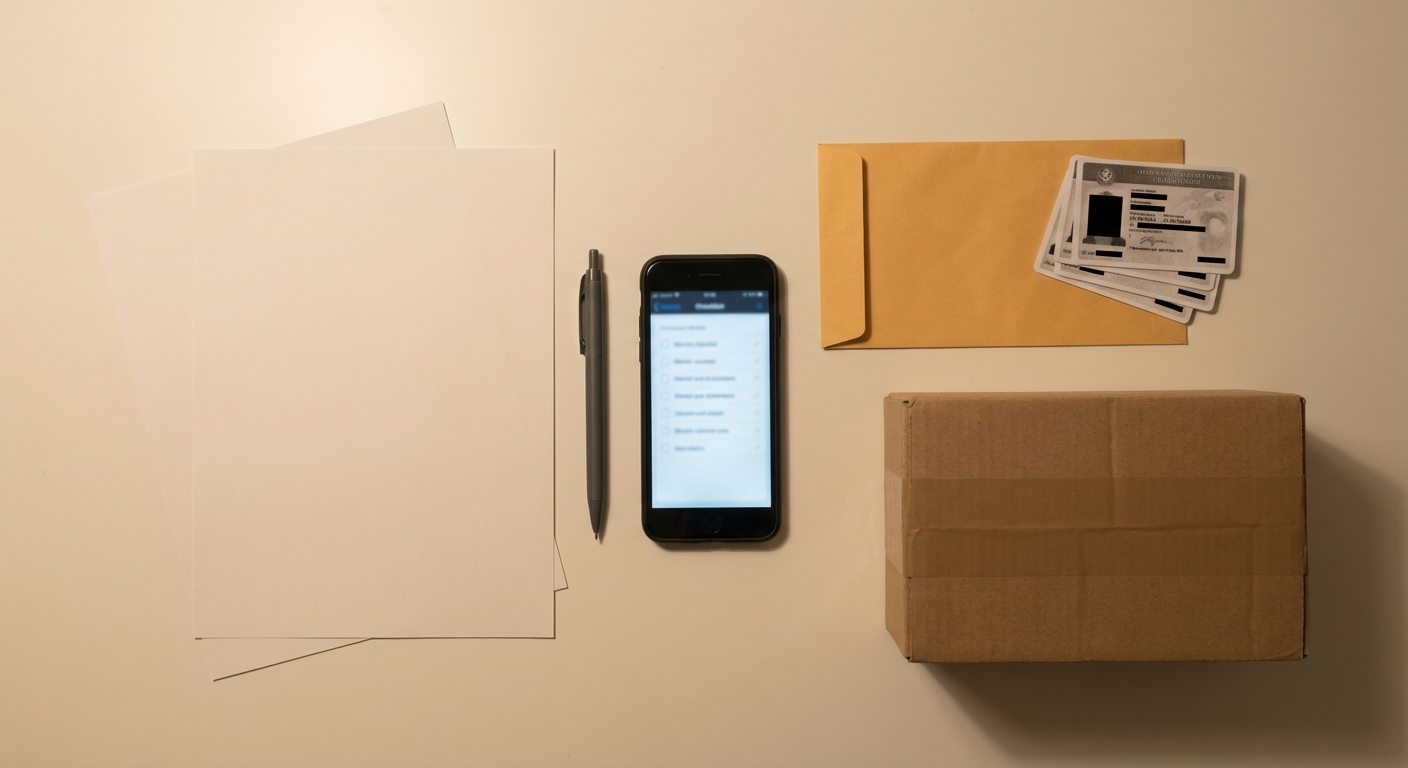
- Assemble your basic firearm details and photos for quoting. Have manufacturer/importer, model, serial number, type, and caliber/gauge ready, those are the same core identifiers an FFL records on acquisition.
- Prepare simple proof-of-transaction paperwork (bill of sale/receipt expectations). Bring a government ID, and be ready to provide your current address and a simple signed receipt showing date, firearm description, and sale amount.
- Call the FFL ahead of time with the key questions that prevent a refused transfer. Ask: Will you accept a non-resident seller in person or by shipment? What exact items do you require in the box or at the counter? What are your fees and payout method? What hours do you accept intake? Any firearm types, magazine limits, or configuration rules you refuse?
Step 5
Whichever venue you choose, the part that keeps you out of trouble is the same: document the custody change so there’s no gray area about who had the gun, and when.
The safest sale is the one you can document end-to-end: when the gun left your control, when the FFL took custody, and exactly when it was transferred to the buyer. Most “problems” in private sales aren’t technical, they’re timeline problems, payment timing vs possession, shipping uncertainty, and buyers trying to shortcut the process.
You’re optimizing for clean custody change. You hand the firearm to the dealer, the dealer logs it, and the buyer completes the transfer through the dealer’s normal counter process. Your job is to leave with a dated intake record and a payment trail that matches the handoff.
You’re optimizing for chain-of-custody proof. The winning formula is simple: ship only to the receiving FFL per their instructions, use tracking plus insurance, and save every receipt so you can prove where the firearm was at every step (including how to package and ship a firearm properly). (This is also why services like Cash My Guns lean hard on insured shipping and a “Safe • Legal • Hassle-Free” process.)
- Coordinate with the FFL on timing, acceptance, and what paperwork goes with the gun. (Confirm they will accept a shipment from a nonlicensee if you’re shipping.)
- Deliver the firearm to the FFL (in person) or ship it per the receiving FFL’s instructions. (Ask about packaging expectations, carrier rules, and whether they want a copy of your ID in the box.)
- Confirm the firearm is logged in and get a dated receipt or intake record. (You want something that ties the make, model, and serial to a date.)
- Complete the buyer-side transfer only through the FFL’s normal process. The buyer must appear in person at the FFL’s licensed premises for an over-the-counter transfer, because ATF Form 4473, the buyer’s federal transfer form, is required any time a firearm is disposed from the dealer’s A&D record to a nonlicensee.
- Collect payment in the agreed, traceable way and match it to the moment custody changes. (In-person: release to the FFL first, then finalize payment. Shipping: get paid per your agreement, but do not treat it as “done” until you have the FFL intake record and tracking shows delivered.)
- Keep your records (receipt/bill of sale, tracking, insurance, communications) in one folder.
- Walk away from red flags (pressure, weird payment, third-party buyer stories, “my cousin will fill out the form”).
Red flags worth taking personally: anyone pushing you to skip the dealer, rushing you to “just hand it to my friend,” offering overpayment or reversible payment methods, or trying to separate the payer from the person who will show up to do the paperwork. Clean transactions don’t need creative stories.
Records to keep: the FFL intake receipt (dated), any bill of sale or written terms, shipping receipt plus tracking number and insurance, screenshots or emails confirming the receiving FFL details, and your payment confirmation. The FFL handles the seller-side portions accurately, runs the background check process, and records the final disposition after approval. Your job is keeping proof that you transferred to the dealer, not to some random person in a parking lot.
Final Checklist for Non-Resident Sellers
This checklist is basically the same set of pressure points from the start: State of residence, firearm type, an FFL-based transfer path when states differ, and a clean paper trail that proves you didn’t do a casual handoff that federal law treats as interstate.
If you can clearly show where you legally live, what you’re selling, how it moved, and who took possession, you’re doing this the smart way.
Federal baseline: direct interstate transfers between nonlicensees are generally prohibited, so when you’re unsure, route the transfer through an FFL.
- Confirm your State of residence (right now) and where the transfer happens.
- Classify the firearm correctly (handgun/long gun/frame/receiver).
- Choose a compliant route-default to an FFL when states differ.
- Price using sold comps and your net-after-fees number.
- Prep your docs and FFL questions before you drive/ship.
- Document the transfer and keep receipts, tracking, and insurance proof.
Keep your bill of sale or receipt, shipping tracking and insurance paperwork, and any FFL documentation you were given. If you’re dealing with an edge case like inheritance, collections, or prohibited configurations, ask a qualified FFL or firearms attorney, or use Cash My Guns, a nationwide online firearms purchasing service operated by an FFL.