

Buyer seems normal, wants to meet tonight, and keeps pushing, “No paperwork, cash only.” It feels like a simple private sale, but this is where people accidentally create the biggest legal exposure, not from missing a form, but from ignoring obvious warning signs right in front of them.
You’re also stuck in a real tension: you want a clean, efficient sale, and you don’t want to act like a detective or offend someone who’s legit. The problem is you don’t have a magic database as a private seller, so the only thing you can control is the quality of the decisions you make before you hand the firearm over.
Federal law draws the line around what you knew at the moment of transfer. Under 18 U.S.C. § 922(d), it’s unlawful to sell or otherwise dispose of a firearm or ammunition to someone “knowing or having reasonable cause to believe” they’re prohibited. In practical terms, “reasonable cause to believe” means your gut plus the facts matter, and the ATF’s Federal Firearms Regulations Reference Guide (ATF P 5300.4) explains that facts and circumstances can be enough for a reasonable person to conclude the buyer is prohibited, even without direct proof. If a buyer says “I’m a felon” or “I can’t pass a check,” that’s a clear indicator you can’t proceed.
This guide gives you a practical, step-by-step verification workflow that protects you, by reducing liability, investigation headaches, civil risk, and avoidable safety problems, with a focus on documentation and compliance, not legal advice. You’ll also build in a “check your state” decision point, because state and local rules vary, and your process has to match where the transfer happens.
Step 1 Know the Legal Baseline
- Learn the federal baseline before you vet any buyer, because you can’t verify eligibility until you know what “legally allowed” means under federal law, and where your state piles on stricter rules.
Federal law sets the floor for who’s a prohibited person, meaning someone who can’t legally receive or possess a firearm. In real-world private sales, the big buckets to keep in mind are felony-equivalent convictions under 18 U.S.C. § 922(g)(1), fugitives under § 922(g)(2), unlawful users of or addicts to controlled substances under § 922(g)(3), and certain domestic-violence related disqualifiers, including qualifying restraining orders and misdemeanor crimes of domestic violence under § 922(g)(8) and § 922(g)(9). For broader context on legal and safe firearms sales practices, keep these prohibited-person categories front of mind.
This is where seller risk shows up: 18 U.S.C. § 922(d) exposure hinges on transferring to someone prohibited, including situations where you have “reasonable cause to believe” they’re prohibited.Private, face-to-face “cash and carry” gets a hard stop at state lines. Under 18 U.S.C. § 922(a)(5), a non-FFL generally cannot transfer a firearm to a non-FFL they know, or should know, lives in another state. The narrow exceptions are a temporary loan or rental for lawful sporting purposes, or a transfer by bequest or intestate succession (inheritance).
States can require background checks for private transfers, permits to purchase, waiting periods, registration, or specific transfer paperwork. Start with ATF P 5300.5, “State Laws and Published Ordinances, Firearms,” but treat it as a snapshot that can lag. Your state’s statutes and official agency guidance control.
Action check: before you message buyers, confirm (1) they’re in-state, and (2) confirm your state’s private-transfer rules for the exact type of firearm you’re selling.
Once you’ve got the baseline in your head, the “verification” part stops being abstract and gets very practical: you’re trying to avoid handing a firearm to the wrong person, or to the right person who turns out to be out-of-state.

Step 3 Confirm Identity and Residency
You’re not “running a background check” at this step. You’re confirming the person standing in front of you matches the identity and residency assumptions your sale depends on, so you do not accidentally transfer to someone you never intended to deal with.
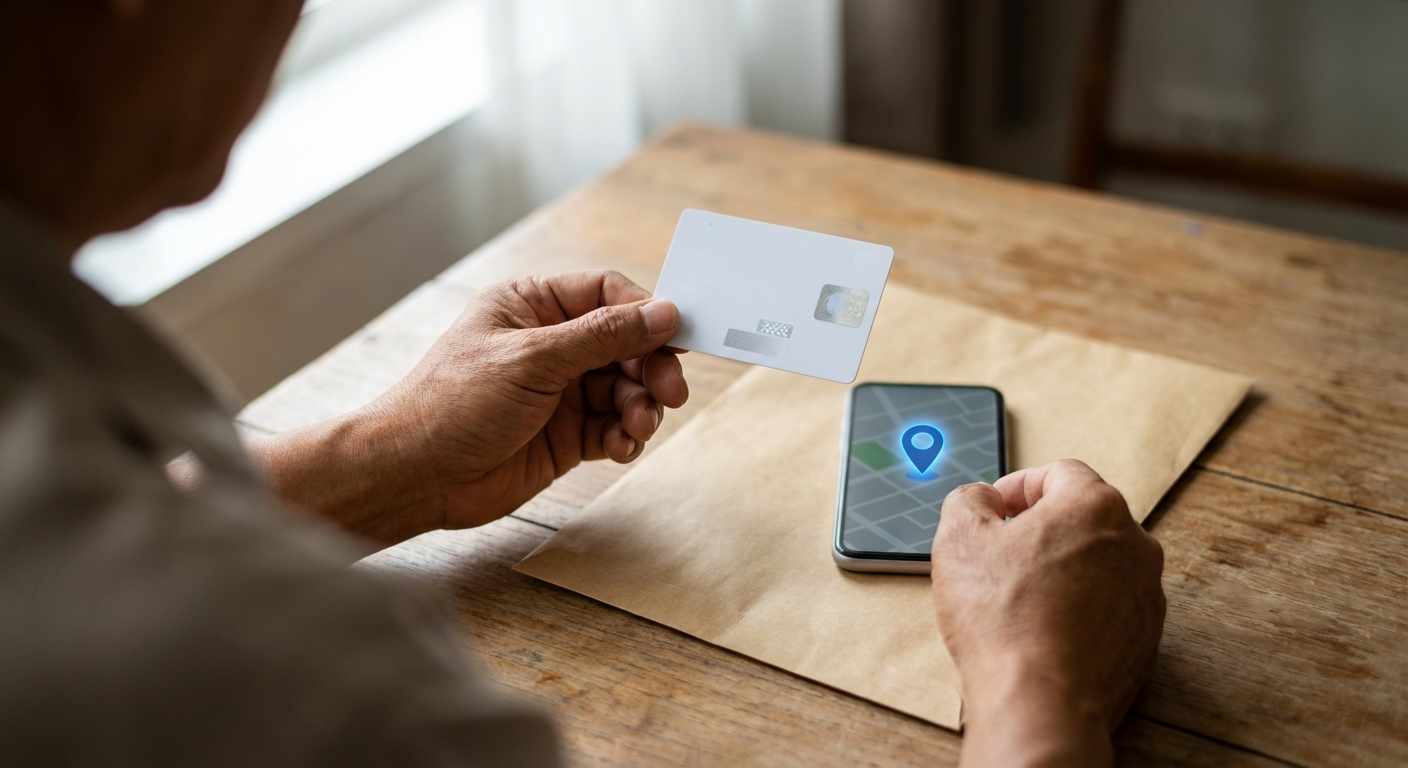
Use a valid government-issued photo ID and keep it practical: verify the name, photo match, date of birth (age), address, and state. If the ID is out-of-state, or the address clearly does not line up with in-state residency for your planned path, the safe move is simple: pause the sale or route it through an FFL (licensed dealer).
As a conservative best practice, use the federal framing in 27 CFR 478.11: a person’s “State of residence” is the state where they’re present with the intention of making a home. The same regulation treats active-duty military as residents of the state where their permanent duty station is located. For an alien legally in the U.S., 27 CFR 478.11 adds an FFL-context rule: they’re a resident only if they’ve lived in-state for at least 90 days, which is a solid default to follow if you want to stay on the safest ground.
Age is non-negotiable for handguns: 18 U.S.C. § 922(x)(1) makes it unlawful to transfer a handgun or handgun ammunition to someone you know, or reasonably believe, is under 18.
Keep notes minimal, for example “ID checked, in-state, over 18.” Do not copy or store sensitive ID numbers unless you truly need them. If you do keep anything, store it offline in a locked place. If anything doesn’t line up, stop and switch to an FFL-facilitated transfer.
ID and residency get you to the right person in the right place. If you want a cleaner yes/no on legal eligibility, you’ll need an authorized check path rather than trying to infer it from vibes or small talk.
Step 4 Use Background Checks or Permits
Option 1: Use an FFL to run NICS
- Meet at an FFL and have the buyer complete ATF Form 4473, the transfer form filled out at the dealer before the firearm can be transferred.
- Wait for the NICS response the dealer receives: Proceed (the transfer can happen), Delayed (the dealer has to wait for a final answer or the legal waiting window), or Denied (the transfer cannot happen).
- Complete the transfer only if the dealer can legally release the firearm based on that result and any state rules they must follow.
Option 2: Use an ATF-listed NICS-alternative permit (where applicable)
- Confirm the buyer has a permit that is specifically listed by ATF as a NICS alternative (often called a “Permanent Brady Permit”), not just any carry permit.
- Ensure the permit is valid and was issued after a qualifying background check, because only those listed permits can substitute for a check in the situations ATF authorizes.
Option 3: Follow your state’s private-sale background-check process (if required)
Some states require background checks even for private sales and route them through a state process authorized by law.
- Check your state’s rules for any approved private-sale background check portal or state-run procedure.
- Follow the state’s exact routing, since some states run checks themselves while others rely on the FBI NICS system.
The quick way to figure out “who runs the check” in your state is the FBI’s published NICS POC list, which labels states as full, partial, or non-POC. If you can’t confidently verify eligibility through an authorized method, the safest route is using an FFL/NICS route when a background check is required or declining the sale.
Even when an ID checks out and an eligibility path looks clean, your responsibility doesn’t end there. The “reasonable cause to believe” standard is about facts and circumstances, and a few obvious ones can show up only when you’re actually dealing with the person.
Step 5 Watch for Red Flags
- Watch for red flags and be ready to end the deal, even if the buyer flashes an ID or talks a good game. Red flags are actionable information; ignoring them is what creates the legal and personal risk.
- Pressure for “no paperwork,” offering extra money to skip an FFL, rushing you, or refusing to show ID.
- Personal details that don’t match, name, address, age, or story shifts between messages and in person.
- Any admission like “I can’t pass a check” or “I’m not supposed to have one.” Those statements are clear reasonable-cause indicators. Do not proceed.
- Straw-purchase cues: a “straw purchase” is when the person completing ATF Form 4473 (dealer transfer form) isn’t the actual transferee/buyer. Form 4473 requires the purchaser to confirm they are the “actual transferee/buyer,” and it even gives examples, including that buying with your own money as a bona fide gift is OK, but buying on someone else’s behalf is not.
- “Don’t Lie for the Other Guy” warning signs: a companion directs the selection or answers questions while the nominal buyer seems unfamiliar, uninterested, or disengaged.
- Aggression, intoxication, or unsafe handling.
If you see any of these, keep it short and end it without turning it into a debate.
In person: “I’m not comfortable with this transfer. I’m ending the sale. Take care.”
By message: “I’m going to pass on the sale. No hard feelings. Please don’t contact me again about this listing.”- Stay in a public spot, keep your tone flat, and don’t argue or explain.
- Leave immediately if the vibe shifts, and don’t let them follow you to a second location.
If you feel pressured to bend rules, that’s your answer, don’t proceed.
When everything lines up and you do decide to proceed, the last step is making sure the transfer is easy to explain later. That’s where minimal, clean documentation helps-along with one quick safety-and-legality check on the firearm itself.
Step 6 Document the Transfer Properly

Before you hand it over, look at the importer or manufacturer serial number on the frame or receiver. If it looks removed, obliterated, or altered, stop the transfer immediately. Federal law, 18 U.S.C. § 922(k), makes it unlawful to knowingly possess or receive (and to knowingly transport, ship, or receive in commerce) a firearm with that serial number removed, obliterated, or altered.
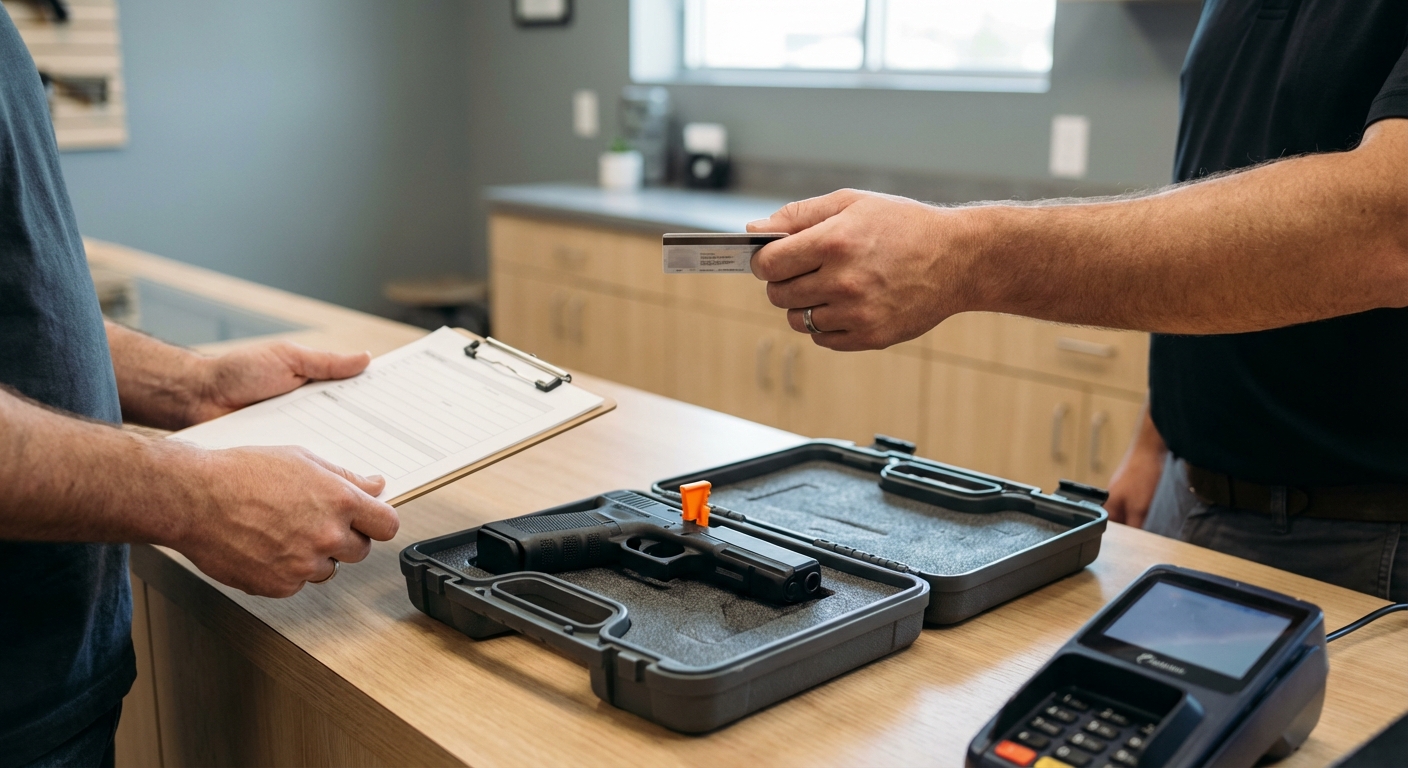
A bill of sale is a written record of a private transfer that documents the parties, the firearm details, and the transfer date and basic terms, where it’s lawful and you choose to use one. The friction is privacy: too much data creates unnecessary exposure, too little makes the transfer hard to prove. Keep it tight, names and signatures, date and time, make, model, caliber, serial number, sale price, and a short statement that the buyer affirmed they’re legally allowed to possess the firearm (you already checked eligibility and residency earlier). If you’re missing original materials, see what records matter when you don’t have the box or papers.
States vary on what you must collect or verify. For example, Illinois private sales require the seller to view and obtain the buyer’s FOID Card. Check your state’s rules before you rely on a generic form.
At an FFL (dealer transfer), the buyer completes ATF Form 4473 under 27 CFR 478.124, and the dealer records the transaction in their required records. You should not expect, request, or attempt to copy dealer-only records beyond whatever receipt or transfer confirmation the dealer provides.
Store what you keep securely, and keep only what you need to prove the transfer date and firearm identity.
Conclusion
The safest private-sale verification is a workflow you can repeat, not a gut check. Stick to the steps in this guide: know the baseline rules (prohibited person, plus the big interstate limits), confirm identity and residency, use an eligibility check pathway (FFL, qualifying permits, or your state’s authorized process), watch for red flags and walk away, then document the transfer and do a quick serial-number sanity check. If you know, or have reasonable cause to believe, the buyer is prohibited, don’t transfer, 18 U.S.C. § 922(d) is the federal risk trigger.
When the rules feel unclear, or state or interstate requirements push you there, the safest default is simple: route the transfer through an FFL. For official references, use the ATF “State Laws and Published Ordinances – Firearms” page (ATF P 5300.5) and the ATF “Federal Firearms Regulations Reference Guide,” then confirm details on your state agency site or statutes. If you want a Safe • Legal • Hassle-Free path, how to sell a gun (and your options) can help you choose a next step, including safer alternatives; Cash My Guns, operated by Dunlap Gun Buyers (FFL), is a licensed, remote, mail-in option, Trusted Since 2013.