
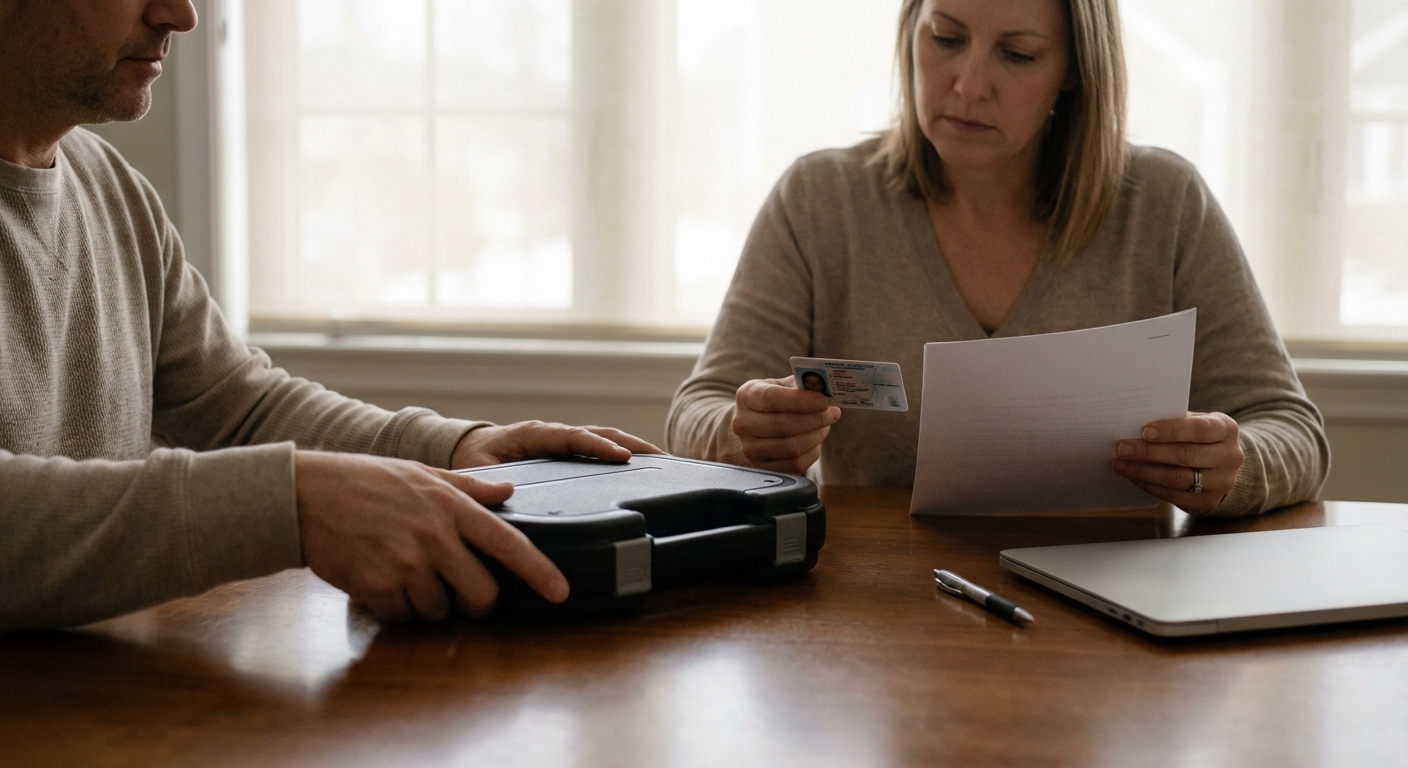

You found a buyer, they want to meet today, and they’re acting like a private sale means “no background check, no rules.” That assumption is the fastest way to get yourself charged.
The pressure is real. You want the cash, you don’t want to lose the buyer, and it feels awkward to ask, “Are you allowed to own this?” or “What state do you live in?” But the risk triggers aren’t about whether you’re a dealer. They’re about who you’re handing the gun to.
Federal law generally bars a non-licensed seller from transferring a firearm to someone they know or reasonably believe lives in another state, with limited exceptions like inheritance and certain temporary sporting loans. Federal law also bars transferring to someone you know, or have reasonable cause to believe, can’t legally possess a firearm, and “reasonable cause” can come from the circumstances, not just a confession. This is where people get jammed up fast: an online buyer with an out-of-state ID, a gun-show meet-up, or “my buddy’s cousin wants it.”
Here’s the practical rule: the answer depends on who’s involved (FFL or not), whether the buyer is in-state, and what your state piles on top. If you’re not 100% sure it’s an in-state, lawful buyer under your state’s rules, default to an FFL. A common lawful workaround for an out-of-state buyer is doing the transfer through a licensed dealer in the recipient’s state so the buyer handles the required check and paperwork there. This is general information, not legal advice.
Federal Rules Every Seller Should Know
Federally, the rules don’t hinge on “private sale”, they hinge on licensing, residency, and whether you’re acting like a dealer. States can add extra requirements, but they can’t subtract the federal floor, so the baseline stays the same whether you meet at a gun show, message through an online forum, or do the deal in a parking lot.
A Federal Firearms Licensee (FFL) is the person or business licensed under federal law to deal in firearms, and that license is what triggers the standard background check workflow for most retail-style transfers. If your sale is completed by an FFL, the check happens through the FFL, not “because it’s a gun show” or “because it was online.”
On the other hand, a truly occasional, private, intrastate sale between two residents of the same state has no federal background-check requirement by itself. The catch is that federal law still forbids transfers you know, or have reasonable cause to believe, would put a gun in the hands of someone who can’t lawfully possess it, so “no federal check required” never means “no federal rules apply.”
At an FFL transfer, the buyer fills out ATF Form 4473 (the Firearms Transaction Record), and the dealer runs the buyer through the National Instant Criminal Background Check System (NICS). The dealer documents the NICS result and transaction information before the firearm is transferred. NICS responses include Proceed, Delayed, and Denied, and the FFL records the outcome as part of the transfer recordkeeping (27 CFR 478.124; 27 CFR 478.102; ATF Form 4473).
Federal trouble starts when selling stops looking like “cleaning out the safe” and starts looking like a business. The legal phrase is engaged in the business, and the Bipartisan Safer Communities Act (2022) broadened that standard to cover people who sell firearms “to predominantly earn a profit” through repeated or regular transactions (18 U.S.C. § 921(a)(21)(C) and § 921(a)(22), as amended). Selling down or improving a personal collection is generally outside that core definition.
So, if you sell a couple guns you’ve owned for years to fund one new purchase, that reads like a collection change. If you’re flipping guns every weekend, advertising inventory, and buying with the intent to resell for profit, you’re drifting into dealer territory, and federal law expects dealers to be licensed.
An interstate transfer is any transfer involving people in different states, and federal residency rules are where “easy private sale” plans usually break. As a baseline, non-FFL to non-FFL transfers across state lines are generally barred (18 U.S.C. § 922(a)(5)). Even for licensed dealers, sales to out-of-state residents are restricted, and handguns generally must be transferred through an FFL in the buyer’s home state (18 U.S.C. § 922(b)(3)).
Those federal guardrails set the baseline. The next question is where background checks get triggered in real-world sales, especially when state law and out-of-state buyers enter the picture.
When Background Checks Are Typically Required
Most sellers don’t “need” a background check, until one detail changes and suddenly they absolutely do. The surprise requirements almost always come from three triggers: an FFL is involved (they run the check), your state has its own rules, or the deal turns interstate or involves a special category like an NFA item.
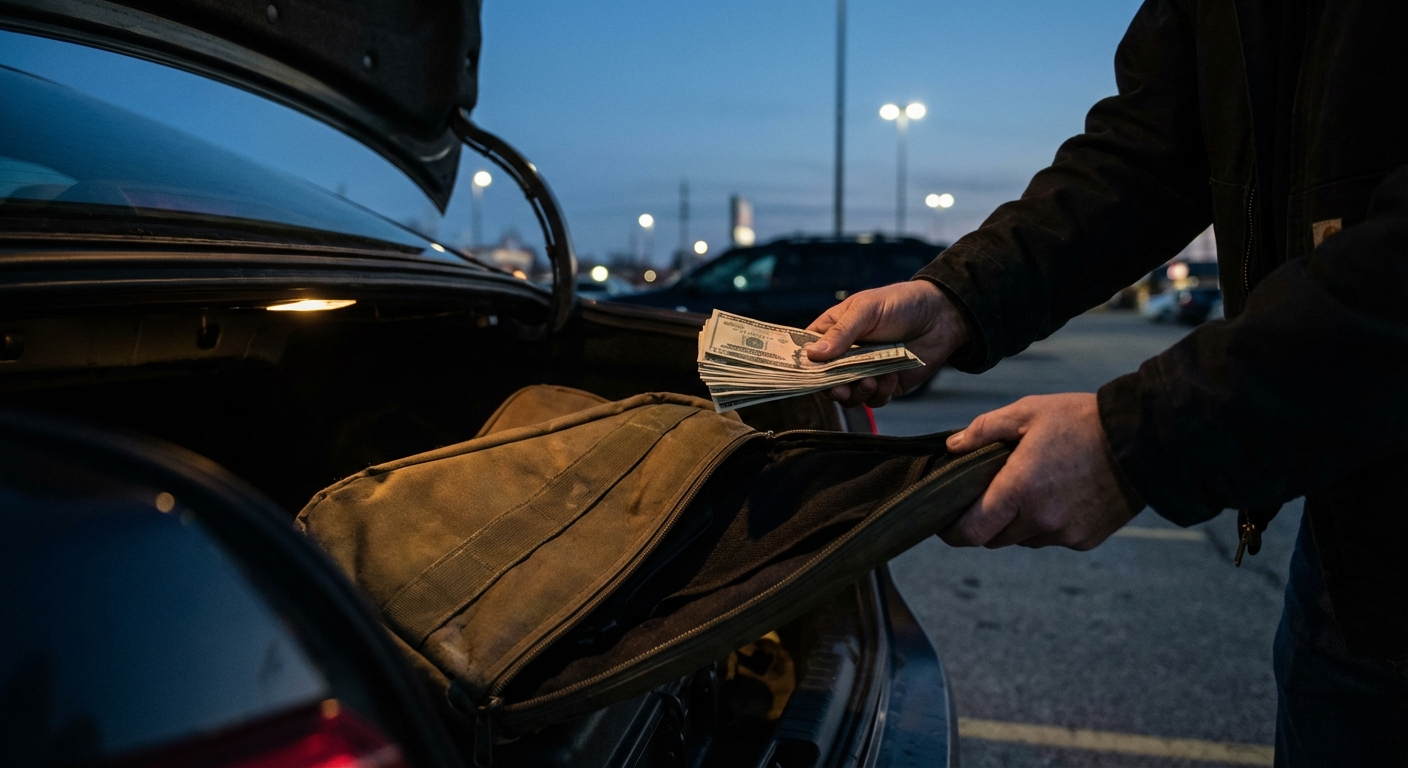
A purely intrastate, private-party transfer (non-FFL to non-FFL) doesn’t require a federal background check if you’re not engaged in the business and your state doesn’t require universal background checks. That doesn’t make it a free-for-all. Federal law still makes it a crime to transfer a gun to someone you know, or have reasonable cause to believe, is a prohibited person (18 U.S.C. § 922(d)).
A prohibited person is someone federal law bars from possessing firearms, for example a convicted felon, fugitive, unlawful user of or addicted to controlled substances, someone with certain mental health adjudications or commitments, an unlawfully present alien, a person under a qualifying domestic-violence restraining order, or someone convicted of misdemeanor domestic violence. If any of those flags are in play, the “easy” private sale is the wrong lane.
If the sale is completed through a gun store or any FFL, the background check happens through the FFL as part of the transfer paperwork. No workaround, that’s the point of using the licensee.
If the buyer says they’re from another state, treat it as an interstate transfer. A private seller generally can’t transfer directly to an out-of-state non-FFL, the common lawful path is shipping or delivering it to an FFL in the buyer’s state to complete the transfer.
Gun shows don’t change the rules. If an FFL is the transferor, a check is required. If it’s a true private-party transfer, it’s still governed by the same state and federal rules as anywhere else.
Handguns and long guns don’t always transfer the same way across state lines. At a high level, interstate handgun transfers to nonresidents are tightly restricted, and long-gun transfers still have to comply with both states’ laws.
An NFA item (National Firearms Act regulated firearm) like a suppressor or SBR lives on a different track: ATF Form 4 is the tax-paid transfer to a non-FFL/SOT, ATF Form 5 is the common tax-exempt estate or heir transfer, and ATF Form 1 is for making and registering an NFA item, not transferring one (see suppressor rules and transfer considerations).
Estates and trusts add their own wrinkles, especially with NFA items. Inheritance can be treated differently, so don’t wing it.
- Confirm the buyer is in your state (same state residency).
- Decide whether you’re using an FFL to complete the sale.
- Stop if you have any reason to believe the buyer is a prohibited person.
- Route any out-of-state deal through an FFL in the buyer’s state.
- Ship only to an FFL when the transaction is interstate or online (and follow how to package and ship a firearm).
- Escalate suppressors, SBRs, and other NFA items to the correct ATF form process.
- Default if anything feels fuzzy: Use an FFL transfer.
State Laws Change the Answer Fast
Your zip code can change the answer more than the type of gun. Federal law is the floor, then states stack on extra steps that turn a “simple private sale” into an FFL-only handoff, a state background-check system, a waiting period, or a required buyer document.
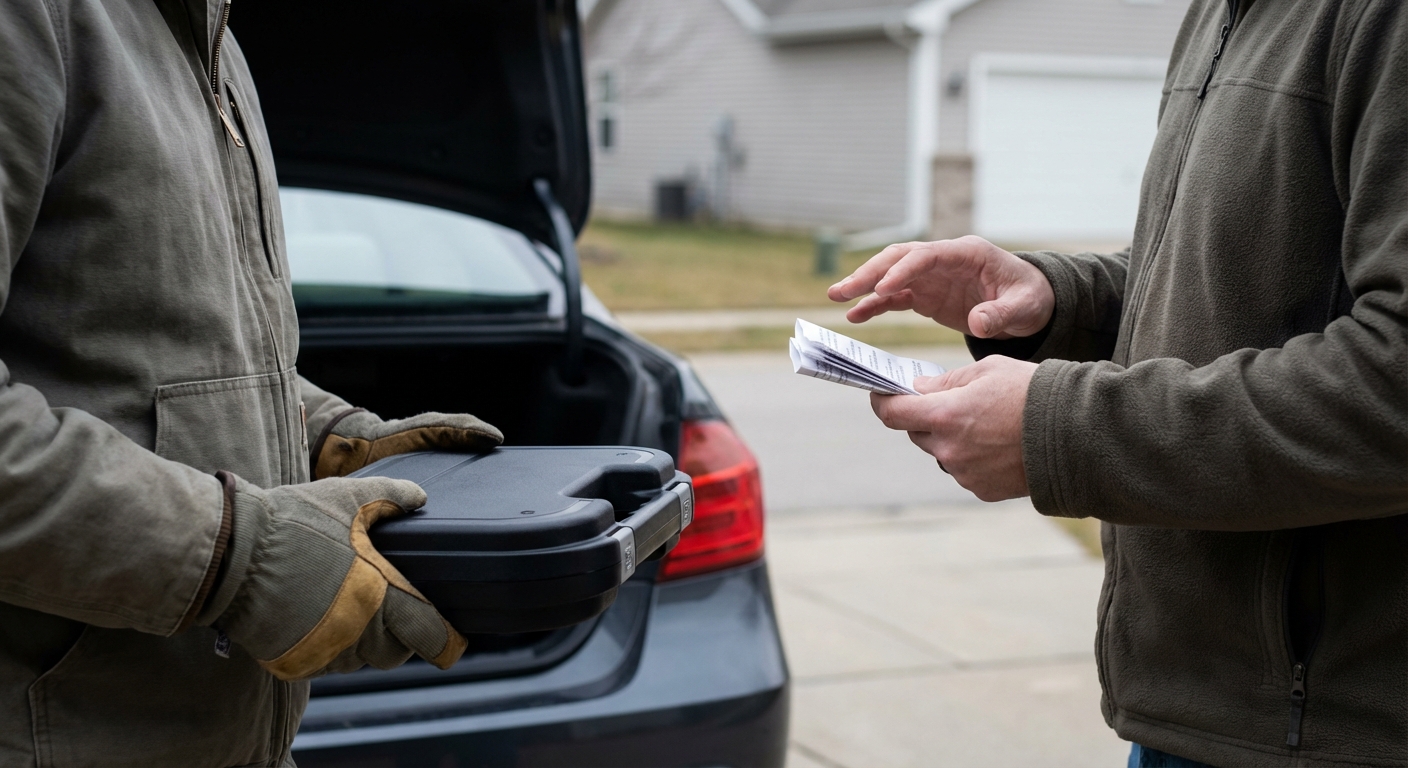
The real seller problem is timing and possession. In some states, the legal transfer is not “money changed hands,” it is “the buyer can legally take the gun home,” and state rules control that moment.
CA: Plan on dealer processing for most transfers, even between two private parties. The dealer runs the DROS and you generally cannot deliver the firearm until the 10-day waiting period has run (CA DOJ guidance; Cal. Penal Code § 26815). For a deeper look at selling a gun in California and the required transfer steps, note that California law is designed to stop a same-day handoff in a parking lot.
NY: Private sales generally route through a dealer (or other authorized entity) so the background check happens under the SAFE Act, with limited exceptions. If you are not sure an exception applies, treat it as an FFL transaction and confirm using New York laws for selling and buying firearms.
IL: Expect state-specific eligibility documentation, commonly a FOID, and a state-required check process that often runs through an FFL and/or the Illinois State Police system depending on the transfer. Illinois rules change and details matter, verify against current ISP or Illinois AG guidance before you hand anything over.
PA: Pennsylvania flips based on whether the gun is a covered “firearm” under state law, which generally captures handguns and certain short-barreled guns (18 Pa.C.S. § 6102). For those covered transfers, you generally must use an FFL or a county sheriff, and the buyer must clear PICS and paperwork before delivery (18 Pa.C.S. § 6111(b), (c)). Typical long-gun private transfers are treated differently, so don’t assume the handgun rule applies to everything.
TX: Texas does not impose a state-law requirement that a private-party sale use an FFL or background check. Texas still criminalizes certain transfers, including age and prohibited-recipient situations, so “no mandatory check” is not the same as “no rules.”
FL: Florida generally does not require an FFL for a purely private, in-state transfer under state law. The practical seller move is to avoid any transfer that gives you reason to think the buyer is prohibited.
GA, OH, AZ, NC: These states generally do not impose a universal private-sale background-check mandate statewide. Your job is still the same, do not transfer if the situation screams “prohibited person,” and check for any local or situational requirements that change the default.
- Check your state police or AG firearms page for private-transfer rules and required documents.
- Call a local FFL and ask, “Can I legally hand it over today, or does this need to be processed?”
- Wait to transfer possession until you are sure the state-specific boxes are checked, especially in CA, PA, IL, and NY.
Safe, Compliant Ways to Complete a Sale
Once you know whether federal law and your state let you do a direct handoff, the practical question is how to run the sale without guessing. The safest sale is the one that leaves you with proof you did it the right way.
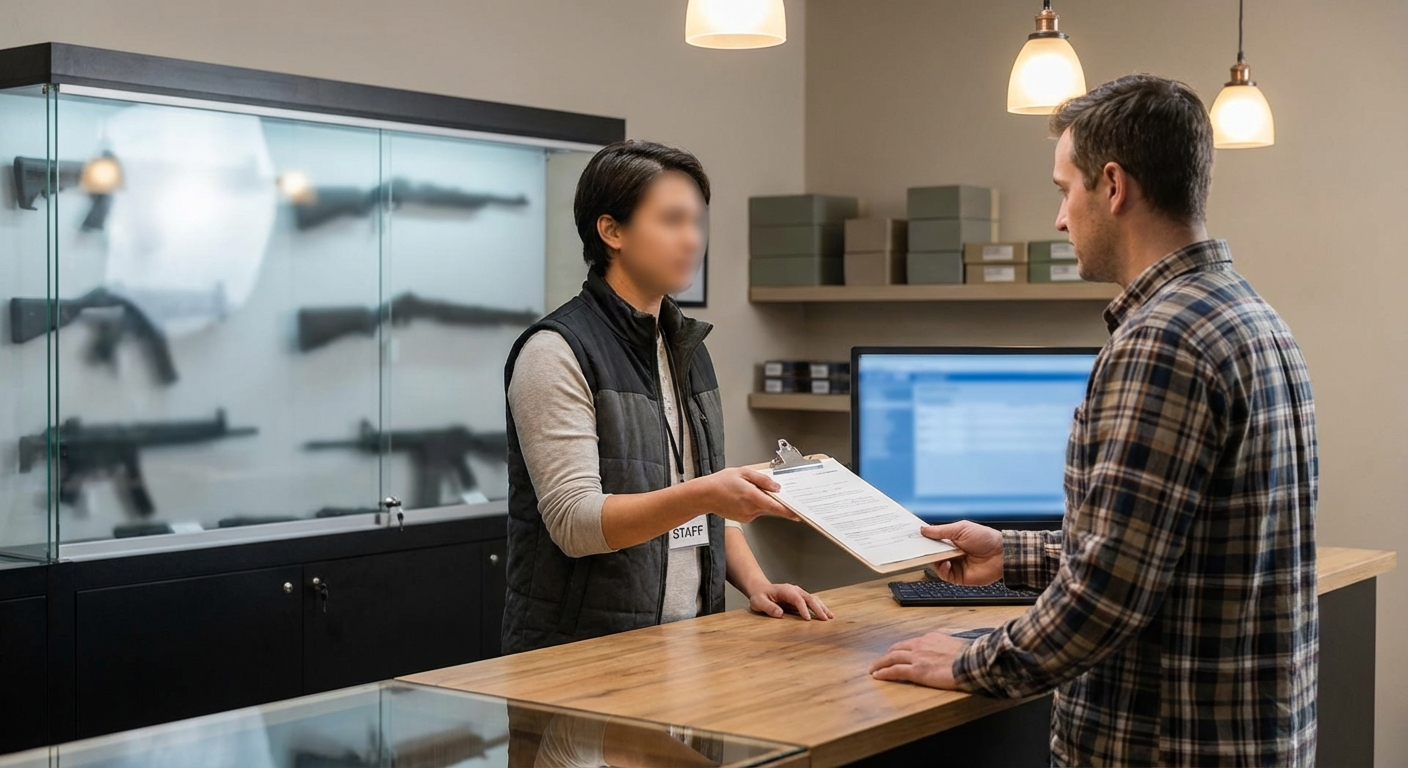
Walk into a local gun shop, show ID, and ask for an offer. This is the simplest path because the dealer controls the compliance steps and you leave with a receipt and a clear handoff. The tradeoff is price, dealers build in margin because they’re taking inventory risk and doing the work to resell it.
You and the buyer meet at an FFL and the firearm changes hands only through the counter. The buyer (transferee) completes ATF Form 4473, the FFL verifies the buyer’s government-issued photo ID, and the FFL runs NICS (or an allowed alternative where permitted) before the transfer is approved and completed. You should expect a transfer fee, typically about $20 to $75, and it varies by dealer and location.
Pick services that are clearly licensed, spell out each step, and offer insured shipping with transparent offer and payment terms. Cash My Guns (Dunlap Gun Buyers) identifies as a federally licensed firearms dealer (FFL) and describes its process as “Safe • Legal • Hassle-Free,” using a nationwide mail-in model with transfers routed through licensed FFLs.
It also describes its business model as a nationwide online purchasing service that buys guns, ammunition, and accessories.
- Bring your government photo ID, any documents the dealer asks for, and basic firearm details (make, model, caliber, serial number).
- Verify residency and identity where lawful, and match the buyer to their ID at the counter.
- Use a bill of sale where appropriate, and keep your copy.
- Refuse suspicious buyers and odd workarounds. If something feels off, end it.
- If shipping is involved, stay strict on legal and carrier requirements.
A non-FFL can ship a firearm to an FFL in another state for lawful purposes, but generally cannot ship directly to an out-of-state non-FFL. USPS generally prohibits non-FFLs from mailing handguns under USPS Publication 52.
Pick the lowest-risk option that fits your timeline, especially if the buyer’s residency or eligibility is anything less than crystal clear.
Does a Background Check Affect Value?
The check isn’t what changes the price, your selling route does. Most pre-owned firearms sell based on the same fundamentals as any used durable good: model, condition, and what similar examples are actually moving for. A background check is a compliance step, not a value add.
Sellers get surprised by net proceeds because “used value” is usually a range, not a number. Recent market analysis puts typical retained value for pre-owned firearms at roughly 60-85% of original price, with condition and model doing most of the work. Your job is picking the path that keeps the biggest slice of that range.
Private sales often have the best gross, but net can still get clipped by transfer costs. Consignment can bring storefront exposure, but commissions are usually roughly 10%-25%, often with minimums, so small wins in sale price disappear fast. Direct-to-buyer services can be simpler; some buyers evaluate make and model plus condition and use market data like dealer listings and auctions.
Finish wear, bore condition, matching numbers or parts, and clean, reversible aftermarket parts drive offers. Box, papers, receipts, and accessories help you prove what it is and how it was kept. Demand also swings, and how supply and demand affects firearm resale prices helps explain why offers and timing can change. Americans bought 15.3 million guns in 2024, down from 21.8 million in 2020 (The Trace tracker), which affects speed and aggressiveness of offers. If you find yourself searching “how much is my Glock 19 worth” or “how much is my Remington 700 worth,” choose a channel based on what you value most, max dollars, speed, or lowest hassle and risk, then document condition clearly.
Quick Checklist Before You Transfer
If you remember one thing: when residency, eligibility, or state rules are unclear, route the deal through an FFL.
- Start with the federal floor. Treat federal law as the baseline, then assume your state can add stricter overlays.
- Confirm residency. Same-state transfers follow one set of rules, out-of-state buyers create immediate interstate risk.
- Screen for prohibited-person risk. Don’t transfer if you know, or reasonably believe, the buyer is prohibited.
- Check state overlays. Verify whether your state requires universal background checks, permits, or waiting periods for private sales.
- Use the safety valve. If anything feels fuzzy, use an FFL-facilitated transfer, or sell to a licensed dealer/service to reduce compliance risk.
At the dealer, keep it clean: 18 U.S.C. § 922(a)(6) makes false statements about material facts a crime, so answer truthfully and be the actual transferee.
That brings you back to the same gut-check from the start: the biggest risks aren’t about whether you call it a “private sale,” they’re about who you’re handing the gun to, whether they’re in your state, and what your state requires at the moment of transfer. For edge cases, confirm your specific state rules with official sources, a local FFL, or a firearms attorney. If you want a simpler compliant path, consider a licensed buyer or service, one example is Cash My Guns, which operates as an FFL.