

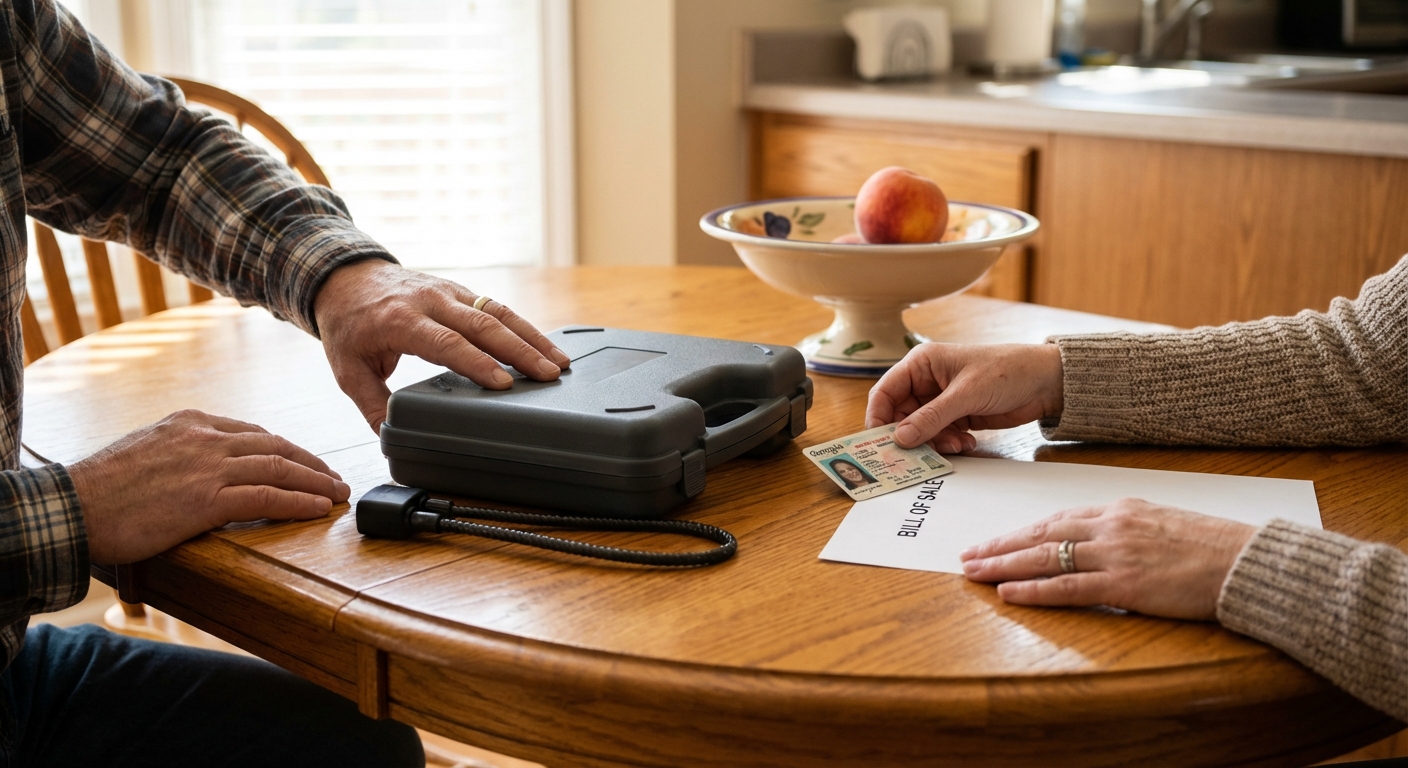

You’re trying to sell a gun in Georgia, and you’re not looking to guess your way through it. One bad assumption can turn a simple sale into a legal headache, a parking-lot scam, or a deal where you walk away with less than you should.
The pressure is real: you want it gone quickly, but you also want to do it clean. The fastest buyer is often the one waving the biggest red flags, and slowing down for five minutes usually saves you days of regret.
Here’s the tension this guide resolves: Georgia is simple on paper, but the mistakes are expensive. Georgia does not require a background check for private-party firearm sales between unlicensed individuals, but dealer sales do require a background check. Georgia also has no state firearm registry and no statewide waiting period for firearm purchases, including private sales. That “looser” feel makes private sales common, and it’s exactly why small details matter.
The biggest tripwire is cross-border: if the buyer and seller are in different states, the transfer generally must go through an FFL under federal law. If a guy from Alabama wants to meet in a parking lot and do a handshake deal, that’s where people get burned.
Follow a clean process and you protect both sides while keeping the sale straightforward, legal, and confident in Georgia.
Step 1
Georgia makes private gun sales feel simple, but the safest sale is the one that stays inside federal guardrails. Federal law is where most sellers get jammed up, especially in gray-area situations where you ignore red flags, deal with an out-of-state buyer, or try to “help out” a friend.

Georgia’s private-sale rules are permissive, which is why you have to self-police the deal. Georgia does not force you to use a Federal Firearms Licensee (FFL), but choosing to route a transfer through an FFL reduces legal risk because the dealer handles the required paperwork and runs the background check for the buyer (and it helps to understand when a background check or FFL involvement may still be required).
“Permissive” still isn’t “anything goes.” Federal law controls who can legally receive a firearm, and Georgia separately criminalizes transferring a gun to certain people in-state (for example, transferring to a convicted felon is a state felony under O.C.G.A. § 16-11-131). Your job as a seller is to avoid transferring to a prohibited person, not to pretend you didn’t notice what was right in front of you.
18 U.S.C. § 922(d) makes it illegal to transfer a firearm to someone you know, or have reasonable cause to believe, is prohibited. “Reasonable cause to believe” is the standard that catches people: it’s not mind-reading, it’s facts that would make a reasonable person suspicious, like a buyer openly admitting disqualifying history or pushing you to skip basic verification.
18 U.S.C. § 922(g) lists common prohibited categories. Practically, the ones that come up most are: felony-equivalent convictions, fugitives from justice, unlawful users of or addicts to controlled substances, people adjudicated as a mental defective or committed to a mental institution, certain noncitizens (for example, unlawfully present), dishonorable discharges, people who’ve renounced U.S. citizenship, people under qualifying domestic-violence restraining orders, and people convicted of misdemeanor crimes of domestic violence.
- They tell you they “can’t pass a background check” or “don’t want paperwork.”
- They ask you to sell it to their friend “instead,” or they script what you should say if anyone asks.
- They mention active warrants, a recent felony, or a domestic-violence case, then try to brush it off.
Interstate transfer rules are the other big trap. If the buyer is an out-of-state resident, a nonlicensee-to-nonlicensee transfer generally must go through an FFL under 18 U.S.C. § 922(a)(5) and 27 C.F.R. § 478.30. In plain terms, if someone from Florida or Alabama wants your gun, you usually cannot just hand it to them as a private seller.
The buyer has a restriction too: 18 U.S.C. § 922(a)(3) (and 27 C.F.R. § 478.29) generally bars a nonlicensee from receiving or bringing into their home state a firearm they obtained out of state unless the transfer runs through an FFL. That’s why the clean path is routing the transfer to the buyer through an FFL, typically in the buyer’s state.
Watch for straw purchase pressure as well. ATF Form 4473 is explicit: a straw purchase is when the person completing Form 4473 is not the “actual transferee/buyer.” If you hear, “My buddy will do the paperwork, but it’s really for me,” treat it as a stop sign, not a loophole.
- Confirm the buyer is a Georgia resident before you agree to a private transfer, otherwise plan on an FFL.
- Refuse any deal where you know, or have reasonable cause to believe, the buyer is a prohibited person (18 U.S.C. § 922(d)).
- Listen for straw purchase language tied to Form 4473, especially “I’m buying it for someone else” scenarios.
- Route the transfer through an FFL when anything feels gray, because federal interstate rules are not optional (18 U.S.C. § 922(a)(5); 27 C.F.R. § 478.30).
Once you’re clear on the legal tripwires-prohibited persons, out-of-state buyers, and straw-purchase pressure-the rest is about running a clean, low-drama transaction. For a deeper dive into Georgia firearm laws and regulations for sellers and a checklist-style refresher on ensuring your gun is sold legally, it helps to review the basics before you meet a buyer.
Step 2
Most “bad sales” start as sloppy sales: unclear condition, missing parts, and no paper trail. A little prep up front makes the handoff faster, keeps the conversation focused, and cuts down on misunderstandings that turn into last-minute haggling.
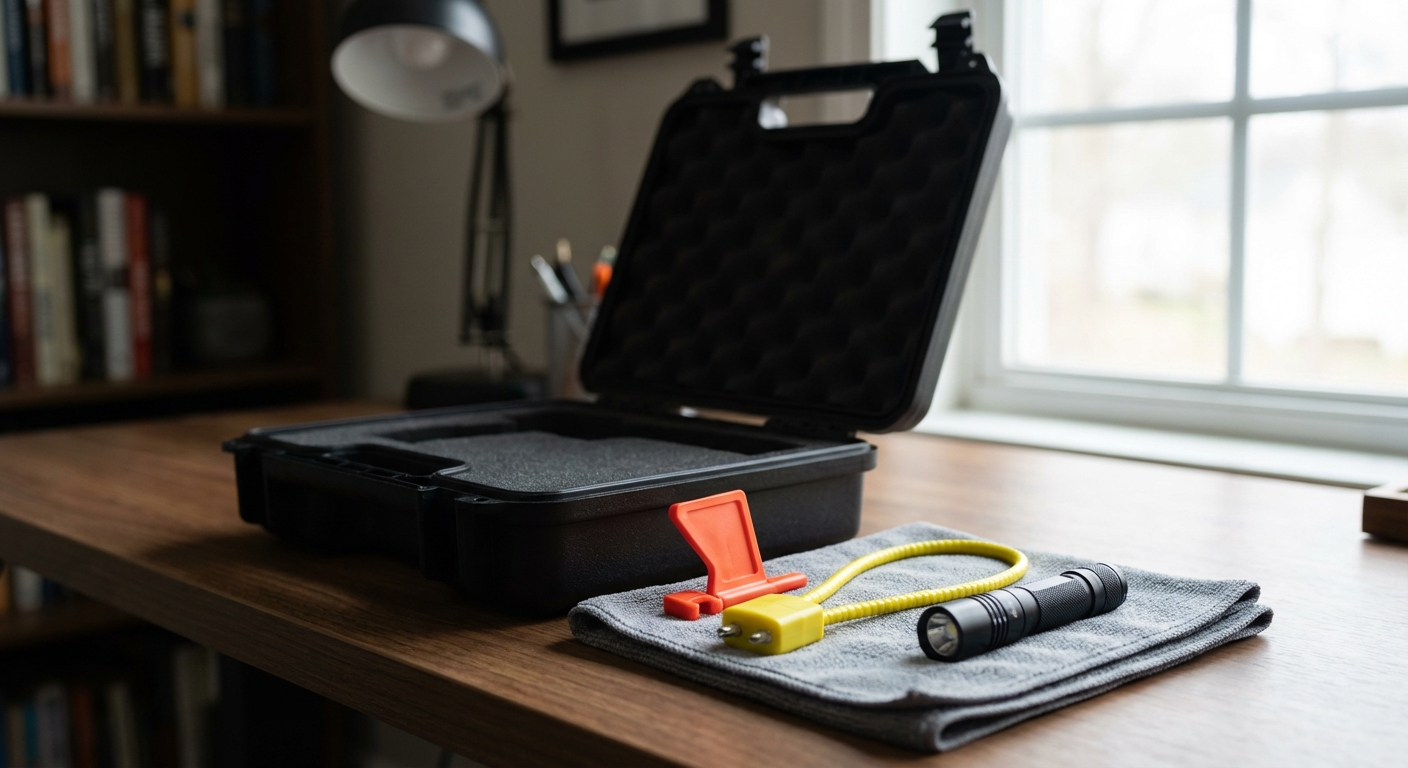
- Handle it like you mean it: control the muzzle, keep your finger off the trigger, and treat every firearm as loaded while you’re checking it, cleaning it, or showing it.
- Unload and confirm it’s clear before you do anything else. Remove the ammo source (magazine, cylinder load, etc.), open the action, and visually check the chamber so you can demonstrate “clear” confidently during the meet.
- Clean it just enough to inspire confidence. Wipe down exterior metal, clean obvious carbon on contact points, and make sure the bore and chamber aren’t filthy. You’re not restoring it, you’re proving it was cared for.
- Function-check the basics and gather everything that goes with the sale. Verify normal controls work as expected (safety, slide/bolt, magazine insertion and release, trigger reset where applicable). Then pull together the case, extra mags, optic and mounts, sling, factory box, manuals, and any spare parts you’re including.
- Document the details for your records and the buyer’s peace of mind. Write down the make, model, caliber/gauge, serial number, and what accessories are included. Georgia does not require a bill of sale for private-party firearm sales, but a simple bill of sale gives both sides the same written record. Keep it simple: date, firearm identifiers, sale price, both names, and a short buyer statement that they can legally possess (18 U.S.C. § 922(d)).
- Confirm paperwork if you’re shipping to an FFL (common for online sales). Ask for a copy of the receiving FFL license, ship only to the address shown on that license, and include whatever the receiving FFL asks for inside the box, many request a copy of the seller’s government ID (especially if you’re selling a gun without the box or papers).
Why this helps: clear safety habits, a quick cleanup, and a tight list of what’s included remove the “mystery” that spooks buyers. A basic written record, even when it’s not required in Georgia, gives you something concrete to point to if questions come up later about what was sold and when.
Once your gun is ready to show and your details are straight, pricing gets a lot easier because you’re comparing apples to apples, not guessing based on memory or emotion.
Step 3
Pricing isn’t guessing, it’s pattern-matching against real sales of the same gun in the same kind of condition, with the same stuff included.
- Pull comps from two places: completed auction results (sold listings, not active bids) and current dealer listings for used guns. For each comp, write down the exact model/variant, stated condition, and what’s included, especially magazines, boxes, optics, and lights, because those swing the number fast.
- Match the exact variant before you touch price. “Glock 19” isn’t specific enough if yours is a Gen4 vs Gen5, MOS vs non-MOS, different sights, different finish, or different capacity magazines. Quick anchor for your gut check: a standard (non-MOS) Glock 19 or 17 Gen5 commonly sits roughly $500 to $650 new at retail, and MOS variants are commonly higher. If a comp is for the wrong generation or the optic-ready version, it’s the wrong comp.
- Apply condition grading so your price lines up with how buyers talk. Use a simple grade like Excellent, Very Good, Good, Fair, and be consistent: finish wear and dings are visible value hits; bore condition and overall mechanical feel separate a clean shooter from a hard-used one; matching numbers matter on collectible or older guns where originality is the point.
- Account for accessories and included items by pricing the gun first, then adding only what buyers actually pay for. Extra OEM mags usually help because they save the buyer money immediately. Optics and lights can help if they’re quality and correctly installed, but you need to compare against comps that also include them, not tack on what you paid.
- Discount modifications that shrink the buyer pool. Aftermarket triggers, slide cuts, cerakote, stippling, or “custom” work often reduce demand in private sales because buyers worry about reliability and workmanship. If your “Glock 19” is actually a Gen4 with night sights and a home stipple job, treat the stipple as a potential negative and let the comps tell you how much.
- Set two numbers: an asking price and a minimum acceptable price. Asking price should sit near the upper end of your realistic comp range to leave room to negotiate. Minimum price is your walk-away number, usually around the lower third of sold comps for your condition grade, adjusted for what you’re including and how quickly you want it gone. Keep supply and demand in mind, Georgia buyers don’t pay the same in every month or every zip code.
Common pricing traps: using MSRP instead of sold comps, pricing off what you paid, ignoring variant differences (Gen, MOS, caliber, barrel length), overvaluing mods, and forgetting that “included items” (mags, optics, case) need to match the comps you’re copying. Professional buyers, including Cash My Guns, use dealer listings and auction results plus condition factors like finish, bore, matching numbers, and aftermarket parts, and they adjust for current market conditions, your process should too.
When you know your two numbers-ask and walk-away-the next decision is less about price and more about the route you’ll use to get paid without wasting your time.
Step 4
The “best” way to sell a gun in Georgia depends on which pain you’re trying to avoid: leaving money on the table, wasting a week answering messages, or dealing with extra paperwork. More net payout usually means more time and more buyer management. More convenience usually costs margin. Decide what you’re optimizing before you entertain offers.
A private, in-state sale usually leaves you with the highest net because there’s no shop margin and no consignment commission. The tradeoff is effort: you’re the one handling inquiries, scheduling, and deciding who you’re comfortable selling to.
If you want “close to private-sale money” without doing all the legwork, consignment through a local gun shop is the middle ground. You’re paying a commission for their display space, foot traffic, and staff time, and you’re also waiting on their timeline, but you offload most of the buyer-facing hassle.
Selling directly to a local gun store or pawn shop is the quickest path from “I’m done with this” to “it’s sold.” You’ll get an offer that reflects their need to resell at a profit, but you skip the back-and-forth and you usually walk out the same day.
Online buyout services sit in this same “speed first” lane. For example, Cash My Guns is operated by Dunlap Gun Buyers, a federally licensed firearms dealer (FFL), and it describes its model as buying guns, ammunition, and accessories nationwide through an online process.
Online marketplaces can put your listing in front of far more buyers than a single town or shop, which helps niche models move faster. The catch is complexity: selling to an out-of-state buyer typically means shipping to an FFL (licensed dealer) for transfer, plus more communication and platform rules.
On GunBroker, basic listings are free to create, and buyers pay a 1% Marketplace Service Fee upon purchase. That structure can keep your upfront cost low, but you still need the patience to run a listing and manage questions.
Channel comparison (no-table summary):
- Highest net: Private in-state sale, most work and buyer management
- Least hassle: Shop or pawn, fastest, lowest payout
- Balanced: Consignment, better net than a buy offer, slower
- Biggest reach: Online marketplace, widest pool, more rules and FFL logistics
Whatever channel you pick, the part that decides whether the sale feels “easy” or turns into a problem is the finish: the meet, the verification, and the payment (and understanding your options for selling a gun).
Step 5
The riskiest part of a private sale is the handoff: money changes hands, the gun changes hands, and small mistakes turn into big problems fast. Treat the finish like a checklist every single time, even when the buyer seems solid (see liability and risk-reduction guidance when selling to a stranger).
- Screen with a few direct questions before you ever meet: “Are you a Georgia resident?” “Are you at least 18?” “Are you comfortable showing a GA ID at pickup?” If they dodge basic questions, rush you, or want weird workarounds, stop.
- Set a safe meetup: daylight, a busy public place, and ideally near a bank or police station parking area. Bring a friend if you can. Keep it discreet, no case-flashing in a crowded lot, and don’t give out your home address.
- Verify identity and residency in a common-sense way: ask to see a government photo ID that shows a Georgia address, then confirm the name matches who you have been messaging. If the ID shows another state, do not proceed privately.
- Follow the interstate rule as a hard boundary: you must not transfer to someone you know or have reasonable cause to believe is an out-of-state resident unless the transfer is through an FFL (18 U.S.C. § 922(a)(5)). When in doubt, route it through an FFL and keep your transaction clean.
- Confirm age for handguns specifically: Georgia prohibits selling, loaning, or giving a pistol or revolver to anyone under 18 (limited exceptions) under O.C.G.A. § 16-11-132(b). If the buyer cannot clearly clear the age check, end the meet.
- Take low-risk payment: in-person cash is the simplest. If you use a certified or cashier’s check, meet at the issuing bank and verify it before you hand over the firearm. Don’t accept “extra money” games or payment that cannot be validated on the spot.
- Ship only through the right channel when selling online: confirm the receiving FFL will accept a shipment from a non-FFL and ask exactly what they want included (often a copy of your ID in the box). USPS Publication 52 allows nonlicensees to mail unloaded rifles and shotguns when lawful, but non-FFLs cannot mail handguns.
After the sale, keep your paperwork and messages, a simple bill of sale, and any FFL receipt if you used one, in a safe place. If anything feels off at any point, you’re allowed to set a boundary, stop the transaction, and walk away.
Quick Checklist for Georgia Sellers
If you only remember one thing, selling a gun in Georgia stays simple when you follow the same guardrails every time, and you do not improvise at the finish line.
- Recheck the guardrails you used in Step 1, especially the prohibited-person screen. Georgia’s SB 319 (2022 permitless carry) changed carry and possession rules, not who can legally receive a firearm.
- Confirm your paperwork from Step 2, the same serial number notes, photos, and any bill of sale details you planned to use.
- Stick to your pricing plan from Step 3, and do not chase the market mid-conversation.
- Use the channel you chose in Step 4, and do not “make an exception” because a buyer sounds convenient.
- Execute the handoff safely per Step 5, then document what you actually did.
One more point that trips people up: Georgia Weapons Carry Licenses (WCLs) still exist and are still issued, even after SB 319.
Laws and prices change, so verify the current rules before you finalize anything. Use the ATF Firearms FAQ (atf.gov) and the Georgia General Assembly’s OCGA access. If you feel uncertain-especially with an out-of-state buyer or anything that smells like a parking-lot headache-choose the lowest-drama path, including using an FFL-led option.