
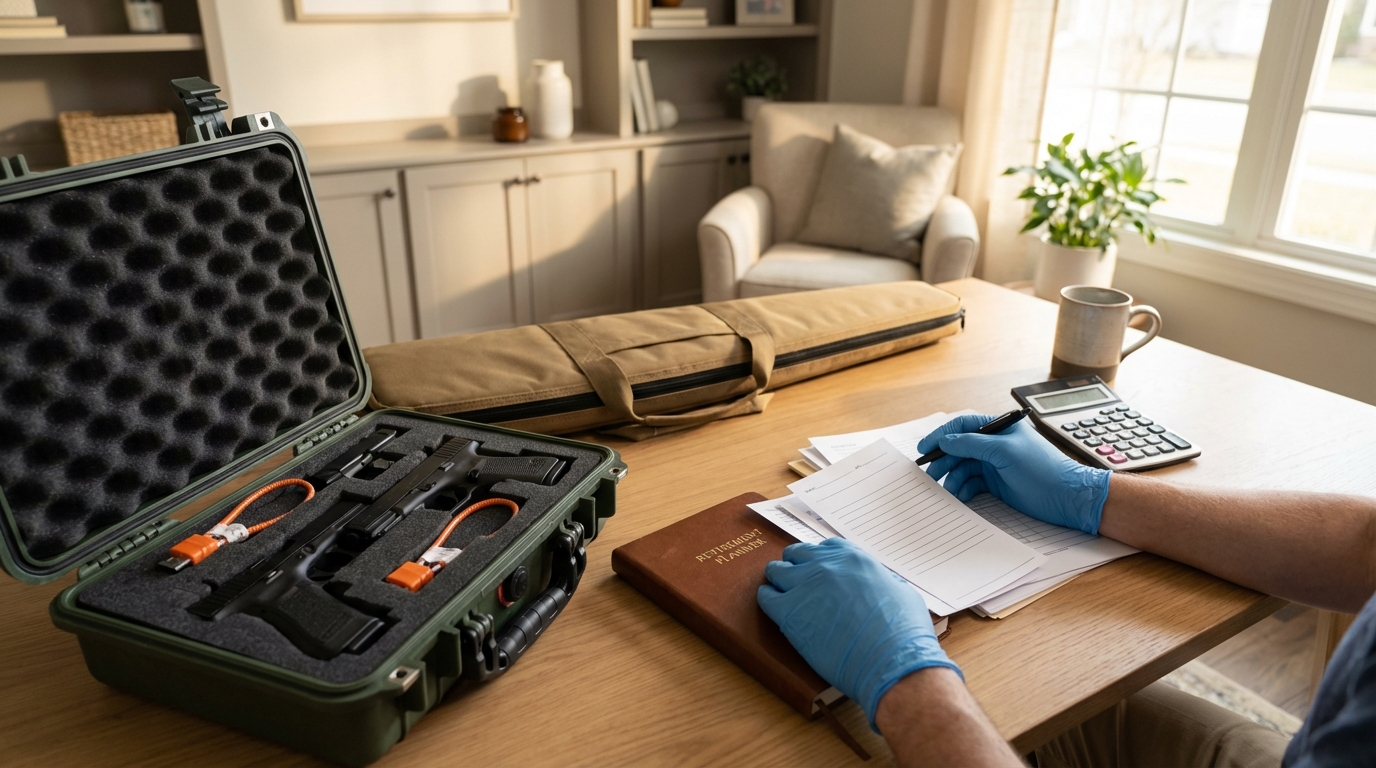

You’re retired, the budget feels tighter every month, and “extra” cash is hard to find. Meanwhile, you might have meaningful retirement money sitting a few feet away in your safe or closet. For a lot of people, selling part of a firearm collection is what covers a healthcare bill, funds a long-planned trip, pays for downsizing, or simplifies an estate before your kids have to sort it out.
If you’ve had these guns for decades, the hesitation is real. Letting one go can feel like you’re giving up memories, identity, or a lifelong hobby. Add the estate pressure, plus the fear of doing something illegal or getting taken advantage of, and it’s easy to freeze, even when the practical need for cash and simplicity is obvious.
The decision usually comes down to a three-way tradeoff: speed, value, and peace of mind. The goal is to turn firearms into cash without leaving money on the table and without creating legal headaches. Pew Research Center (2017) helps explain why this comes up so often: about one-third of adults 65+ reported personally owning a firearm, and most gun owners, 66%, own more than one gun.
You’ll also see the federal term “engaged in the business” come up, but it’s aimed at repetitive purchase and resale with the principal objective of livelihood and profit, not a retiree liquidating part of a personal collection (18 U.S.C. § 921(a)(21)(C)); the law also distinguishes improving or liquidating a personal collection, and occasional profit alone isn’t determinative (18 U.S.C. § 921(a)(22)). You’ll walk away with a clear plan to inventory, understand value drivers, choose a selling path, and sanity-check compliance.
Inventory first, then set selling goals
If you want top-dollar offers, or even just a smooth, low-stress sale, your best move is to get organized before you talk to any buyer. Inventory is leverage, it keeps you from getting lowballed on details you forgot, and it keeps you from getting overwhelmed when you realize you’re balancing memory, money, and a retirement timeline.
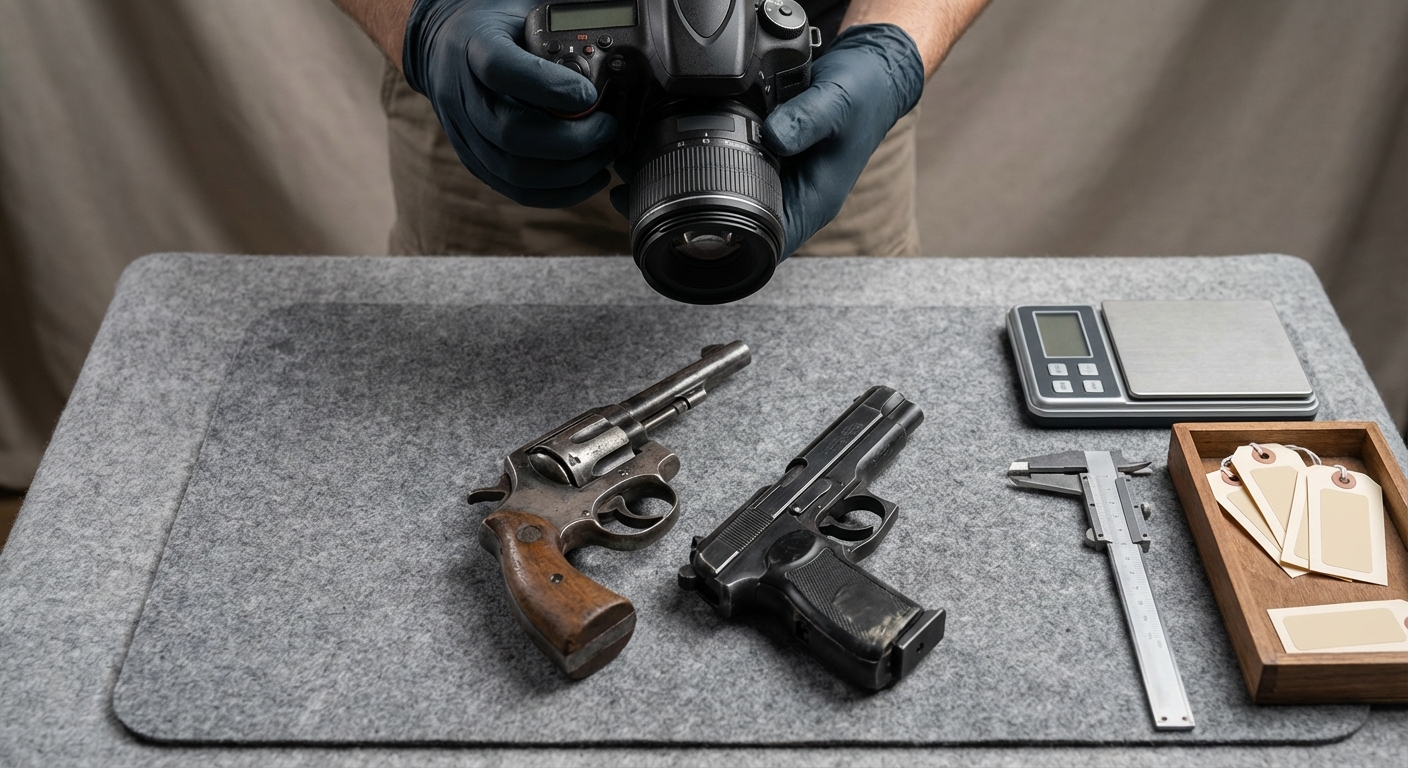
A simple inventory beats a perfect one you never finish. For each firearm, capture the stuff buyers actually price: make and model, serial number (for your private records), a few condition notes you can defend, and what’s included. “Included” matters because an extra magazine, the factory box, or a specific optic can change the package someone is valuing, and it prevents back-and-forth later.
- Log make/model, caliber, and serial number in a notebook or spreadsheet.
- Describe condition in plain language, with notes on finish wear, any rust or pitting, and how the bore and crown look.
- List accessories and paperwork, optics, mounts, magazines, slings, cases, and any original box or labels.
Where strong offers really separate is provenance, the paper trail that proves what you have. Receipts, factory letters, import docs, bring-back papers, or even a dated photo of the original owner turn “a nice old gun” into a documented piece, especially on collectibles.
Write down your priority before you start picking what to sell. “Maximize price” pushes you to sell fewer, higher-value items first, and to wait if the market’s soft. “Speed” favors moving the most liquid, easiest-to-identify guns first. “Simplicity” usually means bundling similar items and avoiding anything with messy history or missing parts.
Valuation often comes down to make and model, condition details including finish and bore condition, notes factors like (matching numbers), and market data from dealer listings and auctions, with seasonality and regional demand in the mix; that’s why expert appraisers matter when valuing a firearm collection. That same logic helps you decide sell-now versus hold, especially if something is a sentimental keeper or future heirloom.
Make three piles on paper: keep, sell, and heirloom transfer. “Keep” is the small set you actually shoot, trust, or love. “Sell” is duplicates, impulse buys, and anything you’ve mentally outgrown. “Heirloom” is where provenance, original boxes, and clean condition notes pay off, because you’re preserving value and story, not just hardware.
Photos are your shortcut to clarity. Capture identifiers and condition signals: roll marks, barrel markings, bore and crown, import marks, box labels, and optic model and serial. Keep full serial numbers out of public posts for privacy and security, but record them in your private inventory.
Minimum to write down today: for each gun, make/model, serial (private), 2 to 3 condition notes, what’s included, any provenance you can find, plus one sentence stating your goal: “I’m optimizing for price,” “I’m optimizing for speed,” or “I’m optimizing for simplicity.” If you want a fuller roadmap, follow a plan for selling a gun collection that balances value and convenience.
What determines your guns’ value
Once you’ve got a basic inventory, pricing gets a lot less emotional and a lot more predictable. Two guns can share the exact same model name and still sell for very different amounts.
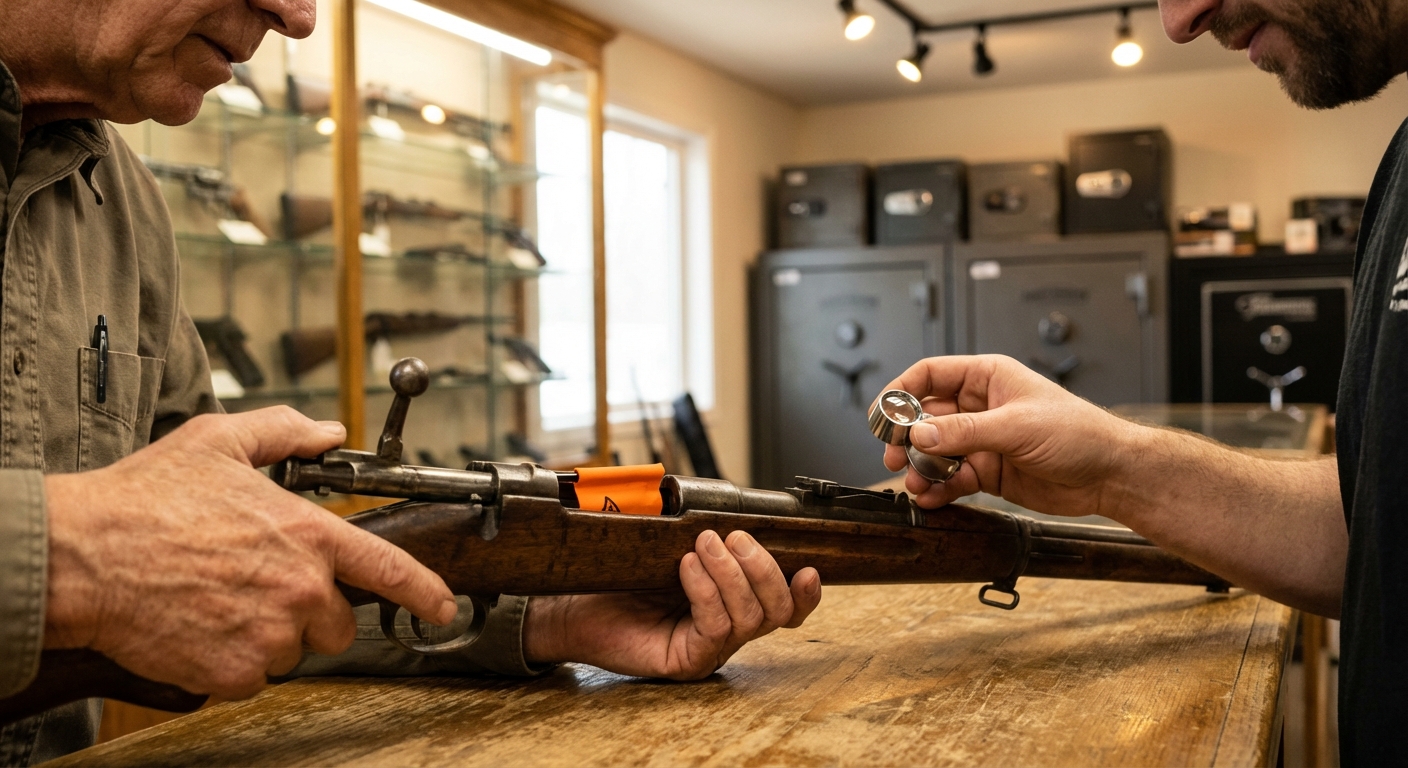
Value isn’t magic, buyers are paying for condition, correctness, and confidence, and most of the spread is explainable once you know what they’re reacting to.
Condition isn’t what you remember from the last time you shot it, it’s what a buyer experiences in the first 30 seconds. Finish wear tells them how it was handled. A clean bore tells them how it was cared for. The easiest way to talk about that without arguing is to use the NRA Modern Gun Condition Standards as a shared language: NEW means “Not previously sold at retail, in same condition as current factory production.” EXCELLENT means “New condition, used but little, no noticeable marring… bluing perfect (except at muzzle or sharp edges).” Those anchors make your comps and your expectations line up with how the market actually grades guns.
Originality is where value jumps or drops fast. Aftermarket parts, refinishes, and swapped components can make a gun more enjoyable to own, but they also make it harder to price against clean comparables. For collector-leaning pieces, (matching numbers) are a big deal because they reduce doubt about what’s original, and doubt is what gets priced out of an offer. Completeness matters in the same way: the right box, papers, and correct parts make the story easier to believe, which tightens the value range.
Optics and extra magazines can add real value when they’re desirable and clearly compatible. They can also muddy the waters if the setup screams “project gun,” or if a buyer worries the add-ons are covering wear, hard use, or non-original changes they can’t easily undo.
Here’s a simple, responsible way to land on a range instead of a single number:
- Pull comparable completed sales for the same model and close configuration.
- Adjust for condition and originality, especially finish wear, bore condition, modifications, and (matching numbers).
- Reality-check demand where you are and when you’re selling, timing and regional interest swing outcomes.
One concrete example: two identical-model revolvers, one original finish with (matching numbers) and the factory box, the other refinished with aftermarket parts and no papers. The first attracts collector confidence and tighter comps, the second gets priced like a shooter, even if they run the same.
Services like Cash My Guns build offers using finish and bore condition, (matching numbers), aftermarket parts, and market data pulled from dealer listings and auctions, then layer in seasonality and regional demand. Use the same mindset with your own comps and you’ll set a realistic value range before you decide what to do next.
Common models retirees ask about
Once you understand what moves value, the next hurdle is simply labeling what you have so buyers can compare it fairly. If you own a common, widely searched model, the quickest shortcut to smarter pricing is labeling it correctly.

Variant + condition + originality drive the range, and the model name alone usually is not enough.
- Confirm the model: Glock 17 and Glock 19 are both 9×19mm, but the G17 is full-size and the G19 is compact.
- Count the magazines: Typical factory magazine capacities are 17 rounds (G17) and 15 rounds (G19), and both accept larger 9mm Glock magazines. Write down exactly what’s included.
- Flag magazine legality: If the package includes standard-capacity mags, legality in the buyer’s area can change what’s desirable in the bundle.
- Look for “special” slide features: Any factory optics-ready cut, marked package, or non-standard finish is a demand driver, but only if you identify it clearly.
- List what’s original: Factory case, manual, backstraps, and factory sights vs aftermarket parts. Buyers pay differently for an all-factory setup.
If you’re trying to pin down a Glock variant, small frame details matter as much as the rollmark.
- Use the grip and controls as tells: Glock Gen3 pistols are commonly identified by finger grooves and a non-reversible magazine release.
- Don’t guess the generation: If yours doesn’t match that Gen3 combo, write down what you see (mag release style, frame texture, any factory optics cut markings) and let that drive the exact listing description.
Modular pistols can trip people up in a different way, because the “gun” isn’t always the part you expect.
- Start with the serialized part: The SIG Sauer P320 is built around a removable serialized Fire Control Unit (FCU). Record the FCU serial number, not just what’s on the slide.
- Paperwork can be the “matching numbers” anchor: Because grip modules aren’t serialized, “matching numbers” usually means the FCU serial matches the original case label and paperwork. Slides and barrels typically aren’t serialized the same way.
- Spell out the size and cut: Note the slide and barrel length class (Full Size, Carry, Compact) and whether the slide is factory optics-ready, plus any included plates, covers, or original parts.
Before you ask for offers, use a what is my gun worth checklist: write down the variant cues you can see and everything included in the box, especially mags, case, and paperwork.
Choose the right selling path
Once your inventory and rough value range are in place, the channel you choose is where that speed/value/peace-of-mind tradeoff becomes real. Different paths can be equally “right” depending on whether you’re optimizing for net proceeds, time, or simplicity.
A local gun shop offering a direct buy or trade-in is the fastest path to “cash and done.” The tradeoff is net proceeds, the shop has to leave room for overhead, inventory risk, and resale margin, so the offer is rarely the highest number you can get on paper.
If you want similar simplicity without driving store to store, an FFL-based mail-in buyer can be the cleanest workflow. A Federal Firearms Licensee (FFL) can simplify compliant transfers and shipping because the transaction is routed through a licensed dealer instead of you trying to reinvent the process yourself. Cash My Guns is one example of this outright-purchase model; it describes itself as a nationwide online purchasing service that buys guns, ammunition, and accessories, and it says it is operated by Dunlap Gun Buyers, a federally licensed firearms dealer (FFL), with marketing that positions the service as “Safe • Legal • Hassle-Free.”
“Top dollar” usually comes from selling directly to another individual where legal, or listing on online marketplaces, then completing the required transfer and any shipping through an FFL. The catch is the hidden cost of your time: answering messages, screening buyers, coordinating a legal transfer, and dealing with no-shows (and understanding liability when selling to a stranger).
Consignment sits in the middle. It means the shop lists and sells the firearm for you, then keeps an agreed percentage after it sells. You typically give up some of the upside versus doing it yourself, but you save the day-to-day grind of marketing and buyer communication.
For rare, collectible, or highly documented pieces, an auction can outperform fixed-price selling, but auctions also add uncertainty, a longer timeline, and fee layers that reduce your final take-home.
Risk is where payment rules quietly shape your options. PayPal’s Acceptable Use Policy prohibits firearms and ammunition transactions. Venmo also prohibits firearms, ammunition, and parts. Zelle is intended for people you know and trust, and it does not offer purchase protection, so a “simple” digital payment can increase your fraud exposure and reduce recourse if something goes sideways.
If you are selling a mixed lot, estate and collection buyers can be the lowest-friction way to move everything in one coordinated transaction, usually at a discount for convenience.
Pick one top priority, maximize net, sell fast, or minimize hassle and risk, then choose the channel that reliably delivers that outcome for you (see a breakdown of common gun-selling options).
State rules and safe compliance basics
The more you lean toward speed and simplicity, the more it helps to make compliance boring and repeatable. Compliance is manageable, if you stop guessing and verify the state rules that apply to you.
A private-party sale, meaning a transfer between two unlicensed individuals, can be perfectly legal, but it can also trigger state and federal transfer requirements that feel “invisible” until you’re already mid-deal. The complication is that “normal” varies sharply by state, especially for person-to-person transfers and handguns.
When you want the simplest compliance default, route the transfer through an FFL (licensed dealer). You’re paying for the dealer’s process: they handle the required forms, run the background check when the law calls for it, and document the transfer in their required records, which reduces the chance you miss a state-specific rule.
Interstate transfers are the big reality check. Federal law generally prohibits private firearm transfers across state lines, so if the buyer and seller are residents of different states, the clean path is usually an FFL-handled transfer instead of a face-to-face handoff.
For your own protection, keep recordkeeping simple: save the buyer’s name and contact info, the date, and the firearm’s make, model, and serial number in your personal files, plus any receipt or dealer paperwork if an FFL is involved.
State snapshots (verify before you transfer):
- California: Private-party transfers generally must be processed through a California FFL as a PPT. The dealer runs DROS and the background check, and California imposes a mandatory waiting period of at least 10 days before delivery, so confirm scheduling and document requirements with the dealer.
- Florida: Florida has no statewide requirement that private intrastate transfers use an FFL or background check, but it is illegal to knowingly transfer to a prohibited person. The state waiting-period statute generally applies to retail dealer delivery and has exceptions, so confirm what applies where the transfer happens.
- Pennsylvania: Private handgun transfers generally must go through a PA FFL or the sheriff’s office, with specific family exceptions. Most private long-gun transfers between PA residents can be done without an FFL or sheriff if otherwise lawful, but many sellers still confirm details with a local dealer.
- Ohio: Ohio generally does not require background checks for in-state private transfers between Ohio residents, and Ohio has no state-mandated waiting period, but confirm any local or situational rules before you transfer.
Use these notes to ask the right questions, then call a local FFL or check state-by-state transfer requirements before you finalize any transfer.
A simple plan to cash out
Once you’ve done the upfront organization and the quick compliance check, the actual selling gets a lot easier to manage. This is a process, not a mystery, and it doesn’t have to be overwhelming.
The stress usually comes from doing steps out of order, selling before you’ve inventoried, guessing value, or skipping the compliance check. Keep it simple and run the same sequence every time: inventory your items, triage what stays vs. goes, set a realistic value range, choose the selling channel that fits your timeline, do the compliance check, prep and pack, then complete the sale.
Three moves you can knock out this week: (1) take clear photos and write a one-line note for each firearm, plus ammo and accessories, (2) pick your first small batch to sell, even three items gets momentum, (3) choose one channel and start the paperwork or outreach. If you want a retirement-friendly mail-in option, an FFL-run buyer like Cash My Guns offers an outright-purchase workflow, and its marketing says “Trusted Since 2013.” A professional appraisal for anything you suspect is collectible, plus insured handling and shipping, protects both value and peace of mind. Follow the sequence once, and you’ll get cash with far less stress.
Conclusion
You don’t need perfect knowledge. You need the right order of operations-and a clear choice about whether you’re prioritizing speed, value, or peace of mind.
Start by getting your inventory straight and choosing your goal, then let condition, originality, and matching numbers set realistic value expectations before you pick a selling path that fits your tradeoff between speed, net, and hassle. If you’re unsure on any transfer detail, call a local FFL and confirm with your state resources, laws and policies change and this isn’t legal advice. For more guides and deeper dives, check the Cash My Guns blog hub.