
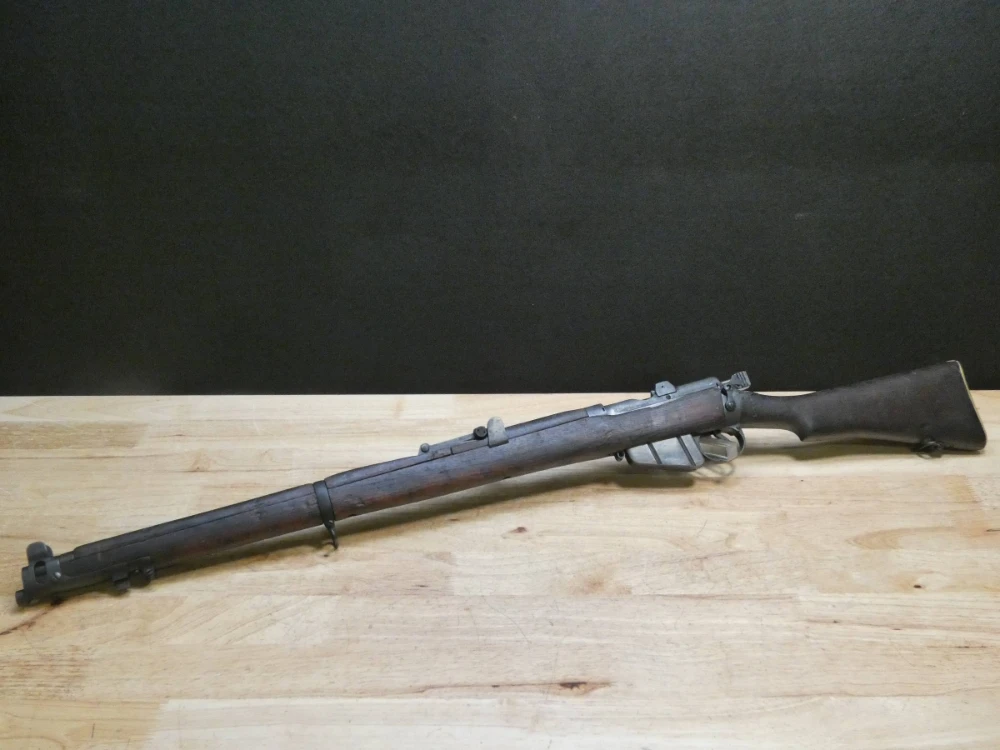
The RSAF Lee-Enfield No. 1 Mk III, or SMLE, is a legendary bolt-action, magazine-fed repeating rifle that served as the standard firearm for the British military for decades. As a long gun, its historical significance and robust design make it a popular item for collectors and shooting enthusiasts alike. Understanding the key factors that determine its market value, from originality and condition to legal transfer requirements, is essential for any owner looking to sell this classic piece of military history.
What Determines Your RSAF Lee-Enfield No. 1 Mk III SMLE’s Worth
The primary determinant of your RSAF Lee-Enfield No. 1 Mk III SMLE’s value is its originality and condition. Collectors, who are the main drivers of the market, place a significant premium on rifles that retain their original factory parts and matching serial numbers. While a functional shooter might be appealing to some, any deviation from the original configuration can negatively impact its price. A formal appraisal is often not cost-effective for most examples, as their value typically ranges from $300 to $900. Instead, a realistic valuation can be achieved by carefully comparing the rifle’s condition and historical markings to recent online sales data.
2026 Price Breakdown by Generation
Early Production & WWI Models (Mk III)
The earliest Lee-Enfield No. 1 Mk III rifles, produced before and during the initial years of World War I, are highly sought after by collectors. These models often feature components that were later simplified for mass production, such as a magazine cut-off and volley sights. An example in good, original condition with these features intact can command a premium. While average market values hover between $400 and $600, a well-preserved early Mk III with clear markings and matching numbers could easily approach the higher end of the $360 to $715 range seen in recent sales, with potential to exceed it.
Condition is paramount for these early rifles. Decades of service and potential refurbishments mean that finding a truly original piece is rare. The wood stock should show honest wear but be free of major cracks, and the metal finish should be consistent. The bore condition is also a critical factor, as many were used with corrosive ammunition. A dark or pitted bore will significantly lower the value, whereas a bright bore with strong rifling will attract more buyers and justify a higher asking price, pushing it toward the top of the valuation spectrum.
Simplified WWI Models (Mk III*)
As World War I progressed, the Lee-Enfield design was simplified for faster production, resulting in the Mk III* variant. These models omitted features like the magazine cut-off, volley sights, and windage-adjustable rear sight. While they are more common than the early Mk III, they represent the quintessential WWI battle rifle and are very popular. The average used price for a standard SMLE falls between approximately $487 and $638. A solid, matching-numbers Mk III* from a known WWI manufacturer would fit squarely within this range, with exceptional examples fetching more.
Because so many Mk III* rifles were produced and saw hard use, their value is heavily dependent on their arsenal history and current state. Many were refurbished, force-matched, or passed through the service of other Commonwealth nations, each of which adds a layer to its story and value. A rifle with clear cartouches, a good bore, and original finish will always be more desirable. Lower-end “B grade” models can be found for as little as $300, but these typically have significant cosmetic issues, mismatched parts, or poor bores, making them more suitable as project guns than collector pieces.
Inter-War & Commonwealth Production
In the years between the World Wars, production of the SMLE continued at various arsenals throughout the British Commonwealth, including in Australia (Lithgow) and India (Ishapore). These rifles are often of very high quality and have their own dedicated following among collectors. Their value is generally in line with the overall market average of $400 to $600, but specific arsenal markings can create variance. For example, a Lithgow-produced SMLE with a World War II date might be more desirable to some collectors than a British-made rifle from the same period, slightly increasing its value.
The condition and originality of these inter-war rifles remain the most important factors. Many were later refurbished for service in WWII and beyond, sometimes resulting in mismatched parts. An all-original rifle from this era is a prized find. The market for these models is steady, and as the supply of quality WWI-era rifles dwindles, interest in these well-made inter-war examples continues to grow. Prices reflect this, with clean examples consistently selling within the $487 to $638 average price bracket, and sometimes higher depending on the rarity of the manufacturer and year.
Post-War Refurbished & Sporterized Models
After World War II, countless SMLEs were either put through extensive arsenal refurbishment programs or sold as surplus and subsequently “sporterized” for hunting. Refurbished military rifles, often identifiable by newer finishes and mismatched parts, hold less value for collectors seeking originality and typically fall into the lower end of the price spectrum, from $300 to $450. While they are often excellent shooters, their historical value is diminished. Sporterized rifles, which have had their original stocks cut down and military sights removed, unfortunately hold the least value, often struggling to sell for more than $300, regardless of their mechanical condition.
The market for sporterized Lee-Enfields is limited primarily to hunters or casual shooters looking for an inexpensive bolt-action rifle. Restoring a sporterized rifle back to its original military configuration is often prohibitively expensive, as the cost of sourcing original wood furniture and metal parts can exceed the value of the finished project. Therefore, these modified rifles are permanently separated from the collector’s market. Their value is based purely on their utility as a firearm, not their historical significance, placing them at the bottom of the SMLE valuation hierarchy.
How Modifications Affect Value
While the market lacks a standardized price list for specific upgrades, any modification that deviates from the original factory configuration almost universally hurts the monetary value of a RSAF Lee-Enfield No. 1 Mk III SMLE. Collectors, who drive the prices for historical firearms, place the highest premium on originality. Changes such as drilling and tapping the receiver for a scope, altering the bolt handle, or replacing the original sights will permanently diminish its appeal to this key buyer demographic. Even seemingly minor changes can have a significant negative impact on its final sale price, as the rifle is no longer a true historical artifact.
The most common and detrimental modification is “sporterizing,” where the original military stock is cut down or replaced to make the rifle lighter for hunting. This irreversible alteration effectively removes the rifle from the collector market, relegating it to the status of a utility firearm. While such a modification might make it a more practical hunting tool for the owner, its resale value will plummet, often by 50% or more compared to an original-condition counterpart. For sellers, it is crucial to understand that value is tied to historical authenticity, and returning a modified rifle to its original state is rarely financially viable.
Regional Price Variations in 2026
While a national average price for the Lee-Enfield No. 1 Mk III SMLE can be established, regional demand and local firearm laws can introduce price variations. In states with more restrictive gun laws, such as California, the pool of available buyers and sellers might be different, potentially affecting pricing. Although the rifle itself is generally legal in California, regulations concerning ammunition for hunting could indirectly influence its desirability for certain uses. The lack of specific restrictions in other major markets like New York means prices there are more likely to follow national trends, driven by collector interest rather than legislative pressures.
Furthermore, prices can fluctuate based on local collector density and the availability of military surplus firearms. In areas with a strong community of military history enthusiasts or frequent gun shows specializing in historical arms, demand may be higher, potentially pushing prices slightly above the national average. Conversely, in regions where modern sporting rifles dominate the market, a vintage bolt-action rifle like the SMLE might generate less interest, leading to softer prices. These local market dynamics, though subtle, can impact the final sale price achieved by a private seller.
Online vs Local Sales
Selling a Lee-Enfield online exposes the firearm to a national audience of collectors, significantly increasing the chances of finding a buyer willing to pay top dollar for a rifle in excellent, original condition. Websites dedicated to firearm auctions and sales connect sellers with specialized enthusiasts who understand the nuances of SMLE variations and are actively seeking them. This broad exposure is the primary advantage of an online sale. However, it comes with the complexity of navigating interstate transfer laws and shipping regulations, which can be a hurdle for inexperienced sellers and adds extra cost for the buyer.
The legal requirements for an online sale are strict. A private individual cannot simply mail the rifle to a buyer in another state. The transaction must go through a Federal Firearms Licensee (FFL) in the buyer’s state of residence. The seller is responsible for legally shipping the long gun, which for a private party means using the United States Postal Service (USPS), as carriers like UPS and FedEx now prohibit firearm shipments from non-licensees. The buyer then completes the background check and paperwork at their designated FFL to take legal possession, adding transfer fees to their total cost.
A local sale offers simplicity and immediacy, avoiding the complexities of shipping and FFL transfers. The transaction can often be completed face-to-face in a single meeting, which many find more convenient and secure. However, the trade-off is a drastically smaller market. The seller is limited to buyers within their immediate geographic area, which may not include a collector willing to pay a premium for that specific rifle. This can result in a longer time on the market or the need to accept a lower price than what could have been achieved through a national online listing.
The FFL Buying Advantage
Selling your Lee-Enfield No. 1 Mk III SMLE directly to a gun dealer, or a Federal Firearms Licensee (FFL), offers a fast, secure, and legally straightforward transaction. The primary advantage is convenience; you can walk into a licensed shop, receive an immediate cash or trade-in offer, and complete the sale on the spot without the hassle of finding a private buyer, negotiating a price, or arranging a legal transfer. This process eliminates any personal risk and guarantees that the firearm is transferred off your record legally and professionally, providing peace of mind for the seller.
However, this convenience comes at a cost. Gun dealers must account for overhead, shelf time, and profit margin, so their offer will be below the private market value. Typically, a dealer will offer between 60% to 70% of what the rifle might sell for in a private party transaction. For a Lee-Enfield valued at $600 on the private market, a dealer offer might be closer to $360 to $420. For sellers who prioritize a quick, guaranteed sale and wish to avoid the complexities of a private transaction, this trade-off is often considered a worthwhile advantage.
What Increases Your Offer
The single most important factor for maximizing an offer on your RSAF Lee-Enfield No. 1 Mk III SMLE is its originality. Collectors pay a substantial premium for rifles that retain all their original, factory-issued parts with matching serial numbers on the receiver, bolt, and often other components like the nose cap and rear sight. A rifle that has not been altered, “sporterized,” or had parts swapped from other guns is considered far more valuable. Preserving this historical authenticity is critical, as it is the primary attribute that separates a high-value collectible from a standard “shooter grade” rifle.
Beyond originality, the rifle’s overall condition plays a crucial role. This includes the state of the metal finish, the quality of the wood stock, and, critically, the condition of the bore. A bright, clean bore with sharp, prominent rifling is highly desirable and can significantly increase an offer. The wood should be free of cracks and deep gouges, and the original military cartouches and inspection marks should be clear and legible. Any accompanying original accessories, such as a correct-pattern bayonet, sling, or oiler, will also add to the completeness of the package and justify a higher price.
Proper pre-sale preparation can also boost your offer. This does not mean aggressive restoration, which can diminish value. Instead, perform a careful cleaning. Gently wipe the wood stock with a damp cloth or denatured alcohol to remove grime without harming the markings, followed by a light application of raw linseed oil to condition it. Thoroughly clean the bore and action, and apply a thin coat of quality gun oil to all metal surfaces to prevent rust and enhance their appearance. Using properly fitting screwdrivers for any disassembly prevents marring screw heads, showing care and attention to detail that buyers appreciate.
When to Sell Your rsaf lee enfield no 1 mk iii smle
Timing the sale of your Lee-Enfield can have a tangible impact on the final price. Historically, the demand for rifles, including classic military models, often sees an uptick in the fall months leading up to various hunting seasons across the country. Even though the SMLE is primarily a collector’s item, this seasonal increase in general rifle interest can create a more active market, potentially leading to a faster sale and better offers as more buyers are actively looking for firearms. This makes the period from August to November a strategically sound time to list your rifle.
Another prime period for selling any firearm is during tax return season, which generally runs from February through April. During this time, many consumers have more disposable income and are looking to make discretionary purchases. This influx of cash into the market often translates to increased sales across the board for gun dealers and private sellers alike. Listing your Lee-Enfield during this window capitalizes on this heightened consumer spending power, increasing the likelihood of attracting a buyer ready to commit to a purchase without significant haggling over the price.
Finally, it is worth noting that the political climate can create unpredictable but significant spikes in firearm demand. During election years or periods of debate over new firearm legislation, uncertainty can drive consumers to purchase firearms of all types. While this trend is most pronounced for modern semi-automatic rifles and handguns, the overall surge in market activity can lift values for collectible firearms as well. Selling during one of these high-demand periods, irrespective of the season, can often result in achieving a price at the upper end of the rifle’s market value.
Common Pricing Mistakes
One of the most frequent mistakes sellers make is letting sentimental attachment dictate the asking price. While a Lee-Enfield may have a rich family history or personal significance, this emotional value does not translate to the open market. Buyers are focused on objective factors like condition, originality, and manufacturer. It is essential to detach emotionally and assess the rifle based on its tangible attributes. Starting with an unrealistically high price due to sentiment will only deter knowledgeable buyers and leave the rifle sitting on the market for an extended period.
Another critical error is failing to accurately assess the rifle’s condition. A seller might overlook a pitted bore, a hairline crack in the stock, or mismatched parts, and price their “B grade” rifle as if it were in excellent condition. The value difference can be substantial, with prices ranging from as low as $300 for a rough example to over $700 for a pristine one. A thorough and honest evaluation is necessary. This includes checking for matching serial numbers, inspecting the bore with a bright light, and noting any non-original parts or repairs before setting a price.
Relying on outdated information or failing to research the current market is a recipe for pricing failure. The value of military surplus firearms fluctuates, so a price that was accurate five years ago may be too low or too high today. Given that a formal appraisal is generally not worth the cost for a standard SMLE, the best approach is to research recent, completed sales on online auction sites. Comparing your rifle to others of similar condition, manufacturer, and originality provides a realistic, data-driven basis for setting a competitive and fair asking price.
Market Outlook for 2026
Predicting the future value of any collectible is speculative, but current market trends for the RSAF Lee-Enfield No. 1 Mk III SMLE point toward a modest but steady increase by 2026. As of late 2024 and early 2025, these rifles typically trade in a range of approximately $400 to $800, with average sale prices falling between $487 and $575. The supply of original, high-quality examples is finite and continues to shrink as they are absorbed into private collections, which naturally applies upward pressure on prices for the remaining rifles on the market.
The demand for historical and collectible military firearms has been consistently growing. Over the past year alone, observed prices for the SMLE have increased by $30 to $94. Assuming this trend continues, driven by both historical interest and a desire for tangible assets, the estimated value for a Lee-Enfield in good, original condition could realistically reach a range of $550 to $950 by 2026. Rifles with rare markings, exceptional condition, or documented histories will likely command prices at the top end of, or even exceeding, this projected range as they become increasingly scarce.
Frequently Asked Questions
Does a matching serial number on the bolt really increase the value?
Yes, absolutely. For a military collectible like the Lee-Enfield SMLE, a matching serial number on the bolt is one of the most critical factors for determining value. It indicates that the bolt is original to the rifle as it left the factory or arsenal. Collectors, who drive the market for these firearms, pay a significant premium for “all-matching” examples because it confirms the rifle’s historical authenticity. A rifle with a mismatched bolt, while perfectly functional, will be valued significantly lower, often by 25% or more, as it is considered less desirable from a collector’s standpoint.
Is it worth getting a professional appraisal for my Lee-Enfield?
For a standard, common-production RSAF Lee-Enfield No. 1 Mk III SMLE, a professional appraisal is likely not worth the cost. The value for most examples is well-documented and typically falls within a range of $300 to $900. The fee for a formal written appraisal could represent a substantial portion of the firearm’s total value. A more practical and cost-effective approach is to research recent, completed sales on online gun auction sites. By comparing your rifle’s specific condition, manufacturer, and originality to similar examples, you can determine a realistic market value without the added expense.
Will ‘sporterizing’ my rifle for hunting affect its resale price?
Yes, sporterizing a military rifle like the Lee-Enfield will drastically reduce its resale value. Modifications such as cutting down the original stock, drilling the receiver for a scope mount, or changing the sights permanently alter the firearm from its historical configuration. While these changes may improve its function as a hunting tool, they destroy its value to collectors. A sporterized SMLE is typically worth only a fraction of an original example, often selling for $300 or less, as it is now judged purely on its utility rather than its significant historical and collectible appeal.
How much does the manufacturer or year of production impact the price?
The manufacturer and year can significantly impact the price of a Lee-Enfield. While RSAF Enfield was the primary producer, rifles were also made at BSA, LSA, and in Commonwealth arsenals like Lithgow (Australia) and Ishapore (India). Certain manufacturers or specific years are rarer than others, making them more desirable to collectors. For example, an early, pre-WWI rifle from the London Small Arms Company (LSA) or a Lithgow-marked rifle from a specific wartime year might command a premium over a more common BSA or Enfield-produced rifle from the same era, assuming all other factors like condition are equal.
Does the condition of the bore matter more than the external cosmetics?
Both are very important, but their relative weight depends on the potential buyer. For a collector, external cosmetics, including the originality of the finish and the clarity of markings on the wood and metal, are paramount. They want a visually authentic piece. For a buyer who intends to shoot the rifle, the bore condition is often the top priority. A bore that is dark, pitted, or has weak rifling will not be accurate and is a major red flag. Ideally, a high-value rifle will have both excellent external cosmetics and a bright, sharp bore, satisfying both collectors and shooters.
Get a Cash Offer Today
Ready to sell your RSAF Lee-Enfield No. 1 Mk III SMLE? We make the process fast, safe, and simple. Submit your firearm’s details online, and our experts will provide you with a fair, competitive cash offer based on the latest market data. Avoid the hassle of private sales and get paid quickly.
There’s no obligation. Simply fill out our form to see what your classic military rifle is worth today. We handle all the necessary FFL paperwork and ensure a secure, legally compliant transaction from start to finish. Click here to get your no-pressure offer now and turn your firearm into cash.