
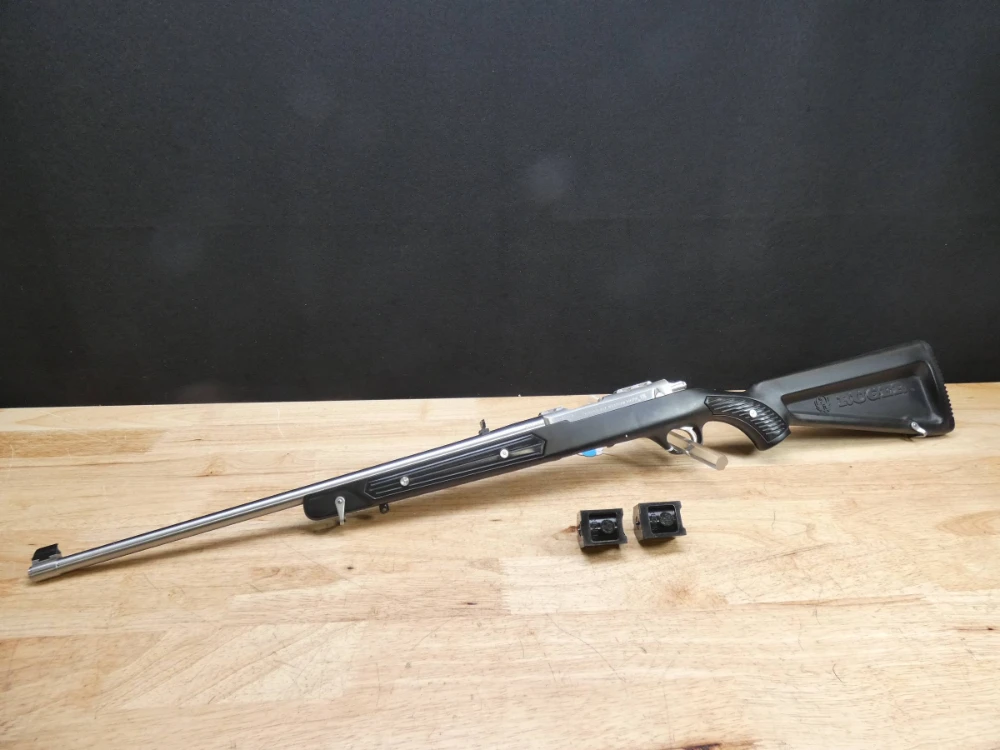
Understanding the value of your Ruger M77 is key to a successful sale. As a classic American bolt-action rifle designed for hunting, its worth is influenced by several key factors, including its specific generation, caliber, overall condition, and the current market demand. Whether you own an early “tang safety” model or a modern Hawkeye variant, knowing these details will help you accurately price your firearm and navigate the selling process with confidence and clarity.
What Determines Your Ruger 77’s Worth
The value of a Ruger M77 is primarily determined by its specific generation, condition, and caliber. The market clearly distinguishes between the original “tang safety” models, which often represent the lower end of the value spectrum, and the later M77 Mark II and Hawkeye generations, which command significantly higher prices. A typical used Ruger M77 has an average price of around $875, but this can fluctuate widely, with listings ranging from $760 to $1,200. In comparison, new models carry an MSRP between $1,000 and $1,700, highlighting the strong value retention of well-maintained examples of this respected bolt-action rifle.
2026 Price Breakdown by Generation
Original “Tang Safety” Models
The first generation of the Ruger M77, easily identified by its tang-mounted safety, was introduced in the late 1960s and produced through the 1980s. These rifles established the M77’s reputation for reliability and accuracy, featuring a Mauser-style controlled-feed extractor that appealed to serious hunters. They were offered in a wide variety of calibers and stock configurations, making them a versatile and popular choice. Today, they are appreciated by shooters and collectors who value the classic design and the distinct feel of the original action and safety mechanism, representing a significant era in Ruger’s history.
In today’s market, these original “tang safety” models typically represent the most accessible entry point into M77 ownership. Their value on the used market generally falls on the lower end, with examples selling for between $455 and $781. This price range reflects their age and the high number of units produced over several decades. While they may not command the premium of later generations, they hold their value well and remain highly sought after by enthusiasts who prefer the traditional features and historical significance of the first-generation M77 rifle.
M77 Mark II Generation
Introduced as a significant update, the M77 Mark II modernized the platform with several key design changes. The most notable alteration was the move from the original tang safety to a three-position safety located on the bolt shroud, allowing the action to be cycled while the rifle remains on safe. This enhancement, along with other refinements to the trigger and action, was well-received by the hunting community for its improved functionality and safety. The Mark II continued the M77’s legacy of durability and reliability, solidifying its place as a premier American hunting rifle.
The M77 Mark II generation typically commands higher prices than its predecessor, reflecting its more modern and desirable features. On the used market, these rifles have recently sold in a range from approximately $1,155 to $1,650, depending on caliber, condition, and specific configuration. This significant jump in value demonstrates the market’s preference for the updated safety system and other refinements. For sellers, owning a well-maintained Mark II means possessing a more valuable asset that appeals to a broad range of contemporary hunters and shooters who prioritize its enhanced design over the original models.
Hawkeye Generation
The Hawkeye series represents a further refinement of the successful M77 Mark II design, incorporating feedback from shooters to enhance both ergonomics and performance. A key feature of the Hawkeye is the LC6 trigger, which offers a smoother, crisper pull right out of the box compared to previous models. Additionally, the stock was slimmed down and re-contoured for better handling and a more classic aesthetic. These subtle but meaningful improvements ensured the M77 platform remained competitive and appealing to a new generation of hunters seeking a modern, high-performance bolt-action rifle.
Reflecting its status as a modern and improved iteration, the Hawkeye generation holds strong value in both new and used markets. Prices for these models are robust, with a new Hawkeye Mannlicher, for example, listed at $1,399.99. This pricing places the Hawkeye series firmly in the premium category, often commanding prices similar to or even exceeding those of the M77 Mark II. The combination of the refined trigger, improved ergonomics, and Ruger’s reputation for quality makes the Hawkeye a highly desirable rifle that sellers can expect to fetch a top-tier price for in good condition.
Special Editions and Exclusives
Beyond the standard production models, Ruger has frequently collaborated with major distributors to create special editions and exclusive configurations of the M77 rifle. These limited runs often feature unique calibers, specialized stocks, different barrel lengths, or distinct finishes that are not available in the main catalog. These exclusives cater to specific niches within the hunting and shooting communities, from dangerous game hunters to collectors seeking a unique piece. Their limited availability inherently makes them more notable and can significantly influence their market desirability and long-term value compared to standard production rifles.
The value of these special editions is often higher than their standard counterparts due to their scarcity and unique features. A prime example is the Lipsey’s exclusive M77 Alaskan Bush Rifle, which carries a Manufacturer’s Suggested Retail Price of $1,659. This price point is considerably higher than many standard Hawkeye models, reflecting its specialized design and limited production. For owners, possessing one of these exclusive variants means holding a more valuable and sought-after firearm that often appreciates well and attracts a dedicated segment of buyers willing to pay a premium for its unique attributes.
How Modifications Affect Value
When it comes to value-adding modifications for the Ruger M77, there is no clear market consensus on specific upgrades that universally increase the rifle’s resale price. While functional improvements like a professional trigger job, glass bedding the action, or upgrading the stock to a high-quality synthetic or laminate version may enhance performance, their value is subjective. Such modifications appeal to a specific buyer who shares the seller’s preferences but may not result in a dollar-for-dollar return on investment. The most reliable way to maintain value is to preserve the rifle’s original condition or ensure any changes are reversible.
Similarly, the market lacks a definitive list of modifications that consistently hurt the Ruger M77’s value, though some general principles apply. Any permanent, non-professional alteration is likely to decrease its worth. This includes actions like cutting down the original wood stock, amateur gunsmithing on the trigger or action, or applying a custom camouflage paint job. These types of irreversible changes can significantly narrow the pool of potential buyers, as many prefer a firearm in its original factory configuration. To protect the rifle’s value, owners should avoid any modifications that cannot be easily undone.
Regional Price Variations in 2026
The Ruger M77, being a conventional bolt-action rifle, generally avoids the complex web of restrictions that affect other types of firearms in certain states. For example, the rifle is considered legal in California, a state with stringent gun laws, provided its magazine capacity does not exceed the 10-round limit. This broad legality across most of the country means that significant price variations are less likely to be driven by state-level legal restrictions. Instead, value is more influenced by local market demand, hunting culture, and the popularity of specific calibers within a given region, creating a relatively stable national market.
While state laws may not be a primary driver of price, local and regional demand certainly is. In areas with a strong hunting tradition, such as the Midwest or Rocky Mountain states, demand for a reliable hunting rifle like the M77 can be consistently high, especially in popular calibers like .30-06 Springfield or .270 Winchester. Consequently, a rifle chambered in a cartridge well-suited for local game may sell faster and for a better price during the lead-up to hunting season. Conversely, the same rifle might linger on the market in a more urban region with less hunting activity.
Online vs Local Sales
When conducting a private, local sale of a Ruger 77, proper documentation is crucial for protecting both the buyer and seller. While not always a strict legal requirement, creating a Bill of Sale is a highly recommended practice. This document should include the full names and addresses of both parties, a complete description of the rifle including its model, caliber, and serial number, the final sale price, and the date of the transaction. Having both individuals sign the document after verifying government-issued IDs provides a clear record of the transfer of ownership, which can be invaluable for future reference.
Opting to sell your Ruger 77 to a gun dealer or pawn shop offers a path of convenience at a financial cost. Dealers will typically offer between 50% and 70% of the firearm’s current market value. This reduced offer accounts for the dealer’s overhead, the time the rifle may sit in inventory, and their need to make a profit upon resale. While you will receive less money than in a private sale, the transaction is immediate and absolves you of the responsibility of finding a buyer, navigating legal requirements, and handling paperwork, making it a viable option for those prioritizing speed.
Selling a firearm to a resident of another state introduces specific legal requirements that must be followed. Federal law mandates that the interstate transfer of a firearm must be facilitated by a Federal Firearms Licensee (FFL). The process involves the seller taking the Ruger 77 to an FFL in their state, who then ships it to an FFL in the buyer’s state. The buyer can then complete the required background check and paperwork at their designated FFL to legally take possession. This two-FFL system ensures the transaction complies with the laws of both states.
The FFL Buying Advantage
Utilizing a Federal Firearms Licensee (FFL) for the sale of your Ruger 77 provides a critical layer of legal protection and ensures compliance. When a firearm is transferred through an FFL, the buyer is required to complete ATF Form 4473 and undergo a National Instant Criminal Background Check System (NICS) check. This process formally and legally documents the transfer of ownership and prevents the firearm from being sold to a prohibited individual. For the seller, this creates a clear and defensible record that they have acted responsibly and in accordance with federal law, mitigating future liability.
Beyond legal compliance, using an FFL is often a logistical necessity, especially for online or interstate sales. Major shipping carriers like UPS and FedEx have policies that prohibit private individuals from shipping firearms directly; they require the shipper to hold a Federal Firearms License. While a private individual can legally ship a rifle via the United States Postal Service (USPS), navigating the specific regulations can be complex. An FFL is experienced in these procedures, ensuring the firearm is packaged, labeled, and shipped correctly, providing a secure and reliable method for getting the rifle to its new owner.
What Increases Your Offer
While the market has not established a clear consensus on the value of retaining all original parts, a Ruger 77 in its factory configuration is generally the most desirable to the widest range of buyers. Collectors, in particular, place a high premium on originality. Any modifications, even those intended as upgrades, can be viewed negatively. Therefore, keeping the original stock, trigger, sights, and any included accessories like scope rings is a prudent strategy. Presenting the rifle as it left the factory is the safest approach to maximizing its potential offer and appealing to both shooters and collectors.
A thorough pre-sale cleaning can significantly impact a buyer’s perception of your rifle and the offer they are willing to make. Begin by ensuring the firearm is completely unloaded and remove the bolt. Using a quality coated cleaning rod and a correctly sized bore brush, clean the barrel from the breech end to avoid damaging the crown. Clean the receiver and bolt assembly with a solvent-wetted patch, removing all carbon buildup. Finish by wiping all metal surfaces with a light coat of high-quality lubricant, ensuring any excess is removed from the stock to present a well-maintained firearm.
High-quality photographs are arguably the most critical element for attracting strong offers in an online sale. To best showcase your Ruger 77, use ample, diffused natural light to avoid harsh shadows and glare. Place the rifle against a simple, uncluttered background that provides good contrast. Be sure to take numerous, sharp photos from various angles, capturing the entire rifle as well as close-ups of important markings, the manufacturer’s roll marks, the serial number, and any notable imperfections. Using a tripod will help ensure your images are clear, steady, and professional in appearance.
When to Sell Your Ruger 77
Timing your sale to align with seasonal demand can significantly impact your success. The Ruger M77 is primarily a hunting rifle, and as such, interest and prices tend to peak in the months leading up to major hunting seasons. Listing your rifle for sale during the late summer and early fall will expose it to a larger pool of motivated buyers who are actively outfitting themselves for the field. This increased demand can lead to a faster sale and a higher final price compared to listing it during the off-season when fewer hunters are in the market.
Beyond the hunting calendar, broader economic trends also influence the firearms market. A general surge in sales is often observed during tax refund season, which typically runs from February through April. During this period, many consumers have more disposable income, leading to increased spending on discretionary items like firearms. Conversely, sales can be slower in January, immediately following the holiday season, and in the deep summer months. By timing your sale for these peak periods, you can capitalize on heightened buyer activity and potentially secure a better offer for your rifle.
It is also important to understand the legal classification of your specific firearm, as this affects the sales process. A standard Ruger 77 is classified as a long gun and is not an NFA item, meaning it can be sold through a straightforward FFL transfer without extensive federal paperwork. However, if you possess a rare factory variant with a barrel shorter than 16 inches or an integral silencer, it is regulated under the National Firearms Act. Selling an NFA item involves a much more complex, expensive, and time-consuming transfer process, which drastically alters the timeline and potential market for the sale.
Common Pricing Mistakes
A frequent error sellers make is failing to realistically assess the impact of the rifle’s usage. While there is no established market consensus on how a specific round count affects the Ruger 77’s value, visible wear and tear will undoubtedly lower its price. A rifle with a pristine bore and minimal handling marks will always command a higher price than one with significant cosmetic blemishes or a throat-eroded barrel from thousands of rounds. Pricing a heavily used rifle as if it were “like new” is a common mistake that will deter knowledgeable buyers and prolong the sale.
Another common oversight is undervaluing the importance of a complete package. Although no specific data exists for a “completeness penalty,” sellers often misplace or discard the original box, owner’s manual, and any factory-included accessories like scope rings. For collectors and discerning buyers, these items are crucial for authenticity and add to the overall value. A rifle presented with all its original materials is perceived as better cared for and more complete, often enabling it to sell faster and for a higher price than the rifle alone. Forgetting to include these items is a missed opportunity.
Setting an unrealistic price based on new models is a primary reason used firearms fail to sell. A seller might see a new Ruger Hawkeye with an MSRP of $1,659 and mistakenly price their older, used “tang safety” model from the 1980s far too high. It is essential to research the current *used* market value for your specific generation and condition. With the average used price for a common M77 hovering around $875, ignoring comparable sales data and anchoring your price to new inventory will almost certainly drive away potential buyers looking for a fair deal.
Market Outlook for 2026
Forecasting the future value of any firearm, including the Ruger M77, is inherently difficult as there is no definitive market consensus. The firearms industry is subject to fluctuations based on political events, regulatory changes, and shifts in consumer demand. However, the Ruger M77’s long-standing reputation as a durable and reliable American-made hunting rifle provides a strong foundation for stable value. It is unlikely to see a dramatic drop in price and should continue to be a desirable asset for both hunters and shooters who appreciate classic bolt-action designs.
Looking ahead, the value of the Ruger M77 will likely be sustained by its core audience of hunters and collectors. Specific models, especially those in less common but desirable calibers or special configurations like the Hawkeye Mannlicher, are expected to hold their value particularly well. While the market may see new trends and platforms emerge, the M77’s legacy and proven performance ensure it will not become obsolete. Its price will likely keep pace with inflation, with well-maintained examples of later generations, like the Mark II and Hawkeye, continuing to command premium prices.
Frequently Asked Questions
How much does the model generation affect the Ruger 77’s price?
The model generation has a profound impact on the Ruger 77’s value. There is a significant price disparity between the earliest models and later iterations. Original “tang safety” rifles from the 1980s typically occupy the lower end of the value spectrum, with used examples selling for between $455 and $781. In stark contrast, the more modern M77 Mark II and Hawkeye generations command much higher prices due to their improved features, with recently sold used Mark II rifles ranging from approximately $1,155 to $1,650, demonstrating a clear market preference for the updated designs.
Will I get more money from a private sale or a dealer?
You will almost certainly receive a higher price for your Ruger 77 through a private sale. In this scenario, you can expect to get a price closer to its true market value, which averages around $875 for common models. Selling to a dealer, on the other hand, prioritizes speed and convenience over maximum profit. A dealer will typically offer between 50% and 70% of the gun’s market value, as their offer must account for their business overhead and profit margin. The choice depends on whether you prioritize getting the most money or making the quickest sale.
Does the rifle’s caliber change its resale value?
Yes, the caliber of a Ruger 77 can significantly influence its resale value and desirability. Rifles chambered in widely popular and available hunting cartridges, such as .30-06 Springfield, .270 Winchester, or .308 Winchester, tend to have broad appeal and a stable market value. Conversely, models in more obscure or niche calibers might take longer to sell and may appeal to a smaller group of buyers. However, certain rare or discontinued chamberings can sometimes command a premium among collectors, making the caliber a critical factor in the rifle’s overall valuation.
Is a standard Ruger 77 considered a regulated NFA firearm?
No, a standard Ruger M77 is classified as a conventional long gun and is not regulated under the National Firearms Act (NFA). This is a positive value factor, as it allows for a simple and inexpensive transfer process through any Federal Firearms Licensee. However, it is important to note that certain rare factory variants, such as those produced with a barrel shorter than 16 inches or an integral silencer, would fall under NFA regulations. These specific models require a much more complex and costly transfer process, which significantly impacts their market and value.
Do I need a Bill of Sale to sell my Ruger 77?
While state law does not always mandate a Bill of Sale for a private firearm transaction, it is a highly recommended document that protects both you and the buyer. This document serves as a formal record of the transfer of ownership, detailing the firearm’s serial number and the identities of the involved parties. From a value perspective, providing a Bill of Sale demonstrates professionalism and can make a buyer feel more secure in the transaction. It solidifies the legitimacy of the sale and provides crucial liability protection, which is an invaluable component of any firearm transfer.
Get a Cash Offer Today
Ready to sell your Ruger 77? We make the process simple and secure. Submit the details of your firearm, and our experts will provide a fair, competitive cash offer based on its condition and the current market. Skip the hassle of private listings and get paid quickly.
Our streamlined process is designed for your convenience. We are fully licensed and can legally and safely handle the entire transaction, including shipping. Click here to begin and discover what your Ruger 77 is worth today. Turn your firearm into cash with a trusted partner.