
The Ruger Blackhawk stands as a testament to rugged reliability in the world of single-action revolvers. Valued by shooters and collectors alike, its worth is determined by a combination of factors including its specific model, age, and overall condition. Whether you own a modern “New Model” or a vintage “3-Screw,” understanding these key value drivers is essential for anyone looking to accurately price their firearm for a potential sale in today’s competitive market.
What Determines Your Ruger Blackhawk’s Worth
The value of a Ruger Blackhawk is primarily dictated by its specific model, age, and condition. For a brand-new firearm, the Manufacturer’s Suggested Retail Price (MSRP) sets the baseline, typically ranging from $879 for a standard blued model to $1,079 for a Super Blackhawk. However, the used market operates differently. The average price for a common used Blackhawk falls between $450 and $760. Factors such as whether it is a more desirable early “3 Screw” model, a versatile convertible version with multiple cylinders, or a standard “New Model” will significantly influence its final price, with the current average resting around $600.
2026 Price Breakdown by Generation
Early “Flattop” & “3-Screw” Models (Pre-1973)
The most sought-after Ruger Blackhawks among collectors are the early models produced before 1973, which include the original “Flattop” and subsequent “3-Screw” variants. These revolvers are highly prized for their closer resemblance to the classic Colt Single Action Army and their original lockwork design, which predates the later transfer bar safety system. Their value is heavily dependent on originality, specific caliber, and condition, with prices commonly ranging from $500 for a shooter-grade example to well over $1,000 for a rare or pristine piece. These models represent the pinnacle of Blackhawk collectibility.
The distinction between a “Flattop” and a “3-Screw” is important to collectors. Flattops, with their unprotected rear sights, were the earliest versions and command a premium. The later “3-Screw” models, identifiable by the three visible screws on the frame and the protective “ears” around the rear sight, are also very desirable. For both types, retaining the original finish and parts is paramount to achieving top value. Any modifications or significant wear can substantially decrease their worth, making well-preserved examples a solid investment for enthusiasts of classic American firearms.
“New Model” Standard Blackhawks (1973-Present)
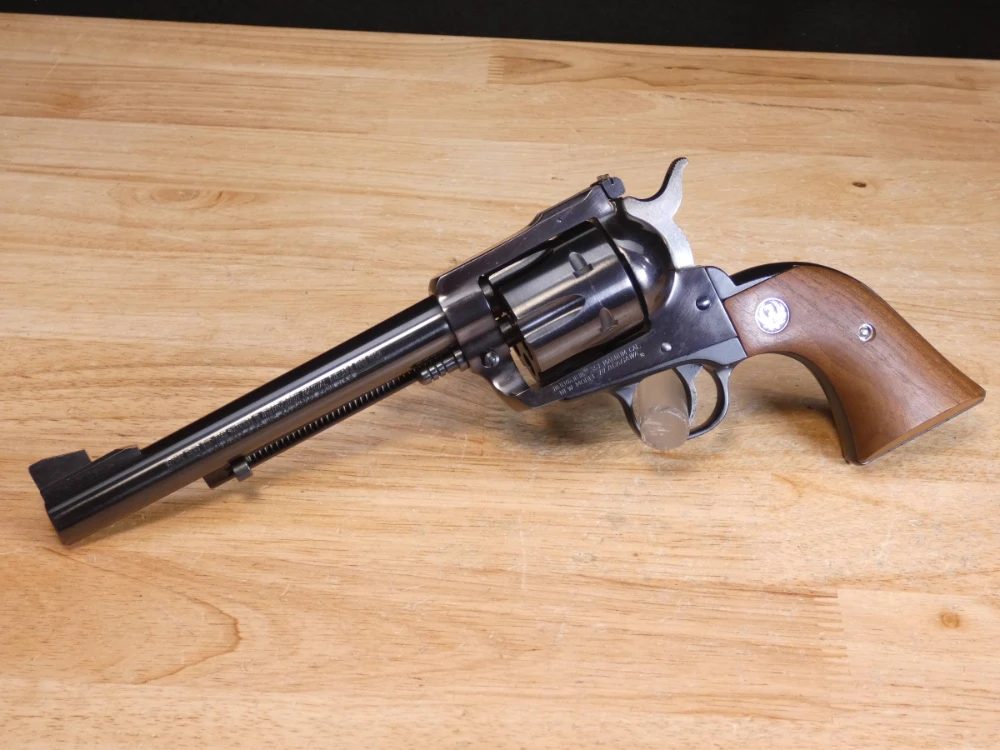
In 1973, Ruger introduced the “New Model” Blackhawk, a significant redesign that incorporated a new transfer bar safety mechanism. This innovation allowed the revolver to be carried safely with all six chambers loaded. While this enhanced safety, it altered the classic “four-click” hammer draw that purists enjoyed in the older models. These modern revolvers are valued more as durable, reliable shooters than as collector’s items. Consequently, their market value is more modest, with typical used prices ranging from approximately $450 to $650, depending heavily on their cosmetic condition, caliber, and barrel length.
The value of a standard “New Model” Blackhawk is less about rarity and more about utility. Factors like a stainless steel finish can command a slightly higher price than the standard blued version. Because these models have been in continuous production for decades, they are widely available on the used market. Their reputation for being able to handle a very high round count means that mechanical condition is rarely a concern, so buyers tend to focus more on the cosmetic appearance, such as the condition of the bluing and the integrity of the grips, when determining a fair price.
“New Model” Convertible Blackhawks
Ruger’s “New Model” Convertible Blackhawks offer shooters enhanced versatility by including an additional cylinder, allowing the firearm to chamber two different calibers. A common pairing is .357 Magnum/.38 Special with a swappable 9mm cylinder, or .45 Colt with a .45 ACP cylinder. This feature makes them highly attractive to practical shooters who value ammunition flexibility and cost savings. New convertible models have an MSRP of around $979, reflecting their added utility. On the used market, these models consistently fetch a higher price than their single-caliber counterparts, as the value of the extra fitted cylinder is a significant selling point.
When selling a convertible model, the presence and condition of the second cylinder are crucial for maximizing value. The original, numbers-matching box that houses both the revolver and the extra cylinder also adds a significant premium. A seller who has lost the second cylinder will see the firearm’s value drop to that of a standard model, as sourcing a replacement that fits correctly can be difficult and expensive for the buyer. Therefore, maintaining the complete package is essential to realizing the full market potential of these versatile and popular revolvers.
“New Model” Super Blackhawks
The Super Blackhawk is engineered to be a more robust version of the standard Blackhawk, specifically designed to handle powerful magnum cartridges like the .44 Magnum. It features a stronger, heavier steel frame, a larger grip for better recoil management, and typically an unfluted cylinder. These enhancements make it a favorite among handgun hunters and enthusiasts of high-power shooting. Reflecting its heavy-duty construction, the Super Blackhawk carries a higher MSRP, priced at $1,079. This premium translates to the used market, where they are consistently valued higher than standard “New Model” Blackhawks of a similar condition.
The value of a used Super Blackhawk is influenced by its specific configuration, including barrel length and finish. Stainless steel models are particularly popular for their durability and resistance to the elements, often commanding a higher price. Because these firearms are built for powerful loads, buyers will inspect them for signs of heavy use, but their legendary durability means that even models with a high round count retain strong functional value. A well-maintained Super Blackhawk remains a top-tier choice in the single-action market, and its price reflects that respected position.
How Modifications Affect Value
When it comes to modifying a Ruger Blackhawk, the impact on its value is highly subjective, as there is no clear market consensus on what adds or detracts from its worth. Permanent alterations such as custom porting, non-factory finishes like Cerakote, or elaborate engraving can be detrimental, as they cater to a specific taste and may narrow the pool of potential buyers. Unless performed by a nationally recognized master gunsmith, these types of modifications often lower the resale value. Reversible changes, such as installing a set of custom grips while retaining the originals, are generally considered a safer bet.
While specific data on the importance of original parts is unavailable, a universal rule in firearms collecting applies: originality is key, especially for vintage models. For a pre-1973 “Flattop” or “3-Screw” Blackhawk, having all original factory parts is critical to maximizing its collector value. Replacing a worn component with a period-correct factory part is generally acceptable, but swapping out major components like the barrel or cylinder with non-original parts can significantly diminish its appeal to serious collectors. For modern “New Models,” this is less of a concern, but a firearm in its factory configuration will always have the broadest appeal.
Regional Price Variations in 2026
State and local laws can create significant regional variations in a firearm’s value. In California, for instance, the Ruger Blackhawk enjoys a unique market position. Because single-action revolvers are exempt from the state’s restrictive roster of approved handguns, they are generally legal for purchase. This exemption can sustain strong demand and stable pricing, as California residents have fewer options for new handguns compared to those in other states. As a result, a Blackhawk may command a slightly higher price in California’s regulated market than it would in a state with more permissive firearm laws.
In contrast, the market dynamics in other states with strict regulations, such as New York, are less clear, with no consensus data available for the Blackhawk specifically. Generally, jurisdictions with complex handgun purchasing laws can suppress the private-party market, pushing more transactions through licensed dealers. This can indirectly affect the prices sellers can achieve in a private sale. Sellers must always be aware of their local and state regulations, as these laws not only dictate the legality of a sale but also influence supply, demand, and ultimately, the final price of the firearm.
Online vs Local Sales
Selling a Ruger Blackhawk online to a buyer in another state involves navigating strict federal laws. The transaction must be facilitated by a Federal Firearms Licensee (FFL). By law, the seller is required to ship the handgun from an FFL in their state to an FFL in the buyer’s state. The buyer can only take possession of the revolver after completing the required ATF Form 4473 and passing a background check at their designated FFL. This two-FFL process is non-negotiable for interstate handgun sales and adds shipping and transfer fees that the buyer or seller must account for.
The logistics of shipping a handgun add another layer of complexity. Major carriers like UPS and FedEx have corporate policies that prohibit private individuals from shipping handguns. Furthermore, the U.S. Postal Service expressly forbids the mailing of handguns by non-licensees. This means a private seller has no choice but to pay an FFL to handle the shipment on their behalf. These logistical hurdles and associated costs are a significant consideration when evaluating the profitability of an online sale versus a local one, as FFL fees can reduce the seller’s net proceeds from the transaction.
A local, in-person sale can be more straightforward and potentially more profitable. While federal law does not require a bill of sale for a private transaction, creating one is strongly recommended to document the transfer of ownership and protect the seller from future liability. However, state laws vary widely, and many now mandate that private sales must be conducted through an FFL to perform a background check. A local private sale often yields a price closer to the firearm’s true market value of $500-$760, whereas selling to a dealer will typically result in a much lower offer of around 50% of that value.
The FFL Buying Advantage
Utilizing a Federal Firearms Licensee (FFL) to sell your Ruger Blackhawk offers unparalleled legal security. When you sell or consign your handgun through an FFL, they are legally obligated to have the buyer complete an ATF Form 4473 and undergo a federal background check. This crucial step ensures the firearm is not transferred to a prohibited individual, such as a convicted felon. The completed paperwork creates an official record of the transfer, effectively releasing you from any future liability connected to the firearm. This peace of mind is often the primary motivation for sellers who choose to use an FFL.
However, this security comes at a financial cost. When selling directly to a gun dealer, you can expect an offer that is significantly lower than the firearm’s private-party value. Dealers typically offer around 50% of a used gun’s market worth to account for their business overhead and profit margin. For a Ruger Blackhawk that might sell for $600 in a private sale, a dealer’s offer might be closer to $300. Sellers must weigh this financial trade-off against the convenience, speed, and absolute legal protection that selling through an FFL provides.
What Increases Your Offer
Presenting a clean and well-maintained firearm is a fundamental step in securing a higher offer. Before listing your Ruger Blackhawk for sale, it is essential to perform a detailed field strip and cleaning. Pay close attention to the bore, the cylinder chambers, and the action, using appropriate firearm-specific solvents and tools to remove all carbon fouling and residue. Be careful to avoid getting harsh chemicals on wooden grips. Afterwards, apply a very light coat of quality gun oil to all metal surfaces to protect against corrosion and give the firearm a well-cared-for appearance that inspires buyer confidence.
In the age of online sales, high-quality photography is non-negotiable. To best showcase your Ruger Blackhawk, use bright, natural, and diffused light to eliminate harsh shadows and accurately display the gun’s finish. The “golden hour” light just after sunrise or before sunset is ideal. Place the revolver on a simple, uncluttered background that provides contrast, making the firearm the sole focus of the image. Take numerous sharp, in-focus photos from various angles, including close-ups of important markings, the serial number, and any visible wear to be transparent and build trust with potential buyers.
A complete package will always command a premium. While no specific data exists on penalties for missing items, including the original box, owner’s manual, and any accessories that came with the firearm new will significantly increase its value and appeal. For convertible models, the presence of the second cylinder is absolutely critical. For older collector pieces like “Flattop” or “3-Screw” models, the original box and paperwork can add a substantial amount to the final price. Gathering all these items before the sale demonstrates meticulous ownership and helps justify a higher asking price.
When to Sell Your Ruger blackhawk
Strategic timing can play a significant role in the price you receive for your Ruger Blackhawk. According to general market consensus, one of the most advantageous times to sell a used handgun is during tax return season. This period, typically running from February through April, is when many consumers have more disposable income. This influx of cash into the market often leads to increased demand for firearms, allowing sellers to achieve faster sales and potentially secure a price closer to their asking value. Listing your firearm during this window can give you a distinct advantage.
Conversely, some periods of the year tend to be slower for firearm sales, which can work against the seller. The late summer months and the holiday season between Thanksgiving and New Year’s are often considered buyer’s markets. During these times, potential customers are often focused on vacations, family gatherings, and other spending priorities, leading to softer demand. If you list your Blackhawk during these slower seasons, you may find it takes longer to sell or that you need to lower your price to attract a buyer, making patience a valuable asset.
Beyond predictable seasonal trends, the political climate can be a powerful, albeit unpredictable, driver of the firearms market. Discussions of new gun control legislation at the state or federal level frequently cause spikes in consumer demand. During these periods of uncertainty, popular and reliable firearms like the Ruger Blackhawk often see a surge in interest from buyers looking to make a purchase before regulations potentially change. While timing these events is difficult, an aware seller who lists their firearm during such a surge can often command a higher price than usual.
Common Pricing Mistakes
One of the most common errors sellers make is overvaluing a standard, modern “New Model” Ruger Blackhawk. While it is an excellent firearm, it is not a rare collector’s item, and its market value is well-established, typically between $400 and $760. Owners sometimes believe a formal appraisal is necessary, but this is rarely a cost-effective choice for a common production revolver. A far more accurate price can be determined by researching recent sale prices of comparable models on major online gun marketplaces, which helps set a realistic expectation and avoids pricing the gun out of the market.
Failing to correctly identify the specific generation of your Blackhawk is a critical pricing mistake. There is a vast value difference between a common “New Model” made after 1973 and a highly collectible “Flattop” or “3-Screw” model from before that year. An early model in good condition can be worth over $1,000, while a standard New Model might be worth half that. Misidentifying your revolver could lead you to unknowingly sell a valuable collector’s piece for a fraction of its worth or, conversely, ask a collector’s price for a common shooter-grade gun.
A third mistake is not pricing the firearm honestly according to its cosmetic condition. While there is no standard formula for deducting value for wear, sellers must be objective. Scratches on the frame, holster wear on the muzzle, or dings on the grip will inevitably lower the value compared to a pristine example. Listing a gun with visible wear as “like new” or “excellent” and asking a top-tier price will only deter knowledgeable buyers. It is essential to inspect the firearm critically, acknowledge its flaws, and adjust the asking price accordingly for a faster, more successful sale.
Market Outlook for 2026
While no definitive consensus exists for future price predictions, the market outlook for the Ruger Blackhawk in 2026 appears stable and positive. The revolver’s legendary reputation for durability, reliability, and accuracy provides a solid foundation for retaining its value. As a classic American-made firearm, it possesses a timeless appeal that resonates with both practical shooters and collectors of single-action revolvers. It is highly unlikely to experience a significant depreciation in value and, for certain models, may continue to see modest appreciation over time, especially as older examples become scarcer.
Looking ahead to 2026, the market will likely maintain a clear distinction between shooter-grade “New Models” and investment-grade pre-1973 variants. The value of the widely available New Models will probably remain tied to general economic conditions and inflation, continuing to serve as a benchmark for a dependable, powerful handgun. In contrast, the value of the more desirable “Flattop” and “3-Screw” models will be driven by collector demand. As the number of these vintage revolvers in excellent, unmodified condition dwindles, their rarity is expected to push their prices steadily upward.
Frequently Asked Questions
Does a high round count significantly lower a Ruger Blackhawk’s value?
While a high round count can impact the value of many firearms, the Ruger Blackhawk is renowned for its exceptional durability and is considered capable of handling a very high number of rounds without significant mechanical failure. Because of this robust reputation, a high round count may not drastically reduce its functional value. However, for collector-grade models like the “Flattop” or “3-Screw,” a lower round count and minimal wear are paramount, and signs of heavy use will certainly diminish its value to a discerning collector.
Is it worth getting a professional appraisal for my Blackhawk?
For a standard, common “New Model” Ruger Blackhawk, a professional appraisal is likely not worth the associated cost. The market value for these models is well-documented and typically falls within the $400 to $760 range, a figure you can determine by researching online marketplaces. An appraisal only becomes justifiable for potentially rare or unusual variants, such as early “Flattop” models in exceptional condition, limited editions, or revolvers with special factory features, where an expert’s validation could significantly increase the firearm’s value.
How much more are the early “3-Screw” models worth compared to the “New Models”?
Early “3-Screw” (pre-1973) models are generally significantly more valuable than the later “New Models.” While a used New Model typically sells for between $450 and $760, a 3-Screw model in similar condition will often start at around $500 and can easily exceed $1,000 depending on its rarity and condition. This substantial price difference is due to the 3-Screw’s higher appeal to collectors who prefer the original action design and the historical significance of these earlier production revolvers.
Is a Ruger Blackhawk considered an NFA item?
No, the Ruger Blackhawk is not classified as an NFA (National Firearms Act) item. As a standard single-action revolver, it is regulated as a typical handgun. The NFA governs specific categories of firearms such as machine guns, short-barreled rifles, short-barreled shotguns, and silencers. Because the Blackhawk does not fall into any of these categories, it does not require the special registration, tax stamp, and extended waiting periods associated with NFA items, which helps maintain its accessibility and stable market value.
Does having a convertible model with two cylinders increase the price?
Yes, having a convertible model with both of its original cylinders absolutely increases its value. The enhanced versatility of being able to shoot two different calibers from the same firearm is a major selling point. This is reflected in the MSRP, with convertible models priced about $100 higher than standard versions. On the used market, a complete convertible package will consistently command a higher price than a single-caliber Blackhawk in similar condition. The absence of the second cylinder effectively reduces its value to that of a standard model.
Get a Cash Offer Today
Ready to sell your Ruger Blackhawk? We make the process safe, simple, and professional. Click here to submit your firearm’s details, and our experts will provide you with a fair, no-obligation cash offer. Avoid the hassle and uncertainty of private sales and get paid quickly.
Our streamlined, FFL-licensed process ensures every transaction is fully compliant with federal and state laws, giving you complete peace of mind. Don’t let your firearm collect dust—turn it into cash today. Learn what your Ruger Blackhawk is worth and start the process now!