
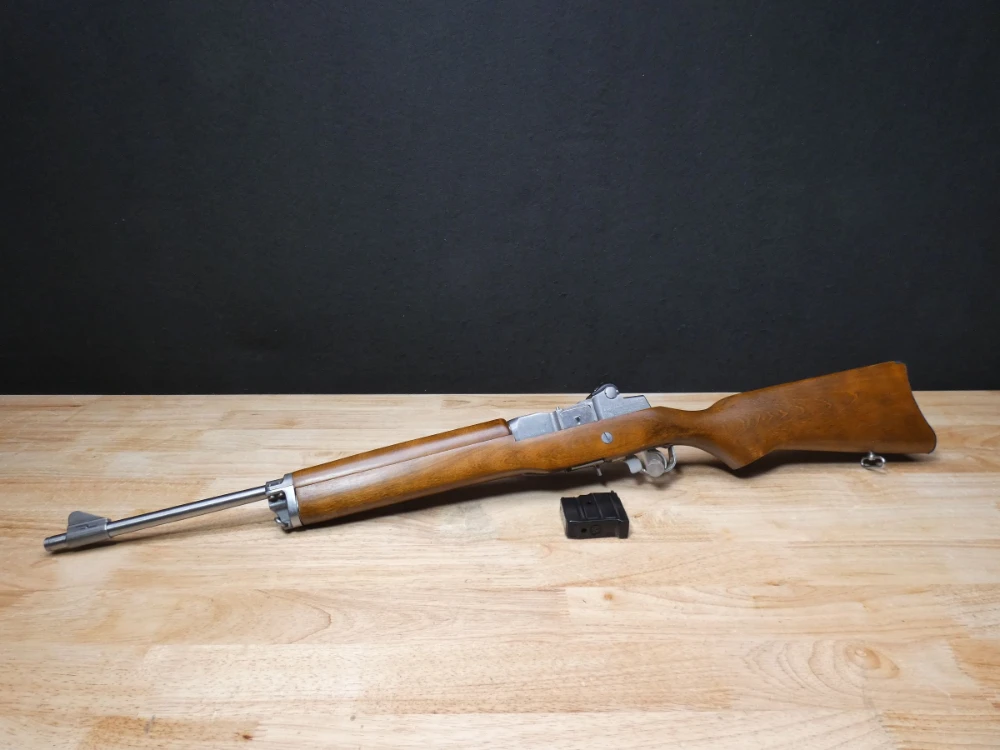
The Ruger Mini-14 is a celebrated semi-automatic rifle, known for its classic design and robust, Garand-style action. As a long gun designed to be fired from the shoulder, it has earned a reputation for reliability across its various models, from the standard Ranch Rifle to tactical variants. Understanding the key factors that influence its resale price is essential for any owner looking to sell. This guide will break down the Mini-14’s market value, legal requirements, and best practices for maximizing your return.
What Determines Your Ruger Mini-14’s Worth
The value of a used Ruger Mini-14 is primarily determined by its specific model, overall condition, and configuration rather than its round count. Thanks to its renowned durability, the rifle can endure tens of thousands of rounds without major parts failure, making its history of use less critical than its current state. The market value for common models in good to excellent condition typically ranges from $500 to $1,200. Special editions, pre-ban models, and tactical variants often command higher prices, with some exceeding $1,300, while a standard Ranch Rifle might average around $611. Condition and market demand remain the most influential factors on its final sale price.
2026 Price Breakdown by Generation
Standard & Ranch Rifle Models
The Standard and Ranch Rifle models represent the baseline for Mini-14 valuation. As the most common configurations, their value is well-established, with the average used Ranch Rifle selling for approximately $611. These models are popular for their simplicity and compliance in states with strict firearm laws, ensuring consistent demand. Their pricing typically occupies the lower to middle portion of the broad $500 to $1,200 valuation spectrum, making them an accessible entry point for many buyers. Condition is paramount, as a well-maintained rifle will always fetch a higher price than a heavily used counterpart, regardless of its commonality in the marketplace.
Older models from earlier production runs can often carry a premium, provided they are in good condition. While the average used price hovers around $701 for the platform overall, well-preserved older Mini-14s can sell for between $650 and $900. This value is driven by a combination of nostalgia, perceived build quality of earlier manufacturing, and the specific features of that era. A pristine, early-production Mini-14 is often more desirable to collectors and enthusiasts than a newer, more common variant, allowing it to command a price that exceeds the typical average for a standard used model.
Stainless Steel Variants
Ruger Mini-14 rifles featuring a stainless steel finish consistently command a higher value in the secondary market. The enhanced resistance to corrosion and distinct aesthetic make these models more desirable to many buyers, pushing their average price to around $900. This represents a significant premium over the standard blued Ranch Rifle, which averages closer to $611. The added durability against the elements is a practical benefit that buyers are willing to pay for, especially for a rifle intended for field use in various weather conditions. This inherent value holds up well over time, making stainless models a solid investment.
As with any firearm, the condition of a stainless steel Mini-14 is a critical factor in its final valuation. While the material is resistant to rust, it can still show scratches, dings, and other signs of wear that will detract from its price. A pristine, like-new stainless model will easily fetch top dollar within its category, while one with significant cosmetic blemishes will see its value fall closer to that of a standard blued version. Sellers should accurately document and photograph the finish to set realistic price expectations and provide transparency to potential buyers.
Tactical & Target Models
The Tactical models of the Ruger Mini-14 are specialized variants that consistently command higher prices, with some examples exceeding $1,300. These rifles often come from the factory with features such as shorter barrels, different stock configurations, and flash hiders, which appeal to a different segment of the market than the traditional Ranch Rifle. Their enhanced features and more modern appearance drive up both their MSRP and their resale value. Because these models are produced in smaller numbers than the standard rifles, their relative scarcity also contributes to their premium price point in the used marketplace.
Similarly, the Mini-14 Target models are highly valued for their specific, factory-installed enhancements geared toward accuracy. These rifles typically feature a heavy barrel, a harmonic dampener, and an adjustable target trigger, making them significantly more precise than their standard counterparts. This specialized purpose appeals to shooters focused on precision, who are willing to pay more for out-of-the-box performance. The higher initial cost and specialized nature of the Target model ensure it retains a strong resale value, often placing it in the upper tier of the Mini-14 price range, well above the more common configurations.
Pre-Ban & Special Editions
Among the most valuable Mini-14 variants are the “pre-ban” models, particularly those manufactured before the 1994 Federal Assault Weapons Ban. Rifles with features like factory folding stocks or bayonet lugs are especially sought after by collectors and residents of states with ongoing restrictions. The legality and collectibility of these configurations create significant demand, pushing their value to the highest end of the spectrum. A genuine pre-ban Mini-14 with a factory folding stock is one of the most desirable models and can fetch a price well above that of a new tactical version, reflecting its scarcity and unique status.
In addition to pre-ban rifles, any factory special editions or limited runs of the Mini-14 will also carry a premium. These models may feature unique finishes, stocks, or commemorative markings that set them apart from standard production. Their value is driven by scarcity; with fewer units available, they naturally become more desirable to collectors who want to own a piece of Ruger history. When selling such a model, it is crucial to document its specific features and production numbers, as this information is key to justifying its higher price to knowledgeable buyers looking for rare and unique firearms.
How Modifications Affect Value
Modifications can have a varied impact on the resale value of a Ruger Mini-14. While some upgrades may be desirable, irreversible changes such as cutting the barrel or permanently altering the original stock can significantly decrease the rifle’s worth by limiting its appeal to purists and collectors. However, not all modifications are detrimental. An aftermarket trigger from a well-regarded brand, for instance, is unlikely to hurt the value and may even increase it for a buyer seeking improved performance. The key is whether the modification is a high-quality, reversible upgrade or a permanent, personalized alteration that narrows the pool of potential buyers.
While certain modifications might not hurt value, there is no broad market consensus on aftermarket parts that consistently add significant monetary worth to a Mini-14. Upgrades like custom stocks, optics, or muzzle devices might appeal to a specific buyer who shares the seller’s taste, but owners rarely recoup the full cost of these additions upon resale. Many potential buyers prefer a rifle in its original factory configuration, as it serves as a clean slate for their own preferences. Therefore, sellers should view most modifications as personal enhancements rather than financial investments that will guarantee a higher selling price.
Regional Price Variations in 2026
Regional laws can create significant price variations for the Ruger Mini-14. In states with strict firearm regulations like California and New York, the standard Mini-14 Ranch Rifle is often legal to own because it typically lacks features like a pistol grip, flash hider, or adjustable stock that would classify it as a prohibited “assault weapon.” This legality increases its demand in these markets, as it is one of the few available semi-automatic rifles of its type. Consequently, the rifle may command a higher price in these restrictive states compared to areas where a wider variety of semi-automatic rifles are available to buyers.
Magazine capacity restrictions also play a role in regional pricing. In states that limit magazine capacity, a Mini-14 sold with compliant, low-capacity magazines is a necessity for a legal transfer. However, in states without such restrictions, a seller who includes original, standard-capacity magazines (often 20 or 30 rounds) can make their offering more attractive and potentially ask for a higher price. The value of these pre-ban or standard-capacity magazines themselves can be high, adding to the overall value of the package in less restrictive jurisdictions and creating a clear price difference based on location.
Online vs Local Sales
When selling a Ruger Mini-14 locally, the process can be relatively straightforward, but laws governing private firearm sales vary dramatically by state. Some states allow private citizens to sell a long gun directly to another resident with minimal paperwork, while others require the transaction to be conducted through a Federal Firearms Licensee (FFL). Regardless of local law, it is always highly recommended to create a bill of sale to document the transaction. This document should include the buyer’s and seller’s identification, the firearm’s make, model, and serial number, and the date of sale to protect both parties.
Selling a Mini-14 online to a buyer in another state involves adhering to strict federal laws. An interstate transfer requires the seller to ship the firearm to an FFL in the buyer’s state of residence. The buyer cannot take possession of the rifle until they have completed all necessary paperwork, including the ATF Form 4473, and passed a federal background check at their designated FFL. This process ensures the transaction complies with the laws of both the buyer’s and seller’s states but adds a layer of complexity and cost compared to a local sale.
Furthermore, the logistics of shipping a firearm add another consideration for online sales. Federal law and carrier policies prohibit private individuals from shipping firearms directly through common carriers like UPS and FedEx. Both companies require the shipper to be a licensed dealer with a specific shipping agreement. Therefore, a private seller must take the Mini-14 to a local FFL, who will then package and ship the firearm legally on their behalf. This service typically involves a fee, which should be factored into the final sale price or negotiated with the buyer beforehand.
The FFL Buying Advantage
Selling your Ruger Mini-14 to a Federal Firearms Licensee (FFL), such as a local gun store, offers a significant advantage in speed and convenience. The process is immediate, secure, and eliminates the complexities of finding a private buyer and navigating transfer laws. However, this convenience comes at a cost. Gun dealers typically offer between 50% and 65% of the firearm’s estimated private party market value. This reduced offer is a standard business practice, as the dealer must account for their overhead, administrative costs, potential repair work, and the profit margin they need to achieve upon reselling the rifle.
Understanding the dealer’s business model is key to having realistic expectations. An offer that seems low, sometimes as little as 40% of the private sale price, is not an insult but a reflection of the market realities for a licensed reseller. For many sellers, avoiding the hassle of listing the firearm, vetting potential buyers, and handling the legal transfer paperwork is worth the lower cash offer. The FFL provides a guaranteed sale, allowing the owner to quickly and legally convert their firearm into cash without the uncertainty and potential risks associated with a private transaction.
What Increases Your Offer
A thorough pre-sale cleaning is one of the most effective ways to increase the perceived value of your Ruger Mini-14. Before showing it to potential buyers, field strip the rifle and meticulously clean the bore, receiver, and bolt, removing all carbon fouling and residue. Pay special attention to the gas block assembly, an area that is often neglected. To ensure smooth operation and prevent the slide from seizing during storage or inspection, scrub the gas system clean and apply a small amount of grease where the gas port meets the slide, finishing with a light wipe-down of all metal parts.
High-quality presentation is crucial, especially for an online sale. To best photograph your Mini-14, use a simple and consistent neutral background that keeps the focus entirely on the firearm. Ensure your lighting is even and bright, preferably using natural light to avoid harsh shadows and glare. Capture clear photos from all sides and angles, including close-ups of any specific markings, the serial number, and any cosmetic blemishes. This transparency provides a comprehensive view of the rifle’s condition, building trust with potential buyers and justifying your asking price, leading to better and faster offers.
While the market lacks a defined financial penalty for missing items, presenting a complete package can significantly boost your offer. Including the original box, owner’s manual, and any accessories that came with the rifle from the factory, such as scope rings or original magazines, makes your firearm more attractive than a bare rifle. A complete set suggests that the firearm was well-cared-for and helps your listing stand out. This attention to detail can be the deciding factor for a buyer and helps you secure a price at the higher end of your rifle’s value range.
When to Sell Your Ruger mini 14
Timing your sale can significantly impact your success, and seasonal trends often drive demand. For a versatile rifle like the Mini-14, which is popular for both ranch work and hunting, the best time to sell is often in the months leading up to major hunting seasons. During the late summer and early fall, many outdoor enthusiasts are actively looking to purchase firearms for upcoming hunts. Listing your rifle during this peak period increases its visibility to a motivated audience, which can lead to a quicker sale at a more favorable price point due to heightened demand.
Beyond hunting seasons, a broader window of opportunity opens during tax refund season, which typically runs from February to April. During these months, many consumers have more disposable income, leading to a general uptick in spending on discretionary items, including firearms. This surge in purchasing power creates a seller’s market across the board, not just for hunting-specific guns. Selling your Mini-14 during this time taps into a larger pool of potential buyers who are financially ready to make a purchase, increasing the likelihood of a full-price offer.
It is also wise to pay attention to the political climate, as it can be a powerful, albeit unpredictable, driver of firearm sales. Periods of heightened debate surrounding gun control legislation frequently lead to surges in demand for semi-automatic rifles like the Mini-14. Consumers often purchase these firearms out of concern for future availability. While these market shifts are difficult to forecast, a seller who is aware of current events can sometimes leverage these periods of high demand to maximize their financial return, as increased urgency among buyers often leads to higher sale prices.
Common Pricing Mistakes
One of the most frequent pricing errors is overvaluing a standard, used Mini-14 based on its new retail price. The Manufacturer’s Suggested Retail Price (MSRP) for a new model ranges from approximately $1,259 to $1,489, but the used market operates differently. A typical used Mini-14 sells for between $500 and $1,200, with the average hovering around $701. Sellers must research recent, actual sales of comparable used models to set a realistic price. Expecting to get near-new value for a used firearm will only deter knowledgeable buyers and prolong the selling process unnecessarily.
Another common mistake is expecting to receive the full private-party value when selling to a gun dealer. An FFL’s offer will be significantly lower because they must cover business expenses and generate a profit upon resale. Dealers typically offer between 50% and 65% of what a rifle is worth on the private market. Understanding this is crucial to avoid feeling lowballed. For this reason, and because the value range is well-established, paying for a professional appraisal for a standard Mini-14 is generally not worth the cost, as online research provides a sufficiently accurate price estimate.
Failing to account for transfer and shipping costs is a critical oversight, especially in online sales. A private seller is required by law and carrier policy to use an FFL to ship a firearm, which involves a service fee. The buyer on the receiving end must also pay their FFL a transfer fee. These combined costs can be substantial and should be clearly addressed in the sale agreement. Deciding upfront whether the price includes shipping or if the buyer is responsible for all fees prevents misunderstandings and ensures a smooth, transparent transaction for both parties involved.
Market Outlook for 2026
The market outlook for the Ruger Mini-14 in 2026 appears stable and positive. Projections indicate that a new Mini-14 will retail for approximately $1,000 to $1,200, a range consistent with its average new price of roughly $1,070 in 2025. This stability suggests that the rifle will continue to be a popular choice, with its price influenced by specific configurations such as wood versus synthetic stocks or standard versus tactical models. The continued production and steady pricing from Ruger provide a solid foundation for the used market’s value, preventing sharp declines in resale prices.
For the used market, the Mini-14’s value is expected to remain strong, buoyed by the rifle’s reputation for rugged durability. Because the platform is known to withstand high round counts without significant issues, even older, well-used models will continue to be desirable. The primary drivers of used value will remain the firearm’s specific model, its cosmetic and mechanical condition, and any included accessories. As new models hold their price, used rifles will continue to represent a compelling value proposition for buyers, ensuring consistent demand and stable pricing in the years to come.
Frequently Asked Questions
How much does a high round count affect a Mini-14’s value?
A high round count has a surprisingly minimal impact on the resale value of a Ruger Mini-14. The rifle is widely celebrated for its robust design and durability, with many users reporting tens of thousands of rounds fired without any major parts failures. Because of this reputation, potential buyers tend to focus more on the rifle’s overall condition, its specific model, and current market demand. A clean, well-maintained Mini-14 will hold its value far better than a neglected, low-round-count example, making cosmetic and mechanical upkeep more critical than the number on the odometer.
Are pre-ban or older Mini-14 models more valuable?
Yes, certain older and pre-ban Mini-14 models are significantly more valuable than their modern counterparts. Rifles manufactured before the 1994 Assault Weapons Ban, especially those with factory-installed folding stocks and bayonet lugs, are highly sought after by collectors and buyers in restrictive states. While a standard used Ranch Rifle may average around $611, these collectible pre-ban configurations can easily command prices at the top of the $500 to $1,200 range, and often much more, due to their relative scarcity and desirable features that are no longer in standard production.
Does having a stainless steel model increase the price?
Absolutely. A stainless steel finish is a distinct value-adding feature for a Ruger Mini-14. The enhanced corrosion resistance and unique aesthetic are highly desirable, leading these models to command a premium in the used market. On average, a stainless steel variant can be valued around $900, which is a considerable increase over the approximately $611 average for a standard blued Ranch Rifle in similar condition. Buyers are consistently willing to pay more for the durability and appearance that a stainless steel finish provides, making it a key factor in the rifle’s overall valuation.
Is it worth getting a professional appraisal for my Mini-14?
For a standard-production Ruger Mini-14, a professional appraisal is generally not a cost-effective measure. The market value for most common models is well-documented and typically falls within a predictable range of $500 to $1,200. A seller can accurately determine a fair asking price by researching recent online sales of rifles in a similar condition and configuration. This readily available market data makes a formal, paid appraisal redundant unless the rifle is an exceptionally rare prototype or a special presentation model with unique historical significance that would require expert verification.
Will selling to a dealer get me the best price?
Selling your Mini-14 to a dealer is the fastest and most convenient option, but it will not yield the highest price. To cover their overhead and ensure a profit margin upon resale, gun dealers typically offer between 50% and 65% of a firearm’s private party market value. In some cases, the offer can be as low as 40%. If your priority is maximizing your financial return, a private sale is the superior route. However, if you value a quick, simple, and legally secure transaction above all else, selling to a dealer is an excellent choice.
Get a Cash Offer Today
Ready to sell your Ruger Mini-14 without the hassle of private listings and shipping regulations? We make the process simple and secure. Submit your firearm’s details on our easy-to-use platform, and our experts will provide a fair, data-driven cash offer based on its specific model and condition.
Avoid the uncertainty of private sales and the low offers from local pawn shops. Our streamlined process ensures you get a competitive price quickly and legally. Click here to begin, get your quote, and see just how easy it is to turn your firearm into cash today.