
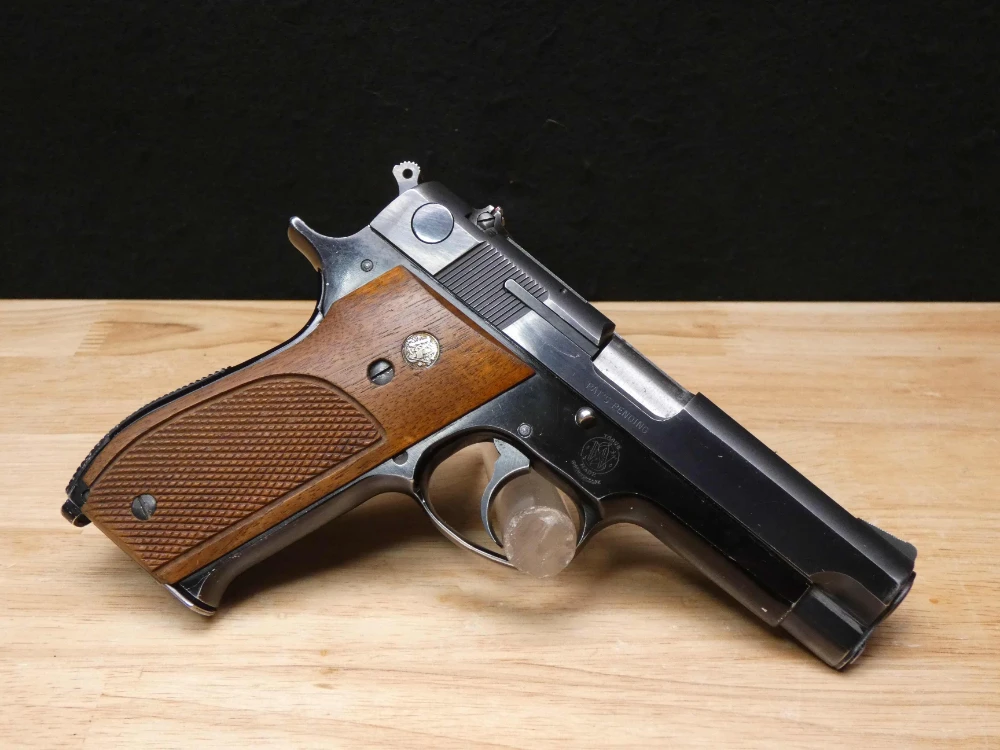
The Smith & Wesson Model 39-2 holds a significant place in firearms history as a pioneering double-action/single-action semi-automatic pistol. As a handgun with a 4-inch barrel, its classic design and reliable performance have made it a favorite among collectors and enthusiasts. Understanding its market value involves looking beyond its base specifications to factors like cosmetic condition, finish, and historical context. This guide provides a detailed analysis of the key elements that determine its worth in today’s market.
What Determines Your Smith & Wesson 39 2’s Worth
The value of a Smith & Wesson 39-2 is more heavily influenced by its cosmetic condition than its round count. Unlike many modern firearms, a high round count does not significantly detract from its worth, provided the pistol has been well-maintained. The primary value drivers are the finish—whether blued or the less common nickel—and the percentage of that original finish that remains intact. A firearm with sharp markings and minimal holster wear will always command a higher price. Prices for used models can range from as low as $300 for a shooter-grade example to over $550 for one in excellent condition, demonstrating the wide premium placed on appearance.
2026 Price Breakdown by Generation
Model 39 (First Generation)
The original Model 39, the predecessor to the 39-2, established the foundation for Smith & Wesson’s semi-automatic pistol line. While specific market data for this first-generation model was not analyzed for this report, it is a collectible firearm in its own right. Its value is determined by factors similar to its successor, including the condition of its steel slide and alloy frame, the presence of early production features, and overall originality. Collectors often seek out these early models, and prices can vary significantly based on rarity and historical provenance, requiring separate market research for an accurate valuation.
When assessing a first-generation Model 39, particular attention should be paid to any modifications or wear that deviate from its factory configuration. As these pistols age, finding examples in pristine, unaltered condition becomes increasingly difficult, which drives up their value for serious collectors. The inclusion of the original box, manual, and any accompanying accessories from the period can also add a substantial premium. Prospective sellers should document these features carefully, as they are key differentiators in a market that prizes originality and completeness for classic firearms of this era.
Model 39-2 (Second Generation)
The Smith & Wesson Model 39-2 represents the second and most refined generation of this classic design. According to market data, the average used value for a 39-2 falls between $608 and $667. However, this average belies a much wider potential price range, which can span from under $500 for a well-used model to over $1,300 for a pristine example. The final selling price is heavily dependent on factors such as the firearm’s overall condition, the type of finish, and whether it includes the original box and paperwork, which adds significant collector appeal and monetary value.
Further analysis of the used market shows a common price range of $400 to $750 for standard models, depending on their condition. The finish is a major variable; models with a special finish, such as nickel, can command a significant premium, with documented sales reaching as high as $1,225. This indicates that while a standard blued 39-2 is an accessible classic, a well-preserved nickel-finished variant with its original packaging is treated by the market as a high-grade collectible, appealing to a different tier of buyers willing to pay more for rarity and condition.
Model 59 (Related High-Capacity Variant)
While not a direct successor in the “39” series, the Model 59 was developed alongside the 39-2 and is often considered part of the same family, distinguished primarily by its double-stack, high-capacity magazine. Market consensus on the specific valuation of the Model 59 was not available for this analysis. However, its value is influenced by similar factors as the 39-2, including condition, finish, and originality. Its higher capacity can make it more appealing to some shooters, but collectors often focus on the single-stack purity of the Model 39 series, creating a distinct market dynamic.
Assessing a Model 59 requires an understanding of its unique place in Smith & Wesson’s history as one of the first “wonder nines.” Its value can be affected by the condition of its magazines, which are integral to its design, as well as the overall state of its finish and mechanical function. Prospective sellers should research recent sales of the Model 59 specifically, as its market trends may not perfectly mirror those of the Model 39-2. Its appeal to both collectors and those seeking a classic high-capacity pistol gives it a broad but distinct buyer base.
Third Generation S&W Pistols (Successors)
The third-generation Smith & Wesson semi-automatic pistols, such as the 3904 and 3906, evolved from the Model 39-2’s design but represent a different era of manufacturing and aesthetics. While detailed pricing data for these later models is beyond the scope of this specific analysis, they occupy a different segment of the used firearms market. Generally, these models are valued more as utilitarian firearms than as historical collectibles compared to the 39-2. Their prices are often more dependent on functional condition and suitability for modern use rather than pure collector-grade originality.
When considering the value of these successors, factors like night sight condition, accessory rail inclusion (on some models), and magazine availability play a larger role. The market for third-generation S&W pistols is robust, but it caters to a different buyer who may prioritize performance and parts availability over the historical significance of the earlier 39-2. Therefore, their value trends separately and should not be used as a direct comparison when pricing a Model 39-2, which appeals more strongly to enthusiasts of classic firearm design and history.
How Modifications Affect Value
The market lacks a clear consensus on whether specific modifications add or detract from the value of a Smith & Wesson 39-2. For a classic firearm like this, most collectors prioritize originality. Therefore, any permanent alterations, such as custom milling on the slide, non-factory sights that required drilling, or a custom frame finish, are likely to hurt its value. Reversible modifications, like aftermarket grips, are generally considered neutral, provided the original parts are included with the sale. Ultimately, the closer the pistol is to its factory configuration, the broader its appeal and the higher its potential value will be.
It is important to distinguish between modifications and historical context. For example, Naval Special Warfare units used a specially modified version of the Model 39 with a suppressor, known as the Mk 22 Mod 0. In this case, the suppressor is the NFA-regulated component, not the base pistol. A standard, privately owned Model 39-2 is not an NFA item. Attempting to create a “clone” of a military variant without proper documentation or provenance will not add value and may confuse potential buyers. For most sellers, presenting the firearm in its original, unmodified state is the safest and most profitable approach.
Regional Price Variations in 2026
The value and ease of selling a Smith & Wesson Model 39-2 can be significantly impacted by state and local laws. In California, for instance, the Model 39-2 is not on the state’s roster of approved handguns. This means a licensed dealer cannot sell it, but it can be legally acquired through a private party transfer between two California residents. This limited supply can sometimes create a niche market where demand among in-state collectors drives prices higher than the national average, as it’s one of the few legal avenues to obtain one.
Conversely, states with more stringent handgun regulations, like New York, present different challenges. A potential buyer in New York must possess a state-issued permit to own a handgun, and the firearm must be registered to that permit. Furthermore, the pistol must comply with the NY SAFE Act, which restricts magazine capacity to 10 rounds. Since the standard Model 39-2 uses an 8-round magazine, this is not an issue, but the complex legal process of permitting and registration can limit the pool of potential buyers and potentially soften local market prices compared to less restrictive states.
Online vs Local Sales
When selling your Smith & Wesson 39-2, the choice between a local private sale and a dealer trade-in involves a trade-off between convenience and profit. Selling to a local gun dealer is often the fastest and simplest option, but it will yield the lowest return. Dealers typically offer between 50% and 70% of the firearm’s actual market value. The final offer depends on the pistol’s condition, the dealer’s current inventory, and its perceived desirability. For a popular classic like the 39-2, an offer in the 65% to 70% range might be achievable if the gun is in high demand.
Selling online or privately opens the door to achieving full market value but requires navigating legal shipping and transfer logistics. A private individual cannot legally ship a handgun directly to a buyer in another state. The transaction must go through a Federal Firearms Licensee (FFL). Shipping carriers also have strict rules; UPS allows individuals to ship handguns to an FFL via an expedited service like Next Day Air, but it must be declared at a main Customer Center. FedEx policy, however, prohibits firearm shipments by non-FFLs entirely, making compliance critical for a legal and successful sale.
Regardless of the sales channel, proper paperwork is essential for the protection of both buyer and seller. While a simple bill of sale is a common document for recording the transaction details in a private sale, state and local laws vary significantly. Some jurisdictions mandate that all private firearm transfers must be conducted through a licensed dealer to facilitate a background check. It is imperative to research and comply with the specific regulations of the state where the sale occurs to ensure the transfer is fully legal and to avoid any potential liability.
The FFL Buying Advantage
Utilizing a Federal Firearms Licensee (FFL) is not just a best practice for firearm sales; for interstate transactions, it is a legal requirement. When selling a handgun like the Smith & Wesson 39-2 to a buyer in another state, the law mandates that the firearm be transferred through an FFL. This process provides a clear, legal framework that protects both the seller and the buyer from inadvertently violating federal law. The seller is shielded from liability once the firearm is logged into the receiving FFL’s books, and the buyer is assured they are acquiring the firearm legally.
The process is straightforward and secure. The seller takes the handgun to a local FFL dealer, who then ships it to an FFL dealer chosen by the buyer in their home state. Upon its arrival, the buyer must go to their designated FFL, complete the necessary paperwork including the ATF Form 4473, and pass a mandatory background check before taking possession of the firearm. This regulated chain of custody ensures that the handgun is transferred legally and responsibly, making the FFL system a crucial advantage for conducting safe and compliant firearm sales across state lines.
What Increases Your Offer
A thorough pre-sale cleaning is one of the most effective ways to maximize the value of your Smith & Wesson 39-2. Before listing it for sale, you should field-strip the pistol and meticulously clean the slide, barrel, guide rod, and frame to remove all carbon residue and fouling. However, it’s crucial to avoid common mistakes that can damage the firearm. Never use harsh household chemicals or steel brushes, as these can easily mar the classic blued or nickel finish. Also, be careful not to apply too much oil upon reassembly, as excess lubricant can attract dirt and gum up the action.
High-quality photographs are non-negotiable for attracting the best offers, especially in an online sale. Use a simple, uncluttered background with ample, diffused lighting to prevent harsh shadows and accurately represent the firearm’s condition. A tripod is essential to ensure your photos are sharp and in focus. Capture multiple angles of the entire pistol, along with detailed close-ups of all markings, the sights, and any areas of wear or damage. Transparency is key; filling all available photo slots in a listing gives potential buyers the confidence to make a strong offer.
Completeness significantly enhances collector value and can substantially increase your final offer. The market data indicates that the inclusion of the original box is a key factor in pushing the value of a Model 39-2 toward the higher end of its price range, potentially from the $600-$700 bracket to over $1,000. If you have the original factory box, manual, cleaning tools, or any other accompanying paperwork, be sure to feature them prominently in your photos and description. These items prove the firearm’s provenance and are highly sought after by serious collectors who are willing to pay a premium for a complete set.
When to Sell Your Smith & Wesson 39 2
Timing the sale of your firearm can have a noticeable impact on the final price you receive. Generally, the market for used firearms sees increased activity during two key periods of the year. The first is tax return season, typically from March through April, when many potential buyers have more disposable income and are actively looking to make purchases. This heightened demand can lead to faster sales and potentially higher offers as more buyers compete for available firearms. Listing your Smith & Wesson 39-2 during this window can be highly advantageous.
The second peak season occurs in the months leading up to hunting season. While this trend primarily benefits rifles, overall market activity and foot traffic in gun stores increase during this time, particularly in August and September. This creates a rising tide that can lift all boats, including classic handguns. Conversely, the market tends to be slowest during the summer months, with July often cited as the least active period for firearm sales. To maximize your return, it is generally advisable to avoid listing your pistol during this mid-summer lull when buyer interest is at its lowest point.
Beyond broad seasonal trends, savvy sellers should also monitor online auction sites and forums dedicated to Smith & Wesson firearms. These communities can provide real-time insight into collector demand and current market prices for the Model 39-2. A sudden surge in interest or a series of high-value sales for similar models could signal an opportune moment to list your pistol. By combining an understanding of seasonal patterns with specific market monitoring, you can strategically time your sale to align with periods of peak buyer interest and achieve the best possible price.
Common Pricing Mistakes
One of the most frequent errors sellers make is overvaluing their firearm due to sentimental attachment. While your Smith & Wesson 39-2 may have personal history, its market value is determined by objective factors like condition, finish, and completeness. It’s crucial to research recent, actual sales of comparable models on auction sites and online forums rather than relying on listed prices, which may not reflect true market value. Setting a price based on emotion instead of data will likely result in the firearm sitting on the market for an extended period without attracting serious offers.
Another critical mistake is underpricing the firearm for a quick sale without understanding its full potential value. While this approach guarantees a fast transaction, it often means leaving significant money on the table. Remember that a dealer will typically offer only 50% to 70% of its market value, so pricing it only slightly above that for a private sale is still a substantial loss. Taking the time to properly clean, photograph, and document your pistol can help you achieve a price at the higher end of the typical $400 to $750 range, or even more for a premium example.
For a common and well-documented firearm like the Model 39-2, paying for a professional appraisal is an unnecessary expense. The market value is well-established, with reliable estimates readily available through online price guides and completed sales records. A formal appraisal is unlikely to provide any information that can’t be found with diligent research and is not worth the cost for a firearm in this price range. Instead of spending money on an appraisal, invest your time in creating a detailed, transparent listing that accurately reflects the pistol’s condition and value based on current market data.
Market Outlook for 2026
While a specific, data-driven price prediction for the Smith & Wesson 39-2 in 2026 is not available, we can analyze the general market trends for classic, collectible firearms. The Model 39-2’s value is primarily driven by its historical significance as a pioneering American-made DA/SA pistol and its reputation for quality. Unlike modern polymer-framed handguns, its value is not tied to the latest technological advancements but rather to its status as a collector’s item. This insulates it from the rapid depreciation that affects many contemporary firearms, suggesting a stable market outlook.
The value of firearms like the 39-2 tends to appreciate slowly but steadily over time, driven by a consistent demand from collectors and enthusiasts of the brand. As fewer pristine examples remain in circulation, the value of well-preserved models, especially those with their original box and paperwork, is likely to increase. The market for these pistols is less about speculation and more about preservation and historical interest. Therefore, owners can expect the firearm to hold its value well and likely see modest appreciation, making it a solid piece for any collection for the foreseeable future.
Frequently Asked Questions
Does a high round count significantly lower my S&W 39-2’s value?
No, a high round count does not appear to have a major negative impact on the value of a Smith & Wesson 39-2. The market for this classic pistol prioritizes its overall cosmetic condition far more. Value is more closely tied to the type of finish (blued or nickel) and the percentage of that original finish that remains. A well-maintained pistol with significant holster wear will be valued lower than a pristine example that has been fired extensively but cared for meticulously. Therefore, focus on presenting the firearm’s excellent cosmetic state rather than worrying about its history of use.
Is it worth getting a professional appraisal for my Model 39-2?
For a standard used Smith & Wesson Model 39-2, a professional appraisal is likely not worth the cost. The market value for this firearm is well-documented, and its typical price range of $500 to $750 is easily verifiable through online price guides and recent sales data from auction websites. A formal appraisal is generally more appropriate for exceptionally rare or high-value firearms. For a common and popular model like the 39-2, your money is better spent on creating a high-quality sales listing rather than paying for a valuation you can determine yourself with some research.
How much less will a dealer offer compared to a private sale?
You can expect a gun dealer to offer significantly less than what you could get in a private sale. Typically, dealers will offer between 50% and 70% of the firearm’s current market value. The exact percentage depends on the pistol’s condition, its desirability in the local market, and the dealer’s current inventory needs. If you have a highly desirable model and the dealer knows they can resell it quickly, you might receive an offer in the 65% to 70% range. However, for maximum financial return, a private sale will always yield a higher price.
Does the original box really add to the selling price?
Yes, the inclusion of the original box and any accompanying paperwork can significantly increase the selling price of a Smith & Wesson 39-2. For collectors, these items are crucial for establishing the firearm’s provenance and completeness. A “complete set” is always more desirable than the gun alone. The presence of the original box can be the deciding factor that elevates a pistol’s value from the average used range into the premium collector category, potentially adding hundreds of dollars to its final sale price, especially if the firearm itself is in excellent condition.
Will having a nickel finish increase the value of my 39-2?
Yes, a factory nickel finish typically increases the value of a Smith & Wesson 39-2 compared to the more common blued finish. Special or less-common finishes often command a premium on the collector’s market. Market data shows that while standard models sell in the $400 to $750 range, examples with a nickel finish have been seen selling for as high as $1,225. The condition of the nickel finish is paramount, as any flaking or significant scratching will diminish this premium, but a well-preserved nickel model is certainly a more valuable asset.
Get a Cash Offer Today
Ready to sell your Smith & Wesson 39-2? We make the process simple, safe, and legally compliant. Avoid the hassle of private listings and the low offers from local dealers. Submit your firearm’s information today to receive a fair, market-based cash offer with no obligation.
Our streamlined process ensures you get paid quickly while we handle all the necessary FFL transfer logistics. We are committed to providing a transparent and professional experience for every seller. Click here to see what your classic Smith & Wesson is worth and get your cash offer now.