
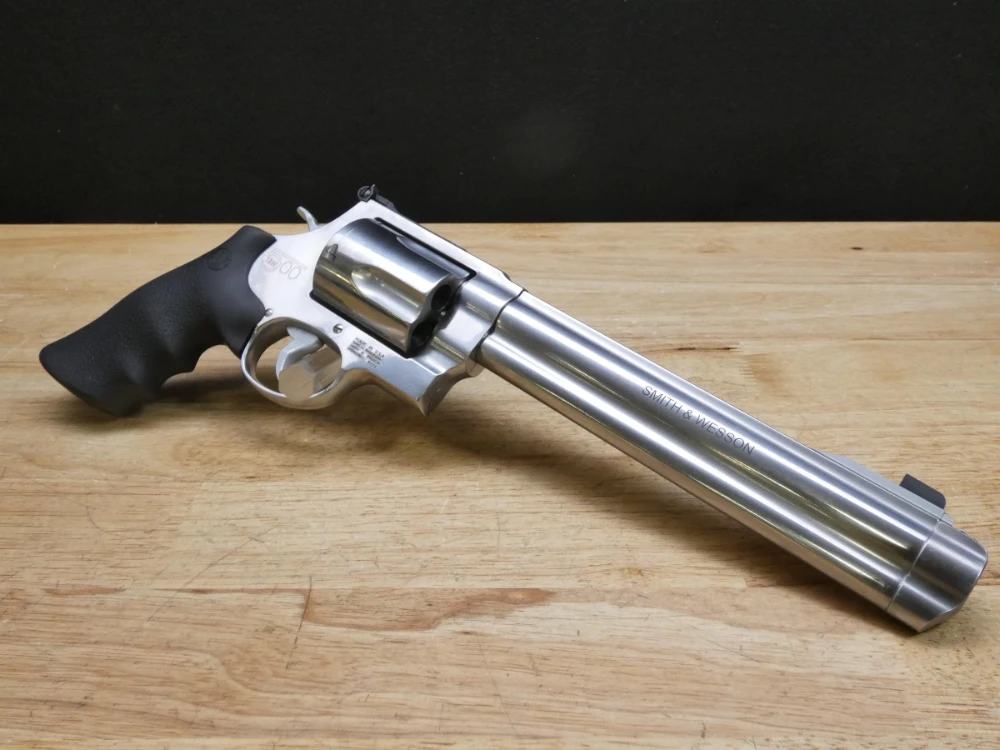
As the world’s most powerful production revolver, the Smith & Wesson 500 is a legendary handgun known for its immense power and precision engineering. Built on the massive X-Frame, it is designed for big game hunting and sport shooting. Understanding its market value is crucial for owners looking to sell. This guide provides a detailed analysis of the factors that determine your S&W 500’s worth, from model variations and condition to market trends and legal requirements for a successful sale.
What Determines Your Smith & Wesson 500’s Worth
The value of a Smith & Wesson 500 is primarily influenced by its specific model, condition, and barrel length, rather than distinct generations. Performance Center variants, which feature enhancements like compensated barrels and refined triggers, consistently command higher prices than standard models. The firearm’s physical condition is paramount; signs of wear, improper maintenance, or frame erosion can significantly decrease its worth. Market demand, original accessories like the case and paperwork, and regional legal restrictions also play a crucial role in establishing a final sale price. Because of its robust build, the round count is often less of a factor than its overall mechanical and cosmetic state.
2026 Price Breakdown by Generation
Standard Models
The Smith & Wesson 500’s value is not defined by traditional generations but by its specific configuration. Standard models, which form the bulk of the market, are valued based on their condition and barrel length. A used standard model in very good to excellent condition will typically have a private sale value between $900 and $1,300. The average used price, based on recent market data, hovers between $1,025 and $1,105. These models are the workhorses of the S&W 500 line and represent the most common transactions between private sellers and at local gun stores.
When purchasing new, the average street price for a standard model is currently around $1,192. This is considerably lower than the Manufacturer’s Suggested Retail Price (MSRP), which starts at approximately $1,569. This price difference highlights the importance of researching current market rates rather than relying on MSRP for valuation. For sellers, pricing a used standard model competitively means setting it below this average new price to attract buyers, with the final figure depending heavily on its cosmetic and mechanical condition, as well as included accessories like the original box and documents.
Performance Center Models
Performance Center variants of the Smith & Wesson 500 represent the upper echelon of the product line and command significantly higher prices. These models are factory-tuned for enhanced accuracy and handling, often featuring ported or compensated barrels, custom triggers, and other premium features. Due to these factory upgrades and their more limited production, a Performance Center model often sells for $1,600 or more on the used market, depending on its specific features and condition. The MSRP for new Performance Center models can reach as high as $2,039, reflecting their premium status in the S&W catalog.
The value proposition for a Performance Center model is clear: it offers a custom-grade experience directly from the manufacturer. For sellers, owning one of these variants means a higher potential return, provided the firearm has been well-maintained. Buyers seeking the ultimate S&W 500 experience are willing to pay a premium for these models, making them a distinct and more valuable category compared to the standard offerings. When selling, it is critical to highlight the specific Performance Center features to justify the higher asking price and attract the right type of knowledgeable buyer.
Used Market Values
The used market for the Smith & Wesson 500 is robust, with a well-established price range for common models. Based on current market data, a typical used S&W 500 revolver will sell for between $1,025 and $1,105. This range assumes the firearm is in very good to excellent condition with minimal wear. Firearms that include the original hard case, owner’s manual, and any included tools or accessories tend to sell at the higher end of this spectrum. Conversely, revolvers with noticeable cosmetic blemishes or signs of heavy use will fall toward the lower end or even below this average.
Sellers should be aware that this price range reflects private party transactions. When selling to a Federal Firearms Licensee (FFL) or gun dealer, the offer will be lower. Dealers typically offer between 50% and 70% of the private sale market value, as they need to account for their own overhead and profit margin upon resale. Therefore, achieving a price within the $1,025 to $1,105 range is most feasible when selling directly to another individual, where the full market value can be realized without a middleman taking a cut.
New vs. MSRP
A significant gap often exists between the Manufacturer’s Suggested Retail Price (MSRP) and the actual new price of a Smith & Wesson 500. The MSRP for a new standard model is approximately $1,569, while specialized Performance Center versions can be listed as high as $2,039. However, these figures are merely suggestions from the manufacturer. In reality, the competitive retail market drives the actual sale price down considerably. The average new price for a standard S&W 500 is currently closer to $1,192, a price point dictated by distributor costs, dealer competition, and consumer demand.
This discrepancy is a critical factor for sellers of used firearms. Basing a used price on the high MSRP will result in an uncompetitive listing that is unlikely to attract buyers. Instead, sellers must use the average new “street price” as the true benchmark. A used S&W 500, even in excellent condition, must be priced attractively below what a buyer could purchase a brand-new one for. Understanding this difference is key to setting a realistic price that facilitates a timely and successful sale, ensuring the firearm is valued according to its actual market position, not its suggested one.
How Modifications Affect Value
When considering the impact of modifications on the Smith & Wesson 500, it is important to note that a broad market consensus on what adds or detracts value is largely unavailable. Modifications are highly subjective and appeal to a narrow segment of buyers. Upgrades such as custom grips, aftermarket sights, or specialized optic mounts may be desirable to a specific user but could deter a purist who prefers the firearm in its original factory configuration. Because of this, most modifications do not add dollar-for-dollar value to the resale price and can sometimes limit the pool of potential buyers.
Similarly, there are no universally agreed-upon modifications that are known to definitively hurt the S&W 500’s value, aside from permanent alterations that are poorly executed. For example, amateur gunsmithing, crude engravings, or non-professional finishes can severely diminish the revolver’s worth. Since the market for this powerful handgun often values its original engineering and robust design, sellers will generally find the most success by offering the firearm in its factory state. If modifications have been made, including the original parts with the sale can help mitigate potential value loss and appeal to a wider audience.
Regional Price Variations in 2026
State and local laws create significant regional price variations for firearms like the Smith & Wesson 500. In California, for instance, the handgun market is heavily regulated by the Roster of Handguns Certified for Sale. Specific models of the S&W 500 are listed on this roster, making them legal for purchase. This limited selection can increase demand and, consequently, the value of these approved models within the state, as residents have fewer options available. A roster-approved S&W 500 may sell for a premium in California compared to a state with fewer purchasing restrictions.
In contrast, New York State does not have a specific ban on .50 caliber handguns, and the S&W 500 is generally legal to own. However, the requirement for a valid New York State Pistol License, with the specific firearm registered on it, creates a different market dynamic. The lengthy and often difficult process of obtaining a license can temper overall demand. While the firearm is legal, the regulatory hurdles can influence how many buyers are in the market at any given time, which can affect its local value and how quickly it might sell compared to less-regulated states.
Online vs Local Sales
Selling a Smith & Wesson 500 online offers the significant advantage of reaching a nationwide audience, potentially leading to a faster sale at a higher price due to increased demand. However, this method comes with logistical and legal complexities. All interstate firearm sales must be processed through a Federal Firearms Licensee (FFL). This means the seller must ship the handgun from their local FFL to the buyer’s designated FFL, where the buyer will complete the required background check and paperwork. This process adds shipping costs and transfer fees, which must be factored into the final price.
Furthermore, shipping a handgun like the S&W 500 has specific legal requirements. Federal law mandates that the carrier must be notified that the package contains a firearm. However, the internal policies of common carriers like UPS and FedEx are even more restrictive, generally prohibiting private individuals from shipping handguns and requiring the shipper to be an FFL holder. Handguns are also not mailable through the USPS by private citizens. These stringent rules make using an FFL for shipping a practical necessity for legal compliance and adherence to carrier policies when selling online.
Local private sales offer a simpler, more direct alternative, avoiding shipping costs and carrier restrictions. However, the transaction is governed by state and local laws, which vary significantly. Some jurisdictions require that all private firearm sales be conducted through an FFL to facilitate a background check. In other areas with fewer regulations, a simple bill of sale and verification of a valid state ID may suffice. It is the seller’s absolute responsibility to understand and comply with all local and state laws to ensure the private transaction is conducted legally and safely.
The FFL Buying Advantage
Selling your Smith & Wesson 500 directly to a Federal Firearms Licensee (FFL), such as a local gun store, offers a fast, secure, and legally straightforward transaction. The primary advantage is convenience; the sale is immediate, and the dealer handles all required paperwork. However, this convenience comes at a cost. Gun dealers typically offer between 50% and 70% of the firearm’s private sale market value. The exact offer depends on the revolver’s condition, current inventory levels, and its perceived desirability. An outright cash offer may be on the lower end of this range, while a trade-in might yield a slightly higher value.
FFLs also provide an indispensable service for conducting legal interstate sales. To sell a firearm to a resident of another state, the handgun must be shipped from an FFL in the seller’s state to an FFL in the buyer’s state. The buyer then completes the background check and transfer at their local dealer. This FFL-to-FFL transfer process is a federal requirement for both commercial and private sales across state lines. Using an FFL ensures the entire transaction is compliant with federal law, protecting both the buyer and seller from potential legal issues associated with an improper transfer.
What Increases Your Offer
A thorough pre-sale cleaning is one of the most effective ways to increase the perceived value of your Smith & Wesson 500. Before showing the firearm or taking photographs, perform a detailed cleaning to remove all gunpowder, lead, and carbon residue. Pay special attention to hard-to-clean areas like the front of the cylinder, the forcing cone, and the ported compensator if your model has one. After cleaning, apply a light coat of high-quality gun oil to protect the metal and give it a professional presentation. Avoid over-lubricating, as a dripping, messy handgun can be off-putting to a potential buyer during inspection.
High-quality photography is essential for maximizing offers, especially in online listings. Always begin by ensuring the firearm is completely unloaded for safety. Place the revolver against a simple, uncluttered background, like a plain white or black surface, to make it the focus. Use soft, diffused natural light from a window or an overcast day to illuminate the firearm evenly, and avoid using a harsh on-camera flash, which creates glare and dark shadows. Capture clear, high-resolution images from multiple angles, including both full sides and close-ups of any markings, unique features, and imperfections to build trust with buyers.
While a high round count can diminish the value of some firearms, it is less of a concern for the robustly built Smith & Wesson 500. Due to the powerful recoil and high cost of .500 S&W Magnum ammunition, most of these revolvers have not been fired extensively. Buyers are generally more focused on the firearm’s overall condition, proper cylinder timing, and any signs of frame erosion or abuse. As long as the revolver is well-maintained, sellers can confidently state that the firearm was built to outlast the shooter’s ability to handle it, making the specific round count a minor factor in its valuation.
When to Sell Your Smith & Wesson 500
One of the most opportune times to sell any type of firearm, including a powerful handgun like the Smith & Wesson 500, is during tax return season. This period, typically running from February through April, sees a general increase in consumer spending as many individuals receive tax refunds. With more disposable income available, buyers are often more willing to make significant purchases. Listing your S&W 500 during this window can increase the number of potential buyers and may lead to a faster sale at your desired asking price due to heightened market activity.
Another strategic period for selling the S&W 500 is in the months leading up to major hunting seasons, generally from August through October. Although often associated with rifles and shotguns, the S&W 500 is a highly capable handgun for hunting large game in jurisdictions where it is permitted. During this time, hunters are actively acquiring and upgrading their gear for the upcoming season. Marketing the revolver’s capabilities as a hunting sidearm or primary hunting handgun can attract a motivated and specific segment of the market, increasing the likelihood of a successful and timely sale.
Beyond seasonal trends, sellers should also monitor local market conditions. If there is a high demand for large-caliber handguns in your area or if local inventory at gun stores is low, it could be an excellent time to list your firearm. Conversely, if the market is saturated with similar models, it may be wise to wait. Paying attention to these local supply and demand dynamics, in addition to broader seasonal trends, allows you to strategically time your sale for the best possible outcome and ensures you are not competing with an excessive number of other sellers.
Common Pricing Mistakes
One of the most frequent pricing errors is basing the asking price on the Manufacturer’s Suggested Retail Price (MSRP). The MSRP for a new S&W 500 can be as high as $1,569 for a standard model, but the average new “street price” is closer to $1,192. A used firearm must always be priced competitively against the actual new price, not the MSRP. Setting your price based on the inflated MSRP will make your revolver appear overpriced to knowledgeable buyers, who will simply opt to buy a new one for a similar or slightly higher cost.
Failing to accurately assess and price according to the firearm’s condition is another common mistake. The value of a used S&W 500 can vary by hundreds of dollars based on its cosmetic and mechanical state. Sellers often have an inflated view of their firearm’s condition. It is crucial to be objective about any scratches, holster wear, or mechanical issues. Researching the established market value for standard models, which typically retail between $900 and $1,300 used, and placing your firearm appropriately within that range based on its true condition is key to a realistic and successful sale.
Neglecting to identify the specific model of your S&W 500 can lead to significant underpricing. While a formal appraisal is generally not worth the cost for a common model, it is vital to know if you possess a more valuable Performance Center variant versus a standard one. Performance Center models feature factory enhancements that command a premium, often selling for $1,600 or more. Mistaking one for a standard model and pricing it in the lower range could mean leaving a substantial amount of money on the table. Proper identification is a simple step that ensures you are asking for its full value.
Market Outlook for 2026
While making precise future price predictions for any firearm is challenging, the market for the Smith & Wesson 500 is expected to remain stable and strong into 2026. The revolver occupies a unique and enduring niche as one of the most powerful production handguns ever made. This legendary status ensures a consistent level of interest from collectors, big-game hunters, and firearms enthusiasts who are drawn to its extreme performance. Its value is less susceptible to fleeting market trends and is more likely to be influenced by broader economic factors like inflation and the overall health of the firearms market.
The S&W 500’s value is also supported by its intentional design. By using a .500-inch bullet diameter, Smith & Wesson ensured the firearm would not be classified as a “destructive device” under the National Firearms Act, making it accessible without the additional taxes and registration required for firearms with bores over half an inch. This accessibility has cemented its place in the market. Barring any major legislative changes, the demand for this iconic revolver should persist, leading to a steady valuation that retains its worth well over time, making it a solid hold of value for its owners.
Frequently Asked Questions
How much does barrel length affect the S&W 500’s value?
Barrel length is a significant factor in the Smith & Wesson 500’s value, as it directly impacts the firearm’s intended use and handling characteristics. Models with longer barrels, such as the 8.38-inch version, are often favored by hunters for their increased velocity and sight radius, which can command a slightly higher price among that demographic. Shorter-barreled versions, like the 4-inch model, are often seen as more manageable “packable” sidearms. While there isn’t a fixed price difference, value is often tied to the desirability of a specific barrel length for its intended application, with condition and model type remaining the primary value drivers.
Is a high round count a major concern for the S&W 500’s resale price?
A high round count is generally not a major concern for the Smith & Wesson 500’s resale value. The firearm is massively overbuilt on the X-Frame to withstand the extreme pressures of the .500 S&W Magnum cartridge. Furthermore, the high cost of ammunition and the punishing recoil mean that very few of these revolvers have been subjected to an extremely high number of rounds. Buyers and appraisers tend to focus more on the firearm’s overall condition, mechanical timing, and any visible wear or frame erosion rather than the specific round count, which is often low by default.
Does the S&W 500’s non-NFA status help its value?
Yes, the Smith & Wesson 500’s status as a non-NFA item significantly helps its value and marketability. The firearm was intentionally designed with a bullet diameter of .500 inches to fall just at the limit, avoiding the “destructive device” classification under the National Firearms Act, which regulates firearms with a bore over half an inch. This design choice means buyers can purchase it without the burdensome paperwork, long wait times, and $200 tax stamp associated with NFA items. This broad accessibility to the general firearms market keeps demand high and supports a stronger, more stable resale value.
Why is the MSRP so much higher than the average new price?
The Manufacturer’s Suggested Retail Price (MSRP) is set by Smith & Wesson as a guideline, but it doesn’t reflect the competitive dynamics of the retail market. The average new price, or “street price,” is often significantly lower because firearms distributors and dealers purchase in bulk and compete with one another for sales. This competition drives the final price down for the consumer. For a seller, it’s crucial to understand this distinction, as a used S&W 500 must be priced against the lower street price (around $1,192 for a standard model), not the much higher MSRP ($1,569+).
Should I get a professional appraisal for my S&W 500?
For a standard, common model of the Smith & Wesson 500, a professional appraisal is likely not worth the cost. The market value for these revolvers is well-established, typically ranging from approximately $900 to $1,300 depending on condition. Free online valuations and comparisons on auction sites can provide a reasonably accurate estimate. A formal appraisal would only be appropriate for a rare, limited edition, or historically significant version of the firearm, where its unique attributes could add substantial value that is not reflected in standard market pricing data. For most sellers, a bit of online research will suffice.
Get a Cash Offer Today
Ready to sell your Smith & Wesson 500? We make the process fast, safe, and simple. Avoid the hassle of private listings and legal complexities by getting a fair cash offer from us today. Click the button below to submit your firearm’s information and receive a quote with no obligation.
Our team of experts understands the true market value of your revolver, ensuring you get a competitive price. We handle all the FFL paperwork and provide a secure transaction from start to finish. Turn your powerful handgun into cash quickly and confidently. Get started now and see what your S&W 500 is worth.