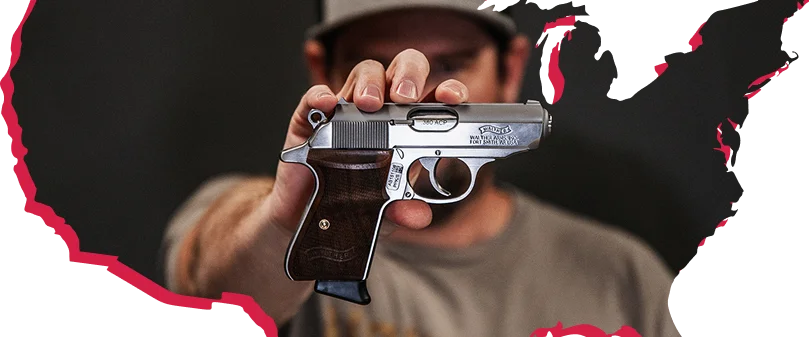



You finally upgraded your carry gun, and now the old one’s sitting in the safe like a loose end. Do you sell it, trade it, or keep it, and how do you do it without messing up the safety and legal side or leaving money on the table?
You’re juggling competing priorities: you want a fair price, you don’t want the process to drag on for weeks, and you definitely don’t want to do something dumb because a buyer “swears it’s fine.”
The friction is real because the sale isn’t just about price, it’s about who can buy it and how it transfers, and the rules change fast once an interstate transfer is involved. When a Federal Firearms Licensee (FFL) handles the handoff, the buyer completes and signs ATF Form 4473, which captures their identifying info and eligibility questions, the firearm’s details, and the dealer’s transfer certification. After that, the FFL typically runs a NICS background check before the transfer, unless a lawful exception applies. At the federal baseline, private, unlicensed sellers generally can’t transfer firearms across state lines without using an FFL (18 U.S.C. § 922(a)(5)), and nonlicensees generally can’t bring firearms acquired out of state into their home state without routing it through an FFL (18 U.S.C. § 922(a)(3)).
You’ll walk away able to move your old carry gun confidently with a practical, step-by-step process that keeps the transaction safe and compliant, without turning into legal advice.
Keep, Trade, or Sell
Before you list anything, decide what you’re really optimizing for. The best upgrade move isn’t automatically “sell”, it’s choosing between keep vs trade vs sell based on your risk tolerance, your timeline, and how proven your next gun actually is.
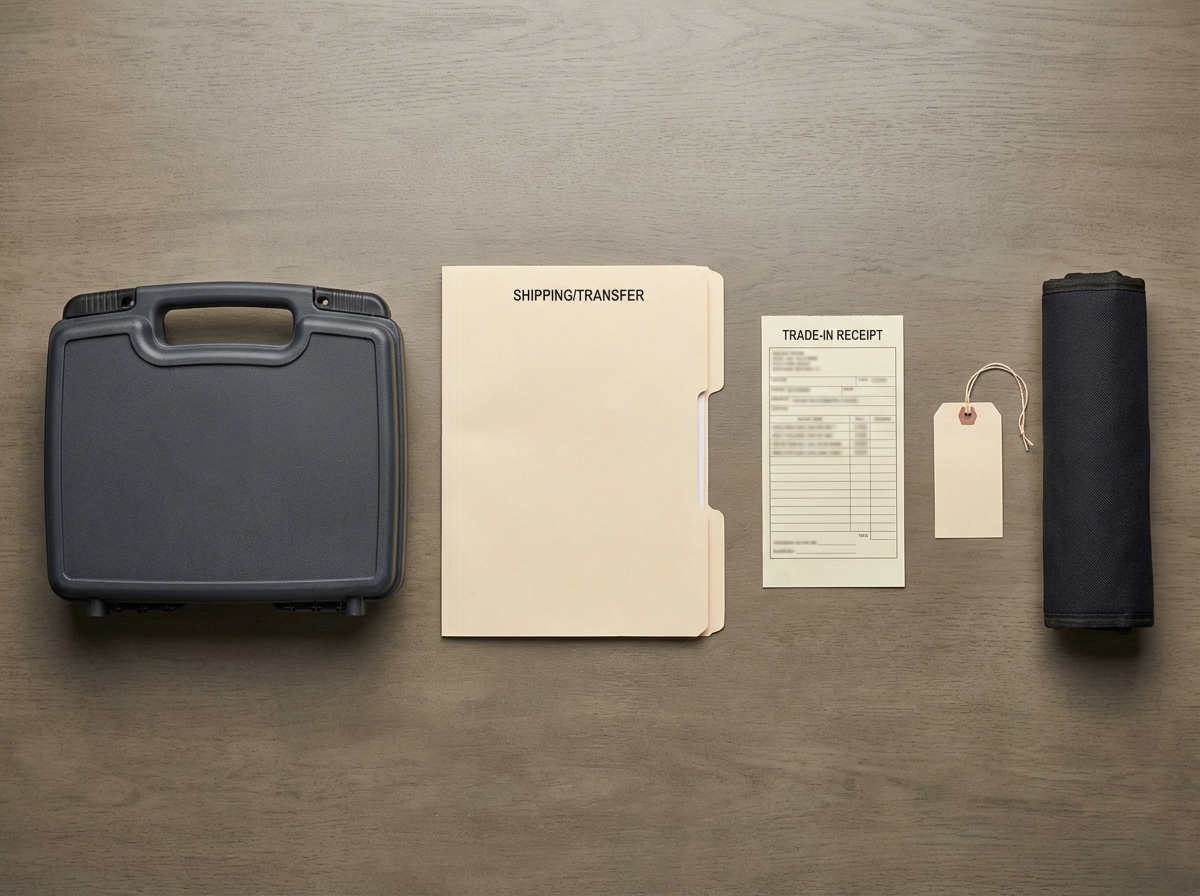
The cleanest no-regret move is keeping your current gun as a safety net when you don’t have redundancy. If it’s your only handgun, keep it until the new carry is vetted for reliability and you’ve confirmed real-world fit, holster comfort, and training reps, because “cash today” feels great until it creates a carry gap you didn’t plan for.
Keeping also makes sense when your current gun has earned trust over time, and you’ve already invested in mags, holsters, and muscle memory. If it’s been finicky, though, the “backup” label can turn into a false sense of security.
Trade when you want the fewest moving parts and the fastest same-day outcome. The tradeoff is simple: you’re paying for convenience with dollars you could have kept, but you gain speed, fewer coordination headaches, and a straight line from “old gun” to “new gun” without weeks of limbo.
Selling is the path when you care most about the strongest net outcome and you can tolerate a little patience. You control the timing, you control who gets it, and you’re not locked into a single offer, but you also have to manage the extra coordination.
Timing signals help. New model launches routinely soften older-model pricing, and local demand often bumps around holidays and tax-refund season. For more context on when market conditions make selling more advantageous, keep an eye on both national and local signals. For a plain-language “market heat” check, look at FBI NICS yearly totals: 2019 logged 28,369,750 checks, 2020 jumped to 39,695,315 (up 11,325,565 YoY), and 2021 stayed high at 38,945,806 (FBI NICS yearly totals page).
Quick self-check you can run today:
- If this is your only handgun or the replacement isn’t vetted yet, pick KEEP for 30 to 90 days.
- If you need a same-day swap and low friction, pick TRADE this week.
- If you want maximum dollars and can wait, pick SELL and choose a window that avoids a new-model drop for your platform and rides higher-demand weeks locally.
Find Your Gun’s Real Value
Once you’ve decided what you’re optimizing for, the next question is what your old gun is actually worth in today’s market. This is where a lot of sellers accidentally create their own problems: they either price too high and sit, or price too low and regret it.

Most people underprice a solid gun or overexpect on a tired one because they’re staring at the wrong numbers. List prices and “MSRP vibes” don’t tell you what buyers actually paid last week. Your goal is simpler: build an estimate from comparable sales, then adjust it using condition grading, meaning the real, observable wear and function that separates “carried a lot” from “barely fired.”
Comparable sales are recent sold results for guns configured like yours, not optimistic asking prices that can sit for months. Use sold or completed prices first (completed auctions are the cleanest signal), then sanity-check against today’s used asking prices to make sure your target number still fits what’s on shelves right now.
What to match in your comparables (and why it changes value):
- Exact generation or SKU: Small model-year changes can shift demand, parts compatibility, and what buyers search for.
- Sights and optic cut (optics-ready vs not): An optics-cut slide attracts dot users; a non-cut slide attracts “keep it stock” buyers.
- Included magazines (count, capacity): Two mags vs five mags is a real dollars-and-cents difference to a buyer.
- State-compliance variants: 10-round packages and roster-specific models don’t trade the same as standard versions.
Once you have a handful of tight comparables, condition grading is the lever that moves your estimate the most. Start with what any buyer can verify quickly: holster wear and finish loss, bore condition, and clear mechanical function signals like consistent trigger reset and clean lockup. On models where it applies, matching numbers matter, and aftermarket parts can either boost appeal or introduce doubt if the install quality and parts list are unknown.
A bone-stock Glock 19 with two mags and light holster wear will price differently than an optics-cut slide with unknown parts. The second gun might be “more upgraded,” but the buyer pool is smaller because some shoppers don’t want to inherit someone else’s experiment.
Extra factory magazines almost always help because they’re universally useful. Original case, backstraps, and optic plates help too, not because they’re flashy, but because they signal completeness and make the gun easier to resell later. Upgraded sights can help if they’re a known brand and properly installed. Highly personal add-ons, like stippling, wild cerakote, or a comp setup, often narrow your buyer pool even if you spent real money doing it.
If you’re trying to upgrade handgun sell old Glock 17 / P320 / M&P / Taurus G3C / Beretta 92, the same matching-and-condition rules apply.
If you’re dealing with a mixed lot, a higher-end piece, heavy modifications, or you just want a number you can act on today, get a pro appraisal or offer. Cash My Guns describes its appraisal as using make and model, condition details like finish and bore, matching numbers (where applicable), aftermarket parts, and market data pulled from dealer listings and auctions.
Wrap it up by setting a defensible price band: low (fast sale, stricter on flaws), target (fair comp plus honest condition), high (best-case buyer who wants your exact setup). Walk into any selling route with that band and you’ll negotiate from reality, not hope.
Pick the Best Selling Route
Once you’ve got a realistic number in your head, the route you choose determines how close you get to it. The same gun priced the same way can net very different outcomes depending on fees, delays, and how much work you’re willing to do yourself.
The “best” way to sell your old carry gun depends on what you’re optimizing: speed, maximum payout, simplicity, or lowest risk. Pick the wrong route and you don’t just lose money, you burn time on flaky messages, paperwork surprises, or shipping headaches that eat your net.
If you’re in a place where private sales are legal, a private sale gives you the most control over price and timeline. The tradeoff is you own the coordination and the screening, and that’s where most of the stress lives.
Consignment flips that around. A shop does the marketing and buyer handling, which cuts your hassle, but you’re waiting on the right buyer and you get paid later, after the shop takes its cut.
A local gun shop buyback or trade-in is the “cash today” button. It’s also the route that typically leaves the most money on the table, because the shop needs margin and inventory safety, but it’s hard to beat for convenience.
Online marketplaces with an FFL transfer reach the widest audience, which helps if you’re chasing top dollar or selling something niche. The friction is real though: more messages, more rules, and more points where costs and delays show up.
Direct-buy services sit in the middle, a predictable offer and fast payment with fewer moving parts, just not the absolute highest net. A direct-buy service like Cash My Guns is one example of that model.
Federal law (18 U.S.C. § 922(e)) allows a non-licensee to ship a handgun to an FFL using a common or contract carrier, and it requires you to notify the carrier that the package contains a firearm. USPS Publication 52 generally treats handguns as nonmailable for non-licensees, with limited exceptions mainly for FFL-to-FFL and certain government or law-enforcement shipments.
Here’s what people don’t realize about marketplaces: fees often land on the buyer. GunBroker, for example, says buyers may be charged a 1% Marketplace Service Fee, and buyers also typically pay sales tax, shipping, and the receiving dealer’s transfer fee. When buyers know they’re stacking costs, they push harder on price.
- “I need cash this week.” Local shop buyback or a direct-buy service.
- “I want top dollar and I’ll work for it.” Online marketplace (or a legal private sale), priced to match condition.
- “I don’t want to meet strangers or manage messages.” Consignment.
Prep, Photograph, and Price
No matter which route you pick, buyers respond to the same thing: a gun that looks like it was owned by an adult. Prep and presentation don’t just help you sell faster, they protect you from the time-wasting back-and-forth that comes from vague listings and questionable handling.
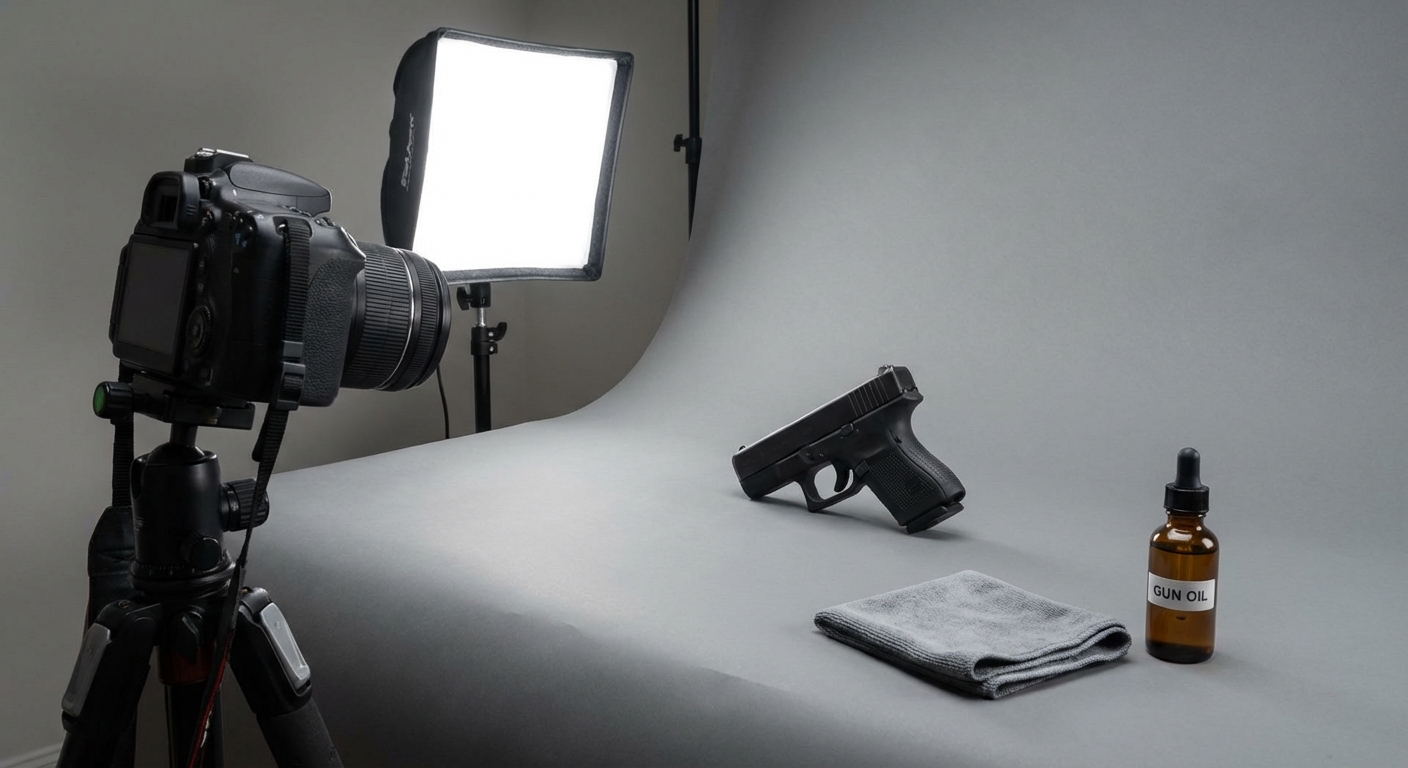
The easiest way to get a smoother sale, and avoid headaches, is to prep like a careful owner: safe handling, an honest read on condition (your gun’s wear level), and a listing that answers the obvious questions before a buyer has to ask. Sloppy unloading habits and vague “comes with stuff” listings don’t just lower offers, they attract the kind of messages that waste your time.
Start with the same unload check manufacturers tell you to do before cleaning, storage, shipping, or disassembly. Glock’s owner’s manual sequence is the clean example: remove the magazine, lock the slide open, then visually and physically inspect the chamber and the magazine well to confirm it’s empty.
One Glock-specific gotcha matters here: a trigger pull is part of the normal Glock field-strip procedure. That trigger press only happens after you’ve confirmed the chamber is empty, every time, no exceptions. Keep your prep in non-gunsmith territory, field strip only if your manual covers it, do basic cleaning and light lubrication per the manufacturer’s recommendations, and skip repair attempts or diagnostics that create new problems to explain.
Write down what’s actually included, then sell exactly that: number of magazines, factory case, backstraps, holster, optic plates, and any other accessories (and if you’re selling without the original box or paperwork, say so clearly). Disclose aftermarket parts clearly, and call out known issues up front. Honesty is what prevents “you never mentioned…” disputes later.
Use bright, clear photos: both sides, top view, and close-ups of common wear areas. Photograph the accessories in the same set. In the description, give an honest round-count estimate if you can, list any issues, note aftermarket changes, say why you’re selling (upgrade), and restate what’s included. For pricing, start from the value range you already estimated and leave yourself a little negotiation room.
Privacy tip: don’t post the full serial number publicly. Record it privately for your own documentation.
- Unload-check the pistol: mag out, slide locked open, visually and physically confirm chamber and mag well are empty.
- Clean per the manual, no repairs or deep disassembly.
- Inventory every included item, then photograph it.
- Photograph both sides plus close-ups of wear.
- Write a straight description: round count (if honest), issues, mods, reason for selling, what’s included.
- Price inside your estimated range, with room to negotiate.
Transfers and State Rules
A clean listing and a fair price get you a buyer, but the transfer is where the stakes actually live. This is also the point where a sale that felt simple can get complicated fast if state lines, shop policies, or local rules come into play.
The sale isn’t “done” when money changes hands. The transfer is the part you want to get unquestionably right, because that’s where people accidentally create legal risk, lose their paper trail, or hand a firearm to someone they shouldn’t.
Here’s the safe way to think about it: interstate transfers are where the rules tighten up quickly. As a baseline, federal law generally prohibits a private seller from transferring a firearm directly to an out-of-state resident without going through an FFL (18 U.S.C. § 922(a)(5)), and on the buyer’s side, nonlicensees generally cannot bring into their home state a firearm they acquired out of state without the transfer being routed through an FFL (18 U.S.C. § 922(a)(3)). The clean mental model is simple: confirm the buyer is eligible where required, use an FFL when required (and when it’s the cleanest option), and document the transaction in a sensible, lawful way.
California is the “do it through a dealer” state. A private party transfer (PPT) between two California residents must be conducted through a California licensed dealer, see Cal. Penal Code §§ 27545 and 28050. Both parties generally appear in person for the dealer to process the required record of sale information, see Cal. Penal Code §§ 28050 and 28160. Then you wait, California’s minimum waiting period is 10 days, see Cal. Penal Code § 26815.
Texas goes the other direction. Texas does not require a background check or an FFL for a private, intrastate transfer that is otherwise lawful. Your guardrail is still federal law: do not transfer if you know or reasonably believe the buyer is prohibited from possessing firearms.
- Call a local FFL and ask what they require for a person-to-person transfer in your state and county.
- Check your state police, AG, or firearms authority website for current transfer rules and any required steps.
- Assume local shop policies vary even when state law is the same, and follow the stricter process if you want it clean.
For meetups, keep it boring and safe: daylight, public place, bring a friend, don’t share sensitive personal info, and if anything feels off, walk away. When it’s lawful and appropriate, a bill of sale, a simple written record of the date, parties, and firearm details, gives you a straightforward “what happened and when” receipt.
- Decide who the buyer is and whether state lines are involved.
- Route through an FFL whenever required, or whenever you want the cleanest transfer.
- Verify your state’s current rules using an FFL call and your state’s official website.
- Document the transfer in a lawful, common-sense way and keep your records.
Close the Sale With Confidence
If you made the keep, trade, or sell call, priced it off comparable sales plus honest condition grading, kept your listing clean (clear photos, clear disclosure), and finished with a clean transfer, you did this the right way.
That also hits the same three pressures you started with: you protect yourself on the safety and legal side by keeping the transfer clean, you protect your wallet by pricing from real comps and condition, and you keep the process from dragging by choosing the route that matches your timeline.
- Records: ATF says unlicensed people aren’t required under federal law to keep acquisition or disposition records (ATF Firearms FAQs, Unlicensed Persons), recordkeeping is on FFLs (18 U.S.C. § 923(g); 27 C.F.R. Part 478), including A&D entries (27 C.F.R. § 478.125(e)). Still, store any legit paperwork you received securely (bill of sale if used, tracking, FFL receipt), and keep sensitive details off public posts.
- Funds: Put the proceeds toward the upgrade stuff that matters, mags, holster, ammo, training.
- New carry validation: Prove reliability, then train with it before it becomes your daily.
If you want a safe, legal, hassle-free way to sell, Cash My Guns is built for that route.