


Someone DMs you about your listing, and the second you see “I’m in another state” or “Can you ship it?”, you hit the exact freeze point: do I need an FFL for this, or can I handle it like a normal private sale?
That hesitation is healthy. You’re not trying to get a law lecture, you’re trying to keep the sale clean, avoid a bad transfer, and protect both sides, especially when residency is murky and the convenient option (ship fast, meet halfway) conflicts with the certain option (route it correctly and document it).
Here’s the federal baseline in plain English: ATF FAQ guidance says an unlicensed person generally may not transfer a firearm to someone they know or have reasonable cause to believe is an out-of-state resident (18 U.S.C. § 922(a)(5); 27 C.F.R. § 478.30). When an FFL is involved, take 60 seconds to verify the receiving dealer with ATF FFL eZ Check, ATF’s official tool that confirms an FFL number is valid and shows the licensee’s name and premises address, using the first 3 digits plus the last 5 digits of the 15-digit FFL number. The practical takeaway is simple: if there’s doubt, think “FFL plus verify the license” before you transfer.
FFL Meaning and Core Purpose
An FFL is the legal switch that turns “I’m selling a gun” into a regulated firearms business transaction. That difference matters because the rules change fast once a sale looks like commerce instead of a one-off personal transfer.
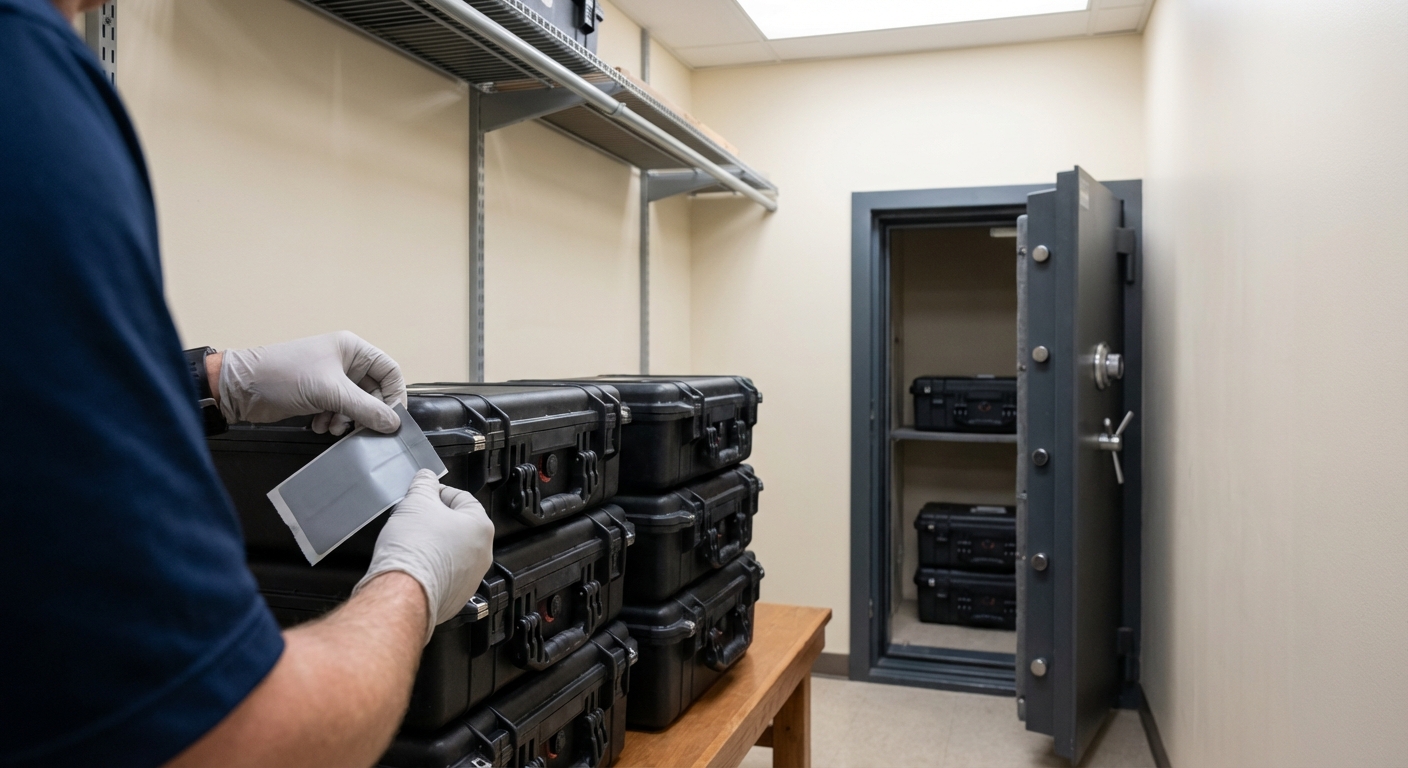
A Federal Firearms License (FFL) is issued by the ATF under the Gun Control Act to authorize regulated firearms business activity, specifically importing, manufacturing, dealing, or collecting Curios and Relics (18 U.S.C. § 923). In real-world terms, an FFL is what lets a person or business lawfully run firearms transactions as a business instead of as a private individual cleaning out a safe.
Most people run into FFLs through everyday businesses: local gun stores, pawn shops that take firearms in trade or pawn, and some gunsmiths and manufacturers. If you’ve ever bought from a counter, consigned a firearm, or had a shop handle a transfer, you were dealing with an FFL holder.
The line sellers care about is private-party sales vs. using an FFL dealer. Federal law defines “engaged in the business” for dealers as repetitive purchase and resale with the principal objective of livelihood and profit (18 U.S.C. § 921(a)(21)(C)). It also explicitly excludes occasional hobby or collection-enhancement sales, and selling all or part of your personal collection (18 U.S.C. § 921(a)(21)).
Even as a private seller, you still cannot transfer to someone you know or reasonably believe is prohibited (18 U.S.C. § 922(d)).
If you’re selling more than occasionally, or you’re repeatedly buying and flipping for profit, pause and get clarity before you list or sell again. The next question is the one that usually triggers the whole “do I need an FFL?” moment: when the law requires a dealer to be in the middle.
When an FFL Is Required
If the buyer lives in a different state, assume you need an FFL, or assume state law will force you into a private-sale background-check pathway.
An “interstate transfer” is any sale or handoff where you and the buyer are residents of different states. Federal law flatly blocks a direct, person-to-person transfer between two unlicensed people across state lines, 18 U.S.C. § 922(a)(5) and 27 C.F.R. § 478.30. In plain terms, if someone messages you from Arizona about your Glock in Nevada, the legal route is to arrange the transfer through an FFL in the buyer’s state so they can complete the transfer under their state’s rules.
The same logic applies when “shipping” is part of the deal. The compliance issue is not the box and the label, it’s that you are delivering the firearm to someone who lives in another state. The clean, standard solution is shipment to an FFL located in the buyer’s state, not to the buyer’s front door.
Gun shows don’t create a magic exception. Federal law treats private sales at a gun show the same as private sales in a parking lot or living room: an FFL running a sale must do the background check, and a same-state private-party sale is not federally required to go through a check, but state law can still require it.
Online listings and forum deals also feel “casual,” right up until the buyer’s driver’s license is from another state. At that point it is an interstate transfer, and routing it through the buyer’s in-state FFL is the normal, legal play.
Even for same-state meetups, using an FFL is often the smart move with a stranger. It helps reduce liability when selling a gun to a stranger by giving you a documented, regulated handoff instead of a handshake deal.
FFLs have their own nonresident limits. Under 18 U.S.C. § 922(b)(3), a dealer generally cannot transfer a firearm to a nonresident, with a narrow exception for certain in-person rifle and shotgun sales that comply with both states’ laws. Handguns generally are not covered by that exception, which is why an out-of-state handgun buyer typically has to receive it through an FFL back home.
Ask yourself:
- Are we residents of different states (an interstate transfer)? If yes, plan on the buyer’s in-state FFL.
- Does my state require private-sale background checks? If you’re unsure, call a local FFL or check official state guidance before you meet or ship.
- Do I trust this buyer enough to skip a regulated transfer, even if it’s legal? If not, using an FFL is the safer call.
How the FFL Transfer Works
Once you decide to route the deal through a dealer, the process is less mysterious than people expect. It’s a repeatable, standardized handoff that creates a lawful paper trail and runs the required background-check process, so you’re not stuck inventing your own “safe” procedure on the fly.
- Show ID and residency docs. The buyer presents a government-issued photo ID, and the dealer verifies identity and the buyer’s current residence address using the ID and, if needed, supplemental government documentation.
- Complete ATF Form 4473. The buyer fills in identifying information and answers the eligibility questions on ATF Form 4473, then signs the certification under penalty of law. The dealer reviews the documentation and completes the dealer sections tied to the specific firearm being transferred.
- Run the National Instant Criminal Background Check System (NICS). The dealer initiates NICS, or a state “point of contact” equivalent. Results come back as Proceed, Delayed, or Denied.
- Handle timing friction. “Delayed” is not a denial, it means more research is needed. If there’s no final response, federal law allows (but does not require) the dealer to transfer after three business days under 18 U.S.C. § 922(t)(1)(B)(ii) and 27 C.F.R. § 478.102(a)(2). State waiting periods, if they apply, add extra time on top.
Operationally, shipping just moves the handoff to the receiving dealer’s counter: the private seller ships the firearm to the buyer’s chosen FFL, then the buyer completes the same in-person pickup steps there. (This is also how mail-in buyers like Cash My Guns keep things “Safe • Legal • Hassle-Free.”)
For the shipping baseline, USPS allows a nonlicensee to mail an unloaded rifle or shotgun to an FFL (when otherwise lawful), but generally prohibits nonlicensees from mailing handguns. Either way, the firearm must be unloaded, and you do not mail ammunition in the same parcel.
- Get the receiving FFL’s details (name, address, phone, and any order number they want on the label).
- Confirm they accept from nonlicensees before you ship or show up.
- Include ID if requested (many dealers want a copy for their intake paperwork).
- Track the shipment and save the delivery confirmation.
- Keep basic sale documentation (date, parties, firearm description, and terms) for your records.
Those five items keep you aligned with the dealer’s process while still respecting the rule that you’re responsible for following the laws that apply where you live and where the transfer happens. If you want a practical checklist, see how to package and ship a firearm.
Cost, Timing, and Liability Impacts
Using an FFL adds a little friction, but you feel three changes immediately as a seller: your net proceeds shift (fees and sometimes shipping), the timeline becomes less predictable, and your risk exposure drops because the transfer is documented and standardized.
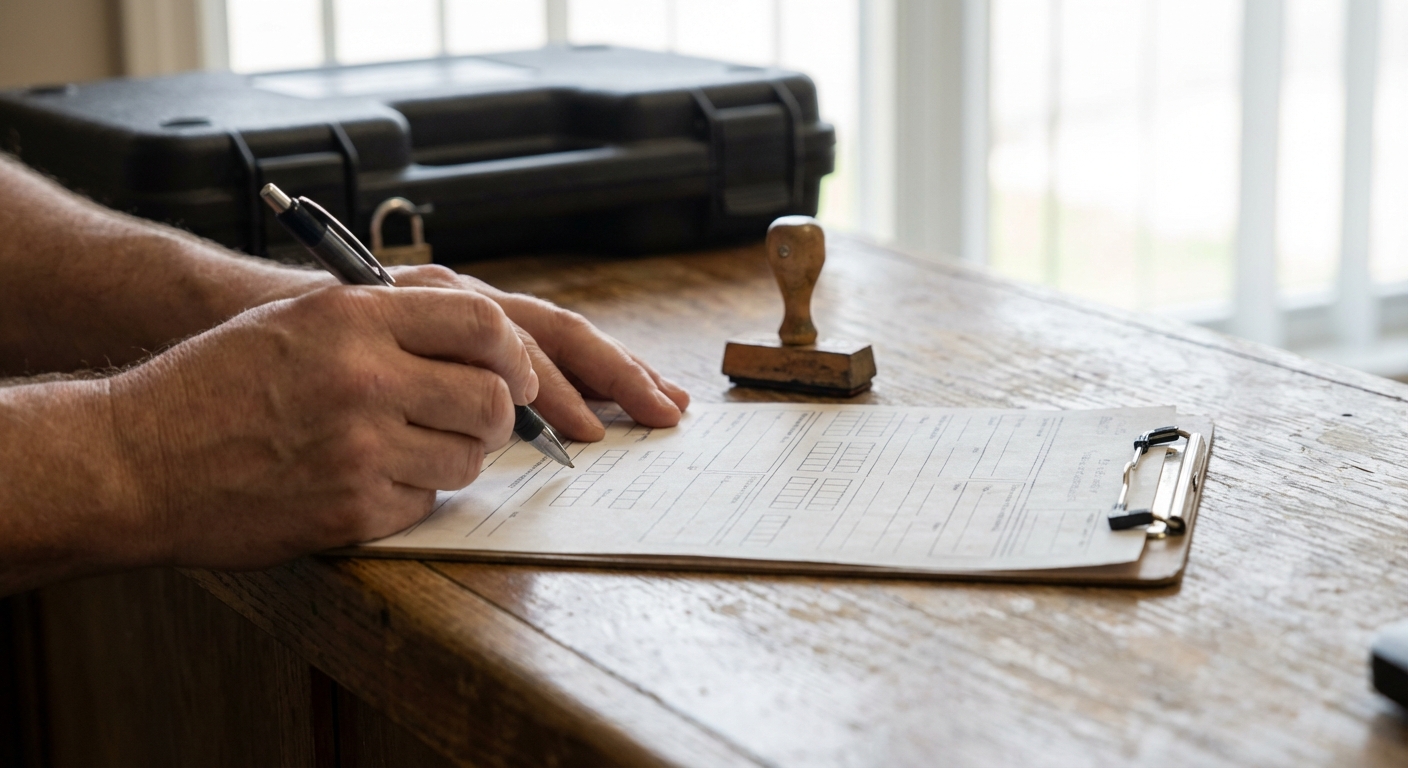
The most common seller surprise is the transfer fee. In many areas, fees cluster around roughly $20 to $50, with some shops charging up to about $75 depending on region and policy. Some national retailers publish flat pricing, for example, Sportsman’s Warehouse lists a $25 per firearm transfer fee. If the gun has to be shipped to a receiving dealer, add shipping and optional insurance coverage. Buyers sometimes ask you to cover the fee or discount the price because it is an out-of-pocket cost they pay at pickup, so it helps to understand how transfer fees can be avoided when selling.
Even when everyone is motivated, the background-check pipeline can add waiting. If NICS comes back “Delayed,” the buyer might not be able to take the firearm home that day, which creates wasted trips and rescheduling headaches. If there’s no final response, federal law allows (but does not require) the dealer to complete the transfer after three business days under the “default proceed” rule. Store policies vary, and state rules like waiting periods or permits can add more time.
An FFL is required to keep an Acquisition & Disposition (A&D) record, the dealer’s bound book that logs firearms in and out by date, who it came from and went to (name and address or FFL number), and identifying details like make, model, and serial number (27 C.F.R. § 478.125(e)). If a firearm is later traced, that recordkeeping narrows “who had it when,” which reduces ambiguity for you. It also reassures buyers who want a clear, legitimate process even when an FFL transfer is not strictly required, which can expand your buyer pool.
- Spell out who pays the transfer fee (and whether you will cover shipping or shipping insurance).
- Set a realistic pickup window that accounts for possible “Delayed” responses and dealer policy on default proceed.
- Name the specific FFL you will use and confirm their hours and transfer rules before you list.
State Rules Sellers Commonly Ask About
The “Do I need an FFL?” answer can flip quickly once state law enters the picture, even if the sale looks simple. Online advice is often state-blind, and rules can change based on where you live, where the buyer lives, and what kind of transfer you’re doing, so your smartest move is to verify, not assume (see this state-by-state guide to selling a gun).
- Private-sale rules: Does your state require private-party sales to run through an FFL and background check (sometimes called “universal background checks”)?
- Buyer prerequisites: Any state permit, owner card, purchase authorization, or specific ID/residency documentation required to buy or receive a firearm.
- Waiting periods: Some states require time between purchase paperwork and delivery.
- Transfer acceptance: If an FFL is involved, ask the receiving FFL what transfers they accept and what they will refuse under state policy or store policy.
Common state-specific questions (verify current rules with official sources or an in-state FFL):
- Texas: The Texas State Law Library’s “Gun Laws” guide indicates no state-mandated waiting period and no state requirement for background checks on private, unlicensed firearm sales.
- Florida: Florida generally requires a 3-day waiting period (excluding weekends and holidays) between purchase and delivery from a retail dealer, per Fla. Stat. § 790.0655.
- California: California mandates most private firearm sales go through licensed dealers (FFLs) for background checks, per Cal. Penal Code § 27545.
- Georgia: Verify whether your specific transaction uses an FFL, and let the receiving dealer tell you what paperwork they require.
- Pennsylvania: Confirm any state-specific purchase or transfer requirements with the receiving FFL before you schedule anything.
- Ohio: Ask the dealer what buyer documentation they require and what they will not transfer.
- Arizona: Confirm private-sale rules and any local constraints through an FFL you trust.
- New York: Treat this as a “verify first” state, the receiving FFL’s checklist will save you time.
- North Carolina: Ask about any permit or ID prerequisites the buyer must present at pickup.
- Illinois: Expect extra buyer documentation in many cases, confirm the exact requirement with the receiving FFL.
- Do you accept transfers from nonlicensees, or only from other FFLs?
- What ID and residency documents does the buyer need at pickup?
- Do you enforce any state waiting period or permit requirement for this transfer?
- What are your transfer steps, fees, and pickup hours?
Value, Offers, and Common Price Questions
Once the legal path is settled-same-state vs. out-of-state, and whether you’re routing it through a dealer-the next pressure point is the offer itself. The offer you’ll actually get isn’t “what the gun is worth” in the abstract. It’s what a real buyer will pay after they’ve priced in condition, local demand, and the friction of doing the deal through an FFL.

Two identical pistols can land hundreds apart if one has honest wear and complete factory stuff, and the other has corrosion, missing parts, or a setup that only a niche buyer wants.
Condition is the first lever buyers pull. Finish wear is normal, but corrosion or pitting is a hard value hit. Mechanical soundness is non-negotiable, and “original” generally sells faster than “heavily modified,” because buyers know exactly what they’re getting.
Demand is the second lever. A Glock 19, Beretta 92FS, CZ 75, SIG P320, S&W M&P, or a basic 1911-pattern pistol all have steady buyer pools, but local preferences still change the pace and the price. If everyone around you is chasing optics-ready duty pistols, older configurations sit longer and attract lower offers.
Completeness is the sneaky lever. Extra factory mags help. Original case and paperwork help. A quality optic can help if it’s a known model and properly mounted, but random add-ons rarely return what you paid.
Asking prices are marketing. Sold prices are reality. Your goal is a tight range from truly comparable sales: same model variant, similar condition, similar included items.
Run the deal like a business: expected sale price minus your transfer and shipping-related costs (whatever they are in your situation) equals what you walk away with. If you need a baseline for what your gun is worth before fees, start there. If you think it’ll sell for $600 and your costs total $70, your net is $530. That’s the number to compare against any direct offer.
- Pull 10 to 20 recent sold comps for your exact configuration.
- Grade your gun honestly (wear, corrosion, mechanical issues, originality).
- Adjust for what’s included (extra factory mags, box, docs, reputable optic).
- Subtract your expected transaction costs to get your net.
- Set your price or evaluate the offer against that net number.
A Simple Checklist Before You Sell
The cleanest gun sale is the one where residency, state rules, and the FFL details are settled before money changes hands. That’s the same problem you started with in the DMs: “out of state” and “can you ship it?” usually means the safest, cleanest answer is a verified dealer transfer.
Most surprises trace back to residency (which can force dealer involvement) and timing (Form 4473, a “Delayed” response, and store policy). On the seller side, it’s always the same tradeoff: fees and extra time versus cleaner documentation through the dealer’s A&D record, plus a clearer “net proceeds” picture after transfer and shipping costs.
- Confirm in-state or out-of-state.
- Check your state’s private-sale rules, and the buyer’s if relevant.
- Verify the receiving FFL in ATF eZ Check, and make sure the licensee name and premises address match the FFL copy and the shipping destination.
- Estimate your net after transaction costs.
- Document what you did and when; dealers must keep sales records, but these sources don’t identify a federal recordkeeping requirement for private sellers.
It’s on you to know and follow your local and state laws, and to confirm current requirements with an FFL or official state resources.
If you want a streamlined, FFL-routed option, get a quote from Cash My Guns at cashmyguns.com.