
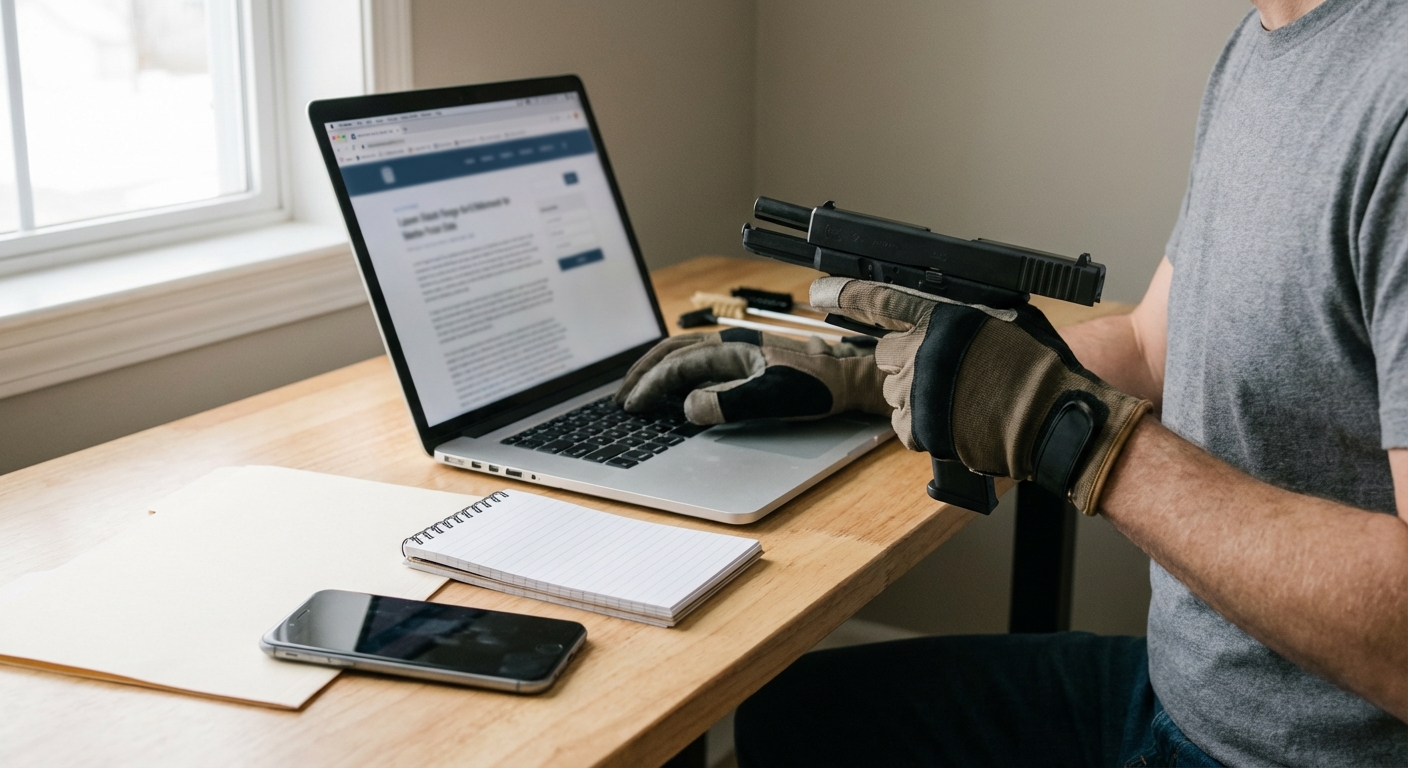

You’re about to list a gun, or walk it into a shop to trade or consign it, and the buyer hits you with the question that stops deals cold: “Is it recalled?” Or worse, the counter guy pauses intake while you’ve already printed a shipping label and cleared your weekend to get it done.
I get it, you’re trying to move fast. Cash matters, space matters, and you don’t want to lose a serious buyer over a technicality you didn’t even know existed.
Recalls and safety actions change the sale instantly. A flagged model can spook a buyer, hand them pricing leverage, or trigger a hard “not until it’s fixed” from a dealer or FFL based on internal policy. You want to find that out on your schedule, not in the middle of a transaction.
The non-obvious friction is where people waste time: firearms and ammunition are excluded from the Consumer Product Safety Act’s definition of “consumer product,” so the CPSC generally doesn’t have jurisdiction over complete firearms, and CPSC recall-database results are often none or limited. That’s why most firearm safety actions live in manufacturer-issued safety programs and notices, not a neat government recall list.
You’ll walk away with a confident, compliant sale path, plus the right documentation and clean disclosure so there are no last-second surprises.
Step 1
Before you talk price or transfer details, you need to know exactly what you’re selling and whether it matches any official safety action. Verification is a matching exercise, not a guessing game.
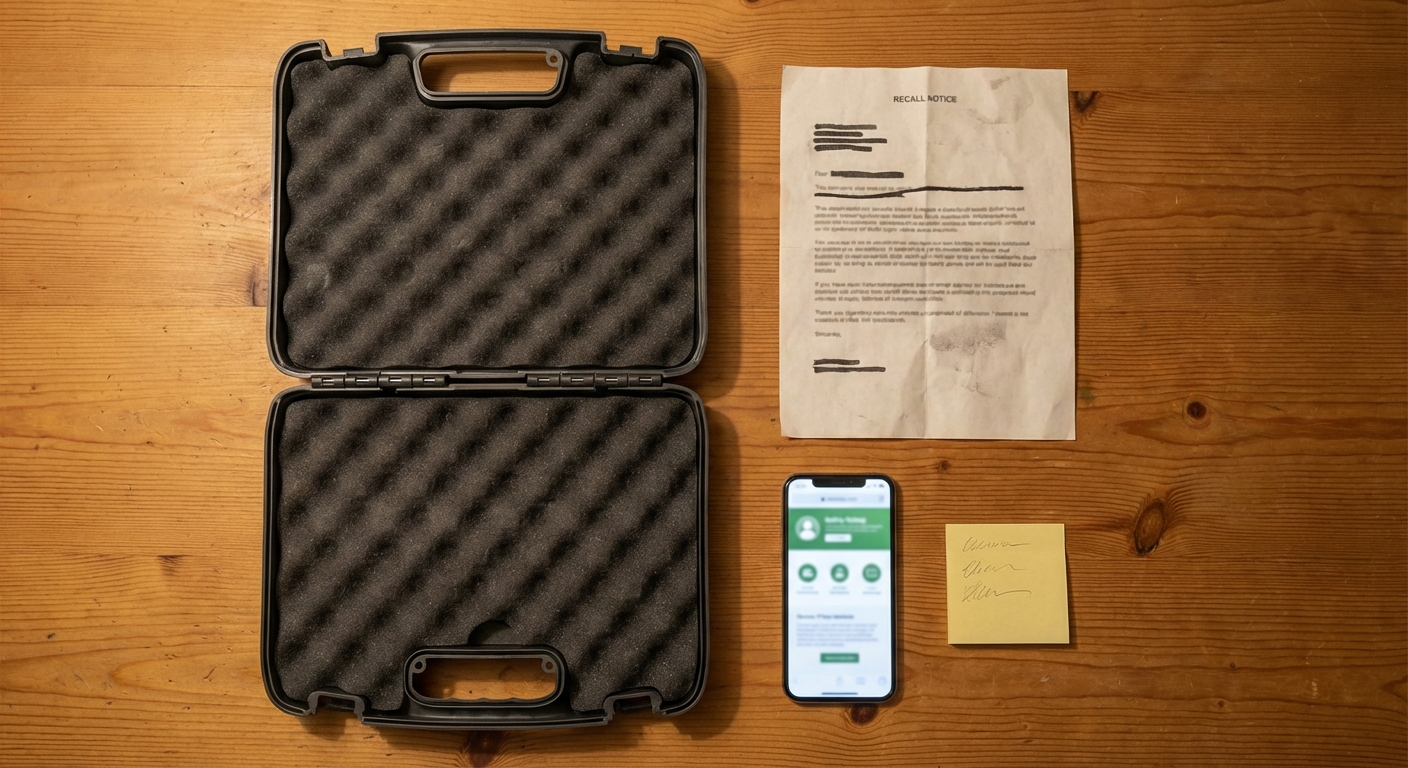
The only way to know whether your specific gun is affected is to identify it precisely and match it to official sources, because a model name alone is rarely specific enough.
Real-world friction is that “Model X” can have multiple calibers, running changes, distributor exclusives, and lookalike variants, and rumors travel faster than recall notices. An official manufacturer safety recall is the program that actually matters for sellers because it’s tied to a documented safety defect and applies to specific models and a serial number range, meaning you either match it or you don’t.
- Collect your exact identifiers: make, model, caliber or gauge, and any SKU, variant label, or dash number you have from the box, manual, or receipt.
- Confirm the serial number exactly as marked on the firearm, then write it down character-for-character. The serial is the anchor for most official lookups and the key to matching a serial number range.
- Cross-check markings when applicable. For example, on Glock pistols the serial number is typically on the frame and also marked on the barrel and slide, and matching serials across frame, slide, and barrel is a useful originality and value context when you’re identifying what you actually have.
- Search the manufacturer’s official recall, safety, or service portal first. This is the primary source for firearm safety actions, and it’s where you’ll see the affected models and the exact serial number ranges, or a serial number checker if they offer one.
- Verify any “non-recall” notices on the same site, too. A safety bulletin is not always labeled as a recall, but it still signals a known issue that can affect buyer confidence and what you’ll need to disclose.
- Check the CPSC database when you’re evaluating firearm-adjacent products like safes, lockboxes, locks, lights, or other accessories. The CPSC recall database is searchable at https://www.cpsc.gov/Recalls by manufacturer name or product keyword, and it’s most useful for those consumer products rather than complete firearms since the manufacturer is usually the place firearm actions are posted.
- Use reputable dealer or armorer bulletins only as a cross-check. They’re helpful for alerts, but they’re never the final authority unless they link you back to the official notice you can match to your serial number range.
If you find an applicable recall or bulletin, save the notice (or a screenshot of the serial-check result) so you can reference the exact affected range later. If you don’t find anything, keep a note of which official pages you checked and the date, so you can disclose confidently without relying on “my buddy said this generation had issues.”
Step 2
Once you’ve confirmed what applies (or that nothing appears to apply), treat the next part like you’re building a clean file for a buyer or dealer to review. Your leverage comes from two things: safety plus documentation.
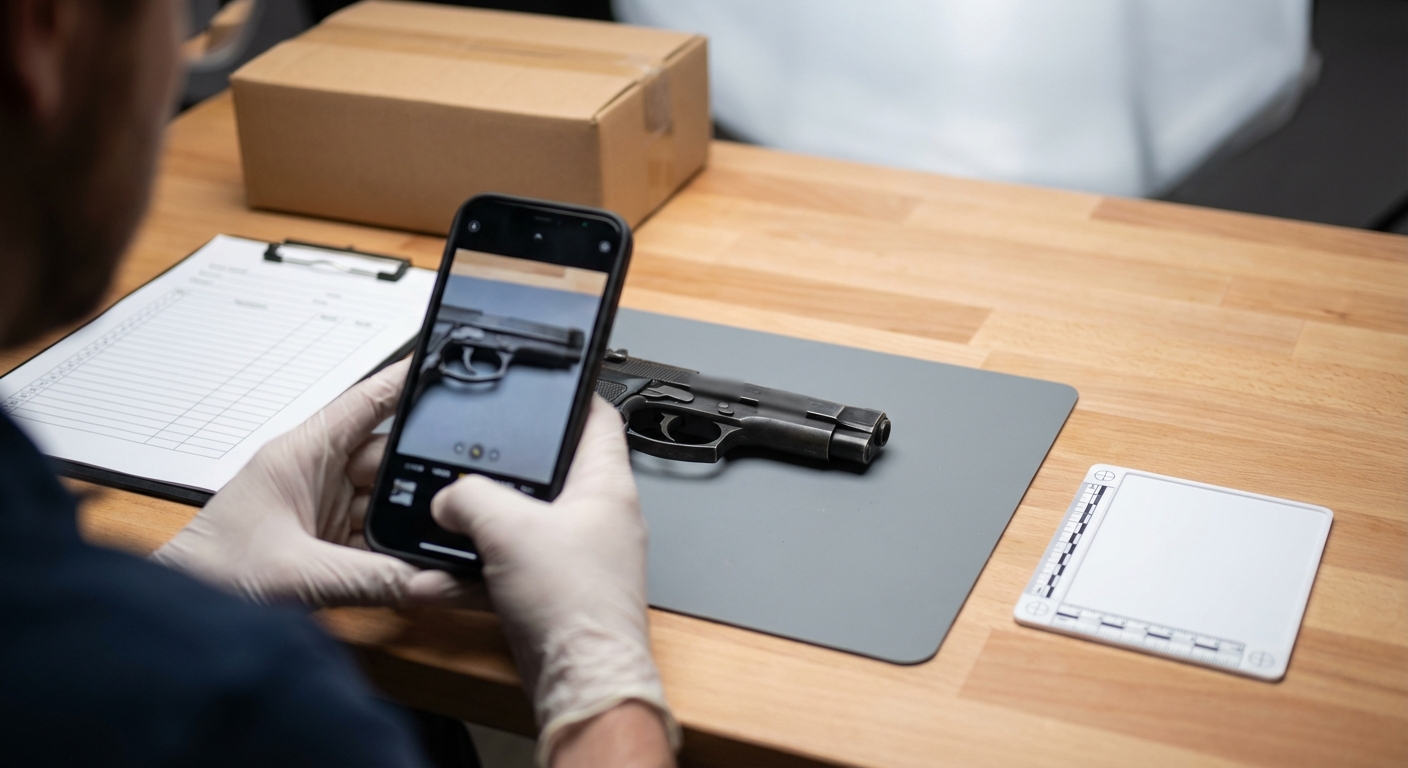
Once a manufacturer safety recall (or potential issue) is on your radar, make the firearm safe first by following core firearm safety rules, then capture clean, useful records before anything gets changed, misplaced, or disputed.
- Unload the firearm completely, then double-check the chamber and magazine well.
- Separate all ammunition, store it in a different locked location, and keep both firearm and ammo inaccessible to children and any unauthorized person.
- Lock the firearm in a safe, locking cabinet, or a locked case while you decide what to do next.
- Photograph what you actually have, not what you remember: overall left and right sides, close-ups of model markings and the serial area (crop or blur digits so the full serial number is not publicly readable), plus any honest wear that a buyer will notice.
- Capture the “package” in pictures, included accessories, magazines, boxes, manuals, optics, and the current configuration, including any modifications or aftermarket parts.
- Log the basics in a few lines: the date you checked, what you observed, and exactly what’s included.
This small photo-and-log packet prevents headaches: it keeps condition and included items from turning into an argument, it avoids public serial-number privacy problems that major marketplaces warn about, and it gives manufacturers, many buyers, and dealers the same consistent snapshot. For more detail on responsible gun storage while you decide what to do next, keep your approach consistent and documented. Since Cash My Guns valuations factor make and model and condition details like matching numbers and aftermarket parts, good documentation also supports accurate disclosure later.
Step 3
With the recall status verified and your condition notes squared away, you can make the one call that drives the rest of the sale: fix it first, or sell it with the recall open. Recall status isn’t just a checkbox, it’s a decision that affects who’ll buy and what you’ll clear.
Your best selling outcome usually comes from completing the recall remedy first, but selling with an open recall (the recall applies to the gun and the remedy isn’t completed) can still be the right move if you disclose it cleanly.
- Rank the safety risk by severity and urgency, because a high-risk safety issue is a bad place to “wait and see,” even if you’re in a hurry to sell.
- Check the turnaround reality for the remedy, then compare it to your timeline, shipping hassle, and the chance you’ll be without the firearm longer than expected.
- Ask what changes during the fix, especially if originality matters. The classic example is the Ruger Old Model (three-screw) single-action “Safety Conversion” to a transfer-bar system, collectors often prefer the original lockwork, and many will pull the grip panel(s) to look for an “R” conversion mark on the frame.
- Stress-test buyer reactions, because many buyers and some dealers treat “unrepaired recall” as a hard pass, even when the remedy is free.
- Confirm the paperwork basics so you’re not spooked by the process, ATF guidance says an ATF Form 4473 is not required when the firearm is returned to the same person from whom the licensee received it for the sole purpose of repair, and it’s also not required if a replacement firearm is returned to that same person as a recall remedy.
Repair first usually wins when the recall involves meaningful safety risk, you can tolerate the downtime, and you want the broadest buyer pool with the least friction. Keep the completion proof, it answers the first question serious buyers ask.
Sell as-is can make sense when time matters, the remedy would change parts that collectors care about, or you’re already dealing with a buyer who understands the issue. You’ll reach fewer buyers, but full disclosure up front keeps the deal clean.
Step 4
Once you’ve decided whether the remedy will be completed or not, pricing gets a lot less emotional and a lot more defendable. You’re not just pricing a gun, you’re pricing the buyer’s uncertainty and hassle.
Two identical make model variants can land weeks apart if one has recall work completed with paperwork, and the other is sitting in an open recall (unfixed) that buyers read as risk and extra steps.
- Pull recent sold comps for the exact make, model, and variant, then circle a realistic “typical” number rather than chasing the single highest sale.
- Adjust up or down for your gun’s condition, focusing on what buyers pay for, not what you paid, finish wear, bore condition, function, and any obvious cosmetic dings.
- Account for included accessories, only if they’re genuinely desirable and included in the sale (extra mags, optic, factory box, and similar add-ons).
- Reprice for recall status: repaired or upgrade completed with documentation supports buyer confidence and usually lets you price closer to normal comps; an open recall typically forces a discount because buyers bake in hassle and perceived risk.
- Sanity-check against current market context, supply and demand, seasonality, and any short-term spikes, because a recall narrows the pool of willing buyers and changes how fast you’ll move it.
- Escalate to an expert appraisal for a collection or high-value piece if it’s a collection, a high-value piece, or heavily modified, where small details swing value hard.
Keep your safety disclosure simple and memorable so it builds confidence instead of starting an argument. The goal is an asking price you can defend in one calm message: comps, condition, accessories, recall status, and a quick reality check on the market (see the latest gun market report).
Step 5
Once your price matches your recall decision, the last thing you want is a blown deal because a shop won’t accept the gun or a buyer claims you were vague. Transparency plus the right transfer channel prevents recall-affected deals from falling apart at the last minute.
If your disclosure is crystal clear and the receiving dealer can actually accept the firearm, everything else gets easier.
The friction is real: some shops will not take a gun on consignment or process a transfer if there’s an open safety recall, and “I told you about it” doesn’t hold up well when expectations change. There’s a reason recall disclosures in other regulated sales are written, override verbal statements, and even use initials to show the buyer saw it.
- Disclose the recall status in writing in your first serious message, and keep it consistent with your listing, your price reflects recall status.
- Confirm your transfer channel before anyone drives across town: call the local shop and ask, “Will you accept this make/model if the recall is open, or only after the remedy is completed?” If they won’t, don’t argue, pick a different channel.
- Choose the simplest compliant handoff:
local dealer transfer; consignment through a shop; or an online sale where you ship to a dealer for buyer pickup. Using a Federal Firearms Licensee (FFL), a dealer legally authorized to receive and transfer firearms, usually reduces compliance friction and boosts buyer confidence. - Follow the basic USPS constraints if you’re mailing: non-FFL individuals generally may not mail handguns, handguns are mailable only for certain licensees and government agencies under USPS requirements. A non-FFL can mail an unloaded rifle or shotgun to an FFL (including a manufacturer or gunsmith) if all laws are met, and ammunition cannot be in the same package.
- Verify local rules and document the trail: firearm transfer rules vary by state and city, so check current legal and safe firearms sales requirements where you and the buyer live. For example, Texas does not require private-party transfers to go through an FFL and has no state waiting period; Florida does not have a universal background check law for private-party transfers (dealer sales still require checks).
Recall disclosure (copy/paste): This firearm is affected by the following manufacturer notice/recall: [title or campaign name] dated [date, if known]. Remedy status: [completed / not completed]. Proof I’m providing: [service receipt / manufacturer email / work order / RMA paperwork]. You can verify the current recall status and the remedy process directly with the manufacturer at [URL] or by calling [phone/email].
Step 6
By this point, you’re not guessing or scrambling-you’re just executing the plan you’ve already documented. The checklist is what keeps you from missing the one thing buyers and dealers care about, proof you verified the recall and disclosed it cleanly instead of hand-waving it.
- Verify the firearm’s recall status and save the proof you’ll share.
- Document the gun’s exact identifiers and condition, so your records match what’s being sold.
- Decide whether you’re selling as-is with an open recall or after the remedy is completed.
- Price based on the decision you made, then stick to it.
- Disclose in a professional-style format: identify the recall, state remedy status, attach proof, and include a buyer verification path.
- Transfer through the proper channel.
- Keep a final file: recall proof, the written disclosure you provided, and transfer documentation (FFL receipt or shipper receipt).
Most problems happen in the cracks, missing proof, vague disclosure, lost receipts. Stay transparent, and you can prove what you knew, what you disclosed, and how the firearm changed hands, which protects both parties and often makes the sale smoother.
Conclusion
The goal is to never get blindsided by that counter-question-“Is it recalled?”-in the middle of a deal. Before you list, take a few minutes to check official sources, especially the manufacturer’s recall/safety pages, and save proof you can share. The CPSC Recalls database (https://www.cpsc.gov/Recalls) and SaferProducts.gov (https://www.saferproducts.gov/) can still be useful in the right context, and for Glock you can use the U.S. Product Safety Information page (as of August 2025): https://us.glock.com/en/learn/glock-pistols/product-safety-information. Pair that with documented condition photos and a dated note, then disclose the recall status clearly and run the sale through a compliant transfer channel.
While you’re doing all of that, keep an eye out for the scams that show up right when people are trying to move fast. The FTC flags “recall” or “refund” impostors who push urgency and demand upfront fees or sensitive payment info. UPS fraud alerts also call out “call tag” and shipping-label scams, if a stranger sends a label and tells you to leave a box out for pickup, you’re setting up an easy package theft.
Check the official pages, keep your proof organized, and if you want a safe, legal, hassle-free route, consider selling through a reputable FFL buying channel like Cash My Guns.