
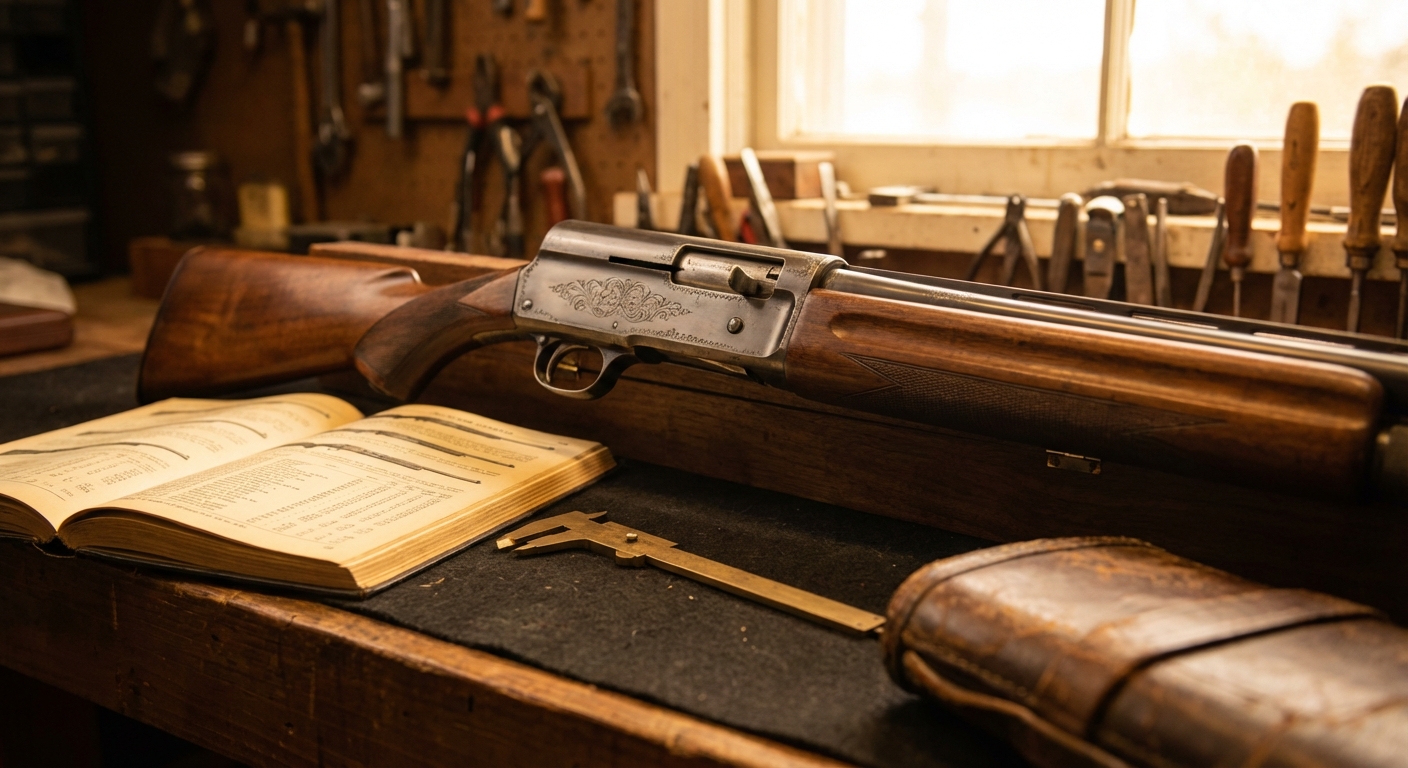
You’re trying to avoid the two classic mistakes: underpricing a family shotgun and leaving money on the table, or overpricing it and watching it sit unsold while buyers scroll right past.
The biggest reason the numbers swing is simple: a lot of listings mash two different guns into “A5.” The classic Browning Auto-5 (the humpback receiver) is John Browning’s long-recoil design, and it gets valued like a collectible, parts-supported, century-old platform. The modern Browning A5 (post-2012) is a different inertia-operated gun, marketed as “Kinematic Drive,” and mixing those comps instantly derails your value estimate.
This guide keeps it practical: value starts with variant and era, including common Auto-5 type codes like 151 (Magnum 12), 161 (Magnum 20), 211 (Light 12), 221 (Sweet 16), and 231 (Light 20), which don’t all sit in the same demand tier. Then it’s condition and originality, plus market timing, since seasonality and regional demand show up in dealer listings and auction data. Most used examples trade in the few-hundred range, while rare variants jump into several-thousand-plus territory.
You’ll walk away able to label what you have correctly and predict a realistic selling range the way buyers do.
Identify Your A5 Variant
Accurate identification is the fastest way to avoid the two most common pricing mistakes, underpricing a desirable variant or pricing yourself out of the listings buyers are actually shopping.
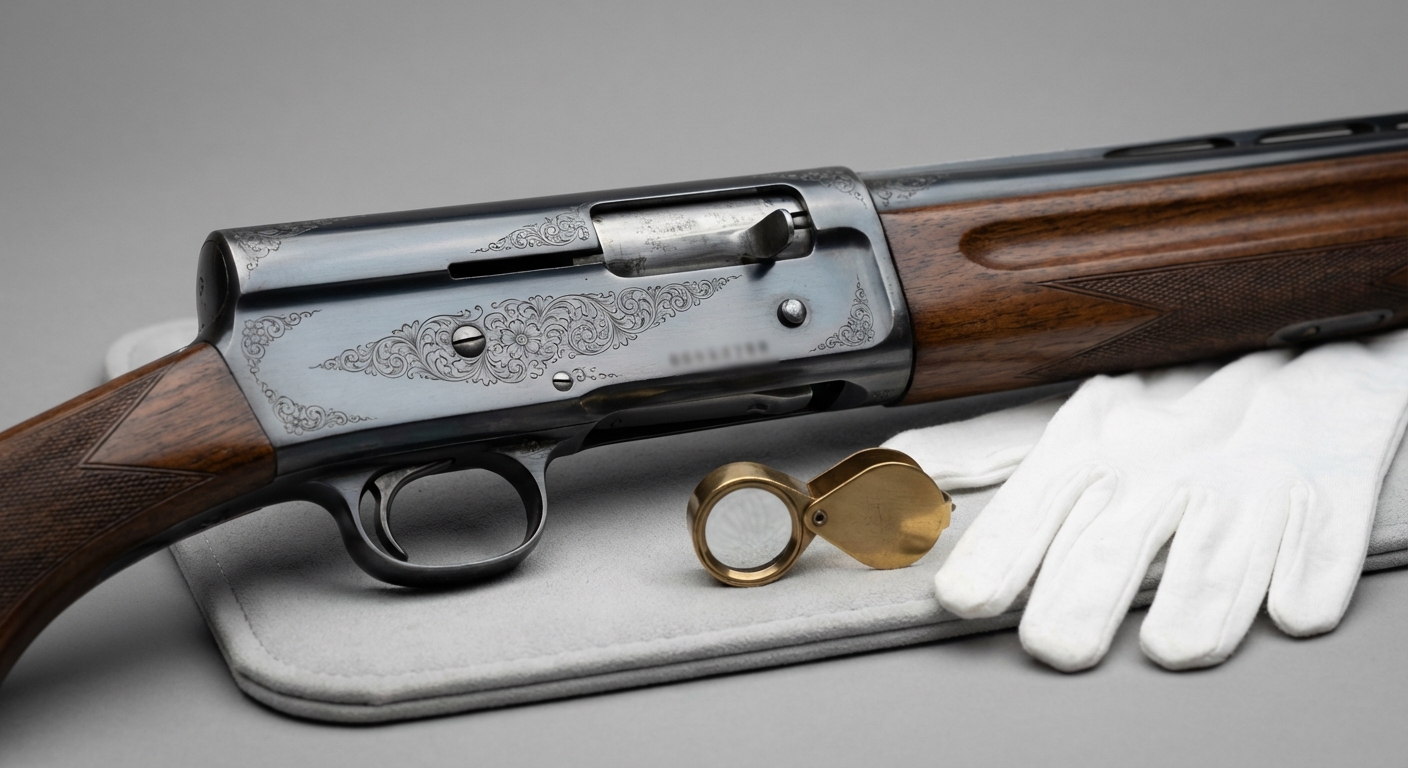
- Write down which “A5” you have. Separate the classic Browning Auto-5 (the humpback) from the modern Browning A5 (post-2012). Mixing those two names is how people end up comparing the wrong market.
- Gauge (12, 16, 20). This changes the buyer pool instantly. A 16 gauge pulls in Sweet Sixteen shoppers and 16-gauge diehards, while 12 gauge is the broadest market, and 20 gauge tends to attract lighter-field-gun buyers.
Once you’ve pinned down which gun you actually have and the gauge, the remaining markings are what let you filter to truly comparable listings instead of “close enough” guesses.
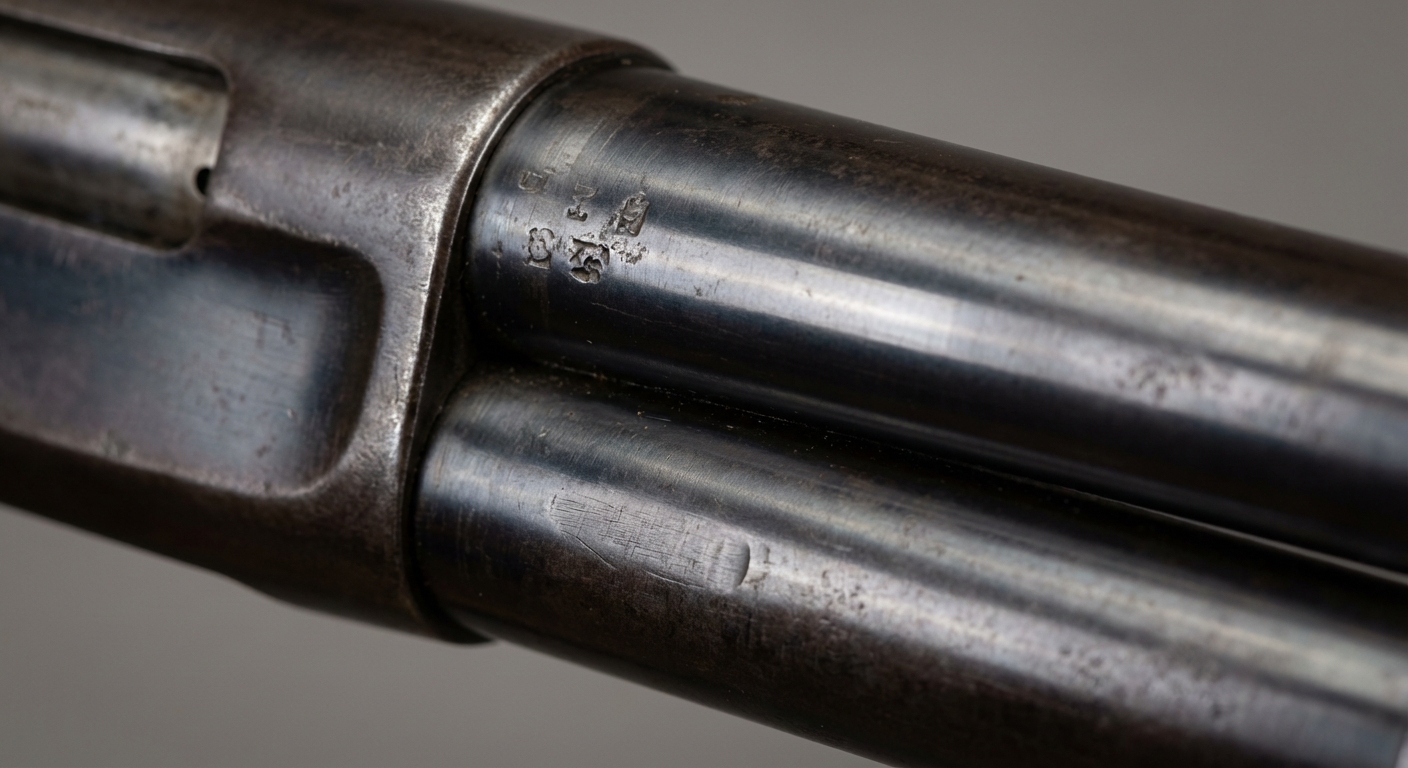
- Chamber length marking. Record exactly what the barrel is marked for. Chamber length is the “what shells it’s built for” detail, and if you compare a 2 3/4-inch gun to 3-inch listings, your price check gets distorted fast.
- Barrel length. Measure or record the stamped length, because the same model designation can trade differently with different barrel lengths.
- Choke marking. Note whether it’s fixed choke or marked constriction. Don’t convert anything, just capture what’s actually stamped.
- Rib type. Plain barrel versus ventilated rib is an easy, visible listing filter. Write what you see.
- Special designations. Record any marking like Sweet Sixteen, Magnum, or Light. Those words are exactly what buyers type into searches.
- Country rollmark. Write the wording exactly, for example “Made in Belgium,” “Parts made in Belgium, assembled in Portugal,” or “Made in Japan.” Buyers routinely filter comparisons by these rollmarks.
- Serial number, plus the “chart bucket.” For the classic Auto-5, serial charts are commonly segmented (pre-1958, 1958-1968, 1969-1975, 1976+). From 1958 onward, Auto-5 serial numbers were preceded by the date (year) of manufacture, and formats like “8M1000” are a known example of a 1958 gun.
If someone’s year claim doesn’t line up with basic serial reality, pause before you price it. For context, 12-gauge serial numbering began with number 1 in 1903, and 16-gauge serial numbering began with number 1 in 1909.
Also keep your confidence calibrated on very early guns: prior to 1924, few Auto-5 serial-number records remain, so “exact year” claims deserve extra scrutiny.
Write these details down before you look at listings, because search filters mirror them. A one-page spec sheet for your A5 keeps your comparisons honest (use a guide to identifying your gun by markings and model details if you need a second set of eyes).
Condition, Originality, and Upgrades
Once the ID is right, condition and originality are where two correctly identified Auto-5s split into completely different price tiers. Buyers don’t “average” condition, they scan for a few telltales that predict how the gun will look, run, and hold value once it’s in their hands.
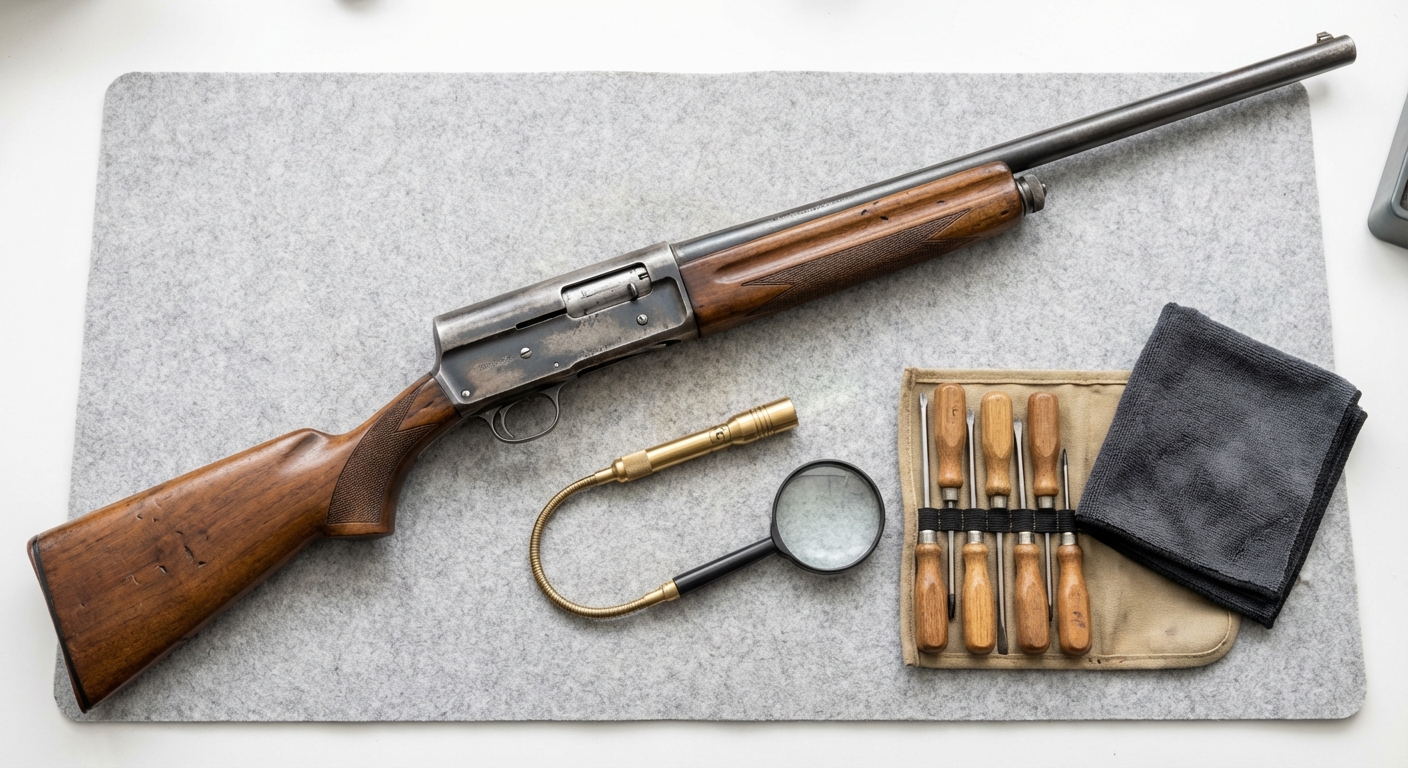
A lot of sellers use “Very Good” or “Excellent” casually, but many buyers are thinking in NRA Modern Gun Condition Standards terms. “Excellent” means minimal evidence of use, strong original bluing with only slight edge or handling wear, a clean bright bore, and wood with only very minor marks and no significant damage. “Very Good” means clearly used but cared for, noticeable but limited bluing wear at edges and carry points, no major corrosion, a bore that’s still in good shape, and wood with minor dents or scratches but no major cracks or repairs.
That’s why the first look is usually metal. Expect eyes to go straight to muzzle edges, receiver corners, and the underside where hands and cases live. Bluing loss on the sharp edges is normal, but pitting and active corrosion in protected spots like under the forearm, around the magazine tube area, and along rib bases is what changes the conversation quickly.
The bore check is just as practical: brightness, visible pitting, and any “something’s off” signs like a ringed spot that can hint at a bulge. You don’t need to diagnose it, but you do want to call out what you see.
Wood gets judged hard on Auto-5s, especially the stock head where cracks and old repairs show up. Chips at the toe, crushed checkering, and obvious refinishing cues (rounded edges, filled pores, glossy modern-looking topcoat) all signal “shooter” more than “collector.” Mechanics are the quick confidence test: does it cycle smoothly by hand, do controls feel crisp, does it pass a basic function check.
Buyers pay more for original finish and natural patina because it is the factory-applied metal and wood finish, not a later refinish. That originality is the proof the gun has lived an honest life, and collectors pay for that proof.
Small parts matter here, but you don’t need a parts taxonomy. One easy checkpoint is the butt end: Browning Auto-5 Magnum models left the factory with recoil pads, and the factory pad was made by Pachmayr and marked with the Browning name.
Barrels are the other big originality lever. Buyers look at the barrel’s choke marking, rib setup (plain vs vent rib), and overall configuration as a package. Swap the barrel, even with a correct-era Browning barrel, and collector demand usually softens because the gun no longer presents as it shipped.
Quick example: two Sweet 16s with the same grade cues and similar wear, but one is truly original and the other has refinished metal and wood. The refinished gun can be a fantastic field piece, but the original one is the one that triggers collector bidding.
Rebluing and wood refinishing are the classic value shifters. A clean refinish can look great, but buyers spot softened roll marks, smeared edges, and “too perfect” surfaces, then price it as a shooter.
Drilling and tapping the receiver is another line in the sand. It improves optics mounting for a practical hunter, but it permanently changes the receiver, and collectors treat it like a one-way door.
Choke work sits in the middle. If a fixed choke gets opened or changed (machining to a fixed Modified is about $60), it can make the gun more usable but it is still a modification. Some Auto-5 barrels can also be machined for screw-in chokes, which a shooter may love, but a collector will discount.
Replacement barrels are a big deal because they change the gun’s “as-found” story. A new Hastings replacement barrel runs about $700 plus additional costs, and buyers know that money went into usability, not originality.
Honest selling is simple: describe finish wear plainly, call out any rust or pitting you see, report bore appearance, disclose cracks or repairs in the wood, and list every modification you know about. Decide which market you’re selling to, collector vs shooter, then describe condition and originality in that language.
Price It Using Real Comps
Once you know what it is and how original it still is, pricing gets much less emotional and much more mechanical. The most reliable way to price an A5 is to anchor on what similar guns actually sold for, not what sellers hope to get.
Start with sold comps (completed sales), because a completed sale is the only honest reality check, it proves a buyer paid that amount in the real market (and how supply and demand affects firearm resale prices helps explain why those numbers swing).
- Find real sold results. Use completed-auction results, dealer “sold” listings (not active listings), and local shop tags that show an item already moved. Asking prices are marketing. Sold results are the market. Many valuations lean on auction outcomes plus dealer-listing market data for exactly this reason.
- Filter hard for true matches. “Close enough” comps fail fast on A5s. Match the exact variant first, then keep only listings that align on the major value drivers you can verify: condition and originality, finish, bore notes, matching-number conventions where applicable, and whether parts are factory-correct or aftermarket. Accessories count too, a period-correct extra barrel or original furniture changes the comp.
- Adjust mentally for what’s different. Don’t do spreadsheet math, do clean logic. If a comp sold higher because it’s cleaner, more original, or a rarer configuration, treat it as an upper anchor, not “the price.” If it sold lower because it’s refinished, has mismatched parts, or wears aftermarket additions, treat it as a lower anchor, even if the headline description sounds similar.
- Set a range, then pick a lane. Use 5 to 10 strong sold comps to build three buckets: a quick-sale number (fast interest, less haggling), a fair-market number (normal time-to-sell, normal questions), and a top-dollar number (slowest, highest scrutiny, buyers expect proof of condition and originality).
Mini-example: two sold comps are the same A5 variant and both “good condition.” One stays original, consistent finish, correct parts, clean bore notes, it anchors your fair-market to top-dollar side. The other shows a refinish and aftermarket parts, it belongs on the quick-sale to low fair-market side, even if the photos look decent.
If you’d rather skip the listing grind entirely, a general shotgun valuation framework can help you sanity-check your condition calls, comps, and adjustments before you decide how to sell.
One last reality check: price is gross, but what you clear is net, so mentally subtract selling costs before you decide a number feels “worth it.” Pick a target lane (fast, fair, top) and price accordingly.
Where You Sell Changes Net Value
Those comps give you a solid range, but the selling channel decides how much of that range you actually keep. Where you sell can change what you actually take home as much as the gun’s condition does.
The same Browning A5 priced off solid comps can land very differently once you factor fees, time, buyer quality, and the legal friction that shows up fast the moment state lines get involved.
- Local gun store, outright sale
- Net to you: Lowest headline offer, but cleanest math
- Time and hassle: Fast, one stop
- Risk and friction: Low scam risk, shop handles the process
- Best when: You want speed and certainty
- Consignment
- Net to you: Higher sale price potential, minus a cut
- Time and hassle: Slow, you wait for the right buyer
- Risk and friction: Low legal friction, but timing is unpredictable
- Best when: You can wait for stronger demand
- Online auction
- Net to you: Often strongest gross, then fees and shipping eat in
- Time and hassle: Photos, listing, packing, answering questions
- Risk and friction: More rules, more ways to mess up a transfer
- Best when: Your A5 is unusual and draws bidders
- Private sale, where legal
- Net to you: Best net when it’s truly local
- Time and hassle: Meetups, screening, scheduling
- Risk and friction: Highest personal safety and scam exposure
- Best when: You know the local market and can vet buyers
- Direct buyer
- Net to you: Clear offer, usually less work than DIY selling
- Time and hassle: Minimal back and forth
- Risk and friction: Lower payment and no show risk if reputable
- Best when: You want simplicity without a storefront
Direct-buyer services vary, but the legit ones lean on an FFL (Federal Firearms Licensee) to keep the transfer clean, especially if the buyer is out of state. For example, Cash My Guns advertises a no-obligation appraisal, prepaid shipping labels, insurance coverage, packing guidance, and help handling state-law compliance.
Here’s what tends to trip people up: under 18 U.S.C. § 922(a)(5), private sellers generally may not transfer directly to an out-of-state resident. If your buyer lives in another state, the transfer has to be completed through an FFL in the buyer’s state.
Shipping is another shortcut trap. USPS allows non-FFLs to mail rifles and shotguns to an FFL, but handguns are generally prohibited for non-FFLs. Long guns must be unloaded and shipped in line with USPS Publication 52 and applicable laws.
State rules can be very different even when the gun is the same, so it helps to anchor the idea with a concrete example. Texas example: Texas does not require a background check or FFL for private intrastate long-gun transfers, and there’s no state waiting period or permit requirement, but federal prohibited-person rules and the interstate transfer rule still apply. Also, local demand matters, a hunting-heavy region can move A5s faster than a market that’s mostly tactical.
Choose the channel that matches your priority (speed, max net, simplicity) while staying legal. If you want a quick refresher on your options for selling a gun (dealer, consignment, private sale, online), it helps to compare the tradeoffs before you commit.
Cross-Check With Other Popular Values
The A5 valuation playbook is the exact one you use on any high-search firearm: nail the exact ID, grade the condition, anchor on sold comps (not asking prices), then adjust for where you’re selling and the fees you’ll eat. Seasonality and regional demand move real-world prices on everything from bird guns to defense guns, even when the model name stays the same.
Remington 870s are the cleanest parallel for why naming precision matters. “870” isn’t specific enough because Wingmaster vs Express are different trims that routinely sell differently, the Wingmaster commonly shows higher-polish bluing and nicer wood, while the Express leans matte and utilitarian, and many receivers are roll-marked with the variant. That’s the same naming trap people fall into by treating every “A5” listing like it’s interchangeable.
That’s also why searches like “Remington 870 Wingmaster value,” “Remington 870 Express value,” “Mossberg 500 vs 590,” “Winchester Model 70 pre-64,” “SKS country of origin,” or “Colt Python generation” pop up around pricing, people are trying to match the right label to the right sold results. If you can precisely label it and match sold results, you’ll rarely be far off, and with A5s the needle moves fastest on collectibility, variants, and how original the gun still is.
Your A5 Value Checklist
This is the same process from the start of the guide, just boiled down into something you can actually use at the kitchen table. You can get to a realistic Browning A5 selling range if you control the inputs: correct ID, honest condition and originality, real sold results, and the selling channel you actually plan to use.
The catch is that small mismatches stack fast: calling a classic gun a modern variant, overselling “excellent” when it’s been drilled, or pricing off ask prices instead of completed sales all pushes you into the wrong number. If your A5 checks any “outlier” boxes, rare engraved grades, unusually high condition, uncommon gauges or configurations, or strong provenance, pay for a professional appraisal, and insist it includes a written description, a condition grade, and the comps used to support the value.
- Lock the ID. Write down the variant clearly (classic vs modern), and note the country and era cues you used.
- Describe condition the way buyers do. “Original finish” beats “looks great,” and clues like a factory Pachmayr pad with the Browning name on an A-5 Magnum matter, the same way a drilled receiver hurts originality.
- Set a range from sold comps. Use completed sales to bracket fast-sale, fair, and top-end pricing.
- Pick the channel before you pick the price. Your net changes by channel, and interstate transfers route through an FFL.
- Build the minimum documentation set. Photos of both sides, receiver markings, barrel and chamber markings, a partial serial (don’t post the full serial publicly), bore, stock head and forend, any damage, plus barrel length, LOP, chamber length, and choke marking.
If you want a clean, defensible number without running a full listing, gather the notes and photos above and request an offer from Cash My Guns, operated by Dunlap Gun Buyers (an FFL), where licensed firearms experts and seasoned appraisers value your A5 using make and model, condition details like finish, bore, matching numbers and aftermarket parts, plus market data, seasonality, and regional demand, under their “Safe • Legal • Hassle-Free.” process.