

You’re seeing $350, $700, and $1,200 all labeled “Savage 110,” and somehow every number feels wrong, one offer is insulting, and one listing looks like fantasy.
You’re also trying to make a real decision: price it to move quickly, or hold out for top dollar without getting lowballed. The hard part is that the market doesn’t pay for what you remember spending, it pays for the exact configuration someone wants right now.
That’s why two rifles both stamped “Savage 110” can sell for wildly different prices. Savage introduced the Model 110 in 1958, and that one name spans decades of trims, actions, stocks, and features, so comparing prices without the exact era and options is basically guessing. A post-2003 110 with an AccuTrigger, Savage’s user-adjustable trigger system, routinely draws different buyer interest than a pre-AccuTrigger rifle, and a post-2009 110 with AccuStock, Savage’s aluminum-rail bedding stock system, often lands in a different resale bracket than conventional-stock versions.
Serious appraisals pull the same levers every time: precise make and model details, condition signals like finish wear and bore quality, originality checks like matching numbers, aftermarket parts, and real market data from dealer listings and auctions, then they adjust for timing and location pressure like seasonality and regional demand.
You’ll walk away with a practical way to gather the few details that let you compare apples to apples and price your Savage 110 with confidence.
Identify Your Exact 110 Variant
The fastest way to stop bad pricing comparisons is to identify your exact Savage 110 variant and configuration first (use a gun identification checklist if you need a quick framework), then match comps to that rifle, not just “a Savage 110.” A Savage 110 variant is the specific trim, feature set, chambering, and era you’re actually comparable to, and small differences here can put you in a completely different bucket of listings.
Don’t guess from the stock shape or finish. Use the factory markings a buyer or appraiser can verify at a glance: the model name on the receiver (often roll-marked on the left side), and the chambering stamped on the barrel near the receiver. Those two lines of text do more to prevent mismatched comps than anything else.
- Find the receiver marking and write down the exact model name as stamped (for example, “110,” “110 Hunter,” “110 Storm”).
- Read the barrel stamp and write down the chambering exactly as shown (caliber and cartridge designation).
Short action and long action are about receiver length, and receiver length sets the maximum cartridge overall length the action is designed to cycle. That’s why a “similar-looking” 110-family rifle can be the wrong comparison if the action length differs.
Use the Savage model-number rule that appraisers lean on: two-digit models (10, 11, 12, 14, 16) are short action; three-digit models (110, 111, 112, 114, 116) are long action.
You’ll also see this reflected in common pairings: Model 10 is associated with short-action chamberings like .243 Win and .308 Win, while Model 110 is associated with long-action chamberings like .270 Win and .30-06.
- Measure barrel length (write it in inches).
- Note muzzle threading if present (write the thread pitch).
- Check for AccuTrigger (user-adjustable trigger) and AccuStock (aluminum bedding chassis).
- Record the magazine setup in plain words (detachable box vs blind internal).
A 110 Hunter SKU 57040 is listed with a 22-inch barrel and 4-round capacity, so if you’re looking at a “Hunter” with a different barrel length, slow down and verify the exact variant. Storm and Hunter listings also show 22-inch or 24-inch barrels depending on chambering, so barrel length is a quick sanity check, not a guarantee. Some variants, like a Trail Hunter listing snippet, show a threaded muzzle in 5/8×24, which is exactly the kind of detail that separates clean comps from noisy ones.
If you’re unsure, stick to the basics: model on the receiver, caliber on the barrel. If you still can’t confirm, take clear photos of both markings and send them to an appraiser.
Once you’ve nailed down exactly what the rifle is on paper, value starts hinging on how it presents in person and how much uncertainty you remove for the buyer.
Condition, Round Count, and Completeness
Buyers pay for confidence, and nothing creates or destroys that confidence faster than condition and completeness. Two Savage 110s can be the same variant on paper, but the one that looks cared for, functions cleanly, and comes with its original bits feels like a safer bet, so it gets stronger offers.
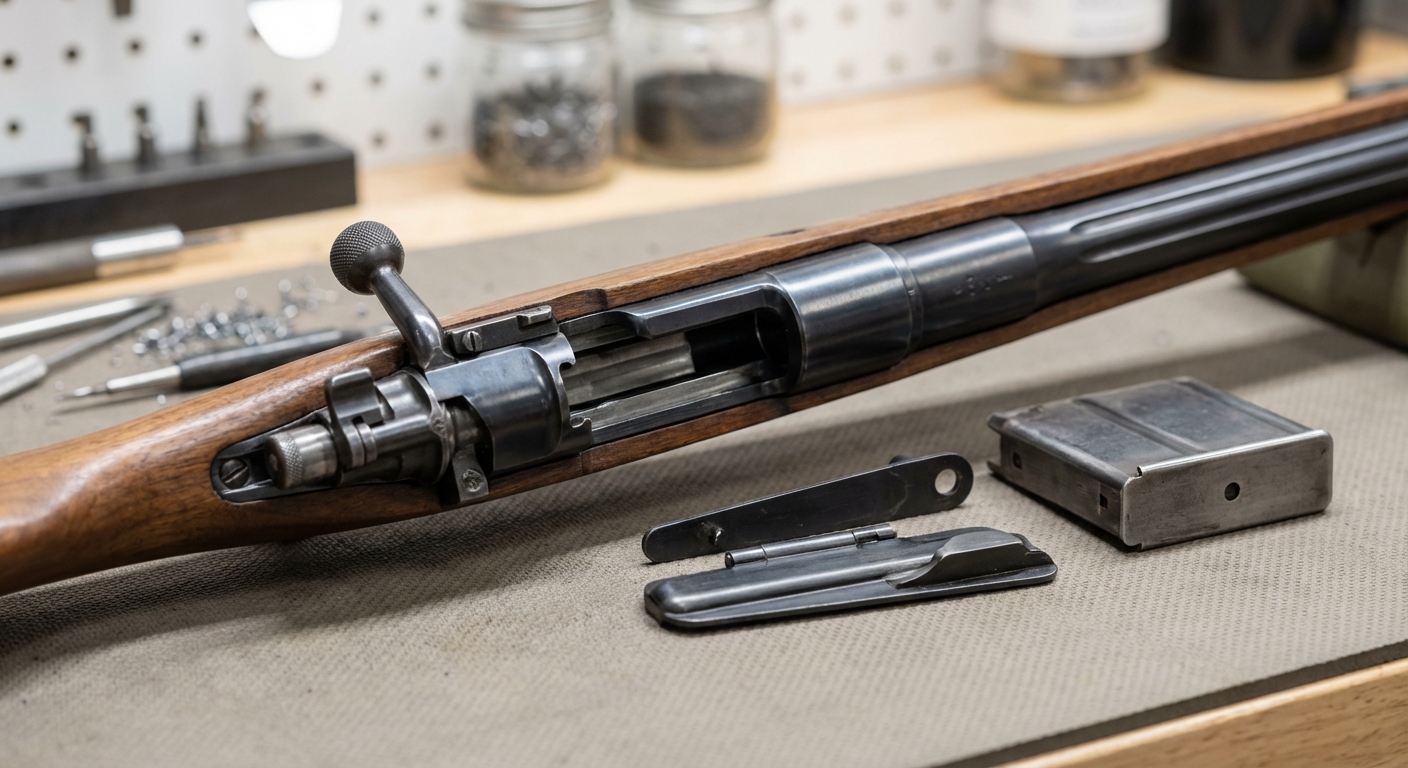
Most people aren’t trying to be a gunsmith, they’re trying to avoid surprises. They’ll look down the bore for sharp rifling and a clean surface, then inspect the crown (the very end of the muzzle) for nicks, because damage there is an easy explanation for “it won’t group.” They’ll run the bolt to feel for gritty spots, binding, or weird resistance, then dry-cycle feeding and ejection if you have snap caps. They’ll test trigger function and confirm the safety engages positively and blocks the trigger the way it should. None of this proves ultimate accuracy, but it instantly signals whether the rifle has been maintained.
Scratches, edge wear, and a few dings read as honest hunting wear. Rust freckles, pitting, bubbled finish, or crust in screw heads reads as neglect. On the stock, buyers check for cracks at the wrist and around action screw areas, soft spots, and any odd contact that hints the action shifted in the stock. Cosmetic wear is negotiable. Neglect makes people wonder what they can’t see.
Round count is a proxy, not a lie detector, and plenty of owners simply don’t know it. Your job is to replace “unknown” with credible context: how you cleaned it (solvent, patches, oil, how often), whether it lived as a range rifle or a once-a-season deer gun, any saved targets, and any service notes or receipts. That story makes the bore and bolt condition feel explainable instead of mysterious.
Include what reduces buyer uncertainty: the original box, manual, and any factory accessories you still have (and how missing the box or papers can affect selling and value), plus original components if you swapped parts (stock, bottom metal, bolt handle, trigger shoe, etc.). You can’t promise a dollar premium without comparable sales, but completeness tightens the trust gap. Appraisal logic also tracks verification details, for example the Blue Book of Gun Values anchors “New/Perfect” at 100% condition and, for currently manufactured firearms, that generally assumes NIB. In the same practical spirit, Cash My Guns’ valuation inputs include finish and bore condition, and they also look at matching numbers as part of condition and verification and consider aftermarket parts during valuation.
Pick an honest condition grade, list exactly what’s included, and photograph the wear and the accessories up front. Surprises belong in the listing, not in the negotiation.
After that, most buyers look at what’s attached to the rifle-optics, mounts, and upgrades-to decide whether it feels “ready to hunt” or like a project they’re inheriting.
Optics, Accessories, and Upgrades Value
Accessories almost never add dollar-for-dollar value, and buyers know it. But a reputable optic or upgrade that’s properly installed can still increase buyer interest because it removes unknowns and makes the rifle feel “ready,” not “project.”
A scope helps most when you list the exact brand and model, show clean glass (no scratches, chips, or internal haze), and when the optic has a solid reputation for repeatable tracking. Rings, rails, and spare magazines tend to help the sale more than the price, unless they’re clearly OEM mags and clearly not bargain-bin add-ons. Threaded-muzzle and suppressor-ready setups also get attention, but buyers want one concrete detail: is the muzzle actually threaded, and is the brake or thread protector included with the rifle?
Savage 110 receivers are factory drilled and tapped, and most mounts are sold under the “Savage 10/110” footprint, not a unique pattern for every sub-model. The catch is fitment confidence: buyers watch for round-back versus flat-back receiver-top profiles, and they notice when the base doesn’t match. Many bases use four receiver-top screws, so missing screws, chewed heads, or stripped receiver holes screams amateur gunsmithing and can reduce value fast.
If you’re selling to someone who wants a turnkey hunting rifle, bundling optic, rings, and a practical extra like a bipod or sling usually moves it quicker, even if it doesn’t add full retail value. If you’re pricing for maximum return, splitting can make sense, especially because buyers may value your caliber and ammo terminology clarity when comparing listings.
Takeaway: photograph every accessory installed on the rifle, plus close-ups of receiver-top screw holes and screw heads, and list model names exactly. Then pick bundle versus split based on your target buyer, turnkey convenience or highest net return.
Once you’ve separated “helps it sell” from “adds real value,” you’re ready for the part that keeps pricing honest: matching your rifle to sold comps.
How to Price Using Market Comps
The only comps that matter are the ones that match the rifle you actually have, the exact 110 variant, the condition reality, and what you’re including. Use sold prices to anchor your number, because asking prices are just wishes until money changes hands.
- Completed, sold listings: What buyers paid. How to use it: Build your baseline from the median sold price of close matches.
- Current dealer listings: What sellers hope to get. How to use it: Use as a ceiling, then sanity-check against sold results.
- Auction archives: Real outcomes across many buyers. How to use it: Great for oddball variants, uncommon chamberings, or loaded packages.
Cash My Guns states it “uses market data from dealer listings and auctions” and that it “factors in seasonality and regional demand.” Cash My Guns states condition inputs include “finish, bore, matching numbers, and aftermarket parts.”
- Collect 10 to 20 sold comps that match your action length, chambering, and major features, and note what’s included.
- Filter out mismatches fast, different barrel profiles, different stocks, or listings bundled with optics when yours is bare, and vice versa.
- Normalize each comp into “rifle only” vs “rifle plus package,” so you’re not paying yourself twice for accessories.
- Calculate a baseline using the median sold price, not the highest sale and not the lowest fire sale.
- Adjust up or down based on your real condition and completeness, then sanity-check against current asking prices.
Here’s the clean rule: sold prices set value, asking prices set expectations. If most asks sit above sold, your “patient” price is the top edge of what’s actually closing, not the top edge of what’s listed.
If you want a fast, low-friction exit, Cash My Guns is a nationwide online purchasing service and positions the process as “Safe • Legal • Hassle-Free,” and it’s been operating since 2013.
For your own pricing, use your median sold comp as the anchor. A defensible quick-sale range is 85% to 92% of that median. A defensible patient-sale range is 98% to 110% of that median, only if your rifle is a close-match to the best-selling comps you pulled and your listing is equally complete (see this Savage 10/110 value guide for model-specific benchmarks).
That price range is the “what.” The “how” comes down to where you sell, because the channel changes your net, your timeline, and how much work you take on (this Savage firearm worth overview breaks down the big value drivers).
Where to Sell and Legal Basics
After you’ve nailed your price range, the biggest lever you still control is the selling channel. Where you sell changes your net money, your timeline, and how much responsibility you’re taking on, so pick the path that matches your risk tolerance and how much effort you want to spend.
A local gun store is the simplest route. You hand it over, they handle the paperwork, and you’re usually done fast, but convenience usually comes with a lower net compared to finding your own buyer.
Consignment trades speed for upside. The shop lists it for you and takes a cut when it sells, so you’re waiting on the right buyer, but you can clear more than a straight sale to the counter if the rifle is desirable and priced right.
Private party sales, where your state allows them, often produce a higher net because you’re cutting out the middleman. The friction is real though, you’re coordinating meetups, screening buyers, and keeping the transaction clean.
Online and other FFL-assisted options widen the buyer pool and keep the process structured. For example, selling guns online can work well when you follow the required transfer steps.
This is general information, not legal advice. Federally, you generally cannot transfer a firearm directly to a non-licensee who lives in another state; interstate private transfers have to run through an FFL transfer, meaning the firearm goes to a federally licensed dealer who transfers it to the buyer under the recipient state’s rules (18 U.S.C. § 922(a)(5)). On the buyer side, a non-licensee generally cannot acquire or receive a firearm outside their state of residence without using an FFL transfer (18 U.S.C. § 922(a)(3)). State and local rules vary and change.
In Texas, private-party transfers between Texas residents do not require an FFL or a background check under state law, and Texas has no state-mandated waiting period. Federal prohibited-person rules still apply, and crossing state lines still triggers the federal FFL requirement.
Practical takeaway: before you list or meet anyone, confirm your buyer’s state and plan on an FFL transfer when required. If anything feels fuzzy, call an FFL and ask how they want it handled.
Regardless of the route you choose, having the same set of details and photos ready makes pricing conversations cleaner and keeps the sale from stalling on basic questions.
Quick Value Checklist and Next Steps
If you can hand someone clean details and clear photos, you’ll get a faster, more accurate value, and a smoother sale. The winning inputs are simple: your exact Savage 110 variant and configuration, your condition level and function confidence, what’s included (original parts and extras), your optics and accessory list, and a comps-based price range you can defend.
Savage 110 model/variant (as marked):
Caliber:
Action length (short/long, if known):
Barrel length:
Muzzle threading (yes/no, thread pattern if known):
Trigger/stock features (AccuTrigger/AccuStock, etc.):

Condition notes:
- Finish (wear, rust, scratches):
- Bore (bright/frosted/pitting, if checked):
- Function (feeds, extracts, safety, trigger reset):

Included accessories:
- Optic (make/model):
- Rings/rail/base:
- Magazines (qty/capacity):
- Bipod/sling/case:
- Original box/paperwork:
- Original take-off parts included (yes/no, list):

Aftermarket parts/mods (list everything):

Serial number status: recorded privately (do not post publicly); matching numbers noted where applicable:
- Full left and right side of the rifle
- Receiver markings and model designation
- Barrel stamp (caliber, twist if shown) and muzzle threads
- Bolt face and lugs, plus feed ramp area
- Crown or muzzle, and any brake or thread protector
- Optic mounting area, rings, rail, and screw heads
- Stock and bedding areas, plus every blemish close-up
- Paperwork, receipts, and any original parts laid out
Appraisers price faster when you give them what they actually use: confirmed make and model, condition details including finish and bore, plus any aftermarket parts and whether numbers match where applicable. You can either keep running sold comps until your range feels tight, or get an expert appraisal and offer for speed.
If you want the fast path, Cash My Guns describes itself as a nationwide online purchasing service that buys guns, ammunition, and accessories directly from private sellers.
Cash My Guns is operated by Dunlap Gun Buyers, a federally licensed firearms dealer (FFL), and it positions the process as “Safe • Legal • Hassle-Free.” If you want, you can request an offer, send your checklist and photos, and skip the endless follow-up questions.
Conclusion
Your Savage 110 is worth exactly what buyers are paying for your exact configuration in your current condition, not what a generic “110” chart says. That’s the fix for the $350 vs $700 vs $1,200 whiplash: get the variant right, be honest about finish and bore, and be clear about matching numbers and aftermarket parts. Accessories can help, but asking prices aren’t sold results, and rules vary by location. Build your range from completed listings, or get a quick expert appraisal from Cash My Guns, and verify current local transfer rules (not legal advice).