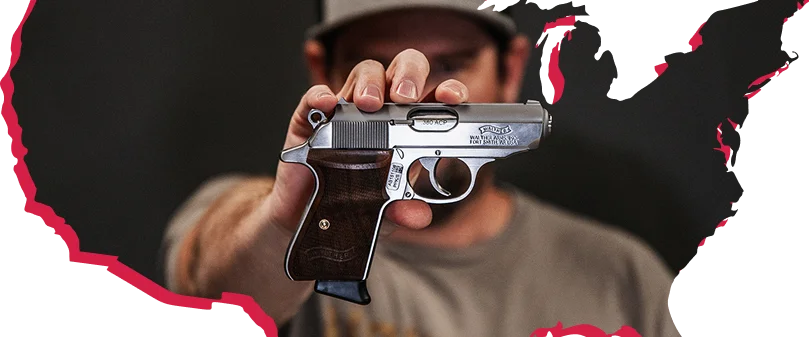

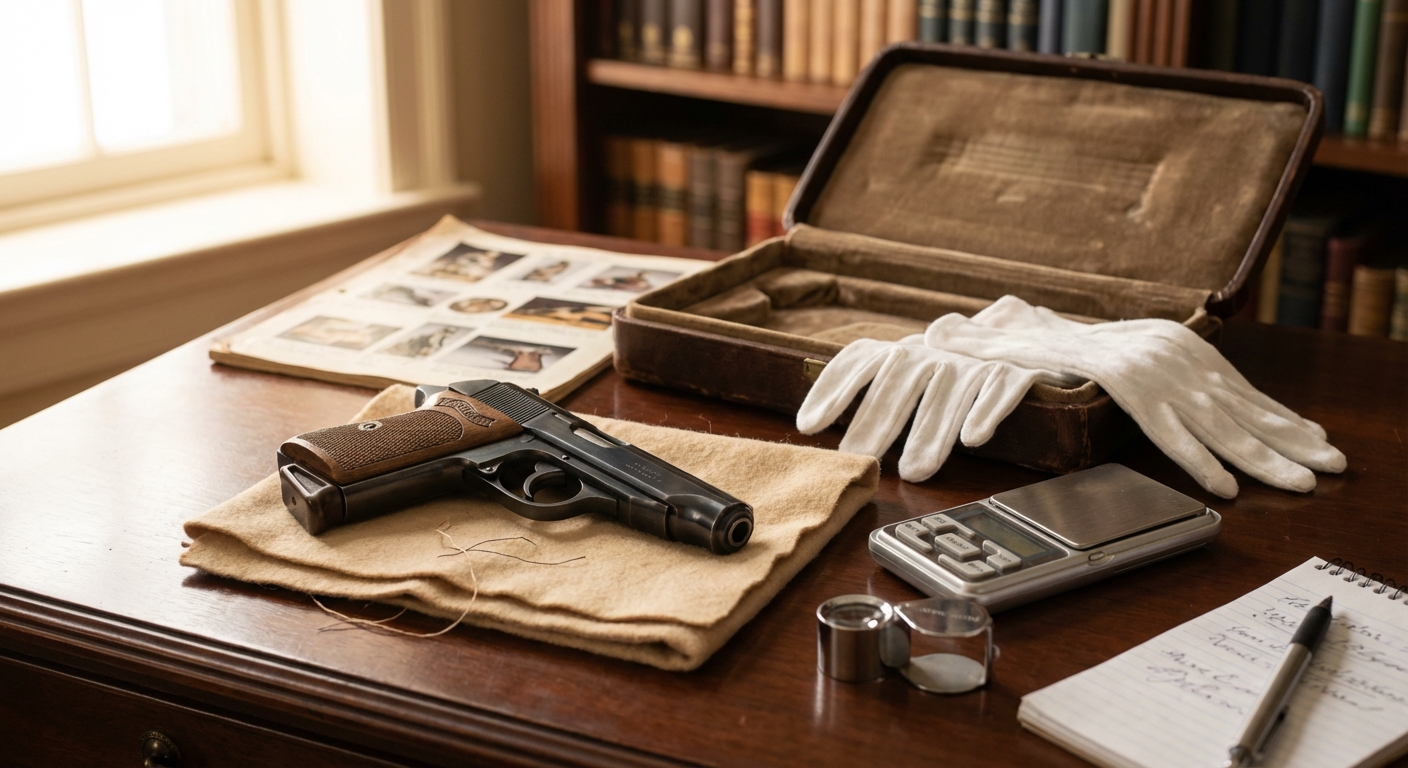

You’re staring at a Walther PPK, or what you’ve always called a PPK, and the prices you see online are all over the map. Same silhouette, same size, totally different money.
If you’re deciding whether to sell now or hold, accept an offer or list it yourself, or you’ve inherited one and aren’t even 100% sure what variant it is, that price chaos is maddening. Two pistols that look nearly identical can trade for very different amounts, and it’s not because one seller is “greedy,” it’s because buyers are paying for specific details.
Here’s the core insight: pricing a PPK isn’t about finding one average number. It’s about matching your pistol’s exact configuration to what the market recognizes as that configuration, then adjusting for the reality of condition and timing.
That’s how the major references do it. The Blue Book of Gun Values lists Walther PPK-family pricing by specific model and variant, like PPK vs PPK/S, and it breaks values out by standardized condition grades expressed as percentages, like 100%, 98%, and 95%. It also treats caliber as its own value driver, commonly listing separate values for 7.65mm Browning (.32 ACP) vs 9mm Kurz (.380 ACP). Finish is priced the same way, as an objective attribute, commonly differentiated by factory categories like blued, nickel, and later stainless or bright finishes when applicable.
By the end, you’ll know exactly which details to write down-variant or model family, caliber, finish type, condition grade, originality and completeness, market timing, and sale method-and how to turn those inputs into a defensible value range you can stand behind.
Identify the Exact PPK Variant
If your listing title says “Walther PPK” but the gun is actually a Walther PPK/S, or it’s a .32 ACP that you accidentally call .380 ACP, you’ll pull the wrong comparisons and end up fielding the wrong offers. The fastest path to a defensible number later is getting the exact variant, caliber, and era cues written down first, using the same labels buyers and search filters use.
The Walther PPK is the compact version of the Walther PP, and the PPK has a shorter grip frame than the PP. In your hand, that shows up as a shorter grip, and usually a shorter magazine body.
The Walther PPK/S is a hybrid: it pairs a PPK-length slide and barrel with a longer PP-style grip frame. That longer frame is why it matters what you call it in a listing, because it’s not just a naming quirk, it’s a different configuration you can see.
Because the PPK/S uses the longer PP-style grip frame, it typically holds one more round than a PPK in the same caliber. As a quick reality check, typical factory mags are 6 rounds in .380 ACP for a PPK vs 7 for a PPK/S, and 7 rounds in .32 ACP for a PPK vs 8 for a PPK/S. If your “PPK” grip looks long enough to swallow that extra round, double-check the model marking before you post it.
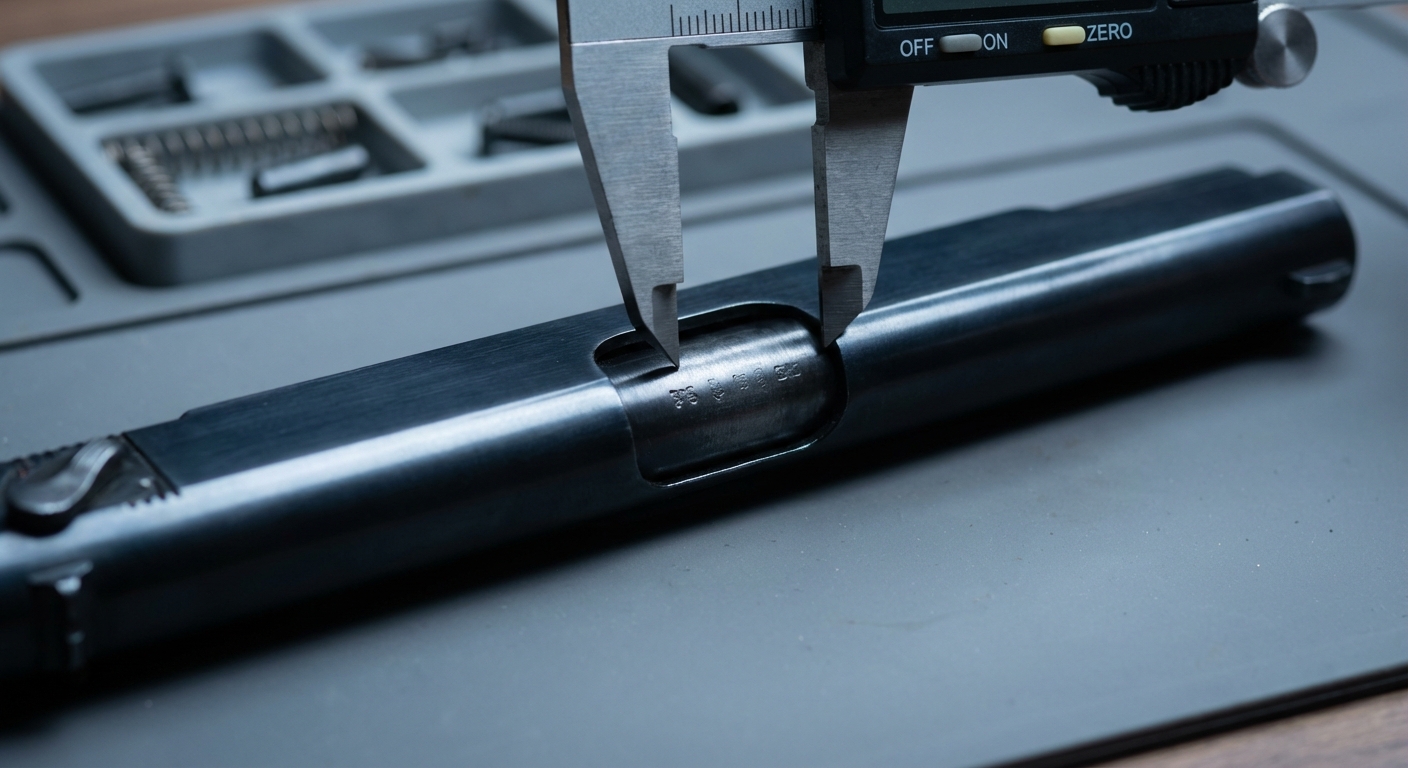
Don’t trust what ammo came with it, or what someone told you it was. Confirm caliber from the gun’s markings, usually on the slide legend or barrel area. You’re looking for “.32 ACP” or “7.65” (often 7.65 Browning) versus “.380 ACP” or “9mm Kurz.” Write down exactly what it says, because buyers do—and if you need a refresher on calibers, types, and terminology, it helps keep listings and comparisons consistent.
Start with the slide rollmark text, because it often plants the gun in the right era immediately. Pre‑WWII Walther PPK pistols commonly have slide rollmarks reading “Carl Walther Waffenfabrik Zella‑Mehlis (Thür.).” Post‑war West German production is commonly marked “Carl Walther Waffenfabrik Ulm/Do.”
WWII-era examples complicate this, because many WWII-era Walther PPK pistols use wartime manufacturer codes instead of the full Walther name. If you see a code-style marking instead of a full factory name, treat that as a meaningful identifier and capture it cleanly for later comparison.
Once the legend gets you in the right neighborhood, corroborate it with proof marks (official proof-testing stamps) and import marks (U.S. importer identification). The “antler” proof mark is the symbol of the Ulm proof house and indicates proof-testing at Ulm. The “Eagle over N” (Eagle/N) is the German nitro proof indicating smokeless-powder proofing.
On PP-series pistols, those proofs are typically stamped on major parts like the slide and barrel, and often the frame. Because the barrel is fixed, barrel marks are commonly visible through the ejection port with the slide open or partially retracted. For U.S. import context, remember that post‑1968 imported pistols typically have importer markings, because the Gun Control Act of 1968 requires the importer’s name and location to be marked on the firearm.
- Write down the model exactly as marked, PPK or Walther PPK/S.
- Record the caliber exactly as marked, including any “7.65,” “9mm Kurz,” or “.380 ACP” text.
- Transcribe the full slide legend, letter-for-letter.
- Photograph and note any visible proof marks, especially the Ulm antler and Eagle/N if present.
- Capture any import marks you can find, including the importer name and location.
Once you’ve got those identifiers pinned down, you’re working with the same “filters” the market uses. If you’re still unsure, use a practical guide to identify your exact firearm before you start pricing. The next big value swing comes from what’s hard to fake in photos: condition, originality, and what’s actually included.
Condition, Originality, and Completeness
Two PPKs can look identical in a quick photo, then land in totally different value buckets once a buyer starts asking, “How much original finish is left, does it run 100%, and is anything swapped?” Condition and originality are trust signals. The cleaner and more verifiable the story, the more confident a serious buyer feels putting real money behind it.
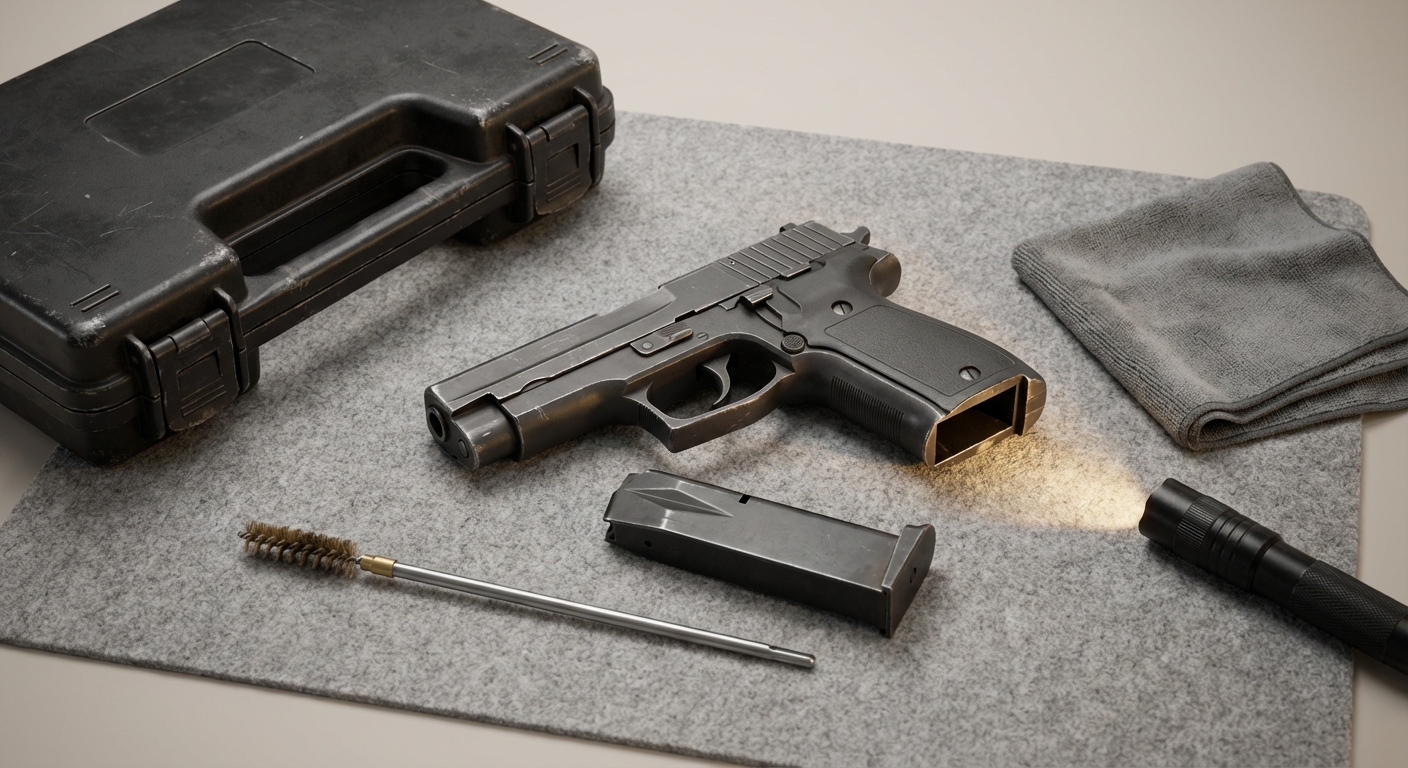
Most people’s eyes go straight to finish wear, especially on the slide flats, muzzle, and sharp edges. If the slide edges are silvered, the front strap is polished smooth, or the tang shows holster burn, buyers mentally downgrade it fast because that wear is hard to “unsee.” Right after that, they’ll ask about mechanical function (safety, decocker, trigger, slide lock behavior), bore quality (mint and bright vs dull, dark, or frosted), corrosion or pitting (even tiny freckles under grips count), and how sharp the markings and edges still are. Crisp rollmarks and clean corners usually mean less polishing, less refinish work, and less mystery.
The fastest way to speak the same language as listings is to anchor your grade to the NRA Modern Gun Condition Standards, then describe the specific wear you see. Under that standard, “Excellent” typically means about 98% or more original finish, a mint or bright bore, and mechanical perfection with crisp markings and edges. “Very Good” typically means about 95% or more original finish with minor high-point and edge wear, and it’s still fully functional with a clean bore and strong rifling.
- Excellent
- Finish: ~98%+ original finish
- Bore: Mint/bright
- Mechanical function: Mechanically perfect, fully functional
- What usually triggers buyer doubt: Any pitting, softened edges, refinish tells
- Very Good
- Finish: ~95%+ original finish, minor edge wear
- Bore: Clean, strong rifling
- Mechanical function: Mechanically sound, fully functional
- What usually triggers buyer doubt: Corrosion under grips, weak rifling, timing issues
- Good
- Finish: ~80%+ finish, obvious high-point wear
- Bore: Serviceable, visible rifling
- Mechanical function: Functional
- What usually triggers buyer doubt: Pitting in the bore, gritty controls, parts swaps
- Fair
- Finish: Major finish loss, rust or pitting
- Bore: Dark, worn, possibly pitted
- Mechanical function: Operable but worn or loose
- What usually triggers buyer doubt: Safety concerns, heavy pitting, marginal function
Originality is where “pretty” can backfire. Collector references commonly treat Zella‑Mehlis-era PPKs as especially originality-sensitive: matching serial numbers on major components, correct period proofmarks, and original finish condition. Refinishing or replaced parts are typically disclosed because they materially reduce collector value, even if the gun looks cleaner afterward.
“Correct” usually means the right style of grips and the right type of magazine for the period, plus no obvious aftermarket parts. Box, papers, and accessories matter most on collector-leaning PPKs because they increase buyer confidence that the gun hasn’t been rebuilt from mixed parts.
Some finishes simply belong to later production. Interarms-era U.S.-made PPKs could be had in stainless steel, a finish stated as not available on older PPK examples. Modern-production PPK variants have a fixed 3.3-inch barrel and have been offered in stainless or blued finishes with black checkered grip panels. The takeaway is simple: describe what you actually have, don’t assume a finish is rare just because you don’t see it often.
Pick an honest condition grade using the NRA rubric, then write a plain description of the wear you can point to: finish percentage, bore brightness, any corrosion or pitting, and whether the markings and edges are still sharp. State whether you believe the finish is the original finish, and call out any refinishing or aftermarket parts. Finally, inventory what’s included-mags, box, papers, and accessories-so your comparisons stay apples-to-apples instead of “same model, different package.”
When those details are clear, pricing gets a lot less mystical. You’re no longer comparing “a PPK” to “a PPK,” you’re comparing a specific configuration in a specific condition to recent sales of the same thing.
Real-World Price Ranges and Comps
The only “real” price for a Walther PPK is what similar PPKs actually sold for recently, not what someone hopes to get. If you can point to a handful of matching sales with close details and close dates, you can defend your number to a buyer, or quickly spot a lowball.
Asking prices are noisy because optimistic listings can sit for weeks, get relisted, or get discounted quietly. A high tag on an active listing only proves one thing, nobody has paid it yet. Sold results show where buyers actually opened their wallets.
“Sold comps” means completed sales of comparable guns, meaning they match the identifiers that actually move PPK pricing. The catch is that PPK lookalikes are not equals. Do not compare a PPK to a PPK/S, and do not mix .32 ACP and .380 ACP. Keep finishes consistent, and watch for clues in photos or descriptions that point to a different production era, importer, or marking set.
The Walther PP/PPK valuation overview does not include any sold-price dataset for Walther PPK/PPK/S pistols, so the honest move is to use the comps method instead of pretending there’s a “typical” number that fits every variant.
Reliable sold signals usually come from completed auctions and completed marketplace sales, plus published results from major firearm auction houses. You are not hunting for the highest sale, you are building a small sample of truly similar sales.
Capture the same fields from every comp so you can compare apples to apples:
- Variant: PPK vs PPK/S
- Caliber: .32 ACP vs .380 ACP
- Finish (and any clear notes about changes)
- Condition notes from the seller
- Included accessories: box, papers, extra magazine, holster
- Date sold
- Visible markings or importer notes when shown
Turn those comps into a range by clustering the most similar results, tossing obvious outliers, and adjusting for specifics, like boxed examples generally justifying a higher comp than a gun-only sale. Market timing matters too. Buyer willingness shifts with supply, demand, and broader market cycles (see how supply and demand affects firearm resale prices), so old comps can mislead even when the gun matches perfectly.
Actionable takeaway: pull 5 to 10 sold comps that match your variant, caliber, finish, and completeness, then set a tight, defensible range anchored to those recent sold results.
Selling Options That Change Your Net
The comps you found tell you what buyers pay, but your net depends just as much on how you sell a gun and which option you choose. A “higher” sale price can shrink fast after platform fees, transfer costs, shipping, and the time you spend screening strangers or handling a dispute.
- Fast and simple: accept a lower net to get paid quickly with minimal coordination.
- Maximize net: do more work to reach more buyers and hold your price.
- Minimize risk: reduce scam exposure and “item not as described” headaches, even if it costs you a bit.
- Private sale (where legal)
- Typical net outcome: Often highest, no platform cut
- Speed and hassle: Most coordination and screening
- Dispute and fraud exposure: Higher, you own the vetting and payment risk
- Online marketplace or auction
- Typical net outcome: High gross, but fees eat into net
- Speed and hassle: More messages, packing, shipping, transfers
- Dispute and fraud exposure: Medium, controlled by clear terms and documentation
- Consignment (dealer sells for you)
- Typical net outcome: Lower after split, common ranges run 20-30%
- Speed and hassle: Low effort, slower payout
- Dispute and fraud exposure: Lower, dealer handles buyer interaction
- Pawn or local quick-cash
- Typical net outcome: Usually lowest
- Speed and hassle: Fastest
- Dispute and fraud exposure: Low, but price is the tradeoff
- Direct buyer via an FFL
- Typical net outcome: Predictable offer-based net
- Speed and hassle: Streamlined, less back-and-forth
- Dispute and fraud exposure: Lower, the FFL (Federal Firearms Licensee) process formalizes transfer and records
If you go the auction route, bake fees into your math. GunBroker, for example, says basic listings are free until the item sells, then the Final Value Fee is 6% on the first $400 plus 4% on the amount above $400. GunBroker also publishes other tiered schedules, the Top 1000 Tier lists 7% up to $15,000, 2.5% on $15,000 to $20,000, and 1.5% above $20,000, so fee schedules vary by tier.
Transfers can be another quiet net-killer. FFL transfer fees commonly land around $20 to $75 on average for a typical firearm transfer, and they vary by dealer and area. Decide up front who pays it so it does not turn into a last-minute renegotiation.
If you want an FFL-based buyer with a defined process, Cash My Guns is operated by Dunlap Gun Buyers (a federally licensed firearms dealer) and positions the service as “Safe • Legal • Hassle-Free” and “Trusted Since 2013.” Operationally, the transfer to your FFL is handled at checkout, FFL options are listed based on your ZIP code, and you select the FFL you want to use.
- Photograph both sides, top of slide, muzzle crown, feed ramp, bore (as best you can), serial markings, and any wear hotspots.
- Include clear shots of magazines, box, papers, and any aftermarket parts.
- Disclose known issues and modifications plainly, surprises are what trigger returns, chargebacks, and price chipping.
Pick the route that matches your priority (net, speed, or risk), then prep a tight “package” before you talk price: a few clean photos and short notes on what’s included and what’s been changed. That’s how you keep money from leaking out through fees, lowballing, and avoidable disputes.
One more wrinkle: the “best” route on paper isn’t always the easiest route where you live. State rules can add friction to private sales, or steer you toward an FFL transfer simply because it’s the cleanest way to do it correctly.
State Rules That Affect Selling
Where you live can change your selling friction as much as your gun’s condition. Two identical Walther PPKs can have very different “easy to sell” paths depending on what your state expects from a private transfer, and how many buyers are willing to follow those steps.
The real-world catch is leverage. A bigger local buyer pool usually means faster messages, fewer lowball offers, and less time explaining your process. Add required steps, or uncertainty about what’s allowed, and the pool shrinks. That slows your timeline and often pushes you toward an FFL-handled transfer, which is typically simpler to do correctly but can change your net because it changes where, and how, you sell.
Texas: Texas does not require a background check for a private-party (non-FFL) handgun sale if the seller does not know or reasonably believe the buyer is prohibited (Tex. Penal Code § 46.06). Texas also has no state purchase permit requirement for buying a handgun. What this often means for your process is more viable face-to-face demand, but the seller still carries the responsibility to avoid an unlawful transfer.
Florida: Florida law does not generally require a background check for a private-party handgun sale when no FFL is involved (Fla. Stat. ch. 790). Background checks are required when the transfer is made by an FFL under federal law, and FDLE publishes background check program info. What this often means is you can choose between a direct local buyer or an FFL route if you want clearer compliance rails.
- CA: Check the official state statutes portal and your state DOJ or AG firearms resources, or a state-by-state guide to selling a gun.
- GA: Check the official state statutes portal and state police or AG resources, or a dedicated state guide.
- PA: Check the official state statutes portal and state police or AG resources, or a dedicated state guide.
- OH: Check the official state statutes portal and Ohio Attorney General resources, or a dedicated state guide.
- AZ: Check the official state statutes portal and state police or AG resources, or a dedicated state guide.
- NY: Check the official state statutes portal and state police or AG resources, or a dedicated state guide.
- NC: Check the official state statutes portal and state police or AG resources, or a dedicated state guide.
- IL: Check the official state statutes portal and state police or AG resources, or a dedicated state guide.
Not legal advice: laws change, and details matter, so verify your state’s current requirements using official sources before you pick a route. If you decide an FFL-based process is the cleanest option, an FFL-run service like Cash My Guns is positioned as “Safe • Legal • Hassle-Free.”
Your PPK Value Checklist
The “prices are all over the map” feeling usually disappears once you treat your PPK like a specific configuration instead of a generic model. If you can document the identifiers, call condition and originality honestly, and anchor your range to real sold comps, you’ll have a number you can defend.
Most pricing headaches come from skipping one input: loose ID details get you mismatched comps, optimistic condition calls invite lowballs, thin comp sets lead to overpricing, and the wrong selling route turns a fair number into a slow or stressful sale.
- Document the identifiers buyers expect in listings: exact make and variant, caliber, manufacturer and era clues, proofs and import marks, serial number notes (including any relevant serial range context), and finish type.
- Grade condition honestly and write down originality and completeness: matching parts where applicable, replaced or aftermarket parts, and what is included (factory box, papers, and any extra magazines).
- Pull 5 to 10 recent sold comps that match your variant, finish, and condition, then bracket your defensible range instead of chasing a single perfect number.
- Choose a selling route that matches your priority: fastest turnaround, highest net, or lowest risk and least back and forth.
- Prep trust-building photos and notes: clear shots of both sides, markings, serial area, finish wear, and anything non-original, plus a concise summary you can paste into a listing or send to a buyer.
If the range looks good for your goals, list it, accept an offer inside it, or take a direct-buyer route and trade a bit of upside for speed and simplicity. If your PPK has unusual marks, an uncommon configuration, or it is part of a larger collection, get an expert set of eyes before you commit to a number.
If you want a guided, direct-buyer path, Cash My Guns (operated by Dunlap Gun Buyers, an FFL) is a nationwide online purchasing service marketed as “Safe • Legal • Hassle-Free.”