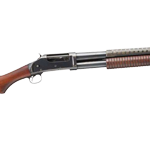

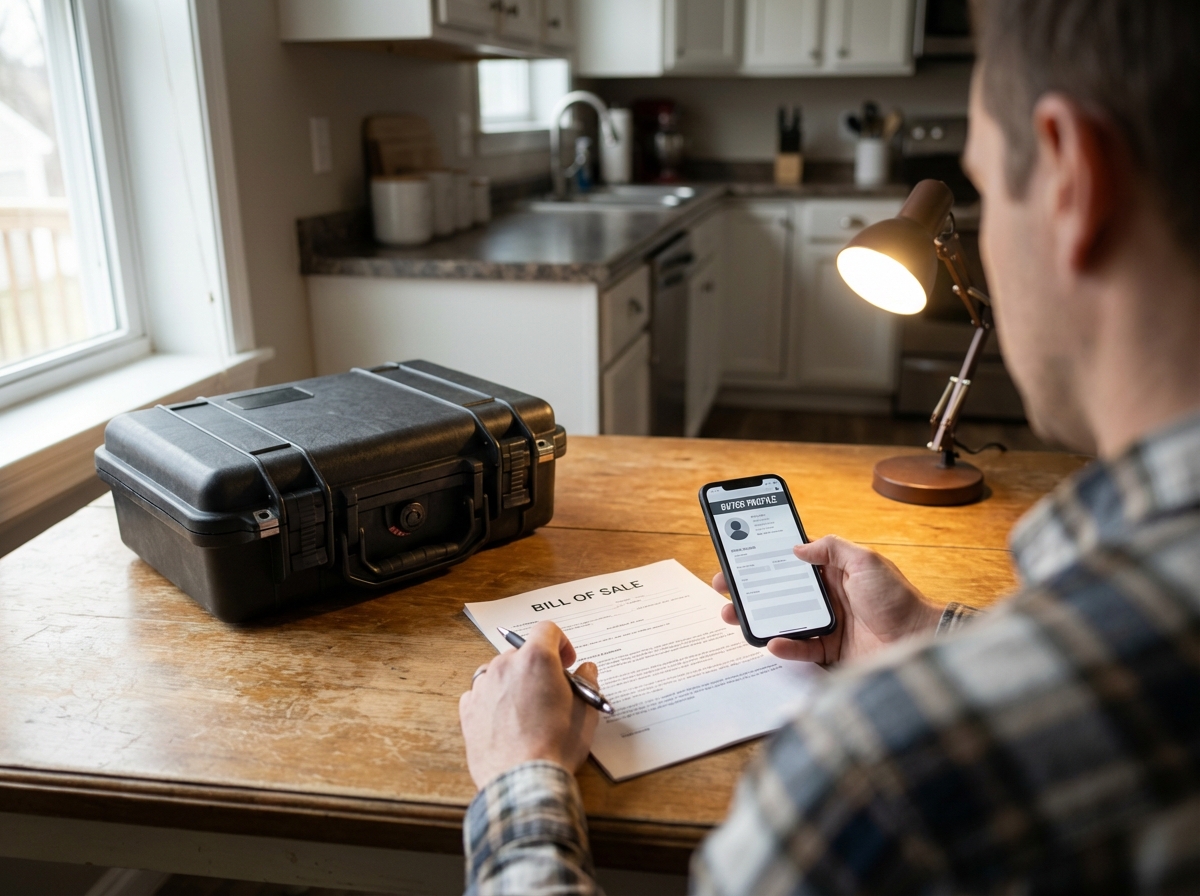

Scammers love firearm sales because the deal already feels “off” before you can prove it, the buyer’s pushing weird payment or shipping requests, and you don’t want to accuse a legit person. Remote messages move fast, and the pressure to close can make even obvious red flags feel easy to rationalize.
You’re also dealing with a perfect storm: firearms are high-value, often sold at a distance, and regulated. That combo gives scammers leverage. They can create urgency, exploit transfer confusion, and count on you not wanting to lose a buyer. Your job is balancing speed with safety while still checking current federal, state, and local requirements.
Below, you’ll learn to spot four common patterns: fake payments, shipping traps, identity and FFL fraud, and chargebacks.
Online fraud is massive in general, the FBI IC3 2023 Internet Crime Report logged 880,418 complaints and reported losses of more than $12.5 billion, and firearm scammers borrow the same playbook. ATF also notes a common firearm scam involves counterfeit or fraudulent FFL documents, so verify the receiving dealer before any transfer or shipment; one key control is checking the dealer in ATF FFL eZ Check.
Run the next five steps every time as a simple checklist you can use before, during, and after a deal.
Step 1
A realistic price is your first anti-scam tool. The further your ask drifts from reality, the bigger your scam surface area gets, because it invites the wrong kind of attention and makes bad offers sound believable.
Underpricing creates urgency, the buyer who “has a cousin coming right now with cash” is often the one steering you away from normal, verifiable steps. Overpricing creates a different trap: it attracts people who use confusion about configuration and condition to “explain” why they can only pay with weird terms, or why they need you to throw in extras. Scammers also lean hard on emotional pricing, especially with inherited guns or your “never fails me” favorite, because feelings make it easier to ignore numbers.
- Pull completed-sale comps from GunBroker’s “Completed Items,” and filter for listings that clearly show a completed sale, not merely “ended” or “reserve not met.” Those sold outcomes anchor what people actually paid recently.
- Match like-for-like configuration before you trust any number: same exact model and variant, same caliber, similar included accessories (mags, optics, case), and comparable aftermarket parts. If it is not the same setup, it is not a real comp.
- Grade condition honestly using a simple condition grading mindset, then adjust: finish wear, bore condition, matching numbers, and aftermarket parts all materially change value.
- Sanity-check outlier offers, especially anything wildly above your expectation. Pros do this too, and how supply and demand affects firearm resale prices helps explain why a “too good” number without a clear reason deserves suspicion.
Guardrail rule: set an acceptable price range based on your comps and condition adjustment, then write down one walk-away number. Any offer outside your range is not “negotiation,” it is a fraud filter.
Once you’ve got that walk-away number, a lot of the pressure tactics lose their bite. If you’re still unsure on value, consider the role of expert appraisers in valuing firearm collections. From there, the biggest risk lever you control is where you choose to sell.
Step 2
The safest sale isn’t the one with the “nicest” buyer, it’s the one where your selling channel strips out the most things you’d otherwise have to verify yourself, fast, in a parking lot, or mid-message thread.
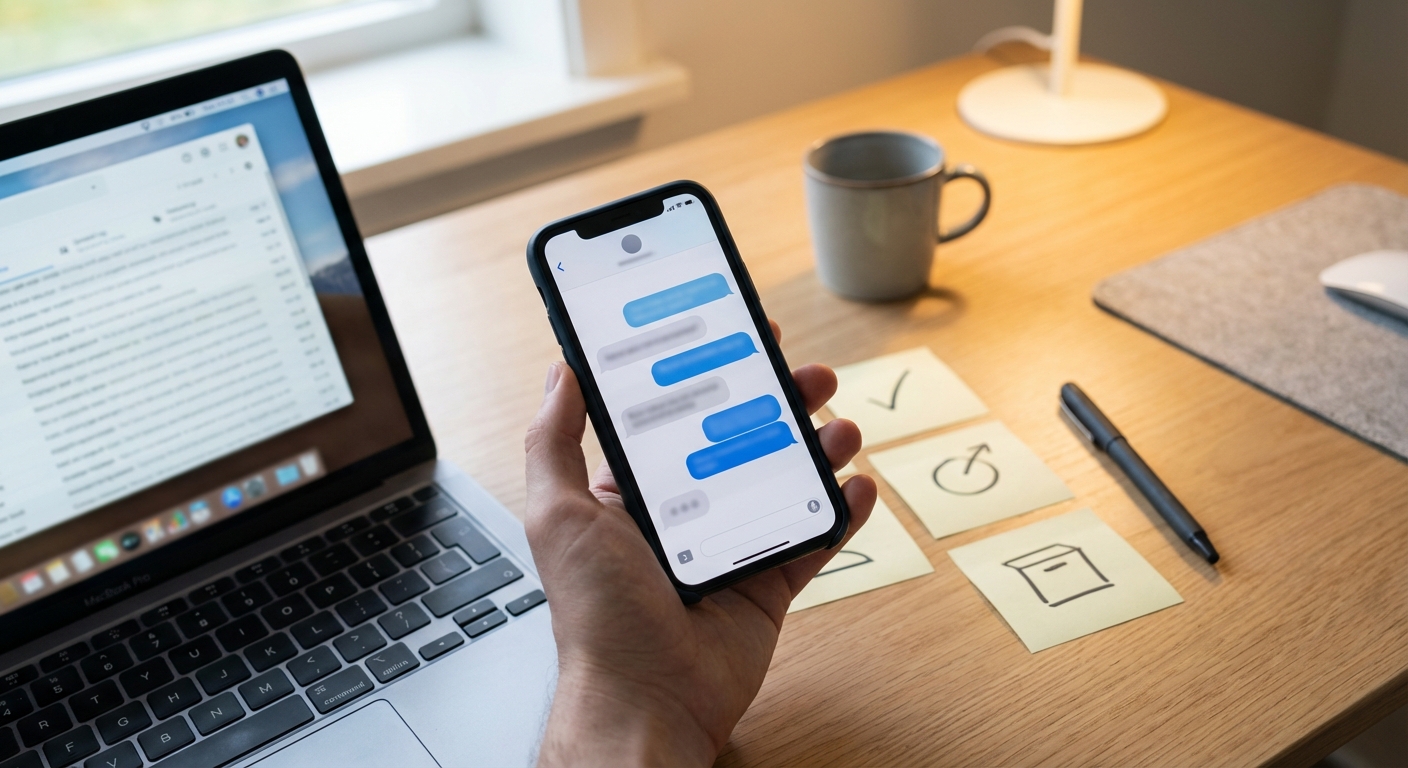
The real tradeoff is control vs protection vs speed. The channels that usually net the most money also push the most work onto you: vetting the person, confirming eligibility, documenting the handoff, and handling disputes. Convenience channels take a bite out of payout, then repay you by shrinking your scam surface area.
- Count how many checks you personally must do, identity, eligibility, paperwork, and safe handoff logistics.
- Decide what “ID verification” looks like in that channel and whether you’ll have backup when something doesn’t match.
- Confirm who resolves disputes, you, a shop counter, or a managed process with customer support.
- Prefer channels with built-in compliance help, consignment through an FFL (licensed gun dealer) reduces risk because the dealer handles required paperwork and compliance steps.
- Plan for “abort options,” if your gut says no, how easily can you pause, get advice, or hand the sale off to someone who does this daily?
Local private sales (where legal) give you maximum control, and maximum exposure to impersonation and pressure tactics. Consignment shifts the buyer-facing friction to a shop, with example terms you’ll see advertised like 15 to 20 days to sell and a flat 25% fee, which varies by dealer and market. Online marketplaces widen your buyer pool, but also multiply messages, verification steps, and conflict scenarios. Direct-to-buyer services reduce the moving parts; for example, Cash My Guns is operated by Dunlap Gun Buyers and is positioned as “Safe • Legal • Hassle-Free.”
If you can’t comfortably verify identity and keep control of the transaction flow under pressure, pick a channel where those checks and the paperwork are handled for you—see your options for selling a gun.
Even in a safer channel, the message thread is still where most scams start. That’s why it helps to screen the same way every single time, instead of improvising based on how “normal” someone seems—especially when selling guns online.
Step 3
Your best scam filter is a consistent script. Screening beats recovering, because almost every bad deal shows its seams in the message thread, before money moves or anything ships.
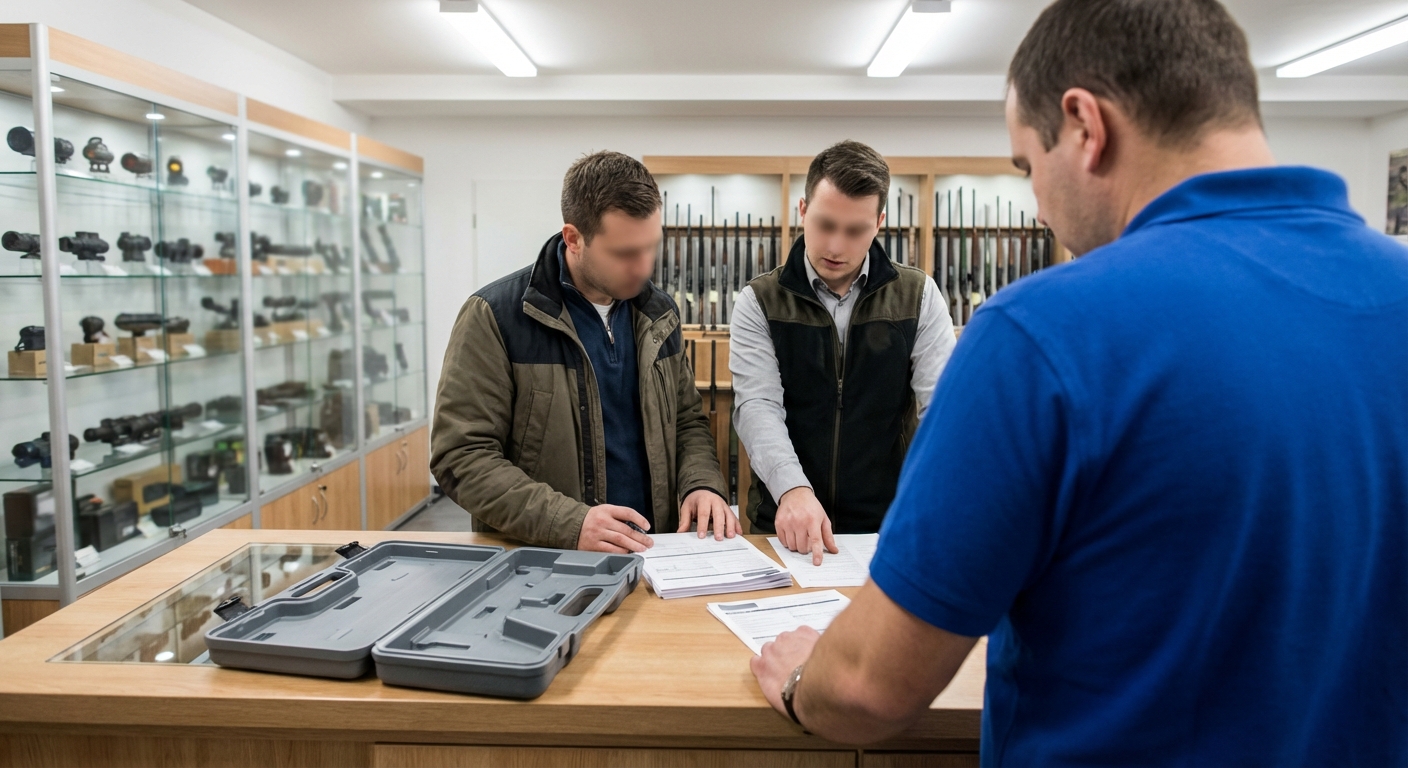
Scammers try to change the rules of conversation first: “Text me instead,” “I’m flying out tonight,” “Here’s a certified copy of the FFL.” Off-platform pressure, urgency, and identity confusion are how they get you to accept a counterfeit or mismatched Federal Firearms License (FFL), the license that authorizes regulated firearm sales and transfers.
- Ask for the buyer’s full name, city, and state, then keep the deal on the original platform until you’re satisfied.
- Confirm residency up front; if the buyer is out of state, treat the transfer as an FFL-to-FFL process, not “ship it to my house.” (General federal baseline, not legal advice: 18 U.S.C. § 922(a)(5), § 922(a)(3), § 922(b)(3).)
- Require the receiving FFL’s license number and the dealer’s publicly listed phone number, not just a photo of a license.
- Verify the license in ATF FFL eZ Check by entering the first 3 and last 5 digits of the FFL number; it returns the license status plus the licensee’s name and address on file.
- Match what eZ Check shows to the buyer’s stated dealer name and shipping destination; any mismatch is a hard stop.
- Refuse last-minute reroutes like “ship to my new address” or “send it to my buddy,” especially after you’ve confirmed an FFL.
- Push back on missing basics: model, condition questions, and transfer plan. Evasive answers are the answer.
- End the thread when you see urgency plus inconsistencies. Don’t argue, just stop engaging.
Share information like a pro. Serial numbers are unique identifiers, and publicly posting a full serial can fuel counterfeit listings, fraudulent returns, or fraudulent warranty and support claims. Keep listing photos partially obscured, then share the full number privately only with a serious buyer who’s following your transfer plan.
Walk-away threshold: any identity mismatch plus urgency, or any attempt to bypass the buyer’s in-state FFL for an interstate deal, means the deal is over (and liability risks when selling a gun to a stranger are a big reason to be strict).
When the buyer passes your screening, the next pressure point is usually payment. That’s where scammers try to make “looks good” feel the same as “final.”
Step 4
Availability isn’t finality. Payment scams work because “paid” is ambiguous, your account can show money that still isn’t yours to keep.
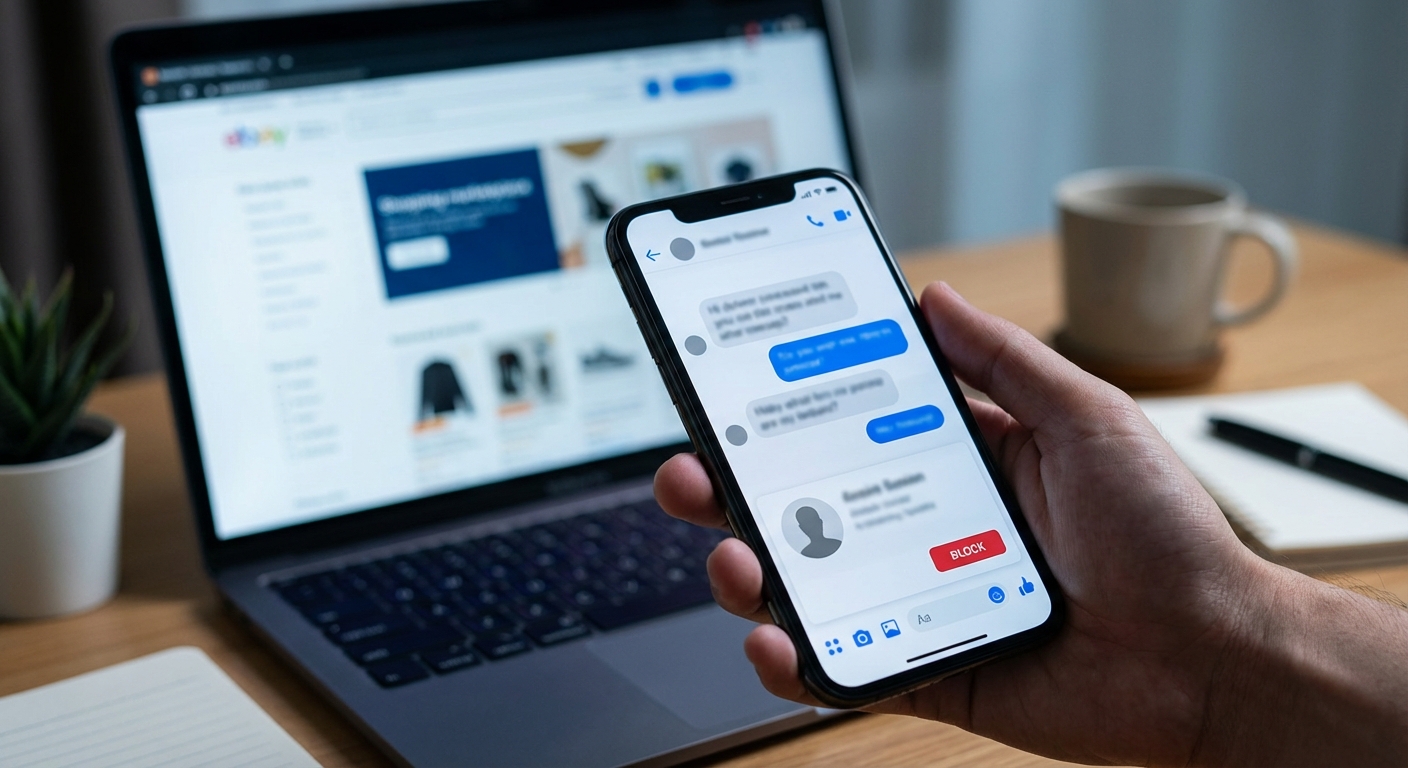
Scammers lean hard on speed and confusion because banks can make deposits available fast even when the underlying transaction has not finally settled. Regulation CC, which implements the EFAA’s funds-availability rules, requires banks and credit unions to make deposited funds available within specified timeframes, including next-business-day availability for certain deposits. That gap is exactly where counterfeit cashier’s checks burn sellers, the balance looks good, then the item is returned as fake and the credit disappears.
The same “not final yet” problem shows up in bank transfers. ACH transactions can be returned for nearly 70 reasons, so a “received” status is still reversible. Reversals also move quickly, a reversal must be sent within 24 hours of noticing an error and no later than 5 banking days after settlement, which is why you set rules before you hand over a firearm.
- Define your go/no-go point as cleared funds, meaning the money has fully settled and can’t be reversed, that’s when you move forward.
- Refuse screenshots, “pending” notices, and buyer-written receipts as proof, they don’t change reversibility.
- Treat cashier’s checks and money orders as untrusted until your bank confirms final collection, not just “available.”
- Decline overpayments, and never send a “refund difference” until funds are cleared, overpay plus refund is a classic trap.
- Assume any reversible rail can produce a chargeback, where the payer initiates a reversal after the transaction posts, and hold possession until you’re insulated.
- Walk away if the buyer pressures same-day transfer, changes payment types midstream, or insists you “trust the app.”
No transfer until cleared funds, no exceptions.
Cleared funds solve one huge problem, but they don’t automatically make the handoff clean. The handoff is where a lot of “everything was fine” deals suddenly get messy.
Step 5
A clean handoff is your best dispute protection.
Once payment is actually final, the transfer is where scammers try to create confusion: a last minute address swap, “new” dealer info that does not match what you verified, or the classic pivot to “my buddy will pick it up.” The goal is to pull you off your plan so there’s no clear paper trail when a delivery or identity dispute shows up.
- Choose a controlled handoff: in person at an FFL, shipment to the buyer’s receiving FFL, or a marketplace payment and shipping flow that keeps everything logged (and know the tradeoffs between a private-party transfer versus using an FFL dealer).
- Confirm the receiving dealer’s name, address, and license details match what you already verified, do not accept “close enough” substitutions.
- Lock the destination, ship only to the verified FFL address, never to a residence, hotel, “work address,” or alternate pickup.
- Reject pickup pivots, if the plan is an FFL transfer, the firearm goes to that FFL and only that FFL.
- Follow USPS baselines: under USPS DMM 601.12, nonlicensees generally cannot mail handguns; handguns are mailable only by certain licensees and agencies under USPS rules.
- Ship long guns correctly: USPS allows a nonlicensee to mail an unloaded rifle or shotgun to an FFL in any state if conditions are met, and the shipment must not contain ammunition (USPS DMM 601.12).
- Document the handoff with tracking and signature confirmation, and keep your messages inside the platform whenever possible.
Keep lightweight chain-of-custody documentation, your message thread, invoice or bill of sale, the receiving FFL’s details, photos of the packed box, tracking number, and the delivered signature or FFL intake receipt (and shipping insurance for firearms when you ship).
State rules vary. Texas and Florida generally do not require an FFL or background check for private party transfers between unlicensed individuals, but it’s illegal to knowingly transfer to a prohibited person, check current rules before you hand anything over. Simple rule: any destination change equals pause and re-verify.
Final Checklist Before You Say Yes
Most firearm sale fraud sneaks in where sellers improvise: pricing (Step 1) that skips a quick comps reality check, a sales channel (Step 2) that doesn’t match your risk tolerance, a “buyer” or receiving dealer (Step 3) you didn’t verify using ATF FFL eZ Check, payment (Step 4) that looks good before it’s truly cleared because ACH can be reversed or returned, and a handoff (Step 5) that’s rushed instead of controlled with basic documentation. Those are the same pressure points scammers target from the first message to the final transfer.
- Confirm a realistic asking price with comps before you answer offers.
- Choose the selling channel you can control, not the one that feels fastest.
- Verify the buyer’s identity details match the plan and the messages.
- Verify the receiving FFL is valid using ATF FFL eZ Check.
- Require a payment method you understand end to end.
- Wait for cleared funds, then transfer, never the other way around.
- Keep all deal terms in one thread and don’t accept last-minute changes.
- Control the handoff location, timing, and who touches the firearm.
- Document the firearm condition, serial, and the agreed terms before release.
- Save receipts, tracking, and transfer records in one folder.
If anything fails the checklist, walk away. For complex or high-value sales, using a professional buyer or appraiser can be the cleanest option.