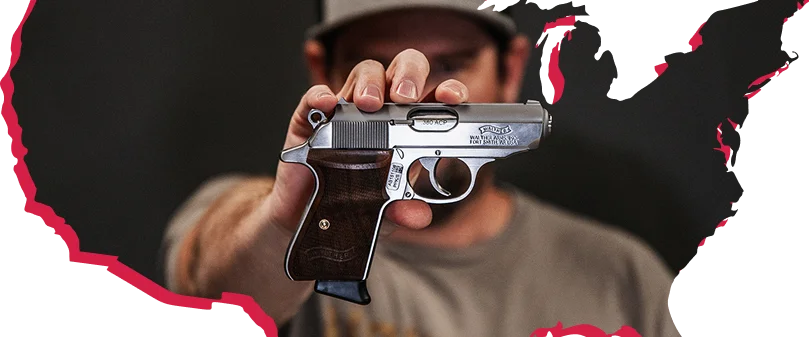

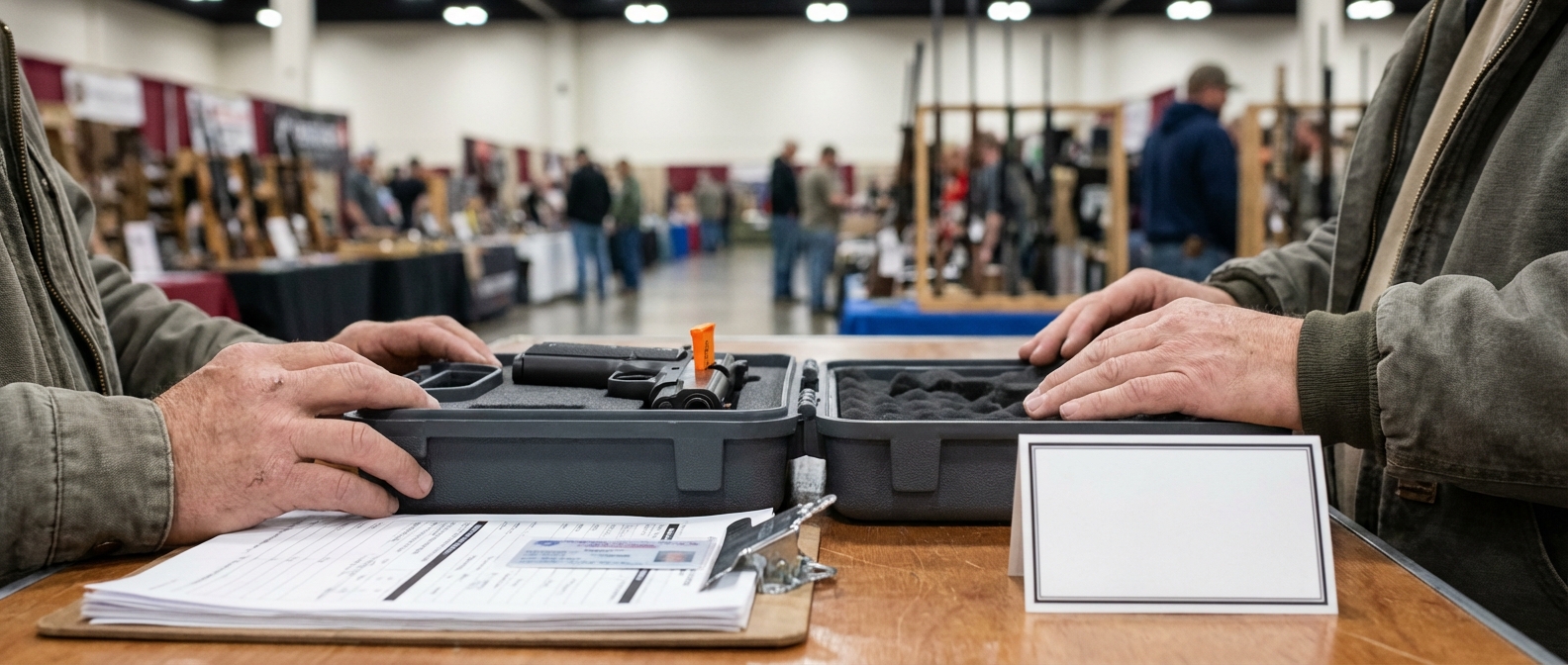

You bought a gun at a show, and now you want to sell it, but the buyer keeps asking for “paperwork” you don’t have, or you’re second-guessing whether the “gun show loophole” changes what you’re allowed to do. That uncertainty is where people get stuck, not the sale itself.
You’re trying to sell confidently, without accidentally breaking a rule, and without fumbling the handoff when someone asks, “So how did you buy it?”
The gun-show part usually isn’t the thing that complicates resale. The ATF has been clear that the same federal firearms laws apply at gun shows as they do anywhere else, a show doesn’t create a special exemption. What actually changes your next steps is how you originally bought it and what your current state and local transfer requirements are today.
“Gun show purchase” usually means one of two real scenarios: you bought from a Federal Firearms Licensee (FFL), a dealer licensed by ATF to handle firearm business and transfers, or you bought from another individual walking the show. If you bought from an FFL, ATF says the dealer still has to complete ATF Form 4473 and meet Brady requirements, including a NICS background check, the federal check process an FFL typically initiates before a transfer, unless an exception applies. ATF also notes unlicensed individuals can sell from a personal collection at a gun show only if they’re not engaged in the business.
By the end, you should be able to quickly spot which purchase path fits your gun, understand what paperwork may (or may not) exist, and choose a clean transfer method that matches your state’s rules and the buyer you’re dealing with.
Dealer Table vs. Private Seller at a Gun Show
Once you’re past the “a gun show is just a venue” part, resale usually comes down to one question: did you buy from a dealer table, or from an individual walking the aisles? That purchase path determines what paper trail exists today, and how much confidence a future buyer feels.
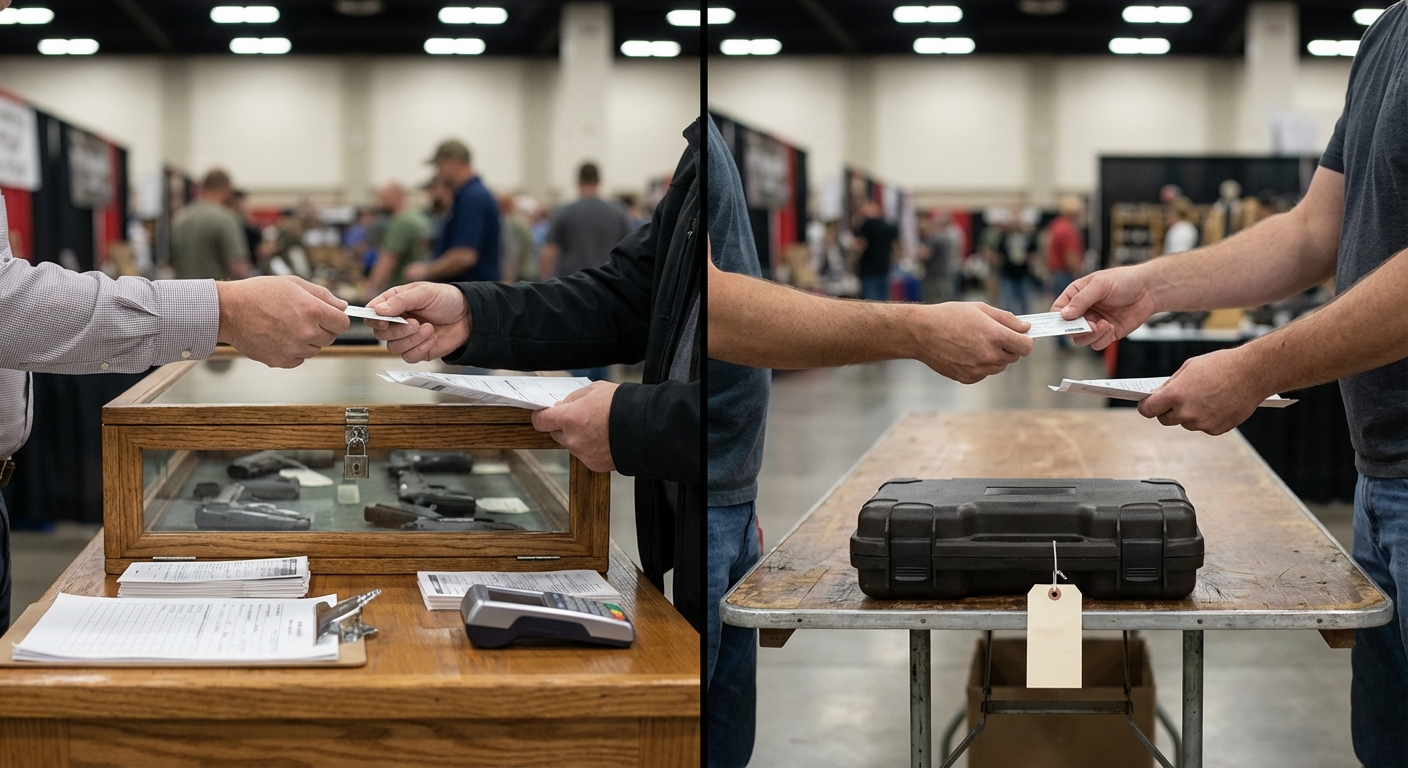
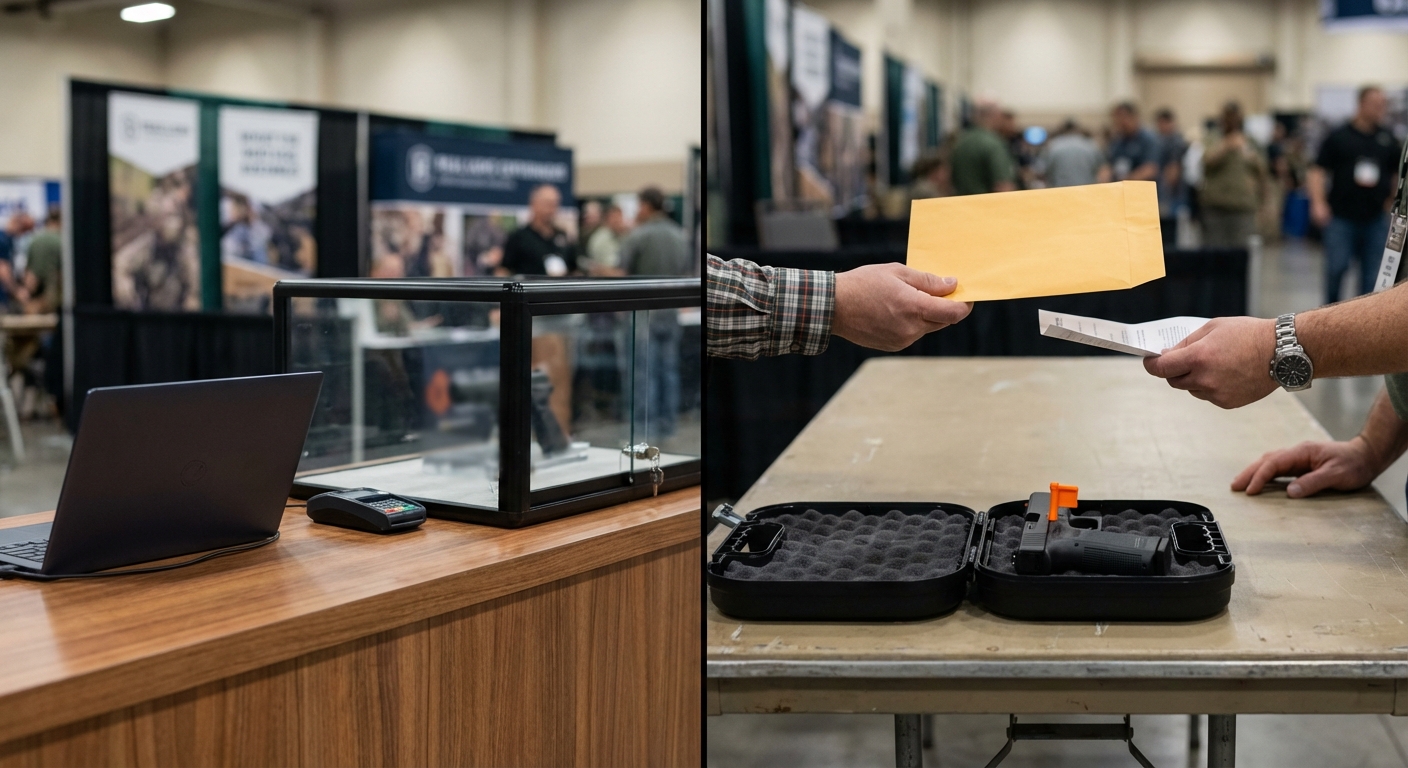
You interacted with an FFL (licensed gun dealer), which means the transfer was documented at the time. In an over-the-counter FFL transfer, ATF Form 4473, the Firearms Transaction Record completed for most over-the-counter transfers by an FFL to a nonlicensee and retained by the dealer as required, is the primary required transaction record. The dealer verifies buyer identity using a government-issued photo ID and records firearm details like make, model, serial number, type, and caliber or gauge. The catch is that you usually do not leave with a copy of that 4473, even if you did get a store receipt, so your “proof” today is often just your ability to describe that it went through a dealer.
A private-party transfer, a firearm transfer between two unlicensed individuals, can be light on paperwork. Federally, a missing gun-show receipt is not, by itself, a bar to resale by a private owner, but it can create friction because buyers still ask, “Where’d you get it?” State law may add restrictions too, for example Colorado has required most private transfers to be processed through a licensed dealer since July 1, 2013.
- Prep clear photos and the exact make, model, and serial number so a buyer can verify what you’re offering.
- Explain the purchase path in one sentence, “Bought from a dealer table and did the paperwork,” or “Bought private at the show, no receipt, but I can do a bill of sale if you want one.”
- Use an FFL transfer versus a private-party sale if you want more structure; a dealer typically just needs the firearm and your ID, and they handle the required forms for the transfer.
If a buyer wants documentation anyway, a simple bill of sale is often enough to make them comfortable, and an FFL-run transfer adds the standard federal forms to the process.
If you choose a dealer route, you can also confirm the shop is actually licensed using ATF FFL eZ Check, ATF’s online tool to confirm an FFL license number corresponds to a current, valid license record. You only enter the first 3 digits and last 5 digits of the 15-digit FFL number, the middle 7 are not required.
Your self-check is simple: which of the two purchase paths describes your gun? Then do one thing that pays off fast, have your firearm details and a calm, consistent “how I bought it” explanation ready before you list it.
Legal Checklist for Resale
Once you’ve got a handle on how you originally bought it, the next set of questions is less about the gun show and more about the person across the table. Resale compliance usually comes down to who the buyer is, where they live, and what your state requires for a lawful transfer.
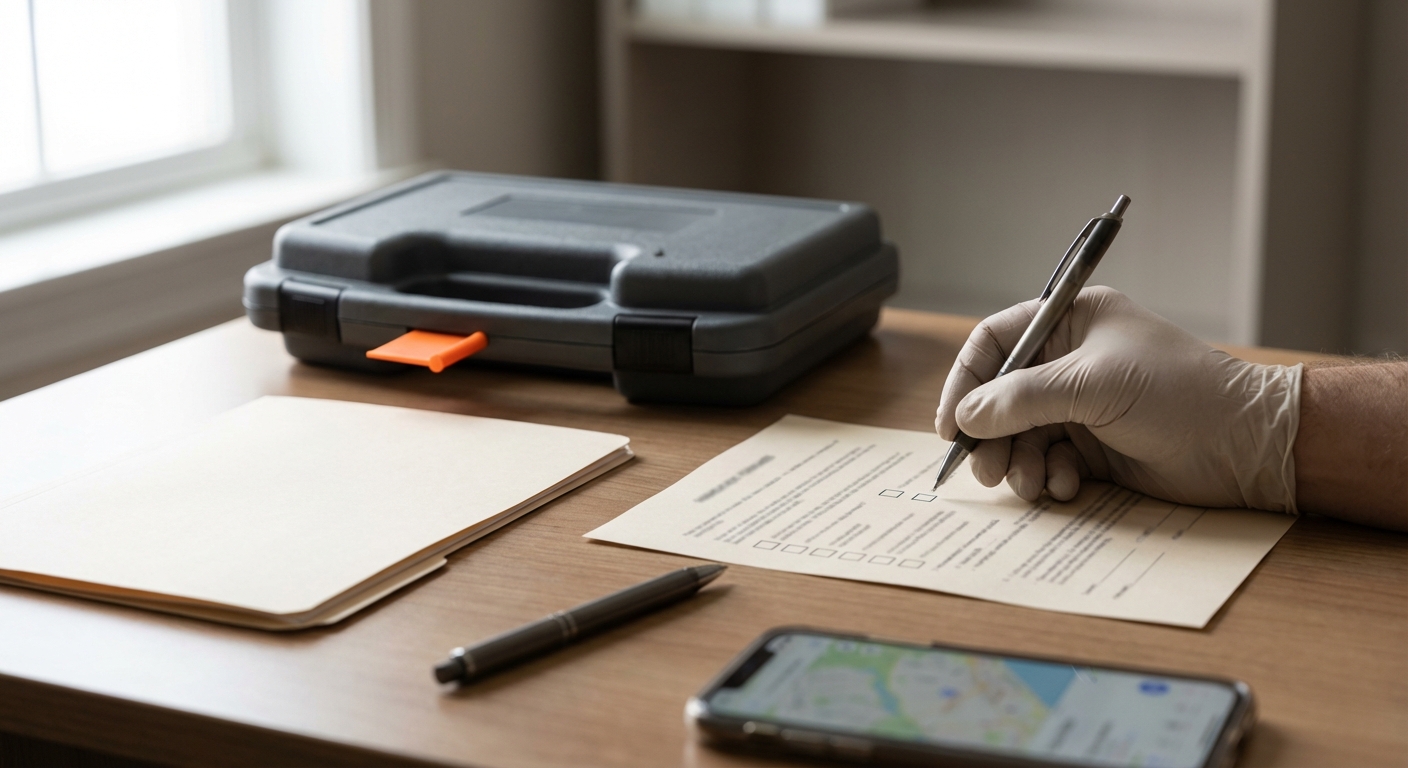
Once you know whether you are buying from a dealer table or a private individual, the compliance checklist narrows fast to three questions that decide most “accidental” violations: Who is the buyer, are they a resident of your state, and what extra steps does your state tack on before a transfer is lawful?
If the person on the other end of the deal throws off eligibility red flags, stop there. Under federal law, it is unlawful to sell or otherwise dispose of a firearm to someone you know, or have reasonable cause to believe, is a prohibited person, meaning someone federally barred from possessing guns or ammunition (ATF summary of 18 U.S.C. § 922(d)). “Reasonable cause” is the tripwire, if a buyer hints they cannot pass a background check, asks you to “not write anything down,” or says the gun is “for someone else,” those are reasons to walk away.
The second federal fork is residency. If the buyer lives in another state, you are dealing with an interstate transfer, a cross-state handoff that generally has to be completed through an FFL (licensed dealer) when the recipient is a nonlicensee. In plain terms, you usually cannot legally hand the firearm directly to an out-of-state private buyer; the transfer is routed through a dealer, typically in the buyer’s state, so the dealer can complete the transfer lawfully.
Age is the other place people misapply what they “heard at a show.” Federal minimum ages for dealer transfers are hard stops: an FFL cannot sell or deliver a handgun to anyone under 21, and cannot sell or deliver a long gun to anyone under 18. Private-transfer rules can be more restrictive depending on your state and the situation, so do not assume the dealer minimums are the only limits that matter.
Two sales that look identical on a gun-show floor can be treated completely differently once you layer in state law. Some states require universal background checks even for private-party transfers, which functionally forces you to complete the handoff through a dealer—especially if you’re trying to sell a gun without a background check. For example, Colorado has required most private firearm transfers between nonlicensed persons to be conducted through a licensed gun dealer who obtains a background check (effective July 1, 2013). Other states add permits to purchase, waiting periods, or registration-style steps that change what “legal” looks like even when both people are in the same state.
The practical move is simple: check your current state requirements before you list the gun or agree to meet. It is much easier to plan for a dealer-facilitated transfer upfront than to discover, at the parking lot, that your state requires a background check, permit, or specific process you did not account for.
Examples of how state rules can differ (always confirm current law before you transfer):
- Texas: Texas law does not require a background check or FFL involvement for a private, intrastate transfer between two Texas residents who are not prohibited. Texas also does not require permit-to-purchase, registration, or a state waiting period, which is why confirming “Texas resident” and watching for prohibited-person red flags carries so much of the compliance load.
- Florida: Florida law does not require a background check or FFL involvement for a private, intrastate transfer under state law. The catch is that the same federal rules still apply, so you still need to treat out-of-state buyers and prohibited-person warning signs as deal-breakers.
When in doubt, especially across state lines, route the transfer through an FFL.
How to Price It
Once you’ve got a legal transfer plan in mind, pricing is the next place deals get won or lost. Buyers tend to care less about where you bought it and more about what it is, what shape it’s in, and how sure they feel about what they’re getting.
The compliance side is only half the battle. The other half is pricing it like any other used gun, then adjusting for confidence. A “gun show” origin does not automatically add value, and it rarely subtracts value either. Buyers still pay for the same basics: verified condition, correct configuration, and a price that matches real market comps.
Condition does the heavy lifting, and “condition” is more than exterior wear. Finish wear can be cosmetic, but bore condition (pitting, erosion, crown damage) changes how buyers perceive risk, which shows up directly in offers. The catch is that most sellers anchor to what they paid at the show or to the cleanest example they saw on a table. The fix is simple: describe wear precisely and photograph it clearly so the buyer is negotiating the gun, not guessing about it.
Originality is the next lever. Factory-correct parts, matching-number guns, and unaltered finishes generally price more confidently than examples with permanent changes. Aftermarket parts can help a buyer, but they can also shrink your buyer pool if the mods are taste-specific, hard to reverse, or raise questions about who did the work. Accessories can move the total package too, especially extra magazines, factory boxes, and factory sights or grips you kept. Finally, demand is local and seasonal: state compliance features, hunting seasons, and what’s common in your area can shift how fast a “fair” price actually sells.
Start with sold data, not asking prices. GunBroker’s “Completed Items” (when enabled) can show realized sale prices for specific listings, which is closer to what buyers actually paid than an optimistic posting that never sold. Use the Blue Book of Gun Values as a second check, it’s widely used and publishes value ranges by condition grade, but only after you’ve matched the exact model variant and condition level.
Missing purchase paperwork usually is not a practical blocker to selling, but an unclear history can lower offers because it adds uncertainty. Provenance can support stronger pricing on collector-leaning guns, where originality and documented history matter. If all you have is the gun, create confidence now: take dated photos of the bore and any wear, list serial-range details accurately (without broadcasting the full number publicly), gather any factory parts you removed, and note any known service work.
One example of how appraisals are commonly framed: an expert appraisal for valuing firearm collections typically weighs condition (including finish and bore condition), originality (such as matching numbers), and aftermarket parts, and it may also use current market data to anchor offers to real comps rather than MSRP.
- Pull 5 to 10 comparable completed sales for the same variant and setup.
- Match condition honestly, including finish wear and bore notes, plus accessories included.
- Set a realistic range, then add a small negotiation buffer without drifting into unsold “wish prices.”
Do this next: pull completed-sale comps, set a tight range that matches condition and features, then document wear and included items so buyers can pay for facts instead of uncertainty.
Where to Sell
Pricing sets expectations; where you sell determines how much work you do to reach that number. This is where you decide how much you want to screen buyers, how much structure you want in the transfer, and how quickly you want the money.
Once you’ve got a price target, the real decision is which of three dials you want to turn: maximum dollars, fastest cash, or the least hassle and risk. The fact that the gun originally came from a gun show does not lock you into any single path.
A private-party sale can hit closer to “top dollar” because you are not paying a middleman. The friction is everything else: you have to screen the buyer, coordinate a safe meetup, and follow your state’s transfer requirements. Federally, keep the baseline in mind: interstate transfers to a nonlicensee must go through an FFL (licensed dealer), and even in-state transfers are not something to do if you know or reasonably believe the buyer is prohibited from possessing firearms.
Consignment is the “I want market exposure without managing people” option. The shop handles display, payment collection, and the actual transfer paperwork, which reduces both no-shows and compliance anxiety. The catch is cost: published shop policies commonly land around a 20 to 25 percent commission, or the seller receiving about 70 percent of the final sale price, depending on the store’s structure.
If you want the cleanest handoff, an FFL is responsible for ensuring the transfer is conducted lawfully.
The tradeoff is economic: a dealer’s offer typically reflects their need to resell at a profit and carry inventory risk, so it often lands below what a patient private sale can bring.
Online listings widen your buyer pool, but out-of-state interest usually means the firearm will be transferred through an FFL to the buyer.
That can improve buyer confidence, but it adds coordination, possible fees, and shipping constraints depending on what you’re selling.
Direct-buy services prioritize speed and predictable steps over squeezing out every last dollar. Comparing your options for selling a gun can help you decide whether speed, price, or simplicity matters most.
USPS generally prohibits nonlicensees from mailing handguns; under USPS Domestic Mail Manual rules, handguns are mailable only in limited circumstances, such as between certain licensees and government entities. USPS does permit mailing rifles and shotguns when compliant with law, but the firearm must be unloaded and not readily operable from outside the package.
Meet in well-lit public places, limit how much personal info you share during negotiation, and do not bring a loaded firearm into an unfamiliar environment. If anything feels unclear, especially with out-of-state buyers or shipping, choosing an FFL-involved path is usually the most defensible way to close the deal.
A Practical Resale Checklist
Once you’ve picked a place to sell, it helps to slow down and make the handoff easy for both sides. A little prep up front also answers most of the “paperwork” questions without you having to argue about what happened at the gun show years ago.
Once you’ve picked a selling route and a realistic price range, the missing gun-show receipt or other paperwork usually isn’t the thing that makes a resale messy. Clean documentation and a compliant transfer method you choose today are what keep the process organized.
- Confirm legality where you live. Check current state and local rules before you list or meet anyone, because eligibility, transfer requirements, and transport rules can change and can be city-specific.
- Record identifying details and take photos. Write down make, model, serial number, and caliber or gauge for your records, then take clear photos of both sides, markings, and any notable wear. This helps you list accurately and protects you if questions come up later.
- Assess condition honestly. Note basic function (safety, action, magazines), and do a quick bore and finish check. Gather accessories you’ll include (case, extra mags, optics boxes), since “what’s in the deal” affects buyer expectations more than people think.
- Set a price range using comps. Use completed-sale comps and reference guides to bracket a low and high number, then decide your walk-away minimum before you talk to buyers.
- Choose a compliant transfer method. If anything feels unclear, using an FFL (licensed dealer) shifts the legality checks onto a process built for transfers.
An FFL transfer is also a simple way to reduce “did I do this right?” stress, because the dealer is responsible for ensuring the transfer is conducted lawfully.
- Document the deal without oversharing. Even if you have zero paperwork from the gun show, you can create resale documentation now with a simple bill of sale, while keeping personal data exposure minimal.
- Meet and handle safely. Keep it unloaded, keep it cased, and choose a public, well-lit location if meeting. Don’t allow handling that sweeps people, and keep ammunition separate during inspection.
No receipt: Not having a gun-show receipt is not automatically a federal barrier to selling. What matters is that you can lawfully possess it and you transfer it in a compliant way.
Inherited or unsure history: If prior transfers are unclear, default to an FFL transfer for a cleaner chain of custody.
Stolen-gun check reality: The NCIC stolen-gun file is not publicly searchable, so private individuals generally can’t run an official nationwide stolen check. Police “courtesy” serial-number checks vary by jurisdiction, and many departments won’t do them for private transactions.
Transport rules can be specific: For example, Illinois law says that with a valid FOID, an unloaded firearm must be enclosed in a case; “unloaded” means no ammo in the chamber and no ammo in a magazine inserted in the firearm, and the “case” must be fully fastened with no portion exposed (430 ILCS 65).
If any part feels uncertain, especially buyer eligibility or anything crossing state lines, route the transfer through an FFL.
Bottom Line
This is the same theme from the first questions buyers ask: the gun show isn’t the special rulebook, it’s just where you happened to buy it. If you used the checklist, the gun-show origin usually is not what moves your resale result, transfer rules, documentation confidence, and comp-based pricing do. ATF has reiterated there is no special federal rule just because a firearm is bought or sold at a gun show, the same laws apply. The only “paperwork gap” tends to come from how you bought it, a dealer-table sale typically leaves a cleaner trail than a private seller, which is why you might not have a receipt. The friction shows up when buyer residency and state overlays enter the chat, cross-state interest generally means running the deal through an FFL (licensed dealer), and even a simple, privacy-conscious bill of sale can steady buyer confidence. Price it from real comps, then pick the channel that matches your speed vs price tradeoff.
If you want a “Safe • Legal • Hassle-Free” route, explore Cash My Guns, a nationwide online firearms purchasing service operated by Dunlap Gun Buyers, a federally licensed firearms dealer (FFL).