
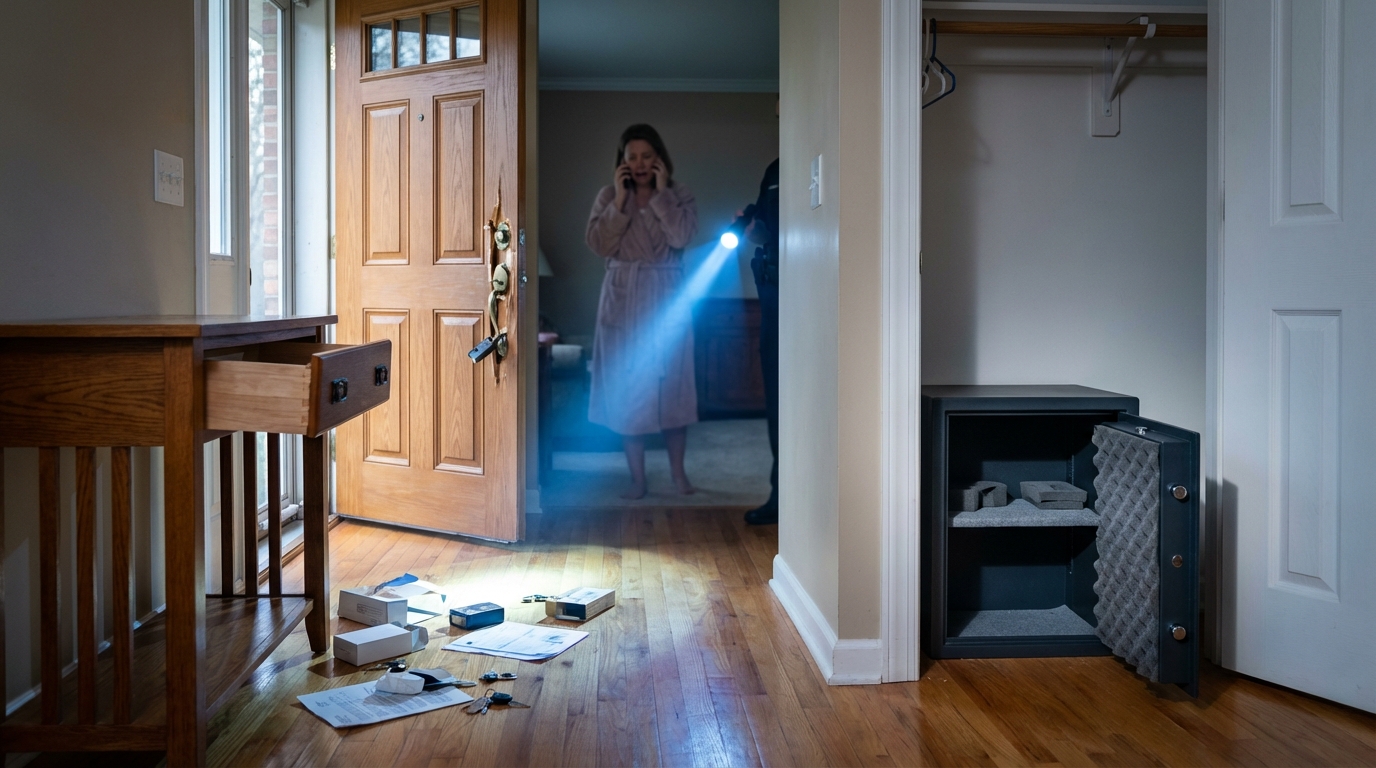

The first 72 hours matter most. You’re standing in a room that doesn’t feel like yours anymore, and the thought hits hard: “I don’t even know what’s gone, but I know a gun is missing.” In that moment, you’re not thinking about perfect paperwork, you’re trying to get control of the situation fast.
The pressure comes from three directions at once: safety for everyone in the home, the paperwork that follows a theft, and the money tied up in what was taken or damaged. Most homeowners and renters policies commonly include a “Duties After Loss” condition that requires prompt notice to the insurer “as soon as practicable,” so waiting until you feel calm can create avoidable friction.
The tradeoff is speed versus accuracy. Moving quickly helps with safety and starts the claim clock, but rushing can leave you with missing details you’ll be asked for later. “Good” in the first 72 hours looks like a tight, urgent gun-owner checklist: confirm what’s missing as safely as you can, give prompt notice, and recognize that policies commonly require notifying police for theft and providing the report information to your insurer when requested. Policies also typically require reasonable steps to prevent further damage and to keep records of related expenses, so every cleanup run and temporary repair matters.
Start a simple written log now, who you called, when, and what was discussed, and don’t discard anything from the scene until it’s documented, so you can move fast today and still have clean, defensible paperwork later.
From there, everything else gets easier: a better police report, a smoother insurance claim, and a clearer decision on whether you’re replacing what was taken or selling what you still have.
Report, Document, and Freeze the Paper Trail
If you want the best shot at recovery and a clean claim, your list has to be serial-first. The serial number is the firearm’s unique identifier, and it’s what turns “I think it was a Glock” into something police can actually tie to you and an insurer can actually pay on.
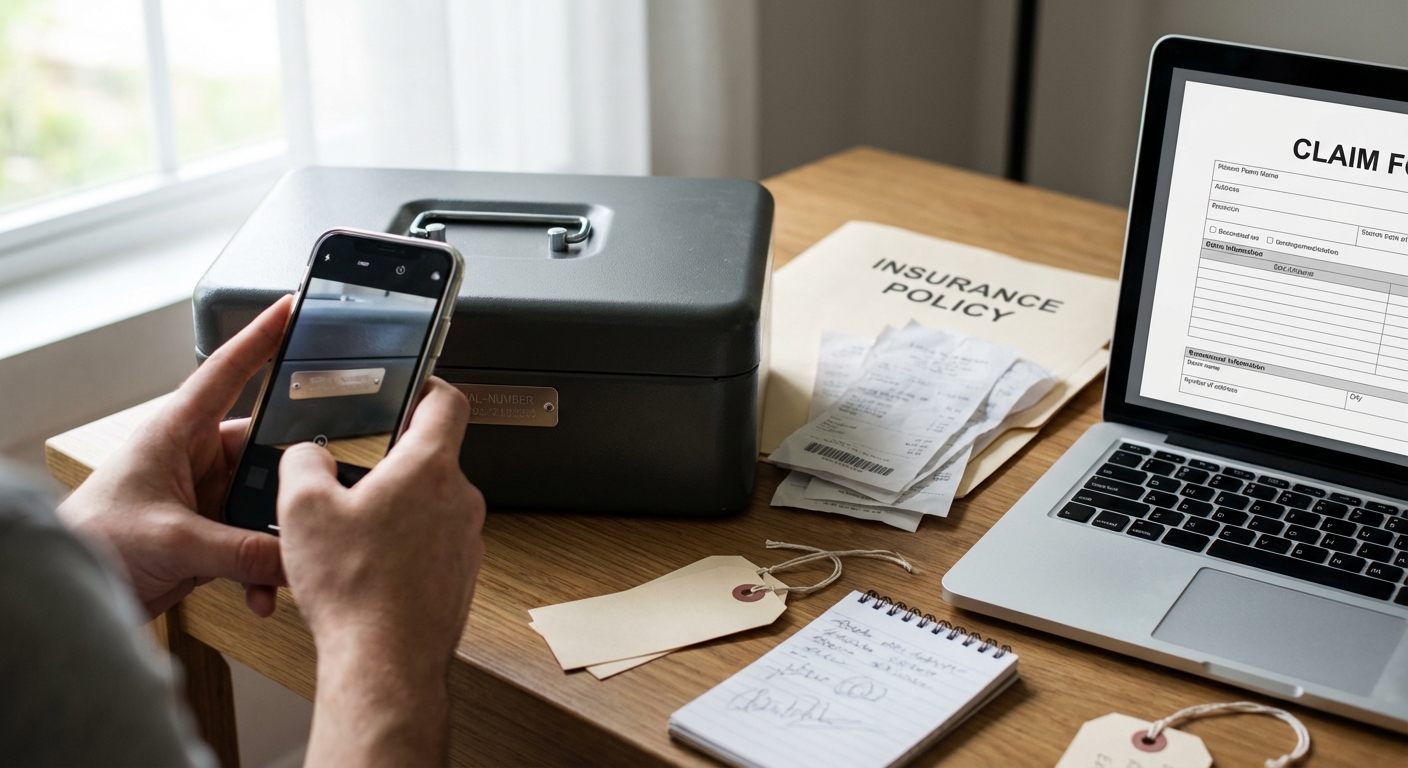
People usually remember the category of gun, but law enforcement needs specific identifiers to log it correctly and connect it to a recovered firearm later. In practice, your goal is to give them a complete set of fields the first time, so the entry in systems like the NCIC Gun File, a law-enforcement database file for stolen guns, is clean and searchable.
- Serial number
- Make and model
- Caliber or gauge
- Firearm type (pistol, rifle, shotgun, receiver, etc.)
Even without any kind of firearm “registry,” those identifying details are enough for a recovered gun to be recognized as stolen and matched back to a report.
It’s normal to have gaps after a break-in, especially if paperwork, cases, or the safe contents were taken. Start rebuilding from what you already have access to, then fill in the blanks as you find them, and don’t wait weeks to begin.
Check old range photos (serials sometimes show), purchase confirmation emails, credit card statements, receipts, and any prior appraisals, because insurers typically ask you to prove what was stolen and support the claim with documentation.
If the serial number is missing, contact the original dealer with the approximate purchase window. An FFL may be able to help locate the serial from purchase records when you need it for the police report—and if you later need to sell a gun without the box or papers, those same records can still help.
If a silencer, SBR, machinegun, or other NFA item is lost or stolen, you generally notify local law enforcement and also notify ATF’s NFA Division as soon as possible, typically in a written report that identifies you and the item (including the serial).
Do this today: start one master spreadsheet or notes doc with one line per firearm, serial, make, model, caliber/gauge, type, plus any photos and receipts you can find, then keep updating it as you recover info.
Once you’ve got that inventory in one place, you’re ready for the part that surprises most people: what the policy actually pays can hinge on limits and settlement terms, not just whether theft is covered.
Insurance Coverage and Claim Strategy
Most firearm theft claims go sideways for boring reasons: your policy’s built-in limits, how it settles property (ACV vs RCV), and how much proof you can put on the adjuster’s desk. If those three don’t line up, the claim drags, the payout shrinks, or both, even when you’re clearly “covered.”

Many homeowners and renters policies treat firearms as personal property under Coverage C, but theft is where people hit a wall. A lot of policies include a firearms theft sub-limit, meaning a special limit that caps what the insurer will pay for stolen firearms under the base personal property coverage. If your collection is worth more than that built-in cap, the claim can be “approved” and still feel like a denial because the math stops at the limit.
The clean way around that problem is a scheduled personal property rider, an optional add-on where you list specific items so they’re insured for higher amounts than the base limits.
Settlement is the second trap. Actual Cash Value (ACV) pays what the property is worth at the time of loss after depreciation. Replacement Cost Value (RCV) pays the replacement cost for like kind and quality without subtracting depreciation. The shorthand insurers use is ACV = RCV − depreciation, and that subtraction is where your check can drop fast.
If you want your insurance claim firearm file to move, give the adjuster something they can verify quickly, not a story they have to reconstruct (and make sure your expectations match full insurance coverage terms in writing).
- Police report number
- Serial-based inventory (one firearm per line, exact make, model, caliber)
- Receipts or invoices, plus any credit card or email purchase confirmations
- Photos, ideally showing the serial number and distinguishing features
- Appraisals for unusual, collectible, or custom guns
- Separate documentation for accessories (optics, lights, suppressor mounts), not bundled into one line item
Claims stall on vague descriptions, missing serial numbers, lumping accessories together with no proof, and waiting too long to notify the carrier.
- Export your serial-number inventory into a single PDF.
- Attach receipts, invoices, and appraisal pages behind the matching line items.
- Add 1 to 3 photos per item, prioritizing serials and unique identifiers.
- Include the police report number on page one.
If the adjuster pushes back on value, this is where your documentation has to graduate from “proof it existed” to “proof this number makes sense.” That’s a valuation problem, and it’s fixable.
Valuing Firearms Without Guesswork
A solid valuation is evidence, not a vibe. The goal is a defensible number you can stand behind for a claim or a sale, and you get there the same way pros do: pull real, completed-sale comps and write down the exact condition of what was stolen and what’s still in your safe. You don’t need to be a pricing expert, you just need to be organized.
Asking prices are marketing, not market. Build your comps from completed transactions, for example GunBroker completed auctions or major auction-house sold results, then document the source and the date range you pulled. Keep it tight, the last 30 to 90 days is usually more useful than “sometime last year.”
The detail that keeps comps credible is matching the real variant. “Glock 19” is not one price, and neither is “P320.” Match generation, SKU-level features (optic cut, safety model, finish), and included mags or factory case when those were part of the sold listing. Use 3 to 5 comps per firearm so one outlier doesn’t hijack your number, especially when supply and demand swing prices.
Small condition notes move value more than most people expect. Finish wear (holster rub, corrosion, touch-up), bore condition (bright vs pitted), matching numbers on collectible or surplus guns, and the presence and quality of aftermarket parts all materially shift what buyers will actually pay. Write what you can verify, not what you assume, and back it with clear photos if the firearm is still in your possession.
Common question: can you “sell damaged guns after break in” if a remaining firearm got dinged during the incident or evidence handling? Yes, but your comps need to match that reality, and your condition notes need to say exactly what’s wrong.
Optics, lights, suppressor mounts, and custom triggers can change resale value, but reimbursement or buyer credit often depends on what you can prove. Treat accessories and major aftermarket parts as their own line items, and support them with receipts, invoices, and purchase records plus photos that show the item and serial number when applicable.
If you want a reality check, an expert appraisal to substantiate value is a clean option for rare, collectible, or high-value guns, or any time your documentation is thin. Cash My Guns, for example, evaluates condition using finish, bore, matching numbers, and aftermarket parts, which is exactly the kind of detail you want captured on paper.
Lock it in by saving screenshots or links of your sold comps, then create a one-page valuation note per gun: 3 to 5 completed comps plus your condition notes plus separate accessory line items with proof. If you need a baseline, use a general guide to estimating what a gun is worth to sanity-check your range. That packet keeps your number consistent no matter who asks for it.
Once you’ve got a defensible value, the next decision stops feeling emotional and starts feeling practical: what gets replaced, what gets kept, and what gets sold.
Replace, Keep, or Sell After Theft
Your best move is to decide in stages, not all at once. It’s normal to want to replace everything immediately, but sequencing wins: replace what you truly need first, then decide what to keep or sell once your claim and any recovery chances are clearer.
- Role-first: replace only what fills an immediate gap, like a carry setup, a home firearm, a hunting tool, or a specific collecting piece you actually use.
- Budget-second: set a hard cap based on cash on hand, not the payout you hope to get.
- Timeline-third: buy for the next few weeks, not the next few years, until you see what the claim really covers.
Recovered firearms often go through testing, including fingerprints, DNA work, and NIBIN entry or comparison. If the gun is evidence, it can sit in an evidence room instead of coming straight back to you, which turns “recovered” into “delayed.” If it does return after a payout, the paperwork usually triggers a claim adjustment conversation, not a free extra firearm.
Ownership and salvage outcomes depend on your policy language. Insurers generally must clearly state salvage or recovered-property rights in the policy to claim them, and many policies let you take possession of recovered property with the claim payment adjusted accordingly. Keep every receipt and serial-number record together, so you don’t accidentally sell something that later becomes part of a recovery or claim adjustment discussion. Some services, including Cash My Guns, offer prepaid insured shipping for sales, which helps keep documentation clean.
Write this 3-line plan today:
Pick your must-replace list, 1 to 2 items.
Pause on everything else until coverage is confirmed.
Keep every receipt in one folder.
If you do decide to sell, the “how” matters as much as the “what,” especially when you’re still cleaning up the paperwork from the break-in—review your options for selling a gun before you commit.
Selling Safely and Legally by State
When you sell after a break-in, compliance is what keeps a bad week from becoming a worse one. If you’re stressed, tired, and just trying to close the loop, “do it the most correct way” beats “do it the fastest way,” especially because one wrong assumption about residency, paperwork, or transfer method can turn into a real problem.
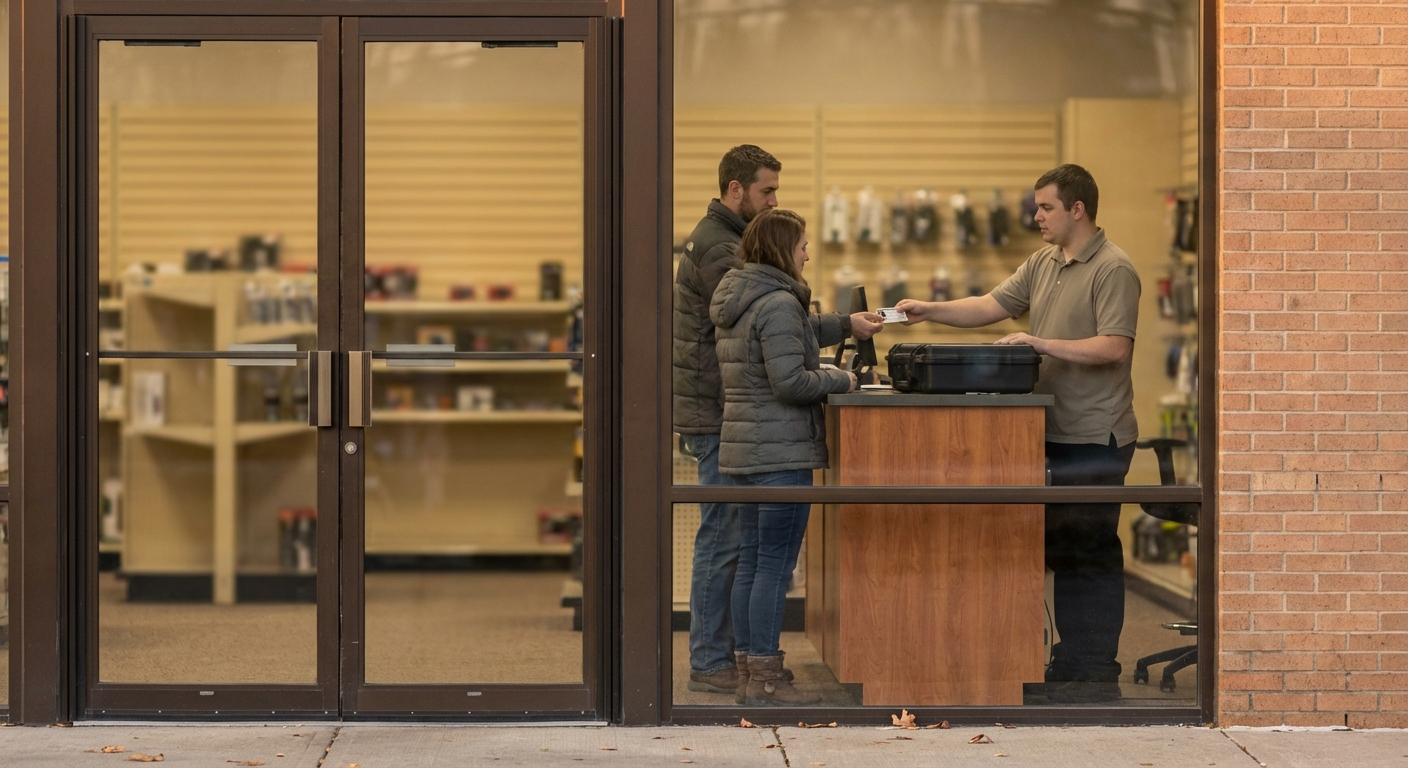
Sell to an FFL. Working with a federally licensed firearms dealer (FFL) gives you a clear paper trail, and the dealer handles the compliance-heavy steps.
Consignment through a dealer. You leave the firearm with an FFL, they market it and transfer it to the buyer, and you get paid after it sells. The catch is timing and fees, but it’s the cleanest way to avoid screening strangers yourself.
Online marketplace workflows that route to an FFL. You can list online, but the actual transfer still runs through a dealer. Use services that provide compliant, insured shipping and clear instructions, and skip any buyer pushing “no FFL needed.” For more detail, see selling guns online the right way.
Private-party in-state sales (where lawful). This is the most hands-on option, and the scam risk is highest. Verify the buyer is an in-state resident and not prohibited, and keep a simple bill of sale.
Federal law is the big guardrail here. Under 18 U.S.C. § 922(a)(5), a private, non-FFL seller generally cannot transfer a firearm to a non-resident. Relatedly, 18 U.S.C. § 922(a)(3) generally makes it unlawful for a non-FFL to bring into, or receive in, their home state a firearm obtained out of state, with limited exceptions. The practical takeaway is straightforward: interstate private-party sales typically must go through an FFL in the recipient’s state, because that’s the legal pathway built for interstate transfers.
Rules change and local details matter, so treat these as snapshots, not legal advice. If you need a quick state-by-state guide to selling a gun, check your specific state before you list or transfer.
- Texas: Private-party sales between Texas residents generally don’t require an FFL or background check under state law, but federal prohibitions still apply.
- Florida: No general statewide requirement for private-party sales to go through an FFL or background check, while FFL sales require checks.
- California and New York: Commonly treated as states where transfers generally route through an FFL and a background check process.
- Pennsylvania: Commonly requires handgun transfers via an FFL or the sheriff.
If you’re trying to sell damaged guns after a break in, disclose the condition clearly and let an FFL buyer inspect, appraise, and transfer it correctly. If there’s any chance the buyer is out of state, or you just want the simplest path, choose an FFL-mediated sale and keep the minimum info handy: your ID, the firearm’s make, model, caliber, serial number, clear photos, and an honest condition description.
A Clear Plan for Moving Forward
You can make the next claim dramatically easier with 30 minutes of prep, and the best time to do it is while this one is still fresh-turn your hard week into a stronger setup.
- Document what you own going forward. Project ChildSafe, developed by the National Shooting Sports Foundation (NSSF), specifically advises recording firearm serial numbers and provides a downloadable record sheet you can keep with your records.
- Upgrade storage with clear eyes. A UL Residential Security Container rating is a consumer burglary-resistance rating (UL 1037), and it is not the same thing as a UL TL burglary safe rating, so buy based on the threat you actually want to slow down.
- Align coverage to your collection. Scheduled personal property coverage (a rider) typically requires an itemized list of what you’re adding, and it’s used to insure high-value items beyond standard policy limits.
Tonight, record serials, snap a clear photo of each firearm, and store a copy offsite.
Conclusion
Fast action plus precise documentation is what protects you now. The first 72 hours are where most claims get won or lost, because prompt notice and a police report are commonly required under “Duties After Loss,” and that simple written log you start on day one is what keeps the story straight when you’re tired and the questions keep coming. Go serial-first because accurate serial-number documentation improves recovery odds and gives your insurer clean proof of what was taken; then sanity-check your coverage, since many policies cap firearms theft at a $2,500 sub-limit per loss unless the guns are scheduled or endorsed. When it’s time to put numbers on the loss, completed-sale comps and clear condition notes keep valuation from turning into guesswork. Once the dust settles, decide whether you’re replacing, keeping, or selling-and when you do sell, leaning on an FFL-mediated path is often the simplest way to keep the transfer clean.
Take one hour today to finalize your serial-based list and send it where it needs to go.
If you’ve decided to sell, Cash My Guns is a nationwide online service that buys guns, ammunition, and accessories directly.