
Asking prices for the same gun are all over the map, and your buddy’s “it’s worth $2,000” doesn’t match what you’re seeing online in 2026.
If you’re deciding whether to sell, insure it properly, or just understand an inherited firearm before it sits in a closet for another decade, you need a price reality check that isn’t based on wishful thinking.
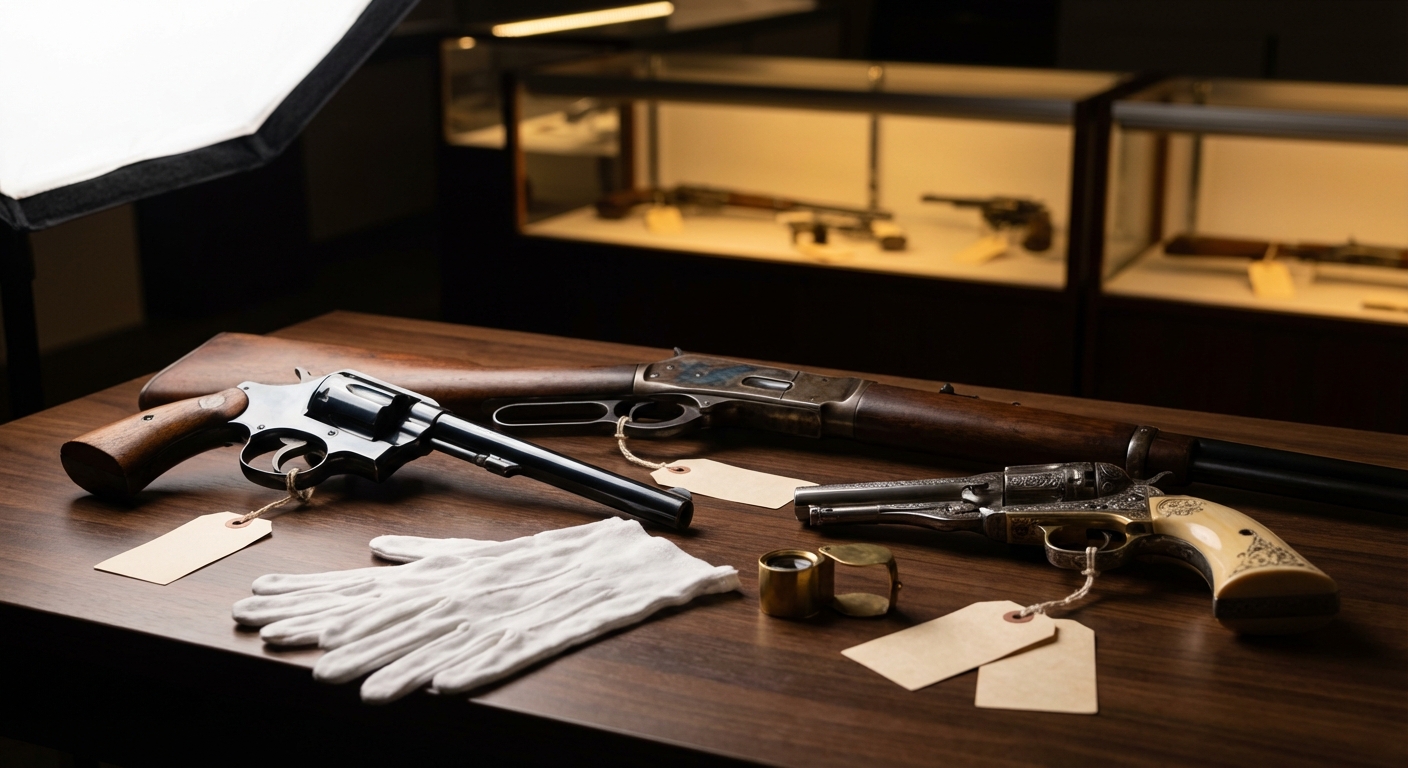
Here’s the tension: “collectible” isn’t the same thing as “old,” and even the same model can swing wildly based on configuration, condition, documented history, and what collectors are chasing right now. The fastest way to sanity-check your expectations is to anchor your comps to completed sales, not optimistic listings, which is why “prices realized,” the published post-sale results showing what items actually sold for, matter more than any asking price. Rock Island Auction Company (RIAC) and Morphy Auctions both publish searchable online catalogs and prices realized that are commonly used as comparable-sales data for appraisals.
Labels also change the conversation, an “antique firearm” is a federally defined category that includes guns made in or before 1898 (18 U.S.C. § 921(a)(16)), and “curio or relic (C&R)” is a federally defined collector category (27 CFR 478.11) tied to recognized collector interest. You’ll walk away able to spot the value drivers, flag what deserves a closer look, and take responsible next steps.
Value Drivers In The 2026 Market
Most “value mysteries” aren’t mysteries, they’re missing details. In 2026, the biggest price swings come from a handful of verifiable specifics you can confirm fast, and sometimes improve by undoing past choices like pulling off aftermarket add-ons and returning to factory parts.
Two guns that look “the same” across a table get very different offers once buyers spot finish wear, edge rounding, or pitting, and once they see the bore, because those signals track real use and long-term care. Originality separates a clean example from a parts gun: “numbers matching” means the serialized components match as originally assembled, and collectors pay for that confidence. The fastest value-killer is often aftermarket parts, especially when the original pieces are gone.
“Rare” only moves the needle when it’s tied to something concrete: a limited production window, an early run, or an unusual factory configuration that can be verified, not just a story.
Provenance, meaning documented ownership history plus supporting paperwork, boosts collector confidence and can lift value because it reduces doubt about what the gun actually is and where it’s been.
Valuation factors often include make/model and condition details like finish, bore, matching numbers, and aftermarket parts—core collectibility factors like rarity, provenance, and condition—and valuations also incorporate market data from dealer listings and auctions, along with seasonality and regional demand.
- Make, model, and exact variant
- Caliber and generation or era, plus serial range if relevant
- Clear photos (both sides, markings, bore, wear points)
- Accessories included (box, mags, grips, slings, etc.)
- All modifications and any factory-original parts you still have
- Any provenance paperwork
If you can describe your gun in one clean paragraph with photos and originality notes, your pricing gets dramatically more accurate.
Once you know what details actually move the number, it gets a lot easier to understand why certain models keep showing up in serious collector conversations—and how supply and demand affects firearm resale prices. The list below focuses on models where configuration, correctness, and condition routinely separate a “nice gun” from a high-dollar collectible.
Top 10 Most Valuable Collectibles
Collectors aren’t paying up for “a model name,” they’re paying up for the right era, the right configuration, and the right level of originality. The same gun can land in two totally different price tiers based on one swapped part or one honest factory feature.
Reminder: use completed sales as your anchor, because condition and originality routinely move value enough to halve or double what a similar-looking example brings.
- Colt Python (classic double-action revolver)
Why it’s hot: It’s the flagship of the “luxury revolver” era, with a reputation built on finish quality and collector nostalgia as much as mechanics.
Premium triggers: Early production, rare barrel lengths (2.5-inch, 3-inch), original boxes/papers, high-condition bright nickel and strong factory blue.- Condition watch-outs: Rebluing (softened markings, rounded edges)
- Non-factory grips, sights, or “action jobs” that remove originality
- Timing and lockup issues that signal heavy use
2026 range: $2,000 to $10,000+, depending on originality, finish, and barrel length.
Quick ID: 1950s to 1990s,.357 Magnum, vent rib barrel, full underlug, “Python” marked. - Colt Single Action Army (SAA)
Why it’s hot: It’s the American West in steel, and that cultural gravity keeps first-rate examples liquid at serious money.
Premium triggers: 1st Generation guns, rare factory finishes (original nickel, special-order), documented history (provenance), factory letter-confirmed configurations.- Condition watch-outs: Refinish that kills the “honest wear” look collectors pay for
- Non-matching numbers, replaced barrels, or re-engraving
- Ground markings and altered front sights
2026 range: $2,500 to $50,000+, with documented history and rare configurations far above that.
Quick ID: Late 1800s onward, commonly.45 Colt, fixed sights, loading gate, Colt SAA profile. - Winchester Model 70 (especially pre-64)
Why it’s hot: The pre-1964 guns are the benchmark for classic American bolt-action fit and finish, and collectors treat “pre-64” like a shorthand for era quality.
Premium triggers: Pre-64 production, Super Grade and Featherweight models, desirable chamberings, crisp original checkering and finish.- Condition watch-outs: Drilled and tapped receivers beyond factory pattern
- Sanded stocks, refinished wood, cut recoil pads
- Non-original sights, swivels, or altered barrel length
2026 range: $1,200 to $8,000+, driven hard by pre-64 status and condition.
Quick ID: 1936 to present, bolt action, controlled-round-feed on classic pre-64, “Model 70” marked. - Luger P08
Why it’s hot: It’s the iconic early 20th-century service pistol, and the collector game is all about correct parts, markings, and matching numbers.
Premium triggers: All-matching examples, unit-marked or special-issue variants, desirable makers and early dates, documented bring-backs (papered).- Condition watch-outs: Forced-matched numbers and restamped small parts
- Import marks that depress collector demand
- Refinished metal that looks “too perfect” for the wear
2026 range: $1,500 to $15,000+, with rare variants exceeding that.
Quick ID: 1900s to 1940s, 9mm is most common, toggle-lock action, distinctive grip angle. - M1 Garand (U.S. service rifle)
Why it’s hot: It’s the defining U.S. rifle of WWII and Korea, and collectors pay for correctness, not just “Garand-ness.”
Premium triggers: Correct, period-matching parts for the receiver’s era, desirable manufacturers, original finish, documented military history.- Condition watch-outs: Mixmaster parts when the seller claims “all original”
- Reparked metal and aggressively sanded stocks
- Added modern optics mounts or modified handguards
2026 range: $1,200 to $12,000+, with rare, highly correct examples above that.
Quick ID: 1930s to 1950s,.30-06, 8-round en bloc clip, long-stroke gas system. - Springfield 1903 / 1903A3
Why it’s hot: It’s the classic U.S. bolt gun, and “right configuration, right parts” is the difference between a nice rifle and a collector rifle.
Premium triggers: Early production features, correct WWI or WWII configuration, original inspection marks, sniper-associated variants with verified correct components.- Condition watch-outs: Sporterized stocks and cut-down barrels
- Receiver drilled for modern scopes
- Refinished metal that wipes out sharp stampings
2026 range: $900 to $12,000+, depending heavily on configuration and originality.
Quick ID: 1903 to 1940s,.30-06, bolt action, military markings on receiver and barrel. - Browning Auto-5 (especially Belgian-made)
Why it’s hot: John Browning’s long-recoil shotgun is mechanically unique, and high-grade Belgian production pulls strong collector demand.
Premium triggers: Belgian FN manufacture, high-grade engraving, Sweet Sixteen variants, original finishes and correct barrels.- Condition watch-outs: Cut barrels and added choke tubes that weren’t factory
- Reblued receivers that flatten engraving detail
- Cracks at the wrist or oil-soaked wood
2026 range: $700 to $6,000+, with high grades and exceptional originality higher.
Quick ID: 1900s to 1990s, 12 or 16 gauge common, “humpback” receiver, long-recoil action. - Marlin 336 (lever-action)
Why it’s hot: It’s the working lever gun that turned into a collector staple, and “pre-change” examples with the right markings carry the premium.
Premium triggers: Early production and desirable eras, special editions, uncommon chamberings, original sights and stocks.- Condition watch-outs: Added scope rails and extra holes in the receiver
- Refinished wood that removes sharp checkering lines
- Aftermarket internals that hurt collector originality
2026 range: $600 to $3,500+, with rare configurations and pristine condition at the top end.
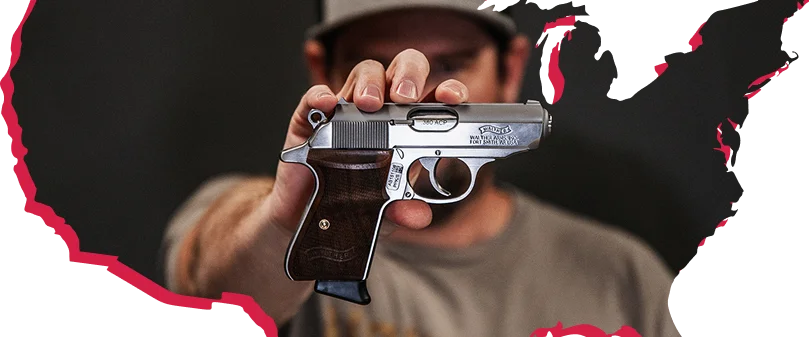
Quick ID: Mid-1900s onward, commonly.30-30, side-eject lever action, solid-top receiver. - Walther PPK / PP-family pistols
Why it’s hot: It’s the classic European concealment pistol with deep historical associations, and collectors pay for period-correct markings and condition.
Premium triggers: Pre-war production, scarce factory finishes, documented military or police history (papered), correct magazines and grips for the variant.- Condition watch-outs: Reblue that muddies proof marks and edges
- Parts swapping across PP, PPK, and PPK/S variants
- Import marks that reduce collector appeal
2026 range: $900 to $12,000+, with rare, documented examples above that.
Quick ID: 1930s onward,.32 ACP or.380 ACP common, fixed barrel blowback, compact steel frame. - Colt AR-15 SP1 and other early Colt semi-auto ARs
Why it’s hot: Early civilian AR-15s became collectibles because they capture the platform’s original “slick” configuration, and history matters as much as function.
Premium triggers: Early production features, original furniture and finish, correct period accessories, documented law enforcement or military association where applicable.- Condition watch-outs: Non-original uppers, barrels, rails, or stocks (parts swaps)
- Refinished receivers or altered markings
- Bubba modifications, extra holes, permanent changes
2026 range: $1,800 to $8,000+, where originality drives the upper band.
Quick ID: 1960s to 1980s, 5.56 NATO, “slabside” look on early guns, triangular handguards on many early examples.
One practical reality: even buyers who quote “market comps” are usually pulling from a mix of auctions and dealer listings, and they discount hard for non-original condition, especially aftermarket parts.
Those are the big-name collectibles, but most people price far more common guns than a rare Luger variant or a first-rate SAA. For those, the process is less about hype and more about matching your exact configuration to real, recent sold listings.
Quick Answers For Common Model Values
For common models, your selling channel and configuration matter more than “rarity.” These are high-supply, near-identical guns, so pricing is comp-driven and channel-driven, it’s normal to see a 20% to 40% swing for the same pistol depending on where you sell.
- GunBroker “Completed/Sold” listings show final prices for items that actually sold, not optimistic ask prices.
- TrueGunValue breaks estimates into three buckets: Trade-In, Private Party, and Retail, which helps you sanity-check where your number should land.
Those three buckets are also a handy way to keep expectations realistic before you start calling shops or answering messages (and a broader what is my gun worth framework can help you tighten the range).
- Trade-in: typically the floor, a quick rule is ~70% to 85% of a matched private-party comp because the buyer needs margin and risk coverage.
- Private party: usually the middle, often your best net if your exact config matches demand.
- Retail used: typically the ceiling, commonly ~110% to 125% of private-party comps because you’re paying for inspection and convenience.
On popular pistols with multiple generations, small feature changes can matter because buyers filter for them when they shop.
- Gen3: finger grooves and a smaller, non-reversible mag release, which keeps demand strongest among buyers who specifically want that older feel.
- Gen5: no finger grooves plus an ambidextrous slide stop (model-dependent), which is what many shoppers filter for on newer duty-style builds.
To get to a usable number, match as many details as you can before you compare sold prices (especially if you’re trying to figure out how much a Glock 19 is worth for your exact setup).
- Exact gen/variant, number of mags, box/papers
- Optics cut/MOS status, optic/plates, night sights
- Round count (if known), mods, finish wear
Pull 3 to 5 matched completed sales and adjust for condition and accessories.
Protect Value Before You Sell
The collector market punishes ‘improvements.’ The easiest money to lose on a collectible firearm is by changing it, refinishing it, or separating it from the original parts and paperwork. Buyers distrust unknown stories and altered details, even if the gun runs flawlessly.
Skip irreversible mods, aggressive cleaning, and refinishing. If something’s already been changed, keep every original part and accessory, even “small stuff” like sights, screws, boxes, and slings. A correct original part can be worth more than the aftermarket replacement you like better.
Document what you have: clear photos, a simple parts and accessories list, and notes that support provenance (documented history). Missing manuals, receipts, and factory letters is a value haircut you can avoid with one folder.
Humidity control is a real value driver because corrosion and wood movement are value killers.
Museum conservation guidance commonly targets stable ~40-55% relative humidity for mixed materials, stability matters as much as the number.
For rare, high-dollar, or inheritance guns, get an expert appraisal before you list. Cash My Guns founder John Dunlap has nearly 20 years of experience and has evaluated tens of thousands of guns, that level of pattern recognition catches costly mistakes early. Reduce loss risk with declared-value insurance (especially if you insure firearm shipments), and plan shipping logistics up front: USPS rules (as of 2026) let non-FFLs mail unloaded rifles and shotguns to an FFL, non-FFLs generally can’t mail handguns, and USPS prohibits mailing ammunition.
- Do: keep originals, photos, and paperwork together
- Don’t: refinish, “restore,” or toss mismatched parts
Before you sell, create a simple ‘value packet’: photos + parts/accessories list + paperwork.
Keeping the gun correct is one side of a clean sale. The other side is making sure the transfer itself is done the right way for where you live and where the buyer lives.
How To Sell Legally By State
The fastest way to turn a sale into a mess is to ignore transfer rules, so default to compliant pathways. Selling legally is the easiest part, if you pick the right pathway up front, especially once the gun is ready to leave your hands.
- Sell to or through an FFL (Federal Firearms Licensee), a federally licensed business that can handle transfers under federal law, because it’s the cleanest way to keep paperwork, background checks, and interstate rules from landing on you.
- Consign with a dealer, because the dealer markets it and completes the transfer to the buyer through their license.
- Sell on an online marketplace, because a compliant sale normally ends with the firearm shipping to an FFL for the buyer’s pickup and transfer (see selling guns online for the typical steps and pitfalls).
- In-state private sale (where lawful), because some states allow it, but you still have to follow federal prohibited-person rules.
Federal law generally bars a nonlicensee from transferring a firearm to a nonlicensee who lives in another state (18 U.S.C. § 922(a)(5)), with limited exceptions. An FFL can transfer to an out-of-state resident only if the transfer complies with the laws of both states, and handguns generally have to be transferred through an FFL in the buyer’s state (18 U.S.C. § 922(b)(3)).
- California: Dealers must observe a 10-day waiting period before delivery (Cal. Penal Code § 26815(a)). California’s “assault weapon” feature-test also covers certain semiauto centerfire rifle configurations (Cal. Penal Code § 30515(a)(1)), so configuration can be the whole ballgame.
- Texas (as of Aug 2025): Texas does not require universal background checks for private, unlicensed sales, and state law does not require a private sale to be processed through an FFL, but federal law still forbids transferring to a prohibited person.
- Doing an interstate deal directly between two nonlicensees.
- Assuming a handgun can be transferred across state lines the same way a long gun can, it usually cannot.
- Shipping a firearm somewhere it is not lawful to ship or receive, confirm the receiving FFL and state rules first.
- Ignoring prohibited configurations and feature restrictions, especially in California.
- Relying on old forum advice, laws change and enforcement is real.
If there’s any doubt, involve an FFL and confirm the current rules before money changes hands (use a state-by-state guide to selling a gun to sanity-check the pathway).
Next Steps For Pricing And Selling
If you do one thing this week, pull real comps and document exactly what you have. Condition, originality, and paperwork move the number fast, and the most defensible reference points are auction “prices realized” and other documented comparables, not optimistic asking prices. Even the high-value models above can swing widely on small variant details, plus market data, seasonality, and regional demand.
Do a quick inventory, take clear photos, confirm the exact model and variant, and lay out every accessory, spare part, and piece of paperwork together, then don’t modify anything before you price it. If you’re unsure about the legal side, use an FFL and verify current law.
That’s the core of the “collectible isn’t the same as old” problem: the details are what make it collectible, and the details are what make it valuable.
For a “Safe • Legal • Hassle-Free.” path, explore Cash My Guns pricing resources or request an offer and appraisal, and read the latest market report for context.