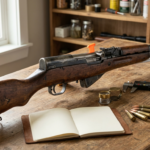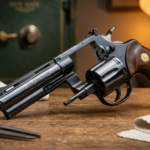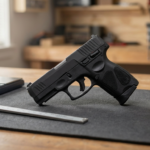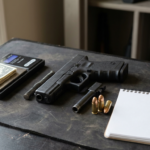

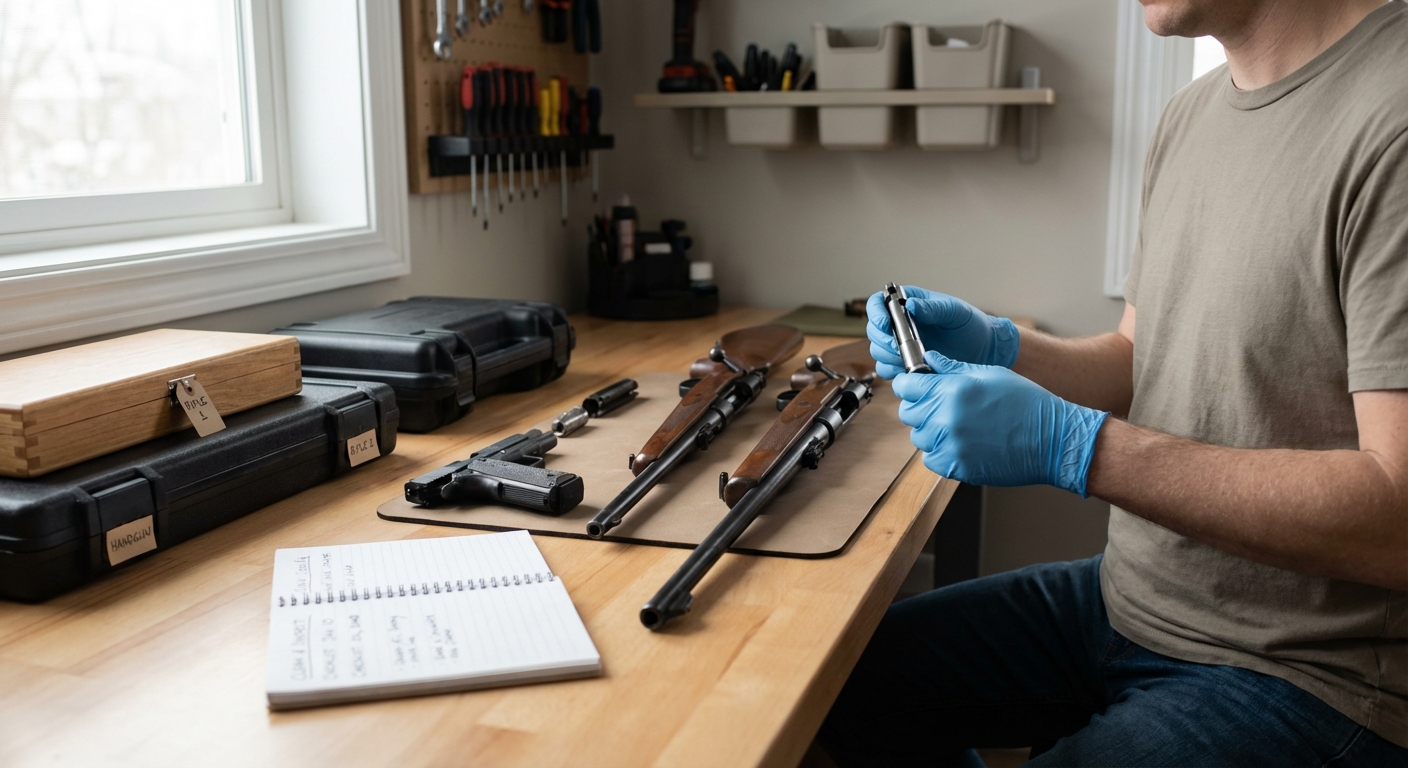

You sell two “extra” pistols to clear space and raise quick cash. A week later you realize one of them was the gun you actually trusted, the one that always ran, always hit, always felt right. Replacing it costs more than you got for it, and now you’re buying back your own mistake.
That gut-punch feeling is common, and it usually isn’t because you “priced it wrong.” It’s because downsizing regret comes from moving too fast, either selling the wrong guns or selling at the wrong time.
Timing matters because firearm pricing isn’t static. One nationwide buyer that publishes its valuation approach states seasonality is a real factor, meaning the same make and model can bring different money depending on when you sell. That’s how you end up watching your exact gun sell higher a month later and feeling like you got clipped.
Where you sell matters too. That same valuation approach calls out regional demand as a pricing driver, so a fast local “sure, I’ll take it” decision can leave meaningful value on the table if your area is soft for that model. And the numbers aren’t just vibes, it’s tied to observable comps, specifically dealer listings and auction results.
This article resolves the real tradeoff: speed and cash today vs keeping the right core set and not giving away value. You’ll finish with a clear framework to decide what to keep, how to sanity-check value against the market, and how to sell safely and legally, without getting lost in legal weeds.
Start With Goals and Inventory
If you can’t see the collection on paper, you’ll sell based on mood. Before you make a single keep-or-sell call, get everything in front of you in a way you can actually evaluate.
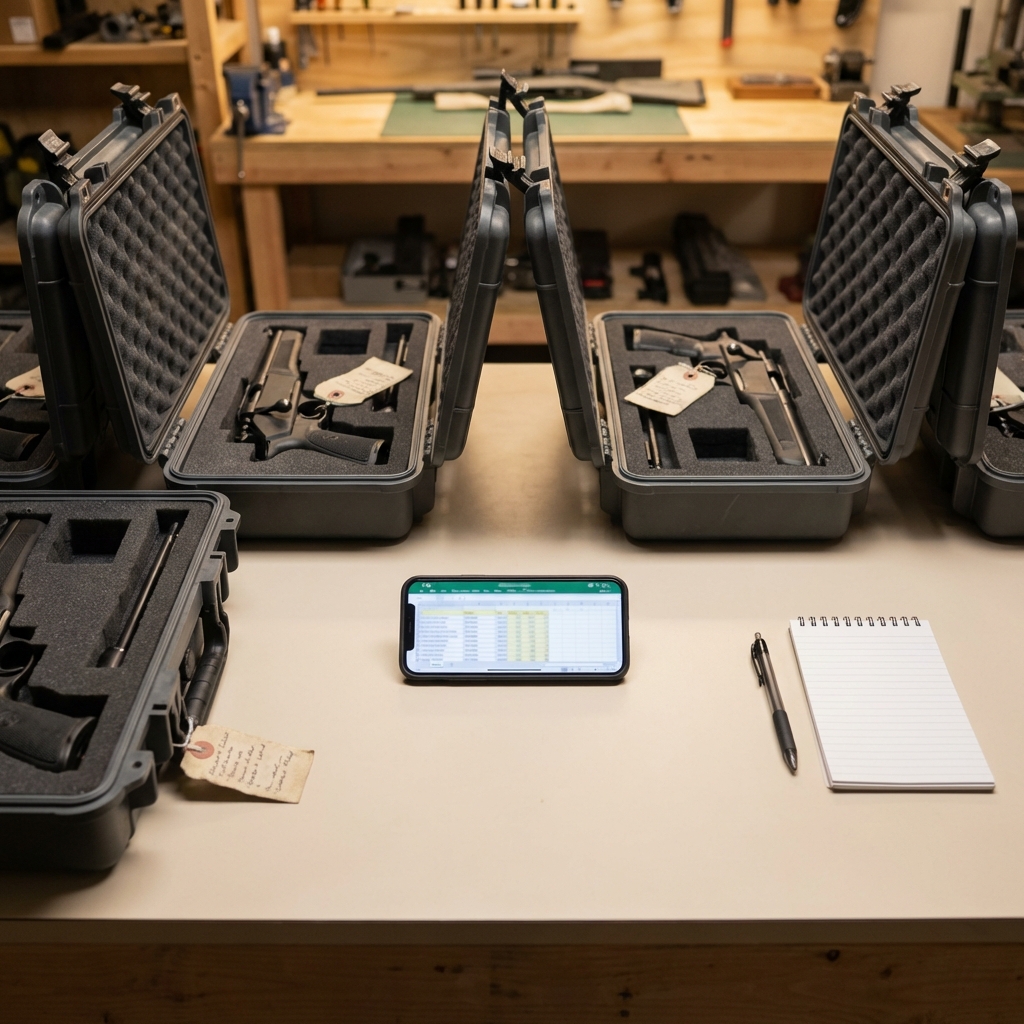
Your downsizing decisions get dramatically easier once your goal is crystal clear and your whole collection is visible in one place, including the “little stuff” you’ll otherwise forget, like spare mags, optics, and that half-finished project gun you’ve been mentally overvaluing.
Choose one primary goal, because each one changes what “good to sell” means. If you need cash, you prioritize low-sentiment pieces and duplicates you won’t miss. If you need space, you prioritize bulky cases, long guns you never take out, and accessory-heavy setups. If you’re reducing redundancy, you keep the best example of a role and sell the “almost the same” backups. If you want compliance comfort, you keep only what you’re confident you can store, document, and manage responsibly. If you’re doing inheritance planning, you keep the firearms with clear provenance and paperwork, and you flag anything a family member would struggle to identify or handle. Once the “why” is picked, your sell list stops feeling personal and starts feeling practical—and it helps to think in terms of a collection-level selling plan and what to prepare before selling.
Insurance home-inventory guidance commonly recommends recording manufacturer/brand, model, and serial number so unique items can be identified for theft or loss claims. That same kind of documentation guidance also commonly advises photographing items and keeping receipts or appraisals to substantiate ownership and value. For each firearm, capture: make/model; serial number (store the list offline or encrypted, not in a shared notes app); condition; round count or usage notes; modifications; accessories; magazines; optics; and original box and papers.
Include accessories in the same line item, not as an afterthought. Buyers who purchase guns, ammunition, and accessories evaluate what’s actually included, so your inventory should too.
Photos do not need studio lighting. Take one overall photo per side, then close-ups of markings, obvious wear, and anything that supports originality (optic model, included mags, box label, papers).
Sort every item into one of three buckets: Keep/Core (non-negotiables), Sell/Candidates (meets your goal), Uncertain/Research (needs info, not emotion). “Uncertain” is a win, it prevents analysis paralysis.
While you’re handling firearms for inventory work, follow Project ChildSafe’s safe-storage basics: keep guns unloaded, locked, and out of reach of unauthorized users, and store ammunition separately. Also confirm your current local rules before you act on any sell decisions.
Action step: set a 30 to 45 minute timer tonight, inventory the first 5 guns you can access safely, and force each one into Keep, Sell, or Uncertain before you stop.
A Clear Keep or Sell Framework
Once you’ve got an inventory and a goal, the next problem is consistency. A simple framework keeps you from selling the gun you actually rely on while hanging onto three that only feel “useful.”
Downsizing isn’t about having fewer guns; it’s about keeping the right ones. You don’t need a perfect rule, you need a repeatable framework that protects your functional core and your personal non-negotiables. Run every firearm through the same questions and the keep or sell decision gets a lot less emotional and a lot more consistent.
Start with role coverage: carry, home defense, hunting, training, competition. If a gun doesn’t clearly cover a real role in your life, it’s a sell candidate by default. The friction is that “someday” roles multiply fast. Resolve it by forcing a plain-language job title: “This is my winter carry,” “This is my deer rifle,” “This is my class gun,” or it doesn’t get a slot.
Redundancy is the sneaky collection killer. If you have duplicate calibers or platforms doing the same thing, keep the best example and move the rest. “Best” is the one that’s proven reliable and the one you’re actually familiar with, meaning you shoot it well under normal speed and you trust it to run. And if you’re thinking about what it would cost to replace something later, remember the earlier point: timing and geography can change what the same gun brings when you sell (or buy).
Finicky guns, hard-to-find parts, and unfinished “project” builds are time debt. Storage and transport count too: safe space, cases, and the reality of traveling with the guns you keep. One practical nuance: on striker-fired pistols, weak ejection, like cases dribbling out or consistently hitting you, is a wear signal commonly tied to recoil spring or extractor-related issues. That turns into a clean fork: Keep if you’ll service it, Sell if you won’t, and label it Service so it doesn’t get “kept” by procrastination.
Sentiment is allowed. Heirlooms, irreplaceable gifts, and pieces with real family history can outrank pure utility—especially when you’re thinking about legacy and end-of-life planning for a firearm collection. Also pause on anything that could be an “antique firearm,” because under 18 U.S.C. § 921(a)(16) that includes many firearms manufactured in or before 1898, which often pushes you toward a collectibility-first decision instead of a pure role decision.
Action step: grab three guns tonight, run this framework, and label each one Keep, Sell, Service, or Research.
Estimate Value Without Guessing
Once you’ve got a real sell-candidate list, the next place people get burned is value. The goal isn’t a perfect number-it’s a defensible range based on what’s actually selling.
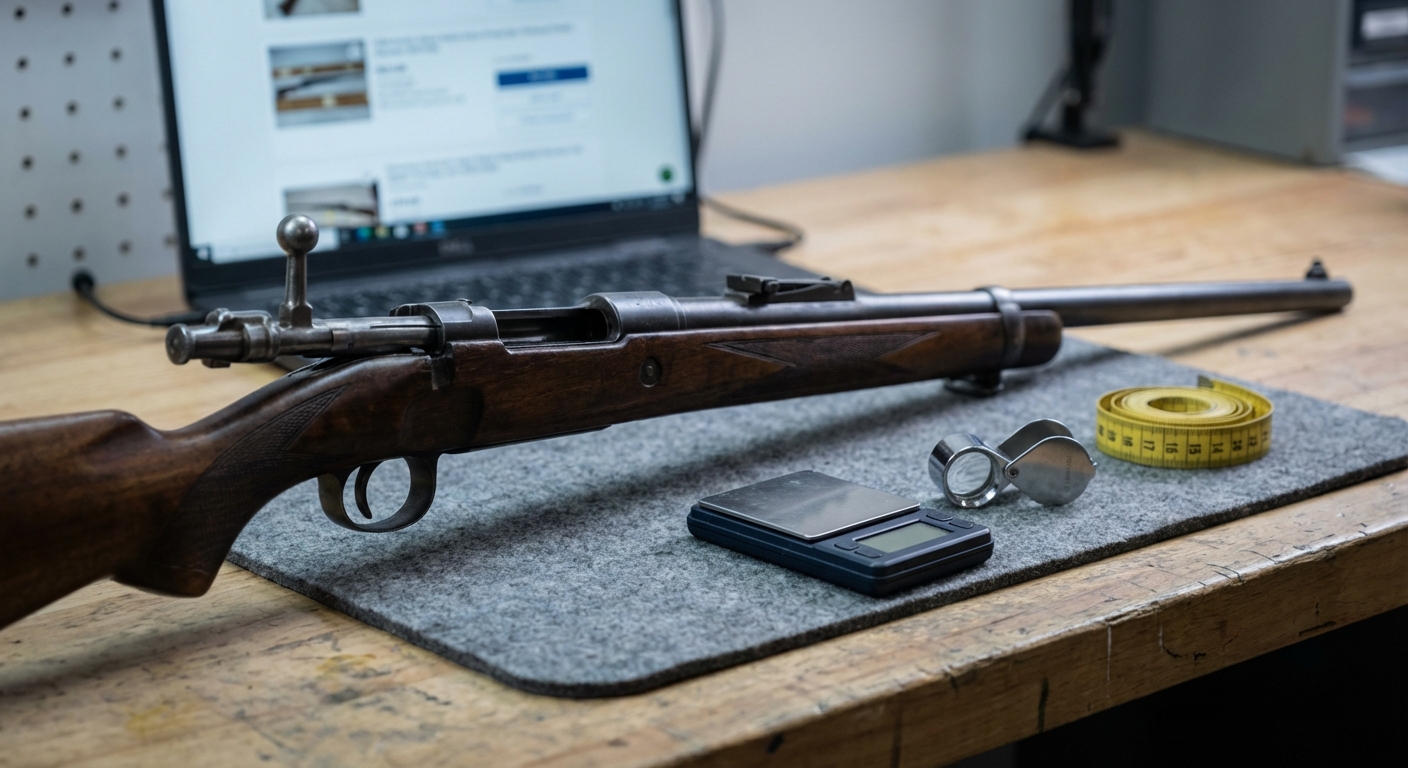
You don’t need an appraiser to stop guessing-you need the right reference points, including a clear process for figuring out what your gun is worth.
The fastest way to underprice or overprice a gun is to guess. Realistic value comes from sold comps, meaning recently completed sales of similar firearms, plus honest condition notes that a buyer would agree with when it’s in their hands.
- Condition (finish, bore): Small details move dollars. A clean bore and intact finish price differently than pitting, rust, or heavy holster wear.
- Originality vs. modifications: Aftermarket parts don’t “add their cost” automatically. They often narrow the buyer pool or reset expectations, especially if the buyer now assumes hard use, DIY work, or missing factory parts.
- Included accessories: Extra mags, optics, and boxes or papers can lift value, but only when they’re clearly listed and actually match what buyers want for that model.
- Rarity and collectibility: Limited runs, discontinued variants, and desirable era markings can matter more than round count.
- Local demand plus seasonality: The same firearm sells differently based on where you are and when you list, which is why “average price” screenshots can mislead if you ignore your local reality.
This is the same market-data logic described earlier: prices track what similar items are listed for and what they actually sell for, then get pushed around by condition, location, and timing (all part of how supply and demand affects firearm resale prices).
- Pull 5 to 10 recent completed sales for your exact model, as close as you can get on generation, barrel length, caliber, and variant.
- Match condition honestly, especially finish wear and bore notes, then ignore the outliers that look mislisted or bundled weirdly.
- Adjust for big differences: optics, extra mags, factory box and papers, and major mods. Price the gun, then add value for extras only if the comps prove buyers pay for them.
- Reality-check your net, what you clear after likely fees, shipping, and your time, so a “higher price” doesn’t turn into lower money.
Use plain queries like “Glock 19 price,” “Sig P320 value,” “Beretta 92 worth,” or “Colt Python sold price,” then do the same for long guns: “Remington 870 sold listings,” “Marlin 336 value,” “SKS worth.” The trick is filtering to completed sales, then reading the listing like a buyer: exact variant, condition language, what’s included, and whether mods are helping or scaring off bidders.
Before you choose a selling route, set a defensible value range for each sell candidate: low, likely, high. Then write down what would justify moving it up or down, like “add two OEM mags,” “remove optic and sell separately,” or “price down for worn finish.”
Pick the Right Selling Route
Once you know what you’re selling and what it’s worth, the route you choose determines how much work you’re signing up for. It’s also where “speed vs value” becomes real, because the easiest option often isn’t the best-paying one.
Pick your selling route like you’d pick a flight: fastest, cheapest, or easiest, rarely all three. The “best” way to sell a gun depends on what you’re optimizing, speed, net proceeds, simplicity, or risk reduction, and your route sets the stress level as much as the payout.
Direct private sale (where legal) usually nets the most because you’re not paying a middleman. The catch is you’re also taking on the scheduling, screening, and record-keeping expectations in your area, plus the personal safety piece of meeting strangers.
Consignment is the “let the shop do the selling” option: the store lists and sells your firearm, then keeps a commission deducted from the sale price. You give up time and a slice of the final number, but you offload tire-kickers, messages, and a lot of admin.
Selling to a local gun store outright (or trading) is the speed play. It’s one counter visit and you’re done, but you’re accepting a dealer buy price that bakes in their overhead and resale risk.
Online marketplace sales through an FFL can widen your buyer pool without you doing sketchy meetups. A Federal Firearms Licensee (FFL) is the federally licensed dealer who can run the regulated transfer and recordkeeping, and under 18 U.S.C. § 922, unlicensed people generally can’t transfer directly to an out-of-state non-FFL, it has to go through an FFL in the recipient’s state.
Selling the whole lot to a professional buyer is the lowest-hassle path when you’re moving multiple guns fast. For example, Cash My Guns is operated by Dunlap Gun Buyers, a federally licensed firearms dealer (FFL), and is described as a nationwide online firearms purchasing service.
Fraud and personal safety are the big “hidden costs” of private selling: bad payments, no-shows, and meetups that feel fine until they don’t. Online sales add logistics, photos, packing, and coordination with the receiving FFL, but they also reduce direct-contact risk.
Shipping is workable, but it has rules: a non-FFL may ship a firearm to an FFL in any state for a lawful purpose if the shipment complies with federal, state, and local law. That’s the legal backbone that makes selling guns online through an FFL even possible.
Bundle duplicates when the buyer’s decision is basically “I want two,” like two similar rifles, spare magazines, or a stack of matching parts. Split items when they dilute value, a premium optic often sells stronger on its own than when it’s treated like “included stuff.” If your goal is speed, including the light or optic can still be the right move, just price it as “priced to move” and treat the extras as a convenience, not a separate negotiation.
- Pick your primary goal for this downsizing round: speed, max net, or low-hassle.
- Match each category to a route: common models you want gone fast, rare or high-dollar pieces you’ll wait on, accessories you’ll sell separately or bundle.
- Run the plan consistently so one slow, high-effort sale doesn’t stall the rest of your pile.
State Rules and Safe Transfers
The selling route is only “right” if it’s legal where you live and where the gun is going. The details change fast once residency, firearm type, or shipping enters the picture, so this is the part you don’t leave to assumptions.
If you’re wrong about the rules, you’re not just annoyed, you’re exposed. Your best sale is the one you can complete cleanly, and legality isn’t a box to check at the end, your local rules can decide whether a transfer is even possible and what paperwork and pathway you need.
- Confirm residency. Crossing state lines changes the game. Under 18 U.S.C. § 922(a)(5), an unlicensed person generally may not transfer a firearm to someone they know, or have reasonable cause to believe, lives in a different state, with limited exceptions like a bequest or intestate succession.
- Screen eligibility. Do not transfer to a prohibited person, meaning someone legally barred from possessing firearms under federal and or state law. If a buyer’s story feels off, refuses basic questions, or hints they “can’t buy from a dealer,” you walk away.
- Pick the transfer path. When you’re unsure, the safest default is routing the sale through an FFL so the handoff and required checks run through a licensed process.
State rules change what’s sellable, who can receive it, and how long the process takes. California is a clean example: magazines over 10 rounds are generally prohibited (Cal. Penal Code § 32310), and defined “assault weapons” are heavily restricted (Cal. Penal Code §§ 30510-30515, 30600-30675), which can limit your buyer pool or force an FFL-only solution. Other states add waiting periods, handgun roster concepts, or feature based restrictions that make “same gun, different state” a completely different transaction.
Shipping and carrier policies stack on top of the law. Before you accept money, confirm the legal destination, the receiving party (often an FFL), and the carrier’s current requirements.
Quick state snapshots (verify current law before acting):
- Texas: Private person to person transfers are generally allowed without an FFL under state law, but knowingly transferring to certain prohibited persons is illegal (Tex. Penal Code § 46.06).
- Florida: Dealer transfers run through FDLE checks, and Florida has a waiting period for retail handgun delivery in many cases. Private transfer rules differ from dealer rules, confirm current law.
- California: Mag capacity limits, “assault weapon” definitions, and roster style constraints can dictate what can move and how.
- Georgia: Often treated as permissive on private sales, but you still have to follow federal residency and prohibited person rules.
- Pennsylvania: Handgun transfers commonly run through an FFL or sheriff process; long gun transfers can follow different rules. Verify the firearm type and the legal pathway.
- Ohio: Generally straightforward for in state private sales, but eligibility and federal interstate limits still control the edges.
- Arizona: Commonly permissive for private transfers, but state and federal disqualifiers still apply.
- New York: Known for stricter feature and magazine rules and tighter transfer requirements. Expect more FFL involvement.
- North Carolina: Rules have changed in recent years, so don’t rely on old advice. Confirm current law before listing.
- Illinois: FOID and background check processes can shape who can buy and how a private transfer must be documented.
Recordkeeping is what protects you when memories get fuzzy. Where appropriate, keep a simple, dated bill of sale and any FFL receipt or transfer paperwork.
Action step: write down the exact transfer path you’ll use, for example “through an FFL,” before you accept money from anyone (see legal and safe firearms sales best practices).
Sell Confidently and Keep What Matters
At this point you’ve made the big decisions: what stays, what goes, and what “good value” looks like. The last step is executing the sale in a way that matches your plan instead of turning into a rushed, last-minute scramble.
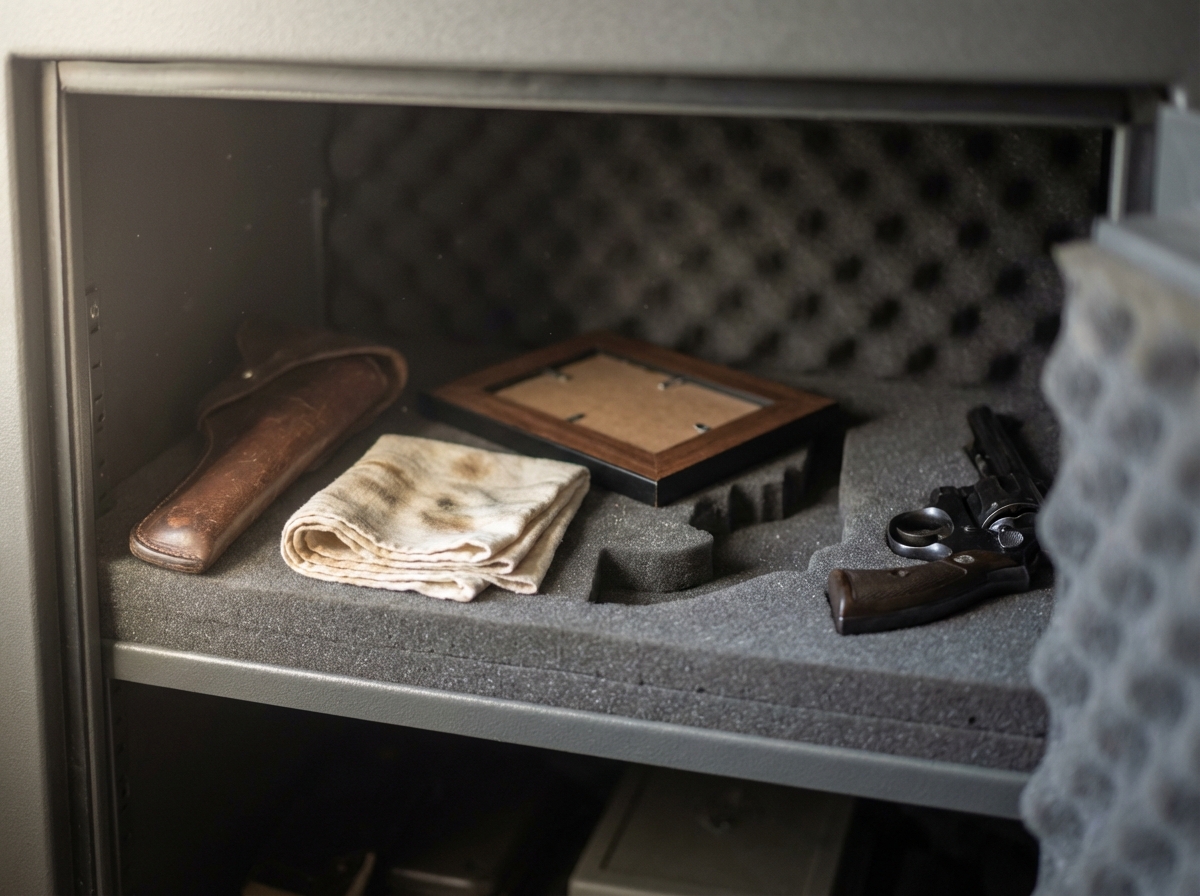
You can downsize and still feel great about your collection if you follow a simple sequence, no second-guessing required: set goals and inventory what you own, decide keep vs sell, estimate value realistically, pick a selling route, then verify state rules and keep the handoff safe. Sales get messy when you skip steps or rush the transfer. If you use an FFL, expect the transferee to complete ATF Form 4473, the federal form filled out to receive a firearm, and the FFL records the transfer under 27 C.F.R. § 478.124.
- Clean the firearm and do a quick function and condition check
- Photograph clearly, include serial number photos only where appropriate
- Gather accessories, mags, boxes, and manuals
- Bring any documentation you plan to keep for your records
- Meet in a secure location or complete the transfer through an FFL
- Verify funds, avoid sketchy payment methods and pressure
Keep it simple and legal: under 18 U.S.C. § 922(d), do not transfer a firearm to anyone you know or have reasonable cause to believe is prohibited.
Keep what matters, let the duplicates go, and enjoy the extra space without the lingering “did I do this right?” feeling.
Conclusion
The goal isn’t fewer guns, it’s the right guns and a clean sale: keep the functional core that you actually trust, and sell the true extras with realistic value anchors and a safe transfer path. Right now, mark your top three sell candidates, add a value range, and pick the selling route for each.
For a nationwide online firearms purchasing service, Cash My Guns at https://www.cashmyguns.com/ is operated by Dunlap Gun Buyers (FFL) under D4 Media Corp, Reno, Nevada.