


The part that keeps first-time sellers up at night usually is not the listing, it is the fear of a preventable mistake: handling a firearm unsafely or stumbling into a legal problem. Start with the non-negotiables, treat every gun as if it is loaded, keep it pointed in the safest possible direction, and keep your finger off the trigger until you are ready to shoot. Those habits cost $0, take seconds, and they prevent the kind of incident that turns a simple sale into a crisis.
Most expensive missteps also come from compliance, not marketing: who you sell to, how you document your intent, and whether your pattern of sales looks like dealing. Federal law uses the concept of being “engaged in the business” for repetitive firearm sales tied to a predominant profit motive, and the 2022 Bipartisan Safer Communities Act emphasized the wording “to predominantly earn a profit.” That is why “I only sold a few” is not a strategy.
This guide gives you a simple, confidence-building four-part plan to arrive at a realistic value range, choose a selling route, prep the firearm and listing responsibly, and complete the transaction safely and lawfully. If you keep those two priorities (safety and compliance) front and center, the rest becomes a series of manageable steps.
How to Figure Out What Your Gun Is Worth
If you want a smoother sale and fewer lowball offers, pin down a realistic value range before you list. “Value” is rarely one clean number, it moves with condition, originality, what’s included, and plain old demand, and first-time sellers often miss the exact variant, which can swing price fast.
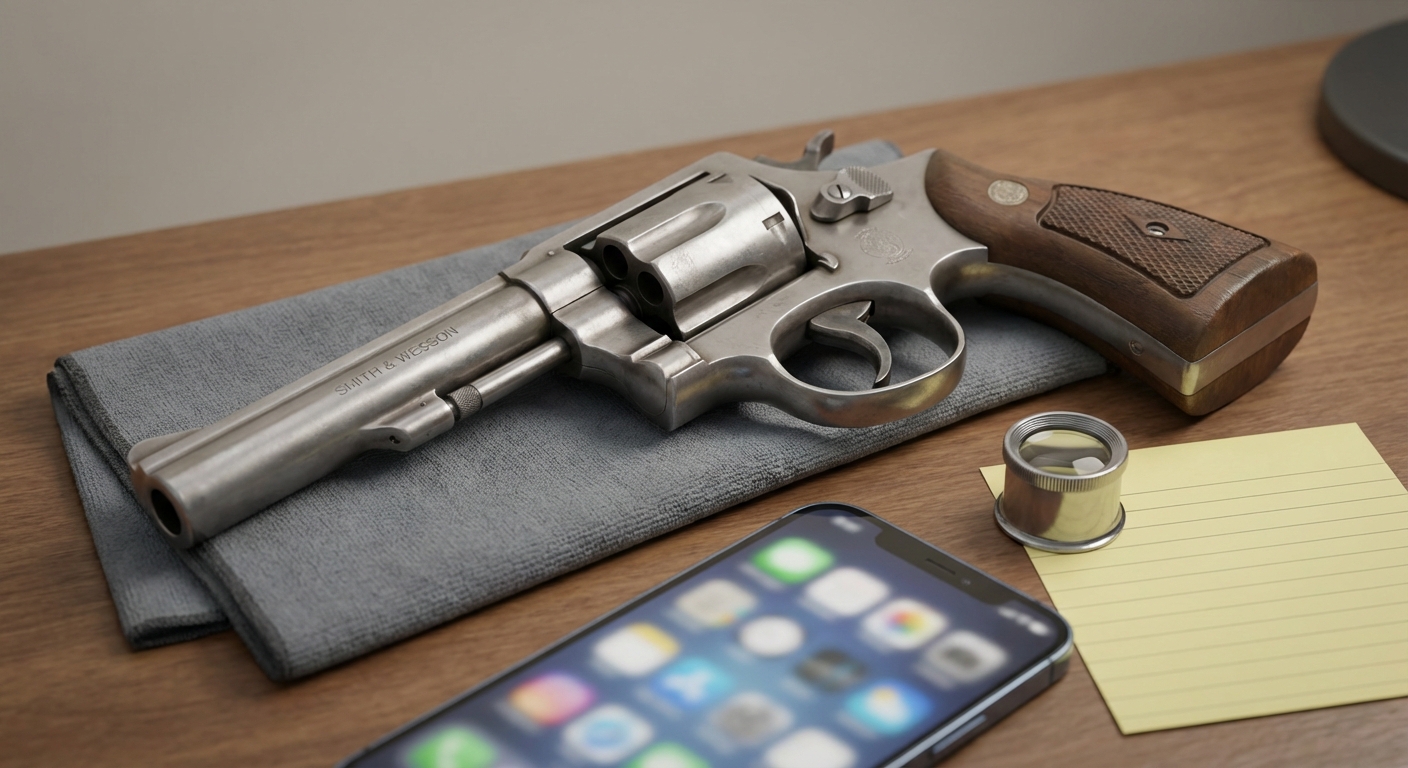
Start with what a buyer can verify: manufacturer, model, caliber or gauge, and the specific variant or series markings on the gun itself. Then capture the details that commonly separate “same model” prices, barrel length (when relevant), frame size or generation, and any factory features called out in roll marks or on the box label. The friction is that family guns and secondhand buys often come with the wrong story attached, and two nearly identical versions can trade at very different prices. Resolve that uncertainty by writing one tight ID line, then listing what’s actually included, for example factory box, manuals, spare magazines, chokes, extra grips, optic, or sling.
Most pricing arguments come from condition subjectivity, so use condition grading, a standardized New, Excellent, Very Good, Good, Fair, Poor style scale, to match buyer expectations instead of your memories. Focus on the parts buyers inspect first: finish wear on high points, bore condition, and whether the gun functions normally. On some guns, matching numbers matter to value, especially where collectors expect the major numbered parts to match. The takeaway: pick the lowest honest grade that still fits, then price to that grade, not your best-case interpretation.
Use completed-sale comparables (comps), meaning recently closed sale listings, to anchor your range to what people actually paid, not what sellers hoped to get. The catch is lazy matching: “same brand” comps are noise. Resolve it by filtering hard for the same model and variant, similar condition grade, and similar included items. If you cannot find true matches, widen slowly, for example same model but different finish, and note the difference as an adjustment, not an assumption.
Aftermarket parts can raise or lower value depending on who is buying. A practical shooter may pay extra for a quality optic or upgraded trigger, while a collector market often rewards originality and may discount permanent mods, refinishing, or missing factory parts. The move that keeps you out of trouble is pricing the gun as the core firearm first, then treating add-ons as a separate, conservative adjustment unless you see comps where the same mod reliably changes sale price.
Your “right” price can still be wrong for your area and timing, because supply and demand affects firearm resale prices and regional preferences and seasonal buying cycles shift what clears quickly. If your range still feels shaky, get a second opinion from a local shop appraisal, a recognized expert evaluation for collectible pieces, or a reputable buying service quote as a reference point. Cash My Guns says its valuation benchmarks incorporate market data from dealer listings and auctions, and that it considers seasonality and regional demand when making valuation decisions.
If you can name it precisely, grade it consistently, and match it to real completed sales, you’ll avoid 90% of pricing surprises. And once you have that range, picking how to sell gets much easier, because you can see exactly what you’re trading for speed or convenience.
Pick the Right Selling Route
Once you’ve got a realistic value in mind, the selling route you pick is what decides how much time, money, and stress the sale actually costs you. There isn’t one “best” option, there’s only the one that matches what you care about most: speed, payout, simplicity, or control.
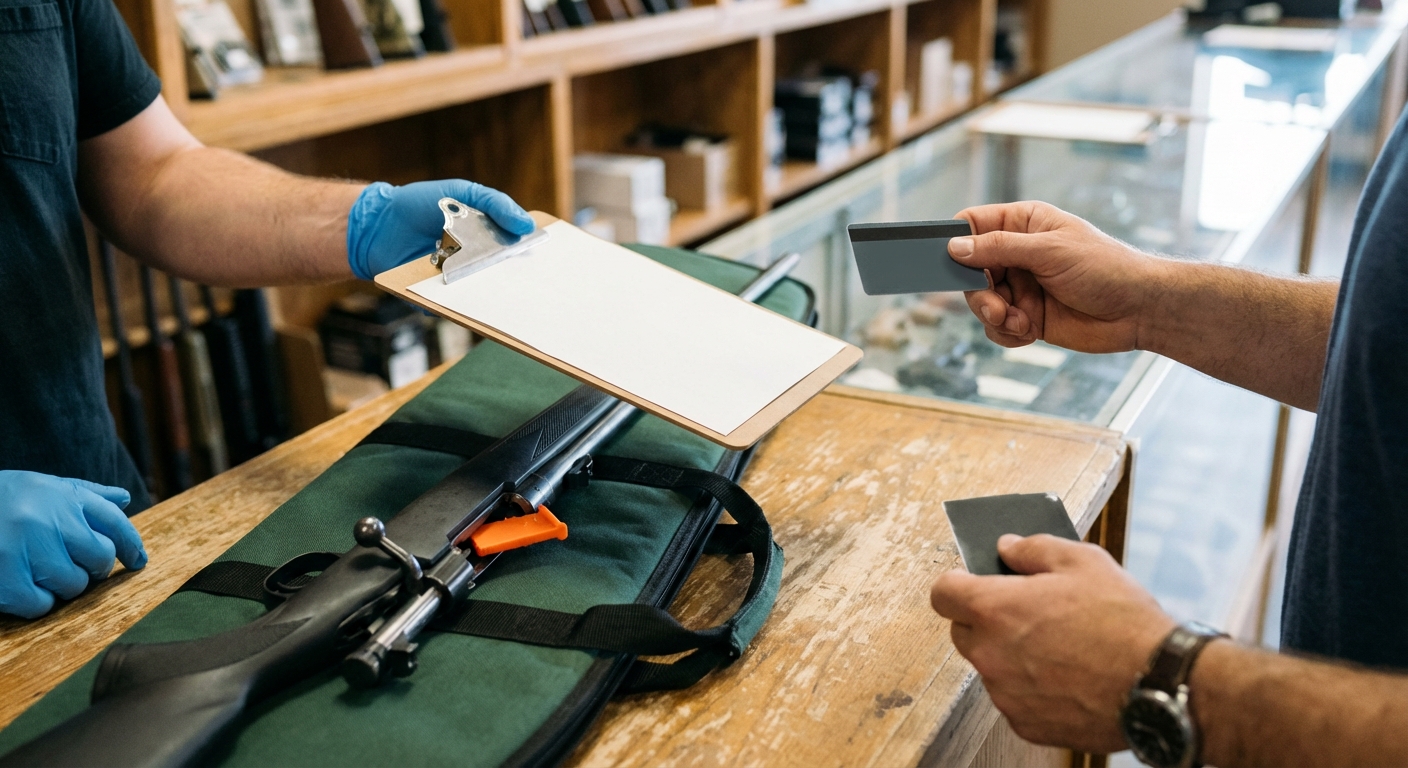
If you want top dollar, you usually buy it with extra steps: more messages, more coordination, and more chances for something to go sideways. If you want the fastest, lowest-hassle exit, you typically accept a discount because the buyer is taking on the work of reselling. Control sits on the other axis. The more you want to screen buyers, set terms, and choose timing, the more effort you should expect to spend.
Private in-state sale (where legal)
- Speed: Fast if you already have a buyer
- What you take home (broadly): Often higher than dealer offers
- Effort: High, you handle photos, vetting, meetups
- Risk: Higher, you manage payment and personal safety
- Buyer pool: Local only
Sell through a licensed gun dealer (incl. selling a gun on consignment)
- Speed: Immediate if they buy it, slower on consignment
- What you take home (broadly): Lower on a direct buy; consignment can be higher after the shop’s cut
- Effort: Low to medium
- Risk: Lower, dealer handles the regulated transfer steps
- Buyer pool: Store’s walk-in audience
Online marketplace with dealer transfer
- Speed: Variable, depends on demand and responsiveness
- What you take home (broadly): Can be strong because it reaches beyond your town
- Effort: High, listing, questions, coordinating transfer and shipping
- Risk: Medium to high, remote payments and shipping add failure points
- Buyer pool: Broad
Auction house (best for collectibles)
- Speed: Slow, tied to auction schedules
- What you take home (broadly): Can be excellent for rare, documented pieces
- Effort: Medium, you’ll provide details and provenance
- Risk: Medium, you rely on the house’s process
- Buyer pool: Specialized collectors
Direct-buy service
- Speed: Fast
- What you take home (broadly): Typically lower than private sale
- Effort: Low
- Risk: Lower, fewer unknowns
- Buyer pool: Not dependent on finding an individual buyer
One example of the “fewer steps” approach: Cash My Guns states, “Free everything: Shipping, full insurance, federal transfer fees.”
Whatever route you choose, be realistic about where things tend to break: payment and pressure. A common trap is a fake payment confirmation (a screenshot or spoofed email) meant to push you to ship or meet before funds actually clear, so treat “send it today” pressure as a reason to slow down. If a buyer insists on hard-to-recover payments like crypto, Zelle, Cash App, gift cards, or “Friends & Family” style transfers that remove protections, that’s another sign to be cautious.
If you want the broadest buyer pool, expect more steps and more screening. If you want fewer steps, expect some discount, and pick a route that reduces buyer and payment uncertainty. The next piece is making sure your preferred route matches what the law requires in your exact situation.
Legal Basics
After you choose a selling route, the “stay legal” part usually comes down to one decision: when the transfer has to go through the right process, and when you should walk away because the buyer is pushing you to bend rules. Legal clarity is cheap; a bad transfer is not.
Some transfers are illegal no matter what your state says. The clearest example is selling to a prohibited person, which includes anyone convicted of “a crime punishable by imprisonment for a term exceeding one year” under 18 U.S.C. § 922(g)(1); the ATF summarizes the broader prohibited categories, which are also reflected in 27 C.F.R. § 478.32.
Also, some deals that feel “simple” still need a licensed intermediary. Federal law relies on an FFL (Federal Firearms Licensee) for certain regulated transfers, and the ATF publishes guidance on when an FFL is required, including scenarios involving state lines.
That state-line detail is where first-time sellers get tripped up. An in-state private-party transfer (between unlicensed people) is not the same thing as a deal where the buyer or seller is in a different state. In general, interstate transfers require using an FFL, even if both people are ordinary, law-abiding gun owners.
State rules add friction in three predictable places: who must process the transfer (FFL required for private sales in some states), what credentials the buyer needs (permits or ID cards), and what can legally be included (common flashpoints are waiting periods and magazine limits). The practical move is to treat any uncertainty as a reason to pause, not to “figure it out later.”
A simple documentation mindset helps: keep messages, dates, and the basic deal terms organized so you can reconstruct what happened if questions come up. Some sellers prefer an FFL-backed process for consistency, for example routing the deal through a licensed buyer like Cash My Guns, but the key is matching your exact scenario to current law.
- California: Verify the dealer delivery waiting period, California generally requires 10 days (Cal. Penal Code § 26815). Confirm magazine legality, “large-capacity magazines” are generally restricted over 10 rounds (Cal. Penal Code § 32310).
- Illinois: Confirm the buyer’s FOID requirement (430 ILCS 65/2). Check the 72-hour waiting period before delivery (720 ILCS 5/24-3(B)).
- New Jersey: For handguns, verify a Permit to Purchase a Handgun is required for each transfer (N.J.S.A. 2C:58-3(a)). Check “large capacity” magazine limits, generally over 10 rounds (N.J.S.A. 2C:39-1(y); 2C:39-3(j)).
- Maryland: Check whether your sale type requires an FFL, any permits or ID cards, waiting periods, and magazine restrictions.
- Massachusetts: Confirm FFL requirements for private sales, permits or cards, waiting periods, and magazine restrictions.
- Washington: Verify whether an FFL is required for your scenario, plus waiting periods, permits or IDs, and magazine restrictions.
- Colorado: Check private-sale FFL rules, buyer eligibility documentation, waiting periods, and magazine restrictions.
- Vermont: Verify FFL requirements, any permits or ID requirements, waiting periods, and magazine restrictions.
- Virginia: Check whether an FFL is required, whether any permits or IDs apply, any waiting periods, and magazine restrictions.
- Hawaii: Verify permit or registration requirements, whether an FFL is needed, waiting periods, and magazine restrictions.
Laws change. Before you commit, verify current rules using your state legislature’s statute site and your state AG’s firearms FAQ or official guidance page, and use state-by-state selling requirements as a starting point.
- Identify your scenario: in-state (private-party transfer) or interstate transfer.
- Confirm whether an FFL (licensed intermediary) is required for that scenario.
- Verify state “gotchas” that change deliverability: permits or ID cards, waiting periods, and magazine restrictions.
- Decline any deal that pressures you to skip required checks or processes.
Once you’re clear on what the transfer has to look like, you can prep the firearm and the listing in a way that supports that process instead of fighting it.
Prepare Your Firearm for Sale
Once you’ve picked a legal route, the fastest way to avoid first-time seller headaches is simple: present a clean, clearly identified firearm that has been handled safely. Those three things sell faster and cut down on “was this misrepresented?” disputes.
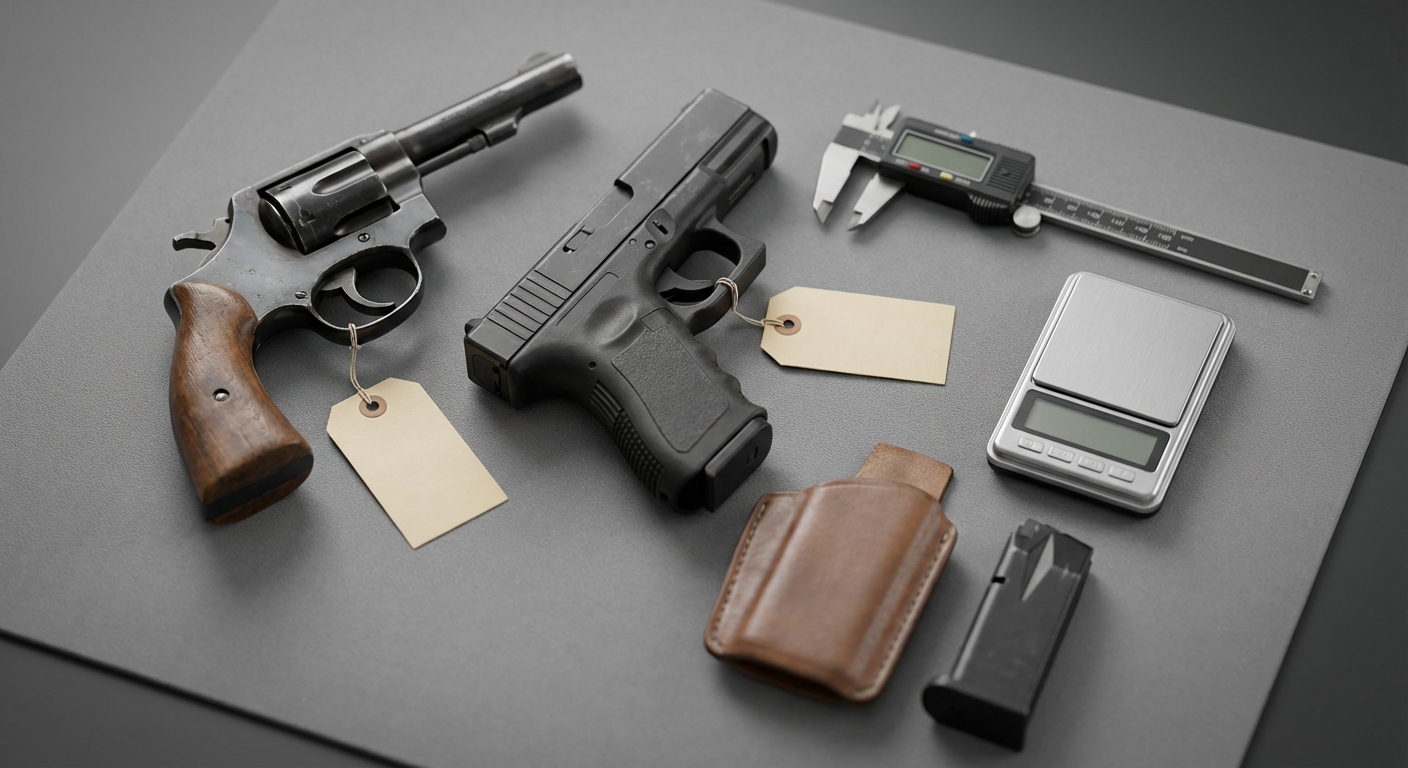
Use the same firearm safety rules you rely on at the range, especially while cleaning and taking photos.
Treat every firearm as loaded, and personally verify it’s unloaded before you do photos, cleaning, or measuring anything.
Keep the muzzle pointed in the safest possible direction the entire time, even during “unloaded” handling.
Keep your finger outside the trigger guard until you are ready to fire.
Light cleaning is about removing obvious grime, not chasing a showroom shine. A wipedown and gentle dust removal usually helps; aggressive polishing can round edges, mute markings, and make honest wear look “messed with,” which can spook buyers.
Be finish-aware and clean with the goal of not damaging the finish, especially on coatings like Cerakote.
For oil-finished wood stocks, some people use products like Schaftol (described as used to finish or improve oil-finished stocks, including a red-colored option) or Howard’s (described as used for maintenance), but keep it minimal and avoid experimenting right before listing.
Write down the make, model, caliber, and any variant markings exactly as stamped. Condition questions usually follow, so note finish condition, bore condition, whether numbers match where applicable, and any aftermarket parts. For serial and variant details, record them for documentation, but don’t post the full serial publicly.
Use clear, well-lit photos, an accurate description that matches the markings, a complete “what’s included” list (mags, box, accessories), and a plain disclosure of modifications. Store the firearm securely while you wait to sell, inaccessible to unauthorized people.
Quick pre-list routine: verify unloaded with safe muzzle discipline and trigger-finger control; wipe it down gently without over-polishing; confirm make, model, caliber, and variant markings plus condition notes; photograph clearly, list inclusions and modifications, and keep it locked up until transfer.
Closing the Deal Safely
You already did the hard part, you documented the gun honestly and safely. Closing is where deals go sideways, unless you control the sequence with clear boundaries, verified payment, and a lawful transfer path.
Set expectations in your first real reply: your asking price (and how firm it is), what’s included (mags, case, optic, ammo, paperwork), and where you’ll meet. Buyers who are serious will adapt; buyers who want chaos will self-select out. Keep it practical and respectful, but avoid oversharing. A first name, a burner email, and a public meet spot are usually plenty. Your home address, daily schedule, and where you store other firearms are not negotiation leverage.
Negotiation works best when it stays boring. If someone offers less, counter once with a number and a reason grounded in the listing, then stop talking. If they get hostile, try to change the meet location repeatedly, or keep pushing for exceptions, walking away is the win.
Cash is generally final, there is no chargeback mechanism. That lowers reversal risk, but it raises the in-person theft risk, so the meet logistics matter as much as the bills. Meet in a well-lit public place, keep the firearm secured until you are ready to complete the transfer, and do not let a buyer “test fit” it into a bag or car before payment and paperwork are handled.
Cashier’s checks and money orders can be counterfeit or forged, and even a deposit that shows up in your account can be reversed if the item is returned unpaid. If you accept anything other than cash, treat “funds cleared” as the only finish line, not “funds received.”
If the situation calls for an FFL (licensed dealer) transfer, use one. The extra stop is usually cheaper than guessing wrong.
If shipping is involved, anchor yourself to USPS Domestic Mail Manual (DMM) 601—and follow step-by-step firearm packaging and shipping guidance. Non-licensed individuals are generally prohibited from mailing handguns through USPS. Rifles and shotguns may be mailable for non-FFLs when the shipment complies with applicable laws and USPS standards. Under DMM 601, firearms must be unloaded, and ammunition is not mailable with the firearm.
For peace of mind, keep a simple written record where legal and appropriate: date, make/model/serial, buyer’s name, and the transfer method used. If you shipped or used an FFL, keep the shipping receipt, tracking, and any transfer paperwork. The goal is not bureaucracy, it is being able to prove what happened if questions come up later.
- Pressure to rush or “skip the shop”
- Refusal to follow the legal transfer process you propose
- Inconsistencies in identity or story
- Weird insistence on a specific payment method
Deal-closing script: agree on terms in writing, confirm funds, complete the lawful transfer or compliant shipment, then save the receipts and a simple record of the sale.
Quick Checklist + Next Steps for First-Time Gun Sellers
First-time selling stops feeling complicated when you keep your focus on the same two things that tend to cause the biggest regrets: safe handling and a clean, legal transfer. The main gotchas are value accuracy, compliance, and a safe, repeatable close.
- Set your realistic value range (your “keep it” number and your “sell it today” number).
- Pick a selling route that matches your priorities: speed, net proceeds, privacy, and effort.
- Verify your state requirements using official sources before you accept money or schedule a meetup.
- Confirm the firearm is unloaded, then do your basic cleaning and function check.
- Gather what supports your price: model details, condition notes, and any boxes or documents you have.
- Create clear photos that show markings and wear honestly, no mystery angles.
- Screen buyers early, and walk away from anything that feels rushed or evasive.
- Execute the close in order: agree on terms, secure payment, complete the transfer, then ship or hand off.
- Record what happened (dates, what was sold, and transfer/shipping confirmations) and store it safely.
Pick your route today, verify your state requirements from official sources, then set a realistic timeline so you are not negotiating under pressure. If you want a simple FFL-backed option, Cash My Guns is a nationwide online firearms purchasing service operated by Dunlap Gun Buyers (an FFL) that buys guns, ammunition, and accessories, and it states shipping is prepaid and fully insured as part of its process.