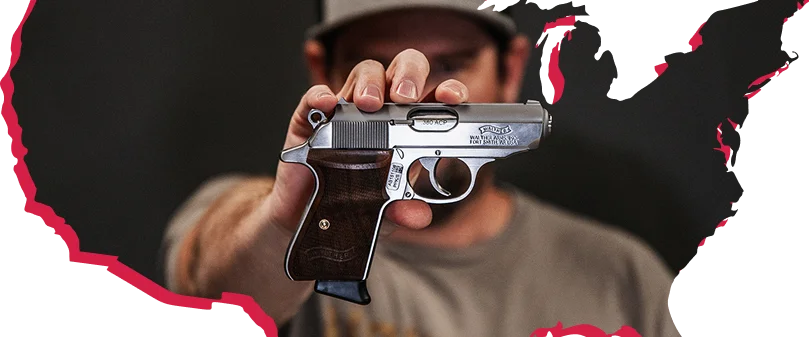


You show up expecting “fair money” and realize the offer is a flat gift card, not cash, and not even tied to what your firearm would sell for.
That’s the tension you’re juggling: you want the gun out of the house quickly and safely, but you also don’t want to feel like you got lowballed. Most sellers miss the price gap because buybacks aren’t priced like a market sale.
A gun buyback program feels official and simple because it is built around preset incentives. The catch is that simplicity flattens the payout; compensation is often a fixed amount based on broad firearm type, not an appraisal of make, model, or condition.
That disconnect can get expensive fast; one reported example describes a transferable 1940s Thompson submachine gun turned in for a $50 gift card.
The other path is selling through a dealer, where the number is based on what the gun can realistically be resold for, not a one-size-fits-most category. You’ll leave with a practical way to weigh payout, speed, legality, effort, and risk, so you can tell when a buyback is “good enough” and when the dealer route is the one that actually puts more money in your pocket.
Two Paths to Turning Guns Into Cash
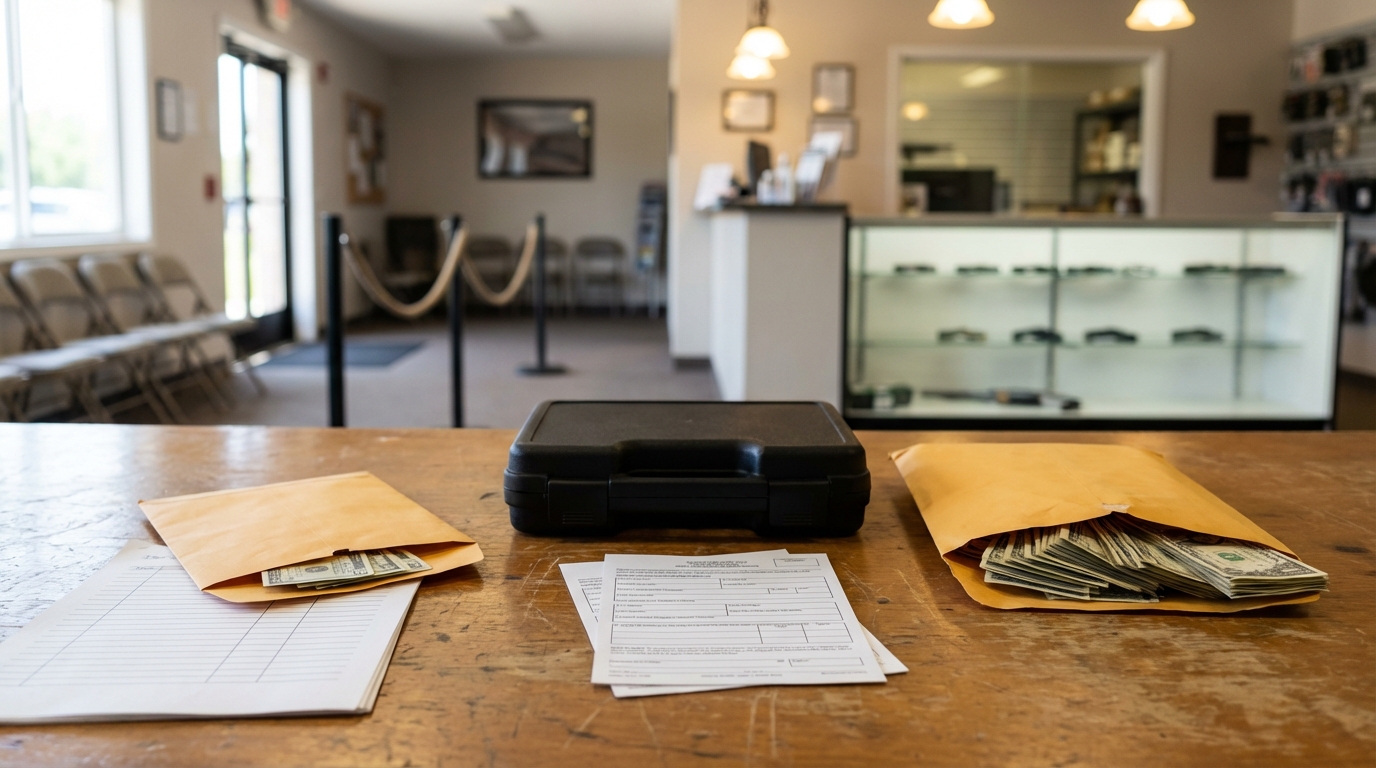
These routes don’t just pay differently, they work differently, which is why expectations get crossed. A gun buyback program is a preset offer event; a dealer sale is a market transaction with records and rules.
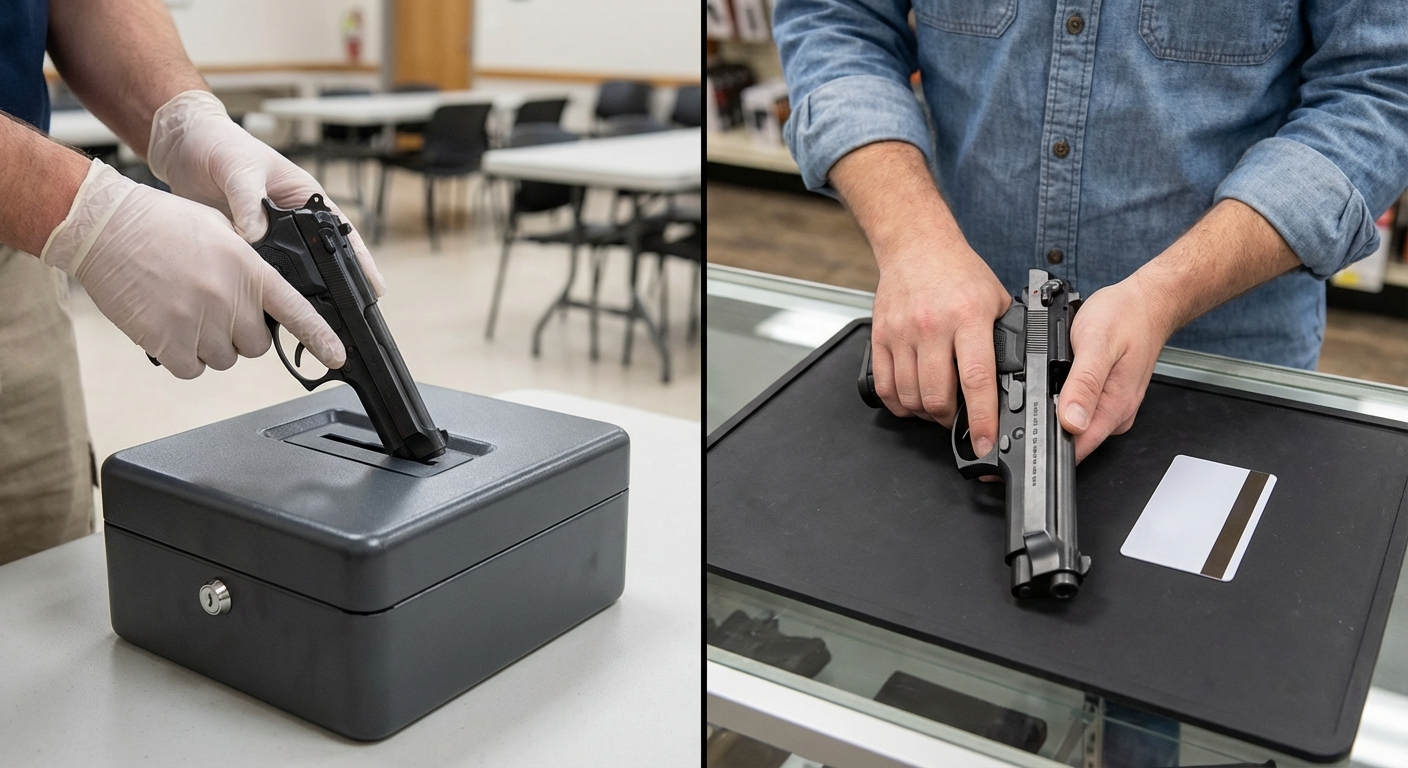
Most gun buyback programs run as event-based intake: you show up, the organizer uses a posted payout schedule, and they slot your gun into broad categories instead of doing a true one-by-one appraisal. Payment is often a gift card rather than cash.
That structure is why a rare or unusual firearm can still get treated like “a gun is a gun” at the table. The takeaway is straightforward: at a buyback, the organizer sets the price, not the market (which is exactly why an outlier like the Thompson example above can happen).
Selling through a Federal Firearms Licensee (FFL), the regulated middleman who can legally transfer and record sales, branches into four common ways to sell a gun. A direct purchase offer is the simplest: you bring it in (or ship it) and the dealer prices to the market. A trade-in swaps some cash for store credit so your next purchase is simpler. Consignment means the dealer lists it for you, you wait for a buyer, and you get paid after it sells.
“Online-to-FFL” selling is the same dealer transfer, just started online; the firearm still ends up logged and transferred through an FFL (Cash My Guns is one example of an online buyer that routes purchases through licensed dealers). The paperwork is why it feels structured: ATF Form 4473 is the standard transfer record, and the buyer completes it when the gun is transferred through a dealer. For private-party transactions, the FFL must check Item 32 on Form 4473, and FFL licensees must accurately complete all sections under “Must Be Completed By Transferor/Seller” when applicable. Any firearm the FFL receives that was a privately made firearm (PMF) must be recorded on Form 4473.
Shipping is the practical constraint: a nonlicensee may ship a firearm to an FFL in another state for a lawful transfer, with the receiving FFL transferring to the buyer under background-check and state-law rules. If you ship a handgun as a nonlicensee, federal rules require a common or contract carrier, not USPS, unless you are an FFL or authorized government entity. ATF also allows “ship to yourself in care of” for certain lawful sporting travel, but only you can take possession.
When the route is clear, the payout and timeline get easier to predict-because you’re no longer comparing an incentive schedule to an actual resale-driven offer.
What Actually Determines Your Payout
Your payout isn’t just “what a gun is worth”; it’s what someone can reliably sell your specific one for right now, with enough margin to cover overhead and the risk of it sitting. That’s why two guns that look “basically the same” to an owner can get noticeably different dealer offers.
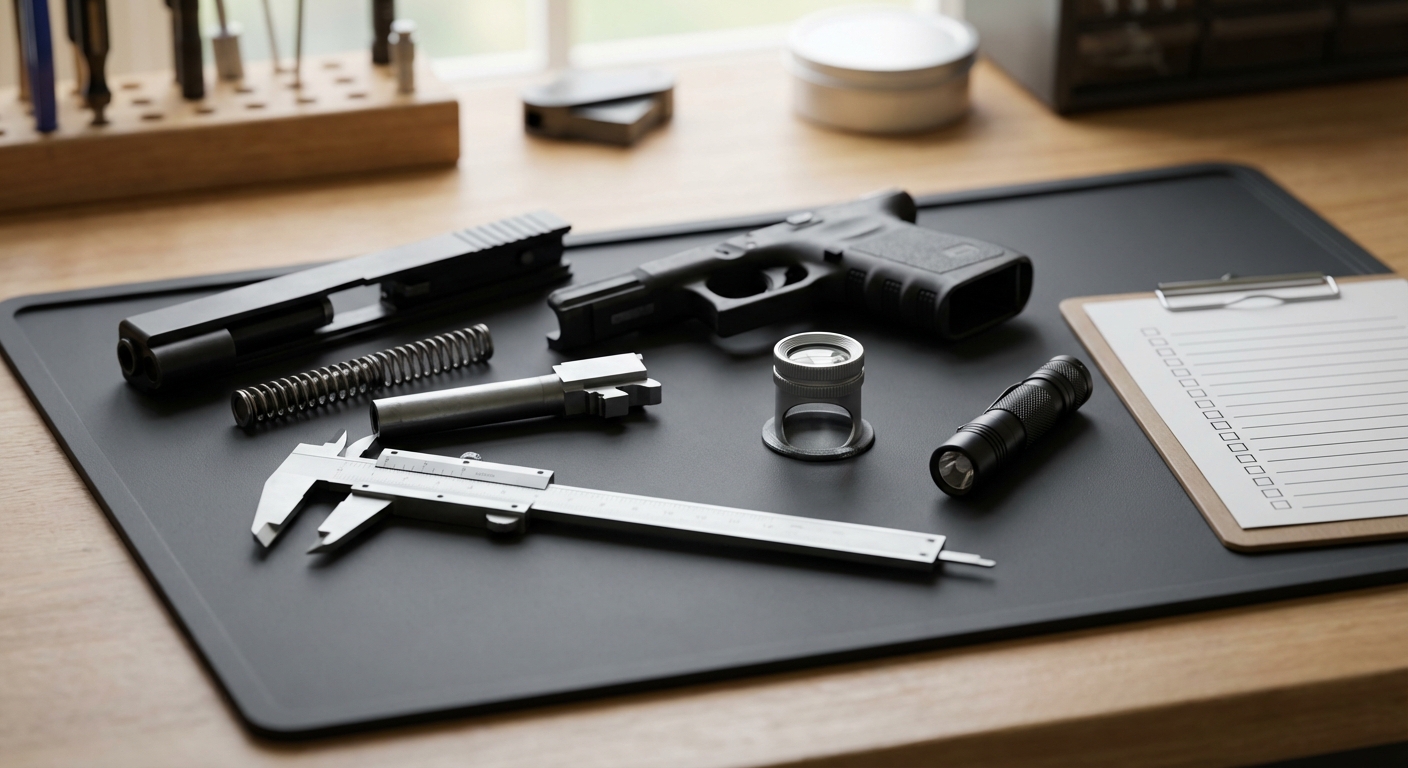
Dealers price off resale velocity, not nostalgia. A popular polymer pistol in a common configuration has a deep buyer pool and predictable comps; a niche model or oddball variant can be harder to move, even if it’s “higher quality” on paper. Micro-example: the same platform in an uncommon caliber or limited-run trim often draws fewer buyers, so the offer usually reflects that slower, riskier resale.
Condition isn’t just cosmetics, it’s confidence. Finish wear, rust freckling, or battered screws suggest hard use; a bright, sharp bore suggests a gun that’s been cared for. Micro-example: a pristine bore versus a rough, pitted bore changes how confidently a dealer can describe it and how likely it is to come back as a complaint, which directly affects what they’re willing to pay.
Collectors add another layer: matching numbers matter because they’re proof the gun hasn’t been pieced together. Micro-example: a matching-number set is easier to sell as “correct”, and that correctness is what people pay for.
Aftermarket parts are a wild card. Some upgrades are a plus to the right buyer, others shrink the buyer pool or raise inspection time. Micro-example: a clean, reversible accessory setup can be an easy yes; permanent changes like aggressive stippling or a non-factory refinish can turn “simple resale” into “specialty buyer only”, which usually pulls the offer down.
Accessories and ammo can move the needle, but usually only when they reduce a buyer’s immediate spend. Micro-example: factory magazines, the original case, or a correct manual set can make the package easier to list and justify at a higher price than “gun only.”
Real pricing comes from triangulating completed sales, not asking prices that never convert. GunBroker “Completed Items” lets you view ended listings with final selling prices and end dates for specific models and variants, which is how you sanity-check what buyers actually paid. Major auction-house past-lot archives publish realized prices that help corroborate collectible values, and dealer “sold” archives, when available, add a reality check because they reflect completed transactions, not hopeful tags on a shelf.
Supply and demand explicitly drives valuation factors like make/model, condition (including finish, bore, and matching numbers), and aftermarket parts, and market data (dealer listings plus auctions) gets adjusted for seasonality and regional demand, which is the same basic math any dealer has to do to stay in business.
- Write down the exact make, model, variant, and caliber, plus the serial prefix if it affects the variant.
- Photograph both sides, the bore, muzzle, crown, and any wear points, plus any markings that matter.
- List every modification and what original parts you still have.
- Bundle accessories and ammo with a clear count, then check real sold prices so you recognize a fair offer fast (and consider how expert appraisers value firearm collections when weighing condition, originality, and accessories).
Payout Comparison Across Common Scenarios
In most normal cases, market-based selling beats preset buyback tiers, except when resale is hard or incentives are unusually high. The reason is simple: many buybacks pay from a posted, category-based schedule, so a gun that’s worth real money in the open market can still land in the same “pistol” or “rifle” bucket as something far less desirable.
Scenario bucket: Common polymer pistols
Buyback payout tendency: Low to Medium
Dealer payout tendency: Medium to High (depends on route)
Why: Buyback tiers ignore model-by-model demand
Best-fit choice: Dealer route if functional
Scenario bucket: Hunting rifles
Buyback payout tendency: Low to Medium
Dealer payout tendency: Medium (depends on season and caliber)
Why: Market prices reflect condition and optics
Best-fit choice: Dealer route if sellable
Scenario bucket: Pump shotguns
Buyback payout tendency: Low
Dealer payout tendency: Low to Medium
Why: Common supply keeps offers conservative
Best-fit choice: Compare both, decide on speed
Scenario bucket: Collectible or rare guns
Buyback payout tendency: Very Low
Dealer payout tendency: High (if authentic and legal)
Why: Collector value rarely fits a category tier
Best-fit choice: Dealer route, not a buyback
Scenario bucket: Non-functional or unsafe firearms
Buyback payout tendency: Can be competitive
Dealer payout tendency: Low (often parts-only)
Why: Dealers price in repair, liability, and verification
Best-fit choice: Buyback for quick disposal
The “collectible gets underpaid” problem isn’t theoretical. The Thompson example mentioned earlier was reportedly turned in at a San Francisco buyback for a $50 gift card-an illustration of what category payouts do when they treat a historically valuable item like a generic firearm.
Dealer outcomes swing based on route. A direct purchase is usually faster and simpler, but the offer bakes in the dealer’s resale costs and risk, so it helps to understand how much gun stores typically pay for guns before comparing against buyback incentives.
Consignment can net more because you’re closer to the final buyer, but your net depends on the commission and how long it takes to sell, so it’s not a guaranteed bump (see selling a gun on consignment for how the math usually works).
One example of a dealer-style route is Cash My Guns, operated by Dunlap Gun Buyers, a federally licensed firearms dealer (FFL). It describes its process as “Safe • Legal • Hassle-Free,” and it operates as a nationwide online firearms purchasing service that buys guns, ammunition, and accessories.
Nuance: the exceptions exist because broken, heavily modified, or questionable guns are expensive to verify and hard to resell. Buybacks often don’t care about resale at all, which can make a flat incentive surprisingly competitive on low-demand or non-functional items, or when an event offers unusually high payouts.
If your gun is functional and in-demand, check a dealer route first. If it’s broken, unsafe, or you prioritize immediate disposal over maximizing value, a buyback may be reasonable.
Speed, Convenience, and Risk Tradeoffs
The money comparison is only half the decision, because the same route that pays more can also take longer or create more friction. Convenience has tradeoffs: time, privacy expectations, and a bit of logistics.

Route: Buyback event turn-in
Speed (practical timeline): Often same-day, one-and-done, but limited event dates, travel, and lines can stretch the “quick” part.
Effort: Show up during a narrow window, wait, leave.
Privacy expectations: Many are marketed “no questions asked,” but organizers commonly record details about the firearm itself. If payment requires a check, tax form, or age verification, personal info may still be collected.
Route: Local dealer (FFL) visit
Speed (practical timeline): Usually the fastest standard sale, you can get an offer on the spot, but some deals require an extra trip depending on how payment and intake are structured.
Effort: Drive there, bring the firearm in, complete their intake.
Privacy expectations: Expect the dealer to record acquisition details as part of normal FFL recordkeeping.
Route: Consignment
Speed (practical timeline): Slow by design, you’re waiting for a buyer, then waiting for payout after it sells.
Effort: Drop off, then follow up.
Privacy expectations: Less “one transaction” privacy, more shop documentation over time.
Route: Mail-in selling
Speed (practical timeline): Shipping time plus inspection time, then payment. Cash My Guns states payment typically takes one business day from arrival and inspection, unless they need to speak with the seller.
Effort: Pack, ship, wait for receipt and processing.
Privacy expectations: Not face-to-face, but still a documented transaction.
Two comfort factors matter in real life: handling and shipping friction. For transport, keep things controlled and secure so you’re not juggling a loose firearm in a parking lot or lobby. For shipping, handguns add a convenience constraint because nonlicensees can’t mail handguns via USPS; they have to use a common or contract carrier, which can mean extra scheduling and fewer drop-off options (and it’s smart to use shipping insurance to reduce loss risk).
Choose the route that matches your urgency and comfort level, then confirm the specific requirements before you go. And before you commit to any handoff, make sure the legal side supports the option you picked.
State Rules That Change Your Options
The best selling option only works if it’s legal where you live, and state rules can change the path. Federal law sets the guardrails that usually matter no matter where you are: an FFL may not transfer a handgun to someone under 21, and may not transfer a rifle or shotgun to someone under 18. Federal law also blocks a common shortcut: an unlicensed individual is prohibited from transferring a firearm to an individual who does not reside in the same state as the transferor, so crossing state lines typically pushes you toward using a dealer transfer.
Then there’s the state layer, which can quietly rule out the route that looks simplest. Some states require background checks for private transfers, mandate dealer involvement, tie transfers to permits or FOID-style systems, impose waiting periods, or use registration-style frameworks that change what’s practical. Texas is a lighter-touch example: Texas law does not require private-party firearm sales to go through an FFL or include a background check, provided it’s between Texas residents and the seller does not knowingly sell to a prohibited person; Texas does not require a state permit to purchase, firearm registration, or a state waiting period. Florida differs: Florida law generally does not require private-party firearm sales to be processed through an FFL or include a background check (state background checks are run on sales through licensed dealers). Confirm current rules through official state resources or a local FFL.
Before you choose a route, confirm the rules that apply to your state and your buyer’s state (see state-by-state gun selling requirements). Those rules can also affect shipping and dealer transfer steps, which is why it’s worth checking before you start calling around for offers.
Best Choice for Your Gun and Goals
If you want maximum money, you generally want a market-based dealer path. If you want maximum simplicity, a buyback can be good enough in the right circumstances. The real unlock is combining what drives price (what the gun is, what shape it’s in, and what people are paying right now) with the friction you’re willing to tolerate (time, logistics, privacy expectations) and the legal constraints that decide which options you can actually use.
Use buybacks when you’re intentionally trading top-dollar for a preset, no-negotiation incentive, often a gift card-especially if the firearm is broken, extremely low-demand, or you just want a fast exit with minimal back-and-forth.
Use a dealer-style offer when your firearm is functional and in-demand, because market-based pricing has room to reflect real resale value. Cash My Guns, for example, builds offers from make and model, condition details (finish, bore, matching numbers, aftermarket parts), plus current market data pulled from dealer listings and auctions; it also factors seasonality and regional demand into the offer price.
- Identify the exact make, model, caliber, and any variant-defining details.
- Document condition clearly: finish wear, bore, matching numbers, and aftermarket parts.
- Inventory what’s included, like mags, optics, cases, ammo, and accessories.
- Contact at least one dealer-style buyer and ask: “What would change this offer up or down?”
- Confirm your state rules before you commit to any handoff or shipment.
If you want a clean dealer-style offer without guessing, request a quote from Cash My Guns; they buy guns and, where legal and compliant, ammunition and accessories.
They’re operated by an FFL, but you still need to verify your state’s requirements as outlined earlier before you move forward.