
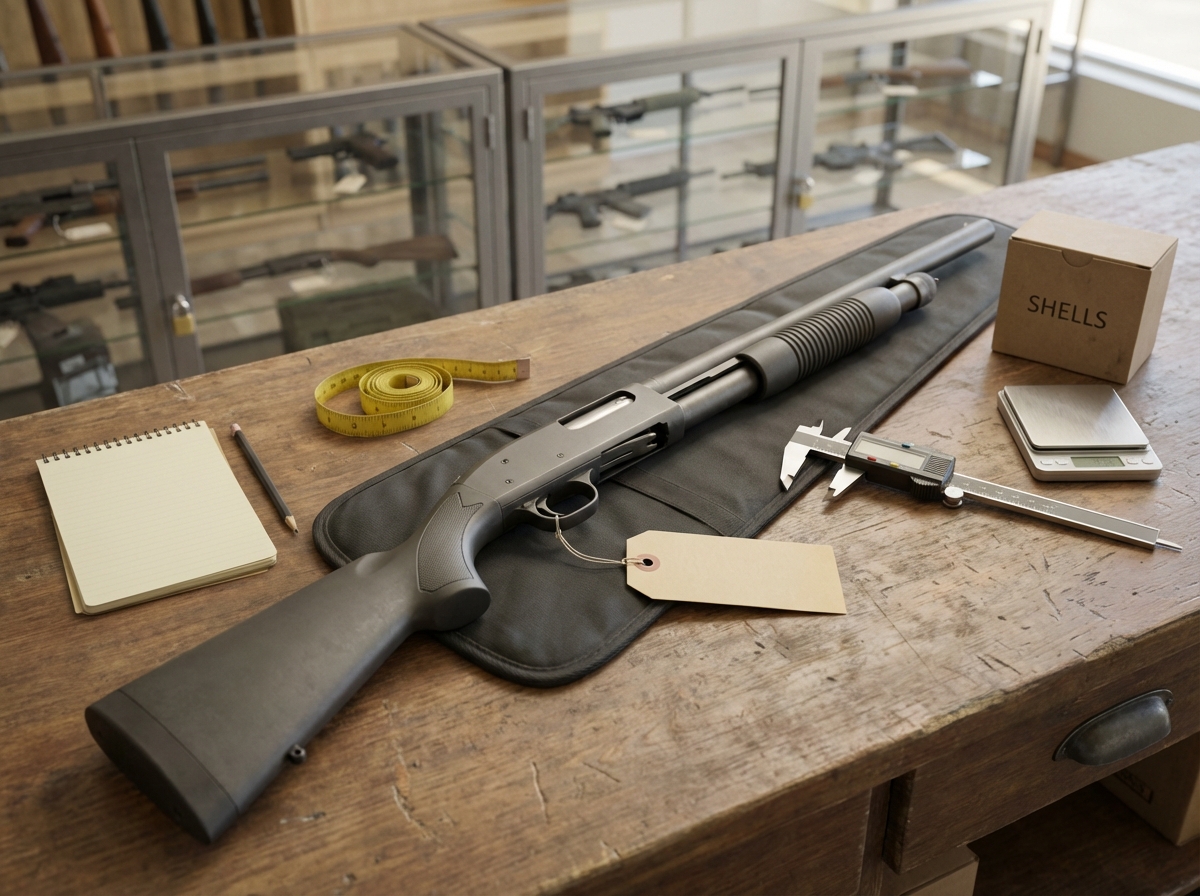
The real problem isn’t curiosity, it’s the decision: price it low and you’ll feel like you donated a shotgun, price it high and you’ll babysit the listing for weeks. That swing usually comes from three mistakes people make without realizing it.
First, they mix up look-alike configurations. The Blue Book of Gun Values methodology assumes you’ve correctly identified the exact gun and you’re using standardized condition grades, so a small SKU-level difference can skew the number fast, and misidentification is one of the most common reasons values go sideways. Second, people overestimate or underestimate condition and completeness, which pushes the “book” value up or down before the market even gets a vote. Third, they treat headline numbers as real, even though pricing pressure lives in the secondary market, private sales, used racks, auctions, and online listings where deals actually close. Some “value” pages are even based on tiny samples, like 10 sold items over the past year, which is not the whole market.
Once you anchor yourself correctly, everything gets calmer. Mossberg publishes MSRPs at the model and SKU level, so there’s no single universal “new Mossberg 500 MSRP,” and even new-retail anchors vary, for example a new 500 Field 28-inch and Security 18.5-inch combo has been listed at $419.99 plus tax with free shipping. You’ll walk away able to pin down a realistic value range by matching your exact setup, sanity-checking condition, and comparing it to how the market is behaving right now so you can pick a selling path that fits your priorities.
Identify Your Exact 500 Variant
“Mossberg 500” isn’t a single thing in the market, it’s a family with a lot of look-alike packages. Buyers shop for a specific variant (configuration): gauge, barrel setup, capacity, sights, finish, furniture, and choke system drive what accessories fit, what role it fills, and what listings it should be compared against.
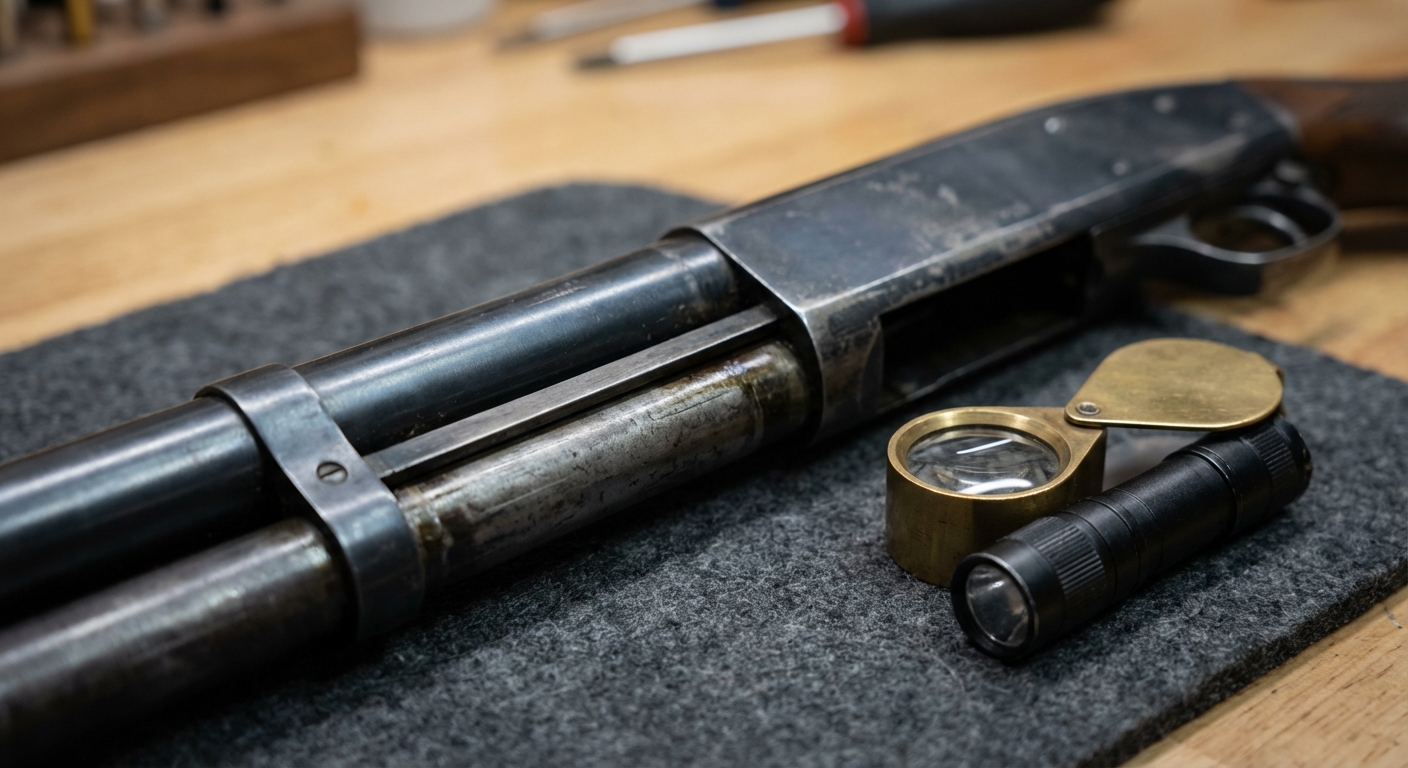
Grab a note on your phone and record the identifiers that actually change what you’re holding: gauge; barrel length (and how many barrels you have); magazine capacity; sights (bead, rifle sights, ghost ring, optic rail); finish (including how to identify a blued finish, parkerized, matte, camo); furniture (wood vs synthetic, standard vs pistol grip, field vs tactical forend); and choke system (fixed choke vs removable tubes, plus whatever choke markings are present).
- Photograph the full shotgun, left side and right side, in good light.
- Photograph the left receiver near the ejection port where the serial is stamped (the serial is on the receiver, not the barrel).
- Photograph the barrel markings, they typically include gauge and barrel details, and often choke information.
- Photograph the front sight and rear sight area clearly (bead vs rifle vs ghost ring matters to buyers).
- Photograph the magazine tube end and the barrel retention point (this also helps avoid mixing up 500 vs 590 family).
- Photograph any extra barrel, choke tubes, or package parts laid out next to the gun.
Mossberg does not publish a complete public serial-to-date table. If you need factory help, contact Customer Service with the full serial number including any prefix. Also, not all older firearms can be reliably dated from the serial number alone, record availability varies by model and production era, so treat serial lookups as “confirming info,” not the whole story.
The fastest tell is the magazine tube and how the barrel is retained. A 500 typically uses a closed-end magazine tube and the barrel is secured by a bolt/screw at the front. A 590/590A1 uses an open-end magazine tube with a removable magazine cap retaining the barrel. Because of that design difference, 500 and 590/590A1 barrels are generally not interchangeable.
If it’s a 590A1, it’s usually easy to spot once you know what to look for: a 20-inch heavy-walled barrel, plus a metal safety and metal trigger housing are common identifiers on the A1 package.
Before you look at listings, gather 6 photos (both sides overall, left receiver serial area, barrel stamp, sight close-up, mag tube/barrel retention, any extra barrel/parts) and record 8 data points (gauge, chamber marking, barrel length(s), capacity, sight type, finish, stock type, choke system and markings).
Condition, Completeness, and Upgrades
Once you’ve nailed down the exact variant, the next thing buyers do is grade the example in front of them. That’s where condition and completeness start doing more work than the name on the receiver.
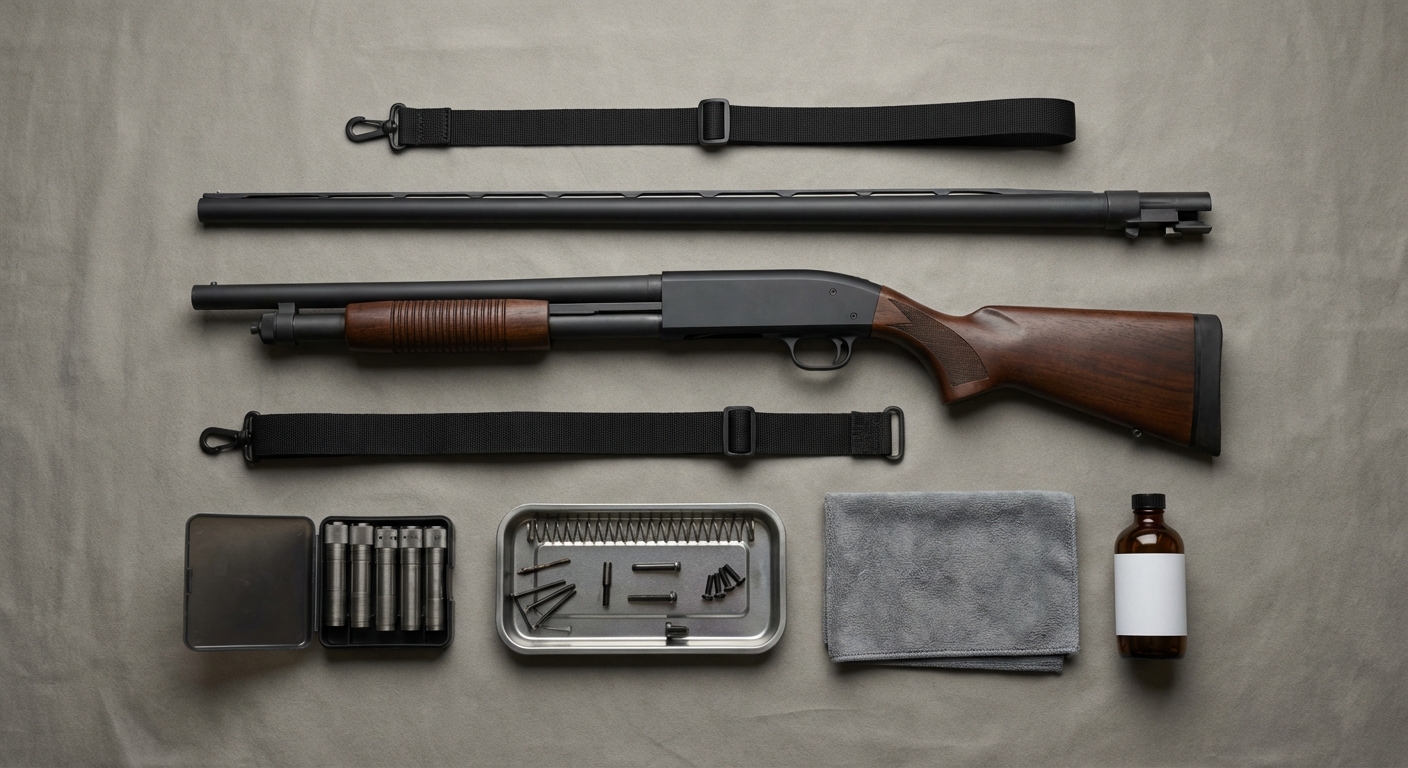
Condition and originality usually move the needle more than accessories. Once a buyer knows which Mossberg 500 setup you have (field vs security style), they start grading what’s actually in front of them: how hard it’s been used, how complete it is, and how far it has drifted from factory configuration. Using a condition grade (NRA Modern Gun Condition Standards) keeps you from over-calling a “nice used” gun as “excellent” and pricing it into a dead zone.
- New in Box (NIB)
- What it looks like in real life: “New” under NRA standards means the same condition as it left the factory with no wear, often with the box and papers when applicable.
- What usually bumps it down: Any visible wear, storage rust, swapped parts, or missing factory packaging for a gun represented as NIB.
- Excellent
- What it looks like in real life: Minimal use and handling marks, a very high level of original finish, and no significant mechanical issues.
- What usually bumps it down: Noticeable finish wear at carry points, freckling, or roughness in function.
- Very Good
- What it looks like in real life: Some wear from use, clearly visible finish wear or minor imperfections, still well cared for and mechanically sound.
- What usually bumps it down: Rust spots, stock damage, missing small parts, or a “works but feels gritty” action.
- Good
- What it looks like in real life: More use and dings, finish loss is obvious, but it’s safe and serviceable, minor repairs or replaced parts can show up here.
- What usually bumps it down: Cracks, heavy corrosion, or anything that suggests neglect instead of honest wear.
- Fair
- What it looks like in real life: Significant wear and finish loss, pitting or visible defects are common, generally still functional and safe, collector appeal is basically gone.
- What usually bumps it down: Broken parts, unsafe function, or severe corrosion.
- Verify function, cycle the action, check the safety, dry-fire only if you’re comfortable and it’s safe to do so, and confirm the action locks and releases normally.
- Look down the bore, buyers want a clean, bright bore and a chamber that doesn’t look rough or abused.
- Scan for rust and pitting, especially around the receiver, magazine tube area, barrel exterior, and under any accessories that might trap moisture.
- Judge finish wear, muzzle, sharp edges, and slide action bars tell the story fast.
- Inspect the stock and forend, cracks at the wrist, splits around screws, and “repaired” stress cracks get noticed immediately.
- Confirm nothing’s missing, a missing bead, odd screws, or a mismatched barrel fit turns into a trust problem in a hurry.
For a common pump gun, “complete” usually means it’s still wearing its original major parts, and any extras you’re including are clearly listed, like an additional barrel or the original furniture if you swapped it. Box and papers help most when you’re claiming NIB. Buyers also lean on shotgun valuation factors like condition, configuration, and market comps: non-original parts, refinishing, aftermarket modifications, missing box and papers, or other deviations from the original configuration typically reduce value versus an original example in the same condition grade.
Comfort and usability changes can make your 500 easier to sell, but they rarely add predictable dollars. A Magpul SGA stock or MOE forend is a good example of an upgrade some buyers actively want, but plenty of buyers still treat it as personal taste and value the gun like a standard used 500. Permanent or value-risk changes, like refinishing, drilling, cutting barrels, or altering the receiver, shrink your buyer pool and trigger the same “deduction” mindset as any other non-original deviation.
Write your listing the way a skeptical buyer sees it: pick the closest condition tier, call out the first-wear points (bore, action feel, rust, finish, stock integrity), and if you added parts, include the original components in the sale whenever you can. That’s how you keep upgrades from becoming a negotiation against you—and why original finish and honest patina often beat a “freshened up” refinish on price.
2026 Mossberg 500 Price Ranges
Once the variant and condition tier are clear, the remaining question is what buyers are actually paying for that specific setup right now. That’s where a range beats a single “book number,” especially when listings and sold prices don’t line up.
You’ll see a spread because listings aren’t the same thing as market-clearing sales, and demand shifts by place and time (see how supply and demand affects firearm resale prices).
The easiest way to stay sane is to treat asking price as the seller’s wish, then compare it to an expected sale (sold price) range that reflects typical negotiation, local demand, and how quickly you want the gun to move.
18.5″ Security / Persuader-style
- Excellent: Asking $325-$425; Expected sale $275-$375
- Very Good: Asking $275-$350; Expected sale $235-$310
- Good: Asking $220-$290; Expected sale $190-$260
- Fair: Asking $160-$220; Expected sale $130-$190
28″ Field, vent rib-style
- Excellent: Asking $275-$375; Expected sale $235-$325
- Very Good: Asking $240-$320; Expected sale $205-$275
- Good: Asking $200-$270; Expected sale $170-$235
- Fair: Asking $140-$200; Expected sale $115-$170
Field / Security combo (two barrels)
- Excellent: Asking $375-$525; Expected sale $325-$450
- Very Good: Asking $330-$450; Expected sale $285-$385
- Good: Asking $275-$375; Expected sale $235-$325
- Fair: Asking $200-$285; Expected sale $170-$245
Combo packages earn their own band because a true two-barrel set, typically a 28-inch field barrel plus an 18.5-inch security barrel, saves the buyer from hunting down a second barrel later, and that convenience shows up in real-world offers.
Field setups also swing based on what “field barrel” actually means in the listing, for example a plain 28-inch MOD 2.75-inch barrel versus a ribbed Accu-Choke barrel with a choke tube set, because included choke hardware and barrel type affect what the buyer would otherwise need to purchase.
One more reality check: new retail promos can land in the low $400s for a basic 12 gauge, 5+1 style build, so a used gun priced too close to new needs a clear reason to exist, such as true like-new condition, a desirable configuration, or the right extras.
- Region: local defensive-shotgun demand can pull 18.5-inch setups up, while hunting-heavy areas keep 28-inch field guns moving faster.
- Seasonality: field guns sell cleaner heading into bird and waterfowl seasons, then soften in the off-season.
- Finish and bore appearance: clean metal and a bright bore keep you in the higher tier; obvious wear drops you fast.
- Completeness: the original barrel(s), correct magazine parts, and any factory take-offs matter because replacements cost time and money.
- Aftermarket changes: obvious “personalized” parts narrow your buyer pool, even if you spent a lot doing them.
- Pricing method: Cash My Guns states its valuations factor in market data (dealer listings plus auctions), plus seasonality, regional demand, and condition inputs like finish, bore condition, matching numbers, and aftermarket parts, which is exactly why two guns that look “similar” online can land in different tiers.
The provided Cash My Guns excerpt (Feb 2026) does not publish 2025 to 2026 completed-sale pricing distributions for these exact setups, so treat the bands above as practical guardrails, not precise percentiles.
Your best play is to pick two numbers: list at the top of your tier’s asking band if you can wait and your local market is hungry, or the middle if you want steady interest. Then set your “I’ll take it” number near the middle-to-upper end of the expected sale band for hot configurations, or closer to the lower end if your area is price-sensitive and you want it gone this week (compare against a Mossberg 500 current-worth guide for model-specific context).
How the 500 Compares
Those price bands make more sense when you remember what category the 500 lives in: it’s a mainstream pump that usually sells because it fills a job. That keeps it relatively liquid, but it also caps how often you see a true “collector premium.”
The 500 usually trades like a practical tool-easy to move, but not always ‘collector premium.’
If you want a sanity check on how liquid the platform is, look at who’s willing to buy them outright. Some buyers even publish current worth guides for the Remington 870, which is a strong signal these models are routinely transacted and easy to convert into cash compared to more niche categories.
Here’s the real-world pattern you’ll recognize once you’ve watched a few listings: a clean 500 tends to sell because it solves a job, home defense, hunting, a truck gun, and buyers shop it like a tool. That usually creates a steadier price floor than platforms that swing with internet trends, special editions, or temporary demand spikes.
That’s also why valuation models that pull from market data, dealer listings plus auctions, and then adjust for gun-specific factors like condition tend to be more consistent on mainstream pumps than on fringe variants.
- Ruger 10/22: utility plus tinkering culture, lots of small configuration preferences.
- SKS: more collector-adjacent, country of origin and originality drive patience.
- Glock 19, Sig Sauer P320, Beretta 92: value searches often reflect different demand cycles and platform culture than a utilitarian pump.
If you want speed, lean into the 500’s tool-like demand and price it to move. If you’re selling something more SKS-like in buyer mindset, plan to wait and hold your line for the right person (and if you’re comparing within the family, see what a Mossberg 590 is typically worth).
Sell Smart and Net More
Once you’ve got a realistic range, the part that actually changes your outcome is where you sell. The same Mossberg 500 can net very different cash depending on fees, friction, and how much work you want to do yourself.

The best selling option is the one that fits your priorities, max cash, fastest cash, or least hassle. The channel you pick changes your net proceeds, your timeline, and how much risk and paperwork you’re personally taking on.
For the highest net, start with a same-state private sale (where legal). For the fastest payout, go straight to a dealer cash offer or a direct-buy service. For the least hassle and lowest scam exposure, use consignment or run the transfer through an FFL.
- Local private sale (same-state, where legal)
- Net proceeds: Highest when priced right
- Speed: Medium
- Scam and hassle risk: Higher, you screen buyers and manage meetups
- Paperwork and compliance burden: On you, plus you must avoid prohibited persons
- Online marketplace listing (ship to buyer’s FFL)
- Net proceeds: Strong, but fees, shipping, and transfer friction eat margin
- Speed: Medium
- Scam and hassle risk: Moderate, more fraud vectors and payment disputes
- Paperwork and compliance burden: Moderate, you coordinate an interstate transfer through an FFL
- Consignment at a local shop
- Net proceeds: Good, but you pay a cut
- Speed: Slow to medium
- Scam and hassle risk: Low, shop deals with shoppers
- Paperwork and compliance burden: Low to medium, shop usually runs the transfer
- Sell to a dealer (cash offer or trade)
- Net proceeds: Lowest, dealer needs margin
- Speed: Fast
- Scam and hassle risk: Low
- Paperwork and compliance burden: Low, dealer runs the process
- Direct-buy service (mail-in)
- Net proceeds: Lower than top-dollar private, but predictable
- Speed: Fast once shipped
- Scam and hassle risk: Low if you use a legitimate FFL-backed buyer
- Paperwork and compliance burden: Low, the service drives the workflow
Federal law draws a hard line around an interstate transfer, meaning a transfer between residents of different states. Under 18 U.S.C. § 922(a)(5), a non-FFL generally may not transfer a firearm to a non-FFL in another state, those deals generally must go through an FFL in the recipient’s state. If you’re buying or selling a long gun across state lines through a dealer, 18 U.S.C. § 922(b)(3) allows the FFL to transfer it only if the transfer complies with both states’ laws.
For same-state (intrastate) private transfers between two non-FFLs, federal law does not require an FFL or a federal background check as long as you’re not “engaged in the business” and you do not transfer to a prohibited person, see 18 U.S.C. § 921(a)(21) and 18 U.S.C. § 922(d). State rules vary a lot, so when you’re unsure, using an FFL often simplifies compliance.
Quick examples (not legal advice): Texas (2026) does not require an FFL, background check, or waiting period for private-party sales, but you can’t knowingly transfer to a prohibited person and minors have restrictions. Florida (2026) generally does not require an FFL for private-party sales, its waiting period targets dealer sales, and buyers are generally 21+ with exceptions. California (2026) routes nearly all private transfers through a CA-licensed dealer with a background check and a 10-day waiting period, plus ID and age rules with limited exceptions.
A high asking price is meaningless if you bleed it back through marketplace fees, payment fees, shipping, insurance, and the buyer’s transfer costs, or if it sits for weeks. “Easy money” offers can also be a mirage when the buyer tries to renegotiate after you’ve invested time, or pushes risky payment methods.
Cash My Guns is operated by Dunlap Gun Buyers (an FFL) and describes itself as a nationwide online purchasing service that buys guns, ammunition, and accessories.
- Clean it enough to photograph well, wipe down metal, clean the bore, but don’t refinish or “restore” it right before selling.
- Photograph the whole gun and the details, both sides, serial area (only if you’re comfortable), sights, barrel markings, any wear, and anything included.
- Describe it like a buyer will inspect it, exact configuration, known mods, honest condition notes, and what’s in the box.
- Set two numbers, your list price based on your local market, and your walk-away number based on net after fees and shipping.
- Plan the transfer, same-state meet with a compliance plan, or ship only to the buyer’s FFL for an interstate transfer; pack hard, insure it, and follow carrier rules.
Your 500 Value Checklist
You don’t need a perfect number, you need a repeatable process and a realistic range.
- ID: Confirm your exact configuration; small differences change the range.
- Condition: Grade what a buyer pays for, finish wear and bore shape move value faster than cleaning effort.
- Completeness/mods: Account for what’s missing or changed, condition and originality beat accessories when you’re trying to predict the check you’ll actually get.
- Price bands: Sanity-check against the 2026 bands, and keep “asking” separate from “expected sale,” seasonality and regional demand can shift where you land.
- Selling channel: Pick the route that matches your priority: net, speed, or hassle.
If you’re trying to avoid the usual pricing whiplash from misidentifying the setup, over-calling condition, or chasing headline numbers, stick to the same sequence every time: match the exact configuration, grade it honestly, then use the 2026 asking vs expected-sale bands to pick a listing strategy that fits your timeline. From there, it’s just choosing whether you want to compare multiple offers locally or get a quote from Cash My Guns based on make/model, condition inputs like finish and bore, matching numbers, aftermarket parts, and market data from dealer listings and auctions.