
The tension is real, you want a fair price without getting lowballed, but you also don’t want to slap on a wishful number and watch it never sell.
Here’s the part most people miss: there isn’t one universal “blue book” number for every Ruger 10/22 because there isn’t one baseline 10/22. What matters in the real world is the offer price, meaning the actual amount a specific buyer will put on the table today after they account for their needs, their fees, and their risk, so two buyers can offer two different amounts for the same rifle.
Even “new price” isn’t one number. Ruger sells multiple baseline configurations, including the fixed-barrel 10/22 Carbine and the 10/22 Takedown, each with its own Ruger-published SKU and MSRP, and the Takedown is typically positioned above the Carbine when new. Add in factory variables like stock material, barrel profile and finish, sight or rail setups, and bundle packages like cases or scoped combos, and the starting point moves fast.
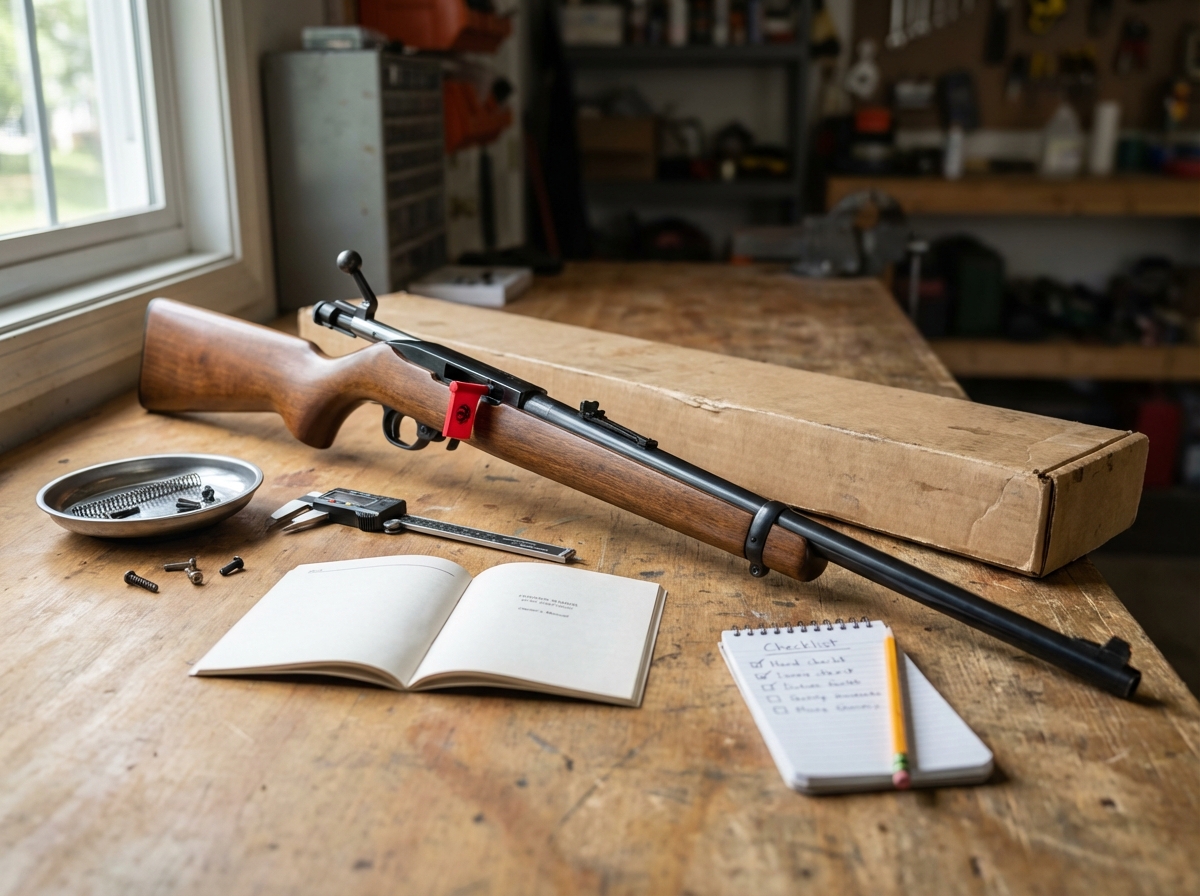
Your first move is to figure out what you actually have, then build a realistic range from configuration, condition, and real market behavior. To keep it from turning into an endless rabbit hole, it helps to line up the “value” you’re seeing, nail down the exact variant, then work outward from condition, upgrades, and sold comps.
Value Terms That Change Your Number
You can look at the exact same Ruger 10/22 and get three different “values” that are all honest. The mistake is treating any one number like it’s the number.
Start with fair market value, the calm baseline where a typical buyer and a typical seller both feel like they got a reasonable deal. From there, the number splits fast: a trade-in value is what a dealer will hand you today for speed and simplicity; a private-party price is usually higher because you’re doing the work; dealer retail is the highest because it includes the shop’s overhead and the fact they’re standing behind the sale (here’s a helpful breakdown of what drives gun values and pricing types).
Where people get thrown off is by listings. Asking ≠ getting paid. Active ads are just hopes with a price tag, and the rifles that actually sell often close below the “firm” number you see sitting online.
Then there’s the moving-target part: timing and location change demand, and demand changes your real options (including how supply and demand affects resale prices). Cash My Guns is a nationwide buyer that runs purchases through an FFL and markets the process as “Safe • Legal • Hassle-Free,” and it’s been “Trusted Since 2013.” That kind of reach is a useful reminder that your local market is only one slice of the bigger picture.
One rule of thumb that stays consistent: dealer trade-in offers commonly land around 60% of used retail value, because the shop is taking on reconditioning, holding time, and resale risk.
Quick filter before you believe any number: What kind of value is this, trade-in, private-party, or retail? Is it asking or sold? Does it match my time and place?
Identify Your Exact 10/22 Variant
Once you’re clear on what “value” you’re trying to estimate, the next big source of bad pricing is simple misidentification. If you can’t name your exact 10/22 variant and configuration, you’ll keep comparing apples to oranges, and your price range will be junk. Most “my 10/22” listings look similar at a glance, but small factory differences, like Takedown vs fixed barrel, sight setup, or a bundled package, are exactly what buyers search for.
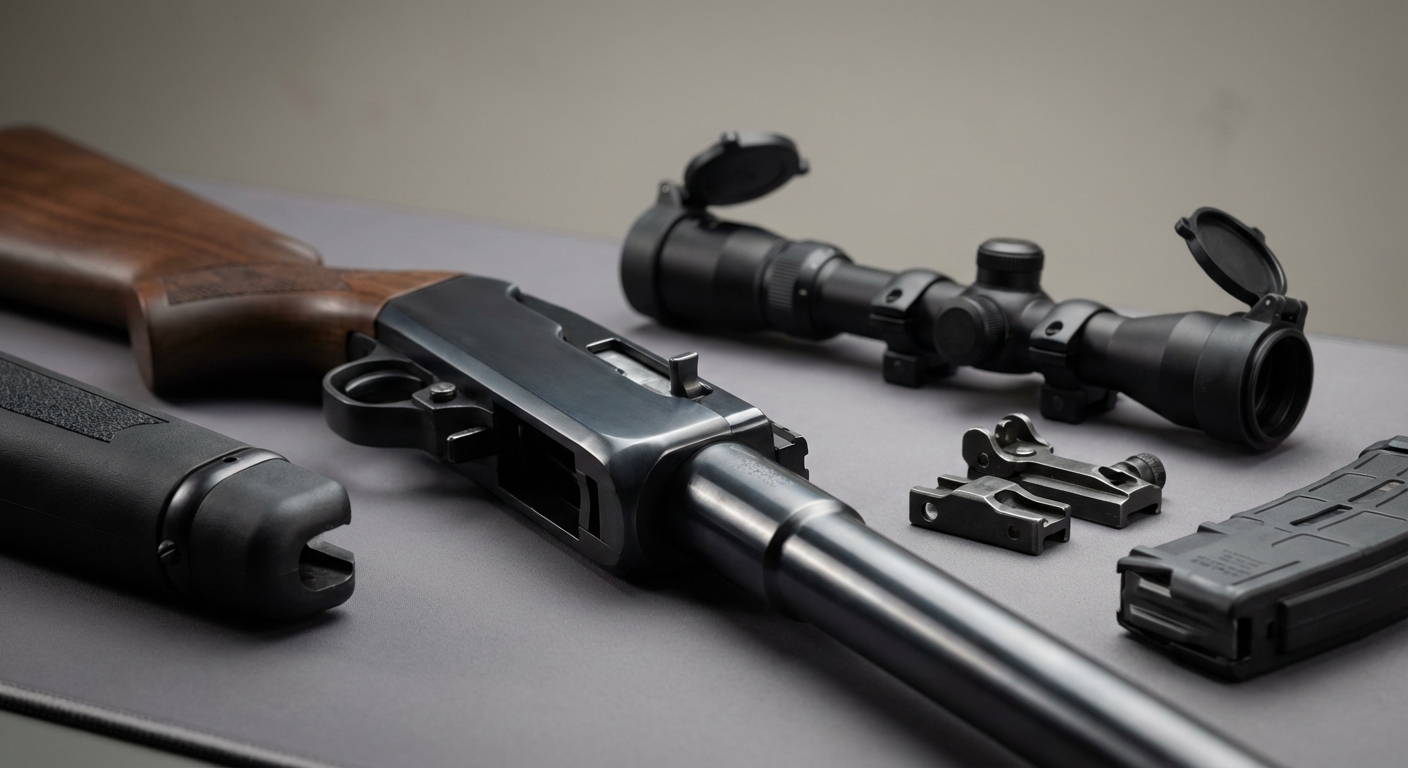
- Model family: standard 10/22 or 10/22 Takedown (the Takedown is the quick-separating storage/transport version).
- Model number: grab it from the box label, manual, or any factory hang tag if it’s available.
- Barrel: length and profile (a light sporter barrel and a heavier profile don’t get shopped the same).
- Stock: material and style (black polymer, hardwood, laminate, etc.).
- Sights and rail: iron sights vs no sights, and what rail is installed.
- Factory package items: bundled optic, case, extra magazines, sling, or special packaging.
Ruger’s public Serial Number Lookup/History is a solid credibility anchor because it’s organized by model family and typically returns an approximate year or year range based on serial-number blocks. The catch is simple: you have to pick the correct model family first, or you’ll be reading the wrong table.
As a calibration point, Ruger’s 10/22 model 32000 is a .22 LR that ships with a 10-round capacity, a 16.40-inch barrel, and a black polymer stock, with Ruger listing MSRP at $349.00. That’s your baseline for comparing feature deltas.
Watch for a distributor exclusive, meaning a factory-produced run built to a distributor’s requested specs, often cosmetic or accessory differences. Practical tells are things like a different stock color, different sights or rail setup, or a bundled case. These special runs and older configurations are not automatically “rare,” but they change demand because buyers search by the exact configuration.
ID line template: “10/22 [Standard or Takedown], model #[_____], .22 LR, [__]-inch [profile] barrel, [stock type], [sights/rail], includes [factory package items], serial dates to approx [year/range].” If you’re stuck, use a step-by-step guide to identify your gun to pin down the exact variant.
Condition, Round Count, and Completeness
Once you’ve got the ID line, condition is what usually pulls your range tighter (or blows it wide open). On a used 10/22, condition is where your price range tightens fast, because buyers are pricing repair risk, not your sentimental story. A clean, consistent shooter gets the benefit of the doubt. Anything that hints at accuracy or function problems gets “padded” into the offer.

The easiest way to sound credible fast is to describe your rifle using the NRA Modern Gun Condition Standards, a common yardstick for observable finish wear and mechanical condition. Under that system, “New” means as it left the factory, and “Excellent” commonly means about 98% to 100% original finish with only very minor wear and strong mechanical condition. In plain English, “excellent” on a 10/22 usually looks like sharp edges, no rust, minimal stock marks, and boringly reliable cycling.
Metal and finish: bluing or coating wear on the barrel and receiver, rust freckles, pitting, and the sneaky spots like under a barrel band or where the action sits in the stock. Stock: dings, cracks at the wrist, chewed-up screw holes, and sling stud pull-out.
Bore and crown: a bore that looks dark, leaded, or pitted reads as neglect. The muzzle crown matters because it’s the last thing that “touches” the bullet. Function: smooth bolt travel, consistent feeding, positive extraction and ejection, and a trigger that breaks cleanly without gritty drag.
Extractor hook wear or chipping is a classic 10/22 problem, and it shows up as weak or inconsistent ejection. A dirty or rough chamber causes extraction failures because the fired case sticks, which buyers read as “this gun needs work.” A damaged muzzle crown (nicks, dents, uneven wear) is an accuracy drop waiting to happen, and it drags offers down because re-crowning costs money and time.
Original box and manual (or missing papers) affect buyer confidence, and factory sights or included rails reduce the “what’s missing?” conversation. Magazines matter most because they’re instantly usable value. A Ruger BX-25 clear magazine is listed at $34.99, and a BX-1 10-round 3-pack is listed at $49.99, so three extra mags aren’t a $200 “upgrade” in a buyer’s head.
The BX-25 value pack is listed at $44.15, which is a good reality check on what high-capacity add-ons are actually worth on the open market.
- Clean the chamber and bolt face until extraction is consistent.
- Verify function with a few mags, confirm feeding and ejection are boringly reliable.
- Inspect the bore and take a clear muzzle crown photo in good light.
- Photograph finish wear, rust spots, and stock dings honestly, close-up.
- List every included magazine and accessory by type and count (BX-1, BX-25, etc.).
Upgrades, Aftermarket Parts, and Their Impact
After you’ve pinned down the factory configuration and honest condition, upgrades are the next thing buyers zoom in on-sometimes as a bonus, sometimes as a red flag. Most 10/22 upgrades don’t pay you back dollar-for-dollar, because you’re selling to a buyer’s taste, not reimbursing your parts receipt. Even if your build is objectively “better,” the resale market usually treats upgrades as nice-to-haves, not a mandatory premium, which is why you’ll often see a big gap between what a seller lists a modded rifle for and what it actually sells for.
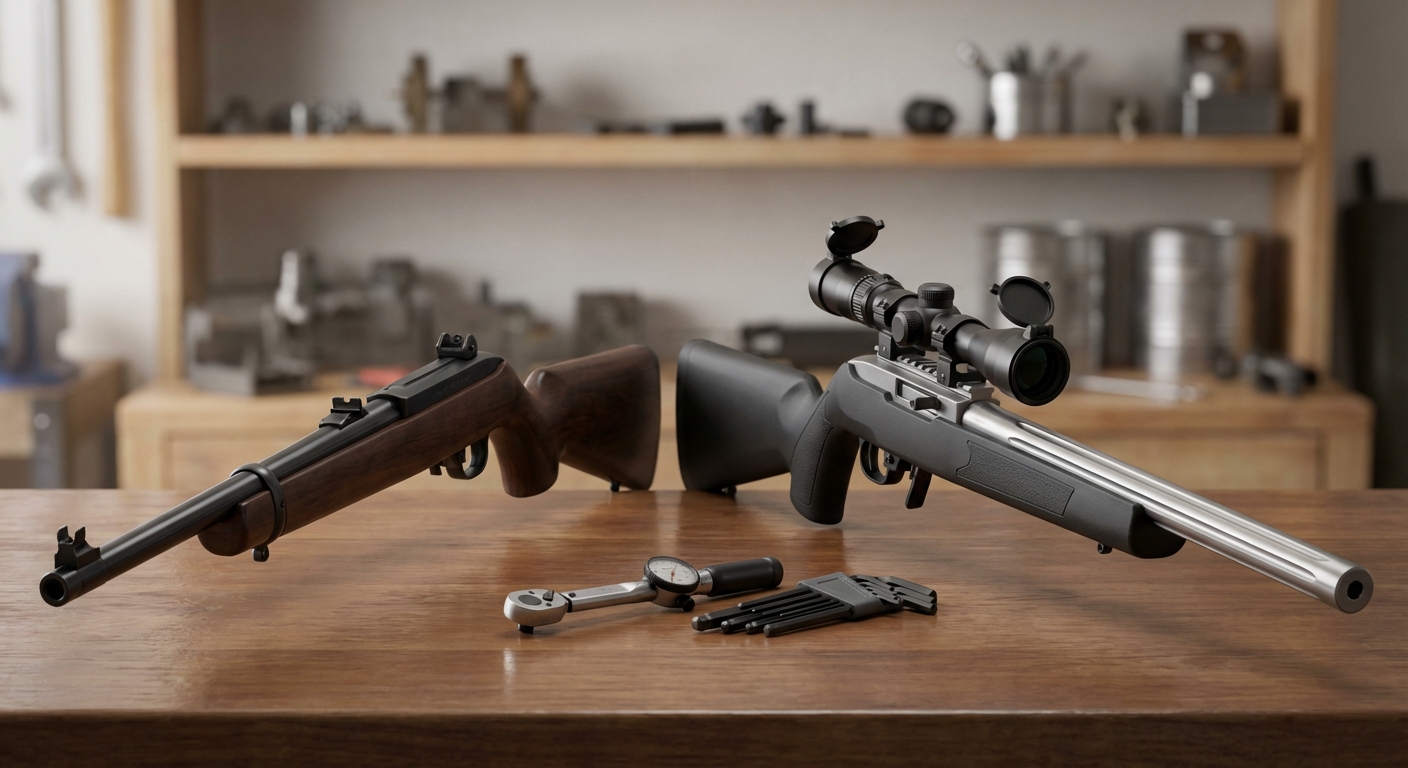
Buyers discount mods for three reasons: risk, taste, and unknown workmanship. A bone-stock 10/22 is a known quantity. A modified one forces the buyer to guess what was done, how well it was done, and whether it’s reversible if they don’t like it.
Broadly appealing, reputable parts can widen demand, especially when the install looks clean and the changes are easy to undo. Triggers from known makers, quality stocks or chassis that fit correctly, and optics that are mounted level with unchewed screws are the kind of upgrades buyers trust. The value usually slides the other way when the rifle becomes ultra-niche, claims can’t be verified (no part numbers, no receipts), or work looks “home-shop” permanent.
Barrels and triggers get the most scrutiny, because they’re performance parts. Stocks and chassis are personal fit and aesthetics, so they’re the fastest way to shrink your buyer pool. Optics are similar: a recognizable model helps, “mystery scope” hurts.
In the U.S. rimfire world, threaded 10/22 barrels are commonly 1/2×28, and listings often call that out explicitly because it signals compatibility with common rimfire muzzle devices.
You’ll also run into 1/2×20, which is noted as more common outside the U.S., so buyers want the exact thread pitch spelled out, not implied.
A common suppressor-oriented recommendation is sticking with a 16-inch barrel to help keep velocity lower when shooting suppressed, so include barrel length in your description instead of making buyers guess.
Valuation systems do notice mods, but they don’t automatically reward them. Cash My Guns explicitly includes aftermarket parts among its valuation factors alongside make, model, condition, and market data. Your best play is presentation: keep the original parts if you can, list exact part names and part numbers, add clear photos of the install points (muzzle threads, trigger group, bedding area, optic mount), and include receipts or gunsmith notes if applicable. Price it like the upgrades are a benefit, not an invoice the buyer owes you.
How to Estimate a Realistic Price Range
At this point you have the pieces buyers actually compare: an exact ID line, a condition story that sounds real, and a clear list of what’s stock vs upgraded. The most reliable way to price your Ruger 10/22 is to build a range from real sold outcomes, not from optimistic listings that never actually close.
Use sold comps, meaning recent completed sales of truly comparable rifles, as your reality check. Asking prices are just wishes; sold prices show what buyers actually paid when money changed hands.
Current Ruger 10/22 worth and price guidance can help you sanity-check your range, but its valuations weigh market data inputs, including dealer listings and auctions, plus seasonality and regional demand, so your comps need to be recent and local-aware.
Because it’s a nationwide online purchasing service that buys guns directly, it’s a useful reminder to think in terms of net outcome, not just a headline number.
- Start with your “ID line” and search that exact configuration, then look for results marked SOLD or completed sales wherever you’re searching. (The research here does not document a specific GunBroker “completed auctions” procedure, so keep this platform-agnostic.)
- Narrow to your condition band and completeness, especially included magazines and whether the box and paperwork are present.
- Remove non-comparable lots, like rifles bundled with optics, ammo, big parts piles, multiple guns, or anything that changes the base price.
- Adjust lightly for accessories using realistic add-on value, not retail optimism. For example, extra mags matter, but they rarely add dollar-for-dollar to a used rifle sale.
- Keep comps recent and interpret them through timing and location, because demand swings by season and region.
You’re not hunting for the single “right” comp. You’re looking for the cluster, then identifying outliers caused by mismatched variants, stale listings, or bundle-heavy lots that inflate the price.
Write down three numbers: low (roughest comparable sold), typical (the tight cluster most sales land in), and high (best-condition, best-timed sale). Add one-line notes for each, condition, extras, and timing. That range becomes your next-step filter, it tells you what to ask, what to accept, and what’s not worth the effort.
Best Places to Sell and State Considerations
A good price range only matters if you can actually execute the sale without it turning into a headache. Two sellers can have the same Ruger 10/22 in the same condition and end up with very different results, because where you sell changes your net and your stress level as much as the rifle itself. The “best” route is rarely the one with the highest asking prices, it’s the one that matches how much time, coordination, and compliance work you want to take on.
- Gun shop trade-in — Speed: Fastest. Net and friction, in plain terms: Lowest net is the tradeoff, but the upside is you’re done in one stop.
- Direct-buy service — Speed: Very fast. Net and friction, in plain terms: High certainty and low coordination, you accept an offer and follow a set process. For example, Cash My Guns is a direct-buy service operated by an FFL and positions the experience as “Safe • Legal • Hassle-Free.”
- Consignment — Speed: Slower. Net and friction, in plain terms: Less work than running your own sale, but you pay consignment fees and you’re waiting on the shop’s foot traffic and timeline.
- Private party (where legal) — Speed: Medium. Net and friction, in plain terms: Typically higher net because you cut out middleman margin, but you own the coordination, screening, and “did we do this correctly” compliance risk.
- Online marketplace via an FFL — Speed: Medium. Net and friction, in plain terms: Biggest buyer pool, but more steps: listing, payment handling, packing, shipping, and transfer coordination.
If you want a broader breakdown of common selling routes and how they compare on speed, fees, and net, it helps to map your priorities before you pick a path.
Any time a sale involves shipping or crossing state lines, an FFL (Federal Firearms Licensee) is the normal hub, because federal law generally requires interstate transfers to nonlicensees to go through an FFL (18 U.S.C. § 922(a)(5)). Federal law also allows an unlicensed person to ship a rifle or shotgun to an FFL in another state for a lawful purpose such as a sale or repair (18 U.S.C. § 922(a)(2), § 922(a)(3)).
Before an FFL can transfer a firearm to a non-FFL, the dealer must complete ATF Form 4473 and a NICS background check (or a valid exemption) under 18 U.S.C. § 922(t) and 27 C.F.R. Part 478. Laws change, verify your local rules or ask a local FFL to walk you through the cleanest compliant path.
California: transfers generally must be processed through a dealer, including most rifles and shotguns (CA Penal Code § 27545). That pushes many “private sales” into dealer-facilitated transfers by default.
New York: most private transfers of rifles and shotguns run through a dealer or authorized entity so a background check happens before transfer (NY GBL § 898). Plan for extra coordination and store hours.
Pennsylvania: the § 6111(c) background-check requirement applies to “firearms” as defined there, generally handguns and certain short-barreled firearms, not ordinary long guns. Many typical long-gun private transfers between PA residents are not required by that section to go through an FFL.
- Maximize net: prioritize a legal private-party sale or an online marketplace with an FFL-assisted transfer.
- Minimize time: prioritize a trade-in or a direct-buy service.
- Minimize risk and hassle: prioritize dealer-handled options like consignment, an online sale routed through an FFL, or a direct-buy service.
- Call: phone one local FFL and confirm their transfer fees, inbound shipment policy, and what they require for long-gun transfers in your state, then pick the route that matches your priority.
If you choose the online route, follow a step-by-step process for selling a gun online through compliant pathways so the listing, payment, shipping, and transfer steps stay clean.
Your 10/22 Value Checklist
If you do nothing else, run the same path you just walked: nail the exact 10/22 variant, judge condition and completeness, factor in mods, sanity-check against sold comps, then pick a selling route that stays compliant.
- Confirm the exact model and variant details you’re pricing.
- Grade condition honestly, including bore, finish, and function.
- Inventory what’s included, box, mags, sights, and original parts.
- Separate aftermarket upgrades from OEM so you don’t overprice the build.
- Check recent sold listings, not asking prices, and bracket your range.
- Choose your route, private sale, consignment, or dealer buy, based on risk and speed.
If you want speed and simplicity, or you’re not fully confident in your assessment, get a quote or a pro appraisal from an expert appraiser. Cash My Guns is operated by Dunlap Gun Buyers, a federally licensed firearms dealer (FFL), and buys firearms directly from individuals via a nationwide, remote process. Safe • Legal • Hassle-Free. Trusted Since 2013.