

Which Price Are You Asking About
If you don’t name the benchmark, every value conversation is noisy.
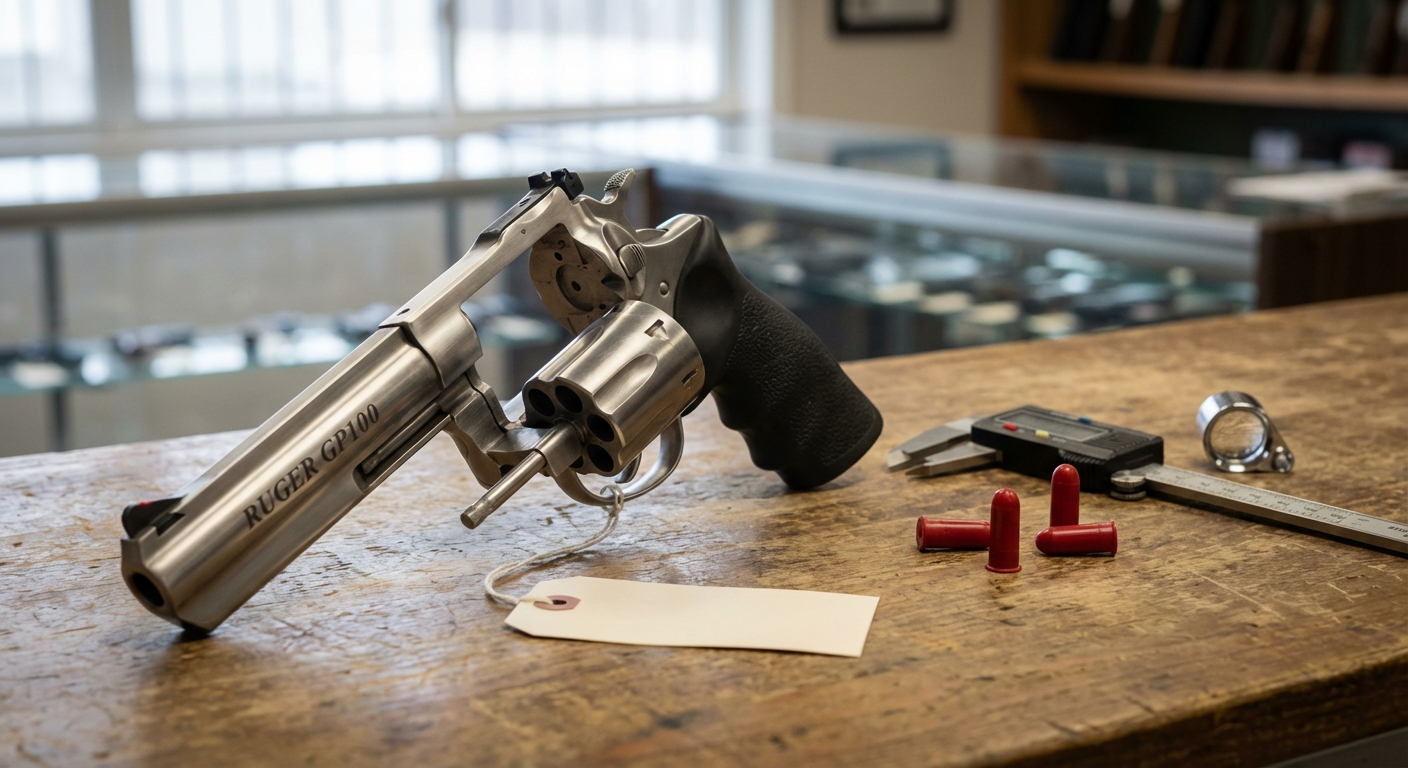
MSRP is the manufacturer’s suggested retail price, and it’s usually the highest number you’ll see attached to a GP100. Ruger lists a current-production GP100 6-inch MSRP at $1,109, but that’s not a promise of what you’ll pay, or what you’ll get if you sell.
Street price is the typical actual selling price at retailers, and it’s often hundreds less than MSRP when a model is in stock. A comparable stainless 6-inch.357 can show up around $799.99, and you’ll even see retailer pages that display “MSRP $1,059 → $799.99” or “MSRP $1,099 → $879.99.” The takeaway is simple: MSRP is a reference point, not a market clearing price.
Used retail is context, not your payout, it’s what a gun shop puts on the tag when they’re the seller and they’re building in overhead and margin. Private-party sale price is what an individual pays an individual seller in a lawful direct sale, and it usually lands below used retail because there’s no storefront, card fees, or warranty expectations baked in.
Where people get fooled is by asking prices. Listings are hopes, not results. If you anchor on the highest ask you can find, every real offer feels “low” even when it’s the only number that actually closes.
Trade-in value is what a dealer offers because they intend to resell at a profit, so it’s naturally lower than what they’ll price it at in the case. Consignment net is your take-home after fees and costs, and those fees are real money: many U.S. gun shops quote 20 to 25%, one example uses a flat 25% that can include shipping and insurance, FFL transfer, and GunBroker auction fees (including the Final Value fee). In another 20 to 25% model, the shop may also be eating roughly 3% credit-card processing plus other seller-side fees that add up to about 9 to 10% on their end.
Immediate cash-offer value is the “I want money now with minimal hassle” number from an outright buyer, and how gun value is determined is largely about which benchmark you’re comparing against.
- MSRP (set by the manufacturer): Suggested retail anchor; often above real transactions; useful for comparing models, not pricing a sale.
- Street price (set by the retail market): Typical in-stock selling price; competition and promos pull it down; useful for what you’d likely pay new.
- Used retail (context) (set by a gun shop): What the shop sells used for; overhead and margin included; useful for sanity-checking local tags.
- Private-party sale price (set by two individuals): Direct-sale going rate; less overhead than retail; useful for maximizing payout with some effort.
- Trade-in value (set by a dealer): Offer credit/cash for resale inventory; dealer needs profit cushion; useful for a fast, simple, one-stop transaction.
- Consignment net (set by the shop fee structure): Your take-home after fees; 20-25% is common; useful for chasing a higher gross price.
- Immediate cash-offer value (set by a direct buyer): Cash now, minimal steps; speed and certainty priced in; useful when time and hassle matter most.
Pick your target first: if your goal is max payout, you shop private-party or consignment, if your goal is speed and least hassle, you judge offers against trade-in or immediate cash numbers.
Once you’re clear on which number you’re chasing, the rest of the process gets a lot less emotional and a lot more mechanical.
GP100 Details That Move Value
Your GP100 isn’t “a GP100”, it’s a specific one. Once you’ve picked the price benchmark you care about, the next lever on value is whether your revolver matches what buyers are actually searching for, down to the exact variant and configuration.
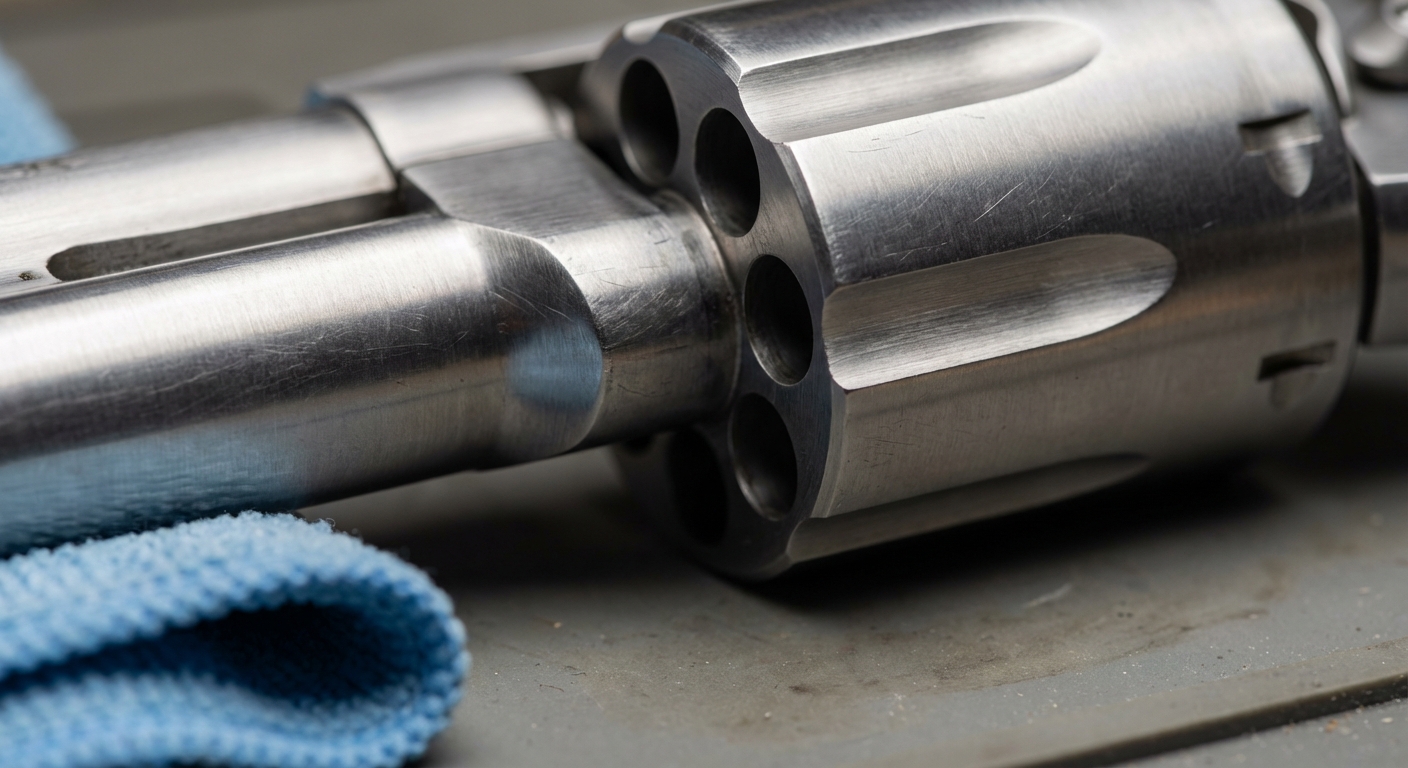
The biggest mistake sellers make is listing something “close enough”, then comparing it to the wrong comps and wondering why offers come in low. Start by confirming the exact model or variant, because a standard GP100 and a Match Champion don’t attract the same buyer, and distributor exclusives or limited runs can pull interest for reasons a generic listing misses.
Then tighten up the details buyers filter by: barrel length (don’t guess), finish (stainless vs blued/black), and the chambering. A.357 GP100 lives in a different shopping universe than a.44 Special, 10mm, or.22 LR version. Capacity belongs on the list too because some GP100 variants are 6-shot and others are 7-shot, and buyers care.
Sights and configuration features are the other fast tell. Adjustable vs fixed sights, fiber optic fronts, half-lug vs full-lug style, and factory grip style all change who clicks on your listing. None of this requires tools, just careful reading of the markings and a clean look at what’s actually installed.
One reason people stick with the GP100 platform is its triple-locking cylinder system that locks at the front, rear, and bottom for positive alignment and dependable operation. That’s a desirability driver, not a pricing shortcut.
Use Ruger’s serial-number lookup tool as your reality check. When you enter the serial number, it can return the model number, product line, caliber, production status, ship date, and sometimes even the instruction manual.
If you’ve been using Ruger’s serial “year” chart to date it, treat that chart as approximate reference-only, not definitive dating.
Finally, inventory “completeness”. Original box, papers, and factory grips make a GP100 easier to sell and can add modest value—especially if you’re selling without the original box or papers. Same deal for accessories like holsters and speedloaders, they usually help the sale move faster, but they rarely add dollar-for-dollar.
- Write down the exact markings and configuration you can see: variant, barrel length, finish, caliber, capacity, and sight type.
- Run Ruger’s serial-number lookup and copy the model number and ship date it returns.
Once the configuration is nailed, you can grade condition honestly and your value estimate stops drifting because you priced the wrong GP100—use a GP100 worth guide with typical pricing ranges by variant as a cross-check.
Condition Grading and Mod Impacts
A GP100 with a faint cylinder turn line can still grade “Excellent”, but a timing issue will crater buyer confidence fast. Condition is where most sellers accidentally overprice because they assume “it’s fine”, or they undersell because they panic over normal holster wear.
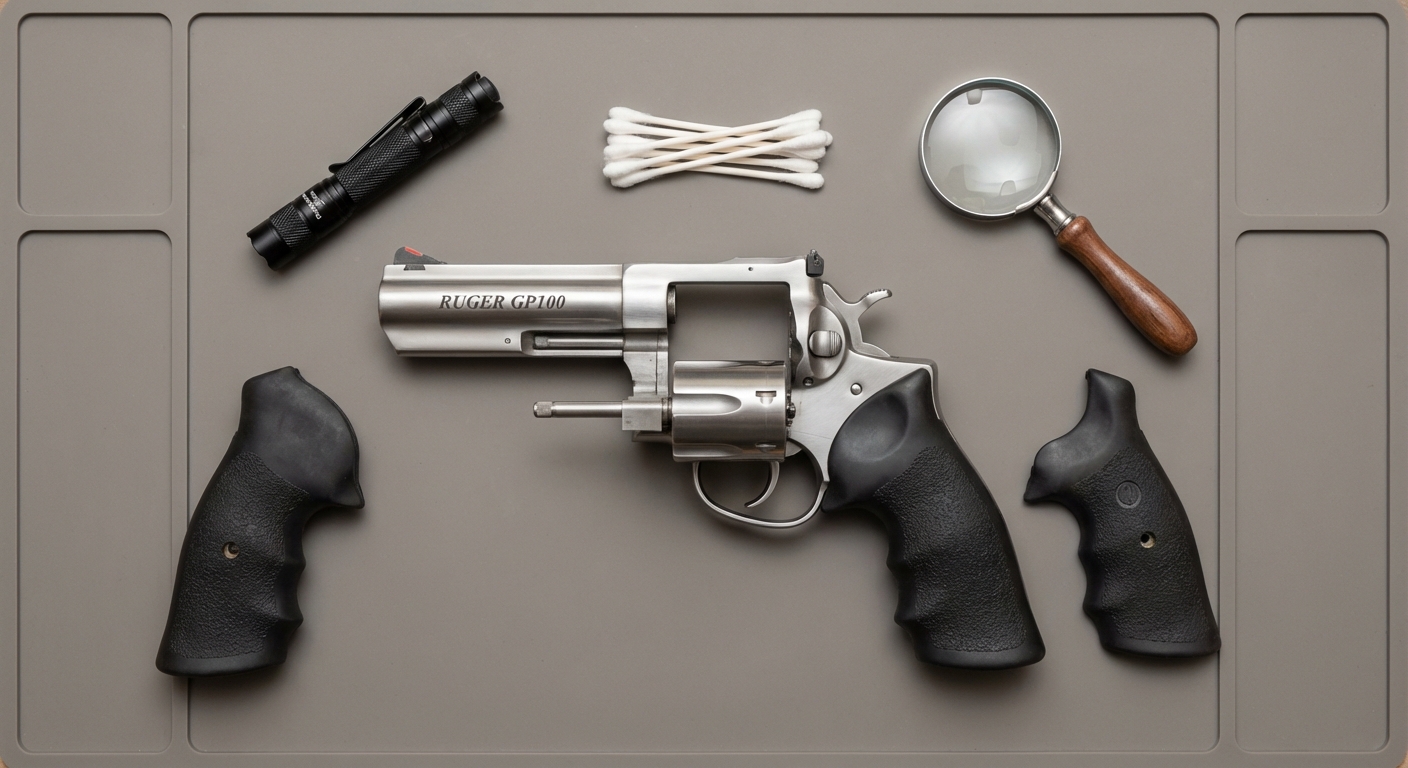
Use the NRA Modern Gun Condition Standards as your anchor, then be conservative.
- New: perfect condition, no wear, never fired other than at the factory, typically with original box and accessories.
- Excellent: minimal evidence of use, a light cylinder line or small handling marks are fine, but no significant wear, damage, or corrosion.
- Very Good: visible finish wear and minor marks from use, still mechanically sound, no major defects.
- Practical extensions: “Like New” (looks essentially unused but might lack box), “Good” (noticeable wear but serviceable), “Fair” (heavy wear, corrosion or pitting, and likely needs work).
Think like a cautious buyer. You’re not fixing anything here, you’re deciding what you can honestly claim.
- Timing: check that the cylinder stop fully engages before the hammer falls. Late carry-up is a warning sign.
- Lockup: hold the trigger fully to the rear, then check cylinder rotational wiggle. Excess play is a concern.
- Endshake: front-to-rear cylinder movement. If you suspect it, a gunsmith can measure it properly.
- Barrel, crown, forcing cone, bore: look for crown dings, forcing cone cracks or chipping, and rough, pitted, or heavily fouled bores.
- Exterior: finish wear, rust or pitting, and handling marks. Surface wear is normal, corrosion is not.
Mods are mostly about trust. Quality sights and documented, professional action work can help. Common grip swaps are usually neutral if you include the originals. “Home gunsmith” work, questionable refinish jobs, and drilled frames often hurt because buyers price in risk.
On the GP100, grip swaps are especially common because Ruger used a grip shank instead of a full grip frame as a cost-saving design, and GP100 grips have appeared in multiple configurations over time.
Pricing honesty wins: grade it conservatively, disclose every modification, keep original parts, and if anything in the checklist feels off, pay a gunsmith for an evaluation instead of guessing. That condition grade becomes your filter when you pull comps, and it keeps your asking price in the real world.
When your condition call is solid, comparing your revolver to other sales stops feeling like guesswork and starts feeling like math.
Finding Real Comps and Trends
After you’ve nailed down your exact GP100 configuration and condition, the next trap is assuming the “for sale” price is the value. Listings are persuasion. The number that matters is what comparable GP100s sold for after buyers had a chance to scroll past the overpriced ones.
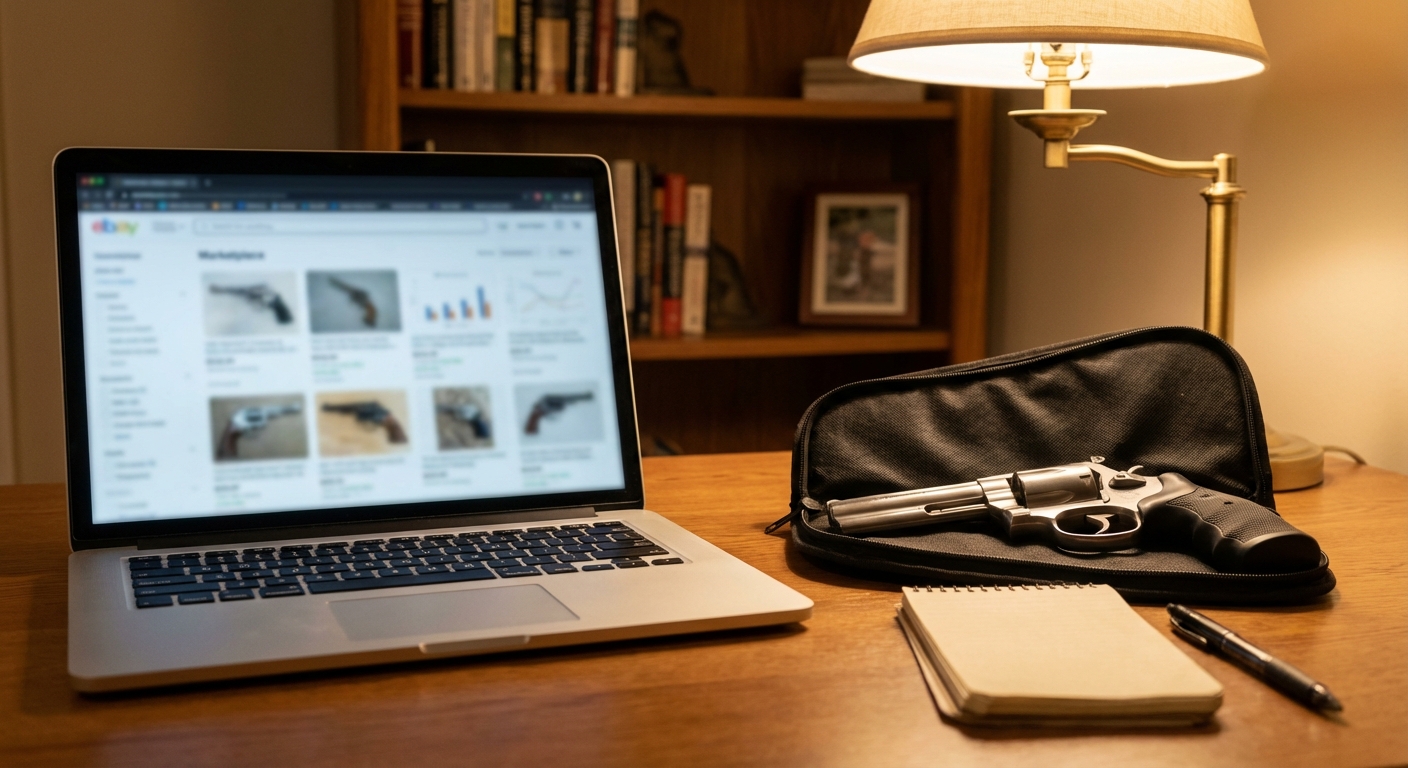
Use completed sales, meaning listings that show a real transaction at a real price, not an optimistic ask. Completed sales are harder to cherry-pick, which makes your valuation more defensible when you’re deciding whether to list, trade, or take an offer.
- Match the config tightly (barrel length, finish, caliber, sights, SKU if you have it).
- Band condition honestly (don’t compare your carry-worn revolver to “NIB” safe queens).
- Filter to completed sales only, then ignore obvious outliers.
- Build a low, mid, and high range from at least a handful of true matches.
- Adjust lightly for accessories and mods, plus your local demand (some regions simply move revolvers faster).
Handgun prices swing with seasonality and with regional supply and demand. Simple rule: if your comps are tightly clustered and inventory looks thin, sell now; if comps are sliding and listings are stacking up, waiting usually costs less than chasing the market down with price cuts.
Your best takeaway is to write down a comps range, then sanity-check it against one baseline datapoint. Cash My Guns is a clean option for that baseline because it uses market data from dealer listings and auctions, factors condition details like finish, bore condition, matching numbers, and aftermarket parts, and considers seasonality and regional demand. You submit make and model details and photos for an expert appraisal and an instant cash offer, and if you accept, payment is typically processed in 2 to 3 business days after inspection and paperwork.
Once you have that range in hand, the last big swing factor is the selling channel you pick, because fees and convenience can move your net just as much as a small price difference in comps (and it helps to check a recent gun market report before you commit).
Best Ways to Sell Your GP100
The “best” way to sell your Ruger GP100 depends on what you’re optimizing for, maximum payout, speed, or the least hassle, and what your state will actually let you do without creating compliance problems. The catch is simple: the channels that pay the most usually take the longest and require the most coordination, and shipping a handgun is easy to get wrong if you freelance it.
Private-party sales, where lawful, usually beat dealer offers because you’re selling to the end buyer. A careful online marketplace sale can land in the same “top payout” bucket, but only when it ships to and transfers through an FFL (Federal Firearms Licensee), a federally licensed dealer who can run the proper transfer process and paperwork for the buyer.
Walk-in sale or trade-in at a local gun shop is the cleanest “one counterparty, one stop” option, but you’re paying for that convenience in the offer. Direct-to-buyer mail-in programs are another low-hassle route when they route everything through an FFL; if you want a quick comparison of your options for selling a gun, it helps to see the trade-offs side by side.
Consignment splits the difference: you keep more upside than a straight sale to a shop, but you’re waiting on the right buyer and you still have shop paperwork and timelines.
Texas is often simpler for private sales: Texas does not require a private, unlicensed seller to use an FFL or run a background check for a private handgun transfer, but knowingly transferring to a prohibited person is unlawful, and transferring a handgun to someone under 21 is restricted (Texas Penal Code § 46.06). Florida generally requires background checks for dealer sales, and Florida statutes do not impose a statewide requirement that private-party handgun transfers be processed through an FFL for a background check (FDLE guidance context).
For CA, GA, PA, OH, AZ, NY, NC, and IL, expect stricter rules or more required steps than you want to guess at. Call a local FFL and ask, “What’s the cleanest legal way to transfer a handgun here?” You can also start with a state-by-state guide to selling a gun to understand the typical compliance steps.
USPS Publication 52 treats handguns (pistols and revolvers) as generally nonmailable for non-authorized persons, with limited exceptions for authorized shippers like FFLs under specific conditions. If shipping is involved, default to dealer help and the carrier’s published firearm policy, not improvisation.
Pick two priorities (speed, payout, convenience), choose the channel that matches, then follow your local compliance steps. Take clear photos, keep your records, and use a bill of sale where appropriate.
If you want a decision you can repeat without second-guessing, it helps to put the whole process into a short checklist.
A Simple GP100 Valuation Checklist
You can confidently value a Ruger GP100 using a repeatable workflow, as long as you’re consistent about what you’re measuring and you anchor everything to real sold prices.
- Confirm the exact configuration (model, caliber, barrel length, sights, and your earlier serial-number lookup so you’re not comping the wrong variant).
- Grade condition with the simple scale, then sanity-check the red flags that tank value fast, especially timing and lockup.
- Pull completed sales and bracket your GP100 inside a realistic range.
- Adjust for accessories and mods, and call out whether the original parts are included.
- Choose a selling channel based on speed vs payout vs hassle, and keep it compliant.
One caution: Ruger product listings sometimes label variants “Distributor Exclusive,” and TALO is a known distributor that distributes and markets Ruger limited editions and has designed hundreds, so verify “rare” claims before you pay a premium.
Remote quotes and appraisals only stay accurate when your inputs are specific, make/model, finish and bore condition, and matching numbers where applicable.
If you want speed and certainty, get a quick quote with photos from Cash My Guns; if you’re chasing top dollar, keep building your sold-comp range and wait for the right buyer.
If you’re also trying to price other handguns, this same workflow transfers cleanly.