
You’ve got real pressure here: price it too high and it sits for weeks; price it too low and you just donated money to the next owner.
The key reality is your P320’s “worth” isn’t one number you can pull from a spec sheet. SIG publishes an official MSRP on each P320 variant’s product page, but what a gun actually sells for is set by dealers and distributors, and it shifts with inventory and promos. That’s why “MSRP” is a reference point, not your payout, and why the new-gun “street price” you see at major U.S. retailers, often advertised below MSRP, usually puts a hard ceiling on used pricing.
One more curveball: the P320 family isn’t one model, it’s multiple groupings like Full Size, Carry, Compact, X-Series, M17/M18, and Legion, and those buckets change what buyers expect to pay. You’ll use a simple 3-part approach, identify your variant, grade condition, and pick a selling route, to land on a realistic price range and the quickest way to get there.
The Biggest P320 Price Drivers
The biggest myth in used P320 pricing is that your original receipt sets the baseline. Buyers pay up for factory configurations they can recognize in two seconds, especially “special” lines and optics-ready variants. A Legion-marked gun, a factory optic-ready slide, or a less-common factory setup generally anchors the top of the used range because it’s easy to verify and easy to shop against.
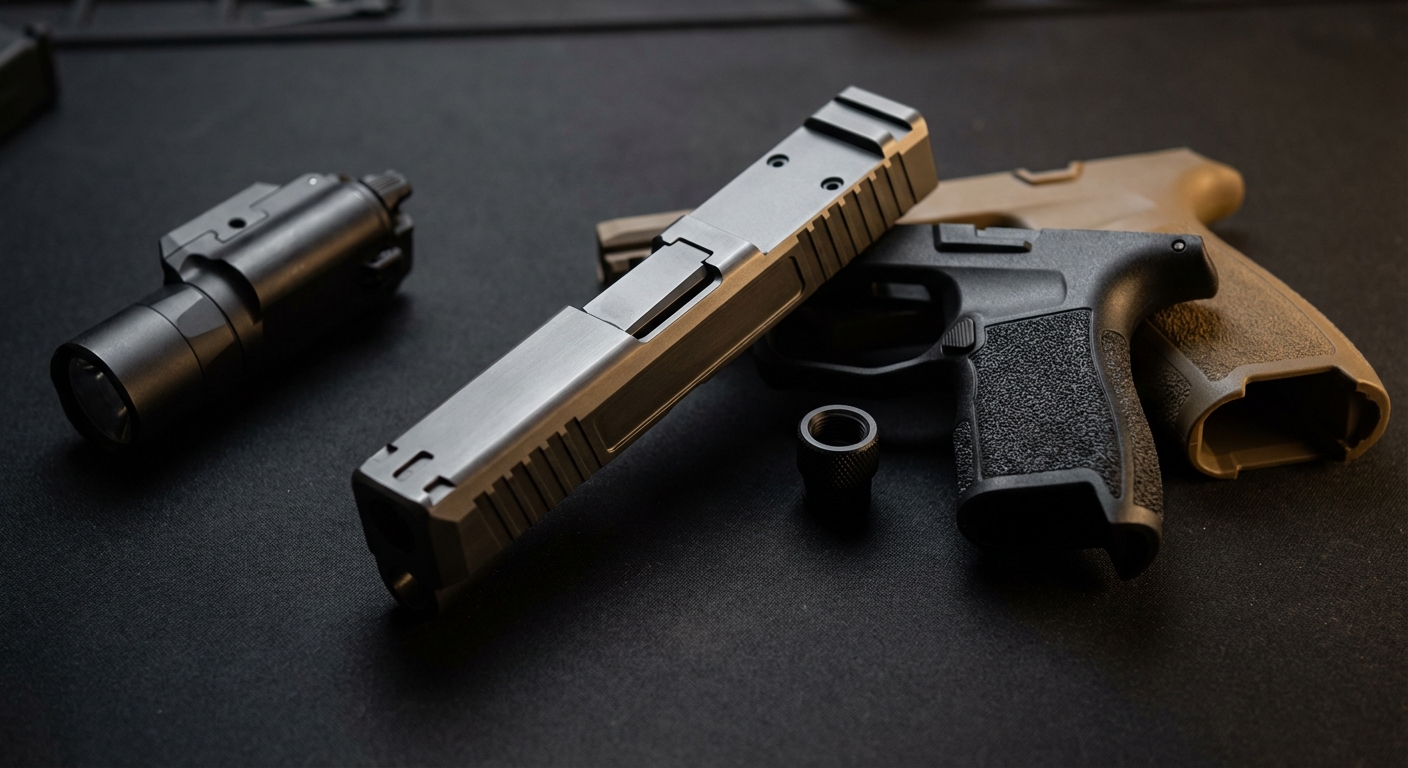
A clean example is the P320-AXG LEGION: it’s factory optic-ready and designed around popular footprints, including SIG SAUER ROMEO1Pro and ROMEO2, Leupold DeltaPoint Pro, and Trijicon RMR.
Condition is less about “cosmetic nitpicks” and more about buyer confidence. A P320 that looks cared-for, with consistent wear and no surprises, simply feels safer to buy. Round count matters because it’s a shorthand for wear, but it’s not the whole story, buyers also react to how the gun presents overall and whether the wear matches the story.
Completeness is the quiet multiplier: the factory case, extra mags, factory parts you removed, and paperwork all reduce uncertainty. One more confidence lever, SIG SAUER runs a P320 Voluntary Upgrade Program and upgrades eligible P320 pistols at no additional cost, proof it’s been through that process helps some buyers relax.
Modifications are a wildcard. The right add-ons for one buyer are an immediate “pass” for another, and heavy customization can push your listing into a smaller, pickier audience that only pays strong money when the parts match their taste.
Local supply and timing move offers more than most sellers expect. Valuation factors often include seasonality and regional demand, using market data from dealer listings and auctions. What this means for you: align your expectation with what buyers are rewarding this month in your area, not what the gun “should” be worth on paper.
The fastest way to avoid overpricing or leaving money on the table is to nail your exact factory configuration, then describe condition and completeness accurately and plainly. Those two steps also make every comparison you do later actually meaningful.
Identify Your Exact P320 Variant
Most pricing headaches start here: one small configuration mismatch turns a “fair offer” into weeks of lowball messages from buyers who think you listed the wrong gun. P320 naming is messy, so your job is to write down what you actually have, not what it “kind of matches.” If you’re unsure, use a gun identification guide to confirm the variant.
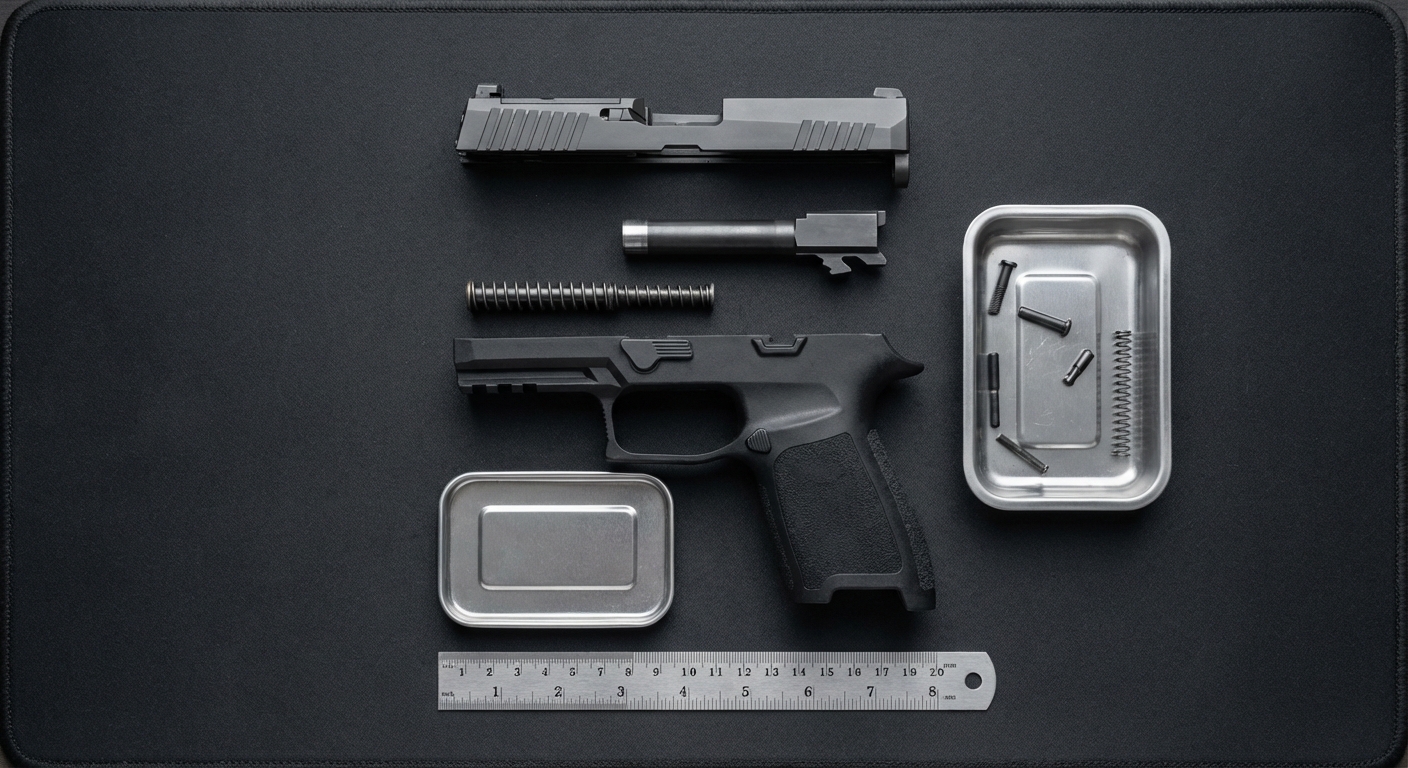
- Size family name: The P320 is commonly grouped as Full Size, Carry, Compact, and Subcompact, but you’ll also see five-size descriptions like Carry, Carry X, Compact, Full-Size, and Full-Size X. Pick the label that matches your slide and grip length so buyers don’t assume the wrong magazine fit.
- Grip module size: Each of the four size families is described as having Small, Medium, and Large grip modules. That changes how the gun feels in-hand, and buyers search and list by it.
- Caliber: Capture it exactly (9mm,.40,.45, etc.). Don’t make buyers guess from photos.
- Configuration family: Note if it’s X-Series, M17/M18, or a Legion-style setup. It’s a labeling step that prevents “wrong model” arguments.
- Optics status: If it’s optics-ready (Romeo1Pro / DeltaPoint Pro cut), say so, because buyers expect that specific factory footprint. Pro Series “Pro Cut” slides share that footprint and keep the rear sight separate from the cover plate.
- Manual safety and compliant versions: A manual safety or restricted-capacity setup changes who can buy it and why. For example, 10-round restricted-capacity magazines are acceptable when the tube length matches full-size 17-round magazine tubes.
- Box label and mags: If you have the box, copy the label/SKU. Then count how many factory magazines are included, because buyers price around what’s actually in the case.
P320 [Size family] + [Grip S/M/L] + [Caliber] + [X/M17/M18/Legion-style] + [Optics-ready?] + [Manual safety?] + [# factory mags] + [Box/SKU if available]
That one clean line is what lets you compare apples to apples when you start judging condition and pulling comps.
Condition, Round Count, and Extras
Once you’ve nailed down the exact P320 you’re selling, the thing that separates a “fair offer” from a “pass” is buyer confidence. You’re not really selling a P320, you’re selling proof it was cared for, so your condition grade needs to match what buyers expect that phrase to mean.
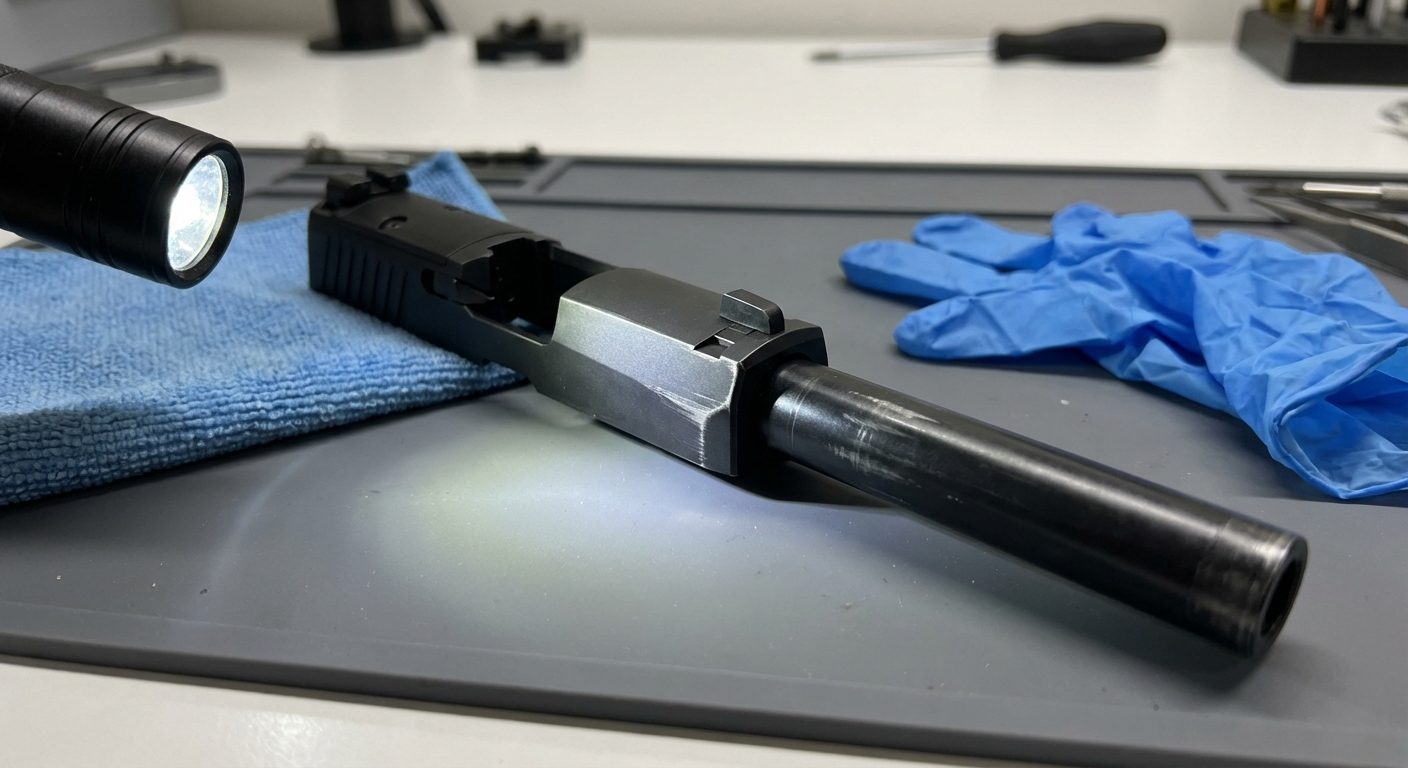
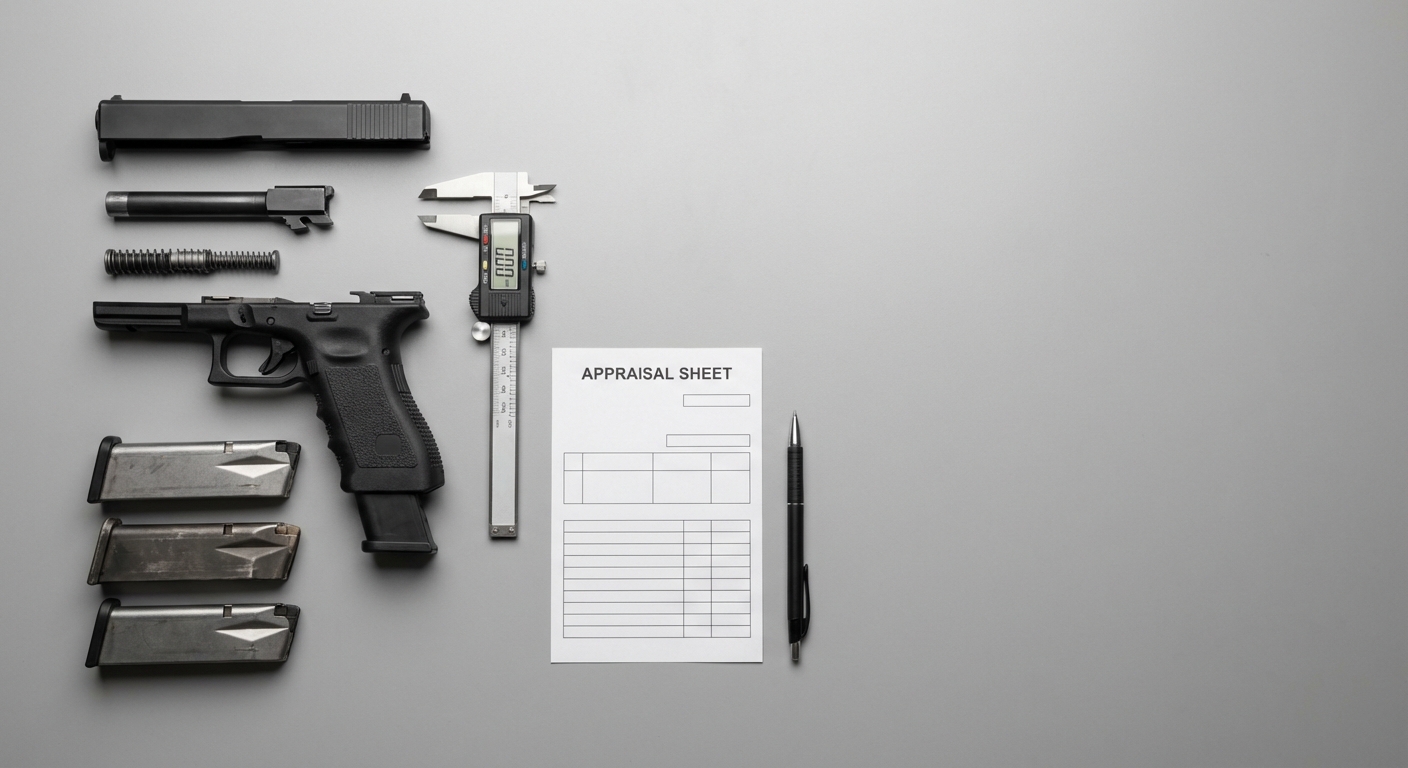
Keep it simple and specific: call out holster finish wear on the slide, then point to the spots buyers check on a P320, the barrel hood, the frame rails, and any slide-to-frame wear lines. Shiny contact marks are normal on a used gun. Dry, rough scuffing reads like neglect, which is why a properly lubricated barrel hood and rails matter when someone inspects it in person.
If you know the round count, say it and say how you know, for example “about 800 rounds, tracked in a notes app.” If you don’t know, don’t guess. “Round count unknown, I’m the second owner” reads honest, and honesty sells.
Safety note: some P320s have been reported with striker-foot wear and factory defects. If anything feels off mechanically, stop, point it in a safe direction, unload and clear it, then have it inspected by a certified SIG SAUER armorer.
Buyers pay for complete packages: original case/box, manuals, factory optic plates (if applicable), and every magazine you’re including. If you’re selling a gun with no box or papers, say so up front and price expectations accordingly. Buyers like Cash My Guns also price condition details (finish, bore, matching numbers, aftermarket parts) alongside market-cycle factors like seasonality, so “what’s included” and “what shape is it in” both move the offer.
Bundle optics, lights, and holsters only when you can name exact models and they clearly fit the setup. Otherwise, “gun plus OEM mags” usually reads higher value than a mystery pile.
Aftermarket parts don’t add value dollar-for-dollar. The easy win is reversibility: list every mod plainly, and keep the factory parts to include in the sale.
Copy-paste listing script: “Condition: ____. Wear: ____ (barrel hood/rails/slide). Lubed: yes (hood + rails). Round count: ____ (or unknown). Includes: ____ (case, manuals, plates, __ mags). Mods: ____; factory parts included: yes/no.”
Trade-In, Dealer, or Private Sale
You’re not just pricing the P320, you’re pricing your time, risk tolerance, and patience. The same pistol can “be worth” four different numbers depending on how much convenience you want to buy with your payout.
Dealer cash offer
- Who it’s best for: Fast cash, minimal back-and-forth
- Typical payout relationship: Often ~50% to 75% of used retail (dealer needs margin)
- Speed + friction: Fastest; lowest hassle
Trade-in
- Who it’s best for: You’re buying another gun right now
- Typical payout relationship: Usually higher than a cash offer, but it’s store credit tied to a purchase
- Speed + friction: Fast; low hassle if the shop has what you want
Consignment
- Who it’s best for: You can wait and want closer-to-market pricing
- Typical payout relationship: Closer to market after the shop’s consignment fee
- Speed + friction: Slower; you wait to get paid
Private-party sale
- Who it’s best for: Max gross price and you don’t mind admin work
- Typical payout relationship: Often best top-line number
- Speed + friction: Most messages, screening, and compliance friction
That friction gets real the moment a buyer isn’t in your state. Under federal law, a nonlicensee can’t transfer a handgun directly to an out-of-state resident, the transfer has to go through a Federal Firearms Licensee (FFL) in the recipient’s state (18 U.S.C. § 922(a)(5) and § 922(a)(3)). A common compliant flow is shipping to the buyer’s receiving FFL, then they complete ATF Form 4473 and a NICS/background check at pickup (27 CFR § 478.124).
If you need cash this weekend, a direct-buy option like Cash My Guns trades some dollars for speed, prepaid shipping, insurance coverage, and compliance guidance. If you can wait, consignment or private sale usually wins on price, but you earn it with time.
Pick the route first, then set your minimum number accordingly, and only then sanity-check it against sold comps (see the main ways to sell a gun and their tradeoffs).
A Practical P320 Pricing Method
Pricing gets easy once you stop arguing with asking prices and start using sold comps, real, completed sales that show what buyers actually paid for a P320 like yours. The friction is that “a P320” is not a single product, a Carry with two mags and an optic is a different deal than a base Compact with one mag and no box.
The same idea applies whether you’re doing it by hand or looking at an instant offer: start with real market data, then adjust for make/model match, condition, and what’s included (see this current P320 worth guide for model-specific context).
- Pull 6 to 12 recent completed sales for closely matching P320 configurations (same variant family, optic-ready status, safety/no-safety, and similar included mags and extras).
- Filter out mismatches fast: different slide length, different module, different sight system, or listings bundled with lights, optics, or extra magazines you are not including.
- Bracket a realistic base range by taking the middle cluster of those sold prices, not the single highest sale.
- Adjust up or down for your gun’s condition and completeness, focusing on what buyers notice first: finish wear, bore condition, matching-numbered parts where relevant, and the value impact of aftermarket parts.
- Set two numbers: a list price with room for negotiation, and a walk-away minimum based on the least-effort selling route you would actually accept after fees and shipping.
- Sanity-check your result against reality: treat MSRP as a reference point, ignore unsold “wish price” listings, and expect local demand and seasonality to push your final result up or down.
- Using active listings instead of completed sales
- Comping an optics-included gun to your iron-sight setup
- Counting aftermarket parts at full retail value
- Forgetting missing case, plates, or magazines change the deal
End goal: you can say, “Based on recent sold comps for my exact configuration, mine should sell for $X to $Y; I will list at $Z and I will not go below $M.”
FAQs and Popular Value Comparisons
Most “does this add value?” questions have the same answer: upgrades only add value when they make the next buyer’s decision easier, not harder. In practice, it usually comes down to whether you can clearly explain fitment, parts, and what’s actually included.
On red dots, an included optic helps when it’s a clean, known fit, and hurts when the mounting story gets messy. P320 optics setups often involve a specific footprint, an adapter plate, and the correct screws, and those parts are real money and real friction, like a $143.49 adapter and an $8.49 screw kit you might need to make a Holosun-compatible setup work. If you can’t clearly document the cut, plate, and hardware, you’ll usually net more selling the optic separately.
On triggers, they can raise interest, but they also shrink your buyer pool. Grayguns sells aftermarket P320 trigger components, and Apex Tactical Specialties sells an aftermarket trigger kit for the SIG Sauer P320, and plenty of buyers still prefer stock parts. If you keep the factory trigger parts to include, your listing feels safer and easier to say “yes” to.
On overall resale strength: often, yes, because demand stays strong, but condition (finish wear) and configuration still win—especially if you’re comparing whether SIG pistols hold their value. A clean, correctly described pistol sells faster than a “better” model with unanswered questions.
On boxes and extras: box, manuals, receipts, and extra mags help because they reduce uncertainty. Receipts answer “what is this part?” and extra mags remove a future shopping trip, which buyers value.
On upgrades in general: it matters as a reality check, not a pricing template. If you’re unsure, price it like it’s stock and treat upgrades as a bonus, or be ready to part them out for the best return.
Next Steps to Sell Confidently
You can sell your P320 confidently when you control the basics: a clean description, honest condition notes, and a price anchored to real sold data, not gut feel.
The formula stays simple: correct variant ID + honest condition + recent sold comps + the right selling channel = a fair price you can explain to any serious buyer. Skip any one of those and you waste time answering questions, renegotiating, or relisting.
- Photograph both sides, serial plate area, sights/optic cut, and any wear points.
- Write a one line configuration (model, size, caliber, safety, optic cut).
- List exactly what’s included (case, mags, plates, upgrades).
- Pull a few recent sold comps that match your exact setup and condition.
- Set your list price and your hard minimum before you post.
- Confirm the transfer rules where you live, and use an FFL (licensed firearms dealer) when required.
That last step matters because the rules can change the easiest (and safest) way to close the deal, especially if your buyer pool is broader than your immediate area.
- CA: Most transfers go through a California FFL with DROS and a 10 day waiting period. The Handgun Roster impacts dealer inventory transfers, while many private party transfers through an FFL are roster exempt.
- TX: No statewide universal background check requirement for private handgun sales, but transferring to someone you know or should know is prohibited is illegal.
- FL: No statewide universal background check requirement for private handgun sales, but transferring to someone you know or should know is prohibited is illegal.
Your goal is a clean, compliant sale at a price you can justify.
Conclusion
You get to a fair number fast when you stop anchoring to guesses and start describing and pricing your P320 the way a buyer does. That’s the same 3-part approach from the start: nail the exact variant ID, be blunt about condition and completeness, then sanity-check against sold comps and choose the selling route that matches your priorities.
If speed and low hassle win, use Cash My Guns, operated by Dunlap Gun Buyers (an FFL), a nationwide online purchasing service that buys firearms directly from individuals through a remote, mail-in workflow branded “Safe • Legal • Hassle-Free.” They also state they buy ammunition and accessories, so you can send a single package with the gun, ammo, mags, optics, lights, and other add-ons if that fits your setup.