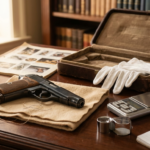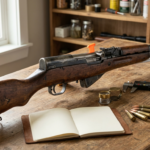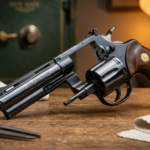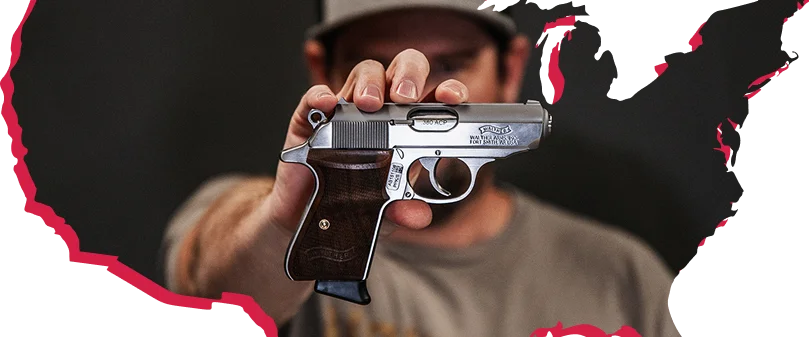

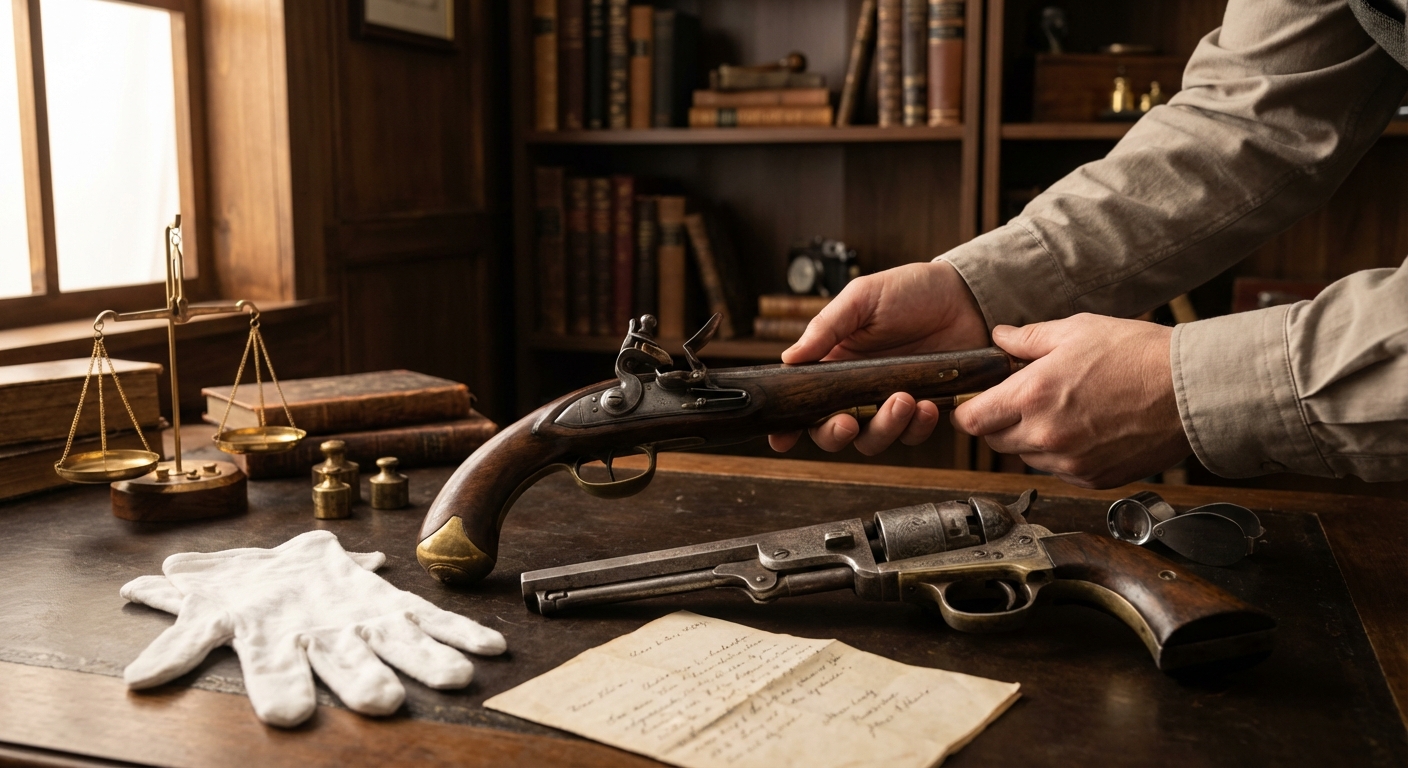

You thought you were selling a “used gun,” then the first serious buyer asks about dates, proof marks, matching numbers, and whether anything’s been refinished, and you realize the legal side isn’t the same either.
The catch is that “antique” can change how the federal rules apply. The Gun Control Act (GCA), the main federal framework that defines “firearm” for many transfer and shipping requirements, expressly excludes “antique firearms” from that definition, see 18 U.S.C. § 921(a)(3) and § 921(a)(16). ATF guidance also commonly treats many muzzleloaders built for black powder or a black powder substitute, and that can’t use fixed ammunition, as “antique firearms” under federal law, meaning they’re not “firearms” for GCA purposes.
On the money side, antique buyers shop like collectors, not bargain hunters, and value is hypersensitive to originality, finish and bore condition, matching numbers, and whether parts were swapped for aftermarket replacements.
That’s why the process has two tracks running at once: you’ll confirm what you actually have, line up the sale with the rules, and present it in a way collectors trust so you maximize price without stepping on a compliance landmine.
Step 1
Status is the first fork that changes everything. You cannot list confidently, or even answer basic buyer questions, until you have confirmed whether your gun qualifies as an antique firearm (18 U.S.C. § 921(a)(16)), and you have proof a platform, buyer, or insurer will actually trust.
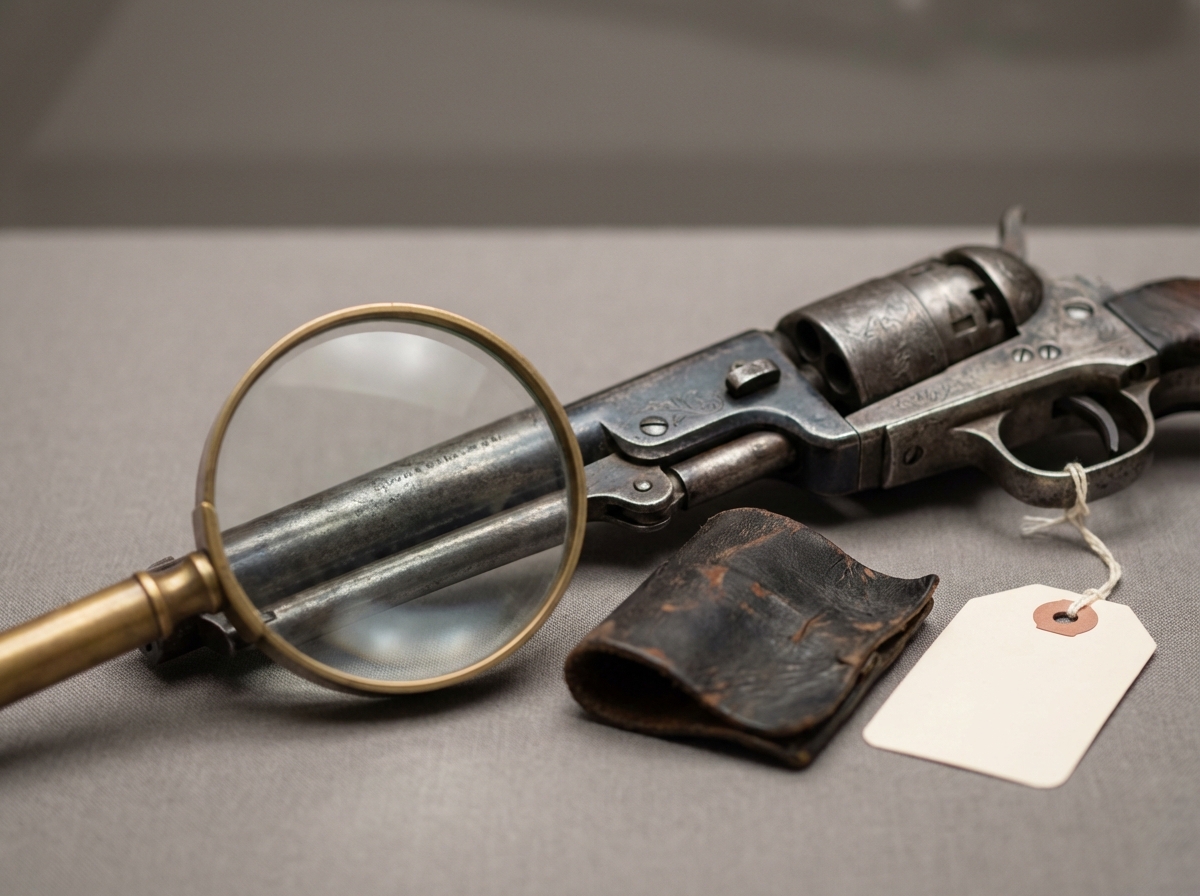
- Confirm the federal cutoff with a manufacture date, not a vibe. Under federal law, the baseline antique bucket covers firearms manufactured in or before 1898 (18 U.S.C. § 921(a)(16)(A)), so you need a defensible way to show where your serial number lands for that maker and model.
- Stress-test the replica and ammo edge cases before you assume “antique.” The replica side is where sellers get burned, because a gun can look 1880s and still be legally modern. Federal law treats certain replicas as antiques only if they are not designed for using fixed ammunition, or if they use fixed ammunition that is no longer manufactured in the U.S. and is not readily available through ordinary commercial channels (18 U.S.C. § 921(a)(16)(B)). That one cartridge detail can flip the classification.
- Photograph what a buyer would use to verify it. Build a simple ID packet with clear, well-lit photos of both sides, top view, all markings, caliber or chambering marks, and the full serial number (plus any assembly numbers). Add close-ups of key features that affect identification, like action type, barrel address lines, and any oddities that suggest a later rebuild or replacement parts.
- Check proof marks the practical way, not the romantic way. The U.S. has no national proofing system, so many U.S.-made guns will not have standardized proof marks the way many European guns do. On many guns, proofs show up on the barrel flats or under the forend, and some proof codes can help date manufacture, but only if you are looking in the right places and reading the right reference.
- Request factory documentation when the records exist. The Cody Firearms Records Office can provide manufacturing dates and original configuration details for select records, including Winchester, plus access to select Marlin and L.C. Smith records. A factory letter is also how you document original specs buyers argue about, like finish, barrel length, and grip style. Include a one-page note in your packet listing exactly which serial tables, proof-mark directories, or factory letters you relied on.
If anything still feels fuzzy, pause the listing and keep building the packet. A qualified specialist, a reputable auction house, or a knowledgeable FFL can sanity-check your date and replica or ammo classification quickly when you hand them clear photos, your reference notes, and any factory documentation you have.
Step 2
The gun’s status matters, but so does how you’re selling it. A gun that’s “antique” for federal purposes can still become a headache if you assume the buyer, the state, or the shipping method won’t change what’s required.
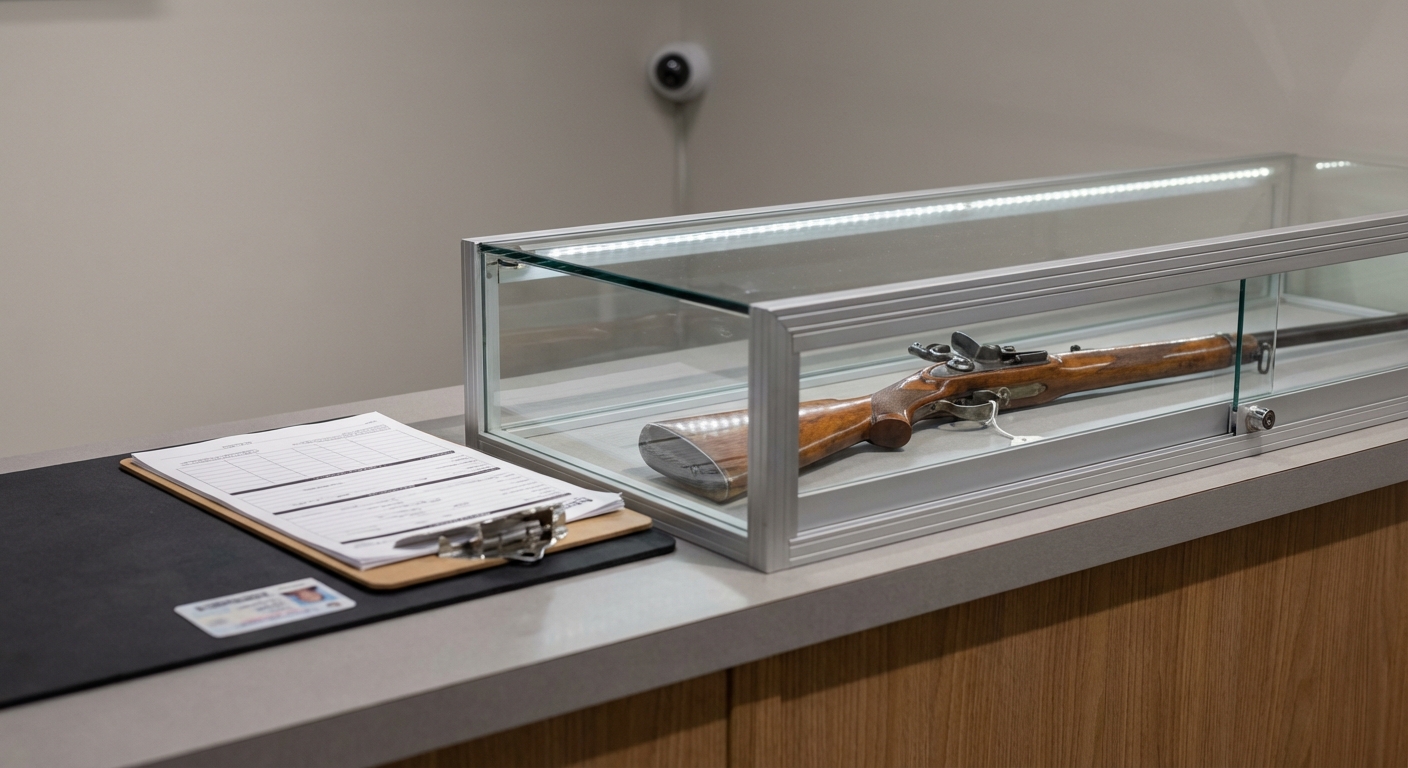
- Confirm which bucket you’re in: Keep three categories straight because they drive different compliance. “Antique firearm” is its own federal category under 27 CFR § 478.11 (the pre-1899 plus replica and ammo-availability logic), and antiques generally are not treated as “firearms” for federal GCA transfer and FFL purposes, even though state and local laws can still regulate the transaction.
- Don’t confuse antique with C&R: A curio or relic (C&R) is a collector-interest firearm category under 27 CFR § 478.11, including guns at least 50 years old (not including replicas) plus other collector-interest classes. C&R is distinct from “antique,” and mixing those labels is where people create avoidable paperwork and shipping problems.
- Pick your sale pathway: Private sale, consignment or auction, and dealer buyout can land you in different procedures. Using a Federal Firearms Licensee (FFL), a licensed dealer who can legally receive and transfer firearms, often reduces risk because they handle the regulated transfer steps when they apply.
- Check the location details: In-state, face-to-face deals can follow one set of rules, but cross-state transactions are the tripwire. Before you commit to an out-of-state buyer, verify your state and the buyer’s state definitions and transfer requirements, since some states treat “antiques” differently than federal law does.
- Reality-check shipping before you promise it: USPS firearm mailing rules live in DMM 601.11 and USPS Publication 52. USPS generally prohibits mailing handguns except in limited situations (such as between authorized FFLs or to or from certain government agencies), so “I’ll just mail it” is not a plan, it’s a problem.
- Use an FFL when anything feels fuzzy: If the buyer is out of state, the gun’s category is debatable, or shipping rules are unclear, routing the transfer through an FFL is the cleanest way to stay on the right side of federal and state requirements.
Watch-outs: The fastest ways sellers get tripped up are cross-state deals, assuming old equals antique, and assuming USPS will take any firearm. Also remember that marketplaces, auction houses, and payment providers often have stricter policies than the law, so verify platform rules before you list or accept funds.
Step 3
Once you’ve nailed down the category and the sale path, your next leverage point is presentation: your listing is only as strong as your documentation.
The easiest way to earn a higher price on an antique is to prove what’s original, what’s worn, and what’s missing, without “improving” it. Collectors punish uncertainty, and they punish altered finishes even more, so well-intended cleaning and vague descriptions can cost real money.
- Handle gently before you touch anything else. Check the finish first, if you see cracking, flaking, or lifting, do not dust or vacuum. Wash your hands and limit handling, or wear gloves that still let you grip safely. Keep the gun and any paper items away from excessive heat and humidity, which promotes mold growth.
- Photograph the whole package, then the details. Get clear, evenly lit photos of both sides, top strap, buttplate, sights, muzzle crown, screws, stock checkering, and any rust, pitting, cracks, or repairs. Add closeups of markings and any serial or assembly numbers. Photograph the condition before packing or moving it around further, and prioritize sharp images buyers can zoom in on.
- Write condition notes buyers can audit. Use specific observations: finish wear pattern, edge thinning, active rust vs staining, bore condition, and any cracks or chips in wood. These details map directly to the biggest value drivers: finish and bore condition, matching numbers, and aftermarket parts—core factors that make a gun collectible.
- Call out originality checks, including “what isn’t there.” Note whether visible numbers match across major components, and list any obvious replacements like modern screws, recoil pads, sights, or refinished wood or metal. If you can’t verify something, say exactly what you checked and what you couldn’t access without disassembly.
- Capture paperwork that strengthens provenance. Provenance earns higher offers because it replaces guesswork with a documented ownership timeline backed by receipts and sales records. Photograph and scan any factory letters, early point-of-sale documents, prior auction listings, dealer records, wills, estate paperwork, and even handwritten notes or plaques that stayed with the gun.
If you’re on the fence, stop cleaning and start documenting. You can always clean later, but you can’t undo damaged originality and valuable patina.
Step 4
Good documentation doesn’t just reassure buyers; it also gives you the raw material for pricing. A “high” price isn’t the goal, a defensible price is. If you can point to real comparable sales, explain the condition differences, and show how fees change what you actually net, buyers take your number seriously and auctions tend to land closer to your expectations.
The catch is that “value” changes depending on the price language you’re using. An appraisal or insurance value is a documentation number, a retail asking price is a starting point, an auction hammer price is the winning bid, and a dealer cash offer is what a buyer will pay today while taking on resale risk. Your net proceeds can also be lower than any of those once fees are deducted.
- Collect realized comps from actual sold results. Prioritize realized prices from major auction houses and completed listings where you can confirm the sale, not unsold “asking” screenshots.
- Normalize condition and configuration differences using the basics you already documented, finish and bore condition, matching numbers, and any aftermarket parts. If your gun is missing originals (or has period-correct extras), adjust your expectations before you adjust your price.
- Translate the price language so you’re comparing apples to apples. Auction results often look higher because of buyer’s premium, the buyer pays it on top of the hammer price, while the seller’s net is reduced by seller fees.
- Set your target range and your floor based on comps you’d feel comfortable showing a skeptical buyer. Your floor is the minimum net you’ll accept after the likely costs of the selling route you pick.
- Choose a list price or reserve strategy that matches your goal. For a fast sale, price near the lower end of your defensible range. For maximum return, list near the upper end, then plan for longer time-to-sale and tougher negotiation (and remember how supply and demand affects firearm resale prices).
If you’re benchmarking against an instant cash offer, keep the frame realistic. Cash My Guns operates as a nationwide online purchasing service and routes transactions through a federally licensed firearms dealer (FFL), so its number is structured like a dealer cash offer, not a retail ask.
If you can’t explain your number in two sentences, tighten your comps until you can, then price from that smaller, sharper set (or consider the role of expert appraisers in valuing firearm collections).
Step 5
Pricing sets your target, but your channel choice can swing your net more than a small change in asking price—so it helps to review your options for selling a gun.
- Pick your win condition: are you optimizing for max net, speed, low hassle, or low fraud risk? A rare, documented piece usually rewards patience, a common black-powder gun usually doesn’t.
- Match the channel to the item: auction houses earn their keep on scarce, story-heavy guns because they put multiple motivated bidders in one place; selling guns online can work for common items, but you’re signing up for more messages, more tire-kickers, and more scam filtering; local collectors are fastest when you already have a credible network; FFL consignment is the “I want retail exposure without doing the legwork” lane; direct-buy services trade top-dollar upside for certainty.
- Sanity-check fees against buyer behavior: live estate auction terms commonly run about 15% to 35% seller commission off the hammer, and buyers often pay another 10% to 15% on top as a buyer’s premium. Those premiums change how bidders bid and how comps look. Collector’s Elite, for example, charges buyers a 10% premium.
- Stress-test timeline and failure points: auctions run on catalog dates and settlement cycles; marketplaces and local sales fail on flakers, chargebacks, and “my cousin will pick it up next week” energy; selling a gun on consignment fails when your gun sits; direct-buy fails only if you hate the offer.
- Route compliance before you commit: if your sale needs an FFL hop, decide who will handle it, the auction house, your local FFL, or the buyer’s FFL, and bake that into your plan.
Scenario match: A scarce revolver with letters, provenance, and crisp photos belongs with an auction house that can market the story and concentrate bidders, even after commissions. A common black-powder long gun often clears faster through a local collector or a straightforward online listing because the upside is capped. A multi-gun estate lot is where a nationwide online firearms purchasing service, operated by an FFL and marketed as “Safe • Legal • Hassle-Free,” can be the cleanest way to turn everything into one decision and one payout.
Step 6
However you sell, most seller horror stories happen at the finish line. The gun was priced right and the buyer looked legit, then a vague listing, a sloppy transfer record, or a thin shipping paper trail turned into a chargeback, an ownership dispute, or an insurance claim you can’t prove.
- Finalize the listing language to match reality, serials (if applicable), known defects, and exactly what’s included, down to slings, clips, and cases.
- Verify the buyer’s location and the rules that apply to that specific transaction, even if the firearm is federally antique. State and local rules, and platform policies, can still change what’s allowed. If anything is unclear, route it through an FFL (dealer) and confirm current requirements.
- Document the deal with a bill of sale, a legal document that records the transfer of ownership. Both parties keep a copy. It typically lists the buyer and seller, the price, and any warranties or guarantees, including “as-is” if that’s the agreement.
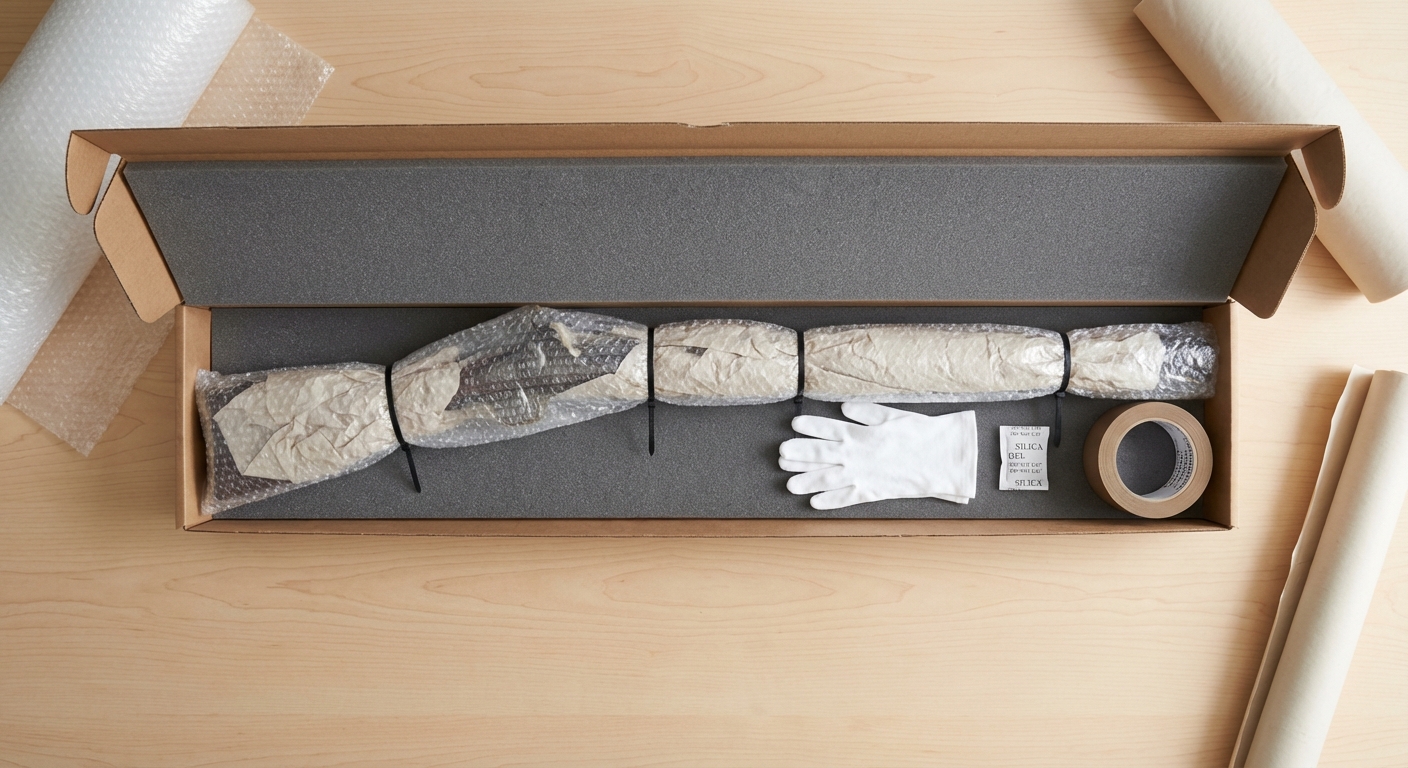
- Photograph the firearm and accessories immediately before packing, including close-ups that show condition and what’s in the box.
- Ship with tracking and appropriate insurance. For insured USPS mail that’s lost, damaged, or missing contents, USPS reimburses up to the value of the article, subject to its terms and limits.
- Confirm delivery and have the recipient open carefully, verify contents, and document any damage or discrepancies immediately, before anything gets “cleaned up.”
- File a seller file: listing screenshots, messages, BOS, payment confirmation, photos, tracking, delivery proof, and any provenance documents you have, such as receipts, auction records, or dealer paperwork.
If something goes sideways, your default play is simple: stop debating over text, preserve packaging and photos, pull your seller file, and start the carrier or platform claim with dated proof. If anything feels unclear up front, slow down and route the transfer through an FFL (and review buyer vetting, liability risk, and documentation basics).
Conclusion
The same buyer questions from the start-date and classification, originality, and condition-are the same levers that keep you legal and paid. Verify antique status under the federal definition before listing; apply rules by sale type and state; capture documentation, condition, and provenance; set defensible pricing; choose the channel that fits your item and your risk tolerance; then execute a tight close-out checklist. Higher values follow originality, condition, and documented provenance. If you are unsure about status or shipping, route it through an FFL or a nationwide online buying service like Cash My Guns to reduce risk.