
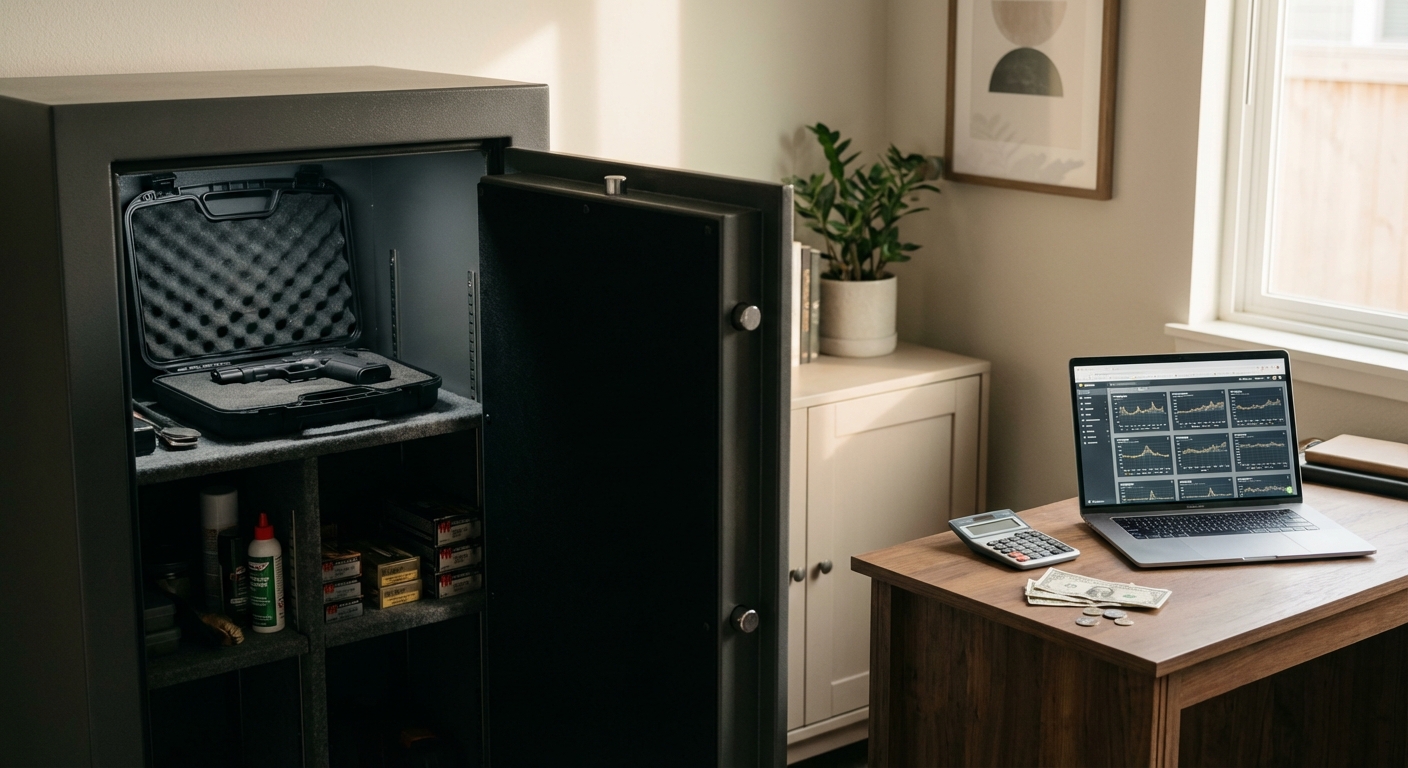
If you’re being honest, the weird part isn’t the gun, it’s the friction around the decision: a little nostalgia, a little “what if,” and a whole lot of not wanting to deal with pricing uncertainty or the hassle of finding a serious buyer.
Here’s the part most people miss: an unused firearm isn’t free to keep. It quietly ties up cash you could use right now, takes up physical space, and sits in the back of your mind as another unresolved “someday” project.
The real tradeoff is practical, not personal. You’re balancing financial logic against what the gun is realistically worth today, plus the difference between a quick, convenient sale and holding out for top dollar. And you’re weighing “just in case” comfort against putting idle money back to work.
By the end, you’ll know whether keeping it is actually worth it, and how to sell it without drama if it isn’t.
Opportunity Cost and Carrying Costs
That “safe queen” sitting untouched can be a financial drag even if it’s fully paid for. Not because it’s bad gear, but because value that never gets used still has a real cost.
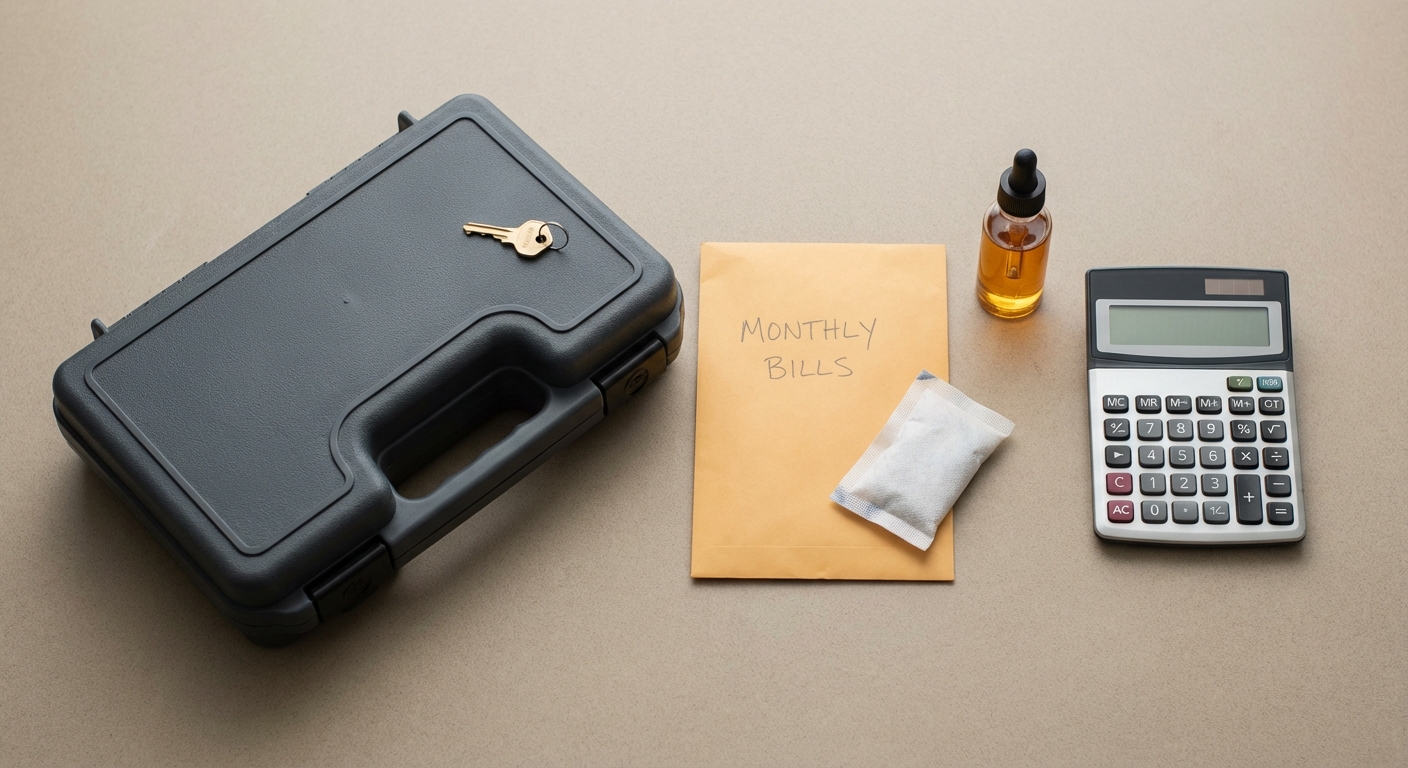
The tricky part is the cost doesn’t show up as a monthly bill. You just keep owning it, keep intending to shoot it “someday,” and meanwhile your dollars are stuck in an asset that isn’t helping your household right now.
The real opportunity cost is the value of the best alternative use of money tied up in an unused asset, like wiping out a 22% credit-card balance, building a cash buffer, or earning around 4% to 5%+ in a high-yield savings account. The average U.S. credit-card APR has sat in the low-20% range (about 21% to 23%) in 2024 to 2025 based on Federal Reserve G.19 data (FRED series TERMCBCCALLNS), and Bankrate rate tables routinely show HYSAs advertised around 4% to 5%+ APY in the same period.
Here’s what that looks like in real life: if you’re carrying a balance, selling an unused gun and paying down that debt is an instant, guaranteed “return” equal to the APR you’re no longer paying. If you’d rather sleep better with cash in savings, turning a safe queen into an emergency fund means fewer surprises end up on a card. Even if you do nothing but park the proceeds in a HYSA, that cash is at least earning interest instead of collecting dust.
Inflation is the quieter squeeze. Even if the gun’s sticker price feels stable, your purchasing power still erodes over time. Using recent CPI-U inflation as a reference point, about 17% cumulative inflation over three years turns $1,200 of buying power into roughly $1,025 in today’s dollars, without you doing anything wrong.
Even if you never fire it, carrying costs, ongoing costs and risks of ownership such as secure storage, insurance gaps, maintenance time, and loss or theft exposure, keep adding up in the background. A proper safe is real money, and even the “small stuff” adds up: oil and solvent, patches, and dehumidifier supplies, plus the time to inspect, wipe down, and keep rust away.
Insurance is the big blind spot. Typical HO-3 homeowners policies often cap theft coverage for firearms at a special sublimit commonly around $2,500 unless you schedule them or add an endorsement. Specialty firearms or collectibles coverage is often priced roughly 0.6% to 1.5% of insured value per year, which is a recurring cost you’re paying just to keep the risk acceptable.
Reality check: if you actually train with it, rely on it for home defense, or it’s truly irreplaceable to you, the math can justify keeping it. “I haven’t touched it in years” is the tell that the someday plan is already costing you.
Simple sanity check: pick one benchmark, your credit card APR, a HYSA rate, or your insurance coverage gap, and ask which one you’d rather optimize this year before you bother getting an offer (and before you assume today’s price—how supply and demand affects firearm resale prices can move it around).
What Determines Resale Value
Once you admit the money could be doing more for you elsewhere, the next question gets practical fast: what is the gun actually worth right now? Most pricing surprises come from a few predictable drivers, not mystery.
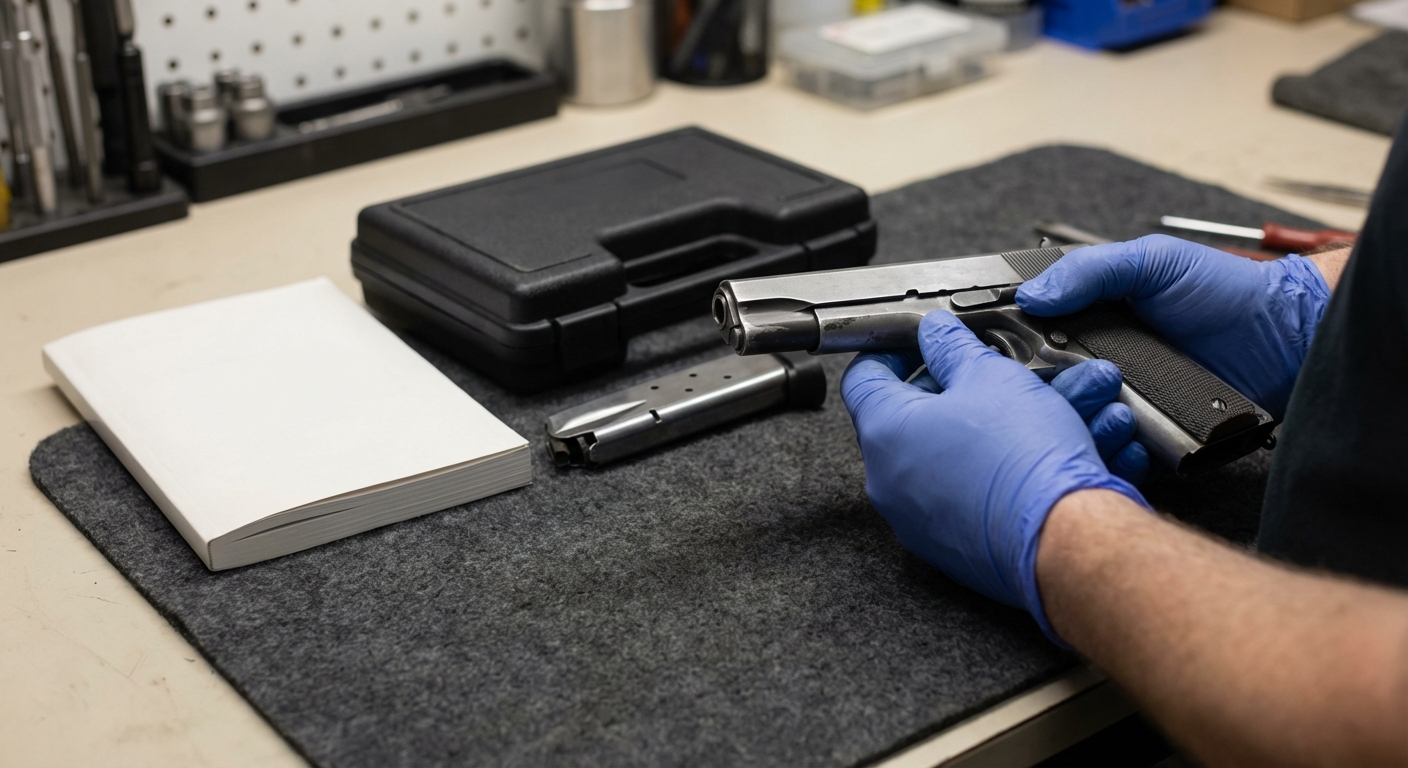
Buyers aren’t “guessing” your gun’s value, they’re reacting to what’s selling lately, what condition it’s truly in, and how closely it matches what they actually want to own.
If you want a realistic number, recent completed-sale prices for comparable items (sold comps) beat scrolling optimistic asking prices all day. Asking prices are just wishes until money changes hands.
Make and model demand sets the boundaries. A popular, widely supported platform tends to stay liquid because more people are actively shopping for it, while niche variants can sit even if the “book value” looks similar. Region matters too: what moves fast in one area can drag in another based on local shooting culture, hunting seasons, and what inventory buyers already see every day.
This is where the real spread shows up, because “clean” means different things to different buyers. Finish wear, rust, dings, and, most importantly, bore condition get judged up close. Collectors and picky buyers often pay more when a gun is still in OEM configuration, meaning it’s in its original factory setup with original parts and finish—and when it has the kinds of rarity cues that make a gun collectible. The tricky part is aftermarket parts, non-factory components or modifications added after purchase that can change value and liquidity, because what you loved customizing might be what a buyer wants to undo. If you kept the original parts, include them, it lowers a buyer’s risk.
Extra magazines, the factory box, manuals, and any included accessories don’t usually redefine the price, but they change how a buyer compares your listing to the next one. Missing basics forces buyers to spend money after the sale, and they price that hassle in immediately.
Timing changes liquidity even when “value” feels stable. Cash My Guns says its appraisals weigh condition details like finish, bore, matching numbers, and aftermarket parts, and it uses market data from both dealer listings and auction results while also factoring seasonality and regional demand.
Takeaway: anchor expectations to recent sold comps and an honest, plain-English condition and originality description, then set your number. If you’re unsure, getting an expert appraisal or a straightforward offer is a fast reality check before you invest time chasing the wrong price.
Popular Guns People Price-Check
Even with the right drivers in mind, most online “what’s it worth” searches go sideways for one reason: you want one exact number, but the market only pays in ranges.
Use the callouts below like checkpoints, not quotes. Start with the model family, then sanity-check the specific variant, condition, originality, what’s included (mags, factory case, box), and whether your local demand runs hot or cold. And keep your head straight about the data: asking prices are just hopes, sold prices are reality.
This is the classic trap because tiny details change the answer: generation, MOS vs non-MOS, night sights, frame work, and whether you still have the original parts. The Cash My Guns excerpt in this knowledge base does not publish completed-sale price ranges for Glock 19/17 by generation or MOS vs non-MOS, so don’t try to reverse-engineer value from a handful of listings. Pull sold comps (recent completed sales) for your exact configuration, then adjust for condition, included mags/box, and what actually moves in your area.
“P320” isn’t a model, it’s a platform. A Full Size, Carry, Compact, X-Series, and Legion can all be “a P320,” but they do not shop the same because buyers search by slide length, optics cut, grip module, and even whether the gun is still in its factory configuration. Your fastest path to a realistic range is matching the exact variant, then pricing it as either original or modified, with the mag count and factory packaging called out.
Beretta M9 price snapshots can vary by time window. For example:
- One snapshot reports an average used Beretta M9 price around $450.60, with a new average around $639.71.
- Zooming out to a different window, the 12-month averages shift to about $595.15 new and $435.00 used.
If you’re about to set a price, accept an offer, or trade, stop guessing. Confirm your exact variant against sold comps and, if you want a fast bottom-line, get an appraisal or firm offer that accounts for your condition, originality, included mags/box, and local demand.
When Selling Beats Holding
Price is only half the decision. The other half is whether the gun still earns its spot in your safe, or whether you’re keeping it mainly because it’s easier than deciding.
The right move depends less on what the gun is and more on what role it actually plays in your life today. “Just in case” can feel responsible, but duplicates, lifestyle changes, and simple storage hassle quietly add up until the safe starts acting like a junk drawer you pay to keep.
- Have you used it in the last 12 months? If it missed an entire range year or hunting season, that’s a signal.
- Does it fill a real role you can name? Defensive use, a specific hunt, a competition class, or a training plan beats “someday.”
- Would you buy this exact gun again at today’s prices? If you’d pass and choose a different caliber or platform now, holding is just inertia.
- Is storage or insurance turning into friction? If space is tight, access is annoying, or you’re paying to store what you don’t use, that cost counts.
- Is there a higher-priority use for the money right now? High-interest debt pressure is a clear example, cash flow beats a safe queen.
Green lights to sell: duplicates, “I keep meaning to use it” guns, anything that no longer matches your range access or hunting calendar, and anything crowding out storage space. If 3 or more answers point to “no real role,” selling is usually the cleaner move.
Good reasons to hold: heirlooms with deep personal value, truly rare or collectible pieces you’d regret replacing, and firearms that still serve an active defensive or hunting role.
If you keep it, keep it calmly and responsibly: Project ChildSafe promotes storing firearms locked, unloaded, and inaccessible to unauthorized users, securing keys or combinations, and commonly advises storing ammunition separately, with both secured. Then do a quick insurance check, including whether scheduled personal property makes sense. Decide first, then either prep for valuation and sale, or tighten storage and full insurance coverage and move on.
How to Sell Legally and Smoothly
Once you’ve decided selling is the cleaner move, the next goal is simple: get it done without introducing risk. The smoothest sales are the ones you set up to be boringly compliant (see how to get rid of a gun legally).
The “best deal” gets messy fast when the transfer path is wrong, the buyer wants shortcuts, or the payment feels sketchy.
Sell to a local dealer (outright): This is the fast, low-friction route. You hand it over, they verify details, and you leave with payment. The tradeoff is payout, a dealer has to build in margin for overhead and resale risk.
Consignment through a local dealer: You usually keep more upside because the shop is selling at retail, not buying at wholesale. The catch is time and uncertainty, your money shows up only after it sells, and the gun sits in someone else’s display case.
Sell online, but route the transfer through an FFL: Online listings can widen your buyer pool and often improve price. The friction is admin work, you still have to ensure the firearm is delivered through a compliant transfer, which usually means coordinating with an FFL on the receiving end (more on selling guns online).
“Buy-from-home” nationwide services (FFL-routed): If your priority is convenience and a clean compliance trail, services like Cash My Guns, operated by Dunlap Gun Buyers (a federally licensed firearms dealer, FFL), position the process as “Safe • Legal • Hassle-Free.” They buy guns, ammunition, and accessories as a nationwide online purchasing service.
Federal law generally restricts interstate transfers between nonlicensees. In plain terms, transferring a firearm across state lines to an unlicensed person generally has to go through a Federal Firearms Licensee (FFL), a federally licensed firearms business that can legally receive, transfer, and record firearm transactions (18 U.S.C. § 922(a)(5) and § 922(a)(3)). In many sales, especially across state lines, an FFL transfer is typically the cleanest way to protect both sides, and it generally involves required forms and a background check as applicable. ATF guidance also indicates a nonlicensee may ship a firearm to an FFL for lawful purposes.
State rules can add layers. Texas, for example, has no general requirement that private-party transfers must be processed through an FFL, but it does criminalize certain unlawful transfers (TX Penal Code § 46.06). Florida imposes a 3-day waiting period for retail sales with exemptions (Fla. Stat. § 790.0655). Double-check your local rules and verify current requirements. This isn’t legal advice.
Keep scams boring, too: stick to reputable buyers or established dealers, insist on clear documentation, and walk away from weird payment requests, including “Venmo tricks” that try to reverse or fake payments.
Pick your priority, max price, fastest sale, or least hassle, then choose the path that matches it (a quick breakdown of your options for selling a gun can help). When you’re unsure, default to an FFL-routed transfer and stay on the right side of compliance.
Turn Idle Gear Into Useful Cash
If it’s been sitting for years, it’s already making a decision for you: it’s tying up money and adding one more thing to store, insure, and worry about.
The smart move is treating this like a two-part problem. First, the dollars: idle guns carry opportunity cost and real carrying costs. Second, the value: demand, condition, and originality drive what buyers pay, and any “snapshot” number moves, so anchor your expectations to sold comps or a real appraisal instead of guesses.
And if the thing that’s been holding you back is that lingering “what if” from the start, the cleanest way through it is a process you can defend: a realistic number, a clear decision, and a compliant transfer. ATF consumer guidance is clear that you can’t transfer a firearm to someone you know, or have reasonable cause to believe, is prohibited, and using an FFL ensures the required paperwork and background check procedures for over-the-counter transfers.
Pick your lane, sell or keep, then sanity-check value with sold comps or an appraisal and choose a compliant path that stays boring and legitimate. If you want a straightforward option, request an offer from Cash My Guns, operated by Dunlap Gun Buyers (an FFL), a nationwide online purchasing service for guns, ammunition, and accessories marketed as “Safe • Legal • Hassle-Free.”