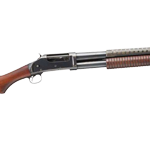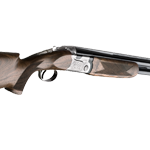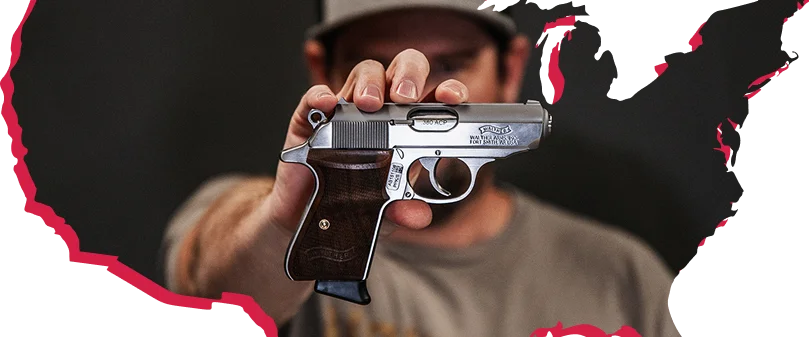



Paperwork mismatches kill otherwise-easy gun sales. You can have a ready buyer, a fair price, and a meetup on the calendar, then everything dies at the counter because the details don’t line up, like their ID shows an old address, the dealer won’t proceed, and you both burn a Saturday for nothing.
If you’re selling, you’re usually trying to do it safely and cleanly without guessing what you’ll be asked for in the moment. The catch is that the documents needed to sell a gun change based on where you live, who you’re selling to (a dealer vs a direct sale), and what you’re selling (a standard firearm vs a more heavily regulated category). Guess wrong, and “fast sale” turns into “come back later with different paperwork.”
One hard rule you can count on during a dealer transfer is this: the buyer must physically present at least one current, valid government-issued photo ID when completing the required paperwork, and that photo ID has to show their name, photograph, and date of birth. Common deal-killers are ID and address mismatches, plus missing paperwork for the transfer method you chose.
This guide is a paperwork-prep walkthrough so you can pick your transfer path first, then gather what you’ll need before you meet, ship, or list. It’s informational, not legal advice, so verify your current state and local rules and the specific dealer’s policies before you commit to a plan.
Step 1 Choose Your Sale Method
Your method choice determines your documents. The second you pick a transfer path, your paperwork checklist and your timeline lock in, dealer counter forms, shipping records, or your own private documentation.

A Federal Firearms Licensee (FFL) is a federally licensed business that can receive, transfer, and record firearm transactions under ATF regulations, so using one usually means the paperwork is standardized and easier to prove later. Here’s what this means for you: you’ll spend your time at a counter signing the dealer’s intake and transfer paperwork, not building your own paper trail from scratch.
The tradeoff is scheduling and processing time. Dealers work off store hours and internal procedures, so even a simple sale can hinge on when they can log the gun, verify details, and close it out. If you want the cleanest documentation with the least guesswork, this is the low-friction route.
If the buyer isn’t local (or you’re using an online buyer or other selling option), the same FFL structure still applies, but it adds distance and a few more points where paperwork matters.
This path adds shipping paperwork and a longer clock. You’ll keep records like the receiving FFL’s information, shipment details, and your buyer communications, because the buyer typically takes possession through their local dealer’s transfer process.
Federal law is the big complication here: a non-licensee may not transfer a firearm to a non-licensee who is not a resident of the seller’s state, which is why interstate private transfers effectively require an FFL-based pathway (18 U.S.C. § 922(a)(5)).
For example, a nationwide online service that buys guns typically routes transactions through licensed dealers, and selling guns online usually follows that same transfer structure.
If you’re considering a direct, private-party transfer instead, the main question isn’t price, it’s whether that handoff is even allowed in your situation.
A private-party transfer is a transfer between two non-FFL individuals that may be lawful in limited scenarios depending on residency and state and local rules, so your first question is, “Are we even allowed to do this directly?” Federally, in-state transfers between two residents generally do not have to go through a dealer, but you cannot transfer to someone you know, or have reasonable cause to believe, is prohibited (18 U.S.C. § 922(d)).
The catch is documentation. Without a dealer record, your protection is whatever private documentation you create. People commonly search rules by state, Texas, Florida, California, Georgia, Pennsylvania, Ohio, Arizona, New York, North Carolina, Illinois, so check current rules before you rely on “what everyone does.”
One more reality check: if you’re frequently flipping guns or selling in a focused, business-like way, ATF’s “engaged in the business” concept looks at devoting time, attention, and labor to dealing as a regular course of trade or business. Here’s the decision nudge: if the buyer is out of state, or you want a clean receipt trail, plan on an FFL-based transfer.
Step 2 Gather Core Seller Documents
Most delays are preventable if your ID, address details, and ownership trail are ready. Build one small “seller document packet” once, and you can use it for almost any sale method, in-person at a dealer or with a dealer-operated online buyer.
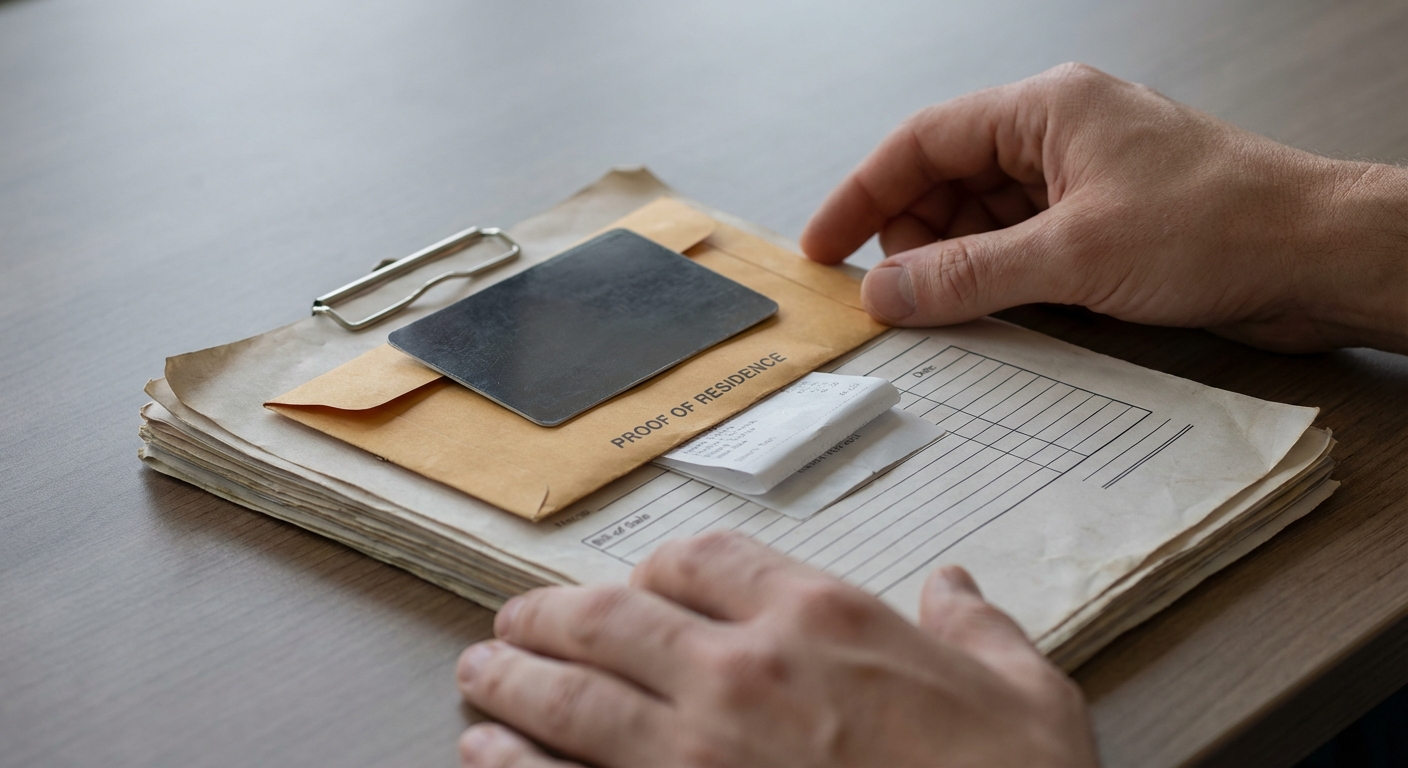
Bring your own government-issued photo ID. Even when you are not the one completing the dealer’s transfer paperwork, dealers commonly want to verify who is dropping off or consigning a firearm, and having your ID out avoids a slow, awkward start.
Also prep for the most common snag: address mismatches. If the buyer’s photo ID does not show their current residence address, the dealer may accept a valid government-issued photo ID plus a separate government-issued document that shows the buyer’s current residence address. In practice, that often means something like a state vehicle registration or another government-issued card or license that lists the current address.
You usually are not required to show a “title” for a firearm, but any chain-of-custody paperwork you have helps answer questions fast. Bring what you can: a store receipt, prior transfer paperwork from when you acquired it, or estate paperwork if you inherited it. If you have none, selling a gun with no box or papers is still common—plenty of legitimate guns changed hands decades ago without a neat paper trail.
What you usually don’t need: the original box and manual are not required. They can help a buyer feel confident, but they are not deal-breakers.
Before you leave home, write down the firearm’s make and model, caliber or gauge, and the serial number. Copy the serial number carefully and store it securely, because one transposed character can stall a transaction or create recordkeeping headaches.
If what you’re selling is an NFA item, a firearm or device regulated under the National Firearms Act (like a suppressor or short-barreled rifle), the paperwork isn’t optional, and missing approved forms can stop the sale cold. Lawful possession or registration is typically evidenced by an approved ATF Form 1 or approved ATF Form 4, and the transfer generally cannot be completed without ATF approval and the required tax stamp when applicable.
- Pull your government-issued photo ID.
- Confirm the buyer has government-issued proof of their current residence address if their ID is outdated.
- Gather any receipts, prior transfer paperwork, or estate documents you have.
- Record make, model, caliber or gauge, and the serial number accurately, and keep that note secure.
Step 3 Prepare Protective Paperwork
Price and photos get a deal started. The “extra” paperwork is what saves you when something goes sideways, a dispute about condition, a chargeback, or simple confusion about where the gun went and when it left your hands. This is just good hygiene, and it makes clean documentation painless.
A bill of sale is a written record capturing who, what, when, price, and key terms, so if memories get fuzzy later, you’ve got something concrete. Keep it simple: seller and buyer names, date, firearm make and model, serial number, sale price, and an “as-is” acknowledgement so nobody re-litigates normal wear after the fact.
One extra line that’s worth adding is a buyer eligibility attestation at a high level, something like: “Buyer affirms they can legally possess and receive this firearm under applicable law.” You’re not running an interrogation, you’re documenting that the buyer took responsibility for their own legal status.
Also record the transfer method, even if it feels obvious in the moment. Write down the dealer or meeting location, the date, and any receipt or transaction number. If the firearm later gets traced or a buyer claims “it never showed up,” this is the clean breadcrumb trail that ends arguments fast.
Finally, store this stuff like you store the firearm: securely. Keep paper copies locked up, and keep digital copies in encrypted storage, not in an open photo roll or unprotected email folder.
If you’re shipping, the protective paper trail matters even more because you’re adding carrier scans and shop receiving logs to the handoff.
Shipping adds handoffs, carrier scans, shop receiving logs, and sometimes payment processing, which is why dealers ask for more documentation than an in-person sale. Federal law allows a nonlicensee to ship a firearm to a dealer in another state, but not to ship directly to a non-dealer resident of another state (18 U.S.C. § 922 framework). That paperwork trail matters.
That ID-copy request usually isn’t “nosiness”, it’s because the receiving shop has to log the gun into its A&D record (bound book), the acquisition-and-disposition ledger that records where the firearm came from and where it went. Under 27 CFR 478.125(e), the dealer must record the firearm (manufacturer or importer, model, serial, type, caliber or gauge) and the source, and for a nonlicensee source that includes name and address, no later than the close of the next business day after receipt.
Checklist for common dealer requests: a copy of your ID (to accurately capture your name and address for their records), the tracking number (so both sides can prove custody and delivery), and any carrier-required declarations. USPS baseline: nonlicensees can mail rifles and shotguns to a dealer under applicable rules, but nonlicensees generally can’t mail handguns.
Some dealer-operated online buyers, like Cash My Guns, also provide a prepaid shipping label, which reduces “who paid for what” confusion because the label, tracking, and insurance are tied to the same transaction.
Create one folder, paper plus digital, with your bill of sale, transfer receipt info, tracking, and any ID copy you provided, and you’ll be able to answer questions in minutes instead of guessing weeks later.
Step 4 Document Condition And Value
Documentation keeps your sale from turning into a renegotiation. If your paperwork says “excellent,” but the photos show holster rub and a worn muzzle, you’ve handed the other side leverage to reopen the price, even if your buyer is a dealer.
Two “same model” guns don’t sell the same because the details aren’t the same: variant or generation, finish wear, bore condition, matching numbers or parts, and aftermarket parts all move value in predictable directions. The fix is a simple condition packet that matches reality.
- Photograph the full firearm (overall, both sides), then key wear points (muzzle, slide rails, crown, grips, optics cut area), plus clear markings (model, caliber, importer, proof marks).
- Write condition notes in plain language: finish wear (where and how much), bore condition (bright, pitting, rifling), function notes (safety, trigger reset, magazine fit), and round count if you actually know it.
- List modifications and what’s included: aftermarket trigger, sights, barrel, stippling, cerakote, plus mags, case, optic, sling, and any OEM parts you still have.
Typing “how much is my Glock 19 worth” is a start, but comps mislead fast if you don’t normalize. Build a defensible comps set using market data from dealer listings and completed auction results, then adjust for the exact variant or generation (Glock 19 Gen 3 vs Gen 5 matters), condition, and included extras. “How much is my SIG P320 worth” changes if an optic and three mags are in the box, and “how much is my AR-15 worth” changes with the rail, barrel brand, and whether it’s a budget build or a known factory model.
Keep one more reality check in your notes: seasonality and regional demand can shift resale pricing, so you’re documenting context, not promising a number.
This packet supports whichever transfer path you picked because it gives the buyer fewer reasons to question your description. Make a one-page condition note + a small comps list (see how to estimate what your gun is worth) before you meet or ship.
Step 5 Complete Transfer And Keep Records
The clean close is what protects you later. A gun sale is not “done” until the transfer path is confirmed, the money is settled, and you have a record that matches what actually happened.
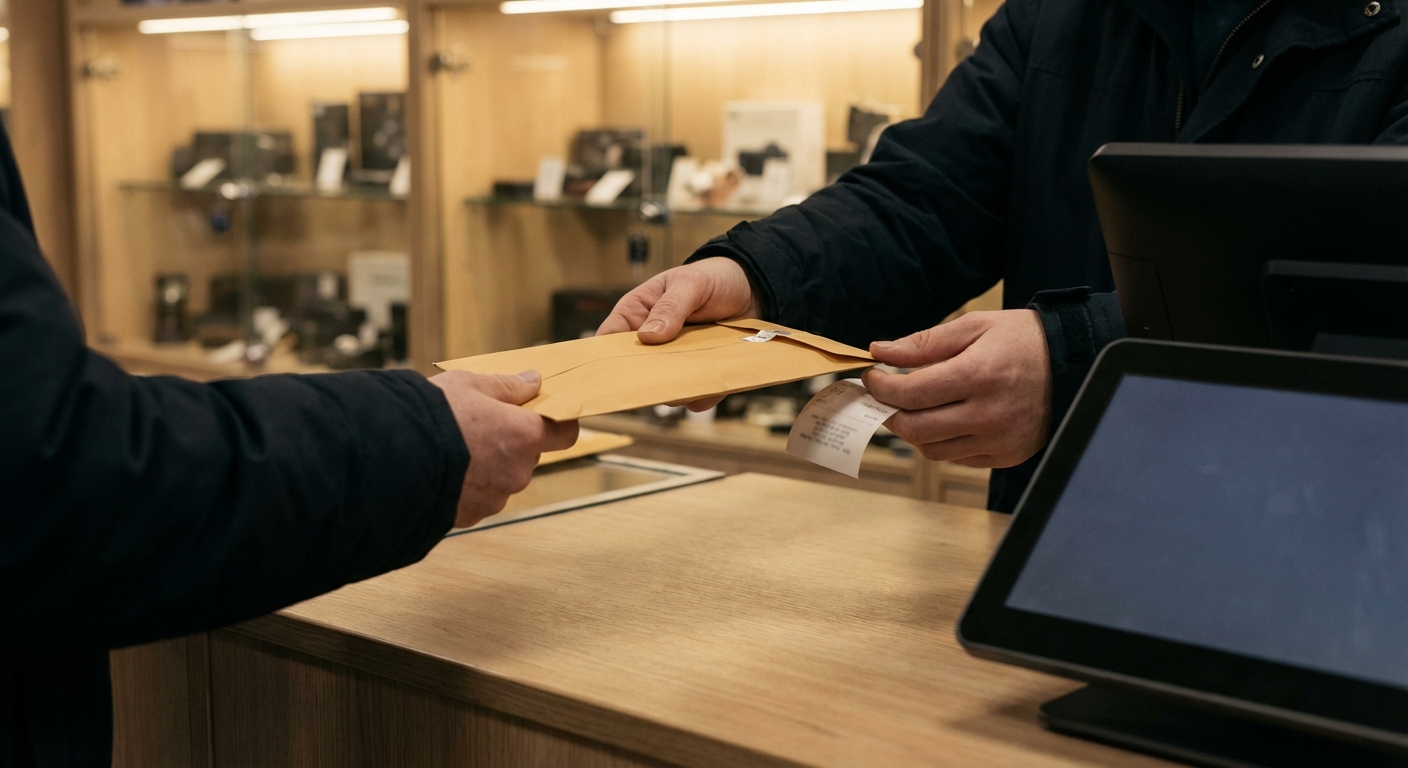
- Confirm the dealer handoff if you’re meeting at an FFL (Federal Firearms Licensee). At the counter, the buyer completes ATF Form 4473, the federal transaction record that captures their identifying info, so mismatched or missing documents can stall the whole transfer. The dealer must have a completed and signed Form 4473 before initiating the NICS background check, and NICS is the background check process, not the form itself. After that, the dealer runs the NICS background check, the check the dealer initiates once the form is signed, which is why you should plan for possible delays and not promise a “5-minute” pickup.
- Collect a transaction record before you leave the shop. Ask for a dated receipt or intake record that ties the firearm (make, model, serial) to the dealer and the intended transfer, and confirm the firearm has been accepted into the dealer’s process, not just set on the counter.
- Document a lawful direct handoff (only where allowed) with identity checks and a paper trail. Verify the buyer’s identity with a government-issued photo ID, confirm the person in front of you matches it, and complete a bill of sale with the firearm details, date, location, and both parties’ signatures. This is about protecting you under 18 U.S.C. § 922(d), which forbids transferring a firearm if you know or have reasonable cause to believe the recipient is prohibited.
- Lock down records and payment. Save copies of your receipt or bill of sale, plus proof the payment fully cleared. If the transfer ran through an FFL, remember the dealer keeps the completed Form 4473 at least 20 years for completed transfers, and at least 5 years for denied or canceled transactions under current ATF rules; your job is keeping your own proof secure. Remove your listings once funds are confirmed. If you’re selling to a dealer-operated mail-in buyer like Cash My Guns, expect status updates and payment confirmation as the transaction progresses (and follow best practices for selling a gun legally).
Walk away if… the buyer pressures you to skip ID or refuses to show it; they hint the gun is “for someone else” or take real-time instructions from another person; they want to rush the meet or change locations repeatedly; the payment method feels reversible or doesn’t match the buyer’s name; your gut says the story doesn’t add up. Your safest move is a polite “no” and leaving with the firearm.
Quick Checklist Before You Sell
Most issues disappear if you can check these boxes before you meet or ship.
In-person at an FFL:
- Current, valid government-issued photo ID
- Firearm make, model, caliber/gauge
- Serial number recorded accurately
- Clear photos of overall condition
- List of included mags, box, accessories
- Any relevant paperwork you have (receipts, prior transfer paperwork; manuals if you still have them)
Shipping to a receiving dealer or a dealer-operated online buyer:
- Receiving dealer’s name, address, contact
- Your current, valid photo ID ready to provide
- Make, model, caliber/gauge, serial number
- Photos of condition before packing
- Documented tracking number and shipment receipt
- If you’re using a mail-in buyer like Cash My Guns, expect a prepaid label and status/payment updates.
Direct private-party handoff (only where legal):
- Confirm this sale type is allowed where you are
- Meet details locked in: time, place, price
- Bill of sale filled out and signed
- Buyer’s ID checked for name match
- Firearm details verified: make/model/serial
- Documented transfer method agreed (FFL or other legal path)
If you’re missing an item, pause and fix it before money or shipping labels change hands.
Confirm state and local rules and the receiving dealer’s policies before you meet or ship.
Conclusion
Paperwork prep prevents failed transfers, and it’s the difference between a clean handoff and that wasted trip to the counter.
Interstate private transfers between non-FFLs effectively must go through an FFL (18 U.S.C. § 922(a)(5)), and dealer transfers require ATF Form 4473 plus the background check (NICS or state POC), so having ID and paperwork ready avoids delays.
Align your ID, current address, and basic ownership details before you meet, use simple protective proof paperwork, and keep your records after the handoff.
Pick your path, gather your packet, and confirm the dealer/state rules before you meet or ship.