

You look up “resale value” and get brand hype or MSRP-ish numbers that don’t match what people actually pay. Then you check a few listings, see wildly different prices for the “same” handgun, and the whole idea of value starts feeling made up.
If you’re deciding whether to buy now or wait, or whether to sell now or hold, that mismatch is the problem. “Book value” is generic; the market prices your exact gun, in your exact condition, on that exact week.
Real-world handgun value is a moving target shaped by demand, condition, the exact variant or generation, and timing. Timing is the sneaky one: 2017 to 2019 was generally stable-to-soft with heavy promo discounting, the classic “Trump slump,” then March 2020 hit and demand shocked the system, resetting used-price expectations. Add transfer friction, the fees, delays, paperwork, and channel constraints (FFL steps, shipping/insurance, state processes) that shrink your buyer pool or your net, especially on interstate resale where an FFL transfer is commonly required.
Buyers also speak in condition grades (NRA Modern and Blue Book style), where “New” and “Excellent” price very differently. You want a handgun that holds value, but you also want to shoot it without accidentally torching resale. By the end, you’ll know which categories tend to hold value and how to sanity-check what your specific gun would bring right now.
How Handgun Resale Value Really Works
Most resale talk gets fuzzy because it mixes two different worlds: normal used-market pricing and true collector behavior. “Holding value” is measurable, and you can think about it the same way across almost any handgun once you separate those two lanes.
Value retention is the percentage of your buy-in that you can realistically get back, anchored to your original street price, meaning the real transaction price you actually paid at retail, not MSRP. The math is simple: value retention (%) = (current fair market sale price ÷ original street price) × 100. “Fair market sale price” is plain English for what buyers are actually paying in recent sales, not what someone hopes to get.
Condition grading is where two “same gun” listings split hard, because wear, finish, bore, and originality move dollars fast. NRA Modern and Blue Book approaches use condition-percentage methods (100%/New-in-Box baseline with percentage adjustments by condition). Collector appreciation is different, it’s rarity, history, provenance, and untouched originality pushing prices above normal depreciation math.
Use this mental framework: demand baseline → condition grade → accessories/originality → transfer friction. Example: two owners sell the same common pistol. One paid a sale price, kept the box and factory mags, and it grades high. The other paid full retail, added niche mods, lost the originals, and sells where transfers are slow. Same model, very different outcomes.
The core drivers sit underneath that baseline demand: brand track record, reliability reputation, parts/mag ecosystem, duty adoption, production volume, supply and demand, market shocks. If you’re evaluating the “best resale value handgun,” you’re really hunting for strong baseline demand with the fewest discount triggers, starting with original street price and honest condition grading.
Once you have that framework, the rest is pattern recognition. Different handgun categories tend to attract different buyers, and that changes how quickly prices move and what gets discounted first (especially during recent gun market shifts).
Polymer Striker Pistols That Stay Liquid
If you want the least resale drama, duty-proven, high-volume polymer striker pistols stay liquid, meaning you can usually sell them fast at a pretty predictable price because the buyer pool is enormous.
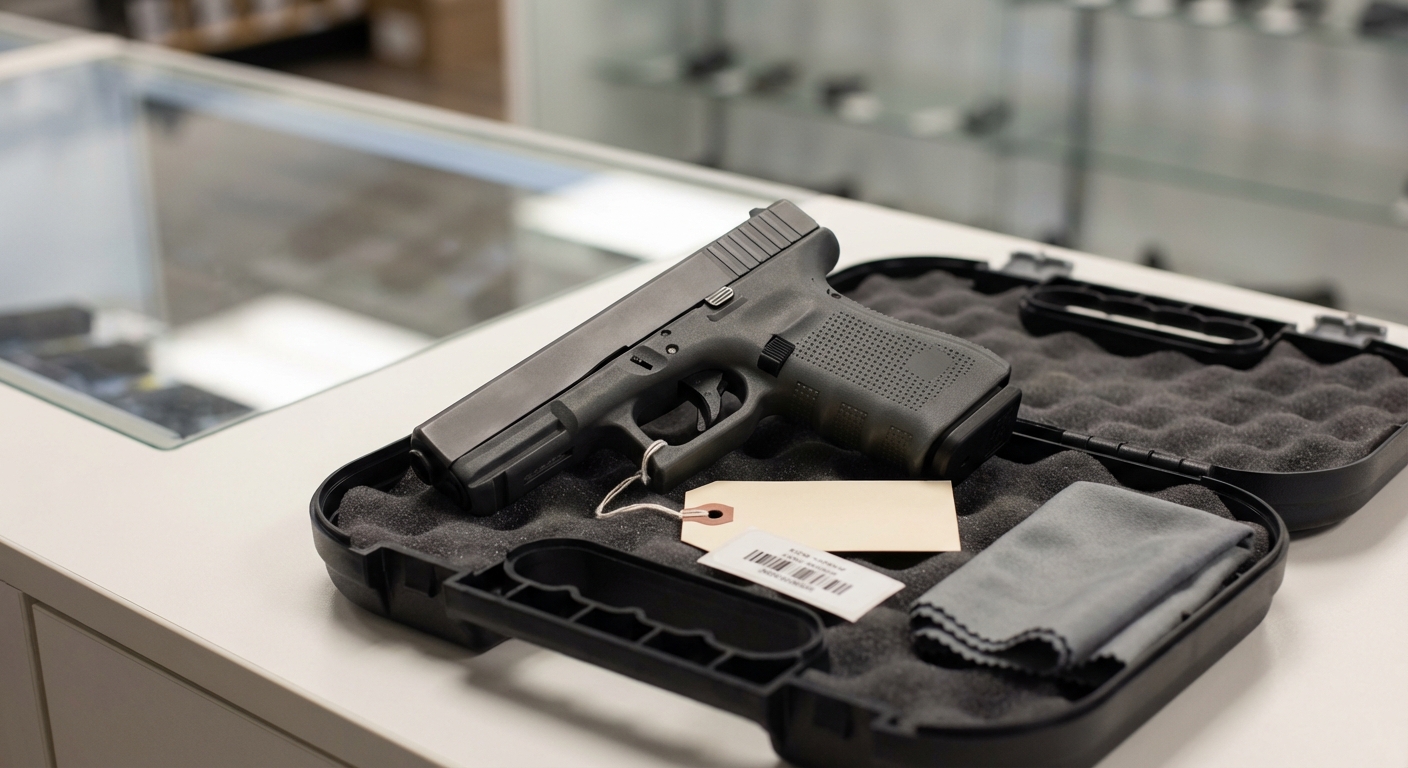
The big buyer pool comes from boring, practical reasons: lots of agencies and private owners run them, most shooters already know how they feel and how they run, and mags and small parts are everywhere. That familiarity reduces shopping hesitation and cuts down on deal-killing questions, so pricing stays tighter than it does on niche pistols. Even if you sell to an FFL like Cash My Guns (operated by Dunlap Gun Buyers, a federally licensed dealer), the basics buyers care about are consistent: exact make and model, condition, aftermarket parts, and real market data from dealer listings and auctions.
The gotcha is that “same model” does not mean “same money.” Inside a single model family, generation and configuration create real demand tiers, think Gen 3 vs Gen 4 vs Gen 5, and standard slides vs MOS or other optics-ready variants. Add frequent refresh cycles and high production volume, and used prices soften quickly on the configurations buyers are not actively hunting.
Use Glock pricing as a way to interpret the spread, not as a promise. One snapshot puts the average Glock at about $645.41 new and $444.02 used, with a 12-month average new around $658.32. There’s also a separate 12-month context figure of about $640.01 new and $452.40 used. That gap exists because used buyers expect a discount for unknown round count and wear, while optics-ready and newer generations often hold the top of the used range better than older, well-worn examples (see current worth guidance for a popular compact 9mm).
SIG’s P320 adds a real-world twist: modularity (the serialized stainless-steel FCU) makes configuration clarity a resale feature, not a detail. A P320 Full Size is commonly a 4.7-inch barrel with 17-round 9mm mags, while a Carry is commonly a 3.9-inch barrel and slide with a full-size grip module that still takes 17-round 9mm mags. If the parts are mixed, buyers struggle to price it against factory comps, and that uncertainty shows up as lower offers.
If resale matters, buy the mainstream configuration people already search for, and keep your original parts. Factory-correct, clearly identified setups sell faster, and they avoid the “what exactly is this?” discount that drags down otherwise solid striker pistols—especially with high-demand carry models like the current worth guidance for a popular micro-compact carry pistol.
That “mainstream wins” logic doesn’t stop with polymer guns; it just looks different once you move into metal-frame favorites, where small variant cues matter as much as the name on the slide.
Metal-Frame Classics With Durable Demand
Metal-frame classics keep demand because buyers aren’t just shopping for “a handgun.” They’re buying the feel in the hand, the legacy behind the model, and whether your exact example is the right variant, with the right cues. That’s a different kind of buyer than the polymer-striker world, and it’s why these guns can retain value so well when they’re truly correct.
The Beretta 92 family shows how fast a “same model” story falls apart. One 92XI SAO was listed at about $699.97 in Huntingtown, Maryland and sold in roughly 7 hours, while a 92FS Brigadier was referenced around $928.99, and a 92G Elite LTT was referenced at $1,499.99. Same lineage, radically different pricing because the variant is the product.
That premium is also fragile. This segment is more sensitive to original finish, small variant tells, and limited-run desirability. If it grades as Excellent on paper but shows obvious edge wear, swapped parts, mismatched mags, or import and proof marks a buyer didn’t expect for that run, the offers move fast.
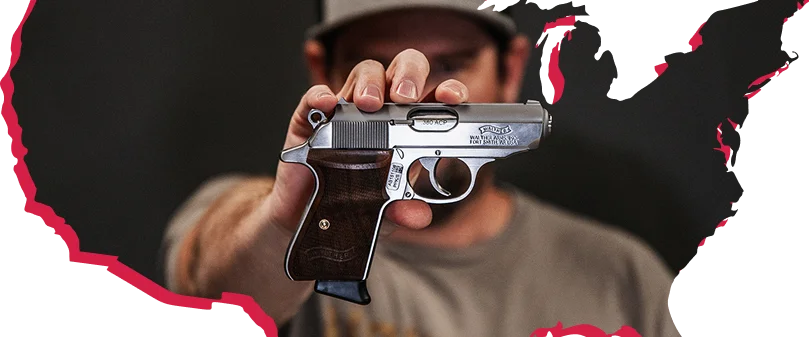
For a retention-style reference, Walther PPK/S averages run about $658.12 new versus $514.50 used, with 12-month averages of $736.79 new versus $509.32 used. The gap reinforces the point: condition and correctness carry real money—especially with all-steel DA/SA classics where variant details drive pricing.
If you want strong resale here, protect the original finish, keep original parts and mags, and document the exact variant and markings you’re selling (the same basics apply to proven DA/SA service pistols with steady resale demand).
If metal-frame pistols are picky about “correctness,” revolvers and 1911s take that pickiness and crank it up. In those lanes, the buyer’s idea of “right” often comes down to tiny details.
Revolvers and 1911s That Hold Strong
In revolvers and 1911s, tiny configuration details swing resale harder than round count. The buyer is usually an enthusiast with a very specific “right” version in mind, and anything that drifts from that mental picture costs you money.
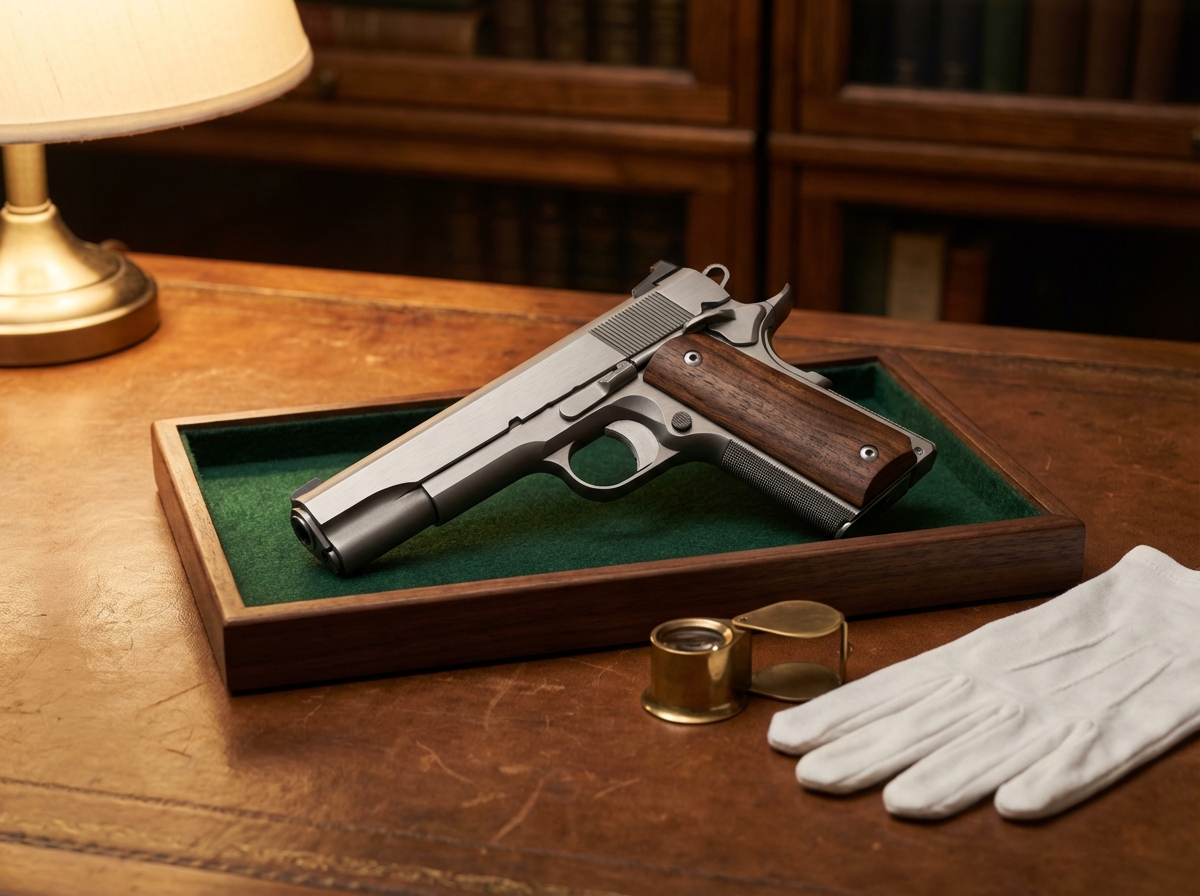
Revolvers make this painfully obvious. A Colt Python is highly era and variant sensitive, especially original production versus the 2020 to present reintroduction, and barrel length and finish commonly drive premiums. The Ruger GP100 plays the same game at a different price tier, buyer perception depends on configuration like finish and sights, plus how original the gun remains. Refinished metal and non-OEM parts are common discount triggers because they muddy the gun’s story and raise “what else was changed?” questions.
On the 1911 side, Springfield Armory resale varies heavily by line, Mil-Spec, Loaded, Range Officer, and TRP do not trade in the same lane. Mods are where people accidentally pay a customization tax: trigger jobs, refinish work, and especially drilled and tapped changes shrink the buyer pool unless the work is well documented by a reputable shop.
Protect resale by doing three boring things:
- Keep every OEM part you remove.
- Document all work with invoices and who did it.
- Avoid irreversible changes, especially refinishes and permanent cuts.
Even in these enthusiast categories, pros still judge finish and bore condition and whether aftermarket parts are present. Before you mod, ask yourself, will the next buyer pay for this, or pay to undo it?
All of these categories can hold value, but the math only becomes useful when you can translate your specific gun-your condition, your variant, your extras-into a price range backed by real sales.
How to Estimate Your Handgun’s Worth
You can get to a realistic “what’s my gun worth?” number with zero insider access, as long as you anchor your estimate to sold comps, grade condition honestly, and apply a few disciplined adjustments.
Here’s the key mindset shift: comps (completed sales) are actual, recent sold prices, not optimistic asking prices that never moved. If you base your number on listings that are still sitting, you’re pricing your hope, not your handgun.
- Identify the exact firearm: make, model, and the value-changing variant details like generation, barrel length, sights, finish, and any SKU or model code you can confirm from the box, receipt, or markings.
- Collect your inputs like an appraiser: finish condition (holster wear, scratches), bore condition (clean, pitting, bulges), matching numbers (where relevant), and aftermarket parts or permanent mods.
- Pull true comps from sold sources: GunBroker Completed Items shows the final winning or accepted price plus the listing’s stated condition, which makes it a strong baseline. Use Guns.com for current listing prices and condition notes/photos, but treat it as “what sellers are asking,” not proof of what it sells for.
- Sanity-check gross vs net: completed prices often exclude shipping, insurance, sales tax, transfer fees, and card surcharges. Back those out mentally so you’re estimating what you actually clear.
- Adjust for obvious mismatches: condition tier, included mags, OEM box and papers, optics cuts, and swapped sights. If you can’t find close matches, widen slowly by finish or sight type before jumping to a different variant. This same comp method works for long guns too.
Your goal is a defensible range you can explain in one minute, backed by real completed sales and an honest condition grade, not a single magical number.
Once you have a range, the next question is practical: what selling route gets you closest to that number after fees, delays, and rules do their damage?
Selling Channels and State Rules That Matter
The gun you’re selling matters, but how you sell it can swing your net almost as much. Each channel bakes in its own costs, delays, and buyer limits, so the “highest price” option doesn’t always leave you with the most money after time, fees, and hassle.
For many sales-especially across state lines-the transfer is processed by a Federal Firearms Licensee (FFL) who records the transaction and runs the required background check. In practice, that adds scheduling, fees, and extra points where a deal can stall.
If you’re chasing maximum net, a legal private sale usually wins because you’re not handing margin to a middleman, but you take on the personal risk, screening effort, and coordination. Consignment can also push a higher sale price because the shop markets it, but you pay consignment fees and you wait. If you want speed, a local dealer buyout is the fast exit, and the discount is the price of immediacy. Online marketplace sales routed through an FFL widen your buyer pool, but shipping, platform fees, and the extra transfer steps eat into both net and timeline. Direct-buyer services are the certainty play, and they typically price in convenience.
Federal baseline: interstate transfers generally must go through a receiving FFL; intrastate private transfers may be allowed where your state law doesn’t prohibit them, and you still can’t transfer to prohibited persons. Texas keeps intrastate private-party transfers relatively low-friction, generally permitting them without a background check or FFL requirement and with no statewide waiting period, which keeps more buyers in play.
One net detail to watch in direct-buyer style sales: a prepaid shipping label plus full insurance coverage cuts your out-of-pocket shipping and insurance costs. Cash My Guns also advertises packing guidance and handling of state-law compliance.
Pick the channel that matches your priority, top dollar, speed, or simplicity, then confirm your state’s current rules before you list or meet a buyer.
Quick Takeaways for Maximum Resale
The handguns that hold value best are the ones people constantly want, and the ones you can sell without giving buyers a reason to discount, like unclear variants, questionable condition, irreversible mods, or high transfer friction.
Polymer striker pistols stay the most liquid because demand is broad and steady. The catch is configuration creep, mainstream setups resell faster, while niche variants turn “easy sale” into “explain this to every buyer.”
Metal-frame classics reward specificity. Variant premiums are real, but buyers pay for originality and finish, not mystery parts or sloppy wear, so condition and “correctness” matter more than with plastic duty guns.
Revolvers and 1911s can hold strong, but they’re detail-sensitive. Once you change parts permanently, you narrow the buyer pool, and price follows the smaller audience.
For timing, watch demand signals you can verify: the FBI publishes monthly NICS totals by state and type, and the NSSF publishes monthly adjusted NICS estimates intended to better approximate retail sales. Many years show higher volume late fall and early winter than mid-year, so seasonality is a real lever.
Example averages (not guarantees):
- Glock (see in-article averages): New: See above; Used: See above
- Walther PPK/S (12-month average): New: $736.79; Used: $509.32
- Verify the exact variant.
- Grade condition honestly, especially finish and bore.
- Keep OEM parts, box, mags, and papers, avoid irreversible mods.
- Track demand signals and seasonality before you list.
- Document accessories and any aftermarket parts clearly.
If you want speed and low hassle, Cash My Guns buys guns directly through a nationwide online purchasing service.
Verify your local and state rules before you sell.